medicine
The Cultivation of Whiteness Douban
author:
Warwick Anderson
publishing house:
Melbourne University Press
2002
- 4
Science, Technology and Medicine in Colonial India Douban
Interest in the science, technology and medicine of India under British rule has grown in recent years and has played an ever-increasing part in the reinterpretation of modern South Asian history. Spanning the period from the establishment of East India Company rule through to Independence, David Arnold's wide-ranging and analytical survey demonstrates the importance of examining the role of science, technology and medicine in conjunction with the development of the British engagement in India and in the formation of Indian responses to western intervention. One of the first works to analyse the colonial era as a whole from the perspective of science, the book investigates the relationship between Indian and western science, the nature of science, technology and medicine under the Company, the creation of state-scientific services, 'imperial science' and the rise of an Indian scientific community, the impact of scientific and medical research and the dilemmas of nationalist science.
Science, Medicine, and the State in Germany Douban
author:
Arleen Marcia Tuchman
publishing house:
Oxford University Press, USA
1993
- 6
This superb account of the development of scientific research in the state of Baden places the growth of science in nineteenth century Germany within a broad social and economic context. The book analyses the progress of scientific research and its institutionalization in the state university system. Focusing on the experimental sciences, the book explores the introduction of the research ethic into the university medical curriculum, and the process by which laboratory science came to be an essential pedagogical tool in the education of future citizens of the state. The social and economic changes that ultimately transformed Germany into a modern industrial state are also considered. It was within this setting that laboratory training, once considered inappropriate for university studies, grew in status, and that dissatisfaction with the overly theoretical education traditionally offered by the universities began to increase. Thus, much like computers today, the scientific method in the nineteenth century came to represent an instrument for teaching not only specific skills but also a particular way of approaching, analyzing, and solving the problems of an industrializing economy. This compelling volume will be of interest to historians of science, medicine, and European studies.

免疫学概览 Douban
How the immune system works
author:
L.松佩拉克
publishing house:
化学工业
2005
- 9
免疫学是一门较难学习的学科,其中包含了大量复杂的机制。本书以生
动的语言、幽默的表述,用“演讲”方式,试图使读者对免疫学无处不在的
细节有更深刻的理解,使读者建立免疫系统全景式的大画卷,真正做到享受
学习免疫学的乐趣。本书共9讲,分别讲述了健康状态下的免疫系统中的先
天免疫系统、B细胞和抗体、抗原呈递、T细胞和细胞因子、淋巴器官和淋巴
细胞运输、耐受诱导和MHC限制性,以及疾病状态下的免疫系统中的免疫病
理学和癌症与免疫学的关系等。
本书可作为高年级本科生和研究生免疫学核心教材,也可作为其他教材
的配套用书。同时,本书还是一部轻松、快速掌握免疫学的考试复习用书。
动的语言、幽默的表述,用“演讲”方式,试图使读者对免疫学无处不在的
细节有更深刻的理解,使读者建立免疫系统全景式的大画卷,真正做到享受
学习免疫学的乐趣。本书共9讲,分别讲述了健康状态下的免疫系统中的先
天免疫系统、B细胞和抗体、抗原呈递、T细胞和细胞因子、淋巴器官和淋巴
细胞运输、耐受诱导和MHC限制性,以及疾病状态下的免疫系统中的免疫病
理学和癌症与免疫学的关系等。
本书可作为高年级本科生和研究生免疫学核心教材,也可作为其他教材
的配套用书。同时,本书还是一部轻松、快速掌握免疫学的考试复习用书。

Epidemiology Douban
author:
Leon Gordis MD MPH DrPH
publishing house:
Saunders
2008
- 7
This popular book is written by the award-winning teacher, Dr. Leon Gordis of the Bloomberg School of Public Health at Johns Hopkins University. He introduces the basic principles and concepts of epidemiology in clear, concise writing and his inimitable style. This book provides an understanding of the key concepts in the following 3 fully updated sections: Section I: The Epidemiologic Approach to Disease and Intervention; Section II: Using Epidemiology to Identify the Causes of Disease; Section III: Applying Epidemiology to Evaluation and Policy. Clear, practical graphs and charts, cartoons, and review questions with answers reinforce the text and aid in comprehension.
Utilizes new full-color format to enhance readability and clarity.
Provides new and updated figures, references and concept examples to keep you absolutely current - new information has been added on Registration of Clinical Trials, Case-Cohort Design, Case-Crossover Design, and Sources and Impact of Uncertainty ( disease topics include: Obesity, Asthma, Thyroid Cancer, Helicobacter Pylori and gastric/duodenal ulcer and gastric cancer, Mammography for women in their forties) - expanded topics include Person-time.
Includes STUDENT CONSULT access, allowing you to:
o→Access the complete contents of the book online, anywhere you go.perform quick searches.and add your own notes and bookmarks.
o→Test yourself with the additional TEST BANK including 200 MCQs, plus complete rationales for all self-assessment Q&A in the print book. .
o→Reference all other STUDENT CONSULT titles you own online, too-all in one place!
Introduces both the underlying concepts as well as the practical uses of epidemiology in public health and in clinical practice.
Systemizes learning and review with study questions in each section and an answer key and index.
Illustrates textual information with clear and informative full-color illustrations, many created by the author and tested in the classroom.
Utilizes new full-color format to enhance readability and clarity.
Provides new and updated figures, references and concept examples to keep you absolutely current - new information has been added on Registration of Clinical Trials, Case-Cohort Design, Case-Crossover Design, and Sources and Impact of Uncertainty ( disease topics include: Obesity, Asthma, Thyroid Cancer, Helicobacter Pylori and gastric/duodenal ulcer and gastric cancer, Mammography for women in their forties) - expanded topics include Person-time.
Includes STUDENT CONSULT access, allowing you to:
o→Access the complete contents of the book online, anywhere you go.perform quick searches.and add your own notes and bookmarks.
o→Test yourself with the additional TEST BANK including 200 MCQs, plus complete rationales for all self-assessment Q&A in the print book. .
o→Reference all other STUDENT CONSULT titles you own online, too-all in one place!
Introduces both the underlying concepts as well as the practical uses of epidemiology in public health and in clinical practice.
Systemizes learning and review with study questions in each section and an answer key and index.
Illustrates textual information with clear and informative full-color illustrations, many created by the author and tested in the classroom.
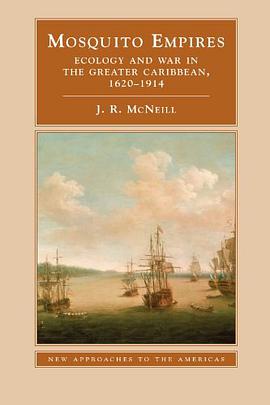
Mosquito Empires Douban
This book explores the links among ecology, disease, and international politics in the context of the Greater Caribbean - the landscapes lying between Surinam and the Chesapeake - in the seventeenth through early twentieth centuries. Ecological changes made these landscapes especially suitable for the vector mosquitoes of yellow fever and malaria, and these diseases wrought systematic havoc among armies and would-be settlers. Because yellow fever confers immunity on survivors of the disease, and because malaria confers resistance, these diseases played partisan roles in the struggles for empire and revolution, attacking some populations more severely than others. In particular, yellow fever and malaria attacked newcomers to the region, which helped keep the Spanish Empire Spanish in the face of predatory rivals in the seventeenth and early eighteenth centuries. In the late eighteenth and through the nineteenth century, these diseases helped revolutions to succeed by decimating forces sent out from Europe to prevent them.
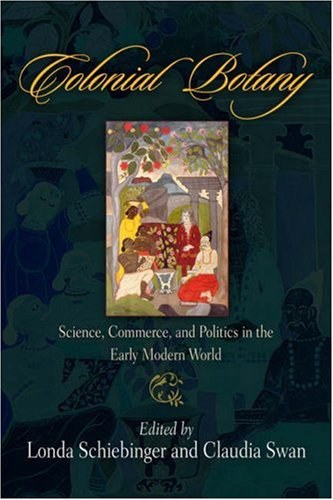
Colonial Botany Douban
author:
Londa Schiebinger
/
Claudia Swan
publishing house:
University of Pennsylvania Press
2007
- 7
In the early modern world, botany was big science and big business, critical to Europe's national and trade ambitions. Tracing the dynamic relationships among plants, peoples, states, and economies over the course of three centuries, this collection of essays offers a lively challenge to a historiography that has emphasized the rise of modern botany as a story of taxonomies and "pure" systems of classification. Charting a new map of botany along colonial coordinates, reaching from Europe to the New World, India, Asia, and other points on the globe, Colonial Botany explores how the study, naming, cultivation, and marketing of rare and beautiful plants resulted from and shaped European voyages, conquests, global trade, and scientific exploration. From the earliest voyages of discovery, naturalists sought profitable plants for king and country, personal and corporate gain. Costly spices and valuable medicinal plants such as nutmeg, tobacco, sugar, Peruvian bark, peppers, cloves, cinnamon, and tea ranked prominently among the motivations for European voyages of discovery. At the same time, colonial profits depended largely on natural historical exploration and the precise identification and effective cultivation of profitable plants. This volume breaks new ground by treating the development of the science of botany in its colonial context and situating the early modern exploration of the plant world at the volatile nexus of science, commerce, and state politics. Written by scholars as international as their subjects, Colonial Botany uncovers an emerging cultural history of plants and botanical practices in Europe and its possessions.