metaphor
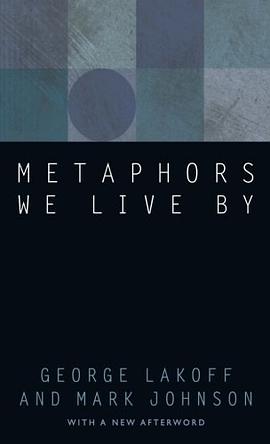
Metaphors We Live By 豆瓣 Goodreads Goodreads
Metaphors We Live By
8.9 (18 个评分) 作者: George Lakoff / Mark Johnson 出版社: University Of Chicago Press 2003 - 4
People use metaphors every time they speak. Some of those metaphors are literary - devices for making thoughts more vivid or entertaining. But most are much more basic than that - they're "metaphors we live by", metaphors we use without even realizing we're using them. In this book, George Lakoff and Mark Johnson suggest that these basic metaphors not only affect the way we communicate ideas, but actually structure our perceptions and understandings from the beginning. Bringing together the perspectives of linguistics and philosophy, Lakoff and Johnson offer an intriguing and surprising guide to some of the most common metaphors and what they can tell us about the human mind. And for this new edition, they supply an afterword both extending their arguments and offering a fascinating overview of the current state of thinking on the subject of the metaphor.
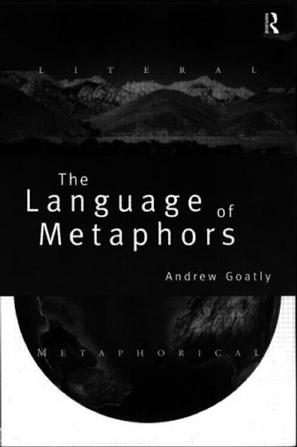
The Language of Metaphors; Literal Metaphorical 豆瓣
作者: ANDREW GOATLY 出版社: Routledge 1997 - 6
In this ambitious and wide-ranging text, Andrew Goatly explores the language of metaphor. Combining insights from relevance theory and functional linguistics, he provides a powerful model for understanding how metaphors work in real communicative situations, how we use them to communicate meaning as well as how we process them.

Examining the distinction between literal and metaphorical language, Goatly surveys the means by which metaphors are realized in texts and locates the interpretation of metaphor in its social context. The Language of Metaphors is enlivened by the choice, variety and humor of its real examples which are taken from a wide variety of genres including conversation, popular science, advertising, news reports, novels and poetry. Supplemented with exercises and a suggested reading list, this book will provide students of language, psychology and literature with an invaluable guide to understanding precisely how metaphors function.</P>
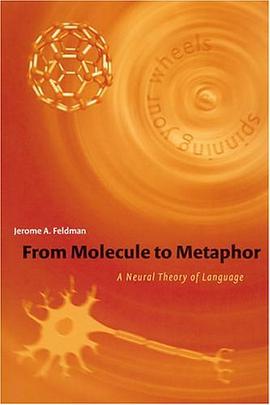
From Molecule to Metaphor 豆瓣
作者: Jerome A. Feldman 出版社: The MIT Press 2006 - 6
In From Molecule to Metaphor, Jerome Feldman proposes a theory of language and thought that treats language not as an abstract symbol system but as a human biological ability that can be studied as a function of the brain, as vision and motor control are studied. This theory, he writes, is a "bridging theory" that works from extensive knowledge at two ends of a causal chain to explicate the links between. Although the cognitive sciences are revealing much about how our brains produce language and thought, we do not yet know exactly how words are understood or have any methodology for finding out. Feldman develops his theory in computer simulations--formal models that suggest ways that language and thought may be realized in the brain. Combining key findings and theories from biology, computer science, linguistics, and psychology, Feldman synthesizes a theory by exhibiting programs that demonstrate the required behavior while remaining consistent with the findings from all disciplines. <br /> <br /> After presenting the essential results on language, learning, neural computation, the biology of neurons and neural circuits, and the mind/brain, Feldman introduces specific demonstrations and formal models of such topics as how children learn their first words, words for abstract and metaphorical concepts, understanding stories, and grammar (including "hot-button" issues surrounding the innateness of human grammar). With this accessible, comprehensive book Feldman offers readers who want to understand how our brains create thought and language a theory of language that is intuitively plausible and also consistent with existing scientific data at all levels.

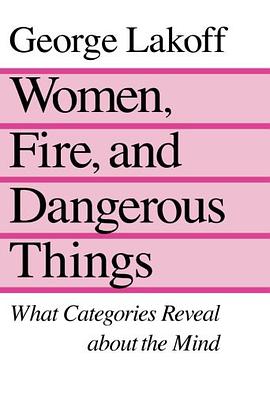
Women, Fire and Dangerous Things 豆瓣 Goodreads
作者: George Lakoff 出版社: University Of Chicago Press 1990 - 1 其它标题: Women, Fire, and Dangerous Things: What Categories Reveal About the Mind
"Its publication should be a major event for cognitive linguistics and should pose a major challenge for cognitive science. In addition, it should have repercussions in a variety of disciplines, ranging from anthropology and psychology to epistemology and the philosophy of science. . . . Lakoff asks: What do categories of language and thought reveal about the human mind? Offering both general theory and minute details, Lakoff shows that categories reveal a great deal."—David E. Leary, American Scientist