女权理论
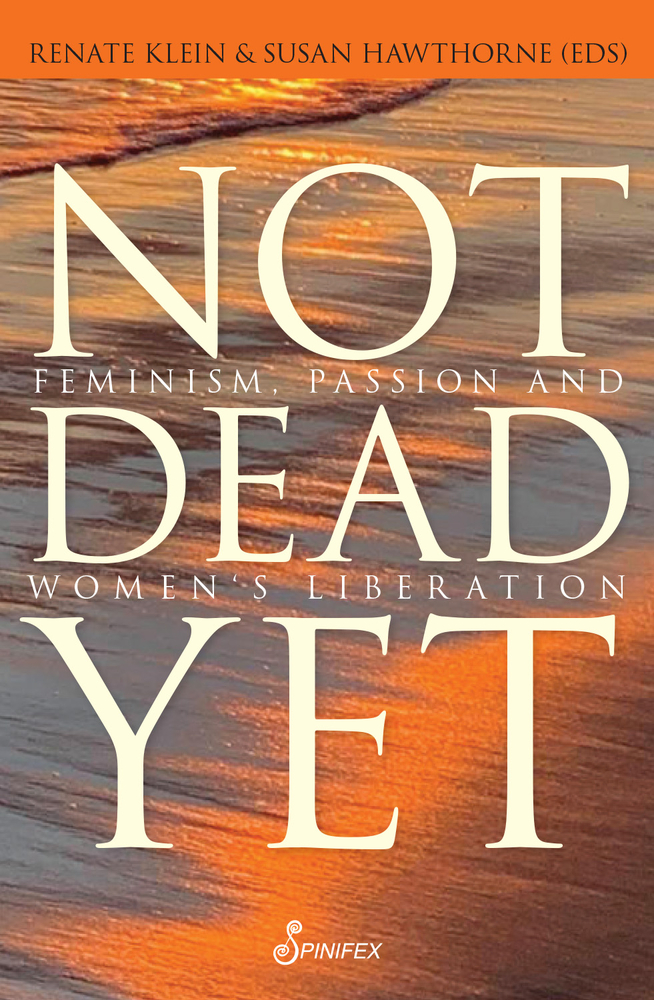
Not Dead Yet: Feminism, Passion and Women's Liberation Goodreads
作者: Susan Hawthorne / Renate Klein Spinifex Press 2021 - 7
What was it like to participate in the Women’s Liberation Movement? What made millions of women step forward from the 1960s onwards and join it in different ways? Many of the fifty women in this book were there. They describe how they have contributed in multitudinous ways across politics, the arts, health, education, environmentalism, economics and science and created wonderfully subversive activism. And how they continue this activism today with determined grittiness. Here are women – all over 70 years of age – still railing against the patriarchal systemic oppression of women, still fighting back. The contributors to Not Dead Yet have created new analyses with new language and new kinds of organisations always aware of the ways in which the system is stacked against them, particularly against radical lesbian feminists. But they persist. They share the revolutionary zest they have carried with them over many decades. There is history, there is subversion and there are many extraordinary acts of courage. The language is full of irony and wit – as well as deadly serious.
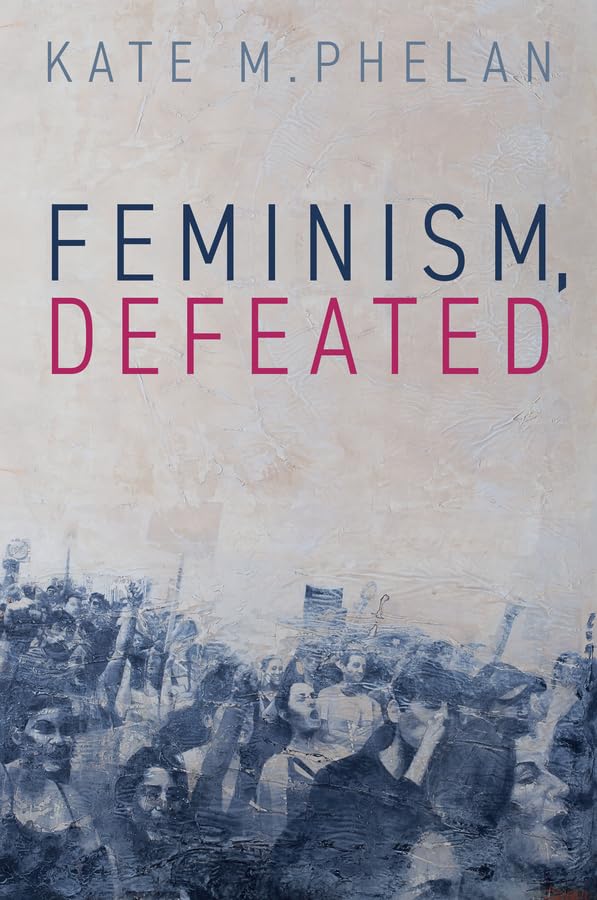
Feminism, Defeated Goodreads
作者: Kate M. Phelan Polity 2025 - 4
Feminism has been defeated.

Once a politics, feminism is now a philosophy, an epistemology, a method. Once for women, it is now for everyone. Once in pursuit of liberation, it now seeks only inclusion.

In Feminism, Defeated , Kate Phelan traces the depoliticization and ultimately, the defeat of feminism. She recovers the second-wave view of men and women as sex-classes, enemies, political kinds, a view more radical than the contemporary view of men and women as social constructs. She also describes how poststructuralism displaced this view and replaced it with another. In this view, the sex/gender binary constructs men and women, and excludes the gender nonconforming.

As this view replaced the second-wave one, the injustice of men’s oppression of women was replaced by that of exclusion, and the goal of women’s liberation was replaced by that of inclusion. Thus did feminism become the trans-inclusionary movement as which we now know it, and Phelan shows that this shift was not the progression of feminism; it was the betrayal of it. In this highly original and persuasive study, she argues that the recent emergence of a new gender-critical feminism presents a moment of opportunity to reclaim feminism’s political project.