心理
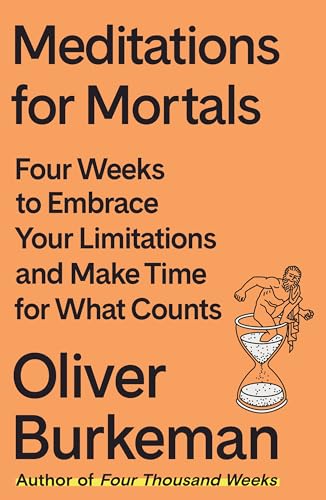
Meditations for Mortals: Four Weeks to Embrace Your Limitations and Make Time for What Counts 豆瓣 Goodreads
Oliver Burkeman
作者: Oliver Burkeman Farrar, Straus and Giroux 2024 - 10 其它标题: Meditations for Mortals
Meditations for Mortals takes us on a liberating journey towards a more meaningful life – one that begins not with fantasies of the ideal existence, but with the reality in which we actually find ourselves.

Addressing the fundamental questions about how to live, it offers a powerful new way to take action on what counts: a guiding philosophy of life Oliver Burkeman calls ‘imperfectionism’. How can we embrace our non-negotiable limitations? Or make good decisions when there’s always too much to do? What if purposeful productivity were often about letting things happen, not making them happen?

Reflecting on ideas drawn from philosophy, religion, literature, psychology, and self-help, Burkeman explores practical tools and shifts in perspective. The result is a bracing challenge to much familiar advice, and a profound yet entertaining crash course in living more fully.

To be read either as a four-week ‘retreat of the mind’ or devoured in one or two sittings, Meditations for Mortals will be a source of solace and inspiration, and an aid to a saner, freer, and more enchantment-filled life. In anxiety-inducing times, it is rich in truths we have never needed more.
2025年10月12日 已读
2025/08/31-2025/10/12
本来以为会是28个daily meditation exercise结果是28场心灵按摩。和作者在后记里预测的一样,我非常tempted to take a perfectionist approach to imperfectionism想着从头来规划我的生活,然后被无情叫醒。真正地接受、拥抱有限性是一生的课题,不是“从明天开始”,也没法轻易“从此刻开始”,而是举起又放下的重担,握紧拳头又放开,挣扎着游向彼岸,然后发现松开身体我已经到达。Here or there does not matter, we must be still and still moving.

在这段阅读旅途中学到了很多可以让我稍微松开点牙关的认识/感悟:
1. 把to read/to watch看成menu或者图书馆书架而不是to do list,不需要完成,只在适当的心情下取阅。
2. 我想做的事情是永远到不了尽头的,这和想读的书永远读不完一样,但正是这个事实才让生命worth living。
3. 我的挣扎来自于who I am和who I want to become的搏斗。我写计划写目标找地图想让自己到达、成为那个想象中的自己。但这其实很没有意义,我就是我,有缺点有痛苦有挣扎,未来的我也一样,我不需要为未来的自己做太多的规划,我相信她会活得很好,至少有能力过得很好,就像此刻的我一样。
4. indecision是一种decision而且非常内耗。后果往往没有我想象的那么可怕——最好的结果不会发生,最坏的结果也不会。
5. 减少wip-每个项目刚开始的时候都让我感到非常有动力,但那是因为“距离产生美”远看的project都非常有趣,当你真的into it and doing the hard grunt work的时候一定是痛苦和自我怀疑的,觉得自己到处拉屎。提前预计这个。
self-help 非虚构 心理
我的痛苦有名字嗎? 谷歌图书
9.5 (16 个评分) 作者: 河美娜(하미나) 大塊文化 2023 - 03
為什麼20、30歲的女性容易得憂鬱症?會得憂鬱症不是因為「本來就有病」
讓她們以自己的語言述說擺脫醫學疾病與社會汙名的定義替女性書寫全新的受苦簡史
從2003至2020年,南韓屢次成為OECD(經濟合作與發展組織)成員國中自殺率最高的國家,而「憂鬱症」被指出是自殺率居高不下的罪魁禍首,一直以來都被視為造成社會問題的成因。近年來,有越來越多20、30歲的女性被診斷出患有心理疾病,而20歲女性的自殺率也節節升高,2020年,南韓20-29歲的女性自殺人數比去年多出了40%。年輕女性的自殺問題如此嚴重,南韓當局已將20、30多歲的女性列為官方自殺危險群。
求助精神科醫師的人越來越多,也開始接連出現分享自身罹病經驗的著述。不過,作者認為,雖然這些疾病經驗的敘事十分重要,但如果只以「個人經驗」的形式來省思憂鬱症,就難以從社會及歷史脈絡的角度來檢視這個被稱為憂鬱症的疾病,而我們對憂鬱症成因的解釋,也會因此只限縮在探討患者身處的環境與個性。
為什麼2、30歲的女性會得憂鬱症?本書作者自己也是躁鬱症患者,並察覺了心理疾病並非單純是個人問題。她在書中訪談了三十一名2、30歲女性憂鬱症患者,並結合了自身的精神醫學知識、親身面對醫療不公的經驗,耗費兩年的時間寫成了此書。
本書採取了全新的觀點,使用患者自身的語言,重新定義了名為「憂鬱症」的痛苦,打造了一個面向大眾的公共溝通平台,讓眾人能互相討論共有的受苦經驗,並提出更平等面對憂鬱症的看法。
正如同美國作家兼詩人安妮.波爾所說:「疾病的歷史並非醫學的歷史,而是世界的歷史」。本書作者擺脫了醫學疾病與社會汙名的定義,替女性書寫了一部全新的受苦簡史,而這是讓一個文化理解痛苦的方式開始產生改變的起始點。作者讓罹患憂鬱相關疾病的女性們用自己的語言說話,不再讓醫生和諮商師奪走詮釋她們的主導權,而是成為自己人生的作者,採訪對象包含韓國及海外的韓國女性,學歷橫跨高中畢業至研究所畢業。
推薦人
王雅涵 諮商心理師 胡展誥 諮商心理師 陳志恆 諮商心理師、暢銷作家 蘇益賢 臨床心理師 (依姓名筆畫順序排列)
「這本書點出了值得被看見與探討的觀點。」——陳志恆 諮商心理師、暢銷作家
「本書以女性為視角,搭配調查、醫學歷史與個案經驗,補足了相關領域更多延伸的讀本,相信能對許多讀者有助益。」——蘇益賢 臨床心理師
2025年11月14日 已读
2025/10/17-2025/11/14
感谢豆瓣上的好心媎妹整理了简体版!从《思想验证领域》认识河马,被她身上的理想主义和强大的共情能力所打动,读这本书才知道她曾经并且现在仍然在努力寻找和躁郁症/双相相处的方法。只有真的身在其中的人才能把这种痛苦和挣扎精准地表达出来吧——需要自己的痛苦被认同(尤其是女性的痛苦总被反复质疑乃至否定),需要找到和自己一样的人,但同时我们又不希望诊断变成一张标签自此定义并预言我们的人生。

读这些访谈时,我一直在想,河马一定是一个很温柔的人,才能让被采访者这样敞开心扉。也让我非常感动的是,作为“病人”的大家,几乎毫无保留地讲述自己的故事。

> 宇容:之所以在现在这个时间点联系您也是有原因的。我们现在的情况非常辛苦。觉得「一定可以顺利解决」的时候,跟信念崩塌的时候是不停交替的。如果我们成功的话,记忆就会被美化了。那我们受访的时候就会说,对我们来说这个过程是「对两人的爱产生确信的契机」。但比起那样,我们想呈现的是更有过程,更惨烈,而且真的很废的那种,活生生的惨痛经验。

因为最近在思考创作的事,这一段对我触动很深。很多时候我不敢分享个人经验,总觉得自己算不上什么“专家”。但也许,正是这种当下此刻的感受,哪怕只是笨拙的尝试抑或惨烈的挣扎,或许也可以帮到后来的人和其她正在经历这一切的人。

除了个体访谈,这本书给我带来最大启发的,是河马对精神疾病的药疗化、私人化,以及它们与系统性社会压迫之间关系的分析。这是一个我从未认真想过的角度。当精神疾病、自杀被完全医疗化之后,它们也同时被剥离了公共和政治意义。痛苦被定义为一个可以被优化、被调校的个人状态,而不再是一个需要被集体理解和回应的处境。我们不再追问:到底是什么样的社会,让这么多人的痛苦以如此相似的方式出现?

当女性的痛苦被不断治疗化、私人化,我们其实是在放弃从社会层面理解女性处境的可能性。在一个持续制造无力感的系统里,我们却被要求独自完成修复。这本书没有给出答案,但它让我对痛苦多了一点耐心,也让我意识到,被认真倾听、被认真书写,本身就是一种重要的抵抗。

“创造即改变”。
社科 心理 女权
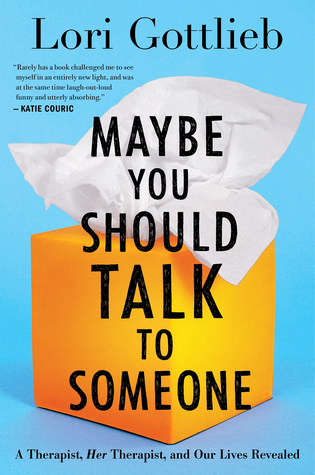
Maybe You Should Talk to Someone: A Therapist, Her Therapist, and Our Lives Revealed
8.7 (6 个评分) 作者: Lori Gottlieb Mariner Books 2019 - 4
One day, Lori Gottlieb is a therapist who helps patients in her Los Angeles practice. The next, a crisis causes her world to come crashing down. Enter Wendell, the quirky but seasoned therapist in whose office she suddenly lands. With his balding head, cardigan, and khakis, he seems to have come straight from Therapist Central Casting. Yet he will turn out to be anything but.
As Gottlieb explores the inner chambers of her patients' lives -- a self-absorbed Hollywood producer, a young newlywed diagnosed with a terminal illness, a senior citizen threatening to end her life on her birthday if nothing gets better, and a twenty-something who can't stop hooking up with the wrong guys -- she finds that the questions they are struggling with are the very ones she is now bringing to Wendell.
With startling wisdom and humor, Gottlieb invites us into her world as both clinician and patient, examining the truths and fictions we tell ourselves and others as we teeter on the tightrope between love and desire, meaning and mortality, guilt and redemption, terror and courage, hope and change.
is revolutionary in its candor, offering a deeply personal yet universal tour of our hearts and minds and providing the rarest of gifts: a boldly revealing portrait of what it means to be human, and a disarmingly funny and illuminating account of our own mysterious lives and our power to transform them.
2025年1月30日 已读
2025/01/14-2025/01/30
A lovely surprise. When I started this book, I didn't expect to get much out of it. I'd call myself lucky—I had a relatively happy childhood without any traumatic experiences. I grew up to be independent, comfortable with solitude, and without major struggles in relationships. But recently, I've found myself craving more companionship and deeper connections and struggling to navigate that desire, which ultimately led me to pick up this book.

As the stories unfolded, they touched me more than I anticipated. By the final chapters, I teared up as I listened to the stories of Julie's funeral and Rita's letters. I saw pieces of myself in almost every character. John masks his vulnerability with hostility, and I, too, fear showing vulnerability, even to friends I trust. Julie finds peace in embracing her final months with presence and love, echoing my own attempts to practice Stoicism and reflect on death as a way to live more meaningfully. Rita, initially resistant to change, learns to open up and reconnect with the world, much like my own reluctance to let people in. Even Lori, the therapist herself, struggles with fears of rejection, aging, and uncertainty—fears I know all too well. She ultimately learns to accept life's unpredictability, and I hope to reach that place someday, too.

Through Lori's own journey of self-discovery, I realised that everything I do and say has deeper, underlying reasons—whether I recognise them or not. This book made me turn inward and reflect on myself in a way I hadn't before.

Many of the lessons here aren't new to me. But it's the deeply personal stories that bring them to life, making them feel immediate, tangible, and real. This book didn’t give me answers, but it held up a mirror—and for now, that’s enough.
心理 非虚构 回忆录
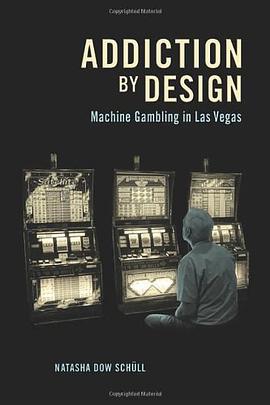
Addiction by Design 豆瓣 Goodreads
作者: Natasha Dow Schüll Princeton University Press 2012 - 9
Recent decades have seen a dramatic shift away from social forms of gambling played around roulette wheels and card tables to solitary gambling at electronic terminals. Addiction by Design takes readers into the intriguing world of machine gambling, an increasingly popular and absorbing form of play that blurs the line between human and machine, compulsion and control, risk and reward. Drawing on fifteen years of field research in Las Vegas, anthropologist Natasha Dow Schll shows how the mechanical rhythm of electronic gambling pulls players into a trancelike state they call the "machine zone," in which daily worries, social demands, and even bodily awareness fade away. Once in the zone, gambling addicts play not to win but simply to keep playing, for as long as possible--even at the cost of physical and economic exhaustion. In continuous machine play, gamblers seek to lose themselves while the gambling industry seeks profit. Schll describes the strategic calculations behind game algorithms and machine ergonomics, casino architecture and "ambience management," player tracking and cash access systems--all designed to meet the market's desire for maximum "time on device." Her account moves from casino floors into gamblers' everyday lives, from gambling industry conventions and Gamblers Anonymous meetings to regulatory debates over whether addiction to gambling machines stems from the consumer, the product, or the interplay between the two. Addiction by Design is a compelling inquiry into the intensifying traffic between people and machines of chance, offering clues to some of the broader anxieties and predicaments of contemporary life.
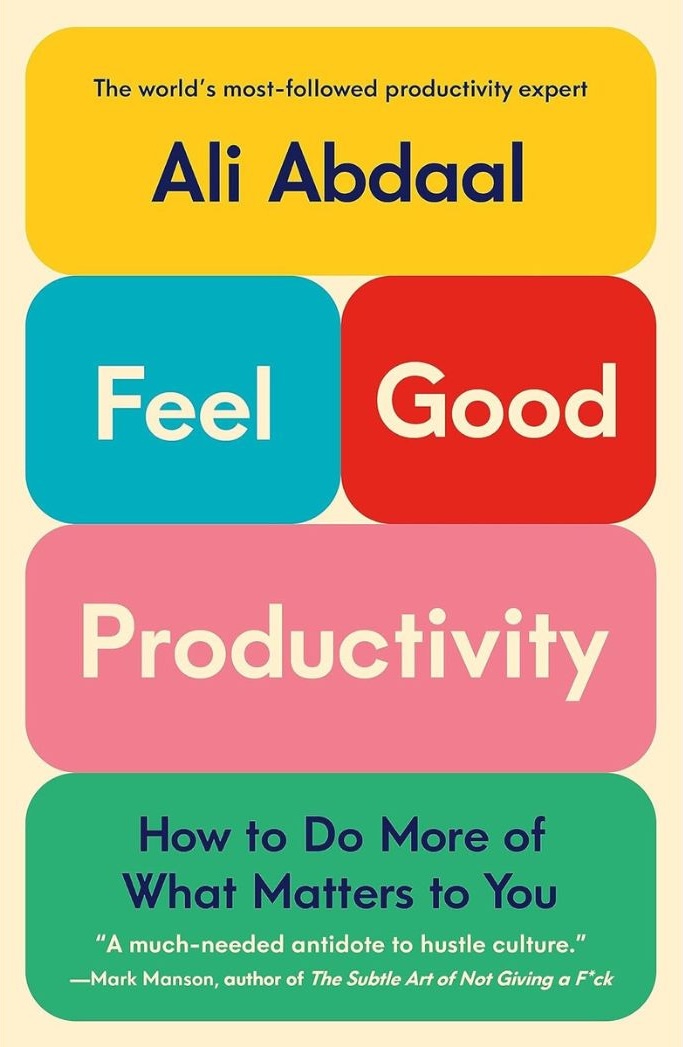
Feel-Good Productivity 豆瓣 Goodreads
作者: Ali Abdaal Celadon Books 2023 - 12 其它标题: Feel-Good Productivity: How to Do More of What Matters to You
The secret to productivity isn’t discipline. It’s joy.
We think that productivity is all about hard work. That the road to success is lined with endless frustration and toil. But what if there’s another way?
Dr Ali Abdaal – the world's most-followed productivity expert – has uncovered an easier and happier path to success. Drawing on decades of psychological research, he has found that the secret to productivity and success isn't grind – it's feeling good. If you can make your work feel good, then productivity takes care of itself.
In this revolutionary book, Ali reveals how the science of feel-good productivity can transform your life. He introduces the three hidden 'energisers' that underpin enjoyable productivity, the three 'blockers' we must overcome to beat procrastination, and the three 'sustainers' that prevent burnout and help us achieve lasting fulfillment. He recounts the inspiring stories of founders, Olympians, and Nobel-winning scientists who embody the principles of Feel-Good Productivity. And he introduces the simple, actionable changes that you can use to achieve more and live better, starting today.
Armed with Ali’s insights, you won’t just accomplish more. You’ll feel happier and more fulfilled along the way.
2025年1月9日 已读
2024/12/30-2025/01/03
看Ali的视频已经很多年了,之前写过: Every time I watch Ali’s videos, it feels like a therapy session. They provide a steady, lasting sense of motivation—not a fleeting burst that fades quickly, but a gentle, persistent push that slowly becomes part of me. Watching them leaves me feeling more at peace with my life.

看这本书也还是这个感受。只给及格分是因为如果follow他的视频的话书里没有太多的新内容,而这些框架其实通过视频可以诠释得更好。在新年的一月读这本感觉很合适。

nevertheless还是能整理出一些自我管理的技巧和方法,记录在评论里了。
2025年1月23日 评论 Feel-Good Productivity - Snippets - A player's mindset Curiosity When we’re kids, our days are filled with a sense of adventure. We explore every inch of the garden, we race through shopping malls, we climb trees, and we swing from branches. We’re not striving for goals or trying to boost our resume. We’re following our curiosity and enjoying activities without worrying about results. But as we get older, this spirit of adventure gets slowly squeezed out of us. Link ✏️ Should I think about “reading a paper a week” as an opportunity to explore an interesting idea rather than a task/step stone to developing my career? Everything I do should be driven by curiosity instead of external motivation. One Zen concept that came up time and again in Jackson’s coaching practices was the Japanese word shoshin, which roughly translates as ‘beginner’s mind’. Shoshin refers to a state of mind in which we approach every task and situation with the curiosity, openness and humility of a beginner . Link Audacity (Confidence) In WoW I’ve never been Ali Abdaal, the slightly nerdy schoolkid with zero sporting ability and confidence issues. I’ve always been Sepharoth, the tall, handsome Blood Elf Warlock with billowing purple robes and an army of demons at my command. Play allows us to take on different roles or personas , whether we’re becoming a character in WoW or acting out an imaginary scene with friends in the playground. These characters allow us to express different aspects of ourselves and transform our experiences into something more enjoyable. When you take on a different persona, you start to find adventure. Link My favourite method involves what I call ‘flipping the confidence switch’; in other words, challenging yourself to behave as if you’re confident in your task, even if you’re not. The method is even more simple than it sounds. The next time you’re not feeling good enough to take a chance, simply ask yourself, ‘What would it look like if I were really confident at this? What would it look like if I approached this task feeling confident that I could do it?’ Link Imagine what your life would look like if you received five proverbial points for failing, rather than losing five like in the experiment. Imagine what would happen if people cheered you on for a little stumble rather than humiliated you. Imagine how you’d approach things if you treated them as experiments, where failure would be just as valuable as success. Might you now see the game of life slightly differently? Suddenly, the stakes are lower. And suddenly, you can afford to play around a little. Link ✏️ Make this one of my goals - fail more often. Make a start, even if it's a shaky one . You won’t need to get perfect for a long time yet. Link Learning In identical circumstances, with identical material, the people who had to teach others about a subject would learn the material better themselves. The researchers named this phenomenon the ‘protégé effect’. Link ✏️ Try to explain new concepts to other people Relationships These random acts of kindness offer the first way to integrate the helper’s high into our day-to-day lives. By stopping what you’re doing and offering help to people at random, you can boost your endorphin levels and help yourself work harder. Link The helper’s high also shows us that asking for help from others can actually be a gift to them , rather than the burden we usually assume it will be. Link How to overcome uncertainty There are a handful of processes that reinforce the loop between uncertainty, anxiety and paralysis: We overestimate what’s at stake. Someone who’s already anxious will think that the uncertain event is going to be worse than it already is. We become hypervigilant. Sensing that something negative might happen, our safety antennae prick up to the sign of any potential danger. Link ✏️ 在自习室播客里听到过:看恐怖片最恐怖的时候就是不知道鬼是谁、鬼在什么时候出现,这种对未知的恐惧。一个可以参考的办法:想象最糟糕最恐怖的事情,做好最糟糕的心理准备,当你回头的时候就发现鬼也没有这么可怕了。 Technique: Commander's Intent Flesh out the following: The purpose behind the operation The end state that the commander was aiming for The key tasks that the commander felt should be taken to accomplish the objective Link Today, I apply this insight to my own life every day. Previously, when I embarked on a project my instinct was to immediately press ahead, planning every step – without ever really thinking about my desired end-state. But this level of obsessive planning can prove an obstacle. I would get so bogged down in ticking off specific tasks that I would lose track of what the ultimate point was. So now, before embarking on a new project, I ask myself the first commander’s intent question: ‘What is the purpose behind this?’ And I build my to-do list from there. Link Goal setting Prioritise When you’ve got a large degree of choice in what you could be doing with your time, it makes it a lot harder to commit to something in a given time slot. Our brain is always thinking, ‘I’m working on X right now, but maybe I could be working on Y, or possibly even Z.’ This is risky; if you’re doing a house renovation while working on a huge project at work, while also trying to learn Japanese, while also trying to get your blog off the ground, while also trying to coach your kids’ football team, everything is going to feel a lot more stressful. Sustainable productivity means recognising the limitations on our time. Link ✏️ Pick one thing and commit to it. Separate out the "planning" and the "doing" and clear my brain's RAM under the "doing" mode. 📚 Related: [[Mindset 20240727-1207#The waiting room will never be empty]] The "Hell yeah or no" trick When you find yourself weighing up whether to take on a new project or commitment, you’ve got two options – either ‘hell yeah’ or ‘no’. There’s no in between. With this filter, you start finding that 95 per cent of commitments are ones you should reject. Rarely are things a ‘hell yeah’. They’re usually along the lines of ‘This could conceivably be useful or semi-interesting, so yeah, why not?’ These are justifications from your brain that you need to overrule . Think about how much you have on already. If it isn’t a ‘hell yeah’, it’s not worth doing. Link ^6a6a17 Setting NICE (not SMART) goals My preferred method doesn’t involve fixating on an external outcome or destination, but instead emphasises the feel-good journey. It’s based on what I call NICE goals. Near-term : Near-term goals ensure that we’re concentrating on the immediate steps we need to take along our journey. They help us avoid being overwhelmed by the bigger picture. I find that a daily or weekly objective is the most helpful time horizon. Input-based : Input-based goals emphasise the process, rather than some distant, abstract end-goal . Whereas an output-based goal would home in on the end result: ‘Lose 5kg by the end of the year’, ‘Hit the bestseller list with my book’, an input-based goal would focus on what we can do in the here and now: ‘Go for a ten-minute walk everyday’, ‘Write 100 words each morning for my novel’. Controllable : We want to focus on goals that are within our control. ‘Spend eight hours a day on my novel’ probably isn’t something you can actually do, since many external factors would have to come together for such an input to be possible. Setting a more genuinely controllable goal (like allocating twenty minutes per day to the task) is far more realistic. Energising : We’ve already discussed plenty of principles and strategies for making our projects, tasks and chores more energising. Is there a way to integrate play, power and people into the goals you set yourself? Link SMART goals can be used for long-term objectives and NICE goals tell you how to get there. Examples: SMART NICE Fitness Lose 20 pounds within the next three months. Exercise for 30 minutes daily, focusing on activities that are enjoyable and manageable. Career Get a promotion to a senior management position within two years. Dedicate an hour each week to improving one key skill or networking with industry professionals. Education Complete a Master’s degree in two years. Spend 30 minutes each day reviewing course material and work on assignments in manageable chunks. Crystal ball method For tough goals that you may struggle to attain, use the crystal ball method: Imagine it’s one week later, and you haven’t actually started the task you intended to. What are the top three reasons why you didn’t get to it? What can you do to help mitigate the risk of those top three reasons derailing you? Who can you ask for help in sticking to this commitment? What action can you take right now that will help increase the odds that you’ll actually do the task? Link By running through what could go wrong in your head, you dramatically reduce the likelihood that it actually will. Get the momentum going We’re not going to leave a conversation without you having at least one, two or three actions to take.’ ‘Is that it?’ I thought. Is coming up with ‘one, two or three actions’ really enough to turn around a business? And then I reflected on my own life. All too often, my difficulty making things happen is that I don’t have a set of clear, simple steps to follow right now . Hence inertia. And hence procrastination. Mochary calls his principle the ‘bias to action’. Link 📚 Related: [[Wait But Why Year One#19. How to Beat Procrastination]] Don't beat yourself up too hard When we’re failing to maintain momentum on a task, we tend to beat ourselves up. But this helps nobody. If anything, it makes things worse. The inertia drives a sense of self-loathing. And that sense of self-loathing makes us even less likely to do anything fruitful. Is there a way to break this doom-loop? As Wohl and his colleagues found, forgiving ourselves is the escape hatch. But how? Perhaps my favourite way is a method I call Find the Win. It involves celebrating something, however small, and however unrelated to your work. I like to use the format: ‘I didn’t do X, but I did do Y.’ Examples: I didn’t go for that early-morning workout session today. But I did get an extra hour in bed and I’m feeling more refreshed than usual. I didn’t finish the last part of that report. But it was for a good reason. I chatted with a colleague in the staff kitchen and we had a lovely catch-up. I didn’t finish that job application today. But I got to spend time with my grandma instead, so that’s a win for today. Link 📚 Related: [[Mindset 20240727-1207]] ‘I’ve spent five minutes on social media; I might as well continue to do so for the next three hours.’ ‘I missed my morning workout; I guess today is a write-off, and I’ll just binge-watch TV instead of getting anything done.’ ‘I skipped a day of my language learning app streak, so I might as well give up on learning the language altogether.’ Failing with abandon is a common reason we waste vast amounts of energy. The key thing is getting back on course. Link Alignment Quests: Long-term goals/values in everyday behaviour/deicisons [The] final ingredient in alignment involves a mindset shift: from thinking about our values at the level of lifetimes and years, to thinking about our values at the level of daily choices. The question is how. We all make decisions every day that take us away from our values. The person who values freedom, but stays in a controlling job waiting for their shares to vest. The person who values close relationships, but spends most of their time working and neglects time with family and friends. These are instances where daily decisions don’t align with what we most desire. But with the right tools, we can subtly shift ourselves back towards the things that matter the most, and in turn sustain our productivity (and enrich our lives) for longer. [Every day, when you sit down to begin work, look at your vision board or 1 year goals. Then] under each of the areas (of health, work and relationships), choose one subcategory to focus on. Examples: H: Gym session 15.30–16:30 W: Make progress in writing Chapter 9 R: Call Nani (my grandma) Link ✏️ “仰望星空,脚踏实地” How to overcome fear A simple way to put cognitive reappraisal into practice is to remind yourself that the thing you’re feeling so bad about probably won’t matter that much in the future. You can do this by asking yourself the following three questions, which add up to what I call the 10/10/10 rule . Ask yourself: Will this matter in 10 minutes? Will this matter in 10 weeks? Will this matter in 10 years? Link Example: Trigger: You don’t get hired for a job. Will this matter in 10 min? Probably. I might feel pretty low for the rest of the day. Will this matter in 10 weeks? Probably not, because I’m going to apply to a bunch of other jobs by then. Will this matter in 10 years? Definitely not. Few people become successful in their careers without any setbacks and I’ll learn to see this as one small hiccup. Link Take rest/recovery Every day, before starting work, I think about when I’ll be feeling most overexerted and I time-block fifteen minutes out at the slots when I think I’ll most need it. And whenever I’m tempted to push through it, I remember the science of self-regulation – and that the harder you work, the more overexerted you become. And I remind myself of the importance of rest – even when you don’t think you need it. Link Try this simple experiment. Set a timer for five minutes and make two lists. The first is a list of things you tend to do when you’re feeling drained of energy. The second is a list of things that tend to actually recharge that energy. If you’re anything like me, you might find that the two lists look very different. Link Things that I do when drained of energy Things that actually energise me Scrolling social media Go for a walk Lie on the sofa and search endlessly for a random movie to watch on Netflix Do some yoga or stretching Scroll through Twitter, feeling incensed about what’s going on in the world Head to the gym for a quick workout Order an unhealthy takeaway Reach out to a friend and suggest grabbing dinner 📚 Related: [[Recovery Routines]]
自助 效率 心理
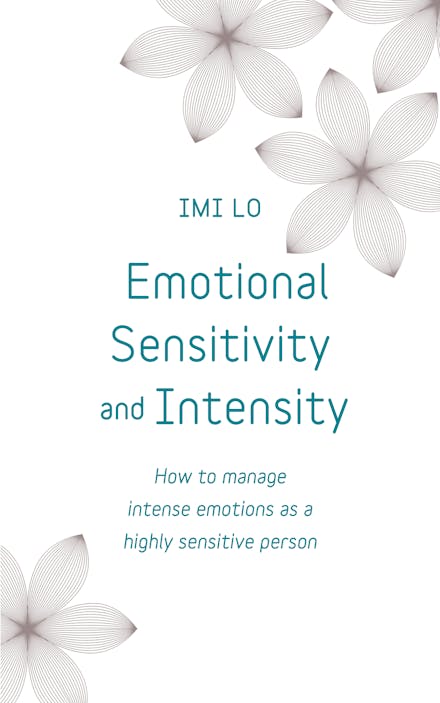
Emotional Sensitivity and Intensity Goodreads
作者: Imi Lo Teach Yourself 2018 - 5
Do you feel you experience life more vividly than others?
Do people sometimes describe you as emotionally intense or oversensitive?
Do your emotions soar high and plunge so quickly that you feel you can't keep up?

This book is for you. Learn how to cope with intense feelings, and discover how to use your sensitivity, empathy and intelligence to live a meaningful and fulfilling life.
Emotional Sensitivity and Intensity will give you in-depth information about this trait, as well as practical exercises and strategies to help with your daily struggles.

It will help you come to new ways of thinking about your past, thrive in your current life, and create exciting possibilities for the future. Written in a friendly and compassionate tone, the chapters will answer questions raised by many emotionally intense

Is there something wrong with me?
How does this trait explain my life experiences so far?
What can I do right now to better my life and to fulfil my potential?

You will learn
- Understand what it means to live with emotional sensitivity and intense feelings
- Debunk the myths and stereotypes about this trait
- Let go of old emotional baggage and limiting mindsets
- Develop real resilience and find peace within life's ups and downs
- Navigate challenging social and family situations
- Build healthy and fulfilling intimate relationships
- Find your unique calling and liberate your creative potential
2025年1月26日 已读
2024/12/30-2025/01/26
我一直以为自己是一个高敏感人,但读这本书让我怀疑起我的自我认识。我有一些高敏感人的特质:共情能力强、容易感动、内向,但我完全不符合作者描述的高敏人的成长经历,甚至感觉自己在她描述的另一端(这都得感谢我妈,在我成人以前我都没有意识到一个健康的童年有多么难得)。而且作者的写法很奇怪,有种我高中写第一篇论文时候的生硬感,读起来体验不是很好。

不过说到底“高敏感”也只是一个标签而已,人是一个复杂的多面体,高敏特质只是其中一个切面,我不期待从这个标签中找到对自我经历的解释从而解放自己。反倒是揭开这个标签让我感到更加自由。

尽管阅读途中我发现自己可能不是这本书的target audience,也还是从里面学到了一些:
- 和世界的关系: me vs them的mindset并不可取,要学会在这个世界里表露真实的自我。
- 更客观地审视我的personal narrative,我对自己的认识只是a map of the territory,危险的是我们的潜意识会让我们过滤信息,只接受符合自己认知的信息,筛掉所有不符合自我认知的部分,这会让我们越活越窄,在这种bias reinforcement的过程中变得趋近于the story I tell myself. 要提醒自己:我对自己的认识只是一种幻象。也可以利用这个方法来实现我想要达成的改变,比如告诉自己risk is not a bad thing, fear gives me excitement and an opportunity to shine.
- 和情绪的关系: 不要对抗情绪。客观地观察情绪,感受它的flow。
- 作为一个creator (to be)要提醒自己我创造是为了表达,而不是为了获取认可。作为一个曾经的写作者我记得自己一直都非常emotionally attached to how people view my work,并且以此来评价自己的每一份作品。这其实非常伤害我的创造力。今年开始学习摄影,需要提醒自己我学摄影不是为了得到别人的肯定,而是为了表达自己。
自助 心理 非虚构
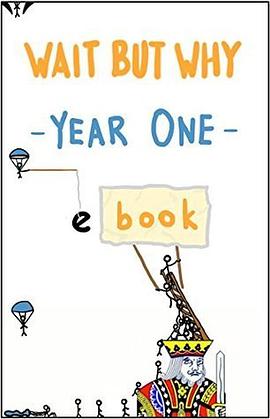
Wait But Why Year One 豆瓣
Wait But Why Year One: We finally figured out how to put a blog onto an e-reader
作者: Tim Urban waitbutwhy.com 2015 - 2
Since we started Wait But Why in 2013, we've received a bunch of requests from readers to get the blog onto their e-reader. This was easy for them to say—they weren't the ones who would have to figure out how to put a blog on an e-reader. Not an easy task for people with no skills. The good news is, with some grit and determination, we finally figured out how to hire someone to do it for us. So here it is—Year One of Wait But Why, perfect for reading on the go, when you're offline, or as a gift for someone you know will love the blog.
2024年12月25日 已读
2024/11/30-2024/12/25
作为一个blog质量很高,作为一本出版书的话比较average,文章质量参差不齐。但还是给了七分,因为有那么几篇分析modern human nature/psychology的文章really clicked:

19. How to beat procrastination
- Procrastinators love planning in a vague way that doesn't consider details or reality too closely. (Me: _attacked_)
- Effective planning takes a big list, ==selects a winner,== and turns a daunting item into a series of small and manageable tasks.
- 虽然是老生常谈的内容但我还是需要经常提醒自己prioritisation的重要性,比起追求太多目标in parallel并且一个都实现不了,还是脚踏实地以周期sprint的形式来一个一个完成,即使这看上去会花费更多的时间,并且意味着必须做艰难的取舍。

p.s. procrastination这篇对我来说是奇妙的缘分,七年前我十二年级的时候听过ted talk并且把panic monster作为我的电脑桌面提醒我自己好好写作业,没想到是Tim Urban的创作。重读还是很有启发。

21. Life is a picture, but you live in a pixel
- hedonic treadmill对我来说不是新鲜的概念,但从impact bias的角度来观察也很有启发:impact bias is our “tendency to overestimate the hedonic impact of future events.” Happiness won't arrive when [x] happens. Happiness can only be achieved by being present.

39. Taming the mammoth
- "Almost nothing you’re socially scared of is actually scary."
- 直击灵魂的拷问: ==Where does the prospect of failure seem like a nightmare? What are you too timid to publicly try even though you know you’re good at it?== 在我工作换组期间尤其需要反思。

41. [[Religion for the Nonreligious — Wait But Why]]
- 这应该是全书我最喜欢的一篇,适合反复读。spiritual growth是我自己这么多年以来都下意识忽视的话题,直到今年读了一些哲学书才慢慢开始思考一些。看了这篇才恍然大悟“哦原来是因为我无神论者所以之前一直对此漠不关心”。
- 文章里提了两个实操办法:
- Broaden your perspective - see also [[Unlock Hidden Potential 20240107-1101#^5d3a35]]
- Try to internalise the vastness of space, the eternity of time, and the tininess of atoms (even though this feeling won't last).
心理 self-help 非虚构
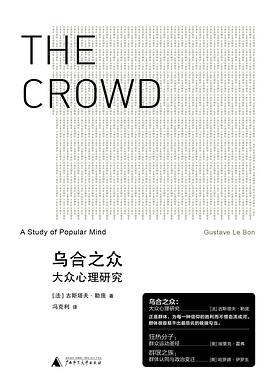
乌合之众 豆瓣
Psychologie des foules
6.7 (25 个评分) 作者: 古斯塔夫·勒庞 (Gustave Le Bon) 译者: 冯克利 广西师范大学出版社 2015 - 1
本书为社会心理学领域的经典著作,至今已被翻译成大约20 种语言出版。作者以十分简约的方式,考察了群体的特殊心理与思维方式,尤其对个人与群体的迥异心理进行了精辟分析。
领袖的影响力只在很小的程度上是出于他们提出的论据,而在很大程度上来自他们的名望。享有足够名望的领袖几乎掌握着绝对权力。
用刀剑成就的事情,同样可以通过言语的力量达到。像不义之财、卑鄙的剥削者、可敬的劳工、财富的社会化之类的说法,总能打动选民的心,尽管它们已经被用得有些陈腐。
教育既不会使人变得更道德,也不会使他更幸福;它既不能改变他的本能,也不能改变他天生的热情,而且有时——只要进行不良引导即可——害处远大于好处。
群体中的个人不再是他自己,他变成了一个不受自己意志支配的玩偶。孤立的他可能是个有教养的个人,但在群体中他却变成了野蛮人——即一个行为受本能支配的动物,他表现得身不由己,残暴而狂热。
群体没有逻辑推理能力,不能辨别真伪或对任何事物形成正确的判断。群体所接受的判断,仅仅是强加给他们的判断,而绝不是经过讨论后得到采纳的判断。
经典之为经典,就在于其永远不会过时。个人到群体的变化总是叫人难以理解、难以置信,此书的解释,或能稍解你的困惑。
2023年1月7日 已读
2025/12/25 过了三年重新整理当时的划线,发现我这三年不是白过的。再读其中片段的时候这爹味直冲天灵盖,全文都是精英主义式居高临下的批判视角,而且也没“精英”出什么逻辑来。“群体”确实是一种特别的心理现象,也容易被政治利用,历史已经反复证明这一点,但比起简单的批判我更好奇其成因(y染色体扮演了多少角色?)以及什么样的制度可以限制一个群体可能造成的破坏。

2023/01/08 译后记和序都评价得比较客观。观点还是值得阅读的,尽管论述确实漏洞太多。
社科 心理 政治
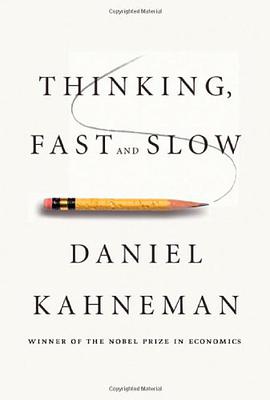
Thinking, Fast and Slow 豆瓣 Goodreads
Thinking, Fast and Slow
8.3 (35 个评分) 作者: Daniel Kahneman Farrar, Straus and Giroux 2011 - 10
Major New York Times bestseller
Winner of the National Academy of Sciences Best Book Award in 2012
Selected by the New York Times Book Review as one of the best books of 2011
A Globe and Mail Best Books of the Year 2011 Title
One of The Economist’s 2011 Books of the Year
One of The Wall Street Journal's Best Nonfiction Books of the Year 2011
In the international bestseller, Thinking, Fast and Slow, Daniel Kahneman, the renowned psychologist and winner of the Nobel Prize in Economics, takes us on a groundbreaking tour of the mind and explains the two systems that drive the way we think. System 1 is fast, intuitive, and emotional; System 2 is slower, more deliberative, and more logical. The impact of overconfidence on corporate strategies, the difficulties of predicting what will make us happy in the future, the profound effect of cognitive biases on everything from playing the stock market to planning our next vacation—each of these can be understood only by knowing how the two systems shape our judgments and decisions.
Engaging the reader in a lively conversation about how we think, Kahneman reveals where we can and cannot trust our intuitions and how we can tap into the benefits of slow thinking. He offers practical and enlightening insights into how choices are made in both our business and our personal lives—and how we can use different techniques to guard against the mental glitches that often get us into trouble. Winner of the National Academy of Sciences Best Book Award and the Los Angeles Times Book Prize and selected by The New York Times Book Review as one of the ten best books of 2011, Thinking, Fast and Slow is destined to be a classic.
One of the New York Times Book Review's Top 10 Books of 2011
Editorial Reviews
Amazon.com Review
Amazon Best Books of the Month, November 2011: Drawing on decades of research in psychology that resulted in a Nobel Prize in Economic Sciences, Daniel Kahneman takes readers on an exploration of what influences thought example by example, sometimes with unlikely word pairs like "vomit and banana." System 1 and System 2, the fast and slow types of thinking, become characters that illustrate the psychology behind things we think we understand but really don't, such as intuition. Kahneman's transparent and careful treatment of his subject has the potential to change how we think, not just about thinking, but about how we live our lives. Thinking, Fast and Slow gives deep--and sometimes frightening--insight about what goes on inside our heads: the psychological basis for reactions, judgments, recognition, choices, conclusions, and much more. --JoVon Sotak
Review
“A tour de force. . . Kahneman’s book is a must read for anyone interested in either human behavior or investing. He clearly shows that while we like to think of ourselves as rational in our decision making, the truth is we are subject to many biases. At least being aware of them will give you a better chance of avoiding them, or at least making fewer of them.”—Larry Swedroe, CBS News
“Daniel Kahneman demonstrates forcefully in his new book, Thinking, Fast and Slow, how easy it is for humans to swerve away from rationality.”—Christopher Shea, The Washington Post
“An outstanding book, distinguished by beauty and clarity of detail, precision of presentation and gentleness of manner. Its truths are open to all those whose System 2 is not completely defunct. I have hardly touched on its richness.”— Galen Strawson, The Guardian
“Brilliant . . . It is impossible to exaggerate the importance of Daniel Kahneman’s contribution to the understanding of the way we think and choose. He stands among the giants, a weaver of the threads of Charles Darwin, Adam Smith and Sigmund Freud. Arguably the most important psychologist in history, Kahneman has reshaped cognitive psychology, the analysis of rationality and reason, the understanding of risk and the study of happiness and well-being . . . A magisterial work, stunning in its ambition, infused with knowledge, laced with wisdom, informed by modesty and deeply humane. If you can read only one book this year, read this one.”— Janice Gross Stein, The Globe and Mail
“A sweeping, compelling tale of just how easily our brains are bamboozled, bringing in both his own research and that of numerous psychologists, economists, and other experts...Kahneman has a remarkable ability to take decades worth of research and distill from it what would be important and interesting for a lay audience...Thinking, Fast and Slow is an immensely important book. Many science books are uneven, with a useful or interesting chapter too often followed by a dull one. Not so here. With rare exceptions, the entire span of this weighty book is fascinating and applicable to day-to-day life. Everyone should read Thinking, Fast and Slow.” —Jesse Singal, Boston Globe
“We must be grateful to Kahneman for giving us in this book a joyful understanding of the practical side of our personalities.” —Freeman Dyson, The New York Review of Books
“Brilliant . . . It is impossible to exaggerate the importance of Daniel Kahneman’s contribution to the understanding of the way we think and choose. He stands among the giants, a weaver of the threads of Charles Darwin, Adam Smith and Sigmund Freud. Arguably the most important psychologist in history, Kahneman has reshaped cognitive psychology, the analysis of rationality and reason, the understanding of risk and the study of happiness and well-being . . . A magisterial work, stunning in its ambition, infused with knowledge, laced with wisdom, informed by modesty and deeply humane. If you can read only one book this year, read this one.” — Janice Gross Stein, The Globe and Mail
“It is an astonishingly rich book: lucid, profound, full of intellectual surprises and self-help value. It is consistently entertaining and frequently touching, especially when Kahneman is recounting his collaboration with Tversky . . . So impressive is its vision of flawed human reason that the New York Times columnist David Brooks recently declared that Kahneman and Tversky’s work ‘will be remembered hundreds of years from now,’ and that it is ‘a crucial pivot point in the way we see ourselves.’ They are, Brooks said, ‘like the Lewis and Clark of the mind’ . . . By the time I got to the end of Thinking, Fast and Slow, my skeptical frown had long since given way to a grin of intellectual satisfaction. Appraising the book by the peak-end rule, I overconfidently urge everyone to buy and read it. But for those who are merely interested in Kahenman’s takeaway on the Malcolm Gladwell question it is this: If you've had 10,000 hours of training in a predictable, rapid-feedback environment—chess, firefighting, anesthesiology—then blink. In all other cases, think.”—The New York Times Book Review
“Ask around and you hear pretty much the same thing. 'Kahneman is the most influential psychologist since Sigmund Freud,' says Christopher Chabris, a professor of psychology at Union College, in New York. 'No one else has had such a broad impact on so many fields' . . . It now seems inevitable that Kahneman, who made his reputation by ignoring or defying conventional wisdom, is about to be anointed the intellectual guru of our economically irrational times.”— Evan R. Goldstein, The Chronicle of Higher Education
“There have been many good books on human rationality and irrationality, but only one masterpiece. That masterpiece is Daniel Kahneman’s Thinking, Fast and Slow . . . This is one of the greatest and most engaging collections of insights into the human mind I have read.”—William Easterly, Financial Times
“[Thinking, Fast and Slow] is wonderful, of course. To anyone with the slightest interest in the workings of his own mind, it is so rich and fascinating that any summary would seem absurd.”— Michael Lewis, Vanity Fair
“Absorbingly articulate and infinitely intelligent . . . What's most enjoyable and compelling about Thinking, Fast and Slow is that it's so utterly, refreshingly anti-Gladwellian. There is nothing pop about Kahneman's psychology, no formulaic story arc, no beating you over the head with an artificial, buzzword-encrusted Big Idea. It's just the wisdom that comes from five decades of honest, rigorous scientific work, delivered humbly yet brilliantly, in a way that will forever change the way you think about thinking.”—Maria Popova, The Atlantic
“I will never think about thinking quite the same. [Thinking, Fast and Slow] is a monumental achievement.”—Roger Lowenstein, Bloomberg/Businessweek
“Profound . . . As Copernicus removed the Earth from the centre of the universe and Darwin knocked humans off their biological perch, Mr. Kahneman has shown that we are not the paragons of reason we assume ourselves to be.” —The Economist
“[Kahneman’s] disarmingly simple experiments have profoundly changed the way that we think about thinking . . . We like to see ourselves as a Promethean species, uniquely endowed with the gift of reason. But Mr. Kahneman’s simple experiments reveal a very different mind, stuffed full of habits that, in most situations, lead us astray.” —Jonah Lehrer, The Wall Street Journal
“[A] tour de force of psychological insight, research explication and compelling narrative that brings together in one volume the high points of Mr. Kahneman's notable contributions, over five decades, to the study of human judgment, decision-making and choice . . . Thanks to the elegance and force of his ideas, and the robustness of the evidence he offers for them, he has helped us to a new understanding of our divided minds—and our whole selves.” —Christoper F. Chabris, The Wall Street Journal
“The ramifications of Kahenman’s work are wide, extending into education, business, marketing, politics . . . and even happiness research. Call his field “psychonomics,” the hidden reasoning behind our choices. Thinking, Fast and Slow is essential reading for anyone with a mind.” —Kyle Smith, The New York Post
“A major intellectual event . . . The work of Kahneman and Tversky was a crucial pivot point in the way we see ourselves.” —David Brooks, The New York Times
“Kahneman provides a detailed, yet accessible, description of the psychological mechanisms involved in making decisions.” —Jacek Debiec, Nature
“With Kahneman’s expert help, readers may understand this mix of psychology and economics better than most accountants, therapists, or elected representatives. VERDICT A stellar accomplishment, a book for everyone who likes to think and wants to do it better.” —Library Journal
“The mind is a hilariously muddled compromise between incompatible modes of thought in this fascinating treatise by a giant in the field of decision research. Nobel-winning psychologist Kahneman (Attention and Effort) posits a brain governed by two clashing decision-making processes. The largely unconscious System 1, he contends, makes intuitive snap judgments based on emotion, memory, and hard-wired rules of thumb; the painfully conscious System 2 laboriously checks the facts and does the math, but is so "lazy" and distractible that it usually defers to System 1. Kahneman uses this scheme to frame a scintillating discussion of his findings in cognitive psychology and behavioral economics, and of the ingenious experiments that tease out the irrational, self-contradictory logics that underlie our choices. We learn why we mistake statistical noise for cohere...
阿斯伯格综合征完全指南 豆瓣 Goodreads
The Complete Guide to Asperger's Syndrome
8.2 (46 个评分) 作者: [英]Tony Attwood 译者: 燕原 / 冯斌 华夏出版社 2012 - 8
作为世界知名的阿斯伯格综合征领域的临床心理学家,作者托尼•阿特伍德博士多年来一直致力于从事临床诊断与咨询的工作,经他诊断和治疗的各年龄段的阿斯伯格综合征人士多达几千人。他还在世界各地为阿斯伯格综合征人士和家长以及专业人士举办各种讨论和学习班,帮助了许多阿斯伯格综合征人士 和他们的家庭。
在《阿斯伯格综合征完全指南》中,作者以浅显易懂的语言介绍了阿斯伯格综合征的病因、特征,阿斯伯格综合征人士的特殊兴趣和认知、情感、运动、语言等方面的特点,以及他们与众不同的能力和在社交方面存在的困难。作者根据自己的临床经验,提出了针对这一群体的治疗方案和干预措施,以帮助他们创设一个适合于学习、生活的环境,更好地融入社会。
本书第一版自2006年问世以来,一直受到英语国家的家长、教师和专业人士的关注,并被译成二十多种文字,畅销世界多个国家。中文简体版的译自2008年的平装英文版。
译者简介
燕原,北京人,1993年毕业于清华大学应用物理系,1996年移居美国,1999年在美国获得物理学博士学位,目前在家教育孩子并从事一些公益活动。育有两子。长子出生于1999年,具有典型阿斯伯格综合征特征,从2009年开始在家读书至今。译著《我心看世界——天宝解析孤独症谱系障碍》已于2012年由华夏出版社出版。
冯斌,浙江杭州人,1986年毕业于华东师范大学物理系,1992年移居美国,并获得物理学及计算机科学硕士学位。育有一子一女,长子出生于1999年,三岁半时被诊断为孤独症,在美国就读于特殊学校至今。自长子被诊断以来,长期担任以琳自闭症论坛(http://new.elimautism.org)的版主及志愿者,为国内的家长提供了丰富的资源和信息。以其教育子女日记为蓝本的《林中鸟儿唱不停》即将由华夏出版社出版。
运气的诱饵 豆瓣 Goodreads
Addiction by Design: Machine Gambling in Las Vegas
8.7 (30 个评分) 作者: [美] 娜塔莎·道·舒尔 译者: 李奇 民主与建设出版社 2021 - 12
凭借近二十年的深入田野工作和人类学家的辛辣眼光,作者一层层地呈现了博彩行业、赌博者个体和现代社会基本理念的全景:
·赌博业为不断盈利并掌控消费者,精益求精地研究方方面面细节:机器算法、道路形制、室内灯光、屏幕角度、取款手段、会员追踪技术乃至急救措施……
·背负着生活压力、身心病痛、情感变故的赌博者,为何又如何一步步深陷赌博机营造的迷幻境地不可自拔,哪怕他们就是赌场雇员甚至赌博机设计师;
·一个个原子化现代个体在“全权为自己负责”的无尽重压下,面对购物、运动、聊天、刷剧、烟酒、药物、加班等万事万物时,都可能无力抵抗诱惑,而戒赌的方法和陷入赌瘾的途径,乃是同一条路……