自助
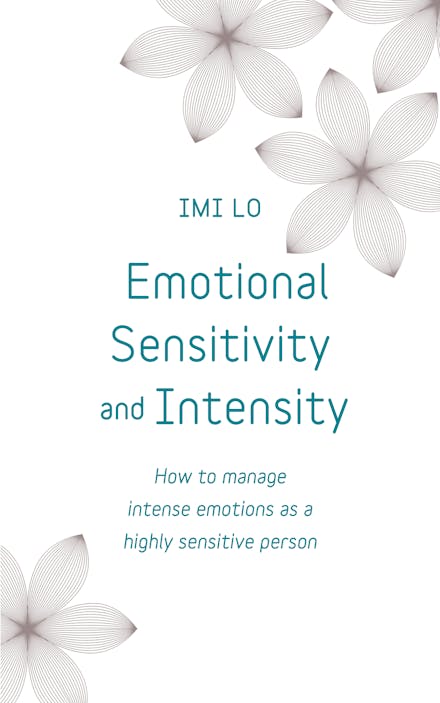
Emotional Sensitivity and Intensity Goodreads
作者: Imi Lo Teach Yourself 2018 - 5
Do you feel you experience life more vividly than others?
Do people sometimes describe you as emotionally intense or oversensitive?
Do your emotions soar high and plunge so quickly that you feel you can't keep up?

This book is for you. Learn how to cope with intense feelings, and discover how to use your sensitivity, empathy and intelligence to live a meaningful and fulfilling life.
Emotional Sensitivity and Intensity will give you in-depth information about this trait, as well as practical exercises and strategies to help with your daily struggles.

It will help you come to new ways of thinking about your past, thrive in your current life, and create exciting possibilities for the future. Written in a friendly and compassionate tone, the chapters will answer questions raised by many emotionally intense

Is there something wrong with me?
How does this trait explain my life experiences so far?
What can I do right now to better my life and to fulfil my potential?

You will learn
- Understand what it means to live with emotional sensitivity and intense feelings
- Debunk the myths and stereotypes about this trait
- Let go of old emotional baggage and limiting mindsets
- Develop real resilience and find peace within life's ups and downs
- Navigate challenging social and family situations
- Build healthy and fulfilling intimate relationships
- Find your unique calling and liberate your creative potential
2025年1月26日 已读
2024/12/30-2025/01/26
我一直以为自己是一个高敏感人,但读这本书让我怀疑起我的自我认识。我有一些高敏感人的特质:共情能力强、容易感动、内向,但我完全不符合作者描述的高敏人的成长经历,甚至感觉自己在她描述的另一端(这都得感谢我妈,在我成人以前我都没有意识到一个健康的童年有多么难得)。而且作者的写法很奇怪,有种我高中写第一篇论文时候的生硬感,读起来体验不是很好。

不过说到底“高敏感”也只是一个标签而已,人是一个复杂的多面体,高敏特质只是其中一个切面,我不期待从这个标签中找到对自我经历的解释从而解放自己。反倒是揭开这个标签让我感到更加自由。

尽管阅读途中我发现自己可能不是这本书的target audience,也还是从里面学到了一些:
- 和世界的关系: me vs them的mindset并不可取,要学会在这个世界里表露真实的自我。
- 更客观地审视我的personal narrative,我对自己的认识只是a map of the territory,危险的是我们的潜意识会让我们过滤信息,只接受符合自己认知的信息,筛掉所有不符合自我认知的部分,这会让我们越活越窄,在这种bias reinforcement的过程中变得趋近于the story I tell myself. 要提醒自己:我对自己的认识只是一种幻象。也可以利用这个方法来实现我想要达成的改变,比如告诉自己risk is not a bad thing, fear gives me excitement and an opportunity to shine.
- 和情绪的关系: 不要对抗情绪。客观地观察情绪,感受它的flow。
- 作为一个creator (to be)要提醒自己我创造是为了表达,而不是为了获取认可。作为一个曾经的写作者我记得自己一直都非常emotionally attached to how people view my work,并且以此来评价自己的每一份作品。这其实非常伤害我的创造力。今年开始学习摄影,需要提醒自己我学摄影不是为了得到别人的肯定,而是为了表达自己。
自助 心理 非虚构
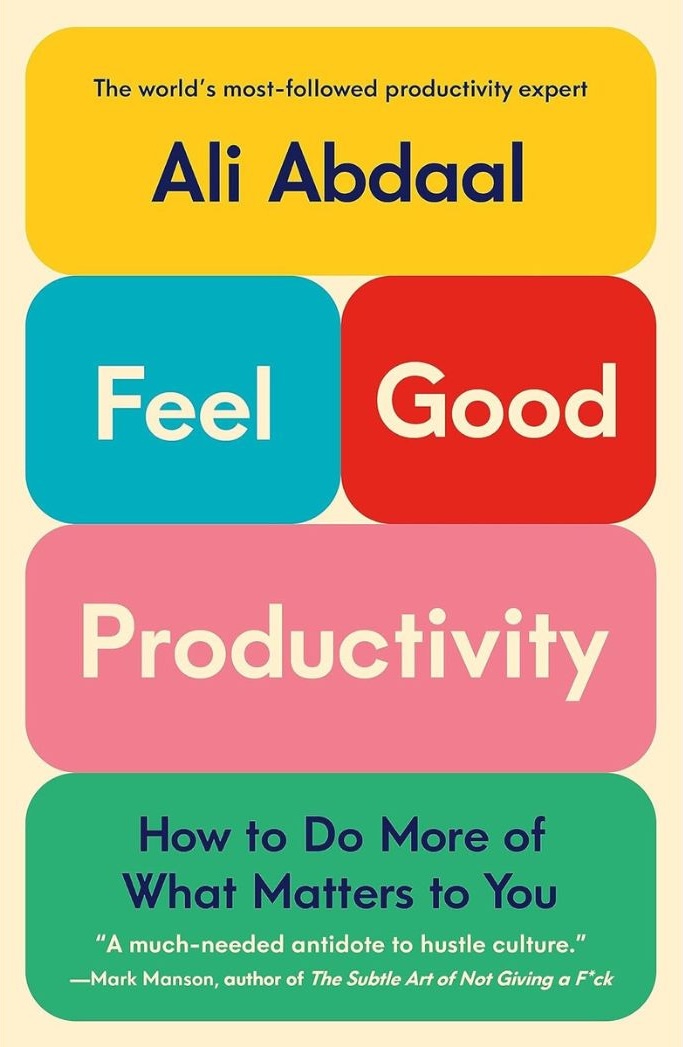
Feel-Good Productivity 豆瓣 Goodreads
作者: Ali Abdaal Celadon Books 2023 - 12 其它标题: Feel-Good Productivity: How to Do More of What Matters to You
The secret to productivity isn’t discipline. It’s joy.
We think that productivity is all about hard work. That the road to success is lined with endless frustration and toil. But what if there’s another way?
Dr Ali Abdaal – the world's most-followed productivity expert – has uncovered an easier and happier path to success. Drawing on decades of psychological research, he has found that the secret to productivity and success isn't grind – it's feeling good. If you can make your work feel good, then productivity takes care of itself.
In this revolutionary book, Ali reveals how the science of feel-good productivity can transform your life. He introduces the three hidden 'energisers' that underpin enjoyable productivity, the three 'blockers' we must overcome to beat procrastination, and the three 'sustainers' that prevent burnout and help us achieve lasting fulfillment. He recounts the inspiring stories of founders, Olympians, and Nobel-winning scientists who embody the principles of Feel-Good Productivity. And he introduces the simple, actionable changes that you can use to achieve more and live better, starting today.
Armed with Ali’s insights, you won’t just accomplish more. You’ll feel happier and more fulfilled along the way.
2025年1月9日 已读
2024/12/30-2025/01/03
看Ali的视频已经很多年了,之前写过: Every time I watch Ali’s videos, it feels like a therapy session. They provide a steady, lasting sense of motivation—not a fleeting burst that fades quickly, but a gentle, persistent push that slowly becomes part of me. Watching them leaves me feeling more at peace with my life.

看这本书也还是这个感受。只给及格分是因为如果follow他的视频的话书里没有太多的新内容,而这些框架其实通过视频可以诠释得更好。在新年的一月读这本感觉很合适。

nevertheless还是能整理出一些自我管理的技巧和方法,记录在评论里了。
2025年1月23日 评论 Feel-Good Productivity - Snippets - A player's mindset Curiosity When we’re kids, our days are filled with a sense of adventure. We explore every inch of the garden, we race through shopping malls, we climb trees, and we swing from branches. We’re not striving for goals or trying to boost our resume. We’re following our curiosity and enjoying activities without worrying about results. But as we get older, this spirit of adventure gets slowly squeezed out of us. Link ✏️ Should I think about “reading a paper a week” as an opportunity to explore an interesting idea rather than a task/step stone to developing my career? Everything I do should be driven by curiosity instead of external motivation. One Zen concept that came up time and again in Jackson’s coaching practices was the Japanese word shoshin, which roughly translates as ‘beginner’s mind’. Shoshin refers to a state of mind in which we approach every task and situation with the curiosity, openness and humility of a beginner . Link Audacity (Confidence) In WoW I’ve never been Ali Abdaal, the slightly nerdy schoolkid with zero sporting ability and confidence issues. I’ve always been Sepharoth, the tall, handsome Blood Elf Warlock with billowing purple robes and an army of demons at my command. Play allows us to take on different roles or personas , whether we’re becoming a character in WoW or acting out an imaginary scene with friends in the playground. These characters allow us to express different aspects of ourselves and transform our experiences into something more enjoyable. When you take on a different persona, you start to find adventure. Link My favourite method involves what I call ‘flipping the confidence switch’; in other words, challenging yourself to behave as if you’re confident in your task, even if you’re not. The method is even more simple than it sounds. The next time you’re not feeling good enough to take a chance, simply ask yourself, ‘What would it look like if I were really confident at this? What would it look like if I approached this task feeling confident that I could do it?’ Link Imagine what your life would look like if you received five proverbial points for failing, rather than losing five like in the experiment. Imagine what would happen if people cheered you on for a little stumble rather than humiliated you. Imagine how you’d approach things if you treated them as experiments, where failure would be just as valuable as success. Might you now see the game of life slightly differently? Suddenly, the stakes are lower. And suddenly, you can afford to play around a little. Link ✏️ Make this one of my goals - fail more often. Make a start, even if it's a shaky one . You won’t need to get perfect for a long time yet. Link Learning In identical circumstances, with identical material, the people who had to teach others about a subject would learn the material better themselves. The researchers named this phenomenon the ‘protégé effect’. Link ✏️ Try to explain new concepts to other people Relationships These random acts of kindness offer the first way to integrate the helper’s high into our day-to-day lives. By stopping what you’re doing and offering help to people at random, you can boost your endorphin levels and help yourself work harder. Link The helper’s high also shows us that asking for help from others can actually be a gift to them , rather than the burden we usually assume it will be. Link How to overcome uncertainty There are a handful of processes that reinforce the loop between uncertainty, anxiety and paralysis: We overestimate what’s at stake. Someone who’s already anxious will think that the uncertain event is going to be worse than it already is. We become hypervigilant. Sensing that something negative might happen, our safety antennae prick up to the sign of any potential danger. Link ✏️ 在自习室播客里听到过:看恐怖片最恐怖的时候就是不知道鬼是谁、鬼在什么时候出现,这种对未知的恐惧。一个可以参考的办法:想象最糟糕最恐怖的事情,做好最糟糕的心理准备,当你回头的时候就发现鬼也没有这么可怕了。 Technique: Commander's Intent Flesh out the following: The purpose behind the operation The end state that the commander was aiming for The key tasks that the commander felt should be taken to accomplish the objective Link Today, I apply this insight to my own life every day. Previously, when I embarked on a project my instinct was to immediately press ahead, planning every step – without ever really thinking about my desired end-state. But this level of obsessive planning can prove an obstacle. I would get so bogged down in ticking off specific tasks that I would lose track of what the ultimate point was. So now, before embarking on a new project, I ask myself the first commander’s intent question: ‘What is the purpose behind this?’ And I build my to-do list from there. Link Goal setting Prioritise When you’ve got a large degree of choice in what you could be doing with your time, it makes it a lot harder to commit to something in a given time slot. Our brain is always thinking, ‘I’m working on X right now, but maybe I could be working on Y, or possibly even Z.’ This is risky; if you’re doing a house renovation while working on a huge project at work, while also trying to learn Japanese, while also trying to get your blog off the ground, while also trying to coach your kids’ football team, everything is going to feel a lot more stressful. Sustainable productivity means recognising the limitations on our time. Link ✏️ Pick one thing and commit to it. Separate out the "planning" and the "doing" and clear my brain's RAM under the "doing" mode. 📚 Related: [[Mindset 20240727-1207#The waiting room will never be empty]] The "Hell yeah or no" trick When you find yourself weighing up whether to take on a new project or commitment, you’ve got two options – either ‘hell yeah’ or ‘no’. There’s no in between. With this filter, you start finding that 95 per cent of commitments are ones you should reject. Rarely are things a ‘hell yeah’. They’re usually along the lines of ‘This could conceivably be useful or semi-interesting, so yeah, why not?’ These are justifications from your brain that you need to overrule . Think about how much you have on already. If it isn’t a ‘hell yeah’, it’s not worth doing. Link ^6a6a17 Setting NICE (not SMART) goals My preferred method doesn’t involve fixating on an external outcome or destination, but instead emphasises the feel-good journey. It’s based on what I call NICE goals. Near-term : Near-term goals ensure that we’re concentrating on the immediate steps we need to take along our journey. They help us avoid being overwhelmed by the bigger picture. I find that a daily or weekly objective is the most helpful time horizon. Input-based : Input-based goals emphasise the process, rather than some distant, abstract end-goal . Whereas an output-based goal would home in on the end result: ‘Lose 5kg by the end of the year’, ‘Hit the bestseller list with my book’, an input-based goal would focus on what we can do in the here and now: ‘Go for a ten-minute walk everyday’, ‘Write 100 words each morning for my novel’. Controllable : We want to focus on goals that are within our control. ‘Spend eight hours a day on my novel’ probably isn’t something you can actually do, since many external factors would have to come together for such an input to be possible. Setting a more genuinely controllable goal (like allocating twenty minutes per day to the task) is far more realistic. Energising : We’ve already discussed plenty of principles and strategies for making our projects, tasks and chores more energising. Is there a way to integrate play, power and people into the goals you set yourself? Link SMART goals can be used for long-term objectives and NICE goals tell you how to get there. Examples: SMART NICE Fitness Lose 20 pounds within the next three months. Exercise for 30 minutes daily, focusing on activities that are enjoyable and manageable. Career Get a promotion to a senior management position within two years. Dedicate an hour each week to improving one key skill or networking with industry professionals. Education Complete a Master’s degree in two years. Spend 30 minutes each day reviewing course material and work on assignments in manageable chunks. Crystal ball method For tough goals that you may struggle to attain, use the crystal ball method: Imagine it’s one week later, and you haven’t actually started the task you intended to. What are the top three reasons why you didn’t get to it? What can you do to help mitigate the risk of those top three reasons derailing you? Who can you ask for help in sticking to this commitment? What action can you take right now that will help increase the odds that you’ll actually do the task? Link By running through what could go wrong in your head, you dramatically reduce the likelihood that it actually will. Get the momentum going We’re not going to leave a conversation without you having at least one, two or three actions to take.’ ‘Is that it?’ I thought. Is coming up with ‘one, two or three actions’ really enough to turn around a business? And then I reflected on my own life. All too often, my difficulty making things happen is that I don’t have a set of clear, simple steps to follow right now . Hence inertia. And hence procrastination. Mochary calls his principle the ‘bias to action’. Link 📚 Related: [[Wait But Why Year One#19. How to Beat Procrastination]] Don't beat yourself up too hard When we’re failing to maintain momentum on a task, we tend to beat ourselves up. But this helps nobody. If anything, it makes things worse. The inertia drives a sense of self-loathing. And that sense of self-loathing makes us even less likely to do anything fruitful. Is there a way to break this doom-loop? As Wohl and his colleagues found, forgiving ourselves is the escape hatch. But how? Perhaps my favourite way is a method I call Find the Win. It involves celebrating something, however small, and however unrelated to your work. I like to use the format: ‘I didn’t do X, but I did do Y.’ Examples: I didn’t go for that early-morning workout session today. But I did get an extra hour in bed and I’m feeling more refreshed than usual. I didn’t finish the last part of that report. But it was for a good reason. I chatted with a colleague in the staff kitchen and we had a lovely catch-up. I didn’t finish that job application today. But I got to spend time with my grandma instead, so that’s a win for today. Link 📚 Related: [[Mindset 20240727-1207]] ‘I’ve spent five minutes on social media; I might as well continue to do so for the next three hours.’ ‘I missed my morning workout; I guess today is a write-off, and I’ll just binge-watch TV instead of getting anything done.’ ‘I skipped a day of my language learning app streak, so I might as well give up on learning the language altogether.’ Failing with abandon is a common reason we waste vast amounts of energy. The key thing is getting back on course. Link Alignment Quests: Long-term goals/values in everyday behaviour/deicisons [The] final ingredient in alignment involves a mindset shift: from thinking about our values at the level of lifetimes and years, to thinking about our values at the level of daily choices. The question is how. We all make decisions every day that take us away from our values. The person who values freedom, but stays in a controlling job waiting for their shares to vest. The person who values close relationships, but spends most of their time working and neglects time with family and friends. These are instances where daily decisions don’t align with what we most desire. But with the right tools, we can subtly shift ourselves back towards the things that matter the most, and in turn sustain our productivity (and enrich our lives) for longer. [Every day, when you sit down to begin work, look at your vision board or 1 year goals. Then] under each of the areas (of health, work and relationships), choose one subcategory to focus on. Examples: H: Gym session 15.30–16:30 W: Make progress in writing Chapter 9 R: Call Nani (my grandma) Link ✏️ “仰望星空,脚踏实地” How to overcome fear A simple way to put cognitive reappraisal into practice is to remind yourself that the thing you’re feeling so bad about probably won’t matter that much in the future. You can do this by asking yourself the following three questions, which add up to what I call the 10/10/10 rule . Ask yourself: Will this matter in 10 minutes? Will this matter in 10 weeks? Will this matter in 10 years? Link Example: Trigger: You don’t get hired for a job. Will this matter in 10 min? Probably. I might feel pretty low for the rest of the day. Will this matter in 10 weeks? Probably not, because I’m going to apply to a bunch of other jobs by then. Will this matter in 10 years? Definitely not. Few people become successful in their careers without any setbacks and I’ll learn to see this as one small hiccup. Link Take rest/recovery Every day, before starting work, I think about when I’ll be feeling most overexerted and I time-block fifteen minutes out at the slots when I think I’ll most need it. And whenever I’m tempted to push through it, I remember the science of self-regulation – and that the harder you work, the more overexerted you become. And I remind myself of the importance of rest – even when you don’t think you need it. Link Try this simple experiment. Set a timer for five minutes and make two lists. The first is a list of things you tend to do when you’re feeling drained of energy. The second is a list of things that tend to actually recharge that energy. If you’re anything like me, you might find that the two lists look very different. Link Things that I do when drained of energy Things that actually energise me Scrolling social media Go for a walk Lie on the sofa and search endlessly for a random movie to watch on Netflix Do some yoga or stretching Scroll through Twitter, feeling incensed about what’s going on in the world Head to the gym for a quick workout Order an unhealthy takeaway Reach out to a friend and suggest grabbing dinner 📚 Related: [[Recovery Routines]]
自助 效率 心理
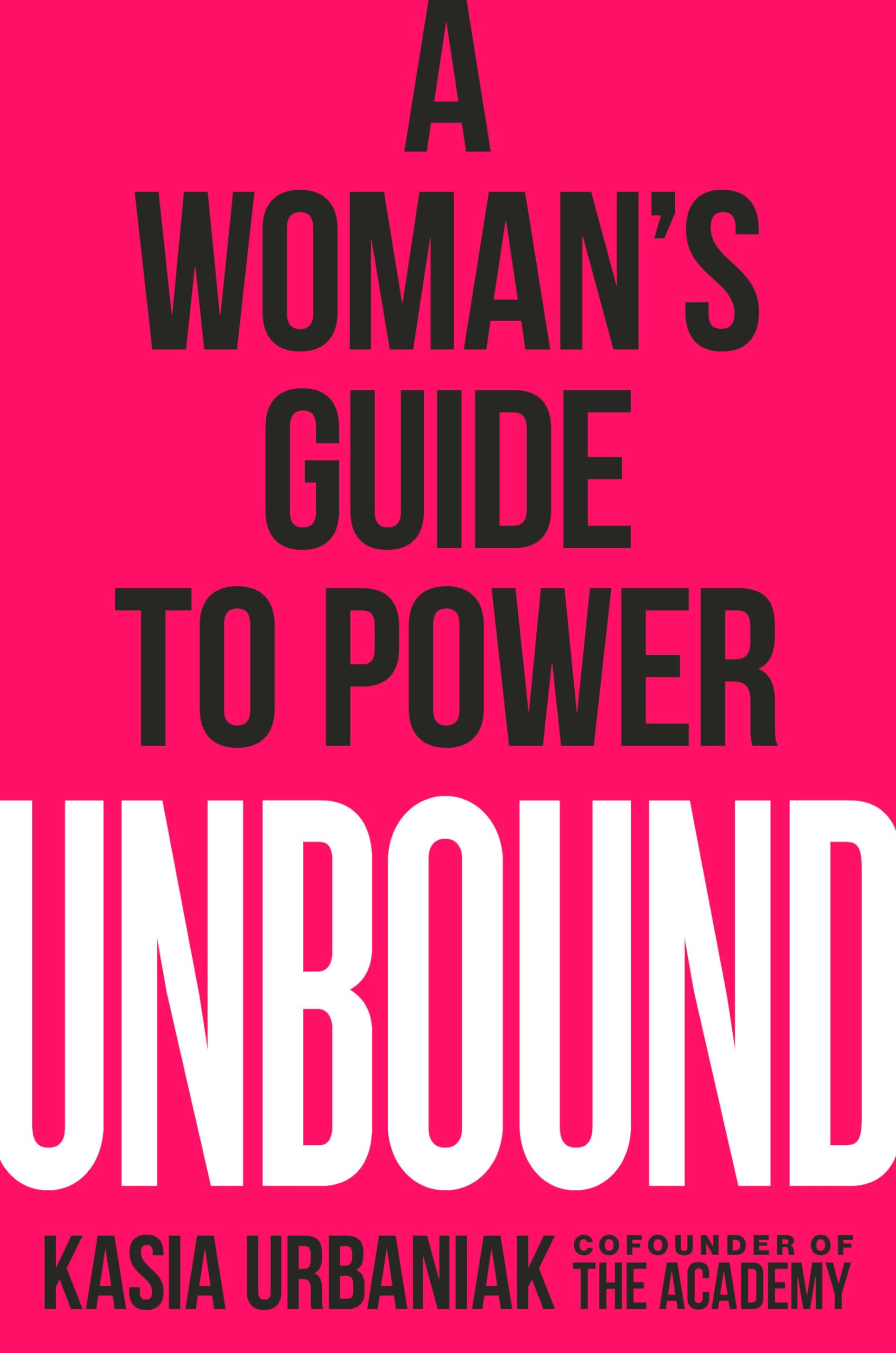
Unbound: A Woman’s Guide To Power Goodreads 豆瓣
作者: Kasia Urbaniak Vermilion 2021 - 3
<b>Electrifying lessons in power, influence and persuasion to equalise women in an unequal world, from former dominatrix and nun turned sought-after coach</b><br /><br />Kasia Urbaniak spent 17 years studying to become a Taoist nun. To foot the bill for her studies, she worked as a high-paid (and extremely successful) dominatrix in dungeons around New York City. What she learned in these two wildly different settings has turned into her life’s work.<br /><br /><b>UNBOUND </b>brings Urbaniak’s unique teachings for women on speaking power, persuading others and navigating conflict to a mainstream audience for the first time. Part polemic, part practical, it opens women’s eyes to why they frequently find it so difficult – personally, professionally and socially – to raise their voices, why they freeze in challenging circumstances and what they can do to change this. Too often women find themselves in the role of ‘sub’ when they need to be more ‘dom’ – in short they are paralysed by their Good Girl Syndrome and a deep-seated need to please everyone and anyone except themselves.<br /><br /><b>UNBOUND </b>shows women how to cut through layers of self-censoring and self-doubt to direct and command attention so they can express – and get – what they really think, feel, need and want.
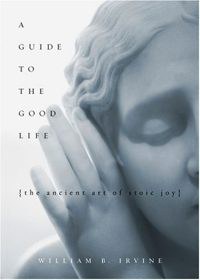
A Guide to the Good Life 豆瓣 Goodreads
作者: William B. Irvine Oxford University Press 2008 - 11
Reading the book, I had no trouble understanding how negative visualization could be an effective antidote against "hedonic adaptation." By imagining ourselves to be homeless, for instance, we can reset our desire for a more luxurious home and once again appreciate the roof over our head that we started taking for granted shortly after moving in.
快眠大全 豆瓣
働く人の疲れをリセットする 快眠アイデア大全
作者: [日]菅原洋平 译者: 戚蕊 江西科学技术出版社 2022 - 11
睡眠是我们人生中非常重要的一件事,但从小到大我们却从未学习过有关科学睡眠的知识。
来自日本知名睡眠医生、睡眠指导师的123个高效休息法,帮你终结“ 身心脑” 疲劳,轻松实现快速入眠、睡个好觉。本书从地点、饮食、洗澡方法、光线、运动、睡眠计划、身心管理等7个方面全方位解读导致睡眠障碍的原因,让你能找到原因,对症解决。无论你是晚上睡不着、早上起不来、白天容易犯困,还是半夜醒后无法再次入睡,解决各种睡眠障碍的方法都能在书中找到答案。随书附赠“1周睡眠记录表”,让你轻松了解并调整自己的睡眠状态。
2024年10月12日 已读
2024/10/11-2024/10/12
daylight saving以后连续一周都只睡6个小时了,决定趁这个契机读这本。因为之前已经了解过不少关于睡眠的养生知识所以没有什么新收获。

比较喜欢作者的practical focus,比起严格follow scientific guidelines更鼓励大家寻找what works the best for yourself. 对于我这样的J/P摇摆性格很适用:
- 以两周为单位调整昼夜节律,一周内实践四天以上即可
- 在周末熬夜会使睡眠节律紊乱,但如果你会因此感到快乐,那就在合适的时间,好好享受这种快乐吧。需要注意的是,我们可以有意识地决定“今晚要熬夜”,但要避免这些情况在无意识中发生
- 睡眠时间的增加不必以小时为单位,坚持每天提前x分钟睡觉

由此出发计划一个DST以后新的routine:
- [9:30-10pm] shower
- [10-11pm] 睡前学习,随便什么
- 11pm in bed / 睡觉之前,说3遍第二天起床的时间
- 7am wake up

还有一些听上去神神叨叨不知道有用没用的tips:
- 试着洗澡后用冷热水交替冲洗膝盖以下部位。这一方法可以锻炼身体从距离最远的脚部吸收水分的能力,进而保证脑部供血充足
- 利用睡前放松的时间,试着把腿抬至比腰高的位置。大约持续10分钟,之后去上个厕所,再睡觉
养生 自助 睡眠