psychology
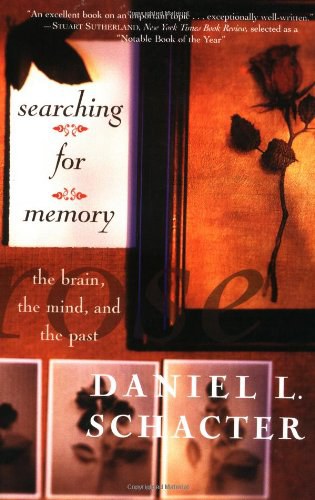
Searching For Memory Douban
author: Daniel L. Schacter publishing house: Basic Books 1997 - 5
Over the past two decades scientists have made remarkable breakthroughs in understanding how memories are stored and retrieved, and with this knowledge they are beginning to understand the mysteries of the human mind. How can we perform tasks such as playing the piano or typing in such a way that we do not need to consciously direct each movement every step of the way? Why can we forget where we put our keys and yet remember events that happened long ago? Why is memory imperfect, and sometimes dead wrong? Daniel Schacter has been at the forefront of the research, and Searching for Memory is his firsthand account of what we now know and what it means. With references to art and autobiography and fascinating case studies, a la Oliver Sacks, he explains how one's past experiences influence the formation of new memories, how and why memory changes as people age, and much more. The book also sheds light on such hot topics as false memory syndrome, recovered memory, Alzheimer's disease and brain-damaged patients.
The Paradox of Choice Douban
7.2 (5 ratings) author: Barry Schwartz publishing house: Harper Perennial 2005 - 2
In the spirit of Alvin Toffler’s Future Shock , a social critique of our obsession with choice, and how it contributes to anxiety, dissatisfaction and regret. This paperback includes a new P.S. section with author interviews, insights, features, suggested readings, and more. Whether we’re buying a pair of jeans, ordering a cup of coffee, selecting a long-distance carrier, applying to college, choosing a doctor, or setting up a 401(k), everyday decisions--both big and small--have become increasingly complex due to the overwhelming abundance of choice with which we are presented.
We assume that more choice means better options and greater satisfaction. But beware of excessive choice: choice overload can make you question the decisions you make before you even make them, it can set you up for unrealistically high expectations, and it can make you blame yourself for any and all failures. In the long run, this can lead to decision-making paralysis, anxiety, and perpetual stress. And, in a culture that tells us that there is no excuse for falling short of perfection when your options are limitless, too much choice can lead to clinical depression.
In The Paradox of Choice , Barry Schwartz explains at what point choice--the hallmark of individual freedom and self-determination that we so cherish--becomes detrimental to our psychological and emotional well-being. In accessible, engaging, and anecdotal prose, Schwartz shows how the dramatic explosion in choice--from the mundane to the profound challenges of balancing career, family, and individual needs--has paradoxically become a problem instead of a solution. Schwartz also shows how our obsession with choice encourages us to seek that which makes us feel worse.
By synthesizing current research in the social sciences, Schwartz makes the counterintuitive case that eliminating choices can greatly reduce the stress, anxiety, and busyness of our lives. He offers eleven practical steps on how to limit choices to a manageable number, have the discipline to focus on the important ones and ignore the rest, and ultimately derive greater satisfaction from the choices you have to make.
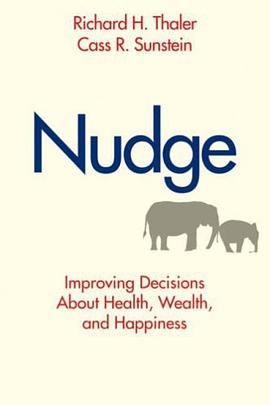
Nudge Douban Goodreads
author: Richard H. Thaler / Cass R. Sunstein publishing house: Yale University Press 2008 - 4
Every day, we make decisions on topics ranging from personal investments to schools for our children to the meals we eat to the causes we champion. Unfortunately, we often choose poorly. The reason, the authors explain, is that, being human, we all are susceptible to various biases that can lead us to blunder. Our mistakes make us poorer and less healthy; we often make bad decisions involving education, personal finance, health care, mortgages and credit cards, the family, and even the planet itself. Thaler and Sunstein invite us to enter an alternative world, one that takes our humanness as a given. They show that by knowing how people think, we can design choice environments that make it easier for people to choose what is best for themselves, their families, and their society. Using colorful examples from the most important aspects of life, Thaler and Sunstein demonstrate how thoughtful choice architecture” can be established to nudge us in beneficial directions without restricting freedom of choice. Nudge offers a unique new takefrom neither the left nor the righton many hot-button issues, for individuals and governments alike. This is one of the most engaging and provocative books to come along in many years. (20080518)