taitaii - 标记
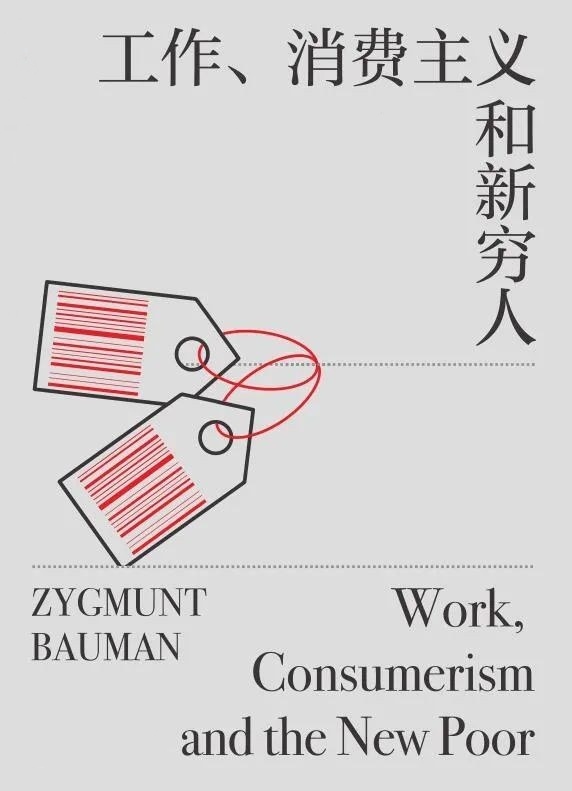
工作、消费主义和新穷人 豆瓣 谷歌图书 Goodreads
Work, Consumerism and the New Poor
8.3 (232 个评分) 作者: [英]齐格蒙特·鲍曼 译者: 郭楠 上海社会科学院出版社 2021 - 9
在生产者和普遍就业的社会中,贫穷是一回事。在消费者社会中,穷人是另一回事。在后者社会中,生活项目围绕消费者的选择而建立,而不是围绕工作、专业技能而建立。“贫穷”曾经与失业联系在一起,如今,它主要指向有缺陷消费者的困境。这种差异改变了贫穷的体验方式,对于拯救苦难产生重大影响。著名社会学家和思想家鲍曼的这部作品,对于消费者社会及其影响进行了反思和论述。在本书中,鲍曼书追溯现代历史上发生的这种变化,对其社会后果进行盘点,并考虑了与贫困作斗争和减轻困苦的各种方式的有效性。
社会学、政治学和社会政策学的研究者会发现,这是关于含义不断变化的一个持久社会问题的一本无价之书。
2026年3月16日 想读
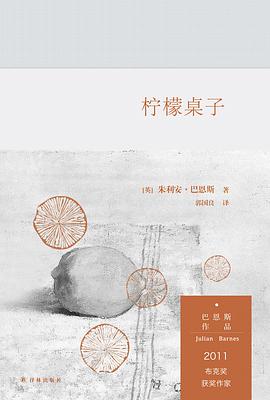
柠檬桌子 豆瓣
The Lemon Table
7.2 (13 个评分) 作者: [英] 朱利安·巴恩斯 译者: 郭国良 译林出版社 2012 - 9
《柠檬桌子》是朱利安·巴恩斯关于变老和死亡的短篇小说集。
书中的人物大多已步入老年,他们一方面明白留恋激情和欲望是愚蠢的,一方面又将它们虔诚地保存在记忆中。这些自感越来越无力于追求生命之乐的人,正以各自的方式面对衰老与死亡,并越发知晓青春和生命的意味。
2026年2月16日 想读
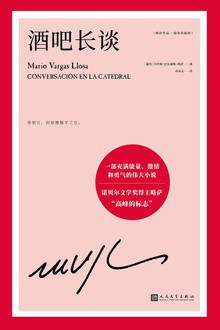
酒吧长谈 豆瓣 谷歌图书
9.3 (45 个评分) 作者: [秘鲁] 马里奥·巴尔加斯·略萨 译者: 孙家孟 人民文学出版社 2021 - 3
《酒吧长谈》是诺贝尔文学奖得主马里奥•巴尔加斯•略萨极富创作野心的作品之一,可能也是体现这位当代作家如何利用文学来进行政治思考的绝佳范例。小说的故事背景是奥德利亚将军独裁时期(1948—1956),讲述了来自中产阶级家庭的年轻人圣地亚哥•萨瓦拉的道德观的坍塌,以及在独裁政府腐化权力的掌控下,怀揣文学梦的知识分子如何逐渐放弃自己的理想。小说全方位描写了利马城当时的情况,展现了秘鲁社会的全貌。
(购买提示:本书涉及上世纪中期南美洲国家政治、军事、社会及多元文化,建议十八岁及以上读者阅读。)
编辑推荐:
◆诺贝尔文学奖得主略萨富野心之作,核心作品之一,被视为作者的写作技巧达到了高峰的标志。
◆涉及范围广,涉及问题深,容量巨大,塑造了从部长、将军富豪到流氓、打手、交际花等约七十个人物。
◆结构大胆、备获奖誉的反独裁小说,立体呈现奥德里亚政府执政整个历史时期、整个国家的现实。
◆“对话波”“通管法”等标志性手法应接不暇,引进戏剧、电影和电视等高度复合的艺术表现技巧。
◆深度印证颁奖词:“…对权力结构制图学般的细腻描述,对个人的抵制、反抗和挫败形象的犀利刻画。”
◆购买提示:本书涉及上世纪中期南美洲国家政治、军事、社会及多元文化,建议十八岁及以上读者阅读。
如果从大火中仅能抢救出我的一部作品,我会选这一部。——略萨
这本书比我其他所有的小说都更具生命力,它一点点地征服了读者。这让我深受鼓舞。如果要对我写的所有小说做一个评价,我认为《酒吧长谈》应该是我的主要作品之一。——略萨
媒体评论/名家推荐
我怀着崇敬之情读完了《酒吧长谈》。——大江健三郎
为了写作这部小说, 作者阅读了那个时期的各种文件和奥德里亚的多次讲话, 并采访了当时各种事件的目击者。 小说的表现手法又有了新的发展, 其基本格局是“对话波”结构, 而且比较集中地运用了现代新小说的各种技巧。一般认为, 这部小说是作者的写作技巧达到了高峰的标志。 ——孙家孟
2026年2月13日 想读
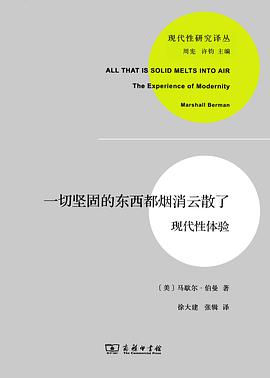
一切坚固的东西都烟消云散了 豆瓣
All That Is Solid Melts into Air: The Experience of Modernity
8.9 (29 个评分) 作者: [美] 马歇尔·伯曼 译者: 徐大健 / 张辑 商务印书馆 2013 - 9
本书用迷人的笔触,以十九世纪的政治和社会革命为背景,透过哥德、马克思、陀思妥耶夫斯基等人的主要作品,向我们展示了一幅充满矛盾和暧昧不明的现代世界画面。通过重新阐释马克思和深入思考罗伯特·摩西对现代城市生活的影响,作者标示出了二十世纪及其以后的发展轨迹。他得出的结论是,适应不断的变化是可能的,建设真正现代社会的希望也正是在这里。
2026年2月13日 想读
无需法律的秩序 豆瓣
作者: 〔美〕罗伯特·C·埃里克森(Robert.C.Ellickson) 译者: 苏力 中国政法大学出版社 2003
《无需法律的秩序邻人如何解决纠纷》的目的在于整合三种关于社会生活世界的珍贵看法:法律经济学的、社会学的以及博弈论的。更谦虚地说,《无需法律的秩序邻人如何解决纠纷》的目的在于,给有关邻人以及其他关系密切之群体的成员关系的讨论增加一点现实主义明晰。
2025年1月30日 想读
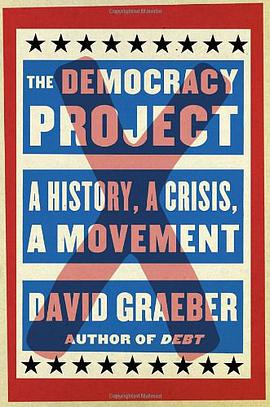
The Democracy Project 豆瓣 谷歌图书 Goodreads
作者: David Graeber Spiegel & Grau 2013 - 4
A bold rethinking of the most powerful political idea in the world—democracy—and the story of how radical democracy can yet transform America
Democracy has been the American religion since before the Revolution—from New England town halls to the multicultural democracy of Atlantic pirate ships. But can our current political system, one that seems responsive only to the wealthiest among us and leaves most Americans feeling disengaged, voiceless, and disenfranchised, really be called democratic? And if the tools of our democracy are not working to solve the rising crises we face, how can we—average citizens—make change happen?
David Graeber, one of the most influential scholars and activists of his generation, takes readers on a journey through the idea of democracy, provocatively reorienting our understanding of pivotal historical moments, and extracts their lessons for today—from the birth of Athenian democracy and the founding of the United States of America to the global revolutions of the twentieth century and the rise of a new generation of activists. Underlying it all is a bracing argument that in the face of increasingly concentrated wealth and power in this country, a reenergized, reconceived democracy—one based on consensus, equality, and broad participation—can yet provide us with the just, free, and fair society we want.
The Democracy Project tells the story of the resilience of the democratic spirit and the adaptability of the democratic idea. It offers a fresh take on vital history and an impassioned argument that radical democracy is, more than ever, our best hope.
Praise for David Graeber’s Debt
“A sprawling, erudite, provocative work.”—Drake Bennett, Bloomberg Businessweek
“Written in a brash, engaging style, the book is also a philosophical inquiry into the nature of debt—where it came from and how it evolved.” —The New York Times Book Review
“Fresh ... fascinating ... thought-provoking [and] exceedingly timely.”— Financial Times
“The book is more readable and entertaining than I can indicate. . . . Graeber is a scholarly researcher, an activist and a public intellectual. His field is the whole history of social and economic transactions.” — Peter Carey , The Observer
“One of the year’s most influential books. Graeber situates the emergence of credit within the rise of class society, the destruction of societies based on ‘webs of mutual commitment’ and the constantly implied threat of physical violence that lies behind all social relations based on money.”—Paul Mason, The Guardian
“Part anthropological history and part provocative political argument, it’s a useful corrective to what passes for contemporary conversation about debt and the economy.”—Jesse Singal, The Boston Globe
“Terrific . . . In the best anthropological tradition, he helps us reset our everyday ideas by exploring history and other civilizations, then boomeranging back to render our own world strange, and more open to change.” — Raj Patel, The Globe and Mail
2024年11月9日 想读
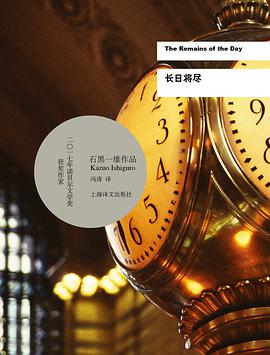
长日将尽 Goodreads 豆瓣
The Remains of the Day
8.9 (248 个评分) 作者: [英] 石黑一雄 译者: 冯涛 上海译文出版社 2018 - 5
《长日将尽》是诺奖得主石黑一雄1989年获布克奖的作品,也是石黑一雄最重要的代表作。小说以管家史蒂文斯的回忆展开,讲述了自己为达林顿勋爵服务的三十余年时光里的种种经历;虽然达到了职业巅峰,但史蒂文斯过于冷酷地压抑自我情感,追求完美履行职责,而在父亲临终前错过最后一面,之后又与爱情擦肩而过。小说通过主人公的回忆,将一个人的生命旅程在读者眼前抽丝剥茧,同时也折射出一战与二战之间那段非常时期的国际政治格局。
2024年11月9日 想读
如何阅读福柯 豆瓣 Goodreads
How to Read Foucault
8.6 (40 个评分) 作者: [芬]约翰娜· 奥克萨拉 译者: 王佳鹏 北京联合出版公司 2021 - 11
米歇尔·福柯是20世纪最重要的哲学家之一,也是著名的政治活动家、社会理论家、文化批评家,富有创造性的历史学家。他不可逆转地塑造了我们今天对权力、性态、疯癫和犯罪等争议性问题的思考方式,奠定了多个学科的理论基础。其批判性研究持续启发着诸多学者、艺术家和政治活动家。 在《如何阅读福柯》中,约翰娜·奥克萨拉围绕福柯思想的重要主题,精心挑取十段关键文本,进行详细的解读和分析,提供一系列线索来帮助读者由此前行,对福柯的思想做出自己的发现和理解。
2024年9月21日 想读
William Eggleston: The Outlands Goodreads
作者: William Eggleston / Winston Eggleston Steidl 2021 - 9
A luxurious three-volume box set of previously unseen images from the 1960s and 1970s by the father of American color photography A New York Times Book Review 2021 holiday gift guide pick

The three volumes of The Outlands are drawn from photographs that William Eggleston (born 1939) made on color transparency film from 1969 to 1974, which formed the basis for John Szarkowski’s seminal exhibition of Eggleston’s work at the Museum of Modern Art in New York in 1976 with the accompanying book William Eggleston’s Guide . However, with the exception of a couple of alternate versions, none of the photographs in The Outlands have been published previously.

The result is revelatory. Starting at almost the exact point on the same street in suburban Memphis where Eggleston made his famous photograph of a tricycle, the work follows a route through the back roads to old Mississippi where he was raised. What is disclosed is a sublime use of pure color hovering in semi-detachment from the forms he records. At the time, Eggleston was photographing a world that was already vanishing. Today, this final installment of his color work offers a view of a great American artist discovering the range of his visual language and an unforgettable document of the Deep South in transition.
2024年7月25日 想读
William Eggleston 豆瓣
作者: William Eggleston Steidl & Partners 2009 - 8
Occasionally, when he was much younger, the celebrated American photographer William Eggleston used to turn off the lights at his home in Memphis, Tennessee and shoot guns in the dark for fun. "The house was riddled with holes made by $6,000 antique shotguns," an acquaintance once revealed. He is often described by journalists as a heavy-drinking hellraiser, with a weakness for Savile Row suits and expensive cars – over the years, he has owned a Ferrari, a Jaguar, a Bentley and a Rolls-Royce.
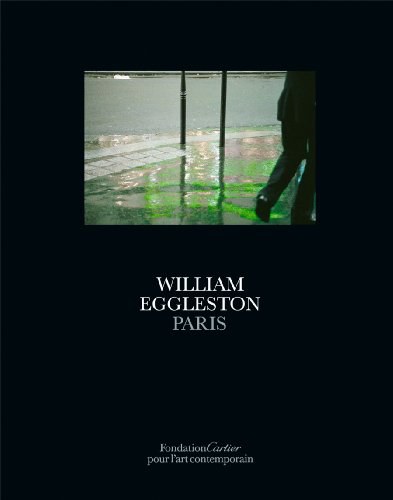
True to form, after a long lunch with the German fashion photographer Juergen Teller, Eggleston turns up late for our interview in the Fondation Cartier, a museum in Paris devoted to contemporary art, where a new series of his photographs has just opened. A few months short of his 70th birthday, he is dressed immaculately in a navy suit, his brown brogues buffed to a shine – yet there is a whiff of something decidedly louche about him. He slumps in a leather sofa that has been placed in the foyer to his exhibition, not far from a baby grand (Eggleston is an accomplished pianist, and a devotee of Bach). A solitary pearl of perspiration rolls down his forehead.He is here to talk about his new work, his third commission from the Fondation Cartier, which most recently invited him to document Paris in a series of photographs. In the early Sixties, Eggleston took his young wife to the French capital hoping to come away with a suite of meaningful pictures, but he felt blocked, and left with nothing. Over the past three years, however, he has returned to the city several times, and stalked its streets, snapping away on his Leica.
During this period, he amassed thousands of pictures, from which the foundation's director, Hervé Chandès, selected 70 for the show. As Eggleston tells me, with some effort, as though dredging up the words from the depths of his soul, "I'm not particular. I don't have favourite pictures." He pauses, before continuing: "To me, the whole project, no matter what size, is the work."
Born into a wealthy Southern family (he has never needed to earn money), and raised on a former cotton plantation, Eggleston is credited as a pioneer of colour photography. His breakthrough exhibition at the Museum of Modern Art in New York in 1976 showed that colour photography could be an artistic, and not merely a commercial, medium. At first, the critics condemned his seemingly casual snapshots of everyday life in the Deep South as "perfectly banal". But the book that accompanied the exhibition, William Eggleston's Guide, proved extremely influential. His free-and-easy images, shot quickly without a tripod from quirky angles, glow with gorgeous colour. They were soon seen as refreshingly democratic in both form and content, a tonic to the stagy, studio-manipulated fine-art photography, which, before 1976, had generally been black and white. "I had this notion of what I called a democratic way of looking around," Eggleston once said, "that nothing was more important or less important."
The new Parisian pictures continue in this vein. With typical perversity, Eggleston refuses to frame a picture that might result in a visual cliché. There are no shots of famous monuments, no pictures of wrought-iron signs for the Métro. Photographs of chic Parisians strolling through the Jardin du Luxembourg are nowhere to be seen.
Instead, there are images of packing crates and graffiti, of a woman begging outside the entrance to the Bastille Métro station, of neon-green light reflected in a puddle of rainwater on a dingy street corner, and of cheap shops selling gaudy tat. Eggleston is drawn to the city's neglected nooks, and often shoots close-up so that it is not immediately clear what the subject of a particular picture is. In fact, many of his photographs could have been taken in any city in the world. Somehow I doubt that they will be used by the Parisian Office du Tourisme any time soon.
Was he consciously trying to avoid clichés? "Not really," he says in his slow, gravelly baritone. But surely he was aware of the masters of photography who documented Paris during the 20th century – people like Eugène Atget and Henri Cartier-Bresson? "I knew about them," he says. "That was in the back of my mind." Yet, as he explains in the exhibition guide, he approached Paris as if it was just anywhere: "That resulted in pictures infused with a little mystery. You're not quite sure: is this Paris, Mexico City, elsewhere? I didn't change my style for Paris. I just did as always, used the same approach."
Eggleston's photographs of Paris will not be to everyone's taste. At first glance, they seem nondescript. But I love the fact that they are worlds apart from the familiar iconography of this famous city. Eggleston's aesthetic is wonky, half-cocked, provisional – and energetic. His pictures feel fresh and true: tiny scraps of reality ripped from the everyday fabric of life in a modern metropolis. He is capable of transforming the trivial into the transcendental, of wresting beauty from unexpected and overlooked places.
His new photographs are also eminently formal, almost abstract. In many of them, bold splashes of colour divide the image into sections, like a vibrant geometric painting by one of the Suprematists. Eggleston only ever takes a picture of something once, which means that his grasp of composition is all the more phenomenal because he never poses his images. His sense of colour would turn most artists, well, green with envy.
"Everything must work in concert," he says. "Composition is important but so are many other things, from content to the way colours work with or against each other."
Alongside his series of Parisian photographs, Eggleston is also showing 40 abstract paintings and drawings for the first time – colourful squiggles that were mostly created using felt-tip pens. He has drawn like this since he was a child (he didn't become interested in photography until he was at the University of Mississippi, where he became captivated by the work of Cartier-Bresson), and these pictures owe a clear debt to Kandinsky, one of Eggleston's favourite artists. They also feel exceptionally musical, brimming with rhythmic swirls.
"I like that idea," he tells me, "though I don't think about that consciously. I like to think that my works flow like music. That may be one reason I work in large groups versus one picture of one thing, it's the flow of the whole series that counts. I think when Paris is finished, it will flow."
As things stand, the project is far from finished. "Even though I now have several thousand pictures [of Paris], I still feel I have just barely begun," he says. "It's a big project. I hope it will be my crowning achievement." But, when pressed on what else he plans to document, he clams up. "I don't have anything in mind," he says. "Nothing more I can say would make any sense yet, because the series is not finished. I'm interested in wherever I go." He pauses. "There's no shortage of visually interesting places to me."
It's clear that Eggleston hates talking about his work. Throughout the interview, he is courteous but also reticent, like a well-dressed screen idol who never uses three words when one will do. He is also keen to avoid discussing the meaning of his work, and refuses to talk about individual images. His silence piques my curiosity. Why does he hate to talk about his photographs? "I don't know how to," he says, as if it's the most obvious thing in the world. "I'm not busy talking, and I don't write – because I'm busy making images."
2024年7月25日 想读
人类学 豆瓣
Anthropology(13th Edition)
作者: [美]卡罗尔·恩贝尔 / [美]梅尔文·恩贝尔 译者: 周云水 / 杨秋月 中信出版集团 2023 - 9
人类学是一门对人类怀着无限好奇心的学科。关于人类的种种问题,人类学家都想寻求答案。
这本《人类学:第13版》涵盖了各种文化和社会现象,是一本关于人类学的综合性读本。它旨在为大学的人类学教育提供支持,为感兴趣的人提供入门引导。本书被作为美国各高校人类学的标准教材,读者从中可以了解人类学的基本概念和方法,了解人类在不同环境中创造出不同的社会、政治、经济制度和宗教体系,并通过比较研究,找出这些文化制度之间的异同,从而探求人类存在的本质。
全书分为五个部分28章,每个章节涵盖一个特定的主题:第一部分介绍人类学的学科体系并对人类学家使用的方法进行综合论述。第二部分关注从早期哺乳动物到现代人类的进化。第三部分讨论关于文化何时与如何演化的证据,以及逐渐促成较复杂文化发展的可能因素。第四部分尝试用世界各地的民族志案例来表现文化差异。第五部分展示人类学知识如何应用于不同的环境,并产生各种各样的结果。正文以外,书中还穿插了不同视角的专题内容,分别为“当前研究和问题”专题框、“移居者与移民”专题框、“性别新视角”专题框,以及本次修订新加入的“应用人类学”专题框,希望读者们能用人类学知识来协助解决现实问题。
如果你对人类学感兴趣,这本书可以帮助你深入探究不同文化和社会现象的原理和途径。无论你是想探究人类行为和文化,还是想将人类学知识应用到跨文化交流中,这本综合性的作品都是一个很好的起点。
2024年5月17日 想读
控糖革命 Goodreads 豆瓣 谷歌图书
Glucose Revolution
7.5 (49 个评分) 作者: [法]杰西·安佐斯佩(Jessie Inchauspé) 译者: 张艳娟 浙江科学技术出版社 2024 - 1 其它标题: 控糖革命
对于现代人来说,忙着减肥、忙着美肤、忙着健身,但同时失眠、焦虑、痤疮、糖尿病等亚健康问题又如影随形。法国“葡萄糖女神”、生物化学家杰西·安佐斯佩告诉你,这些亚健康问题往往都是由我们体内的血糖水平变化引起的,只是我们不自知而已。若置之不理,皮肤问题、情绪问题往往就会接踵而至,情况严重的话,更会引发2型糖尿病、多囊卵巢综合征等身体问题。
杰西·安佐斯佩在《控糖革命》一书中,提出了三个关键性的、颠覆常识的观点:
1.不是只有糖尿病人才需要关心血糖,80%的现代人都有血糖方面的问题;
2.我们不只要控制血糖,更重要的是要控制血糖峰值的变化;
3.比节食更有效的控糖方法是改变吃的顺序。
全书分为三大部分——为什么要控糖、出现葡萄糖峰值有哪些危害、轻松控糖的10个小窍门,通过8个章节,系统阐释了如何在不节食、不放弃我们喜爱的食物的情况下,用10个简单而令人惊讶的方法平衡我们的血糖水平,提升和改善我们的健康状况,包括睡眠、情绪、健康、皮肤、体重,甚至减缓衰老。
2024年5月17日 想读
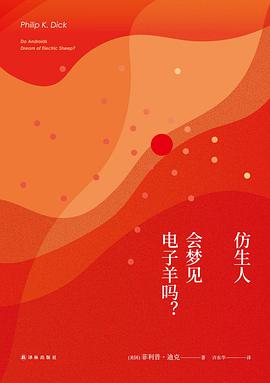
仿生人会梦见电子羊吗? 豆瓣
Do Androids Dream of Electric Sheep?
8.8 (236 个评分) 作者: [美] 菲利普·迪克 译者: 许东华 译林出版社 2017 - 10
“科幻鬼才”菲利普•迪克成长于西方科技文明创造出的崭新辉煌的时代。彼时,人类进入了太空,登上了月球,成功制造出第一台工业用机器人……科技的蓬勃发展也催生出主流科幻小说对人类创造力的无比自信,克拉克、阿西莫夫和海因莱因撑起了西方科幻的黄金时代。可是,迪克却反其道而行之,他的主人公迷惘于亦真亦假的世界上,挣扎于文明的陷落中,充满了对生命的依恋和对人性的追求。
《仿生人会梦见电子羊吗?》是菲利普•迪克最负盛名的作品,小说描述了从一天早晨到第二天早晨的二十多个小时,主人公里克•德卡德为了赏金追杀几个仿生人的过程,历经无数变故,狗血共桃花一色,阴谋与暴力齐飞。小说里的人类受到地球辐射尘的影响,相貌丑陋,很多在心智上都发生了退化,而仿生人却外表堂堂,多才多艺。当仿生人在外表和心智上无限逼近人类,甚至表面上已经超越人类时,人究竟何以为人?
1982年,菲利普•迪克去世后不久,根据《仿生人会梦见电子羊吗?》改编的电影《银翼杀手》上映,雷德利•斯科特导演。电影笼罩着一种迷离、朦胧、似幻似真的基调,描绘了一个末世大都市洛杉矶,是后世无数赛博朋克电影的鼻祖之作。我是谁?我从哪里来?要到哪里去?对这个哲学终极命题的探讨,让这部电影成为科幻电影史上的经典之作,也赋予其历久弥新的魅力。
2017年,电影续集《银翼杀手2049》在北美定档10月6日,也即将与中国观众见面。关于生存和生命的意义,我们永远没有确切答案。
核战后,放射尘让地球上的动物濒临灭绝,地球已不再适合人类居住。为了鼓励残存的人口移民,政府承诺,只要移民到外星球,就为每人自动配备一个仿生人帮助其生活。仿生人不满足于被人类奴役的现状,想方设法逃回地球。
小说主人公里克•德卡德是一名专门追捕逃亡仿生人的赏金猎人。在一次追捕行动中,里克遭遇了新型仿生人前所未有的挑战。九死之后,能否一生?在与仿生人的接触和较量中,里克发现自己对仿生人的看法和态度有了很大的改变。这种改变究竟是福还是祸?
2023年8月5日 想读
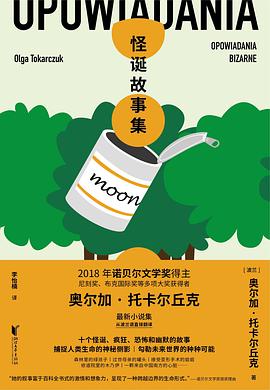
怪诞故事集 豆瓣 Goodreads
Opowiadania bizarne
7.9 (95 个评分) 作者: [波兰] 奥尔加·托卡尔丘克 译者: 李怡楠 浙江文艺出版社 2020 - 7
◎诺贝尔文学奖得主奥尔加·托卡尔丘克最新小说集
◎从波兰语直接翻译
◎2018年诺贝尔文学奖得主(2019年授予);尼刻奖、布克国际奖等多项大奖获得者
◎森林里的绿孩子、母亲过世后留下的罐头、接受变形手术的姐姐、修道院里的木乃伊、一颗来自中国南方的心脏……
◎十个怪诞、疯狂、恐怖和幽默的故事 | 捕捉人类生命的神秘侧影 | 勾勒未来世界的无限可能
————————————
《怪诞故事集》是2018年诺贝尔文学奖得主(2019年授予)——奥尔加·托卡尔丘克最新的小说 集。小说集由十个故事组成:森林里的绿孩子、母亲过世后留下的形形色色的罐头、意外卷入一场死亡案件的教授、“我”去探望做了变形手术的姐姐、修道院里的神秘木乃伊、每年都会在死亡后复活的莫诺迪克斯……每个故事都发生在不同的时空中,从现代的瑞士,到三百多年前的波兰;从中国的寺庙,到想象中的未来。每个故事都诡异且荒谬,你很难猜到下一页将会发生什么,但在怪诞之下又似乎潜藏着人类生活的蛛丝马迹。
小说集融合了民间传说、童话、科幻、宗教故事等元素来观照波兰历史与人的生活。该小说集出版一年之后,托卡尔丘克即摘得诺贝尔文学奖桂冠。本书同时收入托卡尔丘克在瑞典学院领受诺贝尔文学奖的演讲《温柔的讲述者》及诺奖授奖词。
————————————
“她的叙事富于百科全书式的激情和想象力,呈现了一种跨越边界的生命形式”
——诺贝尔文学奖授奖理由
“她运用观照现实的新方法,糅合精深的写实与瞬间的虚幻,观察入微又纵情于神话,成为我们这个时代最具独创性的散文作家之一。她是位速写大师,捕捉那些在逃避日常生活的人。她写他人所不能写:‘世间那痛彻人心的陌生感。’……她的文风——激荡且富有思想——流溢于其大约十五部的作品中。”
——诺贝尔文学奖授奖辞
2023年8月5日 想读
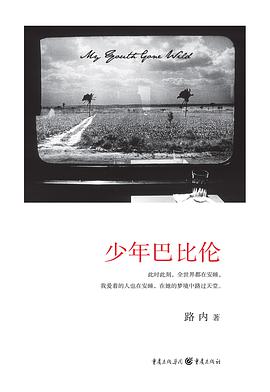
少年巴比伦 豆瓣
8.6 (93 个评分) 作者: 路内 重庆出版社 2008 - 8
上个世纪90年代的戴城,路小路在一家化工厂上班,他是个愣头青,不知道未来和生活目标在哪里。跟着一个叫“老牛逼”的师傅混,没学会半点技术。在机修班,除了拧螺丝之外什么都不会,在电工班,就只会换灯泡。除此之外,还喜欢打游戏、翻工厂的院墙,打架。当然还追女人,他与一个叫白蓝的厂医产生了爱情,最终因为白蓝考上了研究生而离开了他。
后来30岁的路小路坐在马路牙子上对这他的情人讲述了那些年发生的故事。
2023年7月6日 想读
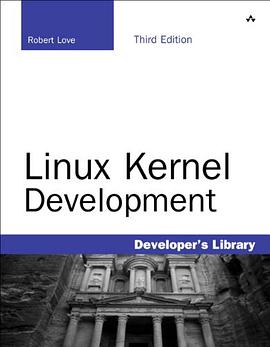
Linux Kernel Development 豆瓣 Goodreads
Linux Kernel Development
作者: Robert Love Addison-Wesley Professional 2010 - 6
The third edition of the authoritative, practical introduction to the Linux kernel for programmers who want to better understand the Linux kernel and write and develop kernel code. Authored by a well-known member of the Linux kernel development team, with a reputation for a highly readable and focused writing style, this edition has been thoroughly updated and includes improved coverage of all the major subsystems and features of the latest version of the Linux 2.6.xx kernel.
Linux Kernel Development details the design and implementation of the Linux kernel, presenting the content in a manner that is beneficial to those writing and developing kernel code. While the book discusses topics that are theoretical, it does so with the goal of assisting programmers so they better understand the topics and become more efficient and productive in their coding.
The book discusses the major subsystems and features of the Linux kernel, including design and implementation, their purpose and goals, and their interfaces. Important computer science and operating system design details are also addressed. The book covers the Linux kernel from both angles -- theoretical and applied -- which should appeal to both types of readers.
The author, a core kernel developer, shares valuable knowledge and experience on the very latest Linux kernel.
Specific topics covered will include: all the important algorithms, relevant subsystems, process management, scheduling, time management and timers, system call interface, memory addressing, memory management, paging strategies, caching layers, VFS, kernel synchronization, and signals.
An authoritative, practical guide that helps programmers better understand the Linux kernel, and to write and develop kernel code.
* Authored by core Linux kernel developers.
* In-depth coverage of all the major subsystems and features of the new Linux 2.6 kernel.
* Targeted audience includes programmers interested in gaining relevant and timely information so they may further their kernel development skills.
--This text refers to an out of print or unavailable edition of this title.
2023年2月19日 想读