老人旧事
豆瓣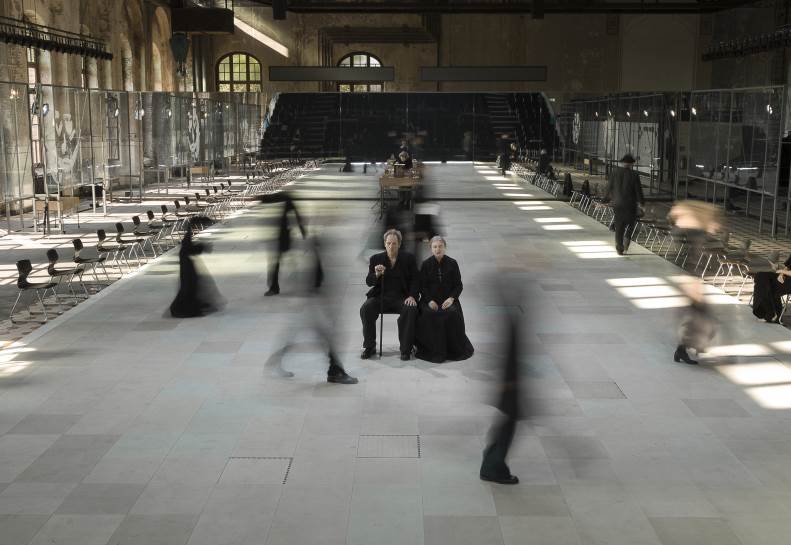
de dingen die voorbijgaan
简介
After The hidden force, Ivo van Hove made a second adaptation of a novel by Couperus: The things that pass, this time a coproduction with Toneelhuis (Antwerp).
Directing The hidden force, Ivo van Hove got rid of the image that had been stuck to Couperus since the 1970s. Not a costume drama in The Hague, no tempo dulu (the good old days). But he did get straight to the core of this visionary novel: the culture of the west, irreconcilable with that of the east.
The second project is based on the majestic psychological novel Old people and the things that pass (1906). Couperus imagined an ‘appalling and dreadful tragedy’. We see how a hushed-up murder of passion in the Dutch East Indies continues to have a devastating influence on the family of the elderly Ottilie and Takma. The hushing up of their adulterous relationship and the murder of Ottilie’s husband leave deep traces in the consecutive generations, who are trapped in an unresolved past.
Lot and Elly are the youngest members of this doomed family. They hope to be able to free themselves from the stranglehold of The Hague, but arrive back home disillusioned after their honeymoon in Italy. There is no escaping this family that is damaged by horrible secrets that should never become known.
Just like in The hidden force, Couperus shows that he is far ahead of his time. He paints the portrait of a modern family that does not cohere and is literally spread out to all the corners of the world. The family members struggle with their lustfulness, their faith, dreams of material happiness and mutual jealousy. A family where almost nobody dares to give in to their deepest wishes and desires, to be who they really are.