等待 [图书] Goodreads
publishing house:
四川文艺出版社
2018
- 10
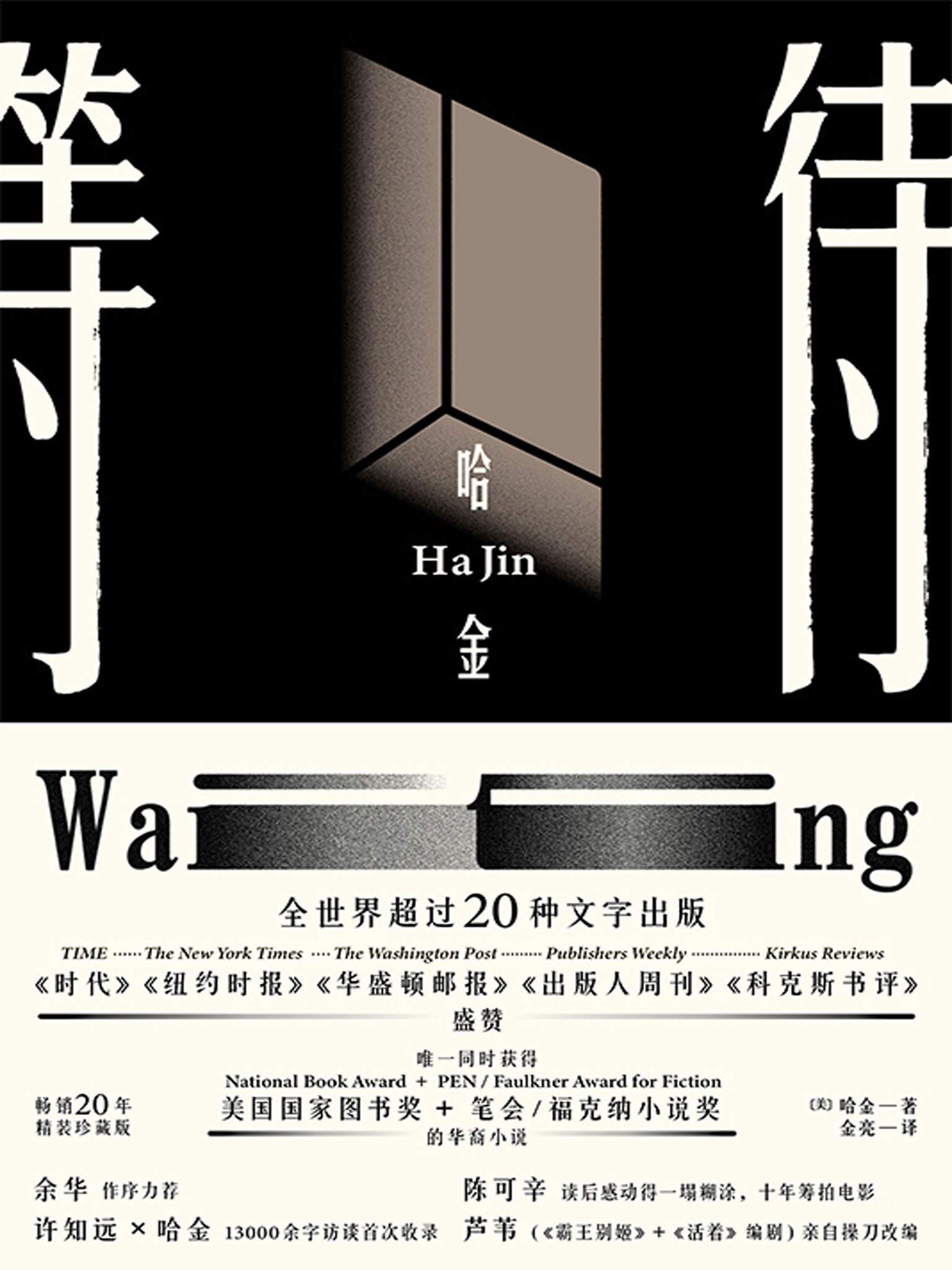
"Every summer Lin Kong returned to Goose Village to divorce his wife, Shuyu." Like a fairy tale, Ha Jin's masterful novel of love and politics begins with a formula--and like a fairy tale, Waiting uses its slight, deceptively simple framework to encompass a wide range of truths about the human heart. Lin Kong is a Chinese army doctor trapped in an arranged marriage that embarrasses and repels him. (Shuyu has country ways, a withered face, and most humiliating of all, bound feet.) Nevertheless, he's content with his tidy military life, at least until he falls in love with Manna, a nurse at his hospital. Regulations forbid an army officer to divorce without his wife's consent--until 18 years have passed, that is, after which he is free to marry again. So, year after year Lin asks his wife for his freedom, and year after year he returns from the provincial courthouse: still married, still unable to consummate his relationship with Manna. Nothing feeds love like obstacles placed in its way--right? But Jin's novel answers the question of what might have happened to Romeo and Juliet had their romance been stretched out for several decades. In the initial confusion of his chaste love affair, Lin longs for the peace and quiet of his "old rut." Then killing time becomes its own kind of rut, and in the end, he is forced to conclude that he "waited eighteen years just for the sake of waiting." There's a political allegory here, of course, but it grows naturally from these characters' hearts. Neither Lin nor Manna is especially ideological, and the tumultuous events occurring around them go mostly unnoticed. They meet during a forced military march, and have their first tender moment during an opera about a naval battle. (While the audience shouts, "Down with Japanese Imperialism!" the couple holds hands and gazes dreamily into each other's eyes.) When Lin is in Goose Village one summer, a mutual acquaintance rapes Manna; years later, the rapist appears on a TV report titled "To Get Rich Is Glorious," after having made thousands in construction. Jin resists hammering ideological ironies like these home, but totalitarianism's effects on Lin are clear.
Ha Jin himself served in the People's Liberation Army, and in fact left his native country for the U.S. only in 1985. That a non-native speaker can produce English of such translucence and power is truly remarkable--but really, his prose is the least of the miracles here. Improbably, Jin makes an unconsummated 18-year love affair loom as urgent as political terror or war, while history-changing events gain the immediacy of a domestic dilemma. Gracefully phrased, impeccably paced, Waiting is the kind of realist novel you thought was no longer being written. --Mary Park
Ha Jin himself served in the People's Liberation Army, and in fact left his native country for the U.S. only in 1985. That a non-native speaker can produce English of such translucence and power is truly remarkable--but really, his prose is the least of the miracles here. Improbably, Jin makes an unconsummated 18-year love affair loom as urgent as political terror or war, while history-changing events gain the immediacy of a domestic dilemma. Gracefully phrased, impeccably paced, Waiting is the kind of realist novel you thought was no longer being written. --Mary Park