Mass Vaccination
豆瓣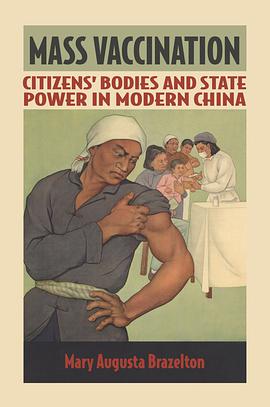
Citizens' Bodies and State Power in Modern China
Mary Augusta Brazelton
简介
While the eradication of smallpox has long been documented, not many know the Chinese roots of this historic achievement. In this revelatory study, Mary Augusta Brazelton examines the PRC's public health campaigns of the 1950s to explain just how China managed to inoculate almost six hundred million people against this and other deadly diseases.
Mass Vaccination tells the story of the people, materials, and systems that built these campaigns, exposing how, by improving the nation's health, the Chinese Communist Party quickly asserted itself in the daily lives of all citizens. This crusade had deep roots in the Republic of China during the Second Sino-Japanese War, when researchers in China's southwest struggled to immunize as many people as possible, both in urban and rural areas. But its legacy was profound, providing a means for the state to develop new forms of control and of engagement. Brazelton considers the implications of vaccination policies for national governance, from rural health care to Cold War-era programs of medical diplomacy. By embedding Chinese medical history within international currents, she highlights how and why China became an exemplar of primary health care at a crucial moment in global health policy.
"By challenging the conventional understanding of the celebrated 'Chinese model' of public health, Mass Vaccination succeeds brilliantly in revealing how the Chinese state developed a stunning capability to protect, as well as to control, life."
- Sean Hsiang-Lin Lei, Academia Sinica, author of Neither Donkey nor Horse
"Well-written and impressively researched, Mass Vaccination will engage scholars of modern Chinese history, history of science and medicine, and global health. It also offers a unique perspective on the history of the PRC and the role of 'medical diplomacy' in its international engagements during the 1960s and '70s."
- Daniel Asen, Rutgers University–Newark, author of Death in Beijing
目录
Introduction: A Mobile Lifestyle, A Middle Way of Living
Prologue: From Official Privileges to Consumer Goods
1. Driving Alone Together: Sociality, Solidarity, and Status
2. Family Cars, Filial Consumer-Citizens: Becoming Properly Middle Class
3. The Emerging Middle Class and the Car Market: Mobilities and Trajectories
4. Car Crash, Class Encounter: Anxiety of Mobility
5. Bidding for a License Plate: The Importance of Being a Free and Proper Consumer
6. Parking: Contesting Space in Middle-Class Complexes
Epilogue: Politics of Transformation