The Dark Side of Dharma
豆瓣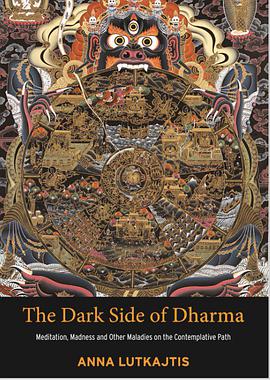
Meditation, Madness and Other Maladies on the Contemplative Path
Anna Lutkajtis
简介
The Dark Side of Dharma explores some of the possible undesirable side effects – also known as ‘adverse effects’ - of meditation and mindfulness. Researcher Anna Lutkajtis investigates why these effects, which are well-known in spiritual and religious traditions, have been ignored in contemporary secular contexts, such as Western psychology.
Lutkajtis’ research reveals that while meditation is commonly portrayed as a practice that is overwhelmingly positive, a growing number of research studies and anecdotal reports suggest that meditation can also have negative effects. Some meditators believe that these adverse effects are a normal part of the contemplative path and a welcome sign of progress. For others, such effects are completely unexpected and can be psychologically harmful.
In religious traditions like Buddhism, difficulties associated with meditation are acknowledged and are usually viewed as milestones on the path to enlightenment or the result of an unbalanced practice. In such traditional contexts, meditation teachers are equipped to deal with adverse effects if and when they arise. However, in the modern West, meditation adverse effects have been overlooked, under- researched, and generally misunderstood.
Given the current popularity of meditation, Lutkajtis argues that it is important to understand why meditation adverse effects have been ignored in contemporary secular settings.
目录
Table of Contents
Acknowledgements xv
Preface xvii
Chapter 1 A brief history of meditation: east and west 1
What is meditation? 1
Hindu approaches to meditation 3
Buddhist approaches to meditation 6
Meditation in the west: mainstream 9
Meditation in the west: clinical 17
Chapter 2 The dark side of dharma: meditation adverse effects and the "dark night" 21
The meditation backlash 21
The dark night of the soul 23
The dukkha nanas 25
Insight gone wrong 28
"Adverse effects" in meditation research 32
The dark night project 38
Chapter 3 From enlightenment to symptom relief and personal transformation 43
Meditation as a western therapeutic intervention 43
Meditation as a panacea 44
The relaxation response 49
Issues of self and non-self 52
Mourning the loss of the self 56
Meditation research methods 59
Chapter 4 Making meditation secular: meditation as a detachable technique 63
"Secular" meditation 63
Meditation as a detachable technique 65
De-contextualisation: privileging meditation and marginalising religious context 66
Simplification: psychological, pathological and neural reductionism 71
Re-contextualisation: "the buddha was a scientist" and the creation of a western meditation lineage 74
Chapter 5 Meditation divorced from religion 79
Meditation adverse effects in religious traditions 79
Preparation 84
Supportive context 88
Teacher and technique 91
Individual differences and psychopathology 97
Chapter 6 "The answer to all your problems?" meditation and the media 101
All good news stories 101
Meditation tropes 103
Scientist-journalist communication 105
Celebrity gurus and celebrity meditators 109
Meditation for sale 111
How should meditation be portrayed? 115
Chapter 7 Facing the shadow 117
The denial of the dark side 117
Spiritual bypassing 119
The future 123
References 131
Index 151
Show More