Ross MacGibbon — 导演 (16)
万尼亚舅舅 (2020) [电影] 豆瓣
Uncle Vanya
8.2 (36 个评分) 导演: Ross MacGibbon / Ian Rickson 演员: 托比·琼斯 / 罗杰·阿拉姆
其它标题: Uncle Vanya
疫情时期特别录制、伦敦西区2020年全新复排版契诃夫名作《万尼亚舅舅》在结束演出后,又重回哈罗德·品特剧院录制了这一五星作品。在全球大部分剧院仍处于黑暗之中时,给人们带来一剂警醒的力量和希望。被《旗帜晚报》誉为“我们时代的‘万尼亚舅舅’”。
此版复排由奥利弗奖得主、出演过《美国队长》《控方证人》等剧的托比·琼斯,和因《霍比特人》《南方与北方》走红的理查德·阿米蒂奇领衔主演,录制版本还邀请到两度奥利弗奖得主罗杰·阿拉姆加盟,卡司阵容十分抢眼。剧本由康纳·麦克弗森全新改编,著名导演伊恩·里克森再度操刀,献上一部"完美"“尖刻”“精彩绝伦”的复排,获得包括最佳话剧男演员、最佳导演在内的四项奥利弗奖提名。
契诃夫名作《万尼亚舅舅》讲的是精神信仰的幻灭,从另一个角度看蕴含着重建的希望:万尼亚舅舅和他的外甥女索尼娅常年住在乡下庄园,只有医生阿斯特罗夫偶尔来访。万尼亚舅舅日复一日庄园劳作、翻译著述和誊写稿子,都是为了索尼娅的父亲、他的姐夫谢列勃里雅科夫教授。对教授的崇拜,支撑了万尼亚舅舅半生辛苦的价值,然而教授带着新婚的年轻妻子回到庄园时,一切秩序和幻想都被打破了……
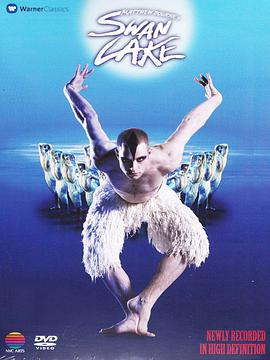
天鹅湖 (2012) [电影] 豆瓣
Swan Lake
8.6 (12 个评分) 导演: Ross MacGibbon / 马修·伯恩 演员: 理查德·温瑟 / 多米尼克·诺斯
其它标题: Swan Lake
Matthew Bourne choreographs this performance of Tchaikovsky's ballet, filmed live in London. The show, the longest running ballet on bo th Broadway and the West End, follows the story of Prince Siegfried, who promises his love to swan maiden Odette, only to be tricked by magician Von Rothbart. The stars include Richard Winsor, Dominic North, Nina Goldman, Madelaine Brennan, Steve Kirkham and Joseph Vaughan.
一个被控制欲超强的母后时时牵制的低能王子,在一次发现自己被欺弄后想投河自尽,却意外地遇到一群天鹅。当群鹅向他攻击的时候,头鹅将他救走。之后,他深深地被头鹅的美和自由所吸引。渐渐他与头鹅互生情谊。然而在回归自然的解脱中还未回过气来,王子就被拉去参加宫廷舞会。他意外地发现曾经是美与自由之化身的头鹅,现在已经是一幅花花公子的模样。他与王子的女友调情,最后还与王子的母后调情。头鹅对他不屑一顾,极度愤怒和嫉妒的王子在舞会上方寸大乱,精神失常。在被拉回卧室后他噩梦不断,终于在次日破晓时死去,而头鹅也因此自杀,双手怀抱王子。
天鹅湖 (2007) [电影] 豆瓣
Swan Lake
9.6 (5 个评分) 导演: Ross MacGibbon 演员: Uliana Lopatkina / Danila Korsuntev
其它标题: Swan Lake / 马林斯基芭蕾舞团天鹅湖
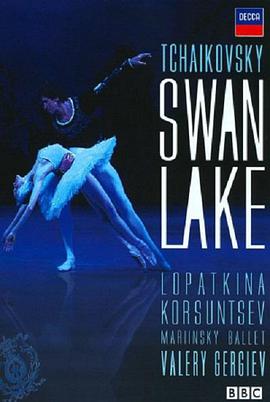
奥杰塔(Uliana Lopatkina 饰)是一位美丽的公主,一场意外中,她不幸的被邪恶的魔王罗特巴尔特变成了一只天鹅。王子齐格弗里德在成人仪式中看到了变成天鹅的奥杰塔,于是追随着她的身影来到了湖畔,奥杰塔以天鹅的姿态默默向王子倾诉着自己的哀怨,王子深深的爱上了奥杰塔,他决定要用自己真爱的力量令奥杰塔变回人形。
齐格弗里德的生日宴会上,罗特巴特带着自己的女儿奥吉莉娅前往庆贺,奥吉莉娅有着和奥杰塔一模一样的样貌,鬼迷心窍的齐格弗里德和奥吉莉娅订下了婚约。很快,王子就知道自己中了恶魔的诡计,他找到了奥杰塔,请求后者的原谅。
车工 (2001) [电影] 豆瓣
The Car Man
导演: Ross MacGibbon 演员: Alan Vincent / Saranne Curtin
其它标题: The Car Man / The Car Man: An Auto-Erotic Thriller
Matthew Bourne's The Car Man is a dance production by British choreographer Matthew Bourne. The music for the production is based on Russian composer Rodion Shchedrin's Bolshoi Ballet version of Georges Bizet's opera Carmen (1875), with additional music by composer Terry Davies. However, the story differs completely from the plot of the opera. Instead, it is loosely based on James M. Cain's novel The Postman Always Rings Twice (1934), and the 1946 and 1981 films of the same name. The ballet is notable for its frank depictions of violence and sex, including homoeroticism.
芭蕾女神 (2014) [剧集] 豆瓣
Darcey's Ballerina Heroines
导演: Ross MacGibbon 演员: 达茜·巴塞尔 / Nathalie Harrison
As courtesans, fashion icons, political pawns and international celebrities, the great ballerinas have played a multitude of roles both on and off the stage. They have moved from the courts of kings to stages around the globe, from the highs of public adoration to the lows of injury and scandal. But few people know the full story.
British prima ballerina Darcey Bussell spent two decades at the top, performing all the great roles in the classical repertoire and becoming one of ballet's most famous faces. She explores the changing role of the ballerina.
Journeying from 18th-century France to 1950s America, she examines the challenges that her predecessors encountered, discovers the women who broke the rules and reveals what it takes to be one of the greats.
A feast for the senses, Darcey's Ballerina Heroines is an authoritative history of the best ballets and the finest ballerinas.
英国皇家芭蕾: 伍尔夫之作 (2017) [电影] 豆瓣 TMDB
The Royal Ballet: Woolf Works
导演: Ross MacGibbon 演员: Clemency Burton-Hill / Sarah Lamb
其它标题: The Royal Ballet: Woolf Works
The Royal Ballet presents Wayne McGregor's triptych, inspired by the writings of Virginia Woolf, with an original score by Max Richter. Met with outstanding critical acclaim on its premiere in 2015, it went on to win McGregor the Critics' Circle Award for Best Classical Choreography and the Olivier Award for Best New Dance Production. Each of the three acts draws from one of Woolf's iconic novels - Mrs Dalloway, Orlando and The Waves - combined with elements from her letters, essays and diaries. Presented from The Royal Opera House by Darcey Bussell and Clemency Burton-Hill.
睡美人 (2007) [电影] 豆瓣
The Sleeping Beauty
导演: Ross MacGibbon / Marius Petipa 演员: Alina Cojocaru / Federico Bonelli
其它标题: The Sleeping Beauty
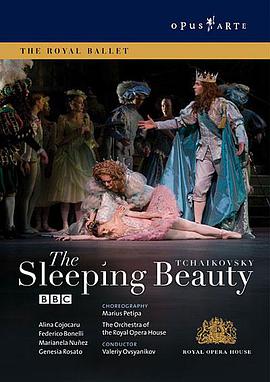
国王和王后迎来了他们可爱的小女儿奥罗拉公主(Alina Cojocaru 饰),为了庆祝这个崭新的小小生命的降临,城堡里举行了盛大的宴会。国王邀请了仙女和女巫们参加晚宴,哪知道仙女们迟到了,这让久候的女巫(玛丽安莉拉·努尼斯 Marianela Nuñez 饰)感到非常的生气。女巫设下了恶毒的诅咒,诅咒奥罗拉公主将在她16岁那一年被纺锤刺破手指而死。
仙女无法破解女巫的诅咒,却将诅咒换了一种形式,被纺锤刺中的公主不会死去,而是陷入永久的沉睡之中。一晃眼16年过去,虽然国王和王后一直对公主的安全严防死守,但悲剧还是发生了,沉沉睡去的奥罗拉公主进入了幻想世界中,体验到了截然不同的人生。
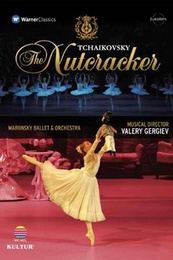
胡桃夹子 [演出] 豆瓣
Щелкунчик
8.6 (16 个评分) 类型: 舞剧 编剧: Marius Petipa / Peter Wright
其它标题: Щелкунчик / The Nutcracker 导演: Ross MacGibbon / Roger M. Sherman 演员: Alina Cojocaru / Ivan Petrov / Miyako Yoshida / Jonathan Cope / Anthony Dowell
Below is a synopsis based on the original 1892 libretto by Marius Petipa. The story varies from production to production, though most follow the basic outline. The names of the characters also vary. In the original E. T. A. Hoffmann story, the young heroine is called Marie Stahlbaum and Clara (Klärchen) is her doll's name. In the adaptation by Dumas on which Petipa based his libretto, her name is Marie Silberhaus. In still other productions, such as Baryshnikov's, Clara is Clara Stahlbaum rather than Clara Silberhaus.
Act I
Scene 1: The Stahlbaum Home
It is Christmas Eve. Family and friends have gathered in the parlor to decorate the beautiful Christmas tree in preparation for the party. Once the tree is finished, the children are sent for. They stand in awe of the tree sparkling with candles and decorations.
The party begins. A march is played. Presents are given out to the children. Suddenly, as the owl-topped grandmother clock strikes eight, a mysterious figure enters the room. It is Drosselmeyer, a local councilman, magician, and Clara's godfather. He is also a talented toymaker who has brought with him gifts for the children, including four lifelike dolls who dance to the delight of all. He then has them put away for safekeeping.
Clara and Fritz are sad to see the dolls being taken away, but Drosselmeyer has yet another toy for them: a wooden nutcracker carved in the shape of a little man. The other children ignore it, but Clara immediately takes a liking to it. Fritz, however, breaks it, and Clara is heartbroken.
During the night, after everyone else has gone to bed, Clara returns to the parlor to check on her beloved nutcracker. As she reaches the little bed, the clock strikes midnight and she looks up to see Drosselmeyer perched atop it. Suddenly, mice begin to fill the room and the Christmas tree begins to grow to dizzying heights. The nutcracker also grows to life size. Clara finds herself in the midst of a battle between an army of gingerbread soldiers and the mice, led by their king. They begin to eat the soldiers.
The nutcracker appears to lead the soldiers, who are joined by tin soldiers, and by dolls who serve as doctors to carry away the wounded. As the Mouse King advances on the still-wounded nutcracker, Clara throws her slipper at him, distracting him long enough for the nutcracker to stab him.
Scene 2: A Pine Forest
The mice retreat and the nutcracker is transformed into a handsome Prince. He leads Clara through the moonlit night to a pine forest in which the snowflakes dance around them, beckoning them on to his kingdom as the first act ends.
Act II
Scene 1: The Land of Sweets
Clara and the Prince travel to the beautiful Land of Sweets, ruled by the Sugar Plum Fairy in the Prince's place until his return. He recounts for her how he had been saved from the Mouse King by Clara and transformed back into himself. In honor of the young heroine, a celebration of sweets from around the world is produced: chocolate from Spain, coffee from Arabia, tea from China, and candy canes from Russia all dance for their amusement; Danish shepherdesses perform on their flutes; Mother Ginger has her children, the Polichinelles, emerge from under her enormous hoop skirt to dance; a string of beautiful flowers perform a waltz. To conclude the night, the Sugar Plum Fairy and her Cavalier perform a dance.
A final waltz is performed by all the sweets, after which the Sugar Plum Fairy ushers Clara and the Prince down from their throne. He bows to her, she kisses Clara goodbye, and leads them to a reindeer drawn sleigh. It takes off as they wave goodbye to all the subjects who wave back.
In the original libretto, the ballet's apotheosis "represents a large beehive with flying bees, closely guarding their riches". Just like Swan Lake, there have been various alternative endings created in productions subsequent to the original.
胡桃夹子 2000年英国皇家芭蕾舞团版 [演出] 豆瓣
所属 演出: 胡桃夹子
语言: 英语 english 剧团: 英国皇家芭蕾舞团 剧院: 考文特花园皇家歌剧院 导演: Ross MacGibbon / Roger M. Sherman
其它标题: 2000年英国皇家芭蕾舞团版 作曲: Pyotr Ilyich Tchaikovsky 演员: Alina Cojocaru / Ivan Petrov
Below is a synopsis based on the original 1892 libretto by Marius Petipa. The story varies from production to production, though most follow the basic outline. The names of the characters also vary. In the original E. T. A. Hoffmann story, the young heroine is called Marie Stahlbaum and Clara (Klärchen) is her doll's name. In the adaptation by Dumas on which Petipa based his libretto, her name is Marie Silberhaus. In still other productions, such as Baryshnikov's, Clara is Clara Stahlbaum rather than Clara Silberhaus.
Act I
Scene 1: The Stahlbaum Home
It is Christmas Eve. Family and friends have gathered in the parlor to decorate the beautiful Christmas tree in preparation for the party. Once the tree is finished, the children are sent for. They stand in awe of the tree sparkling with candles and decorations.
The party begins. A march is played. Presents are given out to the children. Suddenly, as the owl-topped grandmother clock strikes eight, a mysterious figure enters the room. It is Drosselmeyer, a local councilman, magician, and Clara's godfather. He is also a talented toymaker who has brought with him gifts for the children, including four lifelike dolls who dance to the delight of all. He then has them put away for safekeeping.
Clara and Fritz are sad to see the dolls being taken away, but Drosselmeyer has yet another toy for them: a wooden nutcracker carved in the shape of a little man. The other children ignore it, but Clara immediately takes a liking to it. Fritz, however, breaks it, and Clara is heartbroken.
During the night, after everyone else has gone to bed, Clara returns to the parlor to check on her beloved nutcracker. As she reaches the little bed, the clock strikes midnight and she looks up to see Drosselmeyer perched atop it. Suddenly, mice begin to fill the room and the Christmas tree begins to grow to dizzying heights. The nutcracker also grows to life size. Clara finds herself in the midst of a battle between an army of gingerbread soldiers and the mice, led by their king. They begin to eat the soldiers.
The nutcracker appears to lead the soldiers, who are joined by tin soldiers, and by dolls who serve as doctors to carry away the wounded. As the Mouse King advances on the still-wounded nutcracker, Clara throws her slipper at him, distracting him long enough for the nutcracker to stab him.
Scene 2: A Pine Forest
The mice retreat and the nutcracker is transformed into a handsome Prince. He leads Clara through the moonlit night to a pine forest in which the snowflakes dance around them, beckoning them on to his kingdom as the first act ends.
Act II
Scene 1: The Land of Sweets
Clara and the Prince travel to the beautiful Land of Sweets, ruled by the Sugar Plum Fairy in the Prince's place until his return. He recounts for her how he had been saved from the Mouse King by Clara and transformed back into himself. In honor of the young heroine, a celebration of sweets from around the world is produced: chocolate from Spain, coffee from Arabia, tea from China, and candy canes from Russia all dance for their amusement; Danish shepherdesses perform on their flutes; Mother Ginger has her children, the Polichinelles, emerge from under her enormous hoop skirt to dance; a string of beautiful flowers perform a waltz. To conclude the night, the Sugar Plum Fairy and her Cavalier perform a dance.
A final waltz is performed by all the sweets, after which the Sugar Plum Fairy ushers Clara and the Prince down from their throne. He bows to her, she kisses Clara goodbye, and leads them to a reindeer drawn sleigh. It takes off as they wave goodbye to all the subjects who wave back.
In the original libretto, the ballet's apotheosis "represents a large beehive with flying bees, closely guarding their riches". Just like Swan Lake, there have been various alternative endings created in productions subsequent to the original.
天鹅湖 2006年马林斯基剧院版 [演出] 豆瓣
所属 演出: 天鹅湖
剧团: 马林斯基剧院芭蕾舞团 剧院: 马林斯基剧院 导演: Ross MacGibbon
其它标题: 2006年马林斯基剧院版 作曲: Pyotr Ilyich Tchaikovsky 演员: Ulyana Lopatkina / Dalina Korsunstev
Swan Lake is generally presented in either four acts, four scenes (primarily outside Russia and Eastern Europe) or three acts, four scenes (primarily in Russia and Eastern Europe). The biggest difference of productions all over the world is that the ending, originally tragic, is now sometimes altered to a happy ending.
Prologue
Some productions include a prologue that shows how Odette first meets Rothbart, who turns Odette into a swan.
Act 1
A magnificent park before a palace
[Scène: Allegro giusto] Prince Siegfried is celebrating his birthday with his tutor, friends and peasants [Waltz]. The revelries are interrupted by Siegfried's mother, the Queen [Scène: Allegro moderato], who is concerned about her son's carefree lifestyle. She tells him that he must choose a bride at the royal ball the following evening (some productions include the presentation of some possible candidates). Siegfried is upset that he cannot marry for love. His friend Benno and the tutor try to lift his troubled mood. As evening falls [Sujet], Benno sees a flock of swans flying overhead and suggests they go on a hunt [Finale I]. Siegfried and his friends take their crossbows and set off in pursuit of the swans.
Act 2
A lakeside clearing in a forest by the ruins of a chapel. A moonlit night.
Siegfried has become separated from his friends. He arrives at the lakeside clearing, just as a flock of swans land [Scène. Moderato]. He aims his crossbow [Scène. Allegro moderato], but freezes when one of them transforms into a beautiful maiden, Odette [Scène. Moderato]. At first, she is terrified of Siegfried. When he promises not to harm her, she explains she and her companions are victims of a spell cast by the evil owl-like sorcerer Rothbart. By day they are turned into swans and only at night, by the side of the enchanted lake – created from the tears of Odette's mother – do they return to human form. The spell can only be broken if one who has never loved before swears to love Odette forever. Rothbart suddenly appears [Scène. Allegro vivo]. Siegfried threatens to kill him but Odette intercedes – if Rothbart dies before the spell is broken, it can never be undone.
As Rothbart disappears, the swan maidens fill the clearing [Scène: Allegro, Moderato assai quasi andante]. Siegfried breaks his crossbow, and sets about winning Odette's trust as the two fall in love. But as dawn arrives, the evil spell draws Odette and her companions back to the lake and they are turned into swans again.
Act 3
An opulent hall in the palace
Guests arrive at the palace for a costume ball. Six princesses are presented to the prince [Entrance of the Guests and Waltz], as candidates for marriage. Rothbart arrives in disguise [Scène: Allegro, Allegro giusto] with his daughter, Odile, who is transformed to look like Odette. Though the princesses try to attract the prince with their dances [Pas de six], Siegfried has eyes only for Odile. [Scène: Allegro, Tempo di valse, Allegro vivo] Odette appears (usually at the castle window) and attempts to warn Siegfried, but he does not see her. He then proclaims to the court that he will marry "Odette" (Odile) before Rothbart shows him a magical vision of Odette. Grief-stricken and realizing his mistake, Siegfried hurries back to the lake.
Act 4
By the lakeside
Odette is distraught. The swan-maidens try to comfort her. Siegfried returns to the lake and makes a passionate apology. She forgives him, but his betrayal cannot be undone. Rather than remain a swan forever, Odette chooses to die. Siegfried chooses to die with her and they leap into the lake. This breaks Rothbart's spell over the swan maidens, causing him to lose his power over them and he dies. In an apotheosis, the swan maidens watch as Siegfried and Odette ascend into the Heavens together, forever united in love.
1877 libretto synopsis
Act 1: Prince Siegfried, his friends, and a group of peasants are celebrating the Prince's coming of age. Siegfried's mother arrives to inform him that she wishes for him to marry soon so that she may make sure that he does not disgrace their family line by his marriage. She has organised a ball where Siegfried is to choose his bride from among the daughters of the nobility. After the celebration, Siegfried and his friend, Benno, spot a flock of flying swans and decide to hunt them.
Act 2: Siegfried and Benno track the swans to a lake, but they vanish. A woman wearing a crown appears and meets the two men. She tells them that her name is Odette and she was one of the swans they were hunting. She tells them her story: Odette's mother, a good fairy, had married a knight, but she died and the knight remarried. Odette's stepmother was a witch who wanted to kill her, but her grandfather saved her. Odette's grandfather had cried so much over the death of Odette's mother that he created the lake with his tears. Odette and her companions live in the lake with Odette's grandfather, and can transform themselves into swans whenever they wish. Odette's stepmother still wants to kill her, and stalks her in the form of an owl, but Odette has a crown which protects her from harm. When Odette gets married, the witch will lose the power to harm her. Siegfried falls in love with Odette but Odette fears that the witch will ruin their happiness.
Act 3: Several young noblewomen dance at Siegfried's ball, but the Prince refuses to marry any of them. Baron von Rothbart and his daughter, Odile, arrive. Siegfried thinks that Odile looks like Odette, but Benno doesn't agree. Siegfried dances with Odile as he grows more and more enamored with her, and eventually agrees to marry her. At that moment, Rothbart transforms into a demon, Odile laughs, and a white swan wearing a crown appears in the window. The Prince runs out of the castle.
Act 4: In tears, Odette tells her friends that Siegfried did not keep his vow of love. Seeing that Siegfried is coming, Odette's friends leave and urge her to go with them, but Odette wants to see Siegfried one last time. A storm begins. Siegfried enters and begs Odette for forgiveness. Odette refuses and attempts to leave. Siegfried snatches the crown from her head and throws it in the lake, saying "Willing or unwilling, you will always remain with me!" The owl flies overhead, carrying away the crown. "What have you done? I am dying!" Odette says, and falls into Siegfried's arms. The lake rises from the storm and drowns Odette and Siegfried. The storm quiets, and a group of swans appears on the lake.
Alternative endings
Many different endings exist, ranging from romantic to tragic.
In 1950, Konstantin Sergeyev staged a new Swan Lake for the Mariinsky Ballet (then the Kirov) after Petipa and Ivanov, but included some bits of Vaganova and Gorsky. Under the Soviet regime, the tragic ending was replaced with a happy one, so that in the Mariinsky and Bolshoi versions, Odette and Siegfried lived happily ever after.
In the version danced today by the Mariinsky Ballet, the ending is one of a "happily ever after" in which Siegfried fights Rothbart and tears off his wing, killing him. Odette is restored to human form and she and Siegfried are happily united. This version has often been used by Russian and Chinese ballet companies. A similar ending was used in The Swan Princess.
In the 1986 version Rudolf Nureyev choreographed for the Paris Opera Ballet, Rothbart fights with Siegfried, who is overcome and dies, leaving Rothbart to take Odette triumphantly up to the heavens.
In a version which has an ending very close to the 1895 Mariinsky revival, danced by American Ballet Theatre in 2005, Siegfried's mistaken pledge of fidelity to Odile consigns Odette to remain a swan forever. After realizing that her last moment of humanity is at hand, Odette commits suicide by throwing herself into the lake. The Prince does so as well. This act of sacrifice and love breaks Rothbart's power, and he is destroyed. In the final tableau, the lovers are seen rising together to heaven in apotheosis.
In a version danced by New York City Ballet in 2006 (with choreography by Peter Martins after Lev Ivanov, Marius Petipa, and George Balanchine), the Prince's declaration that he wishes to marry Odile constitutes a betrayal that condemns Odette to remain a swan forever. Odette is called away into swan form, and Siegfried is left alone in grief as the curtain falls.
In the 2006 version by Stanton Welch for Houston Ballet, also based upon Petipa and Ivanov, the last scene has Prince Siegfried attempting to kill Rothbart with his crossbow, missing and hitting Odette instead. Odette falls, Rothbart's spell now broken, and regains human form. The Prince embraces her as she dies, then carries her lifeless body into the lake, where he also drowns himself.
In a version danced by San Francisco Ballet in 2009, Siegfried and Odette throw themselves into the lake, as in the 1895 Mariinsky revival, and Rothbart is destroyed. Two swans, implied to be the lovers, are then seen flying past the Moon.
In a version danced by National Ballet of Canada in 2010, Odette forgives Siegfried for his betrayal and the promise of reconciliation shines momentarily before Rothbart summons forth a violent storm. Rothbart and Siegfried struggle. When the storm subsides, Odette is left alone to mourn the dead Siegfried.
In the 2012 version performed at Blackpool Grand Theatre by the Russian State Ballet of Siberia the Prince drags Rothbart into the lake and both drown. Odette is left as a swan.
In the 2015 English National Ballet version My First Swan Lake, specifically recreated for young children, the power of Siegfried and Odette's love enables the other swans to rise up and defeat Rothbart, who falls to his death. This breaks the curse, and Siegfried and Odette live happily ever after. This is like the Mariinsky Ballet's "Happily ever after" endings. In a new production in 2018, Odile helps Siegfried and Odette in the end. Rotbart, who is not the father, but Odile's brother in this production, is forgiven and he gives up his evil power. Odette and Siegfried live happily ever after and stay friends with Rotbart and Odile. This is actually the only Swan Lake production that grants a peaceful solution and a happily ever after even for the characters Odile and Rotbart.
In Hübbe and Schandorff's 2015 and 2016 Royal Danish Ballet production, Siegfried is forced by Rothbart to marry his daughter, after condemning Odette to her curse as a swan forever by mistakenly professing his love to Odile.