Annie Ernaux — 作者 (56)
The Years [图书] 豆瓣
Les années
Considered by many to be the iconic French memoirist's defining work, THE YEARS is a narrative of the period 1941 to 2006 told through the lens of memory, impressions past and present, photos, books, songs, radio, television, advertising, and news headlines. Local dialect, words of the times, slogans, brands and names for ever-proliferating objects are given voice here. The voice we recognize as the author's continually dissolves and re-emerges as Annie Ernaux makes the passage of time palpable. Time itself, inexorable, narrates its own course, consigning all other narrators to anonymity. A new kind of autobiography emerges, at once subjective and impersonal, private and collective. On its 2008 publication in France, THE YEARS came as a surprise. Though Ernaux had for years been hailed as a beloved, bestselling and award-winning author, this was in many ways a departure: both an intimate memoir `written' by entire generations, and a story of generations telling a very personal story. Like the generation before hers, the narrator eschews the `I' for the `we' (`on' in French) as if collective life were inextricably intertwined with a private life that in her parents' generation ceased to exist. In inventing a new genre - the collective autobiography - Annie Ernaux has written a genuine, genre-bending masterpiece which cements her place as one of our greatest memoirists.
Les années [图书] 豆瓣
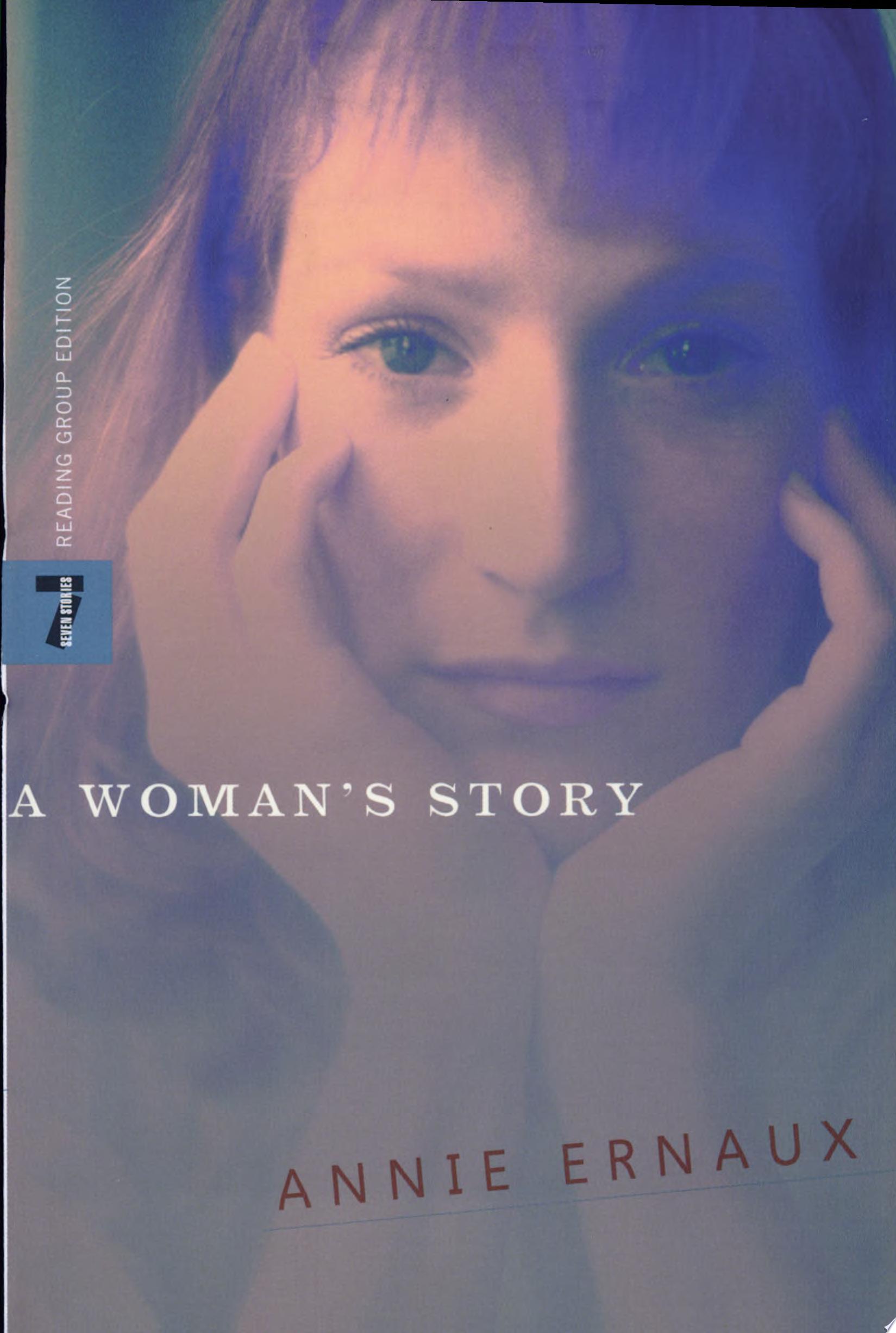
A Woman's Story [图书] 豆瓣
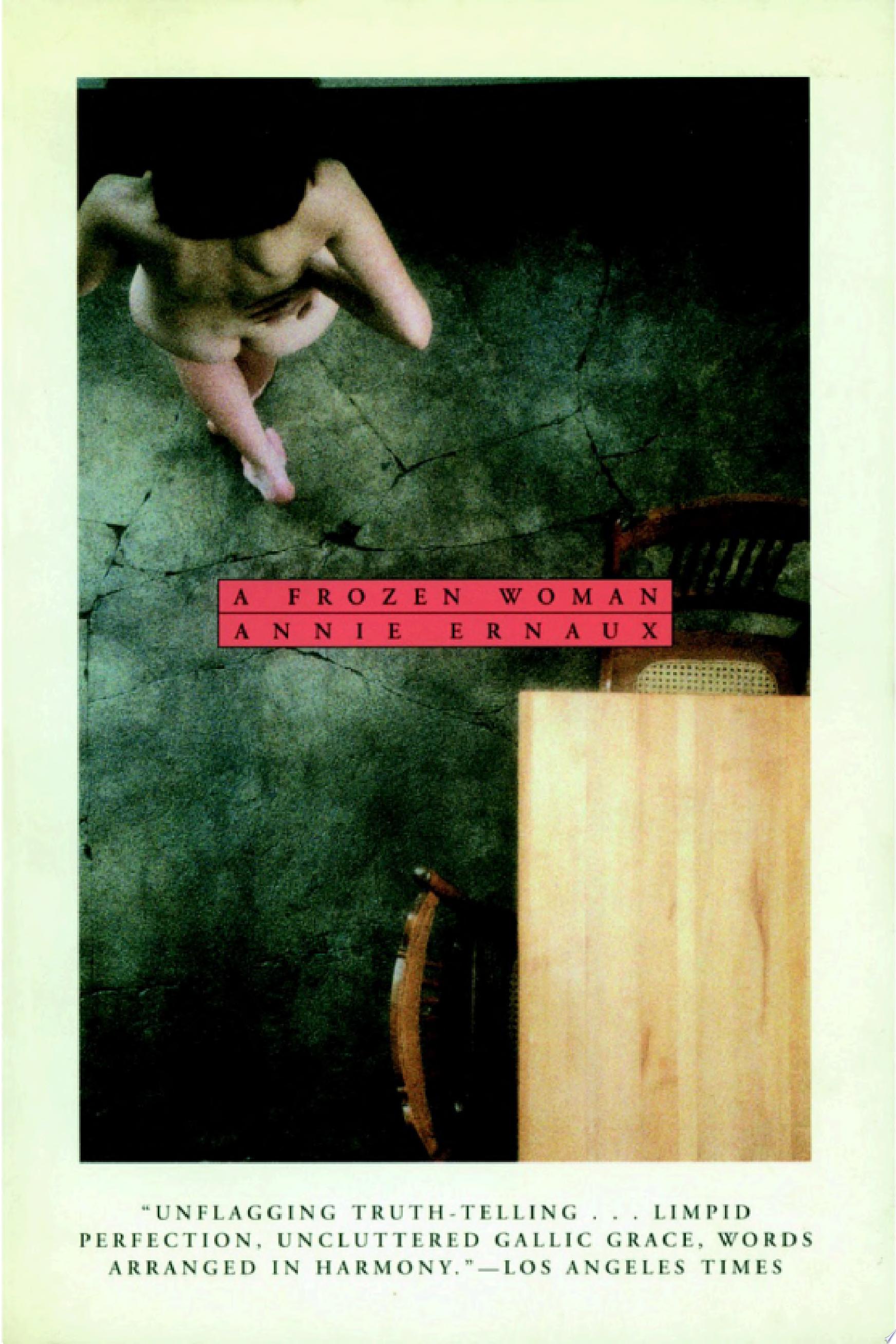
La femme gelée [图书] 豆瓣
Les armoires vides [图书] 豆瓣
Shame [图书] 豆瓣
"My father tried to kill my mother one Sunday in June, in the early afternoon," begins Shame, the probing story of the twelve-year-old girl who will become the author herself, and the single traumatic memory that will echo and resonate throughout her life. With the emotionally rich voice of great fiction and the diamond-sharp analytical eye of a scientist, Annie Ernaux provides a powerful reflection on experience and the power of violent memory to endure through time, to determine the course of a life.
L'Evénement [图书] 豆瓣 谷歌图书
Depuis des années, je tourne autour de cet événement de ma vie. Lire dans un roman le récit d'un avortement me plonge dans un saisissement sans images ni pensées, comme si les mots se changeaient instantanément en sensation violente. De la même façon entendre par hasard La javanaise, J'ai la mémoire qui flanche, n'importe quelle chanson qui m'a accompagnée durant cette période, me bouleverse.
Passion simple [图书] 豆瓣
Simple Passion [图书] Goodreads 谷歌图书
Passion simple
WINNER OF THE 2022 NOBEL PRIZE IN LITERATURE
A New York Times Notable Book
In her spare, stark style, Annie Ernaux documents the desires and indignities of a human heart ensnared in an all-consuming passion.
Blurring the line between fact and fiction, an unnamed narrator attempts to plot the emotional and physical course of her 2 year relationship with a married foreigner where every word, event, and person either provides a connection with her beloved or is subject to her cold indifference.
With courage and exactitude, she seeks the truth behind an existence lived entirely for someone else, and, in the pieces of its aftermath, she is able to find it.
A New York Times Notable Book
In her spare, stark style, Annie Ernaux documents the desires and indignities of a human heart ensnared in an all-consuming passion.
Blurring the line between fact and fiction, an unnamed narrator attempts to plot the emotional and physical course of her 2 year relationship with a married foreigner where every word, event, and person either provides a connection with her beloved or is subject to her cold indifference.
With courage and exactitude, she seeks the truth behind an existence lived entirely for someone else, and, in the pieces of its aftermath, she is able to find it.
A Girl's Story [图书] 谷歌图书
WINNER OF THE 2022 NOBEL PRIZE IN LITERATURE
Another masterpiece of remembering from Annie Ernaux, the Man Booker International Prize–shortlisted author of The Years.
In A Girl’s Story, Annie Ernaux revisits the season 50 years earlier when she found herself overpowered by another’s will and desire. In the summer of 1958, 18-year-old Ernaux submits her will to a man’s, and then he moves on, leaving her without a “master,” bereft.
Now, 50 years later, she realizes she can obliterate the intervening years and return to consider this young woman that she wanted to forget completely. And to discover that here, submerged in shame, humiliation, and betrayal, but also in self-discovery and self-reliance, lies the origin of her writing life.
Another masterpiece of remembering from Annie Ernaux, the Man Booker International Prize–shortlisted author of The Years.
In A Girl’s Story, Annie Ernaux revisits the season 50 years earlier when she found herself overpowered by another’s will and desire. In the summer of 1958, 18-year-old Ernaux submits her will to a man’s, and then he moves on, leaving her without a “master,” bereft.
Now, 50 years later, she realizes she can obliterate the intervening years and return to consider this young woman that she wanted to forget completely. And to discover that here, submerged in shame, humiliation, and betrayal, but also in self-discovery and self-reliance, lies the origin of her writing life.
Mémoire de fille [图书] Goodreads
Mémoire de fille
« J’ai voulu l’oublier cette fille. L’oublier vraiment, c’est-à-dire ne plus avoir envie d’écrire sur elle. Ne plus penser que je dois écrire sur elle, son désir, sa folie, son idiotie et son orgueil, sa faim et son sang tari. Je n’y suis jamais parvenue. »
Dans
, Annie Ernaux replonge dans l’été 1958, celui de sa première nuit avec un homme, à la colonie de S. dans l’Orne. Nuit dont l’onde de choc s’est propagée violemment dans son corps et sur son existence durant deux années. S’appuyant sur des images indélébiles de sa mémoire, des photos et des lettres écrites à ses amies, elle interroge cette fille qu’elle a été dans un va-et-vient implacable entre hier et aujourd'hui.
Dans
, Annie Ernaux replonge dans l’été 1958, celui de sa première nuit avec un homme, à la colonie de S. dans l’Orne. Nuit dont l’onde de choc s’est propagée violemment dans son corps et sur son existence durant deux années. S’appuyant sur des images indélébiles de sa mémoire, des photos et des lettres écrites à ses amies, elle interroge cette fille qu’elle a été dans un va-et-vient implacable entre hier et aujourd'hui.
Happening [图书] 谷歌图书
WINNER OF THE 2022 NOBEL PRIZE IN LITERATURE
"Happening recounts what it was like to be a young woman whose life changed — and world ominously narrowed — in 1963 with an unwanted pregnancy. . . . It feels urgently of the moment."
--The New York Times
In 1963, Annie Ernaux, 23 and unattached, realizes she is pregnant. Shame arises in her like a plague: Understanding that her pregnancy will mark her and her family as social failures, she knows she cannot keep that child.
This is the story, written forty years later, of a trauma Ernaux never overcame. In a France where abortion was illegal, she attempted, in vain, to self-administer the abortion with a knitting needle. Fearful and desperate, she finally located an abortionist, and ends up in a hospital emergency ward where she nearly dies.
In Happening, Ernaux sifts through her memories and her journal entries dating from those days. Clearly, cleanly, she gleans the meanings of her experience.
Now an award-winning film by Audrey Diwan
Winner of the Golden Lion at the Venice International Film Festival
Official Selection of the Sundance Film Festival
"Happening recounts what it was like to be a young woman whose life changed — and world ominously narrowed — in 1963 with an unwanted pregnancy. . . . It feels urgently of the moment."
--The New York Times
In 1963, Annie Ernaux, 23 and unattached, realizes she is pregnant. Shame arises in her like a plague: Understanding that her pregnancy will mark her and her family as social failures, she knows she cannot keep that child.
This is the story, written forty years later, of a trauma Ernaux never overcame. In a France where abortion was illegal, she attempted, in vain, to self-administer the abortion with a knitting needle. Fearful and desperate, she finally located an abortionist, and ends up in a hospital emergency ward where she nearly dies.
In Happening, Ernaux sifts through her memories and her journal entries dating from those days. Clearly, cleanly, she gleans the meanings of her experience.
Now an award-winning film by Audrey Diwan
Winner of the Golden Lion at the Venice International Film Festival
Official Selection of the Sundance Film Festival
Happening [图书] Goodreads 豆瓣
L'évènement
In 1963, Annie Ernaux, 23 and unattached, realizes she is pregnant. Shame arises in her like a plague: Understanding that her pregnancy will mark her and her family as social failures, she knows she cannot keep that child.
This is the story, written forty years later, of a trauma Ernaux never overcame. In a France where abortion was illegal, she attempted, in vain, to self-administer the abortion with a knitting needle. Fearful and desperate, she finally located an abortionist, and ends up in a hospital emergency ward where she nearly dies.
In Happening, Ernaux sifts through her memories and her journal entries dating from those days. Clearly, cleanly, she gleans the meanings of her experience.
This is the story, written forty years later, of a trauma Ernaux never overcame. In a France where abortion was illegal, she attempted, in vain, to self-administer the abortion with a knitting needle. Fearful and desperate, she finally located an abortionist, and ends up in a hospital emergency ward where she nearly dies.
In Happening, Ernaux sifts through her memories and her journal entries dating from those days. Clearly, cleanly, she gleans the meanings of her experience.
L'usage de la photo [图书] 豆瓣
The Years [图书] Goodreads
Les Années
is a personal narrative of the period 1941 to 2006 told through the lens of memory, impressions past and present—even projections into the future—photos, books, songs, radio, television and decades of advertising, headlines, contrasted with intimate conflicts and writing notes from 6 decades of diaries.
Local dialect, words of the times, slogans, brands and names for the ever-proliferating objects, are given voice here. The voice we recognize as the author’s continually dissolves and re-emerges. Ernaux makes the passage of time palpable. Time itself, inexorable, narrates its own course, consigning all other narrators to anonymity. A new kind of autobiography emerges, at once subjective and impersonal, private and collective.
On its 2008 publication in France,
came as a surprise. Though Ernaux had for years been hailed as a beloved, bestselling and award-winning author,
was in many ways a departure: both an intimate memoir “written” by entire generations, and a story of generations telling a very personal story. Like the generation before hers, the narrator eschews the “I” for the “we” (or “they”, or “one”) as if collective life were inextricably intertwined with a private life that in her parents’ generation ceased to exist. She writes of her parents’ generation (and could be writing of her own book): “From a common fund of hunger and fear, everything was told in the “we” and impersonal pronouns.”
Local dialect, words of the times, slogans, brands and names for the ever-proliferating objects, are given voice here. The voice we recognize as the author’s continually dissolves and re-emerges. Ernaux makes the passage of time palpable. Time itself, inexorable, narrates its own course, consigning all other narrators to anonymity. A new kind of autobiography emerges, at once subjective and impersonal, private and collective.
On its 2008 publication in France,
came as a surprise. Though Ernaux had for years been hailed as a beloved, bestselling and award-winning author,
was in many ways a departure: both an intimate memoir “written” by entire generations, and a story of generations telling a very personal story. Like the generation before hers, the narrator eschews the “I” for the “we” (or “they”, or “one”) as if collective life were inextricably intertwined with a private life that in her parents’ generation ceased to exist. She writes of her parents’ generation (and could be writing of her own book): “From a common fund of hunger and fear, everything was told in the “we” and impersonal pronouns.”