威廉·理查德·瓦格纳 — 编剧 (80)
特里斯坦与伊索尔德 1999年大都会歌剧团版 [演出] 豆瓣
所属 演出: 特里斯坦与伊索尔德
语言: german 德语 剧团: Metropolitan Opera Orchestra 大都会歌剧团管弦乐团 ; Metropolitan Opera Chorus 大都会歌剧团合唱团 剧院: Metropolitan Opera House 大都会歌剧院 导演: Dieter Dorn
其它标题: 1999年大都会歌剧团版 编剧: Richard Wagner 作曲: Richard Wagner 演员: Ben Heppner / Jane Eaglen
Act 1
Isolde, promised to King Marke in marriage, and her handmaid, Brangäne, are quartered aboard Tristan's ship being transported to the king's lands in Cornwall. The opera opens with the voice of a young sailor singing of a "wild Irish maid", ("Westwärts schweift der Blick") which Isolde construes to be a mocking reference to herself. In a furious outburst, she wishes the seas to rise up and sink the ship, killing herself and all on board ("Erwache mir wieder, kühne Gewalt"). Her scorn and rage are directed particularly at Tristan, the knight responsible for taking her to Marke, and Isolde sends Brangäne to command Tristan to appear before her ("Befehlen liess' dem Eigenholde"). Tristan, however, refuses Brangäne's request, claiming that his place is at the helm. His henchman, Kurwenal, answers more brusquely, saying that Isolde is in no position to command Tristan and reminds Brangäne that Isolde's previous fiancé, Morold, was killed by Tristan ("Herr Morold zog zu Meere her").
Brangäne returns to Isolde to relate these events, and Isolde, in what is termed the "narrative and curse", sadly tells her of how, following the death of Morold, she happened upon a stranger who called himself Tantris. Tantris was found mortally wounded in a barge ("von einem Kahn, der klein und arm") and Isolde used her healing powers to restore him to health. She discovered during Tantris' recovery, however, that he was actually Tristan, the murderer of her fiancé. Isolde attempted to kill the man with his own sword as he lay helpless before her. However, Tristan looked not at the sword that would kill him or the hand that wielded the sword, but into her eyes ("Er sah' mir in die Augen"). His action pierced her heart and she was unable to slay him. Tristan was allowed to leave with the promise never to come back, but he later returned with the intention of marrying Isolde to his uncle, King Marke. Isolde, furious at Tristan's betrayal, insists that he drink atonement to her, and from her medicine chest produces a vial to make the drink. Brangäne is shocked to see that it is a lethal poison.
Kurwenal appears in the women's quarters ("Auf auf! Ihr Frauen!") and announces that the voyage is coming to an end. Isolde warns Kurwenal that she will not appear before the King if Tristan does not come before her as she had previously ordered and drink atonement to her. When Tristan arrives, Isolde reproaches him about his conduct and tells him that he owes her his life and how his actions have undermined her honour, since she blessed Morold's weapons before battle and therefore she swore revenge. Tristan first offers his sword but Isolde refuses; they must drink atonement. Brangäne brings in the potion that will seal their pardon; Tristan knows that it may kill him, since he knows Isolde's magic powers ("Wohl kenn' ich Irland's Königin"). The journey almost at its end, Tristan drinks and Isolde takes half the potion for herself. The potion seems to work but it does not bring death but relentless love ("Tristan!" "Isolde!"). Kurwenal, who announces the imminent arrival on board of King Marke, interrupts their rapture. Isolde asks Brangäne which potion she prepared and Brangäne replies, as the sailors hail the arrival of King Marke, that it was not poison, but rather a love potion.
Act 2
King Marke leads a hunting party out into the night, leaving Isolde and Brangäne alone in the castle, who both stand beside a burning brazier. Isolde, listening to the hunting horns, believes several times that the hunting party is far enough away to warrant the extinguishing of the brazier – the prearranged signal for Tristan to join her ("Nicht Hörnerschall tönt so hold"). Brangäne warns Isolde that Melot, one of King Marke's knights, has seen the amorous looks exchanged between Tristan and Isolde and suspects their passion ("Ein Einz'ger war's, ich achtet' es wohl"). Isolde, however, believes Melot to be Tristan's most loyal friend, and, in a frenzy of desire, extinguishes the flames. Brangäne retires to the ramparts to keep watch as Tristan arrives.
The lovers, at last alone and freed from the constraints of courtly life, declare their passion for each other. Tristan decries the realm of daylight which is false, unreal, and keeps them apart. It is only in night, he claims, that they can truly be together and only in the long night of death can they be eternally united ("O sink' hernieder, Nacht der Liebe"). During their long tryst, Brangäne calls a warning several times that the night is ending ("Einsam wachend in der Nacht"), but her cries fall upon deaf ears. The day breaks in on the lovers as Melot leads King Marke and his men to find Tristan and Isolde in each other's arms. Marke is heartbroken, not only because of his nephew's betrayal but also because Melot chose to betray his friend Tristan to Marke and because of Isolde's betrayal as well ("Mir – dies? Dies, Tristan – mir?").
When questioned, Tristan says he cannot answer to the King the reason of his betrayal since he would not understand. He turns to Isolde, who agrees to follow him again into the realm of night. Tristan announces that Melot has fallen in love with Isolde too. Melot and Tristan fight, but, at the crucial moment, Tristan throws his sword aside and allows Melot to severely wound him.
Act 3
Kurwenal has brought Tristan home to his castle at Kareol in Brittany. A shepherd pipes a mournful tune and asks if Tristan is awake. Kurwenal replies that only Isolde's arrival can save Tristan, and the shepherd offers to keep watch and claims that he will pipe a joyful tune to mark the arrival of any ship. Tristan awakes ("Die alte Weise – was weckt sie mich?") and laments his fate – to be, once again, in the false realm of daylight, once more driven by unceasing unquenchable yearning ("Wo ich erwacht' weilt ich nicht"). Tristan's sorrow ends when Kurwenal tells him that Isolde is on her way. Tristan, overjoyed, asks if her ship is in sight, but only a sorrowful tune from the shepherd's pipe is heard.
Tristan relapses and recalls that the shepherd's mournful tune is the same as was played when he was told of the deaths of his father and mother ("Muss ich dich so versteh'n, du alte, ernst Weise"). He rails once again against his desires and against the fateful love potion ("verflucht sei, furchtbarer Trank!") until, exhausted, he collapses in delirium. After his collapse, the shepherd is heard piping the arrival of Isolde's ship, and, as Kurwenal rushes to meet her, Tristan tears the bandages from his wounds in his excitement ("Hahei! Mein Blut, lustig nun fliesse!"). As Isolde arrives at his side, Tristan dies with her name on his lips.
Isolde collapses beside her deceased lover just as the appearance of another ship is announced. Kurwenal spies Melot, Marke and Brangäne arriving ("Tod und Hölle! Alles zur Hand!"). He believes they have come to kill Tristan and, in an attempt to avenge him, furiously attacks Melot. Marke tries to stop the fight to no avail. Both Melot and Kurwenal are killed in the fight. Marke and Brangäne finally reach Tristan and Isolde. Marke, grieving over the body of his "truest friend" ("Tot denn alles!"), explains that Brangäne revealed the secret of the love potion and that he had come not to part the lovers, but to unite them ("Warum Isolde, warum mir das?"). Isolde appears to wake at this and in a final aria describing her vision of Tristan risen again (the "Liebestod", "love death"), dies ("Mild und leise wie er lächelt").
特里斯坦与伊索尔德 2017年中国国家大剧院版 [演出] 豆瓣
所属 演出: 特里斯坦与伊索尔德
语言: german 德语 剧团: 中国国家大剧院管弦乐团;中国国家大剧院合唱团;北京管乐交响乐团 剧院: 中国国家大剧院 导演: Mariusz Treliński
其它标题: 2017年中国国家大剧院版 编剧: Richard Wagner 作曲: Richard Wagner 演员: Jay Hunter Morris / Ann Petersen
Act 1
Isolde, promised to King Marke in marriage, and her handmaid, Brangäne, are quartered aboard Tristan's ship being transported to the king's lands in Cornwall. The opera opens with the voice of a young sailor singing of a "wild Irish maid", ("Westwärts schweift der Blick") which Isolde construes to be a mocking reference to herself. In a furious outburst, she wishes the seas to rise up and sink the ship, killing herself and all on board ("Erwache mir wieder, kühne Gewalt"). Her scorn and rage are directed particularly at Tristan, the knight responsible for taking her to Marke, and Isolde sends Brangäne to command Tristan to appear before her ("Befehlen liess' dem Eigenholde"). Tristan, however, refuses Brangäne's request, claiming that his place is at the helm. His henchman, Kurwenal, answers more brusquely, saying that Isolde is in no position to command Tristan and reminds Brangäne that Isolde's previous fiancé, Morold, was killed by Tristan ("Herr Morold zog zu Meere her").
Brangäne returns to Isolde to relate these events, and Isolde, in what is termed the "narrative and curse", sadly tells her of how, following the death of Morold, she happened upon a stranger who called himself Tantris. Tantris was found mortally wounded in a barge ("von einem Kahn, der klein und arm") and Isolde used her healing powers to restore him to health. She discovered during Tantris' recovery, however, that he was actually Tristan, the murderer of her fiancé. Isolde attempted to kill the man with his own sword as he lay helpless before her. However, Tristan looked not at the sword that would kill him or the hand that wielded the sword, but into her eyes ("Er sah' mir in die Augen"). His action pierced her heart and she was unable to slay him. Tristan was allowed to leave with the promise never to come back, but he later returned with the intention of marrying Isolde to his uncle, King Marke. Isolde, furious at Tristan's betrayal, insists that he drink atonement to her, and from her medicine chest produces a vial to make the drink. Brangäne is shocked to see that it is a lethal poison.
Kurwenal appears in the women's quarters ("Auf auf! Ihr Frauen!") and announces that the voyage is coming to an end. Isolde warns Kurwenal that she will not appear before the King if Tristan does not come before her as she had previously ordered and drink atonement to her. When Tristan arrives, Isolde reproaches him about his conduct and tells him that he owes her his life and how his actions have undermined her honour, since she blessed Morold's weapons before battle and therefore she swore revenge. Tristan first offers his sword but Isolde refuses; they must drink atonement. Brangäne brings in the potion that will seal their pardon; Tristan knows that it may kill him, since he knows Isolde's magic powers ("Wohl kenn' ich Irland's Königin"). The journey almost at its end, Tristan drinks and Isolde takes half the potion for herself. The potion seems to work but it does not bring death but relentless love ("Tristan!" "Isolde!"). Kurwenal, who announces the imminent arrival on board of King Marke, interrupts their rapture. Isolde asks Brangäne which potion she prepared and Brangäne replies, as the sailors hail the arrival of King Marke, that it was not poison, but rather a love potion.
Act 2
King Marke leads a hunting party out into the night, leaving Isolde and Brangäne alone in the castle, who both stand beside a burning brazier. Isolde, listening to the hunting horns, believes several times that the hunting party is far enough away to warrant the extinguishing of the brazier – the prearranged signal for Tristan to join her ("Nicht Hörnerschall tönt so hold"). Brangäne warns Isolde that Melot, one of King Marke's knights, has seen the amorous looks exchanged between Tristan and Isolde and suspects their passion ("Ein Einz'ger war's, ich achtet' es wohl"). Isolde, however, believes Melot to be Tristan's most loyal friend, and, in a frenzy of desire, extinguishes the flames. Brangäne retires to the ramparts to keep watch as Tristan arrives.
The lovers, at last alone and freed from the constraints of courtly life, declare their passion for each other. Tristan decries the realm of daylight which is false, unreal, and keeps them apart. It is only in night, he claims, that they can truly be together and only in the long night of death can they be eternally united ("O sink' hernieder, Nacht der Liebe"). During their long tryst, Brangäne calls a warning several times that the night is ending ("Einsam wachend in der Nacht"), but her cries fall upon deaf ears. The day breaks in on the lovers as Melot leads King Marke and his men to find Tristan and Isolde in each other's arms. Marke is heartbroken, not only because of his nephew's betrayal but also because Melot chose to betray his friend Tristan to Marke and because of Isolde's betrayal as well ("Mir – dies? Dies, Tristan – mir?").
When questioned, Tristan says he cannot answer to the King the reason of his betrayal since he would not understand. He turns to Isolde, who agrees to follow him again into the realm of night. Tristan announces that Melot has fallen in love with Isolde too. Melot and Tristan fight, but, at the crucial moment, Tristan throws his sword aside and allows Melot to severely wound him.
Act 3
Kurwenal has brought Tristan home to his castle at Kareol in Brittany. A shepherd pipes a mournful tune and asks if Tristan is awake. Kurwenal replies that only Isolde's arrival can save Tristan, and the shepherd offers to keep watch and claims that he will pipe a joyful tune to mark the arrival of any ship. Tristan awakes ("Die alte Weise – was weckt sie mich?") and laments his fate – to be, once again, in the false realm of daylight, once more driven by unceasing unquenchable yearning ("Wo ich erwacht' weilt ich nicht"). Tristan's sorrow ends when Kurwenal tells him that Isolde is on her way. Tristan, overjoyed, asks if her ship is in sight, but only a sorrowful tune from the shepherd's pipe is heard.
Tristan relapses and recalls that the shepherd's mournful tune is the same as was played when he was told of the deaths of his father and mother ("Muss ich dich so versteh'n, du alte, ernst Weise"). He rails once again against his desires and against the fateful love potion ("verflucht sei, furchtbarer Trank!") until, exhausted, he collapses in delirium. After his collapse, the shepherd is heard piping the arrival of Isolde's ship, and, as Kurwenal rushes to meet her, Tristan tears the bandages from his wounds in his excitement ("Hahei! Mein Blut, lustig nun fliesse!"). As Isolde arrives at his side, Tristan dies with her name on his lips.
Isolde collapses beside her deceased lover just as the appearance of another ship is announced. Kurwenal spies Melot, Marke and Brangäne arriving ("Tod und Hölle! Alles zur Hand!"). He believes they have come to kill Tristan and, in an attempt to avenge him, furiously attacks Melot. Marke tries to stop the fight to no avail. Both Melot and Kurwenal are killed in the fight. Marke and Brangäne finally reach Tristan and Isolde. Marke, grieving over the body of his "truest friend" ("Tot denn alles!"), explains that Brangäne revealed the secret of the love potion and that he had come not to part the lovers, but to unite them ("Warum Isolde, warum mir das?"). Isolde appears to wake at this and in a final aria describing her vision of Tristan risen again (the "Liebestod", "love death"), dies ("Mild und leise wie er lächelt").
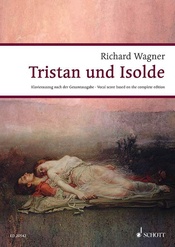
特里斯坦与伊索尔德 2015年维也纳国家歌剧院版 [演出] 豆瓣
所属 演出: 特里斯坦与伊索尔德
语言: german 德语 剧团: Orchester der Wiener Staatsoper 维也纳国家歌剧院管弦乐团 ; Chor der Wiener Staatsoper 维也纳国家歌剧院合唱团 剧院: Wiener Staatsoper 维也纳国家歌剧院 导演: David McVicar
其它标题: 2015年维也纳国家歌剧院版 编剧: Richard Wagner 作曲: Richard Wagner 演员: Peter Seiffert / Iréne Theorin
Act 1
Isolde, promised to King Marke in marriage, and her handmaid, Brangäne, are quartered aboard Tristan's ship being transported to the king's lands in Cornwall. The opera opens with the voice of a young sailor singing of a "wild Irish maid", ("Westwärts schweift der Blick") which Isolde construes to be a mocking reference to herself. In a furious outburst, she wishes the seas to rise up and sink the ship, killing herself and all on board ("Erwache mir wieder, kühne Gewalt"). Her scorn and rage are directed particularly at Tristan, the knight responsible for taking her to Marke, and Isolde sends Brangäne to command Tristan to appear before her ("Befehlen liess' dem Eigenholde"). Tristan, however, refuses Brangäne's request, claiming that his place is at the helm. His henchman, Kurwenal, answers more brusquely, saying that Isolde is in no position to command Tristan and reminds Brangäne that Isolde's previous fiancé, Morold, was killed by Tristan ("Herr Morold zog zu Meere her").
Brangäne returns to Isolde to relate these events, and Isolde, in what is termed the "narrative and curse", sadly tells her of how, following the death of Morold, she happened upon a stranger who called himself Tantris. Tantris was found mortally wounded in a barge ("von einem Kahn, der klein und arm") and Isolde used her healing powers to restore him to health. She discovered during Tantris' recovery, however, that he was actually Tristan, the murderer of her fiancé. Isolde attempted to kill the man with his own sword as he lay helpless before her. However, Tristan looked not at the sword that would kill him or the hand that wielded the sword, but into her eyes ("Er sah' mir in die Augen"). His action pierced her heart and she was unable to slay him. Tristan was allowed to leave with the promise never to come back, but he later returned with the intention of marrying Isolde to his uncle, King Marke. Isolde, furious at Tristan's betrayal, insists that he drink atonement to her, and from her medicine chest produces a vial to make the drink. Brangäne is shocked to see that it is a lethal poison.
Kurwenal appears in the women's quarters ("Auf auf! Ihr Frauen!") and announces that the voyage is coming to an end. Isolde warns Kurwenal that she will not appear before the King if Tristan does not come before her as she had previously ordered and drink atonement to her. When Tristan arrives, Isolde reproaches him about his conduct and tells him that he owes her his life and how his actions have undermined her honour, since she blessed Morold's weapons before battle and therefore she swore revenge. Tristan first offers his sword but Isolde refuses; they must drink atonement. Brangäne brings in the potion that will seal their pardon; Tristan knows that it may kill him, since he knows Isolde's magic powers ("Wohl kenn' ich Irland's Königin"). The journey almost at its end, Tristan drinks and Isolde takes half the potion for herself. The potion seems to work but it does not bring death but relentless love ("Tristan!" "Isolde!"). Kurwenal, who announces the imminent arrival on board of King Marke, interrupts their rapture. Isolde asks Brangäne which potion she prepared and Brangäne replies, as the sailors hail the arrival of King Marke, that it was not poison, but rather a love potion.
Act 2
King Marke leads a hunting party out into the night, leaving Isolde and Brangäne alone in the castle, who both stand beside a burning brazier. Isolde, listening to the hunting horns, believes several times that the hunting party is far enough away to warrant the extinguishing of the brazier – the prearranged signal for Tristan to join her ("Nicht Hörnerschall tönt so hold"). Brangäne warns Isolde that Melot, one of King Marke's knights, has seen the amorous looks exchanged between Tristan and Isolde and suspects their passion ("Ein Einz'ger war's, ich achtet' es wohl"). Isolde, however, believes Melot to be Tristan's most loyal friend, and, in a frenzy of desire, extinguishes the flames. Brangäne retires to the ramparts to keep watch as Tristan arrives.
The lovers, at last alone and freed from the constraints of courtly life, declare their passion for each other. Tristan decries the realm of daylight which is false, unreal, and keeps them apart. It is only in night, he claims, that they can truly be together and only in the long night of death can they be eternally united ("O sink' hernieder, Nacht der Liebe"). During their long tryst, Brangäne calls a warning several times that the night is ending ("Einsam wachend in der Nacht"), but her cries fall upon deaf ears. The day breaks in on the lovers as Melot leads King Marke and his men to find Tristan and Isolde in each other's arms. Marke is heartbroken, not only because of his nephew's betrayal but also because Melot chose to betray his friend Tristan to Marke and because of Isolde's betrayal as well ("Mir – dies? Dies, Tristan – mir?").
When questioned, Tristan says he cannot answer to the King the reason of his betrayal since he would not understand. He turns to Isolde, who agrees to follow him again into the realm of night. Tristan announces that Melot has fallen in love with Isolde too. Melot and Tristan fight, but, at the crucial moment, Tristan throws his sword aside and allows Melot to severely wound him.
Act 3
Kurwenal has brought Tristan home to his castle at Kareol in Brittany. A shepherd pipes a mournful tune and asks if Tristan is awake. Kurwenal replies that only Isolde's arrival can save Tristan, and the shepherd offers to keep watch and claims that he will pipe a joyful tune to mark the arrival of any ship. Tristan awakes ("Die alte Weise – was weckt sie mich?") and laments his fate – to be, once again, in the false realm of daylight, once more driven by unceasing unquenchable yearning ("Wo ich erwacht' weilt ich nicht"). Tristan's sorrow ends when Kurwenal tells him that Isolde is on her way. Tristan, overjoyed, asks if her ship is in sight, but only a sorrowful tune from the shepherd's pipe is heard.
Tristan relapses and recalls that the shepherd's mournful tune is the same as was played when he was told of the deaths of his father and mother ("Muss ich dich so versteh'n, du alte, ernst Weise"). He rails once again against his desires and against the fateful love potion ("verflucht sei, furchtbarer Trank!") until, exhausted, he collapses in delirium. After his collapse, the shepherd is heard piping the arrival of Isolde's ship, and, as Kurwenal rushes to meet her, Tristan tears the bandages from his wounds in his excitement ("Hahei! Mein Blut, lustig nun fliesse!"). As Isolde arrives at his side, Tristan dies with her name on his lips.
Isolde collapses beside her deceased lover just as the appearance of another ship is announced. Kurwenal spies Melot, Marke and Brangäne arriving ("Tod und Hölle! Alles zur Hand!"). He believes they have come to kill Tristan and, in an attempt to avenge him, furiously attacks Melot. Marke tries to stop the fight to no avail. Both Melot and Kurwenal are killed in the fight. Marke and Brangäne finally reach Tristan and Isolde. Marke, grieving over the body of his "truest friend" ("Tot denn alles!"), explains that Brangäne revealed the secret of the love potion and that he had come not to part the lovers, but to unite them ("Warum Isolde, warum mir das?"). Isolde appears to wake at this and in a final aria describing her vision of Tristan risen again (the "Liebestod", "love death"), dies ("Mild und leise wie er lächelt").
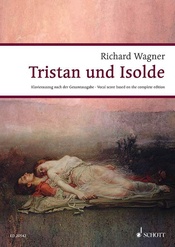
特里斯坦与伊索尔德 2018年巴黎国家歌剧团版 [演出] 豆瓣
所属 演出: 特里斯坦与伊索尔德
剧团: Orchestre de l’Opéra national de Paris 巴黎国家歌剧团管弦乐团 ; Chœurs de l’Opéra national de Paris 巴黎国家歌剧团合唱团 剧院: Opéra Bastille 巴士底歌剧院 导演: Peter Sellars
其它标题: 2018年巴黎国家歌剧团版 编剧: Richard Wagner 作曲: Richard Wagner 演员: Andreas Schager / Martina Serafin
Act 1
Isolde, promised to King Marke in marriage, and her handmaid, Brangäne, are quartered aboard Tristan's ship being transported to the king's lands in Cornwall. The opera opens with the voice of a young sailor singing of a "wild Irish maid", ("Westwärts schweift der Blick") which Isolde construes to be a mocking reference to herself. In a furious outburst, she wishes the seas to rise up and sink the ship, killing herself and all on board ("Erwache mir wieder, kühne Gewalt"). Her scorn and rage are directed particularly at Tristan, the knight responsible for taking her to Marke, and Isolde sends Brangäne to command Tristan to appear before her ("Befehlen liess' dem Eigenholde"). Tristan, however, refuses Brangäne's request, claiming that his place is at the helm. His henchman, Kurwenal, answers more brusquely, saying that Isolde is in no position to command Tristan and reminds Brangäne that Isolde's previous fiancé, Morold, was killed by Tristan ("Herr Morold zog zu Meere her").
Brangäne returns to Isolde to relate these events, and Isolde, in what is termed the "narrative and curse", sadly tells her of how, following the death of Morold, she happened upon a stranger who called himself Tantris. Tantris was found mortally wounded in a barge ("von einem Kahn, der klein und arm") and Isolde used her healing powers to restore him to health. She discovered during Tantris' recovery, however, that he was actually Tristan, the murderer of her fiancé. Isolde attempted to kill the man with his own sword as he lay helpless before her. However, Tristan looked not at the sword that would kill him or the hand that wielded the sword, but into her eyes ("Er sah' mir in die Augen"). His action pierced her heart and she was unable to slay him. Tristan was allowed to leave with the promise never to come back, but he later returned with the intention of marrying Isolde to his uncle, King Marke. Isolde, furious at Tristan's betrayal, insists that he drink atonement to her, and from her medicine chest produces a vial to make the drink. Brangäne is shocked to see that it is a lethal poison.
Kurwenal appears in the women's quarters ("Auf auf! Ihr Frauen!") and announces that the voyage is coming to an end. Isolde warns Kurwenal that she will not appear before the King if Tristan does not come before her as she had previously ordered and drink atonement to her. When Tristan arrives, Isolde reproaches him about his conduct and tells him that he owes her his life and how his actions have undermined her honour, since she blessed Morold's weapons before battle and therefore she swore revenge. Tristan first offers his sword but Isolde refuses; they must drink atonement. Brangäne brings in the potion that will seal their pardon; Tristan knows that it may kill him, since he knows Isolde's magic powers ("Wohl kenn' ich Irland's Königin"). The journey almost at its end, Tristan drinks and Isolde takes half the potion for herself. The potion seems to work but it does not bring death but relentless love ("Tristan!" "Isolde!"). Kurwenal, who announces the imminent arrival on board of King Marke, interrupts their rapture. Isolde asks Brangäne which potion she prepared and Brangäne replies, as the sailors hail the arrival of King Marke, that it was not poison, but rather a love potion.
Act 2
King Marke leads a hunting party out into the night, leaving Isolde and Brangäne alone in the castle, who both stand beside a burning brazier. Isolde, listening to the hunting horns, believes several times that the hunting party is far enough away to warrant the extinguishing of the brazier – the prearranged signal for Tristan to join her ("Nicht Hörnerschall tönt so hold"). Brangäne warns Isolde that Melot, one of King Marke's knights, has seen the amorous looks exchanged between Tristan and Isolde and suspects their passion ("Ein Einz'ger war's, ich achtet' es wohl"). Isolde, however, believes Melot to be Tristan's most loyal friend, and, in a frenzy of desire, extinguishes the flames. Brangäne retires to the ramparts to keep watch as Tristan arrives.
The lovers, at last alone and freed from the constraints of courtly life, declare their passion for each other. Tristan decries the realm of daylight which is false, unreal, and keeps them apart. It is only in night, he claims, that they can truly be together and only in the long night of death can they be eternally united ("O sink' hernieder, Nacht der Liebe"). During their long tryst, Brangäne calls a warning several times that the night is ending ("Einsam wachend in der Nacht"), but her cries fall upon deaf ears. The day breaks in on the lovers as Melot leads King Marke and his men to find Tristan and Isolde in each other's arms. Marke is heartbroken, not only because of his nephew's betrayal but also because Melot chose to betray his friend Tristan to Marke and because of Isolde's betrayal as well ("Mir – dies? Dies, Tristan – mir?").
When questioned, Tristan says he cannot answer to the King the reason of his betrayal since he would not understand. He turns to Isolde, who agrees to follow him again into the realm of night. Tristan announces that Melot has fallen in love with Isolde too. Melot and Tristan fight, but, at the crucial moment, Tristan throws his sword aside and allows Melot to severely wound him.
Act 3
Kurwenal has brought Tristan home to his castle at Kareol in Brittany. A shepherd pipes a mournful tune and asks if Tristan is awake. Kurwenal replies that only Isolde's arrival can save Tristan, and the shepherd offers to keep watch and claims that he will pipe a joyful tune to mark the arrival of any ship. Tristan awakes ("Die alte Weise – was weckt sie mich?") and laments his fate – to be, once again, in the false realm of daylight, once more driven by unceasing unquenchable yearning ("Wo ich erwacht' weilt ich nicht"). Tristan's sorrow ends when Kurwenal tells him that Isolde is on her way. Tristan, overjoyed, asks if her ship is in sight, but only a sorrowful tune from the shepherd's pipe is heard.
Tristan relapses and recalls that the shepherd's mournful tune is the same as was played when he was told of the deaths of his father and mother ("Muss ich dich so versteh'n, du alte, ernst Weise"). He rails once again against his desires and against the fateful love potion ("verflucht sei, furchtbarer Trank!") until, exhausted, he collapses in delirium. After his collapse, the shepherd is heard piping the arrival of Isolde's ship, and, as Kurwenal rushes to meet her, Tristan tears the bandages from his wounds in his excitement ("Hahei! Mein Blut, lustig nun fliesse!"). As Isolde arrives at his side, Tristan dies with her name on his lips.
Isolde collapses beside her deceased lover just as the appearance of another ship is announced. Kurwenal spies Melot, Marke and Brangäne arriving ("Tod und Hölle! Alles zur Hand!"). He believes they have come to kill Tristan and, in an attempt to avenge him, furiously attacks Melot. Marke tries to stop the fight to no avail. Both Melot and Kurwenal are killed in the fight. Marke and Brangäne finally reach Tristan and Isolde. Marke, grieving over the body of his "truest friend" ("Tot denn alles!"), explains that Brangäne revealed the secret of the love potion and that he had come not to part the lovers, but to unite them ("Warum Isolde, warum mir das?"). Isolde appears to wake at this and in a final aria describing her vision of Tristan risen again (the "Liebestod", "love death"), dies ("Mild und leise wie er lächelt").
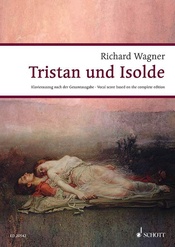
特里斯坦与伊索尔德 1998年慕尼黑歌剧节版 [演出] 豆瓣
所属 演出: 特里斯坦与伊索尔德
语言: german 德语 剧团: Bayerisches Staatsorchester 巴伐利亚国家管弦乐团 ; Bayerische Staatsopernchor 巴伐利亚国家歌剧团合唱团 剧院: Nationaltheater München 慕尼黑民族剧院 导演: Peter Konwitschny
其它标题: 1998年慕尼黑歌剧节版 编剧: Richard Wagner 作曲: Richard Wagner 演员: Jon Fredric West / Waltraud Meier
Act 1
Isolde, promised to King Marke in marriage, and her handmaid, Brangäne, are quartered aboard Tristan's ship being transported to the king's lands in Cornwall. The opera opens with the voice of a young sailor singing of a "wild Irish maid", ("Westwärts schweift der Blick") which Isolde construes to be a mocking reference to herself. In a furious outburst, she wishes the seas to rise up and sink the ship, killing herself and all on board ("Erwache mir wieder, kühne Gewalt"). Her scorn and rage are directed particularly at Tristan, the knight responsible for taking her to Marke, and Isolde sends Brangäne to command Tristan to appear before her ("Befehlen liess' dem Eigenholde"). Tristan, however, refuses Brangäne's request, claiming that his place is at the helm. His henchman, Kurwenal, answers more brusquely, saying that Isolde is in no position to command Tristan and reminds Brangäne that Isolde's previous fiancé, Morold, was killed by Tristan ("Herr Morold zog zu Meere her").
Brangäne returns to Isolde to relate these events, and Isolde, in what is termed the "narrative and curse", sadly tells her of how, following the death of Morold, she happened upon a stranger who called himself Tantris. Tantris was found mortally wounded in a barge ("von einem Kahn, der klein und arm") and Isolde used her healing powers to restore him to health. She discovered during Tantris' recovery, however, that he was actually Tristan, the murderer of her fiancé. Isolde attempted to kill the man with his own sword as he lay helpless before her. However, Tristan looked not at the sword that would kill him or the hand that wielded the sword, but into her eyes ("Er sah' mir in die Augen"). His action pierced her heart and she was unable to slay him. Tristan was allowed to leave with the promise never to come back, but he later returned with the intention of marrying Isolde to his uncle, King Marke. Isolde, furious at Tristan's betrayal, insists that he drink atonement to her, and from her medicine chest produces a vial to make the drink. Brangäne is shocked to see that it is a lethal poison.
Kurwenal appears in the women's quarters ("Auf auf! Ihr Frauen!") and announces that the voyage is coming to an end. Isolde warns Kurwenal that she will not appear before the King if Tristan does not come before her as she had previously ordered and drink atonement to her. When Tristan arrives, Isolde reproaches him about his conduct and tells him that he owes her his life and how his actions have undermined her honour, since she blessed Morold's weapons before battle and therefore she swore revenge. Tristan first offers his sword but Isolde refuses; they must drink atonement. Brangäne brings in the potion that will seal their pardon; Tristan knows that it may kill him, since he knows Isolde's magic powers ("Wohl kenn' ich Irland's Königin"). The journey almost at its end, Tristan drinks and Isolde takes half the potion for herself. The potion seems to work but it does not bring death but relentless love ("Tristan!" "Isolde!"). Kurwenal, who announces the imminent arrival on board of King Marke, interrupts their rapture. Isolde asks Brangäne which potion she prepared and Brangäne replies, as the sailors hail the arrival of King Marke, that it was not poison, but rather a love potion.
Act 2
King Marke leads a hunting party out into the night, leaving Isolde and Brangäne alone in the castle, who both stand beside a burning brazier. Isolde, listening to the hunting horns, believes several times that the hunting party is far enough away to warrant the extinguishing of the brazier – the prearranged signal for Tristan to join her ("Nicht Hörnerschall tönt so hold"). Brangäne warns Isolde that Melot, one of King Marke's knights, has seen the amorous looks exchanged between Tristan and Isolde and suspects their passion ("Ein Einz'ger war's, ich achtet' es wohl"). Isolde, however, believes Melot to be Tristan's most loyal friend, and, in a frenzy of desire, extinguishes the flames. Brangäne retires to the ramparts to keep watch as Tristan arrives.
The lovers, at last alone and freed from the constraints of courtly life, declare their passion for each other. Tristan decries the realm of daylight which is false, unreal, and keeps them apart. It is only in night, he claims, that they can truly be together and only in the long night of death can they be eternally united ("O sink' hernieder, Nacht der Liebe"). During their long tryst, Brangäne calls a warning several times that the night is ending ("Einsam wachend in der Nacht"), but her cries fall upon deaf ears. The day breaks in on the lovers as Melot leads King Marke and his men to find Tristan and Isolde in each other's arms. Marke is heartbroken, not only because of his nephew's betrayal but also because Melot chose to betray his friend Tristan to Marke and because of Isolde's betrayal as well ("Mir – dies? Dies, Tristan – mir?").
When questioned, Tristan says he cannot answer to the King the reason of his betrayal since he would not understand. He turns to Isolde, who agrees to follow him again into the realm of night. Tristan announces that Melot has fallen in love with Isolde too. Melot and Tristan fight, but, at the crucial moment, Tristan throws his sword aside and allows Melot to severely wound him.
Act 3
Kurwenal has brought Tristan home to his castle at Kareol in Brittany. A shepherd pipes a mournful tune and asks if Tristan is awake. Kurwenal replies that only Isolde's arrival can save Tristan, and the shepherd offers to keep watch and claims that he will pipe a joyful tune to mark the arrival of any ship. Tristan awakes ("Die alte Weise – was weckt sie mich?") and laments his fate – to be, once again, in the false realm of daylight, once more driven by unceasing unquenchable yearning ("Wo ich erwacht' weilt ich nicht"). Tristan's sorrow ends when Kurwenal tells him that Isolde is on her way. Tristan, overjoyed, asks if her ship is in sight, but only a sorrowful tune from the shepherd's pipe is heard.
Tristan relapses and recalls that the shepherd's mournful tune is the same as was played when he was told of the deaths of his father and mother ("Muss ich dich so versteh'n, du alte, ernst Weise"). He rails once again against his desires and against the fateful love potion ("verflucht sei, furchtbarer Trank!") until, exhausted, he collapses in delirium. After his collapse, the shepherd is heard piping the arrival of Isolde's ship, and, as Kurwenal rushes to meet her, Tristan tears the bandages from his wounds in his excitement ("Hahei! Mein Blut, lustig nun fliesse!"). As Isolde arrives at his side, Tristan dies with her name on his lips.
Isolde collapses beside her deceased lover just as the appearance of another ship is announced. Kurwenal spies Melot, Marke and Brangäne arriving ("Tod und Hölle! Alles zur Hand!"). He believes they have come to kill Tristan and, in an attempt to avenge him, furiously attacks Melot. Marke tries to stop the fight to no avail. Both Melot and Kurwenal are killed in the fight. Marke and Brangäne finally reach Tristan and Isolde. Marke, grieving over the body of his "truest friend" ("Tot denn alles!"), explains that Brangäne revealed the secret of the love potion and that he had come not to part the lovers, but to unite them ("Warum Isolde, warum mir das?"). Isolde appears to wake at this and in a final aria describing her vision of Tristan risen again (the "Liebestod", "love death"), dies ("Mild und leise wie er lächelt").
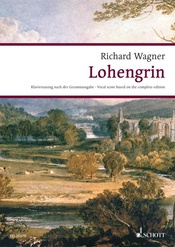
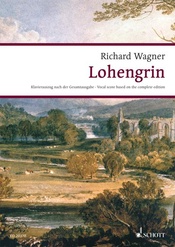
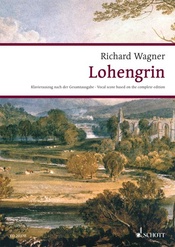
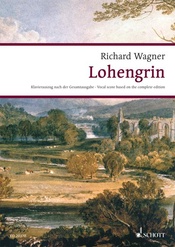
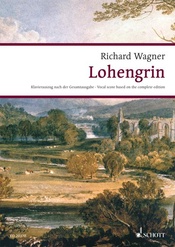
罗恩格林 [演出] 豆瓣
Lohengrin
类型: 歌剧 编剧: Richard Wagner
其它标题: Lohengrin 导演: August Everding / Werner Herzog 演员: Peter Hofmann / Éva Marton / Leif Roar / Leonie Rysanek / John Macurdy
Place: Antwerp, on the Scheldt
Time: 10th century
Summary
The people of the Duchy of Brabant are divided by quarrels and political infighting; also, a devious hostile power left over from the region's pagan past is seeking to subvert the prevailing monotheistic government and to return the Duchy to pagan rule. A mysterious knight, sent by God and possessing superhuman charisma and fighting ability, arrives to unite and strengthen the people, and to defend the innocent noble woman Elsa from a false accusation of murder, but he imposes a condition: the people must follow him without knowing his identity. Elsa in particular must never ask his name, or his heritage, or his origin. The conspirators attempt to undermine her faith in her rescuer, to create doubt among the people, and to force him to leave.
Act 1
King Henry the Fowler has arrived in Brabant, where he has assembled the German tribes in order to expel the marauding Hungarians from his dominions. He also needs to settle a dispute involving the disappearance of the child-Duke Gottfried of Brabant. The Duke's guardian, Count Friedrich von Telramund, has accused the Duke's older sister, Elsa, of murdering her brother in order to become Duchess of Brabant. Telramund calls upon the King to punish Elsa and to make him the new Duke of Brabant.
The King calls for Elsa to answer Telramund's accusation. Elsa does not answer the King's inquiries, only lamenting her brother's fate. The King declares that he cannot resolve the matter and will leave it to God's judgment through ordeal by combat. Telramund, a strong and seasoned warrior, agrees enthusiastically. When the King asks Elsa who shall be her champion, Elsa describes a knight she has beheld in her dreams (Narrative: "Alone in dark days").
Twice the Herald calls for a champion to step forward, but gets no response. Elsa kneels and prays that God may send her champion to her. A boat drawn by a swan appears on the river and in it stands a knight in shining armour. He disembarks, dismisses the swan, respectfully greets the king, and asks Elsa if she will have him as her champion and marry him. Elsa kneels in front of him and places her honour in his keeping. He asks only one thing in return for his service: Elsa must never ask him his name or where he has come from. Elsa agrees to this.
Telramund's supporters advise him to withdraw because he cannot prevail against the Knight's powers, but he proudly refuses. The chorus prays to God ("Herr und Gott") for victory for the one whose cause is just. Ortrud, Telramund's wife, does not join the prayer, but privately expresses confidence that Telramund will win. The combat commences. The unknown Knight defeats Telramund but spares his life. Taking Elsa by the hand, he declares her innocent. The crowd exits, cheering and celebrating.
Act 2
Night in the courtyard outside the cathedral
Telramund and Ortrud, banished from court, listen unhappily to the distant party-music. Ortrud reveals that she is a pagan witch (daughter of Radbod Duke of Frisia), and tries to revive Telramund's courage, assuring him that her people (and he) are destined to rule the kingdom again. She plots to induce Elsa to violate the mysterious knight's only condition.
When Elsa appears on the balcony before dawn, she hears Ortrud lamenting and pities her. As Elsa descends to open the castle door, Ortrud prays to her pagan gods, Wodan and Freia, for malice, guile, and cunning, in order to deceive Elsa and restore pagan rule to the region. Ortrud warns Elsa that since she knows nothing about her rescuer, he could leave at any time as suddenly as he came, but Elsa is sure of the Knight's virtues. The two women go into the castle. Left alone outside, Telramund vows to bring about the Knight's downfall.
The sun rises and the people assemble. The Herald announces that Telramund is now banished, and that anyone who follows Telramund shall be considered an outlaw by the law of the land. In addition, he announces that the King has offered to make the unnamed knight the Duke of Brabant; however, the Knight has declined the title, and prefers to be known only as "Protector of Brabant".[11] The Herald further announces that the Knight will lead the people to glorious new conquests, and will celebrate the marriage of himself and Elsa. In the back of the crowd, four noblemen quietly express misgivings to each other because the Knight has rescinded their privileges and is calling them to arms. Telramund secretly draws the four noblemen aside and assures them that he will regain his position and stop the Knight, by accusing him of sorcery.
As Elsa and her attendants are about to enter the church, Ortrud rushes to the front of the procession and challenges Elsa to explain who the Knight is and why anyone should follow him. Their conversation is interrupted by the entrance of the King with the Knight. Elsa tells both of them that Ortrud was interrupting the ceremony. The King tells Ortrud to step aside, then leads Elsa and the Knight toward the church. Just as they are about to enter the church, Telramund enters. He claims that his defeat in combat was invalid because the Knight did not give his name (trial by combat traditionally being open only to established citizens), then accuses the Knight of sorcery. He demands that the Knight must reveal his name; otherwise the King should rule the trial by combat invalid. The Knight refuses to reveal his identity and claims that only one person in the world has the right to make him do so: his beloved Elsa, and she has pledged not to exercise that right. Elsa, though visibly shaken and uncertain, assures him of her confidence. King Henry refuses Telramund's questions, and the nobles of Brabant and Saxony praise and honor the Knight. Elsa falls back into the crowd where Ortrud and Telramund try to intimidate her, but the Knight forces them both to leave the ceremony, and consoles Elsa. Elsa takes one last look at the banished Ortrud, then enters the church with the wedding procession.
Act 3
Scene 1: The bridal chamber
Elsa and her new husband are ushered in with the well-known bridal chorus, and they express their love for each other. Ortrud's words, however, have made an impression on Elsa; she laments that her name sounds so sweet on her husband's lips but she cannot utter his name. She asks him to tell her his name when no one else is around, but at all instances he refuses. Finally, despite his warnings, she asks the Knight the fatal questions. Before the Knight can answer, Telramund and his four recruits rush into the room in order to attack him. The Knight defeats and kills Telramund. Then, he sorrowfully turns to Elsa and asks her to follow him to the King, to whom he will now reveal his secrets.
Scene 2: On the banks of the Scheldt (as in Act 1)
The troops arrive equipped for war. Telramund's corpse is brought in. Elsa comes forward, then the Knight. He tells the King that Elsa has broken her promise, and discloses his identity ("In fernem Land") by recounting the story of the Holy Grail and of Monsalvat. He reveals himself as Lohengrin, Knight of the Grail and son of King Parsifal, sent to protect an unjustly accused woman. The laws of the Holy Grail say that Knights of the Grail must remain anonymous. If their identity is revealed. they must return home.
As Lohengrin sadly bids farewell to Elsa, the swan-boat reappears. Lohengrin tells Elsa that if she had kept her promise, she could have recovered her lost brother, and gives her his sword, horn and ring, for he is to become the future leader of Brabant. As Lohengrin tries to get in the boat, Ortrud appears. She tells Elsa that the swan is actually Gottfried, Elsa's brother, whom she cursed to become a swan. The people consider Ortrud guilty of witchcraft. Lohengrin prays and the swan turns back into young Gottfried. Lohengrin declares him the Duke of Brabant. Ortrud sinks as she sees her plans thwarted.
A dove descends from heaven and, taking the place of the swan at the head of the boat, leads Lohengrin to the castle of the Holy Grail. Elsa is stricken with grief and falls to the ground dead.
罗恩格林 1986年大都会歌剧团版 [演出] 豆瓣
所属 演出: 罗恩格林
语言: 德语 german 剧团: Metropolitan Opera Orchestra 大都会歌剧团管弦乐团 ; Metropolitan Opera Chorus 大都会歌剧团合唱团 剧院: Metropolitan Opera House 大都会歌剧院 导演: August Everding
其它标题: 1986年大都会歌剧团版 编剧: Richard Wagner 作曲: Richard Wagner 演员: Peter Hofmann / Éva Marton
Place: Antwerp, on the Scheldt
Time: 10th century
Summary
The people of the Duchy of Brabant are divided by quarrels and political infighting; also, a devious hostile power left over from the region's pagan past is seeking to subvert the prevailing monotheistic government and to return the Duchy to pagan rule. A mysterious knight, sent by God and possessing superhuman charisma and fighting ability, arrives to unite and strengthen the people, and to defend the innocent noble woman Elsa from a false accusation of murder, but he imposes a condition: the people must follow him without knowing his identity. Elsa in particular must never ask his name, or his heritage, or his origin. The conspirators attempt to undermine her faith in her rescuer, to create doubt among the people, and to force him to leave.
Act 1
King Henry the Fowler has arrived in Brabant, where he has assembled the German tribes in order to expel the marauding Hungarians from his dominions. He also needs to settle a dispute involving the disappearance of the child-Duke Gottfried of Brabant. The Duke's guardian, Count Friedrich von Telramund, has accused the Duke's older sister, Elsa, of murdering her brother in order to become Duchess of Brabant. Telramund calls upon the King to punish Elsa and to make him the new Duke of Brabant.
The King calls for Elsa to answer Telramund's accusation. Elsa does not answer the King's inquiries, only lamenting her brother's fate. The King declares that he cannot resolve the matter and will leave it to God's judgment through ordeal by combat. Telramund, a strong and seasoned warrior, agrees enthusiastically. When the King asks Elsa who shall be her champion, Elsa describes a knight she has beheld in her dreams (Narrative: "Alone in dark days").
Twice the Herald calls for a champion to step forward, but gets no response. Elsa kneels and prays that God may send her champion to her. A boat drawn by a swan appears on the river and in it stands a knight in shining armour. He disembarks, dismisses the swan, respectfully greets the king, and asks Elsa if she will have him as her champion and marry him. Elsa kneels in front of him and places her honour in his keeping. He asks only one thing in return for his service: Elsa must never ask him his name or where he has come from. Elsa agrees to this.
Telramund's supporters advise him to withdraw because he cannot prevail against the Knight's powers, but he proudly refuses. The chorus prays to God ("Herr und Gott") for victory for the one whose cause is just. Ortrud, Telramund's wife, does not join the prayer, but privately expresses confidence that Telramund will win. The combat commences. The unknown Knight defeats Telramund but spares his life. Taking Elsa by the hand, he declares her innocent. The crowd exits, cheering and celebrating.
Act 2
Night in the courtyard outside the cathedral
Telramund and Ortrud, banished from court, listen unhappily to the distant party-music. Ortrud reveals that she is a pagan witch (daughter of Radbod Duke of Frisia), and tries to revive Telramund's courage, assuring him that her people (and he) are destined to rule the kingdom again. She plots to induce Elsa to violate the mysterious knight's only condition.
When Elsa appears on the balcony before dawn, she hears Ortrud lamenting and pities her. As Elsa descends to open the castle door, Ortrud prays to her pagan gods, Wodan and Freia, for malice, guile, and cunning, in order to deceive Elsa and restore pagan rule to the region. Ortrud warns Elsa that since she knows nothing about her rescuer, he could leave at any time as suddenly as he came, but Elsa is sure of the Knight's virtues. The two women go into the castle. Left alone outside, Telramund vows to bring about the Knight's downfall.
The sun rises and the people assemble. The Herald announces that Telramund is now banished, and that anyone who follows Telramund shall be considered an outlaw by the law of the land. In addition, he announces that the King has offered to make the unnamed knight the Duke of Brabant; however, the Knight has declined the title, and prefers to be known only as "Protector of Brabant".[11] The Herald further announces that the Knight will lead the people to glorious new conquests, and will celebrate the marriage of himself and Elsa. In the back of the crowd, four noblemen quietly express misgivings to each other because the Knight has rescinded their privileges and is calling them to arms. Telramund secretly draws the four noblemen aside and assures them that he will regain his position and stop the Knight, by accusing him of sorcery.
As Elsa and her attendants are about to enter the church, Ortrud rushes to the front of the procession and challenges Elsa to explain who the Knight is and why anyone should follow him. Their conversation is interrupted by the entrance of the King with the Knight. Elsa tells both of them that Ortrud was interrupting the ceremony. The King tells Ortrud to step aside, then leads Elsa and the Knight toward the church. Just as they are about to enter the church, Telramund enters. He claims that his defeat in combat was invalid because the Knight did not give his name (trial by combat traditionally being open only to established citizens), then accuses the Knight of sorcery. He demands that the Knight must reveal his name; otherwise the King should rule the trial by combat invalid. The Knight refuses to reveal his identity and claims that only one person in the world has the right to make him do so: his beloved Elsa, and she has pledged not to exercise that right. Elsa, though visibly shaken and uncertain, assures him of her confidence. King Henry refuses Telramund's questions, and the nobles of Brabant and Saxony praise and honor the Knight. Elsa falls back into the crowd where Ortrud and Telramund try to intimidate her, but the Knight forces them both to leave the ceremony, and consoles Elsa. Elsa takes one last look at the banished Ortrud, then enters the church with the wedding procession.
Act 3
Scene 1: The bridal chamber
Elsa and her new husband are ushered in with the well-known bridal chorus, and they express their love for each other. Ortrud's words, however, have made an impression on Elsa; she laments that her name sounds so sweet on her husband's lips but she cannot utter his name. She asks him to tell her his name when no one else is around, but at all instances he refuses. Finally, despite his warnings, she asks the Knight the fatal questions. Before the Knight can answer, Telramund and his four recruits rush into the room in order to attack him. The Knight defeats and kills Telramund. Then, he sorrowfully turns to Elsa and asks her to follow him to the King, to whom he will now reveal his secrets.
Scene 2: On the banks of the Scheldt (as in Act 1)
The troops arrive equipped for war. Telramund's corpse is brought in. Elsa comes forward, then the Knight. He tells the King that Elsa has broken her promise, and discloses his identity ("In fernem Land") by recounting the story of the Holy Grail and of Monsalvat. He reveals himself as Lohengrin, Knight of the Grail and son of King Parsifal, sent to protect an unjustly accused woman. The laws of the Holy Grail say that Knights of the Grail must remain anonymous. If their identity is revealed. they must return home.
As Lohengrin sadly bids farewell to Elsa, the swan-boat reappears. Lohengrin tells Elsa that if she had kept her promise, she could have recovered her lost brother, and gives her his sword, horn and ring, for he is to become the future leader of Brabant. As Lohengrin tries to get in the boat, Ortrud appears. She tells Elsa that the swan is actually Gottfried, Elsa's brother, whom she cursed to become a swan. The people consider Ortrud guilty of witchcraft. Lohengrin prays and the swan turns back into young Gottfried. Lohengrin declares him the Duke of Brabant. Ortrud sinks as she sees her plans thwarted.
A dove descends from heaven and, taking the place of the swan at the head of the boat, leads Lohengrin to the castle of the Holy Grail. Elsa is stricken with grief and falls to the ground dead.
罗恩格林 1990年拜罗伊特音乐节版 [演出] 豆瓣
所属 演出: 罗恩格林
语言: 德语 german 剧团: Bayreuther Festspielorchester 拜罗伊特音乐节管弦乐团 ; Bayreuther Festspielchor 拜罗伊特音乐节合唱团 剧院: Bayreuther Festspielhaus 拜罗伊特音乐节剧院 导演: Werner Herzog
其它标题: 1990年拜罗伊特音乐节版 编剧: Richard Wagner 作曲: Richard Wagner 演员: Paul Frey / Cheryl Studer
Place: Antwerp, on the Scheldt
Time: 10th century
Summary
The people of the Duchy of Brabant are divided by quarrels and political infighting; also, a devious hostile power left over from the region's pagan past is seeking to subvert the prevailing monotheistic government and to return the Duchy to pagan rule. A mysterious knight, sent by God and possessing superhuman charisma and fighting ability, arrives to unite and strengthen the people, and to defend the innocent noble woman Elsa from a false accusation of murder, but he imposes a condition: the people must follow him without knowing his identity. Elsa in particular must never ask his name, or his heritage, or his origin. The conspirators attempt to undermine her faith in her rescuer, to create doubt among the people, and to force him to leave.
Act 1
King Henry the Fowler has arrived in Brabant, where he has assembled the German tribes in order to expel the marauding Hungarians from his dominions. He also needs to settle a dispute involving the disappearance of the child-Duke Gottfried of Brabant. The Duke's guardian, Count Friedrich von Telramund, has accused the Duke's older sister, Elsa, of murdering her brother in order to become Duchess of Brabant. Telramund calls upon the King to punish Elsa and to make him the new Duke of Brabant.
The King calls for Elsa to answer Telramund's accusation. Elsa does not answer the King's inquiries, only lamenting her brother's fate. The King declares that he cannot resolve the matter and will leave it to God's judgment through ordeal by combat. Telramund, a strong and seasoned warrior, agrees enthusiastically. When the King asks Elsa who shall be her champion, Elsa describes a knight she has beheld in her dreams (Narrative: "Alone in dark days").
Twice the Herald calls for a champion to step forward, but gets no response. Elsa kneels and prays that God may send her champion to her. A boat drawn by a swan appears on the river and in it stands a knight in shining armour. He disembarks, dismisses the swan, respectfully greets the king, and asks Elsa if she will have him as her champion and marry him. Elsa kneels in front of him and places her honour in his keeping. He asks only one thing in return for his service: Elsa must never ask him his name or where he has come from. Elsa agrees to this.
Telramund's supporters advise him to withdraw because he cannot prevail against the Knight's powers, but he proudly refuses. The chorus prays to God ("Herr und Gott") for victory for the one whose cause is just. Ortrud, Telramund's wife, does not join the prayer, but privately expresses confidence that Telramund will win. The combat commences. The unknown Knight defeats Telramund but spares his life. Taking Elsa by the hand, he declares her innocent. The crowd exits, cheering and celebrating.
Act 2
Night in the courtyard outside the cathedral
Telramund and Ortrud, banished from court, listen unhappily to the distant party-music. Ortrud reveals that she is a pagan witch (daughter of Radbod Duke of Frisia), and tries to revive Telramund's courage, assuring him that her people (and he) are destined to rule the kingdom again. She plots to induce Elsa to violate the mysterious knight's only condition.
When Elsa appears on the balcony before dawn, she hears Ortrud lamenting and pities her. As Elsa descends to open the castle door, Ortrud prays to her pagan gods, Wodan and Freia, for malice, guile, and cunning, in order to deceive Elsa and restore pagan rule to the region. Ortrud warns Elsa that since she knows nothing about her rescuer, he could leave at any time as suddenly as he came, but Elsa is sure of the Knight's virtues. The two women go into the castle. Left alone outside, Telramund vows to bring about the Knight's downfall.
The sun rises and the people assemble. The Herald announces that Telramund is now banished, and that anyone who follows Telramund shall be considered an outlaw by the law of the land. In addition, he announces that the King has offered to make the unnamed knight the Duke of Brabant; however, the Knight has declined the title, and prefers to be known only as "Protector of Brabant".[11] The Herald further announces that the Knight will lead the people to glorious new conquests, and will celebrate the marriage of himself and Elsa. In the back of the crowd, four noblemen quietly express misgivings to each other because the Knight has rescinded their privileges and is calling them to arms. Telramund secretly draws the four noblemen aside and assures them that he will regain his position and stop the Knight, by accusing him of sorcery.
As Elsa and her attendants are about to enter the church, Ortrud rushes to the front of the procession and challenges Elsa to explain who the Knight is and why anyone should follow him. Their conversation is interrupted by the entrance of the King with the Knight. Elsa tells both of them that Ortrud was interrupting the ceremony. The King tells Ortrud to step aside, then leads Elsa and the Knight toward the church. Just as they are about to enter the church, Telramund enters. He claims that his defeat in combat was invalid because the Knight did not give his name (trial by combat traditionally being open only to established citizens), then accuses the Knight of sorcery. He demands that the Knight must reveal his name; otherwise the King should rule the trial by combat invalid. The Knight refuses to reveal his identity and claims that only one person in the world has the right to make him do so: his beloved Elsa, and she has pledged not to exercise that right. Elsa, though visibly shaken and uncertain, assures him of her confidence. King Henry refuses Telramund's questions, and the nobles of Brabant and Saxony praise and honor the Knight. Elsa falls back into the crowd where Ortrud and Telramund try to intimidate her, but the Knight forces them both to leave the ceremony, and consoles Elsa. Elsa takes one last look at the banished Ortrud, then enters the church with the wedding procession.
Act 3
Scene 1: The bridal chamber
Elsa and her new husband are ushered in with the well-known bridal chorus, and they express their love for each other. Ortrud's words, however, have made an impression on Elsa; she laments that her name sounds so sweet on her husband's lips but she cannot utter his name. She asks him to tell her his name when no one else is around, but at all instances he refuses. Finally, despite his warnings, she asks the Knight the fatal questions. Before the Knight can answer, Telramund and his four recruits rush into the room in order to attack him. The Knight defeats and kills Telramund. Then, he sorrowfully turns to Elsa and asks her to follow him to the King, to whom he will now reveal his secrets.
Scene 2: On the banks of the Scheldt (as in Act 1)
The troops arrive equipped for war. Telramund's corpse is brought in. Elsa comes forward, then the Knight. He tells the King that Elsa has broken her promise, and discloses his identity ("In fernem Land") by recounting the story of the Holy Grail and of Monsalvat. He reveals himself as Lohengrin, Knight of the Grail and son of King Parsifal, sent to protect an unjustly accused woman. The laws of the Holy Grail say that Knights of the Grail must remain anonymous. If their identity is revealed. they must return home.
As Lohengrin sadly bids farewell to Elsa, the swan-boat reappears. Lohengrin tells Elsa that if she had kept her promise, she could have recovered her lost brother, and gives her his sword, horn and ring, for he is to become the future leader of Brabant. As Lohengrin tries to get in the boat, Ortrud appears. She tells Elsa that the swan is actually Gottfried, Elsa's brother, whom she cursed to become a swan. The people consider Ortrud guilty of witchcraft. Lohengrin prays and the swan turns back into young Gottfried. Lohengrin declares him the Duke of Brabant. Ortrud sinks as she sees her plans thwarted.
A dove descends from heaven and, taking the place of the swan at the head of the boat, leads Lohengrin to the castle of the Holy Grail. Elsa is stricken with grief and falls to the ground dead.
罗恩格林 2012年中国国家大剧院版 [演出] 豆瓣
所属 演出: 罗恩格林
语言: german 德语 剧团: 中国国家大剧院管弦乐团;中国国家大剧院合唱团 剧院: 中国国家大剧院 导演: Giancarlo del Monaco
其它标题: 2012年中国国家大剧院版 编剧: Richard Wagner 作曲: Richard Wagner 演员: Stefan Vinke / 张亚林 / Petra Maria Schnitzer / 王威
Place: Antwerp, on the Scheldt
Time: 10th century
Summary
The people of the Duchy of Brabant are divided by quarrels and political infighting; also, a devious hostile power left over from the region's pagan past is seeking to subvert the prevailing monotheistic government and to return the Duchy to pagan rule. A mysterious knight, sent by God and possessing superhuman charisma and fighting ability, arrives to unite and strengthen the people, and to defend the innocent noble woman Elsa from a false accusation of murder, but he imposes a condition: the people must follow him without knowing his identity. Elsa in particular must never ask his name, or his heritage, or his origin. The conspirators attempt to undermine her faith in her rescuer, to create doubt among the people, and to force him to leave.
Act 1
King Henry the Fowler has arrived in Brabant, where he has assembled the German tribes in order to expel the marauding Hungarians from his dominions. He also needs to settle a dispute involving the disappearance of the child-Duke Gottfried of Brabant. The Duke's guardian, Count Friedrich von Telramund, has accused the Duke's older sister, Elsa, of murdering her brother in order to become Duchess of Brabant. Telramund calls upon the King to punish Elsa and to make him the new Duke of Brabant.
The King calls for Elsa to answer Telramund's accusation. Elsa does not answer the King's inquiries, only lamenting her brother's fate. The King declares that he cannot resolve the matter and will leave it to God's judgment through ordeal by combat. Telramund, a strong and seasoned warrior, agrees enthusiastically. When the King asks Elsa who shall be her champion, Elsa describes a knight she has beheld in her dreams (Narrative: "Alone in dark days").
Twice the Herald calls for a champion to step forward, but gets no response. Elsa kneels and prays that God may send her champion to her. A boat drawn by a swan appears on the river and in it stands a knight in shining armour. He disembarks, dismisses the swan, respectfully greets the king, and asks Elsa if she will have him as her champion and marry him. Elsa kneels in front of him and places her honour in his keeping. He asks only one thing in return for his service: Elsa must never ask him his name or where he has come from. Elsa agrees to this.
Telramund's supporters advise him to withdraw because he cannot prevail against the Knight's powers, but he proudly refuses. The chorus prays to God ("Herr und Gott") for victory for the one whose cause is just. Ortrud, Telramund's wife, does not join the prayer, but privately expresses confidence that Telramund will win. The combat commences. The unknown Knight defeats Telramund but spares his life. Taking Elsa by the hand, he declares her innocent. The crowd exits, cheering and celebrating.
Act 2
Night in the courtyard outside the cathedral
Telramund and Ortrud, banished from court, listen unhappily to the distant party-music. Ortrud reveals that she is a pagan witch (daughter of Radbod Duke of Frisia), and tries to revive Telramund's courage, assuring him that her people (and he) are destined to rule the kingdom again. She plots to induce Elsa to violate the mysterious knight's only condition.
When Elsa appears on the balcony before dawn, she hears Ortrud lamenting and pities her. As Elsa descends to open the castle door, Ortrud prays to her pagan gods, Wodan and Freia, for malice, guile, and cunning, in order to deceive Elsa and restore pagan rule to the region. Ortrud warns Elsa that since she knows nothing about her rescuer, he could leave at any time as suddenly as he came, but Elsa is sure of the Knight's virtues. The two women go into the castle. Left alone outside, Telramund vows to bring about the Knight's downfall.
The sun rises and the people assemble. The Herald announces that Telramund is now banished, and that anyone who follows Telramund shall be considered an outlaw by the law of the land. In addition, he announces that the King has offered to make the unnamed knight the Duke of Brabant; however, the Knight has declined the title, and prefers to be known only as "Protector of Brabant".[11] The Herald further announces that the Knight will lead the people to glorious new conquests, and will celebrate the marriage of himself and Elsa. In the back of the crowd, four noblemen quietly express misgivings to each other because the Knight has rescinded their privileges and is calling them to arms. Telramund secretly draws the four noblemen aside and assures them that he will regain his position and stop the Knight, by accusing him of sorcery.
As Elsa and her attendants are about to enter the church, Ortrud rushes to the front of the procession and challenges Elsa to explain who the Knight is and why anyone should follow him. Their conversation is interrupted by the entrance of the King with the Knight. Elsa tells both of them that Ortrud was interrupting the ceremony. The King tells Ortrud to step aside, then leads Elsa and the Knight toward the church. Just as they are about to enter the church, Telramund enters. He claims that his defeat in combat was invalid because the Knight did not give his name (trial by combat traditionally being open only to established citizens), then accuses the Knight of sorcery. He demands that the Knight must reveal his name; otherwise the King should rule the trial by combat invalid. The Knight refuses to reveal his identity and claims that only one person in the world has the right to make him do so: his beloved Elsa, and she has pledged not to exercise that right. Elsa, though visibly shaken and uncertain, assures him of her confidence. King Henry refuses Telramund's questions, and the nobles of Brabant and Saxony praise and honor the Knight. Elsa falls back into the crowd where Ortrud and Telramund try to intimidate her, but the Knight forces them both to leave the ceremony, and consoles Elsa. Elsa takes one last look at the banished Ortrud, then enters the church with the wedding procession.
Act 3
Scene 1: The bridal chamber
Elsa and her new husband are ushered in with the well-known bridal chorus, and they express their love for each other. Ortrud's words, however, have made an impression on Elsa; she laments that her name sounds so sweet on her husband's lips but she cannot utter his name. She asks him to tell her his name when no one else is around, but at all instances he refuses. Finally, despite his warnings, she asks the Knight the fatal questions. Before the Knight can answer, Telramund and his four recruits rush into the room in order to attack him. The Knight defeats and kills Telramund. Then, he sorrowfully turns to Elsa and asks her to follow him to the King, to whom he will now reveal his secrets.
Scene 2: On the banks of the Scheldt (as in Act 1)
The troops arrive equipped for war. Telramund's corpse is brought in. Elsa comes forward, then the Knight. He tells the King that Elsa has broken her promise, and discloses his identity ("In fernem Land") by recounting the story of the Holy Grail and of Monsalvat. He reveals himself as Lohengrin, Knight of the Grail and son of King Parsifal, sent to protect an unjustly accused woman. The laws of the Holy Grail say that Knights of the Grail must remain anonymous. If their identity is revealed. they must return home.
As Lohengrin sadly bids farewell to Elsa, the swan-boat reappears. Lohengrin tells Elsa that if she had kept her promise, she could have recovered her lost brother, and gives her his sword, horn and ring, for he is to become the future leader of Brabant. As Lohengrin tries to get in the boat, Ortrud appears. She tells Elsa that the swan is actually Gottfried, Elsa's brother, whom she cursed to become a swan. The people consider Ortrud guilty of witchcraft. Lohengrin prays and the swan turns back into young Gottfried. Lohengrin declares him the Duke of Brabant. Ortrud sinks as she sees her plans thwarted.
A dove descends from heaven and, taking the place of the swan at the head of the boat, leads Lohengrin to the castle of the Holy Grail. Elsa is stricken with grief and falls to the ground dead.
罗恩格林 2016年德累斯顿萨克森国家歌剧团版 [演出] 豆瓣
所属 演出: 罗恩格林
语言: 德语 german 剧团: Sächsische Staatskapelle Dresden 德累斯顿萨克森国家乐队 ; Sächsischer Staatsopernchor Dresden 德累斯顿萨克森国家歌剧团合唱团 剧院: Semperoper Dresden 德累斯顿森帕歌剧院 导演: Christine Mielitz
其它标题: 2016年德累斯顿萨克森国家歌剧团版 编剧: Richard Wagner 作曲: Richard Wagner 演员: Piotr Beczała / Anna Netrebko
Place: Antwerp, on the Scheldt
Time: 10th century
Summary
The people of the Duchy of Brabant are divided by quarrels and political infighting; also, a devious hostile power left over from the region's pagan past is seeking to subvert the prevailing monotheistic government and to return the Duchy to pagan rule. A mysterious knight, sent by God and possessing superhuman charisma and fighting ability, arrives to unite and strengthen the people, and to defend the innocent noble woman Elsa from a false accusation of murder, but he imposes a condition: the people must follow him without knowing his identity. Elsa in particular must never ask his name, or his heritage, or his origin. The conspirators attempt to undermine her faith in her rescuer, to create doubt among the people, and to force him to leave.
Act 1
King Henry the Fowler has arrived in Brabant, where he has assembled the German tribes in order to expel the marauding Hungarians from his dominions. He also needs to settle a dispute involving the disappearance of the child-Duke Gottfried of Brabant. The Duke's guardian, Count Friedrich von Telramund, has accused the Duke's older sister, Elsa, of murdering her brother in order to become Duchess of Brabant. Telramund calls upon the King to punish Elsa and to make him the new Duke of Brabant.
The King calls for Elsa to answer Telramund's accusation. Elsa does not answer the King's inquiries, only lamenting her brother's fate. The King declares that he cannot resolve the matter and will leave it to God's judgment through ordeal by combat. Telramund, a strong and seasoned warrior, agrees enthusiastically. When the King asks Elsa who shall be her champion, Elsa describes a knight she has beheld in her dreams (Narrative: "Alone in dark days").
Twice the Herald calls for a champion to step forward, but gets no response. Elsa kneels and prays that God may send her champion to her. A boat drawn by a swan appears on the river and in it stands a knight in shining armour. He disembarks, dismisses the swan, respectfully greets the king, and asks Elsa if she will have him as her champion and marry him. Elsa kneels in front of him and places her honour in his keeping. He asks only one thing in return for his service: Elsa must never ask him his name or where he has come from. Elsa agrees to this.
Telramund's supporters advise him to withdraw because he cannot prevail against the Knight's powers, but he proudly refuses. The chorus prays to God ("Herr und Gott") for victory for the one whose cause is just. Ortrud, Telramund's wife, does not join the prayer, but privately expresses confidence that Telramund will win. The combat commences. The unknown Knight defeats Telramund but spares his life. Taking Elsa by the hand, he declares her innocent. The crowd exits, cheering and celebrating.
Act 2
Night in the courtyard outside the cathedral
Telramund and Ortrud, banished from court, listen unhappily to the distant party-music. Ortrud reveals that she is a pagan witch (daughter of Radbod Duke of Frisia), and tries to revive Telramund's courage, assuring him that her people (and he) are destined to rule the kingdom again. She plots to induce Elsa to violate the mysterious knight's only condition.
When Elsa appears on the balcony before dawn, she hears Ortrud lamenting and pities her. As Elsa descends to open the castle door, Ortrud prays to her pagan gods, Wodan and Freia, for malice, guile, and cunning, in order to deceive Elsa and restore pagan rule to the region. Ortrud warns Elsa that since she knows nothing about her rescuer, he could leave at any time as suddenly as he came, but Elsa is sure of the Knight's virtues. The two women go into the castle. Left alone outside, Telramund vows to bring about the Knight's downfall.
The sun rises and the people assemble. The Herald announces that Telramund is now banished, and that anyone who follows Telramund shall be considered an outlaw by the law of the land. In addition, he announces that the King has offered to make the unnamed knight the Duke of Brabant; however, the Knight has declined the title, and prefers to be known only as "Protector of Brabant".[11] The Herald further announces that the Knight will lead the people to glorious new conquests, and will celebrate the marriage of himself and Elsa. In the back of the crowd, four noblemen quietly express misgivings to each other because the Knight has rescinded their privileges and is calling them to arms. Telramund secretly draws the four noblemen aside and assures them that he will regain his position and stop the Knight, by accusing him of sorcery.
As Elsa and her attendants are about to enter the church, Ortrud rushes to the front of the procession and challenges Elsa to explain who the Knight is and why anyone should follow him. Their conversation is interrupted by the entrance of the King with the Knight. Elsa tells both of them that Ortrud was interrupting the ceremony. The King tells Ortrud to step aside, then leads Elsa and the Knight toward the church. Just as they are about to enter the church, Telramund enters. He claims that his defeat in combat was invalid because the Knight did not give his name (trial by combat traditionally being open only to established citizens), then accuses the Knight of sorcery. He demands that the Knight must reveal his name; otherwise the King should rule the trial by combat invalid. The Knight refuses to reveal his identity and claims that only one person in the world has the right to make him do so: his beloved Elsa, and she has pledged not to exercise that right. Elsa, though visibly shaken and uncertain, assures him of her confidence. King Henry refuses Telramund's questions, and the nobles of Brabant and Saxony praise and honor the Knight. Elsa falls back into the crowd where Ortrud and Telramund try to intimidate her, but the Knight forces them both to leave the ceremony, and consoles Elsa. Elsa takes one last look at the banished Ortrud, then enters the church with the wedding procession.
Act 3
Scene 1: The bridal chamber
Elsa and her new husband are ushered in with the well-known bridal chorus, and they express their love for each other. Ortrud's words, however, have made an impression on Elsa; she laments that her name sounds so sweet on her husband's lips but she cannot utter his name. She asks him to tell her his name when no one else is around, but at all instances he refuses. Finally, despite his warnings, she asks the Knight the fatal questions. Before the Knight can answer, Telramund and his four recruits rush into the room in order to attack him. The Knight defeats and kills Telramund. Then, he sorrowfully turns to Elsa and asks her to follow him to the King, to whom he will now reveal his secrets.
Scene 2: On the banks of the Scheldt (as in Act 1)
The troops arrive equipped for war. Telramund's corpse is brought in. Elsa comes forward, then the Knight. He tells the King that Elsa has broken her promise, and discloses his identity ("In fernem Land") by recounting the story of the Holy Grail and of Monsalvat. He reveals himself as Lohengrin, Knight of the Grail and son of King Parsifal, sent to protect an unjustly accused woman. The laws of the Holy Grail say that Knights of the Grail must remain anonymous. If their identity is revealed. they must return home.
As Lohengrin sadly bids farewell to Elsa, the swan-boat reappears. Lohengrin tells Elsa that if she had kept her promise, she could have recovered her lost brother, and gives her his sword, horn and ring, for he is to become the future leader of Brabant. As Lohengrin tries to get in the boat, Ortrud appears. She tells Elsa that the swan is actually Gottfried, Elsa's brother, whom she cursed to become a swan. The people consider Ortrud guilty of witchcraft. Lohengrin prays and the swan turns back into young Gottfried. Lohengrin declares him the Duke of Brabant. Ortrud sinks as she sees her plans thwarted.
A dove descends from heaven and, taking the place of the swan at the head of the boat, leads Lohengrin to the castle of the Holy Grail. Elsa is stricken with grief and falls to the ground dead.
罗恩格林 2018年比利时铸币局皇家剧院版 [演出] 豆瓣
所属 演出: 罗恩格林
语言: german 德语 剧团: Orchestre symphonique de la Monnaie 比利时铸币局皇家剧院交响乐团 ; Chœurs de la Monnaie 比利时铸币局皇家剧院合唱团 剧院: Théâtre royal de la Monnaie 比利时铸币局皇家剧院 导演: Olivier Py
其它标题: 2018年比利时铸币局皇家剧院版 编剧: Richard Wagner 作曲: Richard Wagner 演员: Eric Cutler / Bryan Register / Ingela Brimberg / Meagan Miller
Place: Antwerp, on the Scheldt
Time: 10th century
Summary
The people of the Duchy of Brabant are divided by quarrels and political infighting; also, a devious hostile power left over from the region's pagan past is seeking to subvert the prevailing monotheistic government and to return the Duchy to pagan rule. A mysterious knight, sent by God and possessing superhuman charisma and fighting ability, arrives to unite and strengthen the people, and to defend the innocent noble woman Elsa from a false accusation of murder, but he imposes a condition: the people must follow him without knowing his identity. Elsa in particular must never ask his name, or his heritage, or his origin. The conspirators attempt to undermine her faith in her rescuer, to create doubt among the people, and to force him to leave.
Act 1
King Henry the Fowler has arrived in Brabant, where he has assembled the German tribes in order to expel the marauding Hungarians from his dominions. He also needs to settle a dispute involving the disappearance of the child-Duke Gottfried of Brabant. The Duke's guardian, Count Friedrich von Telramund, has accused the Duke's older sister, Elsa, of murdering her brother in order to become Duchess of Brabant. Telramund calls upon the King to punish Elsa and to make him the new Duke of Brabant.
The King calls for Elsa to answer Telramund's accusation. Elsa does not answer the King's inquiries, only lamenting her brother's fate. The King declares that he cannot resolve the matter and will leave it to God's judgment through ordeal by combat. Telramund, a strong and seasoned warrior, agrees enthusiastically. When the King asks Elsa who shall be her champion, Elsa describes a knight she has beheld in her dreams (Narrative: "Alone in dark days").
Twice the Herald calls for a champion to step forward, but gets no response. Elsa kneels and prays that God may send her champion to her. A boat drawn by a swan appears on the river and in it stands a knight in shining armour. He disembarks, dismisses the swan, respectfully greets the king, and asks Elsa if she will have him as her champion and marry him. Elsa kneels in front of him and places her honour in his keeping. He asks only one thing in return for his service: Elsa must never ask him his name or where he has come from. Elsa agrees to this.
Telramund's supporters advise him to withdraw because he cannot prevail against the Knight's powers, but he proudly refuses. The chorus prays to God ("Herr und Gott") for victory for the one whose cause is just. Ortrud, Telramund's wife, does not join the prayer, but privately expresses confidence that Telramund will win. The combat commences. The unknown Knight defeats Telramund but spares his life. Taking Elsa by the hand, he declares her innocent. The crowd exits, cheering and celebrating.
Act 2
Night in the courtyard outside the cathedral
Telramund and Ortrud, banished from court, listen unhappily to the distant party-music. Ortrud reveals that she is a pagan witch (daughter of Radbod Duke of Frisia), and tries to revive Telramund's courage, assuring him that her people (and he) are destined to rule the kingdom again. She plots to induce Elsa to violate the mysterious knight's only condition.
When Elsa appears on the balcony before dawn, she hears Ortrud lamenting and pities her. As Elsa descends to open the castle door, Ortrud prays to her pagan gods, Wodan and Freia, for malice, guile, and cunning, in order to deceive Elsa and restore pagan rule to the region. Ortrud warns Elsa that since she knows nothing about her rescuer, he could leave at any time as suddenly as he came, but Elsa is sure of the Knight's virtues. The two women go into the castle. Left alone outside, Telramund vows to bring about the Knight's downfall.
The sun rises and the people assemble. The Herald announces that Telramund is now banished, and that anyone who follows Telramund shall be considered an outlaw by the law of the land. In addition, he announces that the King has offered to make the unnamed knight the Duke of Brabant; however, the Knight has declined the title, and prefers to be known only as "Protector of Brabant".[11] The Herald further announces that the Knight will lead the people to glorious new conquests, and will celebrate the marriage of himself and Elsa. In the back of the crowd, four noblemen quietly express misgivings to each other because the Knight has rescinded their privileges and is calling them to arms. Telramund secretly draws the four noblemen aside and assures them that he will regain his position and stop the Knight, by accusing him of sorcery.
As Elsa and her attendants are about to enter the church, Ortrud rushes to the front of the procession and challenges Elsa to explain who the Knight is and why anyone should follow him. Their conversation is interrupted by the entrance of the King with the Knight. Elsa tells both of them that Ortrud was interrupting the ceremony. The King tells Ortrud to step aside, then leads Elsa and the Knight toward the church. Just as they are about to enter the church, Telramund enters. He claims that his defeat in combat was invalid because the Knight did not give his name (trial by combat traditionally being open only to established citizens), then accuses the Knight of sorcery. He demands that the Knight must reveal his name; otherwise the King should rule the trial by combat invalid. The Knight refuses to reveal his identity and claims that only one person in the world has the right to make him do so: his beloved Elsa, and she has pledged not to exercise that right. Elsa, though visibly shaken and uncertain, assures him of her confidence. King Henry refuses Telramund's questions, and the nobles of Brabant and Saxony praise and honor the Knight. Elsa falls back into the crowd where Ortrud and Telramund try to intimidate her, but the Knight forces them both to leave the ceremony, and consoles Elsa. Elsa takes one last look at the banished Ortrud, then enters the church with the wedding procession.
Act 3
Scene 1: The bridal chamber
Elsa and her new husband are ushered in with the well-known bridal chorus, and they express their love for each other. Ortrud's words, however, have made an impression on Elsa; she laments that her name sounds so sweet on her husband's lips but she cannot utter his name. She asks him to tell her his name when no one else is around, but at all instances he refuses. Finally, despite his warnings, she asks the Knight the fatal questions. Before the Knight can answer, Telramund and his four recruits rush into the room in order to attack him. The Knight defeats and kills Telramund. Then, he sorrowfully turns to Elsa and asks her to follow him to the King, to whom he will now reveal his secrets.
Scene 2: On the banks of the Scheldt (as in Act 1)
The troops arrive equipped for war. Telramund's corpse is brought in. Elsa comes forward, then the Knight. He tells the King that Elsa has broken her promise, and discloses his identity ("In fernem Land") by recounting the story of the Holy Grail and of Monsalvat. He reveals himself as Lohengrin, Knight of the Grail and son of King Parsifal, sent to protect an unjustly accused woman. The laws of the Holy Grail say that Knights of the Grail must remain anonymous. If their identity is revealed. they must return home.
As Lohengrin sadly bids farewell to Elsa, the swan-boat reappears. Lohengrin tells Elsa that if she had kept her promise, she could have recovered her lost brother, and gives her his sword, horn and ring, for he is to become the future leader of Brabant. As Lohengrin tries to get in the boat, Ortrud appears. She tells Elsa that the swan is actually Gottfried, Elsa's brother, whom she cursed to become a swan. The people consider Ortrud guilty of witchcraft. Lohengrin prays and the swan turns back into young Gottfried. Lohengrin declares him the Duke of Brabant. Ortrud sinks as she sees her plans thwarted.
A dove descends from heaven and, taking the place of the swan at the head of the boat, leads Lohengrin to the castle of the Holy Grail. Elsa is stricken with grief and falls to the ground dead.
众神的黄昏 [演出] 豆瓣
Götterdämmerung
类型: 歌剧 编剧: Richard Wagner
其它标题: Götterdämmerung / 诸神的黄昏 导演: Otto Schenk / Patrice Chéreau 演员: Hildegard Behrens / Siegfried Jerusalem / Matti Salminen / Hanna Lisowska / Anthony Raffell
Prologue
The three Norns, daughters of Erda, gather beside Brünnhilde's rock, weaving the rope of Destiny. They sing of the past and the present, and of the future when Wotan will set fire to Valhalla to signal the end of the gods. Without warning, their rope breaks. Lamenting the loss of their wisdom, the Norns disappear.
As day breaks, Siegfried and Brünnhilde emerge from their cave, high on a mountaintop surrounded by magic fire. Brünnhilde sends Siegfried off to new adventures, urging him to keep their love in mind. As a pledge of fidelity, Siegfried gives her the ring of power that he took from Fafner's hoard. Bearing Brünnhilde's shield and mounting her horse Grane, Siegfried rides away as an orchestral interlude (Siegfried's Journey to the Rhine) starts.
Act 1
The act begins in the Hall of the Gibichungs, a population dwelling by the Rhine. Gunther, lord of the Gibichungs, sits enthroned. His half-brother and chief minister, Hagen, advises him to find a wife for himself and a husband for their sister Gutrune. He suggests Brünnhilde for Gunther's wife, and Siegfried for Gutrune's husband. He reminds Gutrune that he has given her a potion that she can use to make Siegfried forget Brünnhilde and fall in love with Gutrune; under its influence, Siegfried will win Brünnhilde for Gunther. Gunther and Gutrune agree enthusiastically with this plan.
Siegfried appears at Gibichung Hall, seeking to meet Gunther. Gunther extends his hospitality to the hero, and Gutrune offers him the love potion. Unaware of the deception, Siegfried toasts Brünnhilde and their love. Drinking the potion, he loses his memory of Brünnhilde and falls in love with Gutrune instead. In his drugged state, Siegfried offers to win a wife for Gunther, who tells him about Brünnhilde and the magic fire which only a fearless person can cross. They swear blood-brotherhood (Hagen holds the drinking horn in which they mix their blood, but he does not join in the oath) and leave for Brünnhilde's rock. Hagen, left on guard duty, gloats that his so-called masters are unwittingly bringing the ring to him (Monologue: Hagen's watch).
Meanwhile, Brünnhilde is visited by her Valkyrie sister Waltraute, who tells her that Wotan returned from his wanderings with his spear shattered. Wotan is dismayed at losing his spear, as it has all the treaties and bargains he has made—everything that gives him power—carved into its shaft. Wotan ordered branches of the World tree, to be piled around Valhalla; sent his magic ravens to spy on the world and bring him news; and currently waits in Valhalla for the end. Waltraute begs Brünnhilde to return the ring to the Rhinemaidens, since the ring's curse is now affecting their father, Wotan. However, Brünnhilde refuses to relinquish Siegfried's token of love, and Waltraute rides away in despair.
Siegfried arrives, disguised as Gunther by using the Tarnhelm, and claims Brünnhilde as his wife. Though Brünnhilde resists violently, Siegfried overpowers her, snatching the ring from her hand and placing it on his own.
Act 2
Hagen, waiting by the bank of the Rhine, is visited in his semi-waking sleep (sitting up, eyes open, but motionless) by his father, Alberich. On Alberich's urging, he swears to kill Siegfried and acquire the ring. Alberich exits as dawn breaks. Siegfried arrives via Tarnhelm-magic, having resumed his natural form and left Brünnhilde on the boat with Gunther. Hagen summons the Gibichung vassals to welcome Gunther and his bride. He does this by sounding the war-alarm. The vassals are surprised to learn that the occasion is not battle, but their master's wedding and party.
Gunther leads in a downcast Brünnhilde, who is astonished to see Siegfried. Noticing the ring on Siegfried's hand, she realizes she has been betrayed—that the man who conquered her was not Gunther, but Siegfried in disguise. She denounces Siegfried in front of Gunther's vassals and accuses Siegfried of having seduced her himself. Siegfried, who does not remember ever having been Brünhilde's lover, swears on Hagen's spear that her accusations are false. Brünnhilde seizes the tip of the spear and swears that they are true. Once again Hagen supervises silently as others take oaths to his advantage. But this time, since the oath is sworn on a weapon, the understanding is that if the oath is proven false, the weapon's owner should avenge it by killing the perjurer with that weapon. Siegfried then leads Gutrune and the bystanders off to the wedding feast, leaving Brünnhilde, Hagen, and Gunther alone by the shore. Deeply shamed by Brünnhilde's outburst, Gunther agrees to Hagen's suggestion that Siegfried must be killed in order for Gunther to regain his standing. Brünnhilde, seeking revenge for Siegfried's manifest treachery, joins the plot and tells Hagen that Siegfried would be vulnerable to a stab in the back. Hagen and Gunther decide to lure Siegfried on a hunting-trip and murder him. They sing a trio in which Brünnhilde and Gunther vow in the name of Wotan, "guardian of oaths", to kill Siegfried, while Hagen repeats his pledge to Alberich: to acquire the ring and rule the world through its power.
Act 3
In the woods by the bank of the Rhine, the Rhinemaidens mourn the lost Rhine gold. Siegfried happens by, separated from the hunting party. The Rhinemaidens urge him to return the ring and avoid its curse, but he laughs at them and says he prefers to die rather than bargain for his life. They swim away, predicting that Siegfried will die and that his heir, a lady, will treat them more fairly.
Siegfried rejoins the hunters, who include Gunther and Hagen. While resting, he tells them about the adventures of his youth. Hagen gives him another potion, which restores his memory, and he tells of discovering the sleeping Brünnhilde and awakening her with a kiss. Hagen stabs him in the back with his spear. The others look on in horror, and Hagen explains in three words ("Meineid rächt' ich!" – "I have avenged perjury!") that since Siegfried admitted loving Brünnhilde, the oath he swore on Hagen's spear was obviously false, therefore it was Hagen's duty to kill him with it. Hagen calmly walks away into the wood. Siegfried recollects his awakening of Brünnhilde and dies. His body is carried away in a solemn funeral procession (Siegfried's funeral march) that forms the interlude as the scene is changed and recapitulates many of the themes associated with Siegfried and the Wälsungs.
Back in the Gibichung Hall, Gutrune awaits Siegfried's return. Hagen arrives ahead of the funeral party. Gutrune is devastated when Siegfried's corpse is brought in. Gunther blames Siegfried's death on Hagen, who replies that Siegfried had incurred the penalty of his false oath, and further, claims the ring on Siegfried's finger by right of conquest. When Gunther objects, Hagen appeals to the vassals to support his claim. Gunther draws his sword but Hagen attacks and easily kills him. However, as Hagen moves to take the ring, Siegfried's hand rises threateningly. Hagen recoils in fear.
Brünnhilde makes her entrance and issues orders for a huge funeral pyre to be assembled by the river (the start of the Immolation Scene). She takes the ring and tells the Rhinemaidens to claim it from her ashes, once fire has cleansed it of its curse. Lighting the pyre with a firebrand, she sends Wotan's ravens home with "anxiously longed-for tidings", and to fly by the magic fire for Loge to fulfill his task. After an apostrophe to the dead hero, Brünnhilde mounts her horse Grane and rides into the flames.
A sequence of leitmotifs portray the fire flaring up, and the hall of the Gibichungs catching fire and collapsing. The Rhine overflows its banks, quenching the fire, and the Rhinemaidens swim in to claim the ring. Hagen tries to stop them but they drag him into the depths and drown him. As they celebrate the return of the ring and its gold to the river, a red glow is seen in the sky. As the Gibichungs watch, the interior of Valhalla is finally seen, with gods and heroes visible as described by Waltraute in Act 1. Flames flare up in the Hall of the Gods, hiding it and them from sight completely. As the gods are consumed in the flames, the curtain falls to the sound of the Erlösungsmotif—the redemption leitmotif.
齐格弗里德 [演出] 豆瓣
Siegfried
类型: 歌剧 编剧: Richard Wagner
其它标题: Siegfried 导演: Richard Wagner / Richard Fricke 演员: Georg Unger / Amalie Materna / Max Schlosser / Franz Betz / Karl Hill
Act 1
Scene 1
A cave in rocks in the forest. An orchestral introduction includes references to leitmotifs including themes relating to the original hoard plundered by the Nibelung Alberich, and one in B-flat minor associated with the Nibelungs themselves. As the curtain rises, Alberich's brother, the dwarf Mime, is forging a sword. Mime is plotting to obtain the ring of power originally created by his brother Alberich. He has raised the human boy Siegfried as a foster child, to kill Fafner, who obtained the ring and other treasures in the opera Das Rheingold and has since transformed himself from a giant to a dragon. Mime needs a sword for Siegfried to use, but the youth has contemptuously broken every sword Mime has made. Siegfried returns from his wanderings in the forest with a wild bear in tow, and immediately breaks the new sword. After a whining speech by Mime about ingratitude, and how Mime has brought him up from a mewling infant ("Als zullendes Kind"), Siegfried senses why he keeps coming back to Mime although he despises him: he wants to know his parentage. Mime is forced to explain how he took in Siegfried's mother, Sieglinde, who then died giving birth to Siegfried. He shows Siegfried the broken pieces of the sword Nothung, which Mime had obtained from her. Siegfried orders him to reforge the sword; Mime, however, is unable to accomplish this. Siegfried departs, leaving Mime in despair.
Scene 2
An old man (Wotan in disguise) arrives at the door and introduces himself as the Wanderer. In return for the hospitality due a guest, he wagers his head on answering any three questions of Mime. The dwarf asks the Wanderer to name the races that live beneath the ground, on the earth, and in the skies. These are the Nibelung, the Giants, and the Gods, as the Wanderer answers correctly. The Wanderer then induces Mime to wager his own head on three further riddles: the race most beloved of Wotan, but most harshly treated; the name of the sword that can destroy Fafner; and the person who can repair the sword. Mime answers the first two questions: the Wälsungs (Siegmund and Sieglinde whose tale is told in the opera Die Walküre) and Nothung. However, he cannot answer the last. Wotan spares Mime, telling him that only "he who does not know fear" can reforge Nothung, and leaves Mime's head forfeit to that person.
Scene 3
Mime despairs as he imagines the ferocity of the dragon Fafner, while "the orchestra paints a dazzling picture of flickering lights and roaring flames". Siegfried returns and is annoyed by Mime's lack of progress. Mime realizes that Siegfried is "the one who does not know fear" and that unless he can instill fear in him, Siegfried will kill him as the Wanderer foretold. He tells Siegfried that fear is an essential craft; Siegfried is eager to learn it, and Mime promises to teach him by taking him to Fafner. Since Mime was unable to forge Nothung, Siegfried decides to do it himself. He succeeds by shredding the metal, melting it, and casting it anew. In the meantime, Mime brews a poisoned drink to offer Siegfried after the youth has defeated the dragon. After he finishes forging the sword, Siegfried demonstrates its strength by chopping the anvil in half with it.
Act 2
Scene 1
Deep in the forest. The Wanderer arrives at the entrance to Fafner's cave, where Alberich is keeping vigil. The two enemies recognize each other. Alberich boasts of his plans to regain the ring and rule the world. Wotan states that he does not intend to interfere, only to observe. He even offers to awaken the dragon so that Alberich can bargain with him. Alberich warns the dragon that a hero is coming to kill him, and offers to prevent the fight in exchange for the ring. Fafner dismisses the threat, declines Alberich's offer, and returns to sleep. Wotan leaves and Alberich withdraws, muttering threats.
Scene 2
At daybreak, Siegfried and Mime arrive. After assuring Siegfried that the dragon will teach him what fear is, Mime withdraws. As Siegfried waits for the dragon to appear, he hears a woodbird singing. He attempts to mimic the bird's song using a reed pipe, but is unsuccessful. He then plays a tune on his horn, which brings Fafner out of his cave. After a short exchange, they fight; Siegfried stabs Fafner in the heart with Nothung. In his last moments, Fafner learns Siegfried's name, and tells him to beware of treachery. When Siegfried withdraws his sword from Fafner's body, his hands are burned by the dragon's blood and he puts his finger in his mouth. On tasting the blood, he finds that he can understand the woodbird's song. Following its instructions, he takes the ring and the magic helmet Tarnhelm from Fafner's hoard.
Scene 3
Outside the cave, Alberich and Mime quarrel over the treasure. Alberich hides as Siegfried comes out of the cave. Siegfried complains to Mime that he has still not learned the meaning of fear. Mime offers him the poisoned drink; however, the magic power of the dragon's blood allows Siegfried to read Mime's treacherous thoughts, and he stabs him to death. He throws Mime's body into the treasure cave and places Fafner's body in the cave entrance to block it. The woodbird now sings of a woman sleeping on a rock surrounded by magic fire. Siegfried, wondering if he can learn fear from this woman, follows the bird towards the rock.
Act 3
Scene 1
At the foot of Brünnhilde's rock. The Wanderer summons Erda, the earth goddess. Erda, appearing confused, is unable to offer any advice. Wotan informs her that he no longer fears the end of the gods; indeed, it is his desire. His heritage will be left to Siegfried the Wälsung, and Brünnhilde (Erda's and Wotan's child), who will "work the deed that redeems the World." Dismissed, Erda sinks back into the earth.
Scene 2
Siegfried arrives, and the Wanderer questions the youth. Siegfried, who does not recognize his grandfather, answers insolently and starts down the path toward Brünnhilde's rock. The Wanderer blocks his path, but Siegfried mocks him, laughing at his floppy hat and his missing eye, and breaks his spear (the symbol of Wotan's authority) with a blow from Nothung. Wotan calmly gathers up the pieces and vanishes.
Scene 3
Siegfried passes through the ring of fire, emerging on Brünnhilde's rock. At first, he thinks the sleeping armored figure is a man. However, when he removes the armor, he finds a woman beneath. At the sight of the first woman he has ever seen, Siegfried at last experiences fear. In desperation, he kisses Brünnhilde, waking her from her magic sleep. Hesitant at first, Brünnhilde is won over by Siegfried's love, and renounces the world of the gods. Together, they hail "light-bringing love, and laughing death."
女武神 [演出] 豆瓣
Die Walküre
类型: 歌剧 编剧: Richard Wagner
其它标题: Die Walküre 导演: Reinhard Hallwachs / André Engel 演员: Sophie Stehle / Heinrich Vogl / Therese Vogl / August Kindermann / Anna Kaufmann
Prior history
During the lengthy time that has passed since the gods entered Valhalla at the end of Das Rheingold, Fafner has used the Tarnhelm to assume the form of a dragon, and guards the gold and the ring in the depths of the forest. Wotan has visited Erda seeking wisdom, and by her has fathered a daughter, Brünnhilde; he has fathered eight other daughters, possibly also by Erda. These, with Brünnhilde, form the Valkyries, whose task is to recover heroes fallen in battle and bring them to Valhalla, where they will protect the fortress from Alberich's assault should the dwarf recover the ring. Wotan has also wandered the earth, and with a woman of the Völsung race has fathered the twins Siegmund and Sieglinde, who have grown up separately and unaware of each other. From the Volsungs Wotan hopes for a hero who, unencumbered by the gods' treaties, will obtain the ring from Fafner.
Act 1
As a storm rages, Siegmund finds shelter from his enemies in a large dwelling built around a massive ash-tree. Unarmed and wounded, he collapses with exhaustion. Sieglinde enters; she tells Siegmund that she is the wife of Hunding, and that he may rest here until Hunding's return. As they talk, they look at each other with growing interest and emotion. Siegmund gets ready to leave, telling Sieglinde that misfortune follows him and he does not want to bring it on her; she replies that misfortune dwells with her already.
Hunding returns, and questions Siegmund's presence. Calling himself Wehwalt ("woeful"), Siegmund explains that he grew up in the forest with his parents and twin sister. One day he found their home burned down, his mother killed and his sister gone. Recently he fought with the relatives of a girl being forced into marriage. His weapons were destroyed, the bride was killed, and he was forced to flee. Hunding reveals that he is one of Siegmund's pursuers; Siegmund may stay, he says, but they must fight in the morning. Before leaving, Sieglinde gives a meaningful glance to a particular spot on the tree in which, the firelight reveals, a sword is buried to the hilt.
Sieglinde returns, having drugged Hunding's drink. She reveals that she was forced into the marriage and that during their wedding feast, an old man appeared and plunged a sword into the trunk of the ash tree which neither Hunding nor any of his companions have been able to remove. She is longing for the hero who will draw the sword and save her. When Siegmund expresses his love for her, she reciprocates, and when he speaks the name of his father, Wälse, she recognises him as Siegmund, and realises that the sword was left for him. Siegmund then draws the sword from the tree. She reveals herself as Sieglinde, his twin sister. Siegmund names the sword "Nothung" and declares that it will be her protection. The two sing of their passionate love for each other, as the act ends.
Act 2
On a high mountain ridge, Wotan instructs Brünnhilde, his Valkyrie daughter, to protect Siegmund in his forthcoming battle with Hunding. Fricka arrives, and in her role as goddess of family values demands that Siegmund and Sieglinde be punished for their adultery and incest. She scorns Wotan's argument that he requires Siegmund as a "free hero", who can further his plans to recover the ring from Fafner, uninhibited by Wotan's contracts. She retorts that Siegmund is not free but is Wotan's pawn, whose every move the god seeks to direct. Defeated by Fricka's logic, Wotan reluctantly agrees that he will not protect Siegmund. After Fricka leaves, the troubled Wotan gives Brünnhilde the full backstory, and with great sorrow rescinds his earlier instruction; he orders her to give the victory to Hunding, and then departs.
Siegmund and Sieglinde now enter, and Sieglinde faints, consumed with guilt and exhaustion. Brünnhilde tells Siegmund of his impending death; he refuses to follow Brünnhilde to Valhalla when she tells him Sieglinde cannot accompany him. Siegmund still believes that his father's sword will assure him of victory over Hunding, but Brünnhilde tells him it has lost its power. Siegmund threatens to kill both Sieglinde and himself. Much moved, Brünnhilde decides to defy her father and grant victory to Siegmund.
Hunding's call is heard; he arrives, and attacks Siegmund. Under Brünnhilde's power Siegmund begins to overpower Hunding, but Wotan appears and shatters Siegmund's sword with his spear. Hunding then stabs him to death. Brünnhilde gathers up the fragments of the sword and flees on horseback with Sieglinde. Contemptuously, Wotan strikes Hunding dead, and swearing that Brünnhilde will be punished for her defiance, sets out in pursuit of her.
Act 3
The Valkyries congregate on the mountain-top, each carrying a dead hero and chattering excitedly. Brünnhilde arrives with Sieglinde, and begs her sisters for help, but they dare not defy Wotan. Sieglinde tells Brünnhilde that without Siegmund she no longer wishes to live. Brünnhilde informs her that she is pregnant by Siegmund, and urges her to remain alive for the child's sake, and to name the child Siegfried. Brünnhilde gives the fragments of the sword Nothung to Sieglinde, who thanks her for her loyalty and comfort, and resolves to save the child. As she departs, Wotan is heard approaching with great wrath.
When Wotan arrives, the Valkyries vainly try to hide Brünnhilde. He faces her and declares her punishment: she is to be stripped of her Valkyrie status and become a mortal woman, to be held in defenceless sleep on the mountain, prey to any man who finds her. The other Valkyries protest, but when Wotan threatens them with the same, they flee. In a long discourse with Wotan Brünnhilde explains that she decided to protect Siegmund knowing that this was Wotan's true desire. Wotan consents to her request that he surround her resting place with a circle of fire that will protect her from all but the bravest of heroes. He bids her a loving farewell and lays her sleeping form down on a rock. He then summons Loge, the demigod of fire, who creates a circle of flames around her. Before slowly departing, Wotan pronounces that anyone with fear shall never pass through the fire.
莱茵河的黄金 [演出] Eggplant.place 豆瓣
Das Rheingold
类型: 歌剧 编剧: Richard Wagner
其它标题: Das Rheingold / 莱茵的黄金 导演: Otto Schenk / Patrice Chéreau 演员: James Morris / Christa Ludwig / Ekkehard Wlaschiha / Siegfried Jerusalem / Jan-Hendrik Rootering
Scene 1
At the bottom of the Rhine, the three Rhinemaidens, Woglinde, Wellgunde, and Floßhilde, play together. Alberich, a Nibelung dwarf, appears from a deep chasm and tries to woo them. The maidens mock his advances and he grows angry – he chases them, but they elude, tease and humiliate him. A sudden ray of sunshine pierces the depths, to reveal the Rhine gold. The maidens sing a hymn of praise to the gold, and Alberich asks what it is. They explain that the gold, which their father has ordered them to guard, can be made into a magic ring which gives power to rule the world, if its bearer first renounces love. The maidens think they have nothing to fear from the lustful dwarf, but Alberich, embittered by their mockery, curses love, seizes the gold and returns to his chasm, leaving them screaming in dismay.
Scene 2
Wotan, ruler of the gods, is asleep on a mountaintop, with a magnificent castle behind him. His wife, Fricka, wakes Wotan, who salutes their new home. Fricka reminds him of his promise to the giants Fasolt and Fafner, who built the castle, that he would give them Fricka's sister Freia, the goddess of youth and beauty, as payment. Fricka is worried for her sister, but Wotan is confident that Loge, the demigod of fire, will find an alternative payment.
Freia enters in a panic, followed by Fasolt and Fafner. Fasolt demands that Freia be given up. He points out that Wotan's authority is sustained by the treaties carved into his spear, including his contract with the giants, which Wotan therefore cannot violate. Donner, god of thunder, and Froh, god of sunshine, arrive to defend Freia, but Wotan cannot permit the use of force to break the agreement. Hoping that Loge will arrive with the alternative payment he had promised, Wotan tries to stall.
When Loge arrives, his initial report is discouraging: nothing is more valuable to men than love, so, there is apparently no possible alternative payment besides Freia. Loge was able to find only one instance where someone willingly gave up love for something else: Alberich the Nibelung had renounced love, stolen the Rhine gold and made a powerful magic ring out of it. A discussion of the ring and its powers ensues, to which the giants listen carefully, and everyone finds good reasons for wanting to own it. Fafner makes a counter-offer: the giants will accept the Nibelung's treasure in payment, instead of Freia. When Wotan tries to haggle, the giants depart, taking Freia with them as hostage and promising to keep her forever unless the gods ransom her by obtaining, and giving them, the Nibelung's gold, by the end of the day.
Freia's golden apples had kept the gods eternally young, but in her absence they begin to age and weaken. In order to redeem Freia, Wotan resolves to travel with Loge to Alberich's subterranean kingdom to obtain the gold.
Scene 3
In Nibelheim, Alberich has enslaved the rest of the Nibelung dwarves with the power of the ring. He has forced his brother Mime, a skillful smith, to create a magic helmet, the Tarnhelm. Alberich demonstrates the Tarnhelm's power by making himself invisible, the better to torment his subjects.
Wotan and Loge arrive and happen upon Mime, who tells them of the misery under Alberich's rule. Alberich returns, driving his slaves to pile up a huge mound of gold. He boasts to the visitors about his plans to conquer the world using the power of the ring. Loge asks how he can protect himself against a thief while he sleeps. Alberich replies the Tarnhelm will hide him, by allowing him to turn invisible or change his form. Loge expresses doubt and requests a demonstration. Alberich complies by transforming himself into a giant snake; Loge acts suitably impressed, and then asks whether Alberich can also reduce his size, which would be very useful for hiding. Alberich transforms himself into a toad. Wotan and Loge seize him and drag him up to the surface.
Scene 4
Back on the mountaintop, Wotan and Loge force Alberich to exchange his wealth for his freedom. He summons the Nibelungen, who bring up the hoard of gold. He then asks for the return of the Tarnhelm, but Loge says that it is part of his ransom. Alberich still hopes he can keep the ring, but Wotan demands it, and when Alberich refuses, Wotan tears it from Alberich's hand and puts it on his own finger. Crushed by his loss, Alberich lays a curse on the ring: until it should return to him, whoever possesses it will live in anxiety, and will eventually be robbed of it and killed.
The gods reconvene. Fasolt and Fafner return with Freia. Fasolt, reluctant to release her, insists that the gold be piled high enough to hide her from view. Wotan is forced to relinquish the Tarnhelm, to help cover Freia completely. However, Fasolt spots a remaining crack in the gold, through which one of Freia's eyes can be seen. Loge says that there is no more gold, but Fafner, who has noticed the ring on Wotan's finger, demands that Wotan add it to the pile, to block the crack. Loge protests that the ring belongs to the Rheinmaidens, and Wotan angrily declares that he intends to keep it for his own. As the giants seize Freia and start to leave, Erda, the earth goddess, appears and warns Wotan of impending doom, urging him to give up the cursed ring. Troubled, Wotan calls the giants back and surrenders the ring. The giants release Freia and begin dividing the treasure, but they quarrel over the ring itself. Fafner clubs Fasolt to death. Wotan, horrified, realizes that Alberich's curse has terrible power.
Donner summons a thunderstorm to clear the air, after which Froh creates a rainbow bridge that stretches to the gate of the castle. Wotan leads the gods across the bridge to the castle, which he names Valhalla. Loge does not follow; he says in an aside that he is tempted to destroy the treacherous gods by fire – he will think it over. Far below, the Rhine maidens mourn the loss of their gold, and condemn the gods as false and cowardly.
塔恩霍伊泽与瓦特堡歌唱大赛 [演出] 豆瓣
Tannhäuser und der Sängerkrieg auf Wartburg
类型: 歌剧 编剧: Richard Wagner
其它标题: Tannhäuser und der Sängerkrieg auf Wartburg / Tannhäuser / 唐豪瑟 导演: Pier'Alli / Tobias Kratzer 演员: Endrik Wottrich / 莫華倫 / Barbara Haveman / 孙秀苇 / Giuseppina Piunti / 朱慧玲 / Markus Werba / 袁晨野 / Manfred Hemm / 吴蔚
Background
Eisenach, Germany, in the early 13th century. The Landgraves of the Thuringian Valley ruled the area of Germany around the Wartburg. They were great patrons of the arts, and particularly music and poetry, holding contests between the minnesingers at the Wartburg. Across the valley towered the Venusberg, in whose interior, according to legend, dwelt Holda, the Goddess of Spring. In time, Holda became identified with Venus, the pagan Goddess of Love, whose grotto was the home of sirens and nymphs. It was said that the Goddess would lure the Wartburg minnesinger-knights to her lair where her beauty would captivate them. The minnesinger-knight Heinrich von Ofterdingen, known as Tannhäuser, left the court of the Landgrave of Thuringia a year ago after a disagreement with his fellow knights. Since then he has been held as a willing captive through his love for Venus, in her grotto in the Venusberg.
Overture
The substantial overture commences with the theme of the 'Pilgrim's Chorus' from Act 3, Scene 1, and also includes elements of the 'Venusberg' music from Act 1, Scene 1. The overture is frequently performed as a separate item in orchestral concerts, the first such performance having been given by Felix Mendelssohn conducting the Leipzig Gewandhaus Orchestra in February 1846. Wagner later gave the opinion that perhaps it would be better to cut the overture at opera performances to the Pilgrim's Chorus alone – "the remainder – in the fortunate event of its being understood – is, as a prelude to the drama, too much; in the opposite event, too little." In the original, "Dresden" version, the overture comes to a traditional concert close (the version heard in concert performances). For the "Paris" version the music leads directly into the first scene, without pausing.
Act 1
The Venusberg, (the Hörselberg of "Frau Holda" in Thuringia, in the vicinity of Eisenach), and a valley between the Venusberg and Wartburg
Scene 1. Wagner's stage directions state: "The stage represents the interior of the Venusberg...In the distant background is a bluish lake; in it one sees the bathing figures of naiads; on its elevated banks are sirens. In the extreme left foreground lies Venus bearing the head of the half kneeling Tannhäuser in her lap. The whole cave is illuminated by rosy light. – A group of dancing nymphs appears, joined gradually by members of loving couples from the cave. – A train of Bacchantes comes from the background in wild dance... – The ever-wilder dance answers as in echo the Chorus of Sirens": "Naht euch dem Strande" (Come to the shore). In the "Paris" version this orgiastic ballet is greatly extended.
Scene 2. Following the orgy of the ballet, Tannhäuser's desires are finally satiated, and he longs for freedom, spring and the sound of church bells. He takes up his harp and pays homage to the goddess in a passionate love song, "Dir töne Lob!" (Let your praises be heard), which he ends with an earnest plea to be allowed to depart, "Aus deinem Reiche, muss ich fliehn! O Königin! Göttin! Lass mich ziehn!" (From your kingdom must I flee! O Queen! O Goddess, set me free). Surprised, Venus offers him further charms, but eventually his repeated pleas arouse her fury and she curses his desire for salvation. (In the "Paris" version Venus's inveighing against Tannhäuser is significantly expanded). Eventually Tannhäuser declares: "Mein Heil ruht in Maria" (My salvation rests in Mary). These words break the unholy spell. Venus and the Venusberg disappear.
Scene 3. According to Wagner's stage directions, "Tannhäuser...finds himself a beautiful valley… To the left one sees the Hörselberg. To the right...a mountain path from the direction of the Wartburg ...; in the foreground, led to by a low promontory, an image of the Virgin Mary – From above left one hears the ringing of herder’s bells; on a high projection sits a young shepherd with pipes facing the valley". It is May. The shepherd sings an ode to the pagan goddess Holda, "Frau Holda kam aus dem Berg hervor" (Lady Holda, come forth from the hill). A hymn "Zu dir wall ich, mein Jesus Christ" (To thee I turn, my Jesus Christ) can be heard, as Pilgrims are seen approaching from the Wartburg, and the shepherd stops playing. The pilgrims pass Tannhäuser as he stands motionless, and then, praising God, ("Allmächt'ger, dir sei Preis!" (Almighty God, to you be praise!)) he sinks to his knees, overcome with gratitude. At that moment the sound of hunting-horns can be heard, drawing ever nearer.
Scene 4. The Landgrave's hunting party appears. The minnesingers (Wolfram, Walther, Biterolf, Reinmar, and Heinrich) recognise Tannhäuser, still deep in prayer, and greet him ("Heinrich! Heinrich! Seh ich recht?" (Heinrich! Heinrich! Do I see right?)) cautiously, recalling past feuds. They question him about his recent whereabouts, to which he gives vague answers. The minnesingers urge Tannhäuser to rejoin them, which he declines until Wolfram mentions Elisabeth, the Landgrave's niece, "Bleib bei Elisabeth!" (Stay, for Elisabeth!). Tannhäuser is visibly moved, "Elisabeth! O Macht des Himmels, rufst du den süsssen Namen mir?" (Elisabeth! O might of heaven, is it you that wakes me with that sweet name?). The minnesingers explain to Tannhäuser how he had enchanted Elisabeth, but when he had left she withdrew from their company and lost interest in music, expressing the hope that his return will also bring her back, "Auf's Neue leuchte uns ihr Stern!" (Let her star once more shine upon us). Tannhäuser begs them to lead him to her, "Zu ihr! Zu ihr!" (To her! To her!). The rest of the hunting party gathers, blowing horns.
Act 2
The minnesingers' hall in the Wartburg castle
Introduction – Scene 1. Elisabeth enters, joyfully. She sings, to the hall, of how she has been beset by sadness since Tannhäuser's departure but now lives in hope that his songs will revive both of them, "Dich, teure Halle, grüss ich wieder" (Dear hall, I greet thee once again). Wolfram leads Tannhäuser into the hall.
Scene 2. Tannhäuser flings himself at Elisabeth's feet. He exclaims "O Fürstin!" (O Princess!). At first, seemingly confused, she questions him about where he has been, which he avoids answering. She then greets him joyfully ("Ich preise dieses Wunder aus meines Herzens Tiefe!" (I praise this miracle from my heart's depths!)), and they join in a duet, "Gepriesen sei die Stunde" (Praise be to this hour). Tannhäuser then leaves with Wolfram.
Scene 3. The Landgrave enters, and he and Elisabeth embrace. The Landgrave sings of his joy, "Dich treff ich hier in dieser Halle" (Do I find you in this hall) at her recovery and announces the upcoming song contest, at which she will preside, "dass du des Festes Fürstin seist" (that you will be the Princess of the Festival).
Scene 4 and Sängerkrieg (Song Contest). Elisabeth and the Landgrave watch the guests arrive. The guests assemble greeting the Landgrave and singing "Freudig begrüssen wir edle Halle" (With joy we greet the noble hall), take their places in a semicircle, with Elisabeth and the Landgrave in the seats of honour in the foreground. The Landgrave announces the contest and the theme, which shall be "Könnt ihr der Liebe Wesen mir ergründen?" (Can you explain the nature of Love?), and that the prize will be whatever the winner asks of Elisabeth. The knights place their names in a cup from which Elisabeth draws the first singer, Wolfram. Wolfram sings a trite song of courtly love and is applauded, but Tannhäuser chides him for his lack of passion. There is consternation, and once again Elisabeth appears confused, torn between rapture and anxiety. Biterolf accuses him of blasphemy and speaks of "Frauenehr und hohe Tugend" (women's virtue and honour). The knights draw their swords as Tannhäuser mocks Biterolf, but the Landgrave intervenes to restore order. However, Tannhäuser, as if in a trance, rises to his feet and sings a song of ecstatic love to Venus, "Dir Göttin der Liebe, soll mein Lied ertönen" (To thee, Goddess of Love, will my song be raised). There is general horror as it is realised he has been in the Venusberg; the women, apart from Elisabeth, flee. She appears pale and shocked, while the knights and the Landgrave gather together and condemn Tannhäuser to death. Only Elisabeth, shielding him with her body, saves him, "Haltet ein!" (Stop!). She states that God's will is that a sinner shall achieve salvation through atonement. Tannhäuser collapses as all hail Elisabeth as an angel, "Ein Engel stieg aus lichtem Äther" (An angel comes to us from the realm of light). He promises to seek atonement, the Landgrave exiles him and orders him to join another younger band of pilgrims then assembling. All depart, crying Nach Rom! (To Rome!).
In the "Paris" version, the song contest is somewhat shortened, possibly because of the lack of suitable soloists for the Paris production.[citation needed]
Act 3
The valley of the Wartburg, in autumn. Elisabeth is kneeling, praying before the Virgin as Wolfram comes down the path and notices her
Scene 1. Orchestral music describes the pilgrimage of Tannhäuser. It is evening. Wolfram muses on Elisabeth's sorrow during Tannhäuser's second absence, "Wohl wusst' ich hier sie im Gebet zu finden" (I knew well I might find her here in prayer) and her longing for the return of the pilgrims, and expresses concerns that he may not have been absolved. As he does so he hears a pilgrims' prayer in the distance, "Beglückt darf nun dich, O Heimat, ich schauen" (Joyfully now my homeland I behold). Elisabeth rises and she and Wolfram listen to the hymn, watching the pilgrims approach and pass by. She anxiously searches the procession, but in vain, realising sorrowfully he is not amongst them, "Er kehret nicht züruck!" (He has not returned). She again kneels with a prayer to the Virgin that appears to foretell her death, "Allmächt'ge Jungfrau! Hör mein Flehen" (Almighty Virgin, hear my plea!). On rising she sees Wolfram but motions him not to speak. He offers to escort her back to the Wartburg, but she again motions him to be still, and gestures that she is grateful for his devotion but her path leads to heaven. She slowly makes her way up the path alone.
Scene 2. Wolfram, left alone as darkness draws on and the stars appear, begins to play and sings a hymn to the evening star that also hints at Elisabeth's approaching death, "Wie Todesahnung Dämmrung deckt die Lande...O du mein holder Abendstern" (Like a premonition of death the twilight shrouds the earth... O thou my fair evening star).
Scene 3. It is now night. Tannhäuser appears, ragged, pale and haggard, walking feebly leaning on his staff. Wolfram suddenly recognises Tannhäuser, and startled challenges him, since he is exiled. To Wolfram's horror, Tannhäuser explains he is once again seeking the company of Venus. Wolfram tries to restrain him, at the same time expressing compassion and begging him to tell the story of his pilgrimage. Tannhäuser urges Wolfram to listen to his story, "Nun denn, hör an! Du, Wolfram, du sollst es erfahren" (Now then, listen! You, Wolfram, shall learn all that has passed). Tannhäuser sings of his penitence and suffering, all the time thinking of Elisabeth's gesture and pain, "Inbrunst im Herzen, wie kein Büsser noch" (With a flame in my heart, such as no penitent has known). He explains how he reached Rome, and the "Heiligtumes Schwelle" (Holy shrine), and witnessed thousands of pilgrims being absolved. Finally he approaches "ihn, durch den sich Gott verkündigt'" (he, through whom God speaks) and tells his story. However, rather than finding absolution, he is cursed, "bist nun ewig du verdammt!" (you are forever damned!), and is told by the pope that "Wie dieser Stab in meiner Hand, nie mehr sich schmückt mit frischem Grün, kann aus der Hölle heissem Brand, Erlösung nimmer dir erblühn!" (As this staff in my hand, no more shall bear fresh leaves, from the hot fires of hell, salvation never shall bloom for thee). Whereupon, absolutely crushed, he fled, seeking his former source of bliss.
Having completed his tale, Tannhäuser calls out to Venus to take him back, "Zu dir, Frau Venus, kehr ich wieder" (To you, Lady Venus, I return). The two men struggle as a faint image of dancing becomes apparent. As Tannhäuser repeatedly calls on Venus, she suddenly appears and welcomes him back, "Willkommen, ungetreuer Mann!" (Welcome, faithless man!). As Venus continues to beckon, "Zu mir! Zu mir!" (To me!, To me!), in desperation, Wolfram suddenly remembers there is one word that can change Tannhäuser's heart, and exclaims "Elisabeth!" Tannhäuser, as if frozen in time, repeats the name. As he does so, torches are seen, and a funeral hymn is heard approaching, "Der Seele Heil, die nun entflohn" (Hail, the soul that now is flown). Wolfram realises it must be Elisabeth's body that is being borne, and that in her death lies Tannhäuser's redemption, "Heinrich, du bist erlöst!" (Heinrich, you are saved). Venus cries out, "Weh! Mir verloren" (Alas! Lost to me!) and vanishes with her kingdom. As dawn breaks the procession appears bearing Elisabeth's body on a bier. Wolfram beckons to them to set it down, and as Tannhäuser bends over the body uttering, "Heilige Elisabeth, bitte für mich!" (Holy Elisabeth!, pray for me!) he dies. As the growing light bathes the scene the younger pilgrims arrive bearing the pope's staff sprouting new leaves, and proclaiming a miracle, "Heil! Heil! Der Gnade Wunder Heil!" (Hail!, Hail! To this miracle of grace, Hail!). All then sing "Der Gnade Heil ist dem Büsser beschieden, er geht nun ein in der Seligen Frieden!" (The Holy Grace of God is to the penitent given, who now enters into the joy of Heaven!).
众神的黄昏 1990年大都会歌剧团版 [演出] 豆瓣
所属 演出: 众神的黄昏
语言: german 德语 剧团: Metropolitan Opera Orchestra 大都会歌剧团管弦乐团 ; Metropolitan Opera Chorus 大都会歌剧团合唱团 剧院: Metropolitan Opera House 大都会歌剧院 导演: Otto Schenk
其它标题: 1990年大都会歌剧团版 编剧: Richard Wagner 作曲: Richard Wagner 演员: Hildegard Behrens / Siegfried Jerusalem
Prologue
The three Norns, daughters of Erda, gather beside Brünnhilde's rock, weaving the rope of Destiny. They sing of the past and the present, and of the future when Wotan will set fire to Valhalla to signal the end of the gods. Without warning, their rope breaks. Lamenting the loss of their wisdom, the Norns disappear.
As day breaks, Siegfried and Brünnhilde emerge from their cave, high on a mountaintop surrounded by magic fire. Brünnhilde sends Siegfried off to new adventures, urging him to keep their love in mind. As a pledge of fidelity, Siegfried gives her the ring of power that he took from Fafner's hoard. Bearing Brünnhilde's shield and mounting her horse Grane, Siegfried rides away as an orchestral interlude (Siegfried's Journey to the Rhine) starts.
Act 1
The act begins in the Hall of the Gibichungs, a population dwelling by the Rhine. Gunther, lord of the Gibichungs, sits enthroned. His half-brother and chief minister, Hagen, advises him to find a wife for himself and a husband for their sister Gutrune. He suggests Brünnhilde for Gunther's wife, and Siegfried for Gutrune's husband. He reminds Gutrune that he has given her a potion that she can use to make Siegfried forget Brünnhilde and fall in love with Gutrune; under its influence, Siegfried will win Brünnhilde for Gunther. Gunther and Gutrune agree enthusiastically with this plan.
Siegfried appears at Gibichung Hall, seeking to meet Gunther. Gunther extends his hospitality to the hero, and Gutrune offers him the love potion. Unaware of the deception, Siegfried toasts Brünnhilde and their love. Drinking the potion, he loses his memory of Brünnhilde and falls in love with Gutrune instead. In his drugged state, Siegfried offers to win a wife for Gunther, who tells him about Brünnhilde and the magic fire which only a fearless person can cross. They swear blood-brotherhood (Hagen holds the drinking horn in which they mix their blood, but he does not join in the oath) and leave for Brünnhilde's rock. Hagen, left on guard duty, gloats that his so-called masters are unwittingly bringing the ring to him (Monologue: Hagen's watch).
Meanwhile, Brünnhilde is visited by her Valkyrie sister Waltraute, who tells her that Wotan returned from his wanderings with his spear shattered. Wotan is dismayed at losing his spear, as it has all the treaties and bargains he has made—everything that gives him power—carved into its shaft. Wotan ordered branches of the World tree, to be piled around Valhalla; sent his magic ravens to spy on the world and bring him news; and currently waits in Valhalla for the end. Waltraute begs Brünnhilde to return the ring to the Rhinemaidens, since the ring's curse is now affecting their father, Wotan. However, Brünnhilde refuses to relinquish Siegfried's token of love, and Waltraute rides away in despair.
Siegfried arrives, disguised as Gunther by using the Tarnhelm, and claims Brünnhilde as his wife. Though Brünnhilde resists violently, Siegfried overpowers her, snatching the ring from her hand and placing it on his own.
Act 2
Hagen, waiting by the bank of the Rhine, is visited in his semi-waking sleep (sitting up, eyes open, but motionless) by his father, Alberich. On Alberich's urging, he swears to kill Siegfried and acquire the ring. Alberich exits as dawn breaks. Siegfried arrives via Tarnhelm-magic, having resumed his natural form and left Brünnhilde on the boat with Gunther. Hagen summons the Gibichung vassals to welcome Gunther and his bride. He does this by sounding the war-alarm. The vassals are surprised to learn that the occasion is not battle, but their master's wedding and party.
Gunther leads in a downcast Brünnhilde, who is astonished to see Siegfried. Noticing the ring on Siegfried's hand, she realizes she has been betrayed—that the man who conquered her was not Gunther, but Siegfried in disguise. She denounces Siegfried in front of Gunther's vassals and accuses Siegfried of having seduced her himself. Siegfried, who does not remember ever having been Brünhilde's lover, swears on Hagen's spear that her accusations are false. Brünnhilde seizes the tip of the spear and swears that they are true. Once again Hagen supervises silently as others take oaths to his advantage. But this time, since the oath is sworn on a weapon, the understanding is that if the oath is proven false, the weapon's owner should avenge it by killing the perjurer with that weapon. Siegfried then leads Gutrune and the bystanders off to the wedding feast, leaving Brünnhilde, Hagen, and Gunther alone by the shore. Deeply shamed by Brünnhilde's outburst, Gunther agrees to Hagen's suggestion that Siegfried must be killed in order for Gunther to regain his standing. Brünnhilde, seeking revenge for Siegfried's manifest treachery, joins the plot and tells Hagen that Siegfried would be vulnerable to a stab in the back. Hagen and Gunther decide to lure Siegfried on a hunting-trip and murder him. They sing a trio in which Brünnhilde and Gunther vow in the name of Wotan, "guardian of oaths", to kill Siegfried, while Hagen repeats his pledge to Alberich: to acquire the ring and rule the world through its power.
Act 3
In the woods by the bank of the Rhine, the Rhinemaidens mourn the lost Rhine gold. Siegfried happens by, separated from the hunting party. The Rhinemaidens urge him to return the ring and avoid its curse, but he laughs at them and says he prefers to die rather than bargain for his life. They swim away, predicting that Siegfried will die and that his heir, a lady, will treat them more fairly.
Siegfried rejoins the hunters, who include Gunther and Hagen. While resting, he tells them about the adventures of his youth. Hagen gives him another potion, which restores his memory, and he tells of discovering the sleeping Brünnhilde and awakening her with a kiss. Hagen stabs him in the back with his spear. The others look on in horror, and Hagen explains in three words ("Meineid rächt' ich!" – "I have avenged perjury!") that since Siegfried admitted loving Brünnhilde, the oath he swore on Hagen's spear was obviously false, therefore it was Hagen's duty to kill him with it. Hagen calmly walks away into the wood. Siegfried recollects his awakening of Brünnhilde and dies. His body is carried away in a solemn funeral procession (Siegfried's funeral march) that forms the interlude as the scene is changed and recapitulates many of the themes associated with Siegfried and the Wälsungs.
Back in the Gibichung Hall, Gutrune awaits Siegfried's return. Hagen arrives ahead of the funeral party. Gutrune is devastated when Siegfried's corpse is brought in. Gunther blames Siegfried's death on Hagen, who replies that Siegfried had incurred the penalty of his false oath, and further, claims the ring on Siegfried's finger by right of conquest. When Gunther objects, Hagen appeals to the vassals to support his claim. Gunther draws his sword but Hagen attacks and easily kills him. However, as Hagen moves to take the ring, Siegfried's hand rises threateningly. Hagen recoils in fear.
Brünnhilde makes her entrance and issues orders for a huge funeral pyre to be assembled by the river (the start of the Immolation Scene). She takes the ring and tells the Rhinemaidens to claim it from her ashes, once fire has cleansed it of its curse. Lighting the pyre with a firebrand, she sends Wotan's ravens home with "anxiously longed-for tidings", and to fly by the magic fire for Loge to fulfill his task. After an apostrophe to the dead hero, Brünnhilde mounts her horse Grane and rides into the flames.
A sequence of leitmotifs portray the fire flaring up, and the hall of the Gibichungs catching fire and collapsing. The Rhine overflows its banks, quenching the fire, and the Rhinemaidens swim in to claim the ring. Hagen tries to stop them but they drag him into the depths and drown him. As they celebrate the return of the ring and its gold to the river, a red glow is seen in the sky. As the Gibichungs watch, the interior of Valhalla is finally seen, with gods and heroes visible as described by Waltraute in Act 1. Flames flare up in the Hall of the Gods, hiding it and them from sight completely. As the gods are consumed in the flames, the curtain falls to the sound of the Erlösungsmotif—the redemption leitmotif.
众神的黄昏 1979年拜罗伊特音乐节版 [演出] 豆瓣
所属 演出: 众神的黄昏
语言: german 德语 剧团: Bayreuther Festspielorchester 拜罗伊特音乐节管弦乐团 ; Bayreuther Festspielchor 拜罗伊特音乐节合唱团 剧院: Bayreuther Festspielhaus 拜罗伊特音乐节剧院 导演: Patrice Chéreau
其它标题: 1979年拜罗伊特音乐节版 编剧: Richard Wagner 作曲: Richard Wagner 演员: Gwyneth Jones / Manfred Jung
Prologue
The three Norns, daughters of Erda, gather beside Brünnhilde's rock, weaving the rope of Destiny. They sing of the past and the present, and of the future when Wotan will set fire to Valhalla to signal the end of the gods. Without warning, their rope breaks. Lamenting the loss of their wisdom, the Norns disappear.
As day breaks, Siegfried and Brünnhilde emerge from their cave, high on a mountaintop surrounded by magic fire. Brünnhilde sends Siegfried off to new adventures, urging him to keep their love in mind. As a pledge of fidelity, Siegfried gives her the ring of power that he took from Fafner's hoard. Bearing Brünnhilde's shield and mounting her horse Grane, Siegfried rides away as an orchestral interlude (Siegfried's Journey to the Rhine) starts.
Act 1
The act begins in the Hall of the Gibichungs, a population dwelling by the Rhine. Gunther, lord of the Gibichungs, sits enthroned. His half-brother and chief minister, Hagen, advises him to find a wife for himself and a husband for their sister Gutrune. He suggests Brünnhilde for Gunther's wife, and Siegfried for Gutrune's husband. He reminds Gutrune that he has given her a potion that she can use to make Siegfried forget Brünnhilde and fall in love with Gutrune; under its influence, Siegfried will win Brünnhilde for Gunther. Gunther and Gutrune agree enthusiastically with this plan.
Siegfried appears at Gibichung Hall, seeking to meet Gunther. Gunther extends his hospitality to the hero, and Gutrune offers him the love potion. Unaware of the deception, Siegfried toasts Brünnhilde and their love. Drinking the potion, he loses his memory of Brünnhilde and falls in love with Gutrune instead. In his drugged state, Siegfried offers to win a wife for Gunther, who tells him about Brünnhilde and the magic fire which only a fearless person can cross. They swear blood-brotherhood (Hagen holds the drinking horn in which they mix their blood, but he does not join in the oath) and leave for Brünnhilde's rock. Hagen, left on guard duty, gloats that his so-called masters are unwittingly bringing the ring to him (Monologue: Hagen's watch).
Meanwhile, Brünnhilde is visited by her Valkyrie sister Waltraute, who tells her that Wotan returned from his wanderings with his spear shattered. Wotan is dismayed at losing his spear, as it has all the treaties and bargains he has made—everything that gives him power—carved into its shaft. Wotan ordered branches of the World tree, to be piled around Valhalla; sent his magic ravens to spy on the world and bring him news; and currently waits in Valhalla for the end. Waltraute begs Brünnhilde to return the ring to the Rhinemaidens, since the ring's curse is now affecting their father, Wotan. However, Brünnhilde refuses to relinquish Siegfried's token of love, and Waltraute rides away in despair.
Siegfried arrives, disguised as Gunther by using the Tarnhelm, and claims Brünnhilde as his wife. Though Brünnhilde resists violently, Siegfried overpowers her, snatching the ring from her hand and placing it on his own.
Act 2
Hagen, waiting by the bank of the Rhine, is visited in his semi-waking sleep (sitting up, eyes open, but motionless) by his father, Alberich. On Alberich's urging, he swears to kill Siegfried and acquire the ring. Alberich exits as dawn breaks. Siegfried arrives via Tarnhelm-magic, having resumed his natural form and left Brünnhilde on the boat with Gunther. Hagen summons the Gibichung vassals to welcome Gunther and his bride. He does this by sounding the war-alarm. The vassals are surprised to learn that the occasion is not battle, but their master's wedding and party.
Gunther leads in a downcast Brünnhilde, who is astonished to see Siegfried. Noticing the ring on Siegfried's hand, she realizes she has been betrayed—that the man who conquered her was not Gunther, but Siegfried in disguise. She denounces Siegfried in front of Gunther's vassals and accuses Siegfried of having seduced her himself. Siegfried, who does not remember ever having been Brünhilde's lover, swears on Hagen's spear that her accusations are false. Brünnhilde seizes the tip of the spear and swears that they are true. Once again Hagen supervises silently as others take oaths to his advantage. But this time, since the oath is sworn on a weapon, the understanding is that if the oath is proven false, the weapon's owner should avenge it by killing the perjurer with that weapon. Siegfried then leads Gutrune and the bystanders off to the wedding feast, leaving Brünnhilde, Hagen, and Gunther alone by the shore. Deeply shamed by Brünnhilde's outburst, Gunther agrees to Hagen's suggestion that Siegfried must be killed in order for Gunther to regain his standing. Brünnhilde, seeking revenge for Siegfried's manifest treachery, joins the plot and tells Hagen that Siegfried would be vulnerable to a stab in the back. Hagen and Gunther decide to lure Siegfried on a hunting-trip and murder him. They sing a trio in which Brünnhilde and Gunther vow in the name of Wotan, "guardian of oaths", to kill Siegfried, while Hagen repeats his pledge to Alberich: to acquire the ring and rule the world through its power.
Act 3
In the woods by the bank of the Rhine, the Rhinemaidens mourn the lost Rhine gold. Siegfried happens by, separated from the hunting party. The Rhinemaidens urge him to return the ring and avoid its curse, but he laughs at them and says he prefers to die rather than bargain for his life. They swim away, predicting that Siegfried will die and that his heir, a lady, will treat them more fairly.
Siegfried rejoins the hunters, who include Gunther and Hagen. While resting, he tells them about the adventures of his youth. Hagen gives him another potion, which restores his memory, and he tells of discovering the sleeping Brünnhilde and awakening her with a kiss. Hagen stabs him in the back with his spear. The others look on in horror, and Hagen explains in three words ("Meineid rächt' ich!" – "I have avenged perjury!") that since Siegfried admitted loving Brünnhilde, the oath he swore on Hagen's spear was obviously false, therefore it was Hagen's duty to kill him with it. Hagen calmly walks away into the wood. Siegfried recollects his awakening of Brünnhilde and dies. His body is carried away in a solemn funeral procession (Siegfried's funeral march) that forms the interlude as the scene is changed and recapitulates many of the themes associated with Siegfried and the Wälsungs.
Back in the Gibichung Hall, Gutrune awaits Siegfried's return. Hagen arrives ahead of the funeral party. Gutrune is devastated when Siegfried's corpse is brought in. Gunther blames Siegfried's death on Hagen, who replies that Siegfried had incurred the penalty of his false oath, and further, claims the ring on Siegfried's finger by right of conquest. When Gunther objects, Hagen appeals to the vassals to support his claim. Gunther draws his sword but Hagen attacks and easily kills him. However, as Hagen moves to take the ring, Siegfried's hand rises threateningly. Hagen recoils in fear.
Brünnhilde makes her entrance and issues orders for a huge funeral pyre to be assembled by the river (the start of the Immolation Scene). She takes the ring and tells the Rhinemaidens to claim it from her ashes, once fire has cleansed it of its curse. Lighting the pyre with a firebrand, she sends Wotan's ravens home with "anxiously longed-for tidings", and to fly by the magic fire for Loge to fulfill his task. After an apostrophe to the dead hero, Brünnhilde mounts her horse Grane and rides into the flames.
A sequence of leitmotifs portray the fire flaring up, and the hall of the Gibichungs catching fire and collapsing. The Rhine overflows its banks, quenching the fire, and the Rhinemaidens swim in to claim the ring. Hagen tries to stop them but they drag him into the depths and drown him. As they celebrate the return of the ring and its gold to the river, a red glow is seen in the sky. As the Gibichungs watch, the interior of Valhalla is finally seen, with gods and heroes visible as described by Waltraute in Act 1. Flames flare up in the Hall of the Gods, hiding it and them from sight completely. As the gods are consumed in the flames, the curtain falls to the sound of the Erlösungsmotif—the redemption leitmotif.
众神的黄昏 1998年斯卡拉剧院版 [演出] 豆瓣
所属 演出: 众神的黄昏
语言: german 德语 剧团: Orchestra del Teatro alla Scala 斯卡拉剧院管弦乐团 ; Coro del Teatro alla Scala 斯卡拉剧院合唱团 剧院: Teatro alla Scala 斯卡拉剧院 导演: Yannis Kokkos
其它标题: 1998年斯卡拉剧院版 编剧: Richard Wagner 作曲: Richard Wagner 演员: Jane Eaglen / Wolfgang Schmidt
Prologue
The three Norns, daughters of Erda, gather beside Brünnhilde's rock, weaving the rope of Destiny. They sing of the past and the present, and of the future when Wotan will set fire to Valhalla to signal the end of the gods. Without warning, their rope breaks. Lamenting the loss of their wisdom, the Norns disappear.
As day breaks, Siegfried and Brünnhilde emerge from their cave, high on a mountaintop surrounded by magic fire. Brünnhilde sends Siegfried off to new adventures, urging him to keep their love in mind. As a pledge of fidelity, Siegfried gives her the ring of power that he took from Fafner's hoard. Bearing Brünnhilde's shield and mounting her horse Grane, Siegfried rides away as an orchestral interlude (Siegfried's Journey to the Rhine) starts.
Act 1
The act begins in the Hall of the Gibichungs, a population dwelling by the Rhine. Gunther, lord of the Gibichungs, sits enthroned. His half-brother and chief minister, Hagen, advises him to find a wife for himself and a husband for their sister Gutrune. He suggests Brünnhilde for Gunther's wife, and Siegfried for Gutrune's husband. He reminds Gutrune that he has given her a potion that she can use to make Siegfried forget Brünnhilde and fall in love with Gutrune; under its influence, Siegfried will win Brünnhilde for Gunther. Gunther and Gutrune agree enthusiastically with this plan.
Siegfried appears at Gibichung Hall, seeking to meet Gunther. Gunther extends his hospitality to the hero, and Gutrune offers him the love potion. Unaware of the deception, Siegfried toasts Brünnhilde and their love. Drinking the potion, he loses his memory of Brünnhilde and falls in love with Gutrune instead. In his drugged state, Siegfried offers to win a wife for Gunther, who tells him about Brünnhilde and the magic fire which only a fearless person can cross. They swear blood-brotherhood (Hagen holds the drinking horn in which they mix their blood, but he does not join in the oath) and leave for Brünnhilde's rock. Hagen, left on guard duty, gloats that his so-called masters are unwittingly bringing the ring to him (Monologue: Hagen's watch).
Meanwhile, Brünnhilde is visited by her Valkyrie sister Waltraute, who tells her that Wotan returned from his wanderings with his spear shattered. Wotan is dismayed at losing his spear, as it has all the treaties and bargains he has made—everything that gives him power—carved into its shaft. Wotan ordered branches of the World tree, to be piled around Valhalla; sent his magic ravens to spy on the world and bring him news; and currently waits in Valhalla for the end. Waltraute begs Brünnhilde to return the ring to the Rhinemaidens, since the ring's curse is now affecting their father, Wotan. However, Brünnhilde refuses to relinquish Siegfried's token of love, and Waltraute rides away in despair.
Siegfried arrives, disguised as Gunther by using the Tarnhelm, and claims Brünnhilde as his wife. Though Brünnhilde resists violently, Siegfried overpowers her, snatching the ring from her hand and placing it on his own.
Act 2
Hagen, waiting by the bank of the Rhine, is visited in his semi-waking sleep (sitting up, eyes open, but motionless) by his father, Alberich. On Alberich's urging, he swears to kill Siegfried and acquire the ring. Alberich exits as dawn breaks. Siegfried arrives via Tarnhelm-magic, having resumed his natural form and left Brünnhilde on the boat with Gunther. Hagen summons the Gibichung vassals to welcome Gunther and his bride. He does this by sounding the war-alarm. The vassals are surprised to learn that the occasion is not battle, but their master's wedding and party.
Gunther leads in a downcast Brünnhilde, who is astonished to see Siegfried. Noticing the ring on Siegfried's hand, she realizes she has been betrayed—that the man who conquered her was not Gunther, but Siegfried in disguise. She denounces Siegfried in front of Gunther's vassals and accuses Siegfried of having seduced her himself. Siegfried, who does not remember ever having been Brünhilde's lover, swears on Hagen's spear that her accusations are false. Brünnhilde seizes the tip of the spear and swears that they are true. Once again Hagen supervises silently as others take oaths to his advantage. But this time, since the oath is sworn on a weapon, the understanding is that if the oath is proven false, the weapon's owner should avenge it by killing the perjurer with that weapon. Siegfried then leads Gutrune and the bystanders off to the wedding feast, leaving Brünnhilde, Hagen, and Gunther alone by the shore. Deeply shamed by Brünnhilde's outburst, Gunther agrees to Hagen's suggestion that Siegfried must be killed in order for Gunther to regain his standing. Brünnhilde, seeking revenge for Siegfried's manifest treachery, joins the plot and tells Hagen that Siegfried would be vulnerable to a stab in the back. Hagen and Gunther decide to lure Siegfried on a hunting-trip and murder him. They sing a trio in which Brünnhilde and Gunther vow in the name of Wotan, "guardian of oaths", to kill Siegfried, while Hagen repeats his pledge to Alberich: to acquire the ring and rule the world through its power.
Act 3
In the woods by the bank of the Rhine, the Rhinemaidens mourn the lost Rhine gold. Siegfried happens by, separated from the hunting party. The Rhinemaidens urge him to return the ring and avoid its curse, but he laughs at them and says he prefers to die rather than bargain for his life. They swim away, predicting that Siegfried will die and that his heir, a lady, will treat them more fairly.
Siegfried rejoins the hunters, who include Gunther and Hagen. While resting, he tells them about the adventures of his youth. Hagen gives him another potion, which restores his memory, and he tells of discovering the sleeping Brünnhilde and awakening her with a kiss. Hagen stabs him in the back with his spear. The others look on in horror, and Hagen explains in three words ("Meineid rächt' ich!" – "I have avenged perjury!") that since Siegfried admitted loving Brünnhilde, the oath he swore on Hagen's spear was obviously false, therefore it was Hagen's duty to kill him with it. Hagen calmly walks away into the wood. Siegfried recollects his awakening of Brünnhilde and dies. His body is carried away in a solemn funeral procession (Siegfried's funeral march) that forms the interlude as the scene is changed and recapitulates many of the themes associated with Siegfried and the Wälsungs.
Back in the Gibichung Hall, Gutrune awaits Siegfried's return. Hagen arrives ahead of the funeral party. Gutrune is devastated when Siegfried's corpse is brought in. Gunther blames Siegfried's death on Hagen, who replies that Siegfried had incurred the penalty of his false oath, and further, claims the ring on Siegfried's finger by right of conquest. When Gunther objects, Hagen appeals to the vassals to support his claim. Gunther draws his sword but Hagen attacks and easily kills him. However, as Hagen moves to take the ring, Siegfried's hand rises threateningly. Hagen recoils in fear.
Brünnhilde makes her entrance and issues orders for a huge funeral pyre to be assembled by the river (the start of the Immolation Scene). She takes the ring and tells the Rhinemaidens to claim it from her ashes, once fire has cleansed it of its curse. Lighting the pyre with a firebrand, she sends Wotan's ravens home with "anxiously longed-for tidings", and to fly by the magic fire for Loge to fulfill his task. After an apostrophe to the dead hero, Brünnhilde mounts her horse Grane and rides into the flames.
A sequence of leitmotifs portray the fire flaring up, and the hall of the Gibichungs catching fire and collapsing. The Rhine overflows its banks, quenching the fire, and the Rhinemaidens swim in to claim the ring. Hagen tries to stop them but they drag him into the depths and drown him. As they celebrate the return of the ring and its gold to the river, a red glow is seen in the sky. As the Gibichungs watch, the interior of Valhalla is finally seen, with gods and heroes visible as described by Waltraute in Act 1. Flames flare up in the Hall of the Gods, hiding it and them from sight completely. As the gods are consumed in the flames, the curtain falls to the sound of the Erlösungsmotif—the redemption leitmotif.
众神的黄昏 2012年大都会歌剧团版 [演出] 豆瓣
所属 演出: 众神的黄昏
语言: german 德语 剧团: Metropolitan Opera Orchestra 大都会歌剧团管弦乐团 ; Metropolitan Opera Chorus 大都会歌剧团合唱团 剧院: Metropolitan Opera House 大都会歌剧院 导演: Robert Lepage
其它标题: 2012年大都会歌剧团版 编剧: Richard Wagner 作曲: Richard Wagner 演员: Deborah Voigt / Jay Hunter Morris
Prologue
The three Norns, daughters of Erda, gather beside Brünnhilde's rock, weaving the rope of Destiny. They sing of the past and the present, and of the future when Wotan will set fire to Valhalla to signal the end of the gods. Without warning, their rope breaks. Lamenting the loss of their wisdom, the Norns disappear.
As day breaks, Siegfried and Brünnhilde emerge from their cave, high on a mountaintop surrounded by magic fire. Brünnhilde sends Siegfried off to new adventures, urging him to keep their love in mind. As a pledge of fidelity, Siegfried gives her the ring of power that he took from Fafner's hoard. Bearing Brünnhilde's shield and mounting her horse Grane, Siegfried rides away as an orchestral interlude (Siegfried's Journey to the Rhine) starts.
Act 1
The act begins in the Hall of the Gibichungs, a population dwelling by the Rhine. Gunther, lord of the Gibichungs, sits enthroned. His half-brother and chief minister, Hagen, advises him to find a wife for himself and a husband for their sister Gutrune. He suggests Brünnhilde for Gunther's wife, and Siegfried for Gutrune's husband. He reminds Gutrune that he has given her a potion that she can use to make Siegfried forget Brünnhilde and fall in love with Gutrune; under its influence, Siegfried will win Brünnhilde for Gunther. Gunther and Gutrune agree enthusiastically with this plan.
Siegfried appears at Gibichung Hall, seeking to meet Gunther. Gunther extends his hospitality to the hero, and Gutrune offers him the love potion. Unaware of the deception, Siegfried toasts Brünnhilde and their love. Drinking the potion, he loses his memory of Brünnhilde and falls in love with Gutrune instead. In his drugged state, Siegfried offers to win a wife for Gunther, who tells him about Brünnhilde and the magic fire which only a fearless person can cross. They swear blood-brotherhood (Hagen holds the drinking horn in which they mix their blood, but he does not join in the oath) and leave for Brünnhilde's rock. Hagen, left on guard duty, gloats that his so-called masters are unwittingly bringing the ring to him (Monologue: Hagen's watch).
Meanwhile, Brünnhilde is visited by her Valkyrie sister Waltraute, who tells her that Wotan returned from his wanderings with his spear shattered. Wotan is dismayed at losing his spear, as it has all the treaties and bargains he has made—everything that gives him power—carved into its shaft. Wotan ordered branches of the World tree, to be piled around Valhalla; sent his magic ravens to spy on the world and bring him news; and currently waits in Valhalla for the end. Waltraute begs Brünnhilde to return the ring to the Rhinemaidens, since the ring's curse is now affecting their father, Wotan. However, Brünnhilde refuses to relinquish Siegfried's token of love, and Waltraute rides away in despair.
Siegfried arrives, disguised as Gunther by using the Tarnhelm, and claims Brünnhilde as his wife. Though Brünnhilde resists violently, Siegfried overpowers her, snatching the ring from her hand and placing it on his own.
Act 2
Hagen, waiting by the bank of the Rhine, is visited in his semi-waking sleep (sitting up, eyes open, but motionless) by his father, Alberich. On Alberich's urging, he swears to kill Siegfried and acquire the ring. Alberich exits as dawn breaks. Siegfried arrives via Tarnhelm-magic, having resumed his natural form and left Brünnhilde on the boat with Gunther. Hagen summons the Gibichung vassals to welcome Gunther and his bride. He does this by sounding the war-alarm. The vassals are surprised to learn that the occasion is not battle, but their master's wedding and party.
Gunther leads in a downcast Brünnhilde, who is astonished to see Siegfried. Noticing the ring on Siegfried's hand, she realizes she has been betrayed—that the man who conquered her was not Gunther, but Siegfried in disguise. She denounces Siegfried in front of Gunther's vassals and accuses Siegfried of having seduced her himself. Siegfried, who does not remember ever having been Brünhilde's lover, swears on Hagen's spear that her accusations are false. Brünnhilde seizes the tip of the spear and swears that they are true. Once again Hagen supervises silently as others take oaths to his advantage. But this time, since the oath is sworn on a weapon, the understanding is that if the oath is proven false, the weapon's owner should avenge it by killing the perjurer with that weapon. Siegfried then leads Gutrune and the bystanders off to the wedding feast, leaving Brünnhilde, Hagen, and Gunther alone by the shore. Deeply shamed by Brünnhilde's outburst, Gunther agrees to Hagen's suggestion that Siegfried must be killed in order for Gunther to regain his standing. Brünnhilde, seeking revenge for Siegfried's manifest treachery, joins the plot and tells Hagen that Siegfried would be vulnerable to a stab in the back. Hagen and Gunther decide to lure Siegfried on a hunting-trip and murder him. They sing a trio in which Brünnhilde and Gunther vow in the name of Wotan, "guardian of oaths", to kill Siegfried, while Hagen repeats his pledge to Alberich: to acquire the ring and rule the world through its power.
Act 3
In the woods by the bank of the Rhine, the Rhinemaidens mourn the lost Rhine gold. Siegfried happens by, separated from the hunting party. The Rhinemaidens urge him to return the ring and avoid its curse, but he laughs at them and says he prefers to die rather than bargain for his life. They swim away, predicting that Siegfried will die and that his heir, a lady, will treat them more fairly.
Siegfried rejoins the hunters, who include Gunther and Hagen. While resting, he tells them about the adventures of his youth. Hagen gives him another potion, which restores his memory, and he tells of discovering the sleeping Brünnhilde and awakening her with a kiss. Hagen stabs him in the back with his spear. The others look on in horror, and Hagen explains in three words ("Meineid rächt' ich!" – "I have avenged perjury!") that since Siegfried admitted loving Brünnhilde, the oath he swore on Hagen's spear was obviously false, therefore it was Hagen's duty to kill him with it. Hagen calmly walks away into the wood. Siegfried recollects his awakening of Brünnhilde and dies. His body is carried away in a solemn funeral procession (Siegfried's funeral march) that forms the interlude as the scene is changed and recapitulates many of the themes associated with Siegfried and the Wälsungs.
Back in the Gibichung Hall, Gutrune awaits Siegfried's return. Hagen arrives ahead of the funeral party. Gutrune is devastated when Siegfried's corpse is brought in. Gunther blames Siegfried's death on Hagen, who replies that Siegfried had incurred the penalty of his false oath, and further, claims the ring on Siegfried's finger by right of conquest. When Gunther objects, Hagen appeals to the vassals to support his claim. Gunther draws his sword but Hagen attacks and easily kills him. However, as Hagen moves to take the ring, Siegfried's hand rises threateningly. Hagen recoils in fear.
Brünnhilde makes her entrance and issues orders for a huge funeral pyre to be assembled by the river (the start of the Immolation Scene). She takes the ring and tells the Rhinemaidens to claim it from her ashes, once fire has cleansed it of its curse. Lighting the pyre with a firebrand, she sends Wotan's ravens home with "anxiously longed-for tidings", and to fly by the magic fire for Loge to fulfill his task. After an apostrophe to the dead hero, Brünnhilde mounts her horse Grane and rides into the flames.
A sequence of leitmotifs portray the fire flaring up, and the hall of the Gibichungs catching fire and collapsing. The Rhine overflows its banks, quenching the fire, and the Rhinemaidens swim in to claim the ring. Hagen tries to stop them but they drag him into the depths and drown him. As they celebrate the return of the ring and its gold to the river, a red glow is seen in the sky. As the Gibichungs watch, the interior of Valhalla is finally seen, with gods and heroes visible as described by Waltraute in Act 1. Flames flare up in the Hall of the Gods, hiding it and them from sight completely. As the gods are consumed in the flames, the curtain falls to the sound of the Erlösungsmotif—the redemption leitmotif.