亚伦·斯沃茨 — 作者 (7)
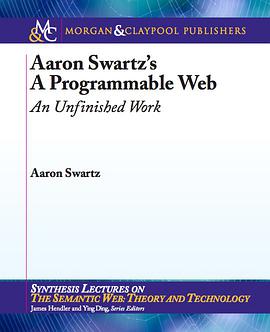
Aaron Swartz's A Programmable Web [图书] 豆瓣 Goodreads
作者: Aaron Swartz 出版社: Morgan & Claypool Publishers 2013 - 2 其它标题: A Programmable Web: An Unfinished Work
This short work is the first draft of a book manuscript by Aaron Swartz written for the series "Synthesis Lectures on the Semantic Web" at the invitation of its editor, James Hendler. Unfortunately, the book wasn't completed before Aaron's death in January 2013. As a tribute, the editor and publisher are publishing the work digitally without cost.
From the author's introduction:
" . . . we will begin by trying to understand the architecture of the Web -- what it got right and, occasionally, what it got wrong, but most importantly why it is the way it is. We will learn how it allows both users and search engines to co-exist peacefully while supporting everything from photo-sharing to financial transactions.
We will continue by considering what it means to build a program on top of the Web -- how to write software that both fairly serves its immediate users as well as the developers who want to build on top of it. Too often, an API is bolted on top of an existing application, as an afterthought or a completely separate piece. But, as we'll see, when a web application is designed properly, APIs naturally grow out of it and require little effort to maintain.
Then we'll look into what it means for your application to be not just another tool for people and software to use, but part of the ecology -- a section of the programmable web. This means exposing your data to be queried and copied and integrated, even without explicit permission, into the larger software ecosystem, while protecting users' freedom.
Finally, we'll close with a discussion of that much-maligned phrase, 'the Semantic Web,' and try to understand what it would really mean."
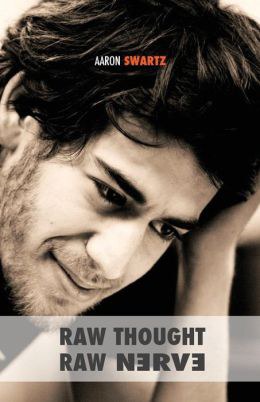
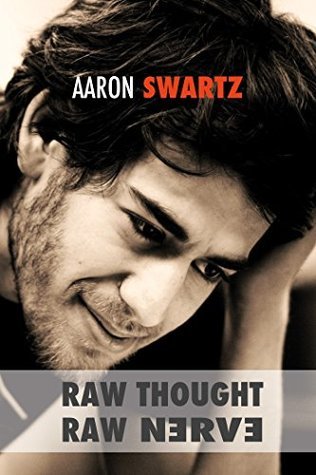
Raw Thought, Raw Nerve [图书] 豆瓣
作者: Aaron Swartz / Adriano Lucchese 出版社: CreateSpace Publishing 2014 - 10
Aaron Swartz taught himself to read when he was three. At twelve, he created Info Network, a user-generated encyclopedia, which he later likened to an early version of Wikipedia. Not long after, Aaron turned his computer genius to political organizing, information sharing and online freedom.
In 2006, Aaron downloaded the Library of Congress's complete bibliographic dataset. The library charged fees to access them. However, as a government document, it was not copyright-protected within the USA. By posting the data on OpenLibrary.org, Aaron made it freely available. Eventually, the Copyright Office sided in favor of Aaron.
In 2008, Aaron downloaded and released 2.7 million federal court documents stored in the Public Access to Court Electronic Records (PACER) database managed by the Administrative Office of the United States Courts. The Huffington Post characterized his actions as: "Swartz downloaded public court documents from the PACER system in an effort to make them available outside of the expensive service. The move drew the attention of the FBI, which ultimately decided not to press charges as the documents, were, in fact, public."
In late 2010, Aaron downloaded a large number of academic journal articles through MIT's computer network. At the time, Aaron was a research fellow at Harvard University, which provided him with an authorized account. Aaron's motivation for downloading the articles was never fully determined. However, friends and colleagues reported that his intention was either to publicly share them on the Internet or uncover corruption in the funding of climate change research. This time, faced with prosecutors being overzealous and a dysfunctional criminal justice system, Aaron was charged with a maximum penalty of $1 million in fines and 35 years in prison, leading to a two-year legal battle with the US federal government that ended when Aaron took his own life on January 11, 2013.
Between 2007 and 2011 Aaron read over 600 books; one book every three days. Early on, Aaron made a point to write about his findings and reflection. From the "Hello World" post published on January 13, 2002 to the last known article written on November 1, 2012 "What Happens in The Dark Knight", Aaron published 1,478 articles on his personal blog; one article every three days.
Aaron dealt with a wide range of subjects going from politics, economics, science, sociology, through technology, education, nutrition, philosophy, among many others. But beyond that, the clarity of Aaron's mind on the difficulty of the subjects he was dealing with at such a young age is striking. When the typical 16 year-old college student worries about fitting in and mating, Aaron was tackling with a book publication and wondered about what he should do with his life. At 18 he read Noam Chomsky, and at 23 wrote the very impressive 12,000-word piece "A Summary/Explanation of John Maynard Keynes' General Theory". This article was dealing with such complexity that two days after its publication, it was followed by a -much- shorter and accessible version, titled "Keynes, Explained Briefly".
Five months before his death, Aaron completed "Raw Nerve", a series of articles reflecting on life, depicting an honest, painful and yet beautiful picture of the tragedy of life. Perhaps then, Aaron knew his time was drawing to an end...
There have been numerous criticisms about Aaron's decision to end his life. Some agree with it, some don't. Whether he made the right decision is certainly not for the editors of this present book to comment on.
Instead, we decided to focus on the positive impact Aaron made on us all. "Raw Thought, Raw Nerve: Inside the Mind of Aaron Swartz" contains the life's work of one of the most original minds of our time.
One volume, 824 pages.

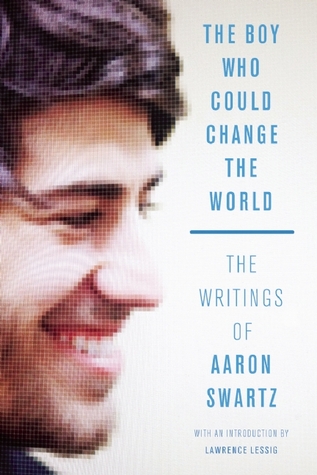
The Boy Who Could Change the World: The Writings of Aaron Swartz [图书] Eggplant.place 豆瓣 Goodreads
The Boy Who Could Change the World
作者: Aaron Swartz 出版社: New Press 2016 - 1
In his too-short life, Aaron Swartz reshaped the Internet, questioned our assumptions about intellectual property, and touched all of us in ways that we may not even realize. His tragic suicide in 2013 at the age of twenty-six after being aggressively prosecuted for copyright infringement shocked the nation and the world.
Here for the first time in print is revealed the quintessential Aaron Swartz: besides being a technical genius and a passionate activist, he was also an insightful, compelling, and cutting essayist. With a technical understanding of the Internet and of intellectual property law surpassing that of many seasoned professionals, he wrote thoughtfully and humorously about intellectual property, copyright, and the architecture of the Internet. He wrote as well about unexpected topics such as pop culture, politics both electoral and idealistic, dieting, and lifehacking. Including three in-depth and previously unpublished essays about education, governance, and cities,
contains the life’s work of one of the most original minds of our time.
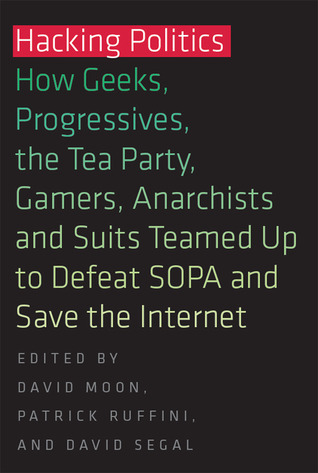
Hacking Politics: How Geeks, Progressives, the Tea Party, Gamers, Anarchists and Suits Teamed Up to Defeat SOPA and Save the Internet [图书] Goodreads
作者: David Moon / Patrick Ruffini 出版社: OR Books 2013 - 5
Hacking Politics is a firsthand account of how a ragtag band of activists and technologists overcame a $90 million lobbying machine to defeat the most serious threat to Internet freedom in memory. The book is a revealing look at how Washington works today – and how citizens successfully fought back.

Written by the core Internet figures – video gamers, Tea Partiers, tech titans, lefty activists and ordinary Americans among them – who defeated a pair of special interest bills called SOPA (“Stop Online Piracy Act”) and PIPA (“Protect IP Act”), Hacking Politics provides the first detailed account of the glorious, grand chaos that led to the demise of that legislation and helped foster an Internet-based network of amateur activists.

Included are more than thirty original contributions from across the political spectrum, featuring writing by Internet freedom activist Aaron Swartz; Lawrence Lessig of Harvard Law School; novelist Cory Doctorow; Rep. Zoe Lofgren (D-CA.); Jamie Laurie (of the alt-rock/hip-hop group The Flobots); Ron Paul; Mike Masnick, CEO and founder of Techdirt; Kim Dotcom, internet entrepreneur; Tiffiniy Cheng, co-founder and co-director of Fight for the Future; Alexis Ohanian, co-founder of Reddit; Nicole Powers of Suicide Girls; Josh Levy, Internet Campaign Director at Free Press, and many more.
Raw Thought, Raw Nerve: Inside the Mind of Aaron Swartz [图书] Goodreads
作者: Aaron Swartz 出版社: Discovery Publisher 2014 - 10
Aaron Swartz taught himself to read when he was three. At twelve, he created Info Network, a user-generated encyclopedia, which he later likened to an early version of Wikipedia. Not long after, Aaron turned his computer genius to political organizing, information sharing and online freedom.

In 2006, Aaron downloaded the Library of Congress's complete bibliographic dataset. The library charged fees to access them. However, as a government document, it was not copyright-protected within the USA. By posting the data on OpenLibrary.org, Aaron made it freely available. Eventually, the Copyright Office sided in favor of Aaron.

In 2008, Aaron downloaded and released 2.7 million federal court documents stored in the Public Access to Court Electronic Records (PACER) database managed by the Administrative Office of the United States Courts. The Huffington Post characterized his actions as: "Swartz downloaded public court documents from the PACER system in an effort to make them available outside of the expensive service. The move drew the attention of the FBI, which ultimately decided not to press charges as the documents, were, in fact, public."

In late 2010, Aaron downloaded a large number of academic journal articles through MIT's computer network. At the time, Aaron was a research fellow at Harvard University, which provided him with an authorized account. Aaron's motivation for downloading the articles was never fully determined. However, friends and colleagues reported that his intention was either to publicly share them on the Internet or uncover corruption in the funding of climate change research. This time, faced with prosecutors being overzealous and a dysfunctional criminal justice system, Aaron was charged with a maximum penalty of $1 million in fines and 35 years in prison, leading to a two-year legal battle with the US federal government that ended when Aaron took his own life on January 11, 2013.

Between 2007 and 2011 Aaron read over 600 books; one book every three days. Early on, Aaron made a point to write about his findings and reflection. From the "Hello World" post published on January 13, 2002 to the last known article written on November 1, 2012 "What Happens in The Dark Knight," Aaron published 1,478 articles on his personal blog; one article every three days.

Aaron dealt with a wide range of subjects going from politics, economics, science, sociology, through technology, education, nutrition, philosophy, among many others. But beyond that, the clarity of Aaron's mind on the difficulty of the subjects he was dealing with at such a young age is striking. When the typical 16 year-old college student worries about fitting in and mating, Aaron was tackling with a book publication and wondered about what he should do with his life. At 18 he read Noam Chomsky, and at 23 wrote the very impressive 12,000-word piece "A Summary/Explanation of John Maynard Keynes' General Theory." This article was dealing with such complexity that two days after its publication, it was followed by a -much- shorter and accessible version, titled "Keynes, Explained Briefly."

Five months before his death, Aaron completed "Raw Nerve," a series of articles reflecting on life, depicting an honest, painful and yet beautiful picture of the tragedy of life. Perhaps then, Aaron knew his time was drawing to an end...

There have been numerous criticisms about Aaron's decision to end his life. Some agree with it, some don't. Whether he made the right decision is certainly not for the editors of this present book to comment on.

Instead, we decided to focus on the positive impact Aaron made on us all. "Raw Thought, Raw Nerve: Inside the Mind of Aaron Swartz" contains the life's work of one of the most original minds of our time.

One volume, 824 pages.
Guerilla Open Access Manifesto [图书] Goodreads
作者: Aaron Swartz 2008 - 1
Aaron Swartz, American computer programmer, writer, political organizer and Internet Hacktivist wrote the Guerrilla Open Access Manifesto, detailing his perspective on the creative commons and the restriction of information. On January 13th 2013, two days after his death, Anonymous hacked MIT's website and posted a copy of this manifesto, along with a message which can be read in full at: http://techcrunch.com/2013/01/13/anon...

"You were the best of us; may you yet bring out the best in us.

-Anonymous, Jan 13, 2013."

This manifesto is openly available across the internet, including at the official URL where it has been posted in numerous languages.