Andreas Schmidt — Artist (14)
Orchestral Lieder [Music] Douban
Andreas Schmidt
/
Radio-Sinfonie-Orchester Berlin
…
release date 1994-04-12
publisher:
RCA
Zemlinsky: Posthumous Songs [Music] Douban
Ruth Ziesak
/
Hans-Peter Blochwitz
…
genre:
Classical
release date 1995-01-01
publisher:
Sony
Bach, J.S.: Christmas Oratorio; St. Matthew Passion; St. John Passion; Mass in B minor [Music] Douban
Valerie Darke
/
Richard Campbell
…
genre:
Classical
release date 2002-01-01
publisher:
环球唱片
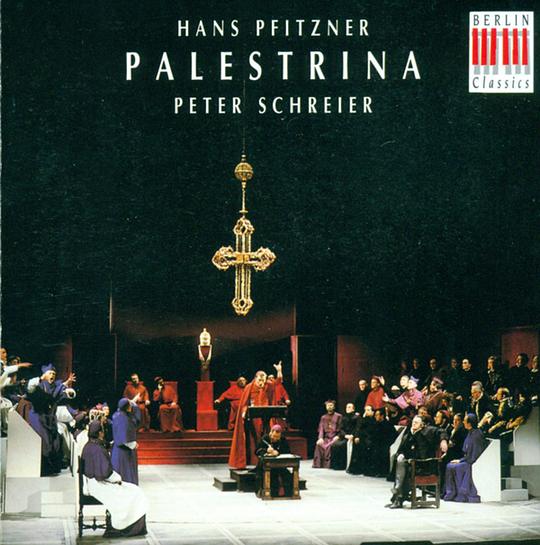
汉斯·普菲茨纳:歌剧《帕莱斯特里纳》 [Music] Douban
Otmar Suitner
/
Staatskapelle Berlin,
…
genre:
Classical
release date 1994-01-04
publisher:
Berlin Classics
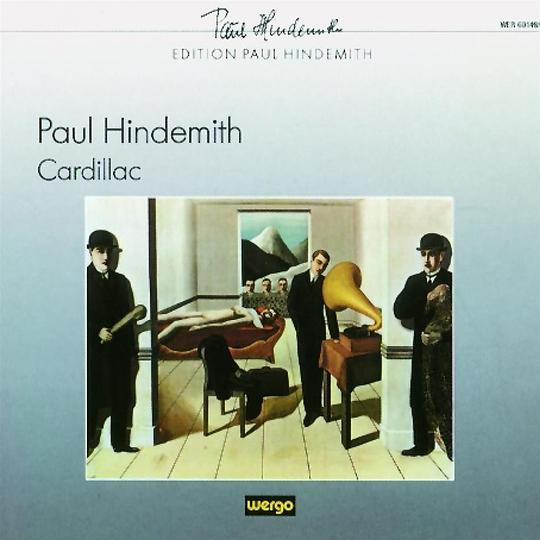
Hindemith: Cardillac [Music] Douban
Andreas Schmidt
/
Siegmund Nimsgern
…
genre:
Classical
release date 1988-01-01
publisher:
Wergo
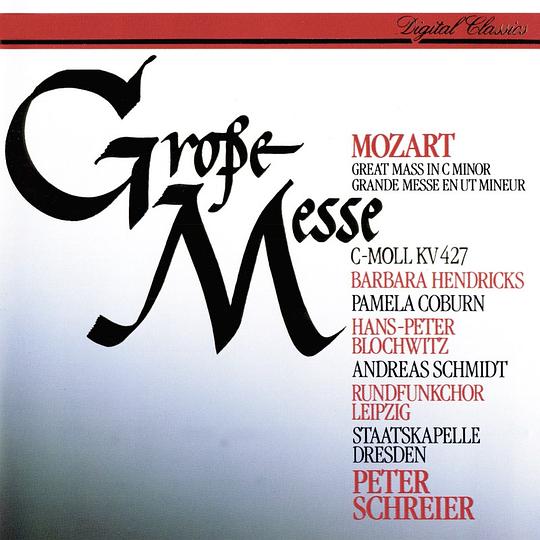
Mozart: Mass in C minor [Music] Douban
Andreas Schmidt
/
Raphael Alpermann
…
genre:
Classical
release date 1990-01-01
publisher:
环球唱片
400 Jahre Oper [Music] Douban
Anna Netrebko
/
Wiener Staatsopernchor
…
genre:
Folk
release date 2021-01-01
publisher:
Deutsche Grammophon - Decca
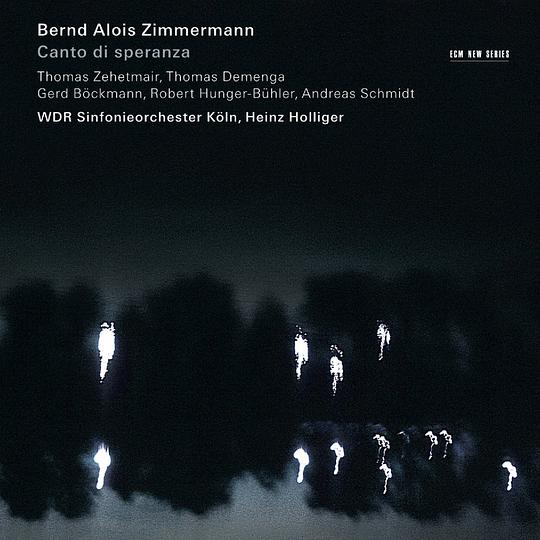
Bernd Alois Zimmermann: Canto di speranza [Music] Douban
Thomas Zehetmair
/
Thomas Demenga
…
genre:
Classical
release date 2008-11-14
publisher:
Ecm Record (Universal)
Contemporary music of great emotional intensity: Zimmermann, best known for his maximalist opera "Die Soldaten" (1958/64), is the great maverick of post-war German modernism (1918-1970). Masterworks from both Zimmermann's early and late creative period documenting his uncompromisingly modern yet unorthodox musical language. Indispensable listening for everybody interested in 20th century music: a portrait of one of the most thought-provoking and ethically committed musical figures of his generation. Thomas Zehetmair, Thomas Demenga and Heinz Holliger are three key figures from ECM's contemporary music roster and they collaborate with an orchestra whose affinity with Zimmermann's music is unrivalled. CD-package includes 28-page illustrated booklet with an essay by Michael Struck-Schloen in English and German
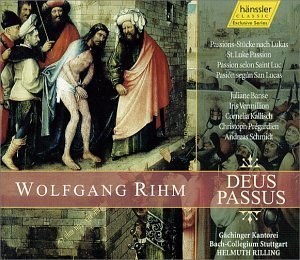
沃尔夫冈·里姆《圣路加受难曲》 [Music] Douban
Juliane Banse
/
Iris Vermillion
…
publisher:
Hanssler Classics
Last fall, a series of modern masterworks were premiered as the capstone of the yearlong commemoration of the death of Johann Sebastian Bach. Four settings of the Good Friday narrative were commission by four of the world's leading composers: Sofia Gubaidulina, Tan Dun, Osvaldo Golijov and Wolfgang Rihm.
First to be released by the international award winning Hanssler Classic label is Wolfgang Rihm's transcendent requiem of Reconciliation, DEUS PASSUS.
For those familiar with Rihm's earlier work, DEUS PASSUS constitutes a new direction in his stylistic development. Absent are the violent juxtapositions and bold gestures of Rihm's earlier work. In their place, a delicate, carefully chosen almost “impressionistic” palette has been selected. This impressionistic approach applies equally to the texts that Rihm selected to set. Consciously selecting St. Luke's account of Jesus' death, specifically for it's lack of anti-Semitic content, Rihm deleted all non dialogue material and supplemented his Passion fragment with selections from the Catholic lectionary, the Stabat Mater and poetic interpolations, concluding with a moving setting of Paul Celan's inverted prayer, TENEBRAE.
Grammy Award winning conductor, Helmuth Rilling delivers one of the finest performances of his career, directing the Gachinger Kantorei, the Bach-Collegium Stuttgart and stellar soloists Juliane Banse, Iris Vermillion, Cornelia Kallisch, Christoph Prégardien and Andreas Schmidt in a score that rightfully takes it's place with the 20th century's other great St. Luke Passion, the Penderecki; Passio et more domini nostri Jesu Christi secundum Lucam.
First to be released by the international award winning Hanssler Classic label is Wolfgang Rihm's transcendent requiem of Reconciliation, DEUS PASSUS.
For those familiar with Rihm's earlier work, DEUS PASSUS constitutes a new direction in his stylistic development. Absent are the violent juxtapositions and bold gestures of Rihm's earlier work. In their place, a delicate, carefully chosen almost “impressionistic” palette has been selected. This impressionistic approach applies equally to the texts that Rihm selected to set. Consciously selecting St. Luke's account of Jesus' death, specifically for it's lack of anti-Semitic content, Rihm deleted all non dialogue material and supplemented his Passion fragment with selections from the Catholic lectionary, the Stabat Mater and poetic interpolations, concluding with a moving setting of Paul Celan's inverted prayer, TENEBRAE.
Grammy Award winning conductor, Helmuth Rilling delivers one of the finest performances of his career, directing the Gachinger Kantorei, the Bach-Collegium Stuttgart and stellar soloists Juliane Banse, Iris Vermillion, Cornelia Kallisch, Christoph Prégardien and Andreas Schmidt in a score that rightfully takes it's place with the 20th century's other great St. Luke Passion, the Penderecki; Passio et more domini nostri Jesu Christi secundum Lucam.
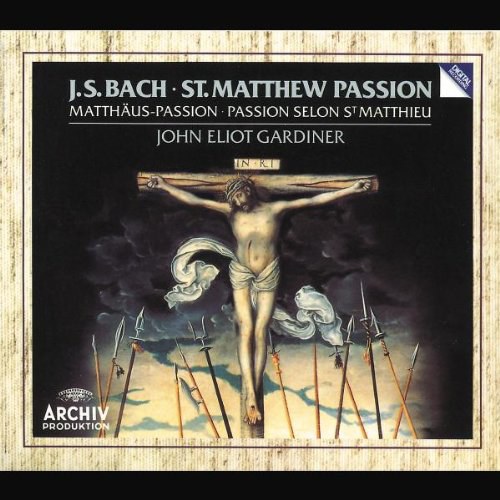
J.S. Bach: St. Matthew Passion [Music] Douban Spotify
John Eliot Gardiner
/
The Monteverdi Choir
…
genre:
Classical
release date 1989-09-15
publisher:
Archiv Produktion
英国指挥家 John Eliot Gardiner 指挥 English Baroque Soloists 演奏古典音乐史上的宗教音乐代表作之一:巴赫《圣马太受难记》,1988 年录音,1989 年发行
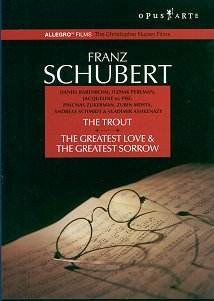
Franz Schubert: The Trout & The Greatest Love and the Greatest Sorrow [Music] Douban
Daniel Barenboim
/
Jacqueline du Pre
…
genre:
Classical
publisher:
Opus Arte
1.The Trout
On August 30th 1969, five young musicians, all of whom were about to become established as international artists of the highest rank, came together to play Schubert's "Trout Quintet" in the new Queen Elizabeth Hall in London. Their names: Daniel Barenboim, Itzhak Perlman, Pinchas Zukerman, Jacqueline du Pré and Zubin Mehta.
It was clear to us that the concert might well become legendary in time and so we decided to make a film about it.
The intention was two-fold: to film the concert itself live on stage, exactly as it happened, with five of the newly invented, silent 16mm film cameras and to make an introduction to it during the preceding week, documenting the preparations and, in particular, the spirit behind the event.
The artists had all been intimate friends for many years, but, more importantly, they had a great deal in common musically and, in addition, they shared an exuberance in their talents which was as appealing as it was filmable.
The introduction takes the television viewer into areas of music-making that are not normally accessible even to the committed concert-going public and the first part of the film ends with the final seven minutes of back-stage preparation before the concert. They are minutes which contain scenes that have passed into musical and television history.
The film then continues with the complete performance shot during the concert, just as it happened, with not a note re-taken.
2.The Greatest Love and the Greatest Sorrow
Franz SchubertSchubert's reputation also suffered from the fact that he did things differently and when a work of art is new and different, and the world cannot categorise or label it, it often takes a long time for the world to understand and accept what that work has to offer. In some ways, these things haunt Schubert's reputation even today.
To complicate the picture still further, Schubert lived, and in some ways his music continues to live, under the shadow of Beethoven. Schubert himself asked the question "Wer vermag nach Beethoven noch etwas zu machen?" (Who would dare to do anything after Beethoven?). The answer, of course, was Franz Peter Schubert and, most notably, in the music that he wrote after the death of his God, Ludvig van Beethoven.
On August 30th 1969, five young musicians, all of whom were about to become established as international artists of the highest rank, came together to play Schubert's "Trout Quintet" in the new Queen Elizabeth Hall in London. Their names: Daniel Barenboim, Itzhak Perlman, Pinchas Zukerman, Jacqueline du Pré and Zubin Mehta.
It was clear to us that the concert might well become legendary in time and so we decided to make a film about it.
The intention was two-fold: to film the concert itself live on stage, exactly as it happened, with five of the newly invented, silent 16mm film cameras and to make an introduction to it during the preceding week, documenting the preparations and, in particular, the spirit behind the event.
The artists had all been intimate friends for many years, but, more importantly, they had a great deal in common musically and, in addition, they shared an exuberance in their talents which was as appealing as it was filmable.
The introduction takes the television viewer into areas of music-making that are not normally accessible even to the committed concert-going public and the first part of the film ends with the final seven minutes of back-stage preparation before the concert. They are minutes which contain scenes that have passed into musical and television history.
The film then continues with the complete performance shot during the concert, just as it happened, with not a note re-taken.
2.The Greatest Love and the Greatest Sorrow
Franz SchubertSchubert's reputation also suffered from the fact that he did things differently and when a work of art is new and different, and the world cannot categorise or label it, it often takes a long time for the world to understand and accept what that work has to offer. In some ways, these things haunt Schubert's reputation even today.
To complicate the picture still further, Schubert lived, and in some ways his music continues to live, under the shadow of Beethoven. Schubert himself asked the question "Wer vermag nach Beethoven noch etwas zu machen?" (Who would dare to do anything after Beethoven?). The answer, of course, was Franz Peter Schubert and, most notably, in the music that he wrote after the death of his God, Ludvig van Beethoven.
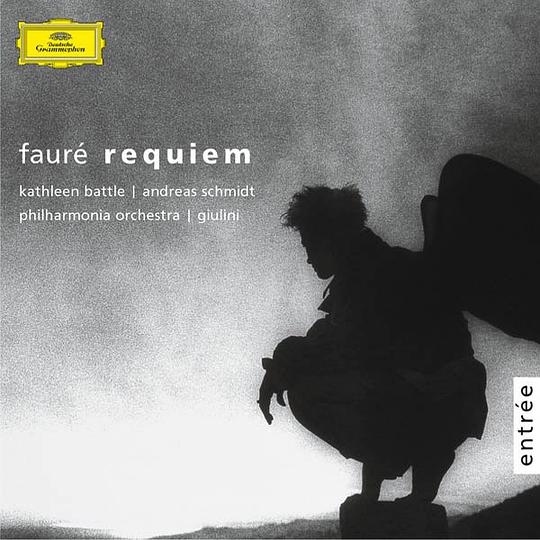
Fauré: Requiem op.48 · Pavane op.50 · Elégie op.24 · Après un Rêve op.7 [Music] Douban
Jules Eskin
/
Andreas Schmidt
…
genre:
Classical
release date 2003-01-01
publisher:
环球唱片