Naomi Kawase — Director (49)


Hanezu (2011) [Movie] Douban IMDb WikiData TMDB
朱花の月
other title:
朱花之月
/
朱花の月
…
Woodwork artist Takumi moves to the small village Asuka in Nara Prefecture. He remodels old homes and lives a peaceful existence with nature. Takumi then meets Kayoko, a woman who went to the same school as Takumi. Kayoko is fascinated with the color crimson. She dyes scarves with the color of hanezu. Kayoko lives with boyfriend Tetsuya, who works as an editor of a PR magazine. They live together. Soon, Kayoko falls in love with Takumi.

Visitors (2009) [Movie] Douban TMDB
어떤 방문
other title:
过客人生
/
어떤 방문
…
Hong Sang-Soo’s Lost in the Mountains (South Korea, 32min) the visitor is the supremely self-centred Mi-Sook, who drives to Jeonju on impulse to see her classmate Jin-Young – only to discover that her friend is having an affair with their married professor, who Mi-Sook once dated herself. The level of social embarrassment goes off the scale. In Naomi Kawase’s Koma (Japan, 34min), Kang Jun-Il travels to a village in rural Japan to honour his grandfather’s dying wish by returning a Buddhist scroll to its ancestral home. Amid ancient superstitions, a new relationship forms. And in Lav Diaz’ Butterflies Have No Memories (Philippines, 42min) ‘homecoming queen’ Carol returns to the economically depressed former mining town she came from – and becomes the target of an absurd kidnapping plot hatched by resentful locals. Serving as his own writer, cameraman and editor, Diaz casts the film entirely from members of his crew and delivers a well-seasoned mix of social realism and fantasy. —bfi
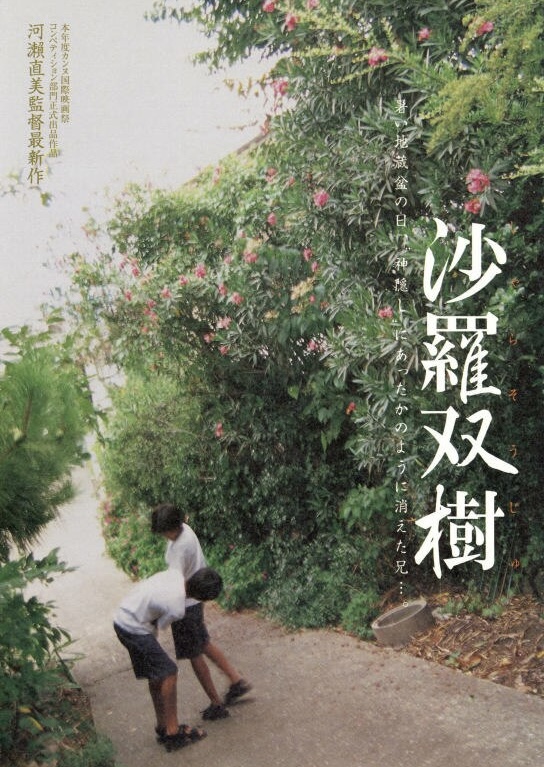
Shara (2003) [Movie] IMDb Douban TMDB WikiData Bangumi
沙羅双樹
other title:
沙罗双树
/
沙羅双樹
…
The Aso family live in the old town of Nara. One Day, Kei, one of the Aso's twin boys suddenly disappears. Five years later seventeen-year old Shun, the remaining twin, is an art student. He now has to move forward with his life, together with his childhood friend, Yu.

True Mothers (2020) [Movie] Douban IMDb WikiData TMDB
朝が来る
other title:
晨曦将至
/
朝が来る
…
After suffering through a long and unsuccessful series of fertility treatments, Satoko and her husband Kiyokazu make the decision to adopt a child. Six years after adopting a boy they named Asato, Satoko has quit her job to concentrate fully on her husband and son. The family lives a peaceful existence until the arrival of a stranger.


Sweet Red Bean Paste (2015) [Movie] Douban IMDb TMDB WikiData
あん
other title:
澄沙之味
/
あん
…
The master of a dorayaki pastry store hires a 76-year-old woman whose talents attract customers from all over. But she's hiding a troubling secret. Life's joys are found in the little details, and no matter what may be weighing you down, everyone loves a good pastry.

Suzaku (1997) [Movie] IMDb Douban TMDB WikiData
萌の朱雀
other title:
萌之朱雀
/
萌の朱雀
…
Depicts the life of a family in a remote Japanese timber village. Family head Tahara Kozo lives with his mother Sachiko, wife Yasuyo, nephew Eisuke and young daughter Michiru. Economic recession and failed development plans cause tragedy in the family.