让-吕克·戈达尔 — 编剧 (85)
孩子扮俄国人 (1993) [电影] 豆瓣
Les Enfants jouent à la Russie
导演: 让-吕克·戈达尔 演员: 拉斯洛·绍博 / 让-吕克·戈达尔
其它标题: Les Enfants jouent à la Russie / 孩子们玩俄罗斯游戏
A famous French filmmaker (Jean-Luc Godard) is hired by a major Hollywood producer (László Szabó) to make a documentary on the state of post-Cold War Russia. The filmmaker, though, subverts the project by stubbornly remaining in France and casting himself as the title character of Dostoyevsky's "The Idiot," offering up a series of typically Godardian musings on art, politics, the nature of images and the future of cinema.
电影传单1968 (1968) [电影] 豆瓣
Film-Tract n° 1968
导演: Gérard Fromanger / 让-吕克·戈达尔
其它标题: Film-Tract n° 1968
By the end 1968, Jean-Luc Godard would make his 18th feature film since his debut in 1960. In addition to this prodigious output—already perhaps the most varied and artistically successful such span in film history—he also produced 8 accomplished short films. All are episodes of omnibus films except one: Film-tract nº 1968, a collaboration with the French painter Gerard Fromanger.
断了气 (1983) [电影] TMDB IMDb 豆瓣 维基数据
Breathless
6.0 (5 个评分) 导演: 吉姆·麦克布莱德 演员: 理查·基尔 / 范蕾丽尔·卡帕里斯基
其它标题: Breathless / 欲海惊魂
杰西(理查·基尔 Richard Gere 饰)是一个桀骜不驯又特立独行的青年,过着放荡不羁的生活。杰西在拉斯维加斯偷了一辆车,并和警方发生了交火,意外中,杰西杀死了一名警察,成为了通缉犯。无奈之下,杰西只得踏上逃亡的旅途,他的目的地是洛杉矶。
在洛杉矶,杰西找到了之前结识的女孩莫妮卡(范蕾丽尔·卡帕里斯基 Valérie Kaprisky 饰),对莫妮卡一见钟情的杰西希望前者能够和他一起去墨西哥生活。莫妮卡出生在一个非常保守的家庭之中,过着循规蹈矩的生活,杰西的大胆建议让她心动不已。然而,最终,莫妮卡发现了杰西的通缉令,意识到自己一直和一名杀人犯在一起,慌乱之中,莫妮卡报了警。
你还好吗? (1976) [电影] 豆瓣
Comment ça va?
导演: 让-吕克·戈达尔 / 安娜-玛丽·米埃维尔 演员: Michel Marot / 安娜-玛丽·米埃维尔
其它标题: Comment ça va? / 怎么样
本片讲述一个男人和一个女人共同拍摄一部录像电影的故事。
大师戈达尔延续了其以往拍片,怪异的叙事,注重旁白和道具,抽象的风格。虽然没有曲折离奇的故事情节,但戈达尔用特定的道具,特定的场景将其含义充分的表达出来,虽然没有大量的出场人物,但对白精彩,具有深刻的哲理性。有人说戈达尔的电影就是艰难晦涩,自命不凡的同义词,也有人说戈达尔本身就是艺术,看完这部电影,请您也给出您的答案吧。
混凝土作业 (1958) [电影] 豆瓣
Opération 'Béton'
5.8 (8 个评分) 导演: 让-吕克·戈达尔 演员: 让-吕克·戈达尔
其它标题: Opération 'Béton'
"Documentary film on the construction of the Grande-Dixence Dam, and especially the" Concrete "phase (production, routing, pouring, etc.) It is the highest dam in the world, a thousand men are fighting "By joining hands ", connecting every eleven hours for this magnificent monument.The sound of the excavators invades the soundtrack which leaves " more room for daydreaming ." The transport of concrete is done through cables, called "Blondin", in tribute to the famous French tightrope walker.
Adrien Porchet turns plans at the end of May 1954. They are wide and distanced shots that never approach the workers. Godard edited the film in October with a lyrical commentary in an austere voice and pastoral music borrowed from Johann Sebastian Bach. He sold his film to the Compagnie de la Grande Dixence in 1955 and even enjoyed a theatrical release in the first part of Thé et Sympathie in 1958. "
神游天地 (1987) [电影] 豆瓣
Soigne ta droite
导演: 让-吕克·戈达尔 演员: 简·伯金 / 多米尼克·拉冯纳特
其它标题: Soigne ta droite / 誓不低頭
故事分成三個章節:主要的章節由高達親自飾演導演,正要趕乘飛機,在24小時內把一部電影的菲林交給監製;同時一隊二人流行電子音樂組合,不斷排練歌曲,最後在路上表演;另一邊廂,愚笨的大肥佬捲入一宗事件,被神秘女人密切監視,最後更被拘捕。三段故事看似毫無關連,實際是高達以電影來討論電影製作和藝術創作的重要。片名看似帶有弦外之音,就像高達暗示,假如監製或其他人要干擾導演的藝術創作,就索性我行我素,忠於自己的道路好了。這大概亦示範了高達如何純熟地運用電影媒體來做評論。
A film in three chapters: Godard plays the director in the main chapter, rushing to catch a plane to pass the negatives to his producer within 24 hours; an electronic duo keeps rehearsing for their roadshow; a clumsy fat man gets involved in an incident, and is arrested after being watched by a mysterious woman. Seemingly unrelated events, Godard is discussing the importance of film producer and artistic creativity. Godard is making the statement that if a producer or anyone interferes with creativity, it is better for the artist to go one's own way. A showpiece of how Godard uses the film media as his critical essay.
六乘二/传播面面观 (1976) [剧集] 豆瓣
Six fois deux/Sur et sous la communication
导演: 让-吕克·戈达尔 / Anne-Marie Miéville 演员: 让-吕克·戈达尔 / 安娜-玛丽·米埃维尔
The title and subtitle of this French miniseries are "Six Times Two; Over and under the media". The "six" refers to the fact that there are six episodes; the "two" has a double meaning. Each of these episodes is a collaboration between two people: Jean-Luc Godard and his long-time partner Anne-Marie Miéville, but the "two" also refers to the fact that each episode has a two-part structure. The individual episodes run 100 minutes each, split almost precisely into two 50-minute sections.
Each episode deals with a specific theme -- history, women, labour -- with the first half being an overview of that topic, and the second half being a documentary interview with one person who somehow represents that very broad topic!
This is a thoroughly Gallic documentary series, with everything that the term implies; despite my passion for Godard's films, I found 'Six Times Two' to be extremely talkative and static. Reportedly, Godard himself did not have a high opinion of this miniseries.
再见TNS (1998) [电影] 豆瓣
Adieu au TNS
其它标题: Adieu au TNS
"In 1998, Jean-Luc Godard made a short video entitled Adieu au TNS (Farewell to the TNS). Never released (or intended to be), the video is nearly impossible to see and has not been included in any Godard retrospectives to date. A consequence of this deliberate unavailability has been instances of inaccurate descriptions of the video in Godard criticism [1]. More important than the manner in which the video’s form and content have been inaccurately described, however, is the manner in which its production history and Godard’s reasons for making it have been purposefully decontextualized in Richard Brody’s Everything is Cinema: The Working Life of Jean-Luc Godard (Metropolitan Books, 2008) in order to misleadingly implicate the video in some kind of cryptic, but sympathetic, engagement with anti-Semitism and/or Fascism that Brody feels runs throughout Godard’s work. Ultimately, these claims – at the very least in regards to this video – are just smoke and mirrors. Unfortunately, Brody’s book remains more or less the only source of information in English about this little-seen video. While the book as a whole was taken to task upon its publication by scholars Adrian Martin and Bill Krohn [2], I think it is worthwhile to focus on this particular passage in Brody’s book in order to clear up any misunderstandings and misperceptions English-language readers might have as a result of the book’s claims.
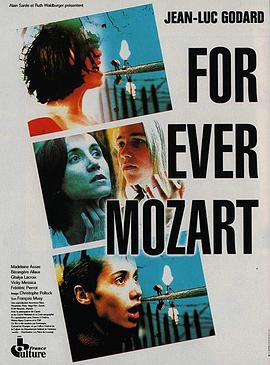
Everything is Cinema devotes three short paragraphs (eleven sentences) to Adieu au TNS (pages 579-580). As this is a minor work, this is not, in and of itself, surprising. However, rather than simply describing the video and contextualizing it in Godard’s life and work, Brody insinuates much while saying very little, exploiting the video’s unavailability and its unfamiliarity to Godard scholars and the general public. The first paragraph does not directly address Adieu au TNS, but introduces another video, one made by French writer Philippe Loyrette [3] in the mid-1990s in which he is videotaped “chanting, in psalmodic incantation, the poetic ‘testament’” of “fanatically anti-Semitic and pro-Nazi writer Robert Brasillach.” The video was sent to Godard. The connection being made and the insinuation quickly becomes clear: Brody suggests that Godard made a video that, inspired by the recitation of a poem by a fanatic anti-Semite and pro-Nazi, is evidence or an admission of his own anti-Semitism. That French writer, literary critic and collaborationist Robert Brasillach was an anti-Semite and supporter of the Nazis goes without question, but in what way was Godard inspired by Brasillach or his words in making Adieu? Is there an important and relevant connection? Brody continues, in the second paragraph, by explaining that Loyrette’s video “made a strong impression on Godard” and that Godard “used it as the basis for a videotaped recitation of his own, in 1997, after [actress Bérangère] Allaux ended their personal and working relationship.” From this, then, it seems to follow that the video was inspired by equal parts Brasillach and Allaux. However, despite the many pages of Everything is Cinema spent chronicling the history of Godard’s failed attempts to have a relationship with Allaux, who had acted in For Ever Mozart (1996), and attempting to emphasize just how badly her rejection hurt him, exactly how Adieu au TNS is related to either her or Brasillach will remain vague.
The Loyrette video has also never been easily available (aside from an audio excerpt Godard uses towards the end of Episode 1A of Histoire(s) du cinéma – Loyrette reciting the first two verses of Brasillach’s poem), but Brody draws two comparisons between it and Adieu, perhaps in lieu of any direct comparisons between Adieu and Brasillach. “Like Loyrette, Godard used accordion music as the background to his chant” and “Like Loyrette, Godard intoned the text by himself, standing alone in a bare room.” There is some kind of accordion-like music in the background of Adieu au TNS and Godard does recite the text alone in a room – though it is furnished with a desk and some shelves – but if these are the main similarities, it remains unclear from Brody’s description why it was so important to stress Brasillachs’ anti-Semitism and pro-Nazi sentiments. Brody cites only one line of Godard’s text, presumably the most likely source of any similarities between Brasillach’s words and Godard’s video: “he lamented having ‘pursed a princess into a theatre – heavens, what misfortune!’” This avoidance of Godard’s words is not surprising. If Brody cited any more, he would undoubtedly be forced to give more of the background, contextual information he has so far left out.
The third and final paragraph in Everything is Cinema addressing Adieu au TNS quickly outlines how Godard “never showed the tape publicly.” He cites an interview with Alain Bergala in which Godard says that he “made it on the basis of this other actor and his music, and having lost the cassette, he would not be able to “cite the source, it would bother me.” Though he provides no source, Brody assures readers that “Bergala considered this to be a ruse: several years later, Godard found Loyrette’s tape, but he still did not show his film.”
The mention of Alain Bergala in the third paragraph is crucial. Bergala’s interview with Godard, La vie vécuee depuis…[4] , is the primary – possibly only – source of information on Adieu au TNS and this period of Godard’s life. All that Brody and Antoine de Baecque relate about this film in their respective biographies comes more or less entirely from this interview – de Baecque quotes Godard more and presents a slightly clearer course of events, though not without factual errors of his own. While it is true that Brody does offer the background, biographical details to the making of Adieu au TNS, he does not offer an explanation of the acronym ‘TNS’ and even if he did, readers might be confused because when he refers to the TNS earlier, he uses a different name, never directly linking the background information with the video. The TNS is the National Theater of Strasbourg (Théâtre nationale de Strasbourg). The theater has an acting school that Brody inaccurately refers to as the “École nationale de l’art dramatique” (it is actually the École supérieure d'art dramatique). Rather than explaining what TNS stands for and how Godard’s involvement with the school may have prompted or inspired the video, Brody prefers to obscure this fact in order to stress his own point. That Godard feels guilty of something should be clear, Brody implies, from his refusal to show the video.
Adieu au TNS, in fact, has absolutely nothing to do with anti-Semitism, collaborationism, Robert Brasillach or Nazis. It is a bitter and mournful farewell to the National Theater of Strasbourg, as would have become clearer had Brody cited any more of the recited text. And Godard’s reluctance to show it publicly makes sense once it is understood that it was made as a piece of correspondence, to be viewed by its recipients.
The video’s seven minutes consists of three shots: a wide shot of Godard standing in a room that might be his office, looking ragged, lighting a cigar and proceeding to recite a poetic farewell to the school of his own composition, and a medium shot and a close up from the same angle and camera position, separated by black during which we can hear Godard walk to the camera and zoom in. In typical Godardian font, the words “ADIEU” “AU” and “TNS” appear onscreen at various points. There is some mournful accordion-type music playing quietly in the background.
In the late 1990s, Godard attempted, as did his partner Anne-Marie Miéville, to secure an academic position in France. He looked for employment at La Fémis, a French filmmaking school, the Collège de France, and, most relevantly, the National Theater of Strasbourg. La Fémis was not interested in hiring Godard and his candidature for the Collège de France – aided by Pierre Bourdieu and Philippe Sollers – was denied. Having worked with several actors from the TNS while making For Ever Mozart (1996), including Bérengère Allaux (with whom he was evidently quite taken), Godard decided to contact Jean-Louis Martinelli, the director of the theater – which also, as mentioned above, had an acting school – to see if he could work with the school in some way. He proposed working with ten students in order so that he might learn about theater, and making a documentary film about the school. What exactly his work with the students involved is not entirely clear. It does not seem like he taught a class or a seminar, and, according to Godard’s own account, it would seem he never met the students in person (although Brody and de Baecque claim the students traveled to Rolle to visit Godard at his home).
一部平行电影 (1971) [电影] 豆瓣
One P.M.
导演: 让-吕克·戈达尔 / 里查德·利科克 演员: Marty Balin / 阿米里·巴拉卡
其它标题: One P.M. / One A.M.
Godard undertook a collaborative project with the U.S. filmmakers Richard Leacock and D.A. Pennebaker in October of 1968. Provisionally entitled One A.M., or "One American Movie", the project was to be shot in the United States, but never reached completion under Godard's direction. Pennebaker and Leacock continued with the project under the title One P.M. [1972], or 'One Parallel Movie,' and did not release the film until 1972.
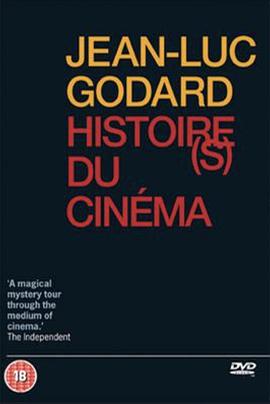
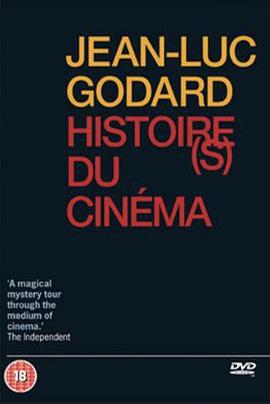
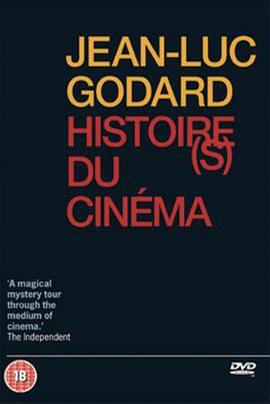
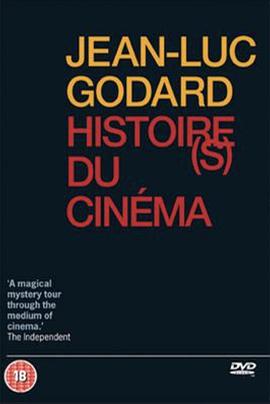
Moments choisis des histoire(s) du cinéma (2004) [电影] 豆瓣
Moments choisis des histoire(s) du cinéma
导演: Jean-Luc Godard
其它标题: 高达‧无以名状
「我需要用一日去講歷史的一秒,用一年去講歷史的一分鐘,用一生去講歷史的一日。」高達野心大,視野闊,要為世界電影作一件事,要後世知道20世紀電影歷史面貌是何等模樣及如何反思。他在1998-99年完成了空前巨大的紀錄片《世界電影(眾數)史》,原版本共八個單元,片長由廿多分鐘至50多分鐘,假如要一口看罷就超過四小時。內容簡單一句,就是從藝術、政治、電影與電視、菲林與數碼影像發展等不同範疇,回顧20世紀電影歷史。《世界電影(眾數)史精選》則是短篇剪輯版本,精華濃縮甚至再創作,極少作大銀幕放映,機會難逢。
"I need one day to describe one second in history, one year to describe one minute in history, one life to describe one day in history," said Godard, who with his ambition and vision wanted to do something for the film world, wanting the future generations to know what 20th century film history is, and how to reflect upon it. Between 1998 and 1999, he finished the monumental eight-chapter documentary Historie(s) of Cinema, with varying length from 20 to more than 50 minutes, and a complete viewing will take more than 4 hours. It is a look back on 20th century film history, from the perspectives of art, politics, film and TV, celluloid and digital video. This screening version has captured the essence of it and is presented rarely on the big screen.