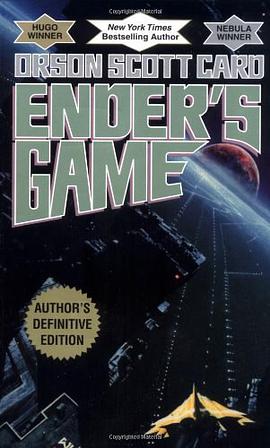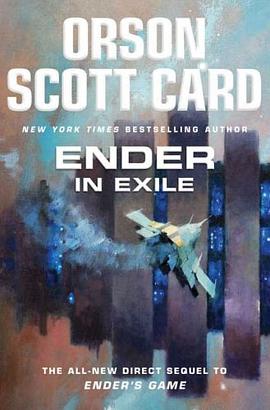
Ender in Exile [Book] Douban
The Exile’s Return: Orson Scott Card’s Ender in Exile
By Beth Meacham, Executive Editor
I have had a very long relationship with Ender Wiggin. I met him first in 1977, in an amazing novelette in Analog. I was working in a bookstore in those days, the Science Fiction Shop in New York City. A few years later, I started working for the Ace sf list—and was delighted to discover that among the authors who had books in inventory was Orson Scott Card. We worked together on turning Hot Sleep into The Worthing Chronicle, and got along pretty well.
A few years later, Scott started talking about writing a sequel to Ender’s Game, about what happened to Ender after the war. I thought it was a great idea—Ender was a great character and the future that had been sketched in for the story was rich and deep. That book we were talking about became Speaker For The Dead. The novel Ender’s Game hadn’t been thought of yet. It took Tom Doherty, publisher of the competition, Tor Books, to spark that. He bought Speaker For The Dead out from under me and Ace, and then he suggested to Scott that it would be a great idea to flesh out “Ender’s Game” into a novel before writing the sequel.
I guess so.
At about the same time, Tom had been talking to me about coming to work for him at Tor. So a few months later, I got to phone Scott and tell him he couldn’t escape me so easily, and Ender and I made up. It’s been great. Ender got to spread out and be far more than just a character sketch at novel length. He grew up and left his identity behind in Speaker, though of course he was always what life had made him. In Xenocide and Children of the Mind (really meant to be one book, but it got out of hand), he finally made peace with his past, with the things he had done, with his conscience. Poor Ender, so hard to be lauded for doing something you know is wrong, and then reviled for doing something you had no choice but to do. But he found happiness at the end.
When I told the sales people, and Tom, that Ender was dead at the end of Children of the Mind, they were not happy. But the boy and man had lived over 3,000 years! How much more could he take?
Fortunately, there were more stories to tell. 3,000 years is a long time, and we haven’t seen all that much of it. First we went back to Battle School, and Bean’s story, in Ender’s Shadow. Earth got really interesting right after the War, even though Ender wasn’t there. And Peter…Scott always wanted to write The Hegemon, though sensibly he has never tried to write Ender’s version of that story.
But then, when the Shadow series was wrapping up (there’s still one more, Shadows In Flight, to come) it started becoming clear that there was a really interesting story to be told in the settlement of the first human colonies on the Formic worlds. And it sent chills up everyone’s backs when we realized that the person best suited to be the viewpoint for that book was Ender. Scott hadn’t expected to ever return to Ender’s voice. I had never expected to visit that frightening, humane, wise-beyond-his-years viewpoint again. I could feel the novel taking shape in Scott’s mind as we talked. It had to happen.
And so it did. Ender In Exile is being published this month. It’s not what you expect, but Ender never is.
By Beth Meacham, Executive Editor
I have had a very long relationship with Ender Wiggin. I met him first in 1977, in an amazing novelette in Analog. I was working in a bookstore in those days, the Science Fiction Shop in New York City. A few years later, I started working for the Ace sf list—and was delighted to discover that among the authors who had books in inventory was Orson Scott Card. We worked together on turning Hot Sleep into The Worthing Chronicle, and got along pretty well.
A few years later, Scott started talking about writing a sequel to Ender’s Game, about what happened to Ender after the war. I thought it was a great idea—Ender was a great character and the future that had been sketched in for the story was rich and deep. That book we were talking about became Speaker For The Dead. The novel Ender’s Game hadn’t been thought of yet. It took Tom Doherty, publisher of the competition, Tor Books, to spark that. He bought Speaker For The Dead out from under me and Ace, and then he suggested to Scott that it would be a great idea to flesh out “Ender’s Game” into a novel before writing the sequel.
I guess so.
At about the same time, Tom had been talking to me about coming to work for him at Tor. So a few months later, I got to phone Scott and tell him he couldn’t escape me so easily, and Ender and I made up. It’s been great. Ender got to spread out and be far more than just a character sketch at novel length. He grew up and left his identity behind in Speaker, though of course he was always what life had made him. In Xenocide and Children of the Mind (really meant to be one book, but it got out of hand), he finally made peace with his past, with the things he had done, with his conscience. Poor Ender, so hard to be lauded for doing something you know is wrong, and then reviled for doing something you had no choice but to do. But he found happiness at the end.
When I told the sales people, and Tom, that Ender was dead at the end of Children of the Mind, they were not happy. But the boy and man had lived over 3,000 years! How much more could he take?
Fortunately, there were more stories to tell. 3,000 years is a long time, and we haven’t seen all that much of it. First we went back to Battle School, and Bean’s story, in Ender’s Shadow. Earth got really interesting right after the War, even though Ender wasn’t there. And Peter…Scott always wanted to write The Hegemon, though sensibly he has never tried to write Ender’s version of that story.
But then, when the Shadow series was wrapping up (there’s still one more, Shadows In Flight, to come) it started becoming clear that there was a really interesting story to be told in the settlement of the first human colonies on the Formic worlds. And it sent chills up everyone’s backs when we realized that the person best suited to be the viewpoint for that book was Ender. Scott hadn’t expected to ever return to Ender’s voice. I had never expected to visit that frightening, humane, wise-beyond-his-years viewpoint again. I could feel the novel taking shape in Scott’s mind as we talked. It had to happen.
And so it did. Ender In Exile is being published this month. It’s not what you expect, but Ender never is.