阿兰·贝茨 — 演员 (41)
乔琪姑娘 (1966) [电影] 豆瓣 IMDb TMDB 维基数据
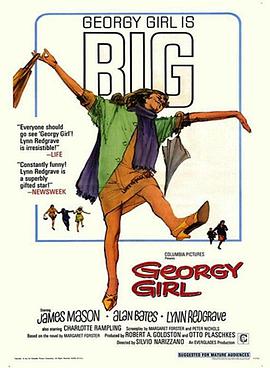
Georgy Girl
导演: 西尔维奥·纳里扎诺 演员: 詹姆斯·梅森 / 阿兰·贝茨
其它标题: Georgy Girl / 傻大姐偷情
一个朴实但活泼的年轻女子躲避着她父亲中年雇主的爱慕之情,同时努力追逐她那在摇摆的伦敦室友的光鲜生活。
亡命狂奔 (1963) [电影] 豆瓣
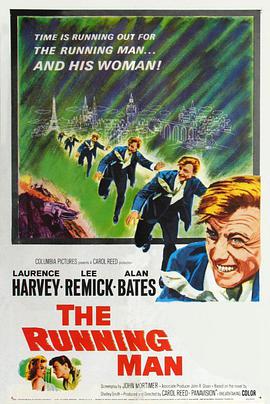
The Running Man
导演: 卡罗尔·里德 演员: 劳伦斯·哈维 / 丽·莱米克
其它标题: The Running Man / 奔跑的人
An Englishman with a grudge against an insurance company for a disallowed claim fakes his own death, but is soon pursued by an insurance investigator.
伯蒂与伊丽莎白 (2002) [电影] 豆瓣
Bertie and Elizabeth
导演: 贾尔斯·福斯特 演员: 詹姆斯·维尔比 / 阿兰·贝茨
其它标题: Bertie and Elizabeth / 白金汉宫之恋
The duke of York, nicknamed Bertie, was born as royal 'spare heir', younger brother to the prince of Wales, and thus expected to spend a relatively private life with his Scottish wife Elisabeth Bowes-Lyon and their daughters, in the shadow of their reigning father, George V, and next that of his elder brother who succeeded to the British throne as Edward VIII. However Edward decides to put his love for a divorced American, Wallis Simpson, above dynastic duty, and ends up abdicating the throne, which now falls to Bertie, who reigns as George VI. Now he expects to be, as constitutional monarch, little more then a figure head, but again faith has more in store for him: Nazi Germany proves such a formidable war challenger to the British Empire that the nearly desperate nation looks to its royal couple as comforting symbol of the unbroken spirit, a part they play with great success, while hosting chased monarchs and governments from continental Europe...
我的父亲 (1984) [电影] 豆瓣
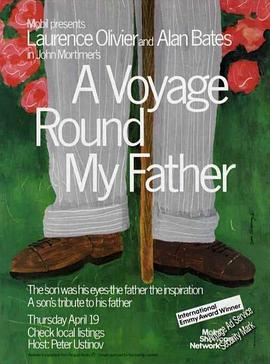
A Voyage Round My Father
导演: 艾尔文·拉考夫 演员: 劳伦斯·奥利弗 / 阿兰·贝茨
其它标题: A Voyage Round My Father
Before creating the beloved courtroom drama Rumpole of the Bailey (1978), writer John Mortimer found inspiration in his own life for this portrait of a difficult but enduring love between father and son in mid twentieth century Britain. Screen legend Sir Laurence Olivier stars as the eccentric patriarch, a blind barrister so stubborn and cantankerous that he refuses to acknowledge his sightlessness. Sir Alan Bates (Gosford Park (2001)) portrays his devoted son, who follows his father's footsteps in the law while longing to become a writer, with Jane Asher (Brideshead Revisited (1981)) as his wife. Adapted for the screen by Mortimer and filmed largely on-location at his family estate in bucolic Oxfordshire, this production garnered multiple awards, including an International Emmy for best drama. By turns hilarious and heartbreaking, it captures the special bond between father and son, which at times seems unbearable, but ultimately unbreakable.
看管人 (1963) [电影] 维基数据 IMDb 豆瓣 TMDB
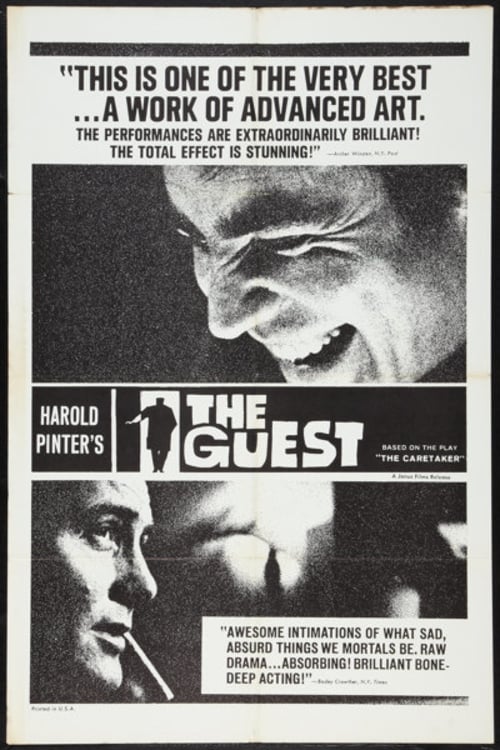
The Caretaker
导演: Clive Donner 演员: Alan Bates / Donald Pleasence
其它标题: The Caretaker / 看门人
阿斯顿是个沉默寡言的人,独自住在伦敦贫困地区一栋废弃小房子的顶层杂乱房间里。他结识并收留了被咖啡馆辞退的老流浪汉麦克-戴维斯(Mac Davies)。随着时间的推移,阿斯顿给他提供了一份看守房子的工作。阿斯顿的弟弟米克是个嘲弄人的准悲观主义者,当他哥哥不在时,他就会骚扰这个老废物,违抗他的命令......
微风轻哨 (1961) [电影] 豆瓣 IMDb 维基数据 TMDB
Whistle Down the Wind
导演: 布莱恩·福布斯 演员: 海莉·米尔斯 / 伯纳德·李
其它标题: Whistle Down the Wind / 小孩子与强盗
When an injured wife-murderer takes refuge on a remote Lancashire farm, the farmer’s three children mistakenly believe him to be the Second Coming of Christ.
情况失控 (1989) [电影] 豆瓣
Force majeure
导演: 皮埃尔·若利韦 演员: 帕特里克·布鲁尔 / 弗朗索瓦·克鲁塞
其它标题: Force majeure / 自由的代价
菲利普和丹尼尔在东南亚旅游时认识了汉斯,三人成为好友。在菲利普和丹尼尔返回巴黎的18个月后,一位律师找到了菲利普,并告知在二人离开后的第二天,警方就逮捕了汉斯,因为在他们居住的房间内发现了大麻,而根据当地法律规定汉斯被判处死刑,并会在7天后行刑。只有一个机会可以救汉斯,就是菲利普和丹尼尔与汉斯共同承担罪行。与此同时,汉斯的前女友(K)也介入其中,望说服二人帮助汉斯。。。菲利普和丹尼尔面临这样的失控情况,应该如何抉择?同时菲利普如何处理他与汉斯前女友以及母亲的关系,丹尼尔如何处理和女友的关系以及承担父亲责任呢?一切都迫在眉睫。。。
王子与贫儿 (2000) [电影] 豆瓣
The Prince and the Pauper
导演: 贾尔斯·福斯特 演员: Jonathan Timmins / Robert Timmins
其它标题: The Prince and the Pauper
爱德华(Jonathan Timmins 饰)是含着金汤匙出生,自幼成长在宫廷之中高高在上的王子,虽然享受着衣食无忧荣华富贵的生活,却没有半点自由。汤姆(Robert Timmins 饰)出生在贫困的家庭里,年纪虽小就已经要开始为了生计奔波,虽然生活得无拘无束,却要饱受穷困之苦。
一次偶然中,爱德华和汤姆相遇了,令两人感到震惊的是,他们竟然有着几乎一模一样的样貌。爱德华羡慕汤姆的自由,汤姆倾心于爱德华的富有,一拍即合的两人交换了身份,想要体验一下彼此的生活。哪知道刚一进入宫廷,汤姆就必须面对复杂而又充满了危险的王位之争,与此同时,身无长技的爱德华亦不知道如何靠着双手劳作来填饱肚子。
权贵幻觉 (1975) [电影] 豆瓣
Royal Flash
导演: 理查德·莱斯特 演员: 马尔科姆·麦克道威尔 / 阿兰·贝茨
其它标题: Royal Flash / 傻侠
上尉Harry Flashman, 是个胆小、好色而且虚伪的人,他拼命地想挤进欧洲的上流社会。一个偶然的机会,他的朋友建议他假扮成普鲁士贵族,来接近一个美丽的女公爵,虽然计划有瑕疵,可是Harry还是这么做了。果然,计划的败露了,他不得不远走高飞,可是一路上他的灾难接踵而来...
The Caretaker [演出] 豆瓣
类型: Theater 编剧: Harold Pinter
导演: Donald McWhinnie / Kenneth Ives 演员: Donald Pleasence / Alan Bates / Peter Woodthorpe / Robert Shaw / Jonathan Pryce
Act I

A night in winter

[Scene 1]

Aston has invited Davies, a homeless man, into his apartment after rescuing him from a bar fight (7–9). Davies comments on the apartment and criticizes the fact that it is cluttered and badly kept. Aston attempts to find a pair of shoes for Davies but Davies rejects all the offers. Once he turns down a pair that doesn’t fit well enough and another that has the wrong colour laces. Early on, Davies reveals to Aston that his real name is not "Bernard Jenkins", his "assumed name", but really "Mac Davies" (19–20, 25). He claims that his papers validating this fact are in Sidcup and that he must and will return there to retrieve them just as soon as he has a good pair of shoes. Aston and Davies discuss where he will sleep and the problem of the "bucket" attached to the ceiling to catch dripping rain water from the leaky roof (20–21) and Davies "gets into bed" while "ASTON sits, poking his [electrical] plug (21).

[Scene 2]
The LIGHTS FADE OUT. Darkness.

LIGHTS UP. Morning. (21) As Aston dresses for the day, Davies awakes with a start, and Aston informs Davies that he was kept up all night by Davies muttering in his sleep. Davies denies that he made any noise and blames the racket on the neighbors, revealing his fear of foreigners: "I tell you what, maybe it were them Blacks" (23). Aston informs Davies that he is going out but invites him to stay if he likes, indicating that he trusts him (23–24), something unexpected by Davies; for, as soon as Aston does leave the room (27), Davies begins rummaging through Aston's "stuff" (27–28) but he is interrupted when Mick, Aston’s brother, unexpectedly arrives, "moves upstage, silently," "slides across the room" and then suddenly "seizes Davies' "arm and forces it up his back," in response to which "DAVIES screams," and they engage in a minutely-choreographed struggle, which Mick wins (28–29), ending Act One with the "Curtain" line, "What's the game?" (29).
Act II

[Scene 1]
A few seconds later

Mick demands to know Davies' name, which the latter gives as "Jenkins" (30), interrogates him about how well he slept the night before (30), wonders whether or not Davies is actually "a foreigner"—to which Davies retorts that he "was" indeed (in Mick's phrase) "Born and bred in the British Isles" (33)—going on to accuse Davies of being "an old robber […] an old skate" who is "stinking the place out" (35), and spinning a verbal web full of banking jargon designed to confuse Davies, while stating, hyperbolically, that his brother Aston is "a number one decorator" (36), either an outright lie or self-deceptive wishful thinking on his part. Just as Mick reaches the climactic line of his diatribe geared to put the old tramp off balance—"Who do you bank with?" (36), Aston enters with a "bag" ostensibly for Davies, and the brothers debate how to fix the leaking roof and Davies interrupts to inject the more practical question: "What do you do . . . when that bucket's full?" (37) and Aston simply says, "Empty it" (37). The three battle over the "bag" that Aston has brought Davies, one of the most comic and often-cited Beckettian routines in the play (38–39). After Mick leaves, and Davies recognises him to be "a real joker, that lad" (40), they discuss Mick's work in "the building trade" and Davies ultimately discloses that the bag they have fought over and that he was so determined to hold on to "ain't my bag" at all (41). Aston offers Davies the job of Caretaker, (42–43), leading to Davies' various assorted animadversions about the dangers that he faces for "going under an assumed name" and possibly being found out by anyone who might "ring the bell called Caretaker" (44).

[Scene 2]

THE LIGHTS FADE TO BLACKOUT.
THEN UP TO DIM LIGHT THROUGH THE WINDOW.
A door bangs.
Sound of a key in the door of the room.
DAVIES enters, closes the door, and tries the light switch, on, off, on, off.

It appears to Davies that "the damn light's gone now," but, it becomes clear that Mick has sneaked back into the room in the dark and removed the bulb; he starts up "the electrolux" and scares Davies almost witless before claiming "I was just doing some spring cleaning" and returning the bulb to its socket (45). After a discussion with Davies about the place being his "responsibility" and his ambitions to fix it up, Mick also offers Davies the job of "caretaker" (46–50), but pushes his luck with Mick when he observes negative things about Aston, like the idea that he "doesn't like work" or is "a bit of a funny bloke" for "Not liking work" (Davies' camouflage of what he really is referring to), leading Mick to observe that Davies is "getting hypocritical" and "too glib" (50), and they turn to the absurd details of "a small financial agreement" relating to Davies' possibly doing "a bit of caretaking" or "looking after the place" for Mick (51), and then back to the inevitable call for "references" and the perpetually-necessary trip to Sidcup to get Davies' identity "papers" (51–52).

[Scene 3]
Morning

Davies wakes up and complains to Aston about how badly he slept. He blames various aspects of the apartment's set up. Aston suggests adjustments but Davies proves to be callous and inflexible. Aston tells the story of how he was checked into a mental hospital and given electric shock therapy, but when he tried to escape from the hospital he was shocked while standing, leaving him with permanent brain damage; he ends by saying, "I've often thought of going back and trying to find the man who did that to me. But I want to do something first. I want to build that shed out in the garden" (54–57). Critics regard Aston's monologue, the longest of the play, as the "climax" of the plot.[3] In dramaturgical terms, what follows is part of the plot's "falling action".
Act III

[Scene 1]
Two weeks later [… ]Afternoon.

Davies and Mick discuss the apartment. Mick relates "(ruminatively)" in great detail what he would do to redecorate it (60). When asked who "would live there," Mick's response "My brother and me" leads Davies to complain about Aston's inability to be social and just about every other aspect of Aston's behaviour (61–63). Though initially invited to be a "caretaker," first by Aston and then by Mick, he begins to ingratiate himself with Mick, who acts as if he were an unwitting accomplice in Davies' eventual conspiracy to take over and fix up the apartment without Aston's involvement (64) an outright betrayal of the brother who actually took him in and attempted to find his "belongings"; but just then Aston enters and gives Davies yet another pair of shoes which he grudgingly accepts, speaking of "going down to Sidcup" in order "to get" his "papers" again (65–66).

[Scene 2]
That night

Davies brings up his plan when talking to Aston, whom he insults by throwing back in his face the details of his treatment in the mental institution (66–67), leading Aston, in a vast understatement, to respond: "I . . . I think it's about time you found somewhere else. I don't think we're hitting it off" (68). When finally threatened by Davies pointing a knife at him, Aston tells Davies to leave: "Get your stuff" (69). Davies, outraged, claims that Mick will take his side and kick Aston out instead and leaves in a fury, concluding (mistakenly): "Now I know who I can trust" (69).

[Scene 3]
Later

Davies reenters with Mick explaining the fight that occurred earlier and complaining still more bitterly about Mick's brother, Aston (70–71). Eventually, Mick takes Aston's side, beginning with the observation "You get a bit out of your depth sometimes, don't you?" (71). Mick forces Davies to disclose that his "real name" is Davies and his "assumed name" is "Jenkins" and, after Davies calls Aston "nutty", Mick appears to take offense at what he terms Davies' "impertinent thing to say," concludes, "I'm compelled to pay you off for your caretaking work. Here's half a dollar," and stresses his need to turn back to his own "business" affairs (74). When Aston comes back into the apartment, the brothers face each other," "They look at each other. Both are smiling, faintly" (75). Using the excuse of having returned for his "pipe" (given to him earlier through the generosity of Aston), Davies turns to beg Aston to let him stay (75–77). But Aston rebuffs each of Davies' rationalisations of his past complaints (75–76). The play ends with a "Long silence" as Aston, who "remains still, his back to him [Davies], at the window, apparently unrelenting as he gazes at his garden and makes no response at all to Davies' futile plea, which is sprinkled with many dots (". . .") of elliptical hesitations (77–78).
The Caretaker 1960 London版 [演出] 豆瓣
所属 演出: The Caretaker
剧院: Arts Theatre 导演: Donald McWhinnie
其它标题: 1960 London版 编剧: Harold Pinter 演员: Donald Pleasence / Alan Bates
Act I

A night in winter

[Scene 1]

Aston has invited Davies, a homeless man, into his apartment after rescuing him from a bar fight (7–9). Davies comments on the apartment and criticizes the fact that it is cluttered and badly kept. Aston attempts to find a pair of shoes for Davies but Davies rejects all the offers. Once he turns down a pair that doesn’t fit well enough and another that has the wrong colour laces. Early on, Davies reveals to Aston that his real name is not "Bernard Jenkins", his "assumed name", but really "Mac Davies" (19–20, 25). He claims that his papers validating this fact are in Sidcup and that he must and will return there to retrieve them just as soon as he has a good pair of shoes. Aston and Davies discuss where he will sleep and the problem of the "bucket" attached to the ceiling to catch dripping rain water from the leaky roof (20–21) and Davies "gets into bed" while "ASTON sits, poking his [electrical] plug (21).

[Scene 2]
The LIGHTS FADE OUT. Darkness.

LIGHTS UP. Morning. (21) As Aston dresses for the day, Davies awakes with a start, and Aston informs Davies that he was kept up all night by Davies muttering in his sleep. Davies denies that he made any noise and blames the racket on the neighbors, revealing his fear of foreigners: "I tell you what, maybe it were them Blacks" (23). Aston informs Davies that he is going out but invites him to stay if he likes, indicating that he trusts him (23–24), something unexpected by Davies; for, as soon as Aston does leave the room (27), Davies begins rummaging through Aston's "stuff" (27–28) but he is interrupted when Mick, Aston’s brother, unexpectedly arrives, "moves upstage, silently," "slides across the room" and then suddenly "seizes Davies' "arm and forces it up his back," in response to which "DAVIES screams," and they engage in a minutely-choreographed struggle, which Mick wins (28–29), ending Act One with the "Curtain" line, "What's the game?" (29).
Act II

[Scene 1]
A few seconds later

Mick demands to know Davies' name, which the latter gives as "Jenkins" (30), interrogates him about how well he slept the night before (30), wonders whether or not Davies is actually "a foreigner"—to which Davies retorts that he "was" indeed (in Mick's phrase) "Born and bred in the British Isles" (33)—going on to accuse Davies of being "an old robber […] an old skate" who is "stinking the place out" (35), and spinning a verbal web full of banking jargon designed to confuse Davies, while stating, hyperbolically, that his brother Aston is "a number one decorator" (36), either an outright lie or self-deceptive wishful thinking on his part. Just as Mick reaches the climactic line of his diatribe geared to put the old tramp off balance—"Who do you bank with?" (36), Aston enters with a "bag" ostensibly for Davies, and the brothers debate how to fix the leaking roof and Davies interrupts to inject the more practical question: "What do you do . . . when that bucket's full?" (37) and Aston simply says, "Empty it" (37). The three battle over the "bag" that Aston has brought Davies, one of the most comic and often-cited Beckettian routines in the play (38–39). After Mick leaves, and Davies recognises him to be "a real joker, that lad" (40), they discuss Mick's work in "the building trade" and Davies ultimately discloses that the bag they have fought over and that he was so determined to hold on to "ain't my bag" at all (41). Aston offers Davies the job of Caretaker, (42–43), leading to Davies' various assorted animadversions about the dangers that he faces for "going under an assumed name" and possibly being found out by anyone who might "ring the bell called Caretaker" (44).

[Scene 2]

THE LIGHTS FADE TO BLACKOUT.
THEN UP TO DIM LIGHT THROUGH THE WINDOW.
A door bangs.
Sound of a key in the door of the room.
DAVIES enters, closes the door, and tries the light switch, on, off, on, off.

It appears to Davies that "the damn light's gone now," but, it becomes clear that Mick has sneaked back into the room in the dark and removed the bulb; he starts up "the electrolux" and scares Davies almost witless before claiming "I was just doing some spring cleaning" and returning the bulb to its socket (45). After a discussion with Davies about the place being his "responsibility" and his ambitions to fix it up, Mick also offers Davies the job of "caretaker" (46–50), but pushes his luck with Mick when he observes negative things about Aston, like the idea that he "doesn't like work" or is "a bit of a funny bloke" for "Not liking work" (Davies' camouflage of what he really is referring to), leading Mick to observe that Davies is "getting hypocritical" and "too glib" (50), and they turn to the absurd details of "a small financial agreement" relating to Davies' possibly doing "a bit of caretaking" or "looking after the place" for Mick (51), and then back to the inevitable call for "references" and the perpetually-necessary trip to Sidcup to get Davies' identity "papers" (51–52).

[Scene 3]
Morning

Davies wakes up and complains to Aston about how badly he slept. He blames various aspects of the apartment's set up. Aston suggests adjustments but Davies proves to be callous and inflexible. Aston tells the story of how he was checked into a mental hospital and given electric shock therapy, but when he tried to escape from the hospital he was shocked while standing, leaving him with permanent brain damage; he ends by saying, "I've often thought of going back and trying to find the man who did that to me. But I want to do something first. I want to build that shed out in the garden" (54–57). Critics regard Aston's monologue, the longest of the play, as the "climax" of the plot.[3] In dramaturgical terms, what follows is part of the plot's "falling action".
Act III

[Scene 1]
Two weeks later [… ]Afternoon.

Davies and Mick discuss the apartment. Mick relates "(ruminatively)" in great detail what he would do to redecorate it (60). When asked who "would live there," Mick's response "My brother and me" leads Davies to complain about Aston's inability to be social and just about every other aspect of Aston's behaviour (61–63). Though initially invited to be a "caretaker," first by Aston and then by Mick, he begins to ingratiate himself with Mick, who acts as if he were an unwitting accomplice in Davies' eventual conspiracy to take over and fix up the apartment without Aston's involvement (64) an outright betrayal of the brother who actually took him in and attempted to find his "belongings"; but just then Aston enters and gives Davies yet another pair of shoes which he grudgingly accepts, speaking of "going down to Sidcup" in order "to get" his "papers" again (65–66).

[Scene 2]
That night

Davies brings up his plan when talking to Aston, whom he insults by throwing back in his face the details of his treatment in the mental institution (66–67), leading Aston, in a vast understatement, to respond: "I . . . I think it's about time you found somewhere else. I don't think we're hitting it off" (68). When finally threatened by Davies pointing a knife at him, Aston tells Davies to leave: "Get your stuff" (69). Davies, outraged, claims that Mick will take his side and kick Aston out instead and leaves in a fury, concluding (mistakenly): "Now I know who I can trust" (69).

[Scene 3]
Later

Davies reenters with Mick explaining the fight that occurred earlier and complaining still more bitterly about Mick's brother, Aston (70–71). Eventually, Mick takes Aston's side, beginning with the observation "You get a bit out of your depth sometimes, don't you?" (71). Mick forces Davies to disclose that his "real name" is Davies and his "assumed name" is "Jenkins" and, after Davies calls Aston "nutty", Mick appears to take offense at what he terms Davies' "impertinent thing to say," concludes, "I'm compelled to pay you off for your caretaking work. Here's half a dollar," and stresses his need to turn back to his own "business" affairs (74). When Aston comes back into the apartment, the brothers face each other," "They look at each other. Both are smiling, faintly" (75). Using the excuse of having returned for his "pipe" (given to him earlier through the generosity of Aston), Davies turns to beg Aston to let him stay (75–77). But Aston rebuffs each of Davies' rationalisations of his past complaints (75–76). The play ends with a "Long silence" as Aston, who "remains still, his back to him [Davies], at the window, apparently unrelenting as he gazes at his garden and makes no response at all to Davies' futile plea, which is sprinkled with many dots (". . .") of elliptical hesitations (77–78).
The Caretaker 1962 New York版 [演出] 豆瓣
所属 演出: The Caretaker
剧院: Lyceum Theatre 导演: Donald McWhinnie
其它标题: 1962 New York版 编剧: Harold Pinter 演员: Alan Bates / Donald Pleasence
Act I

A night in winter

[Scene 1]

Aston has invited Davies, a homeless man, into his apartment after rescuing him from a bar fight (7–9). Davies comments on the apartment and criticizes the fact that it is cluttered and badly kept. Aston attempts to find a pair of shoes for Davies but Davies rejects all the offers. Once he turns down a pair that doesn’t fit well enough and another that has the wrong colour laces. Early on, Davies reveals to Aston that his real name is not "Bernard Jenkins", his "assumed name", but really "Mac Davies" (19–20, 25). He claims that his papers validating this fact are in Sidcup and that he must and will return there to retrieve them just as soon as he has a good pair of shoes. Aston and Davies discuss where he will sleep and the problem of the "bucket" attached to the ceiling to catch dripping rain water from the leaky roof (20–21) and Davies "gets into bed" while "ASTON sits, poking his [electrical] plug (21).

[Scene 2]
The LIGHTS FADE OUT. Darkness.

LIGHTS UP. Morning. (21) As Aston dresses for the day, Davies awakes with a start, and Aston informs Davies that he was kept up all night by Davies muttering in his sleep. Davies denies that he made any noise and blames the racket on the neighbors, revealing his fear of foreigners: "I tell you what, maybe it were them Blacks" (23). Aston informs Davies that he is going out but invites him to stay if he likes, indicating that he trusts him (23–24), something unexpected by Davies; for, as soon as Aston does leave the room (27), Davies begins rummaging through Aston's "stuff" (27–28) but he is interrupted when Mick, Aston’s brother, unexpectedly arrives, "moves upstage, silently," "slides across the room" and then suddenly "seizes Davies' "arm and forces it up his back," in response to which "DAVIES screams," and they engage in a minutely-choreographed struggle, which Mick wins (28–29), ending Act One with the "Curtain" line, "What's the game?" (29).
Act II

[Scene 1]
A few seconds later

Mick demands to know Davies' name, which the latter gives as "Jenkins" (30), interrogates him about how well he slept the night before (30), wonders whether or not Davies is actually "a foreigner"—to which Davies retorts that he "was" indeed (in Mick's phrase) "Born and bred in the British Isles" (33)—going on to accuse Davies of being "an old robber […] an old skate" who is "stinking the place out" (35), and spinning a verbal web full of banking jargon designed to confuse Davies, while stating, hyperbolically, that his brother Aston is "a number one decorator" (36), either an outright lie or self-deceptive wishful thinking on his part. Just as Mick reaches the climactic line of his diatribe geared to put the old tramp off balance—"Who do you bank with?" (36), Aston enters with a "bag" ostensibly for Davies, and the brothers debate how to fix the leaking roof and Davies interrupts to inject the more practical question: "What do you do . . . when that bucket's full?" (37) and Aston simply says, "Empty it" (37). The three battle over the "bag" that Aston has brought Davies, one of the most comic and often-cited Beckettian routines in the play (38–39). After Mick leaves, and Davies recognises him to be "a real joker, that lad" (40), they discuss Mick's work in "the building trade" and Davies ultimately discloses that the bag they have fought over and that he was so determined to hold on to "ain't my bag" at all (41). Aston offers Davies the job of Caretaker, (42–43), leading to Davies' various assorted animadversions about the dangers that he faces for "going under an assumed name" and possibly being found out by anyone who might "ring the bell called Caretaker" (44).

[Scene 2]

THE LIGHTS FADE TO BLACKOUT.
THEN UP TO DIM LIGHT THROUGH THE WINDOW.
A door bangs.
Sound of a key in the door of the room.
DAVIES enters, closes the door, and tries the light switch, on, off, on, off.

It appears to Davies that "the damn light's gone now," but, it becomes clear that Mick has sneaked back into the room in the dark and removed the bulb; he starts up "the electrolux" and scares Davies almost witless before claiming "I was just doing some spring cleaning" and returning the bulb to its socket (45). After a discussion with Davies about the place being his "responsibility" and his ambitions to fix it up, Mick also offers Davies the job of "caretaker" (46–50), but pushes his luck with Mick when he observes negative things about Aston, like the idea that he "doesn't like work" or is "a bit of a funny bloke" for "Not liking work" (Davies' camouflage of what he really is referring to), leading Mick to observe that Davies is "getting hypocritical" and "too glib" (50), and they turn to the absurd details of "a small financial agreement" relating to Davies' possibly doing "a bit of caretaking" or "looking after the place" for Mick (51), and then back to the inevitable call for "references" and the perpetually-necessary trip to Sidcup to get Davies' identity "papers" (51–52).

[Scene 3]
Morning

Davies wakes up and complains to Aston about how badly he slept. He blames various aspects of the apartment's set up. Aston suggests adjustments but Davies proves to be callous and inflexible. Aston tells the story of how he was checked into a mental hospital and given electric shock therapy, but when he tried to escape from the hospital he was shocked while standing, leaving him with permanent brain damage; he ends by saying, "I've often thought of going back and trying to find the man who did that to me. But I want to do something first. I want to build that shed out in the garden" (54–57). Critics regard Aston's monologue, the longest of the play, as the "climax" of the plot.[3] In dramaturgical terms, what follows is part of the plot's "falling action".
Act III

[Scene 1]
Two weeks later [… ]Afternoon.

Davies and Mick discuss the apartment. Mick relates "(ruminatively)" in great detail what he would do to redecorate it (60). When asked who "would live there," Mick's response "My brother and me" leads Davies to complain about Aston's inability to be social and just about every other aspect of Aston's behaviour (61–63). Though initially invited to be a "caretaker," first by Aston and then by Mick, he begins to ingratiate himself with Mick, who acts as if he were an unwitting accomplice in Davies' eventual conspiracy to take over and fix up the apartment without Aston's involvement (64) an outright betrayal of the brother who actually took him in and attempted to find his "belongings"; but just then Aston enters and gives Davies yet another pair of shoes which he grudgingly accepts, speaking of "going down to Sidcup" in order "to get" his "papers" again (65–66).

[Scene 2]
That night

Davies brings up his plan when talking to Aston, whom he insults by throwing back in his face the details of his treatment in the mental institution (66–67), leading Aston, in a vast understatement, to respond: "I . . . I think it's about time you found somewhere else. I don't think we're hitting it off" (68). When finally threatened by Davies pointing a knife at him, Aston tells Davies to leave: "Get your stuff" (69). Davies, outraged, claims that Mick will take his side and kick Aston out instead and leaves in a fury, concluding (mistakenly): "Now I know who I can trust" (69).

[Scene 3]
Later

Davies reenters with Mick explaining the fight that occurred earlier and complaining still more bitterly about Mick's brother, Aston (70–71). Eventually, Mick takes Aston's side, beginning with the observation "You get a bit out of your depth sometimes, don't you?" (71). Mick forces Davies to disclose that his "real name" is Davies and his "assumed name" is "Jenkins" and, after Davies calls Aston "nutty", Mick appears to take offense at what he terms Davies' "impertinent thing to say," concludes, "I'm compelled to pay you off for your caretaking work. Here's half a dollar," and stresses his need to turn back to his own "business" affairs (74). When Aston comes back into the apartment, the brothers face each other," "They look at each other. Both are smiling, faintly" (75). Using the excuse of having returned for his "pipe" (given to him earlier through the generosity of Aston), Davies turns to beg Aston to let him stay (75–77). But Aston rebuffs each of Davies' rationalisations of his past complaints (75–76). The play ends with a "Long silence" as Aston, who "remains still, his back to him [Davies], at the window, apparently unrelenting as he gazes at his garden and makes no response at all to Davies' futile plea, which is sprinkled with many dots (". . .") of elliptical hesitations (77–78).
驯悍记 1973年版 [演出] 豆瓣
所属 演出: 驯悍记
剧院: Royal Shakespeare Theatre 导演: Clifford Williams
其它标题: 1973年版 编剧: 莎士比亚 William Shakespeare 演员: Alan Bates / Susan Fleetwood
Prior to the first act, an induction frames the play as a "kind of history" played in front of a befuddled drunkard named Christopher Sly who is tricked into believing that he is a lord.
In the play performed for Sly, the "Shrew" is Katherina Minola, the eldest daughter of Baptista Minola, a lord in Padua. Katherina's temper is notorious and it is thought no man would ever wish to marry her. On the other hand, two men – Hortensio and Gremio – are eager to marry her younger sister Bianca. However, Baptista has sworn not to allow his younger daughter to marry before Katherina is wed, much to the despair of her suitors, who agree that they will work together to marry off Katherina so that they will be free to compete for Bianca.
The plot becomes more complex when Lucentio, who has recently come to Padua to attend university, sees Bianca and instantly falls in love with her. Lucentio overhears Baptista announce that he is on the lookout for tutors for his daughters, so he has his servant Tranio pretend to be him while he disguises himself as a Latin tutor named Cambio, so that he can woo Bianca behind Baptista's back.
In the meantime, Petruchio arrives in Padua, accompanied by his servant, Grumio. Petruchio tells his old friend Hortensio that he has set out to enjoy life after the death of his father and that his main goal is to wed. Hearing this, Hortensio seizes the opportunity to recruit Petruchio as a suitor for Katherina. He also has Petruchio present to Baptista a music tutor named Litio (Hortensio himself in disguise). Thus, Lucentio and Hortensio, pretending to be the teachers Cambio and Litio, attempt to woo Bianca unbeknownst to her father, and to one another.
Petruchio, to counter Katherina's shrewish nature, woos her with reverse psychology, pretending that every harsh thing she says or does is kind and gentle. Katherina allows herself to become engaged to Petruchio, and they are married in a farcical ceremony during which (amongst other things) he strikes the priest and drinks the communion wine, and then takes her home against her will. Once they are gone, Gremio and Tranio (disguised as Lucentio) formally bid for Bianca, with Tranio easily outbidding Gremio. However, in his zeal to win, he promises much more than the real Lucentio actually possesses, and Baptista determines that once Lucentio's father confirms the dowry, Bianca and Tranio can marry. Tranio thus decides that they will need someone to pretend to be Vincentio, Lucentio's father, at some point in the near future. Elsewhere, as part of their scheme, Tranio persuades Hortensio that Bianca is not worthy of his attentions, thus removing any problems he may cause.
Meanwhile, in Petruchio's house, he begins the "taming" of his new wife. She is refused food and clothing because nothing – according to Petruchio – is good enough for her; he claims perfectly cooked meat is overcooked, a beautiful dress doesn't fit right, and a stylish hat is not fashionable. He also sets about disagreeing with everything she says, and forcing her to agree with everything he says, no matter how absurd; on their way back to Padua to attend Bianca's wedding, she agrees with Petruchio that the sun is the moon, and proclaims that "if you please to call it a rush-candle,/Henceforth I vow it shall be so for me" (4.5.14–15). Along the way, they meet Vincentio who is also on his way to Padua, and Katherina agrees with Petruchio when he declares that Vincentio is a woman and then apologises to Vincentio when Petruchio tells her he is a man.
Meanwhile, back in Padua, Lucentio and Tranio convince a passing pedant to pretend to be Vincentio and confirm the dowry for Bianca. The man does so, and Baptista is happy for Bianca to wed Lucentio (actually Tranio in disguise). Bianca then secretly elopes with the real Lucentio. However, Vincentio arrives in Padua, and encounters the Pedant, who claims to be Lucentio's father. Tranio (still disguised as Lucentio) appears, and the Pedant acknowledges him to be his son Lucentio. There is much confusion about identities, and the real Vincentio is set to be arrested when the real Lucentio appears with his newly betrothed Bianca, and reveals all to a bewildered Baptista and Vincentio. Lucentio explains everything that has happened and all is forgiven by the two fathers.
Meanwhile, Hortensio has married a rich widow, and so in the final scene of the play there are three newly married couples at Baptista's banquet; Bianca and Lucentio, the widow and Hortensio, and Katherina and Petruchio. Because of the general opinion that Petruchio is married to a shrew, a quarrel breaks out about whose wife is the most obedient. Petruchio proposes a wager whereby each will send a servant to call for their wives, and whichever comes most obediently will have won the wager for her husband. Katherina is the only one of the three who comes, winning the wager for Petruchio. At the end of the play, after the other two wives have been hauled into the room by Katherina, she gives a speech on the subject of why wives should always obey their husbands and the play ends with Baptista, Hortensio and Lucentio marvelling at how successfully Petruchio has tamed the shrew.
心有灵犀 (1988) [电影] 豆瓣
We Think the World of You
导演: 柯林·格雷格 演员: 阿兰·贝茨 / Max Wall
其它标题: We Think the World of You
In post-war London, aimless young married bisexual, Johnny, is sent to prison forcing him to entrust his beloved Alsatian dog, Evie, to the reluctant care of his down-trodden parents and older, middle-class former-lover and best friend, Frank. After a series of visits to Johnny's parents' home, Frank bonds with the dog whose mischievous spirit reminds him of his incarcerated friend. As it becomes apparent to Frank that Johnny's father is beating the dog, who is left for days on end in a small yard, a class war erupts over Evie's welfare, exacerbated by Johnny's manipulative and antagonistic wife Megan, whose sole aim is to claim Johnny back from Frank on his forthcoming release. A set of tragi-comic relationships evolve with the dog coming to represent the hold they have over each other.
伦敦奇案 (1964) [电影] 豆瓣 IMDb 维基数据 TMDB
Nothing But the Best
导演: 克莱夫·唐纳 演员: 阿兰·贝茨 / 丹霍姆·艾略特
其它标题: Nothing But the Best / 无毒不丈夫
詹姆斯·布鲁斯特的名字写满了成功,他也把心放在了老板的女儿身上。一个骗子雇他来帮助一个银行计划,但话说回来,詹姆斯会不择手段地致富,成为英国最成功的商人,即使这意味着谋杀!!!
我无罪 (1968) [电影] 豆瓣 IMDb TMDB 维基数据
The Fixer
其它标题: Ein Mann wie Hiob / L'Homme de Kiev
Set in tsarist Russia around the turn of the century and based on a true story of a Russian Jewish peasant Yakov Bog who was wrongly imprisoned for a most unlikely crime - the “ritual murder” of a Gentile child in Kiev. We witness the unrelenting detail of the peasant handyman's life in prison and see him gain in dignity as the efforts to humiliate him and make him confess fail.