Rebecca Skloot — 作者 (6)
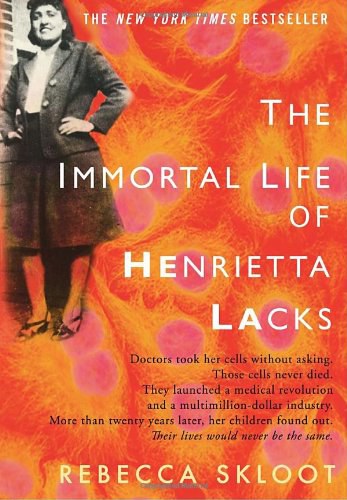
The Immortal Life of Henrietta Lacks [图书] 豆瓣 Goodreads
The Immortal Life of Henrietta Lacks
作者: Rebecca Skloot 出版社: Crown Publishing Group 2010 - 2
Her name was Henrietta Lacks, but scientists know her as HeLa. She was a poor Southern tobacco farmer who worked the same land as her slave ancestors, yet her cells—taken without her knowledge—became one of the most important tools in medicine. The first “immortal” human cells grown in culture, they are still alive today, though she has been dead for more than sixty years. If you could pile all HeLa cells ever grown onto a scale, they’d weigh more than 50 million metric tons—as much as a hundred Empire State Buildings. HeLa cells were vital for developing the polio vaccine; uncovered secrets of cancer, viruses, and the atom bomb’s effects; helped lead to important advances like in vitro fertilization, cloning, and gene mapping; and have been bought and sold by the billions.
Yet Henrietta Lacks remains virtually unknown, buried in an unmarked grave.
Now Rebecca Skloot takes us on an extraordinary journey, from the “colored” ward of Johns Hopkins Hospital in the 1950s to stark white laboratories with freezers full of HeLa cells; from Henrietta’s small, dying hometown of Clover, Virginia—a land of wooden slave quarters, faith healings, and voodoo—to East Baltimore today, where her children and grandchildren live and struggle with the legacy of her cells.
Henrietta’s family did not learn of her “immortality” until more than twenty years after her death, when scientists investigating HeLa began using her husband and children in research without informed consent. And though the cells had launched a multimillion-dollar industry that sells human biological materials, her family never saw any of the profits. As Rebecca Skloot so brilliantly shows, the story of the Lacks family—past and present—is inextricably connected to the dark history of experimentation on African Americans, the birth of bioethics, and the legal battles over whether we control the stuff we are made of.
Over the decade it took to uncover this story, Rebecca became enmeshed in the lives of the Lacks family—especially Henrietta’s daughter Deborah, who was devastated to learn about her mother’s cells. She was consumed with questions: Had scientists cloned her mother? Did it hurt her when researchers infected her cells with viruses and shot them into space? What happened to her sister, Elsie, who died in a mental institution at the age of fifteen? And if her mother was so important to medicine, why couldn’t her children afford health insurance?
Intimate in feeling, astonishing in scope, and impossible to put down, The Immortal Life of Henrietta Lacks captures the beauty and drama of scientific discovery, as well as its human consequences.
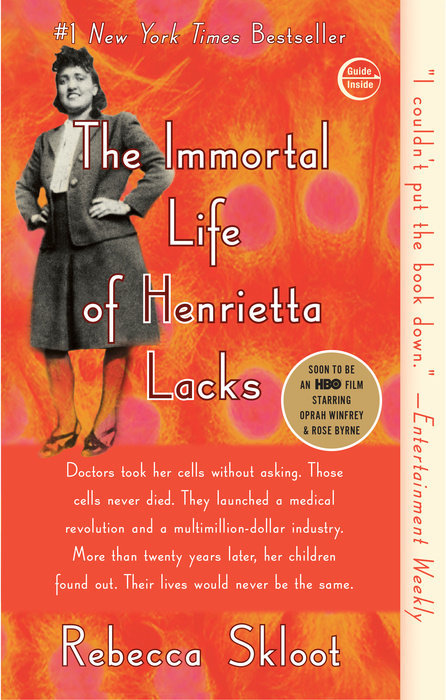
The Immortal Life of Henrietta Lacks [图书] 豆瓣
作者: Rebecca Skloot 出版社: Pan 2011 - 1
Her name was Henrietta Lacks, but scientists know her as HeLa. Born a poor black tobacco farmer, her cancer cells - taken without her knowledge - became a multimillion-dollar industry and one of the most important tools in medicine. Yet Henrietta's family did not learn of her 'immortality' until more than twenty years after her death, with devastating consequences ...Balancing the beauty and drama of scientific discovery with dark questions about who owns the stuff our bodies are made of, "The Immortal Life of Henrietta Lacks" is an extraordinary journey in search of the soul and story of a real woman, whose cells live on today in all four corners of the world. "A fascinating, harrowing, necessary book". (Hilary Mantel, "Guardian"). "A heartbreaking account of racism and injustice". ("Metro"). "A fine book...a gripping read...The book has deservedly been a huge bestseller in the US. It should be here, too". ("Sunday Times").
The Immortal Life of Henrietta Lacks [图书] 豆瓣
作者: Rebecca Skloot 出版社: Broadway Books 2011 - 3
Her name was Henrietta Lacks, but scientists know her as HeLa. She was a poor Southern tobacco farmer who worked the same land as her slave ancestors, yet her cells—taken without her knowledge—became one of the most important tools in medicine. The first “immortal” human cells grown in culture, they are still alive today, though she has been dead for more than sixty years. If you could pile all HeLa cells ever grown onto a scale, they’d weigh more than 50 million metric tons—as much as a hundred Empire State Buildings. HeLa cells were vital for developing the polio vaccine; uncovered secrets of cancer, viruses, and the atom bomb’s effects; helped lead to important advances like in vitro fertilization, cloning, and gene mapping; and have been bought and sold by the billions.
Yet Henrietta Lacks remains virtually unknown, buried in an unmarked grave.
Now Rebecca Skloot takes us on an extraordinary journey, from the “colored” ward of Johns Hopkins Hospital in the 1950s to stark white laboratories with freezers full of HeLa cells; from Henrietta’s small, dying hometown of Clover, Virginia—a land of wooden slave quarters, faith healings, and voodoo—to East Baltimore today, where her children and grandchildren live and struggle with the legacy of her cells.
Henrietta’s family did not learn of her “immortality” until more than twenty years after her death, when scientists investigating HeLa began using her husband and children in research without informed consent. And though the cells had launched a multimillion-dollar industry that sells human biological materials, her family never saw any of the profits. As Rebecca Skloot so brilliantly shows, the story of the Lacks family—past and present—is inextricably connected to the dark history of experimentation on African Americans, the birth of bioethics, and the legal battles over whether we control the stuff we are made of.
Over the decade it took to uncover this story, Rebecca became enmeshed in the lives of the Lacks family—especially Henrietta’s daughter Deborah, who was devastated to learn about her mother’s cells. She was consumed with questions: Had scientists cloned her mother? Did it hurt her when researchers infected her cells with viruses and shot them into space? What happened to her sister, Elsie, who died in a mental institution at the age of fifteen? And if her mother was so important to medicine, why couldn’t her children afford health insurance?
Intimate in feeling, astonishing in scope, and impossible to put down, The Immortal Life of Henrietta Lacks captures the beauty and drama of scientific discovery, as well as its human consequences.
永生的海拉 [图书] Goodreads
The Immortal Life of Henrietta Lacks
作者: Rebecca Skloot / 丽贝卡·思科鲁特 译者: 刘旸 出版社: 广西师范大学出版社 2018 - 11
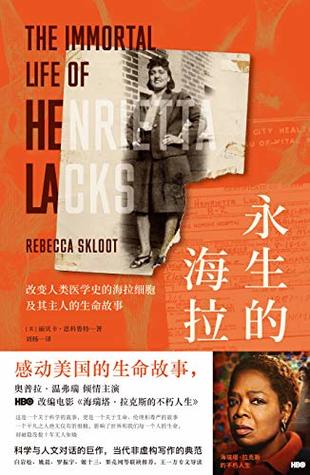
她叫海瑞塔•拉克斯(Henrietta Lacks),但科学家们只知道“海拉”(HeLa)。她是美国南方的贫穷烟农,在她的黑奴祖先世代耕种的土地上生活。她患宫颈癌后,肿瘤细胞被医生取走,并成为医学史上首例经体外培养而“永生不死”的细胞,解开了癌症、病毒、核辐射如何影响人体的奥秘,促成了体外受精、克隆技术、基因图谱等无数医学突破,涉及几乎所有医学研究领域,并贡献多个诺贝尔奖。她的细胞是无价之宝,但是她的家人却毫不知情地生活在贫困中,海瑞塔·拉克斯的名字也无人知晓。当二十年后她的女儿惊闻她还“活着”时,惊恐万状、哀痛欲绝:几十年来科学家都把她关在地下室做实验吗?像《侏罗纪公园》里那样把她克隆了吗?她的细胞在核实验中被炸碎她会感到痛吗?
美国作家丽贝卡•思科鲁特耗时十年挖掘这段跨越近一个世纪的精彩历史,记述拉克斯一家如何用一生的时间来接受海拉细胞的存在,以及这些细胞永生的科学原理,揭开人体实验的黑暗过去,探讨医学伦理和身体组织所有权的法律问题,以及其中的种族和信仰问题。本书细腻地捕捉了科学发现中的动人故事,及其对个体的深远影响。本书出版之后,在外界的捐赠下,家人终于为海瑞塔树立了墓碑,碑上镌刻着“永生的海拉细胞,将永远造福人类”,对海拉细胞为人类做出的贡献进行了完美注解。
本书已被翻译成二十多种语言,并被美国HBO公司改编为电影,奥普拉·温弗瑞倾情主演,获艾美奖、美国评论家选择奖等多项提名。
The Immortal Life of Henrietta Lacks [图书] Goodreads
作者: Rebecca Skloot 出版社: Crown 2010 - 2
Amazon Best Books of the Month, February 2010 : From a single, abbreviated life grew a seemingly immortal line of cells that made some of the most crucial innovations in modern science possible. And from that same life, and those cells, Rebecca Skloot has fashioned in The Immortal Life of Henrietta Lacks a fascinating and moving story of medicine and family, of how life is sustained in laboratories and in memory. Henrietta Lacks was a mother of five in Baltimore, a poor African American migrant from the tobacco farms of Virginia, who died from a cruelly aggressive cancer at the age of 30 in 1951. A sample of her cancerous tissue, taken without her knowledge or consent, as was the custom then, turned out to provide one of the holy grails of mid-century biology: human cells that could survive--even thrive--in the lab. Known as HeLa cells, their stunning potency gave scientists a building block for countless breakthroughs, beginning with the cure for polio. Meanwhile, Henrietta's family continued to live in poverty and frequently poor health, and their discovery decades later of her unknowing contribution--and her cells' strange survival--left them full of pride, anger, and suspicion. For a decade, Skloot doggedly but compassionately gathered the threads of these stories, slowly gaining the trust of the family while helping them learn the truth about Henrietta, and with their aid she tells a rich and haunting story that asks the questions, Who owns our bodies? And who carries our memories? -- Tom Nissley