Marius Petipa — 编剧 (13)
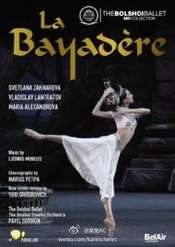
舞姬 [演出] Eggplant.place 豆瓣
La Bayadere
类型: 舞剧 编剧: Marius Petipa / Sergei Khudekov
其它标题: La Bayadere / 印度寺庙的舞女 / 神殿舞娘 导演: 大卫·维尔科克斯 / Galina Stepanenko 演员: Svetlana Zakharova / Alexey Loparevich / Maria Aleksandrova / Vladislav Lantratov / Andrei Sitnikov
古典芭蕾舞剧《舞姬》(La Bayadere) ,又译《印度寺庙的舞女》,改编自印度著名诗剧《沙恭达罗》,原剧的编导是有着“古典芭蕾之父”和“俄罗斯学派奠基人”美誉的马里于斯·珀蒂帕,也是著名作曲家路德维希·明库斯继舞剧《堂·吉诃德》之后的又一力作。
1877年2月4日,该剧在圣彼得堡帝国剧院(今马林斯基剧院)由俄罗斯帝国芭蕾舞团(今马林斯基剧院芭蕾舞团)首演,编剧S.库德科夫、M.珀蒂帕,作曲A.明库斯,编导佩蒂帕,布景K.伊万诺夫、P.朗班、O.阿莱格里和A.夸普,舞姬妮姬娅(Nikiya)由Y.瓦泽姆饰演,公主甘姆扎蒂(Gamzatti)由M.戈尔申科娃饰演,国王(Dugmanta)由C.约翰松饰演,武士索罗尔(Solor)由L.伊万诺夫饰演,三幕中的男子独舞由P.热德特担任。
《舞姬》是古典芭蕾最辉煌时期俄罗斯古典芭蕾的一部经典作品,它的出现比《天鹅湖》还要早,对世界芭蕾的发展起着十分深远的影响,许多芭蕾经典作品都是在其基础上而变化衍生过来的,堪称世界芭蕾的奠基作品之一。
《舞姬》也是佩蒂帕创作中期最为成功的作品之一,究其原因,可谓多方面的:不仅有简练单纯的动作、气势恢弘的音乐、七彩斑斓的服装、变幻莫测的灯光,以及由此创造出的艺术魅力——扣人心弦的悲剧、扑朔迷离的幻觉、崇高圣洁的气氛、玲珑剔透的美感,而且有辉煌铺张的舞台景观、令人心醉的异国情调、对刻骨铭心的爱情与灵魂不朽的生命之讴歌、对芭蕾的诗意品质之强调。
在编舞史上,《舞姬》可谓真正开了芭蕾舞剧交响编舞法之先河,比《天鹅湖》早了17年。熟悉《天鹅湖》二幕“天鹅湖畔”舞蹈的观众,不难在《舞姬》四幕一场《幽灵王国》中的白色大群舞中,看到熟悉的舞姿变奏、队型调度、诗情画意和透明美感。 在《舞姬》中,珀蒂帕充分显示了编排古典芭蕾双人舞、群舞的才能。他的舞蹈既保存了古典芭蕾的高度技术,又有严整、合于逻辑的发展。
“舞姬”是印度寺庙中特有的职业舞女,其职能是用美妙的舞蹈去专门侍奉诸神。这部芭蕾舞剧的文学基础来自印度著名诗剧《沙恭达罗》,并融合了西方童话故事《泥人卡尔》中的线索。剧情梗概是,倾国倾城的舞姬妮姬娅与英勇潇洒的武士索罗尔一见钟情,并深深地堕入爱河不可自拔,但悲剧则在于索罗尔随后却在不得已的情况下,同国王的千金甘姆扎蒂订了婚。出于嫉妒之心,甘姆扎蒂送给妮姬娅一篮藏有毒蛇的鲜花,使妮姬娅因遭毒蛇之咬而死于非命。索罗尔梦中来到幽灵王国,与妮姬娅相会,两人情不自禁地缠绵共舞,深情缅怀更默默追忆那朝露般短暂的爱情。在索罗尔与甘姆扎蒂的婚礼上,善定胜恶的奇迹发生了:随着山崩地裂般的巨响,寺庙倒塌了,将两位同床异梦的新婚燕儿,连同他们的不幸婚姻一道埋葬。
该剧有许多版本,其中一种版本如下:
第一场 古印度的神殿
一队武士在外狩猎,来到一座神殿饮水休憩。神殿的舞姬上前伺候。武士首领被一舞姬的美色和仪态吸引。大祭司看出领队的心仪,催他和部下离开,同时警告众舞姬不可和神殿外的人来往,她们必须对神忠心耿耿。武士返回,向等候他的舞姬表明他矢志不渝的爱情。武士和舞姬却不知,大祭司已窥见他们的爱情盟誓。
第二场 皇宫-夜晚
国王对女儿即将举行的婚礼兴高采烈,对未来的女婿赞不绝口,却不知道女儿的未婚夫最近竟然和神殿的舞姬幽会。大祭司赶到皇宫,告诉公主武士不忠之事。公主不信,让他带舞姬来宫中。公主和舞姬当面对质后,舞姬被卫士关押。
第三场 宫殿-第二天
为了庆祝女儿将要举行的婚礼,国王决定举办盛大的庆典。在庆典当中,大祭司请求释放舞姬。国王不知道这一切,询问女儿,才发现女儿真地囚禁了大祭司的舞姬。舞姬被释放,立即冲向心爱的武士怀抱,但武士并不情愿接纳她。舞姬痛苦地避开,不敢相信那晚发生的一切已不复存在的事实。公主认为根除舞姬的时机已到,她递给舞姬一个藏有毒蛇的花篮。毒蛇发现目标后,立即攻击,但在混乱当中毒蛇也咬中了公主。毒蛇迅速被杀死,国王唤人拿来解药给公主。大祭司给垂死的舞姬同样的解药,但她宁愿死。
第四和第五场 皇宫寝室
武士深深地被白天的事困扰,吸鸦片来麻痹他的精神。在昏迷中,他梦到舞姬的灵魂进入了一个幽灵王国。他进入那个王国祈求,并得到了她的原谅。在梦中他再次誓言对她的爱,但被他的朋友叫醒了,因为去神殿完婚的时辰到了。
第六场 神殿
神殿里气氛肃穆,舞姬们默默地怀念死去的朋友。一对新人和急着进行婚礼的国王一起进入神殿。仪式中,武士被他所背叛的女孩的幻影所烦扰,行为变得怪异。那个幽灵提醒他在金色神像前的誓言,他惊恐万分。国王强制婚礼进行下去,大祭司祈求金色神像完成武士和公主的婚礼,但是神灵发怒了,一阵强烈的地震摧毁了神殿和其中的一切。一个白色的温柔的幽灵悲哀地俯瞰着这最后的场景。
舞姬 莫斯科大剧院2013年直播版 [演出] 豆瓣
所属 演出: 舞姬
剧团: 莫斯科大剧院芭蕾舞团 剧院: 莫斯科大剧院 导演: Galina Stepanenko
其它标题: 莫斯科大剧院2013年直播版 编剧: Marius Petipa / Sergei Khudekov 演员: Svetlana Zakharova / Alexey Loparevich
古典芭蕾舞剧《舞姬》(La Bayadere) ,又译《印度寺庙的舞女》,改编自印度著名诗剧《沙恭达罗》,原剧的编导是有着“古典芭蕾之父”和“俄罗斯学派奠基人”美誉的马里于斯·珀蒂帕,也是著名作曲家路德维希·明库斯继舞剧《堂·吉诃德》之后的又一力作。
1877年2月4日,该剧在圣彼得堡帝国剧院(今马林斯基剧院)由俄罗斯帝国芭蕾舞团(今马林斯基剧院芭蕾舞团)首演,编剧S.库德科夫、M.珀蒂帕,作曲A.明库斯,编导佩蒂帕,布景K.伊万诺夫、P.朗班、O.阿莱格里和A.夸普,舞姬妮姬娅(Nikiya)由Y.瓦泽姆饰演,公主甘姆扎蒂(Gamzatti)由M.戈尔申科娃饰演,国王(Dugmanta)由C.约翰松饰演,武士索罗尔(Solor)由L.伊万诺夫饰演,三幕中的男子独舞由P.热德特担任。
《舞姬》是古典芭蕾最辉煌时期俄罗斯古典芭蕾的一部经典作品,它的出现比《天鹅湖》还要早,对世界芭蕾的发展起着十分深远的影响,许多芭蕾经典作品都是在其基础上而变化衍生过来的,堪称世界芭蕾的奠基作品之一。
《舞姬》也是佩蒂帕创作中期最为成功的作品之一,究其原因,可谓多方面的:不仅有简练单纯的动作、气势恢弘的音乐、七彩斑斓的服装、变幻莫测的灯光,以及由此创造出的艺术魅力——扣人心弦的悲剧、扑朔迷离的幻觉、崇高圣洁的气氛、玲珑剔透的美感,而且有辉煌铺张的舞台景观、令人心醉的异国情调、对刻骨铭心的爱情与灵魂不朽的生命之讴歌、对芭蕾的诗意品质之强调。
在编舞史上,《舞姬》可谓真正开了芭蕾舞剧交响编舞法之先河,比《天鹅湖》早了17年。熟悉《天鹅湖》二幕“天鹅湖畔”舞蹈的观众,不难在《舞姬》四幕一场《幽灵王国》中的白色大群舞中,看到熟悉的舞姿变奏、队型调度、诗情画意和透明美感。 在《舞姬》中,珀蒂帕充分显示了编排古典芭蕾双人舞、群舞的才能。他的舞蹈既保存了古典芭蕾的高度技术,又有严整、合于逻辑的发展。
“舞姬”是印度寺庙中特有的职业舞女,其职能是用美妙的舞蹈去专门侍奉诸神。这部芭蕾舞剧的文学基础来自印度著名诗剧《沙恭达罗》,并融合了西方童话故事《泥人卡尔》中的线索。剧情梗概是,倾国倾城的舞姬妮姬娅与英勇潇洒的武士索罗尔一见钟情,并深深地堕入爱河不可自拔,但悲剧则在于索罗尔随后却在不得已的情况下,同国王的千金甘姆扎蒂订了婚。出于嫉妒之心,甘姆扎蒂送给妮姬娅一篮藏有毒蛇的鲜花,使妮姬娅因遭毒蛇之咬而死于非命。索罗尔梦中来到幽灵王国,与妮姬娅相会,两人情不自禁地缠绵共舞,深情缅怀更默默追忆那朝露般短暂的爱情。在索罗尔与甘姆扎蒂的婚礼上,善定胜恶的奇迹发生了:随着山崩地裂般的巨响,寺庙倒塌了,将两位同床异梦的新婚燕儿,连同他们的不幸婚姻一道埋葬。
该剧有许多版本,其中一种版本如下:
第一场 古印度的神殿
一队武士在外狩猎,来到一座神殿饮水休憩。神殿的舞姬上前伺候。武士首领被一舞姬的美色和仪态吸引。大祭司看出领队的心仪,催他和部下离开,同时警告众舞姬不可和神殿外的人来往,她们必须对神忠心耿耿。武士返回,向等候他的舞姬表明他矢志不渝的爱情。武士和舞姬却不知,大祭司已窥见他们的爱情盟誓。
第二场 皇宫-夜晚
国王对女儿即将举行的婚礼兴高采烈,对未来的女婿赞不绝口,却不知道女儿的未婚夫最近竟然和神殿的舞姬幽会。大祭司赶到皇宫,告诉公主武士不忠之事。公主不信,让他带舞姬来宫中。公主和舞姬当面对质后,舞姬被卫士关押。
第三场 宫殿-第二天
为了庆祝女儿将要举行的婚礼,国王决定举办盛大的庆典。在庆典当中,大祭司请求释放舞姬。国王不知道这一切,询问女儿,才发现女儿真地囚禁了大祭司的舞姬。舞姬被释放,立即冲向心爱的武士怀抱,但武士并不情愿接纳她。舞姬痛苦地避开,不敢相信那晚发生的一切已不复存在的事实。公主认为根除舞姬的时机已到,她递给舞姬一个藏有毒蛇的花篮。毒蛇发现目标后,立即攻击,但在混乱当中毒蛇也咬中了公主。毒蛇迅速被杀死,国王唤人拿来解药给公主。大祭司给垂死的舞姬同样的解药,但她宁愿死。
第四和第五场 皇宫寝室
武士深深地被白天的事困扰,吸鸦片来麻痹他的精神。在昏迷中,他梦到舞姬的灵魂进入了一个幽灵王国。他进入那个王国祈求,并得到了她的原谅。在梦中他再次誓言对她的爱,但被他的朋友叫醒了,因为去神殿完婚的时辰到了。
第六场 神殿
神殿里气氛肃穆,舞姬们默默地怀念死去的朋友。一对新人和急着进行婚礼的国王一起进入神殿。仪式中,武士被他所背叛的女孩的幻影所烦扰,行为变得怪异。那个幽灵提醒他在金色神像前的誓言,他惊恐万分。国王强制婚礼进行下去,大祭司祈求金色神像完成武士和公主的婚礼,但是神灵发怒了,一阵强烈的地震摧毁了神殿和其中的一切。一个白色的温柔的幽灵悲哀地俯瞰着这最后的场景。
舞姬 中央芭蕾舞团1996年第三幕版 [演出] 豆瓣
所属 演出: 舞姬
剧团: 中央芭蕾舞团 导演: 应润生 / 吴振蓉
其它标题: 中央芭蕾舞团1996年第三幕版 编剧: Marius Petipa 作曲: Ludwig Minkus
古典芭蕾舞剧《舞姬》(La Bayadere) ,又译《印度寺庙的舞女》,改编自印度著名诗剧《沙恭达罗》,原剧的编导是有着“古典芭蕾之父”和“俄罗斯学派奠基人”美誉的马里于斯·珀蒂帕,也是著名作曲家路德维希·明库斯继舞剧《堂·吉诃德》之后的又一力作。
1877年2月4日,该剧在圣彼得堡帝国剧院(今马林斯基剧院)由俄罗斯帝国芭蕾舞团(今马林斯基剧院芭蕾舞团)首演,编剧S.库德科夫、M.珀蒂帕,作曲A.明库斯,编导佩蒂帕,布景K.伊万诺夫、P.朗班、O.阿莱格里和A.夸普,舞姬妮姬娅(Nikiya)由Y.瓦泽姆饰演,公主甘姆扎蒂(Gamzatti)由M.戈尔申科娃饰演,国王(Dugmanta)由C.约翰松饰演,武士索罗尔(Solor)由L.伊万诺夫饰演,三幕中的男子独舞由P.热德特担任。
《舞姬》是古典芭蕾最辉煌时期俄罗斯古典芭蕾的一部经典作品,它的出现比《天鹅湖》还要早,对世界芭蕾的发展起着十分深远的影响,许多芭蕾经典作品都是在其基础上而变化衍生过来的,堪称世界芭蕾的奠基作品之一。
《舞姬》也是佩蒂帕创作中期最为成功的作品之一,究其原因,可谓多方面的:不仅有简练单纯的动作、气势恢弘的音乐、七彩斑斓的服装、变幻莫测的灯光,以及由此创造出的艺术魅力——扣人心弦的悲剧、扑朔迷离的幻觉、崇高圣洁的气氛、玲珑剔透的美感,而且有辉煌铺张的舞台景观、令人心醉的异国情调、对刻骨铭心的爱情与灵魂不朽的生命之讴歌、对芭蕾的诗意品质之强调。
在编舞史上,《舞姬》可谓真正开了芭蕾舞剧交响编舞法之先河,比《天鹅湖》早了17年。熟悉《天鹅湖》二幕“天鹅湖畔”舞蹈的观众,不难在《舞姬》四幕一场《幽灵王国》中的白色大群舞中,看到熟悉的舞姿变奏、队型调度、诗情画意和透明美感。 在《舞姬》中,珀蒂帕充分显示了编排古典芭蕾双人舞、群舞的才能。他的舞蹈既保存了古典芭蕾的高度技术,又有严整、合于逻辑的发展。
“舞姬”是印度寺庙中特有的职业舞女,其职能是用美妙的舞蹈去专门侍奉诸神。这部芭蕾舞剧的文学基础来自印度著名诗剧《沙恭达罗》,并融合了西方童话故事《泥人卡尔》中的线索。剧情梗概是,倾国倾城的舞姬妮姬娅与英勇潇洒的武士索罗尔一见钟情,并深深地堕入爱河不可自拔,但悲剧则在于索罗尔随后却在不得已的情况下,同国王的千金甘姆扎蒂订了婚。出于嫉妒之心,甘姆扎蒂送给妮姬娅一篮藏有毒蛇的鲜花,使妮姬娅因遭毒蛇之咬而死于非命。索罗尔梦中来到幽灵王国,与妮姬娅相会,两人情不自禁地缠绵共舞,深情缅怀更默默追忆那朝露般短暂的爱情。在索罗尔与甘姆扎蒂的婚礼上,善定胜恶的奇迹发生了:随着山崩地裂般的巨响,寺庙倒塌了,将两位同床异梦的新婚燕儿,连同他们的不幸婚姻一道埋葬。
该剧有许多版本,其中一种版本如下:
第一场 古印度的神殿
一队武士在外狩猎,来到一座神殿饮水休憩。神殿的舞姬上前伺候。武士首领被一舞姬的美色和仪态吸引。大祭司看出领队的心仪,催他和部下离开,同时警告众舞姬不可和神殿外的人来往,她们必须对神忠心耿耿。武士返回,向等候他的舞姬表明他矢志不渝的爱情。武士和舞姬却不知,大祭司已窥见他们的爱情盟誓。
第二场 皇宫-夜晚
国王对女儿即将举行的婚礼兴高采烈,对未来的女婿赞不绝口,却不知道女儿的未婚夫最近竟然和神殿的舞姬幽会。大祭司赶到皇宫,告诉公主武士不忠之事。公主不信,让他带舞姬来宫中。公主和舞姬当面对质后,舞姬被卫士关押。
第三场 宫殿-第二天
为了庆祝女儿将要举行的婚礼,国王决定举办盛大的庆典。在庆典当中,大祭司请求释放舞姬。国王不知道这一切,询问女儿,才发现女儿真地囚禁了大祭司的舞姬。舞姬被释放,立即冲向心爱的武士怀抱,但武士并不情愿接纳她。舞姬痛苦地避开,不敢相信那晚发生的一切已不复存在的事实。公主认为根除舞姬的时机已到,她递给舞姬一个藏有毒蛇的花篮。毒蛇发现目标后,立即攻击,但在混乱当中毒蛇也咬中了公主。毒蛇迅速被杀死,国王唤人拿来解药给公主。大祭司给垂死的舞姬同样的解药,但她宁愿死。
第四和第五场 皇宫寝室
武士深深地被白天的事困扰,吸鸦片来麻痹他的精神。在昏迷中,他梦到舞姬的灵魂进入了一个幽灵王国。他进入那个王国祈求,并得到了她的原谅。在梦中他再次誓言对她的爱,但被他的朋友叫醒了,因为去神殿完婚的时辰到了。
第六场 神殿
神殿里气氛肃穆,舞姬们默默地怀念死去的朋友。一对新人和急着进行婚礼的国王一起进入神殿。仪式中,武士被他所背叛的女孩的幻影所烦扰,行为变得怪异。那个幽灵提醒他在金色神像前的誓言,他惊恐万分。国王强制婚礼进行下去,大祭司祈求金色神像完成武士和公主的婚礼,但是神灵发怒了,一阵强烈的地震摧毁了神殿和其中的一切。一个白色的温柔的幽灵悲哀地俯瞰着这最后的场景。
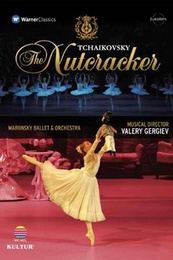
胡桃夹子 [演出] 豆瓣
Щелкунчик
8.6 (16 个评分) 类型: 舞剧 编剧: Marius Petipa / Peter Wright
其它标题: Щелкунчик / The Nutcracker 导演: Ross MacGibbon / Roger M. Sherman 演员: Alina Cojocaru / Ivan Petrov / Miyako Yoshida / Jonathan Cope / Anthony Dowell
Below is a synopsis based on the original 1892 libretto by Marius Petipa. The story varies from production to production, though most follow the basic outline. The names of the characters also vary. In the original E. T. A. Hoffmann story, the young heroine is called Marie Stahlbaum and Clara (Klärchen) is her doll's name. In the adaptation by Dumas on which Petipa based his libretto, her name is Marie Silberhaus. In still other productions, such as Baryshnikov's, Clara is Clara Stahlbaum rather than Clara Silberhaus.
Act I
Scene 1: The Stahlbaum Home
It is Christmas Eve. Family and friends have gathered in the parlor to decorate the beautiful Christmas tree in preparation for the party. Once the tree is finished, the children are sent for. They stand in awe of the tree sparkling with candles and decorations.
The party begins. A march is played. Presents are given out to the children. Suddenly, as the owl-topped grandmother clock strikes eight, a mysterious figure enters the room. It is Drosselmeyer, a local councilman, magician, and Clara's godfather. He is also a talented toymaker who has brought with him gifts for the children, including four lifelike dolls who dance to the delight of all. He then has them put away for safekeeping.
Clara and Fritz are sad to see the dolls being taken away, but Drosselmeyer has yet another toy for them: a wooden nutcracker carved in the shape of a little man. The other children ignore it, but Clara immediately takes a liking to it. Fritz, however, breaks it, and Clara is heartbroken.
During the night, after everyone else has gone to bed, Clara returns to the parlor to check on her beloved nutcracker. As she reaches the little bed, the clock strikes midnight and she looks up to see Drosselmeyer perched atop it. Suddenly, mice begin to fill the room and the Christmas tree begins to grow to dizzying heights. The nutcracker also grows to life size. Clara finds herself in the midst of a battle between an army of gingerbread soldiers and the mice, led by their king. They begin to eat the soldiers.
The nutcracker appears to lead the soldiers, who are joined by tin soldiers, and by dolls who serve as doctors to carry away the wounded. As the Mouse King advances on the still-wounded nutcracker, Clara throws her slipper at him, distracting him long enough for the nutcracker to stab him.
Scene 2: A Pine Forest
The mice retreat and the nutcracker is transformed into a handsome Prince. He leads Clara through the moonlit night to a pine forest in which the snowflakes dance around them, beckoning them on to his kingdom as the first act ends.
Act II
Scene 1: The Land of Sweets
Clara and the Prince travel to the beautiful Land of Sweets, ruled by the Sugar Plum Fairy in the Prince's place until his return. He recounts for her how he had been saved from the Mouse King by Clara and transformed back into himself. In honor of the young heroine, a celebration of sweets from around the world is produced: chocolate from Spain, coffee from Arabia, tea from China, and candy canes from Russia all dance for their amusement; Danish shepherdesses perform on their flutes; Mother Ginger has her children, the Polichinelles, emerge from under her enormous hoop skirt to dance; a string of beautiful flowers perform a waltz. To conclude the night, the Sugar Plum Fairy and her Cavalier perform a dance.
A final waltz is performed by all the sweets, after which the Sugar Plum Fairy ushers Clara and the Prince down from their throne. He bows to her, she kisses Clara goodbye, and leads them to a reindeer drawn sleigh. It takes off as they wave goodbye to all the subjects who wave back.
In the original libretto, the ballet's apotheosis "represents a large beehive with flying bees, closely guarding their riches". Just like Swan Lake, there have been various alternative endings created in productions subsequent to the original.
胡桃夹子 2012年马林斯基剧院3D版 [演出] 豆瓣
所属 演出: 胡桃夹子
剧团: Симфонический оркестр Мариинского театра 马林斯基剧院交响乐团 ; Балет Мариинского театра 马林斯基剧院芭蕾舞团 ; Детский хор Мариинского театра 马林斯基剧院童声合唱团 剧院: Мариинский театр 马林斯基剧院 导演: Andreas Morell / Valery Gergiev
其它标题: 2012年马林斯基剧院3D版 编剧: Marius Petipa 作曲: Pyotr Ilyich Tchaikovsky 演员: Alina Somova / Vladimir Shklyarov
Below is a synopsis based on the original 1892 libretto by Marius Petipa. The story varies from production to production, though most follow the basic outline. The names of the characters also vary. In the original E. T. A. Hoffmann story, the young heroine is called Marie Stahlbaum and Clara (Klärchen) is her doll's name. In the adaptation by Dumas on which Petipa based his libretto, her name is Marie Silberhaus. In still other productions, such as Baryshnikov's, Clara is Clara Stahlbaum rather than Clara Silberhaus.
Act I
Scene 1: The Stahlbaum Home
It is Christmas Eve. Family and friends have gathered in the parlor to decorate the beautiful Christmas tree in preparation for the party. Once the tree is finished, the children are sent for. They stand in awe of the tree sparkling with candles and decorations.
The party begins. A march is played. Presents are given out to the children. Suddenly, as the owl-topped grandmother clock strikes eight, a mysterious figure enters the room. It is Drosselmeyer, a local councilman, magician, and Clara's godfather. He is also a talented toymaker who has brought with him gifts for the children, including four lifelike dolls who dance to the delight of all. He then has them put away for safekeeping.
Clara and Fritz are sad to see the dolls being taken away, but Drosselmeyer has yet another toy for them: a wooden nutcracker carved in the shape of a little man. The other children ignore it, but Clara immediately takes a liking to it. Fritz, however, breaks it, and Clara is heartbroken.
During the night, after everyone else has gone to bed, Clara returns to the parlor to check on her beloved nutcracker. As she reaches the little bed, the clock strikes midnight and she looks up to see Drosselmeyer perched atop it. Suddenly, mice begin to fill the room and the Christmas tree begins to grow to dizzying heights. The nutcracker also grows to life size. Clara finds herself in the midst of a battle between an army of gingerbread soldiers and the mice, led by their king. They begin to eat the soldiers.
The nutcracker appears to lead the soldiers, who are joined by tin soldiers, and by dolls who serve as doctors to carry away the wounded. As the Mouse King advances on the still-wounded nutcracker, Clara throws her slipper at him, distracting him long enough for the nutcracker to stab him.
Scene 2: A Pine Forest
The mice retreat and the nutcracker is transformed into a handsome Prince. He leads Clara through the moonlit night to a pine forest in which the snowflakes dance around them, beckoning them on to his kingdom as the first act ends.
Act II
Scene 1: The Land of Sweets
Clara and the Prince travel to the beautiful Land of Sweets, ruled by the Sugar Plum Fairy in the Prince's place until his return. He recounts for her how he had been saved from the Mouse King by Clara and transformed back into himself. In honor of the young heroine, a celebration of sweets from around the world is produced: chocolate from Spain, coffee from Arabia, tea from China, and candy canes from Russia all dance for their amusement; Danish shepherdesses perform on their flutes; Mother Ginger has her children, the Polichinelles, emerge from under her enormous hoop skirt to dance; a string of beautiful flowers perform a waltz. To conclude the night, the Sugar Plum Fairy and her Cavalier perform a dance.
A final waltz is performed by all the sweets, after which the Sugar Plum Fairy ushers Clara and the Prince down from their throne. He bows to her, she kisses Clara goodbye, and leads them to a reindeer drawn sleigh. It takes off as they wave goodbye to all the subjects who wave back.
In the original libretto, the ballet's apotheosis "represents a large beehive with flying bees, closely guarding their riches". Just like Swan Lake, there have been various alternative endings created in productions subsequent to the original.
胡桃夹子 2011年马林斯基剧院版 [演出] 豆瓣
所属 演出: 胡桃夹子
剧团: Симфонический оркестр Мариинского театра 马林斯基剧院交响乐团 ; Балет Мариинского театра 马林斯基剧院芭蕾舞团 ; Детский хор Мариинского театра 马林斯基剧院儿童合唱团 剧院: Мариинский театр 马林斯基剧院 导演: Valery Gergiev
其它标题: 2011年马林斯基剧院版 编剧: Marius Petipa 作曲: Pyotr Ilyich Tchaikovsky 演员: Alina Somova / Vladimir Shklyarov
Below is a synopsis based on the original 1892 libretto by Marius Petipa. The story varies from production to production, though most follow the basic outline. The names of the characters also vary. In the original E. T. A. Hoffmann story, the young heroine is called Marie Stahlbaum and Clara (Klärchen) is her doll's name. In the adaptation by Dumas on which Petipa based his libretto, her name is Marie Silberhaus. In still other productions, such as Baryshnikov's, Clara is Clara Stahlbaum rather than Clara Silberhaus.
Act I
Scene 1: The Stahlbaum Home
It is Christmas Eve. Family and friends have gathered in the parlor to decorate the beautiful Christmas tree in preparation for the party. Once the tree is finished, the children are sent for. They stand in awe of the tree sparkling with candles and decorations.
The party begins. A march is played. Presents are given out to the children. Suddenly, as the owl-topped grandmother clock strikes eight, a mysterious figure enters the room. It is Drosselmeyer, a local councilman, magician, and Clara's godfather. He is also a talented toymaker who has brought with him gifts for the children, including four lifelike dolls who dance to the delight of all. He then has them put away for safekeeping.
Clara and Fritz are sad to see the dolls being taken away, but Drosselmeyer has yet another toy for them: a wooden nutcracker carved in the shape of a little man. The other children ignore it, but Clara immediately takes a liking to it. Fritz, however, breaks it, and Clara is heartbroken.
During the night, after everyone else has gone to bed, Clara returns to the parlor to check on her beloved nutcracker. As she reaches the little bed, the clock strikes midnight and she looks up to see Drosselmeyer perched atop it. Suddenly, mice begin to fill the room and the Christmas tree begins to grow to dizzying heights. The nutcracker also grows to life size. Clara finds herself in the midst of a battle between an army of gingerbread soldiers and the mice, led by their king. They begin to eat the soldiers.
The nutcracker appears to lead the soldiers, who are joined by tin soldiers, and by dolls who serve as doctors to carry away the wounded. As the Mouse King advances on the still-wounded nutcracker, Clara throws her slipper at him, distracting him long enough for the nutcracker to stab him.
Scene 2: A Pine Forest
The mice retreat and the nutcracker is transformed into a handsome Prince. He leads Clara through the moonlit night to a pine forest in which the snowflakes dance around them, beckoning them on to his kingdom as the first act ends.
Act II
Scene 1: The Land of Sweets
Clara and the Prince travel to the beautiful Land of Sweets, ruled by the Sugar Plum Fairy in the Prince's place until his return. He recounts for her how he had been saved from the Mouse King by Clara and transformed back into himself. In honor of the young heroine, a celebration of sweets from around the world is produced: chocolate from Spain, coffee from Arabia, tea from China, and candy canes from Russia all dance for their amusement; Danish shepherdesses perform on their flutes; Mother Ginger has her children, the Polichinelles, emerge from under her enormous hoop skirt to dance; a string of beautiful flowers perform a waltz. To conclude the night, the Sugar Plum Fairy and her Cavalier perform a dance.
A final waltz is performed by all the sweets, after which the Sugar Plum Fairy ushers Clara and the Prince down from their throne. He bows to her, she kisses Clara goodbye, and leads them to a reindeer drawn sleigh. It takes off as they wave goodbye to all the subjects who wave back.
In the original libretto, the ballet's apotheosis "represents a large beehive with flying bees, closely guarding their riches". Just like Swan Lake, there have been various alternative endings created in productions subsequent to the original.
胡桃夹子 2017年英国皇家芭蕾舞团版 [演出] 豆瓣
所属 演出: 胡桃夹子
语言: 英语 english 剧团: Orchestra of the Royal Opera House 英国皇家歌剧院管弦乐团 ; The Royal Ballet 英国皇家芭蕾舞团 ; The London Oratory Junior Choir ; The Schola Cantorum of the London Oratory School 剧院: Royal Opera House, Covent Garden 考文特花园皇家歌剧院 导演: Lev Ivanov / Peter Wright
其它标题: 2017年英国皇家芭蕾舞团版 编剧: Marius Petipa / Peter Wright 作曲: Pyotr Ilyich Tchaikovsky 演员: Sarah Lamb / Francesca Hayward
Below is a synopsis based on the original 1892 libretto by Marius Petipa. The story varies from production to production, though most follow the basic outline. The names of the characters also vary. In the original E. T. A. Hoffmann story, the young heroine is called Marie Stahlbaum and Clara (Klärchen) is her doll's name. In the adaptation by Dumas on which Petipa based his libretto, her name is Marie Silberhaus. In still other productions, such as Baryshnikov's, Clara is Clara Stahlbaum rather than Clara Silberhaus.
Act I
Scene 1: The Stahlbaum Home
It is Christmas Eve. Family and friends have gathered in the parlor to decorate the beautiful Christmas tree in preparation for the party. Once the tree is finished, the children are sent for. They stand in awe of the tree sparkling with candles and decorations.
The party begins. A march is played. Presents are given out to the children. Suddenly, as the owl-topped grandmother clock strikes eight, a mysterious figure enters the room. It is Drosselmeyer, a local councilman, magician, and Clara's godfather. He is also a talented toymaker who has brought with him gifts for the children, including four lifelike dolls who dance to the delight of all. He then has them put away for safekeeping.
Clara and Fritz are sad to see the dolls being taken away, but Drosselmeyer has yet another toy for them: a wooden nutcracker carved in the shape of a little man. The other children ignore it, but Clara immediately takes a liking to it. Fritz, however, breaks it, and Clara is heartbroken.
During the night, after everyone else has gone to bed, Clara returns to the parlor to check on her beloved nutcracker. As she reaches the little bed, the clock strikes midnight and she looks up to see Drosselmeyer perched atop it. Suddenly, mice begin to fill the room and the Christmas tree begins to grow to dizzying heights. The nutcracker also grows to life size. Clara finds herself in the midst of a battle between an army of gingerbread soldiers and the mice, led by their king. They begin to eat the soldiers.
The nutcracker appears to lead the soldiers, who are joined by tin soldiers, and by dolls who serve as doctors to carry away the wounded. As the Mouse King advances on the still-wounded nutcracker, Clara throws her slipper at him, distracting him long enough for the nutcracker to stab him.
Scene 2: A Pine Forest
The mice retreat and the nutcracker is transformed into a handsome Prince. He leads Clara through the moonlit night to a pine forest in which the snowflakes dance around them, beckoning them on to his kingdom as the first act ends.
Act II
Scene 1: The Land of Sweets
Clara and the Prince travel to the beautiful Land of Sweets, ruled by the Sugar Plum Fairy in the Prince's place until his return. He recounts for her how he had been saved from the Mouse King by Clara and transformed back into himself. In honor of the young heroine, a celebration of sweets from around the world is produced: chocolate from Spain, coffee from Arabia, tea from China, and candy canes from Russia all dance for their amusement; Danish shepherdesses perform on their flutes; Mother Ginger has her children, the Polichinelles, emerge from under her enormous hoop skirt to dance; a string of beautiful flowers perform a waltz. To conclude the night, the Sugar Plum Fairy and her Cavalier perform a dance.
A final waltz is performed by all the sweets, after which the Sugar Plum Fairy ushers Clara and the Prince down from their throne. He bows to her, she kisses Clara goodbye, and leads them to a reindeer drawn sleigh. It takes off as they wave goodbye to all the subjects who wave back.
In the original libretto, the ballet's apotheosis "represents a large beehive with flying bees, closely guarding their riches". Just like Swan Lake, there have been various alternative endings created in productions subsequent to the original.
胡桃夹子 2013年东京新国立剧场版 [演出] 豆瓣
所属 演出: 胡桃夹子
剧团: 东京新国立剧场芭蕾舞团 剧院: 东京新国立剧场 导演: David Bintley
其它标题: 2013年东京新国立剧场版 编剧: Marius Petipa 作曲: Pyotr Ilyich Tchaikovsky 演员: 米沢唯 / 福冈雄大
Below is a synopsis based on the original 1892 libretto by Marius Petipa. The story varies from production to production, though most follow the basic outline. The names of the characters also vary. In the original E. T. A. Hoffmann story, the young heroine is called Marie Stahlbaum and Clara (Klärchen) is her doll's name. In the adaptation by Dumas on which Petipa based his libretto, her name is Marie Silberhaus. In still other productions, such as Baryshnikov's, Clara is Clara Stahlbaum rather than Clara Silberhaus.
Act I
Scene 1: The Stahlbaum Home
It is Christmas Eve. Family and friends have gathered in the parlor to decorate the beautiful Christmas tree in preparation for the party. Once the tree is finished, the children are sent for. They stand in awe of the tree sparkling with candles and decorations.
The party begins. A march is played. Presents are given out to the children. Suddenly, as the owl-topped grandmother clock strikes eight, a mysterious figure enters the room. It is Drosselmeyer, a local councilman, magician, and Clara's godfather. He is also a talented toymaker who has brought with him gifts for the children, including four lifelike dolls who dance to the delight of all. He then has them put away for safekeeping.
Clara and Fritz are sad to see the dolls being taken away, but Drosselmeyer has yet another toy for them: a wooden nutcracker carved in the shape of a little man. The other children ignore it, but Clara immediately takes a liking to it. Fritz, however, breaks it, and Clara is heartbroken.
During the night, after everyone else has gone to bed, Clara returns to the parlor to check on her beloved nutcracker. As she reaches the little bed, the clock strikes midnight and she looks up to see Drosselmeyer perched atop it. Suddenly, mice begin to fill the room and the Christmas tree begins to grow to dizzying heights. The nutcracker also grows to life size. Clara finds herself in the midst of a battle between an army of gingerbread soldiers and the mice, led by their king. They begin to eat the soldiers.
The nutcracker appears to lead the soldiers, who are joined by tin soldiers, and by dolls who serve as doctors to carry away the wounded. As the Mouse King advances on the still-wounded nutcracker, Clara throws her slipper at him, distracting him long enough for the nutcracker to stab him.
Scene 2: A Pine Forest
The mice retreat and the nutcracker is transformed into a handsome Prince. He leads Clara through the moonlit night to a pine forest in which the snowflakes dance around them, beckoning them on to his kingdom as the first act ends.
Act II
Scene 1: The Land of Sweets
Clara and the Prince travel to the beautiful Land of Sweets, ruled by the Sugar Plum Fairy in the Prince's place until his return. He recounts for her how he had been saved from the Mouse King by Clara and transformed back into himself. In honor of the young heroine, a celebration of sweets from around the world is produced: chocolate from Spain, coffee from Arabia, tea from China, and candy canes from Russia all dance for their amusement; Danish shepherdesses perform on their flutes; Mother Ginger has her children, the Polichinelles, emerge from under her enormous hoop skirt to dance; a string of beautiful flowers perform a waltz. To conclude the night, the Sugar Plum Fairy and her Cavalier perform a dance.
A final waltz is performed by all the sweets, after which the Sugar Plum Fairy ushers Clara and the Prince down from their throne. He bows to her, she kisses Clara goodbye, and leads them to a reindeer drawn sleigh. It takes off as they wave goodbye to all the subjects who wave back.
In the original libretto, the ballet's apotheosis "represents a large beehive with flying bees, closely guarding their riches". Just like Swan Lake, there have been various alternative endings created in productions subsequent to the original.
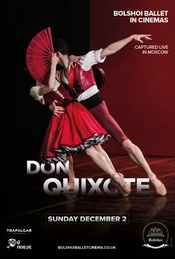
堂吉诃德 [演出] 豆瓣
Дон Кихот
类型: 舞剧 编剧: Marius Petipa / Carlos Acosta
其它标题: Дон Кихот / Don Quixote 导演: Marius Petipa / Rudolf Nureyev 演员: Christopher Saunders / Philip Mosley / Gary Avis / Akane Takada / Alexander Campbell
Prologue
Don Quixote's Study
Bachelor Sanson Carrasco is seen covering a bookcase with wallpaper, while Antonina is putting some rusty old armour and a helmet made of pasteboard into a cupboard. Don Quixote de la Mancha enters, reading a book. He goes to the bookcase and, not finding it, believes it has been stolen by evil magicians. Then he settles into an armchair and continues reading. He delights in stories of brave knights, fabulous giants and other fantastical creatures, but most of all Don Quixote dreams of his beloved Dulcinea, a woman that he believes to be so lovely and noble that she must be divinity. Gradually he nods and falls asleep to dream of their romantic adventures. Darkness falls.
Suddenly his servant, Sancho Panza, climbs hurriedly through the window. In pursuit are several angry women from the market from whom he has stolen bread and a chicken. Awakened by the commotion, Don Quixote sends the women away. Don Quixote tells Sancho that he is determined to seek adventures as a knight-errant, all the while searching for his beloved Dulcinea. He shows him the pasteboard helmet, which, with one sweep from his sword, becomes a shapeless mass on the floor. Antonina suggests that he should use a shaving basin instead, which would make a splendid helmet. Don Quixote enthusiastically agrees and, placing it on his head, orders Sancho to bring him his armour, sword and spear, and to make ready his horse, Rocinante.
Act I
A market-place in Barcelona
Kitri, an inn-keeper's daughter, steals out of her house to meet her beloved, the barber Basilio. Her father, Lorenzo, sees the lovers and sends Basilio away, bringing Kitri to tears. Now comes the rich nobleman Gamache, who, likewise in love with Kitri, goes to Lorenzo and asks for his daughter's hand. The innkeeper accepts with delight but Kitri, appalled at the thought of wedding the foppish nobleman, runs away.
Dancing begins in the square and some toreadors try to kidnap the girls they fancy, but their relatives and lovers hasten to their aid. At this moment Don Quixote arrives mounted on Rocinante, followed by Sancho, who is riding a donkey. At his master's command Sancho sounds his rusted horn, causing the townspeople to cover their ears. Lorenzo runs out of his inn, and Don Quixote, taking him for the lord of a famous castle, dismounts Rocinante and, falling to his knees, begs to be allowed to serve him. Charmed, Lorenzo invites the knight to sit on his balcony. Sancho remains in the square where he is surrounded by girls who induce him to take part in a game of blind man's bluff. Then some boys bring in a blanket on which they place Sancho and proceed to toss him into the air. Don Quixote hurries to his assistance and sets him free.
Peasants gather in the square and dancing resumes. Kitri returns and, noticing her, Don Quixote acclaims her as his Dulcinea, whom evil magicians have reduced to human form. Becoming jealous of her affection for Basilio, Don Quixote attempts to woo her by partnering her in a minuet. Lorenzo berates Kitri for carrying on with Basilio. Kitri and Basilio then run away, and Lorenzo and Gamache follow them. Don Quixote orders Sancho to bring Rocinante, so that he may also set out in pursuit.
Act II
Scene 1 – A camp of gypsies among the windmills outside the village
Kitri, disguised as a boy is seen walking with Harlequin from a troupe of travelling actors. They guess she is a girl and ask her to stay with them.
Scene 2 - The Puppet Theatre
A clown is seen walking with Graziosa, the gypsy chief's daughter. A gypsy tells the chief of the approach of Don Quixote. The chief plans a trick for his benefit and, putting on a mantle crown, sits down as though he were a king on a throne. Don Quixote is deceived and kneels to the chief in homage. The chief bids that he sit beside him and orders a festival to be given in his honor. This begins with Gypsy dances and is followed by a performance of the marionette theatre. Don Quixote is delighted with the entertainment but, mistaking the heroine for his Dulcinea and the marionettes for soldiers attacking her, he rises to assault them. The gypsies are terrified. At this moment the clown and Graziosa run away.
Scene 3 - The Windmills
Flushed with victory, the knight kneels and renders thanks to heaven. Seeing the moon, he takes it for his Dulcinea and tries to get to her. As he approaches the windmills he can see the moon no longer and thinks that evil magicians have hidden his beloved mistress. So, spear in hand, he tilts at the wings of the windmill, which he mistakes for a giant. Alas, the knight is caught by one of the wings and flung into the air. He falls unconscious at Sancho's feet.
Scene 4 – A forest
Through the trees appears Sancho leading Rocinante, upon which sits the wounded Don Quixote. The servant lifts his master down and places him on the grass, so that he may rest. Then, tying up the horse, he goes to sleep. Don Quixote also tries to sleep, but is troubled by fantastic dreams.
Scene 5 – The enchanted Garden of Dulcinea
Fairies appear surrounded by gnomes and Don Quixote finds himself dressed in shining armor. Then comes a succession of fearsome monsters, the last being a gigantic spider, who spins a web. The knight attacks the spider, which he slashes in half with his sword. At that same moment the spider's web vanishes to reveal a beautiful garden, filled with dryads and beautiful women, presided over by the Queen of the Dryads and Amor. Among them is Dulcinea and Don Quixote kneels before his beloved. At this moment everything vanishes.
Act III
The Square
Back at the square, Kitri and Basilio join those who are dancing. At the height of the merriment, Lorenzo and Gamache arrive, followed by Don Quixote and Sancho. Seeing his daughter, Lorenzo decides to give his blessing to her union with the nobleman Gamache. Basilio becomes annoyed and, reproaching Kitri for her unfaithfulness, draws a sword and stabs himself. As he lies dying he begs Lorenzo to unite him with Kitri, but Lorenzo and Gamache refuse. Don Quixote approaches Gamache and challenges him to a duel for having refused a dying man's wish. Gamache declines to fight and the merrymakers drive him out of the inn. Taking pity, Lorenzo agrees to unite Basilio and Kitri. At this moment, Basilio pulls out the sword and tells everyone it was a joke.
Act IV
The Tavern
A magnificent feast is held in honour of Don Quixote. Suddenly the Knight of the Silver Moon challenges him to a duel, which results in the latter being vanquished. The victorious knight proves to be none other than Bachelor Sanson Carrasco, who forces Don Quixote to vow that he will not unsheathe his sword for a whole year. The sorrowful knight, true to his vow, takes up his warlike gear and, followed by Sancho, sets out for home.
堂吉诃德 2010年荷兰国家芭蕾舞团版 [演出] 豆瓣
所属 演出: 堂吉诃德
剧团: 荷兰国家芭蕾舞团 剧院: Nationale Opera & Ballet 荷兰国家歌剧和芭蕾舞剧院 导演: Marius Petipa / Alexei Ratmansky
其它标题: 2010年荷兰国家芭蕾舞团版 编剧: Marius Petipa 作曲: Ludwig Minkus
Prologue
Don Quixote's Study
Bachelor Sanson Carrasco is seen covering a bookcase with wallpaper, while Antonina is putting some rusty old armour and a helmet made of pasteboard into a cupboard. Don Quixote de la Mancha enters, reading a book. He goes to the bookcase and, not finding it, believes it has been stolen by evil magicians. Then he settles into an armchair and continues reading. He delights in stories of brave knights, fabulous giants and other fantastical creatures, but most of all Don Quixote dreams of his beloved Dulcinea, a woman that he believes to be so lovely and noble that she must be divinity. Gradually he nods and falls asleep to dream of their romantic adventures. Darkness falls.
Suddenly his servant, Sancho Panza, climbs hurriedly through the window. In pursuit are several angry women from the market from whom he has stolen bread and a chicken. Awakened by the commotion, Don Quixote sends the women away. Don Quixote tells Sancho that he is determined to seek adventures as a knight-errant, all the while searching for his beloved Dulcinea. He shows him the pasteboard helmet, which, with one sweep from his sword, becomes a shapeless mass on the floor. Antonina suggests that he should use a shaving basin instead, which would make a splendid helmet. Don Quixote enthusiastically agrees and, placing it on his head, orders Sancho to bring him his armour, sword and spear, and to make ready his horse, Rocinante.
Act I
A market-place in Barcelona
Kitri, an inn-keeper's daughter, steals out of her house to meet her beloved, the barber Basilio. Her father, Lorenzo, sees the lovers and sends Basilio away, bringing Kitri to tears. Now comes the rich nobleman Gamache, who, likewise in love with Kitri, goes to Lorenzo and asks for his daughter's hand. The innkeeper accepts with delight but Kitri, appalled at the thought of wedding the foppish nobleman, runs away.
Dancing begins in the square and some toreadors try to kidnap the girls they fancy, but their relatives and lovers hasten to their aid. At this moment Don Quixote arrives mounted on Rocinante, followed by Sancho, who is riding a donkey. At his master's command Sancho sounds his rusted horn, causing the townspeople to cover their ears. Lorenzo runs out of his inn, and Don Quixote, taking him for the lord of a famous castle, dismounts Rocinante and, falling to his knees, begs to be allowed to serve him. Charmed, Lorenzo invites the knight to sit on his balcony. Sancho remains in the square where he is surrounded by girls who induce him to take part in a game of blind man's bluff. Then some boys bring in a blanket on which they place Sancho and proceed to toss him into the air. Don Quixote hurries to his assistance and sets him free.
Peasants gather in the square and dancing resumes. Kitri returns and, noticing her, Don Quixote acclaims her as his Dulcinea, whom evil magicians have reduced to human form. Becoming jealous of her affection for Basilio, Don Quixote attempts to woo her by partnering her in a minuet. Lorenzo berates Kitri for carrying on with Basilio. Kitri and Basilio then run away, and Lorenzo and Gamache follow them. Don Quixote orders Sancho to bring Rocinante, so that he may also set out in pursuit.
Act II
Scene 1 – A camp of gypsies among the windmills outside the village
Kitri, disguised as a boy is seen walking with Harlequin from a troupe of travelling actors. They guess she is a girl and ask her to stay with them.
Scene 2 - The Puppet Theatre
A clown is seen walking with Graziosa, the gypsy chief's daughter. A gypsy tells the chief of the approach of Don Quixote. The chief plans a trick for his benefit and, putting on a mantle crown, sits down as though he were a king on a throne. Don Quixote is deceived and kneels to the chief in homage. The chief bids that he sit beside him and orders a festival to be given in his honor. This begins with Gypsy dances and is followed by a performance of the marionette theatre. Don Quixote is delighted with the entertainment but, mistaking the heroine for his Dulcinea and the marionettes for soldiers attacking her, he rises to assault them. The gypsies are terrified. At this moment the clown and Graziosa run away.
Scene 3 - The Windmills
Flushed with victory, the knight kneels and renders thanks to heaven. Seeing the moon, he takes it for his Dulcinea and tries to get to her. As he approaches the windmills he can see the moon no longer and thinks that evil magicians have hidden his beloved mistress. So, spear in hand, he tilts at the wings of the windmill, which he mistakes for a giant. Alas, the knight is caught by one of the wings and flung into the air. He falls unconscious at Sancho's feet.
Scene 4 – A forest
Through the trees appears Sancho leading Rocinante, upon which sits the wounded Don Quixote. The servant lifts his master down and places him on the grass, so that he may rest. Then, tying up the horse, he goes to sleep. Don Quixote also tries to sleep, but is troubled by fantastic dreams.
Scene 5 – The enchanted Garden of Dulcinea
Fairies appear surrounded by gnomes and Don Quixote finds himself dressed in shining armor. Then comes a succession of fearsome monsters, the last being a gigantic spider, who spins a web. The knight attacks the spider, which he slashes in half with his sword. At that same moment the spider's web vanishes to reveal a beautiful garden, filled with dryads and beautiful women, presided over by the Queen of the Dryads and Amor. Among them is Dulcinea and Don Quixote kneels before his beloved. At this moment everything vanishes.
Act III
The Square
Back at the square, Kitri and Basilio join those who are dancing. At the height of the merriment, Lorenzo and Gamache arrive, followed by Don Quixote and Sancho. Seeing his daughter, Lorenzo decides to give his blessing to her union with the nobleman Gamache. Basilio becomes annoyed and, reproaching Kitri for her unfaithfulness, draws a sword and stabs himself. As he lies dying he begs Lorenzo to unite him with Kitri, but Lorenzo and Gamache refuse. Don Quixote approaches Gamache and challenges him to a duel for having refused a dying man's wish. Gamache declines to fight and the merrymakers drive him out of the inn. Taking pity, Lorenzo agrees to unite Basilio and Kitri. At this moment, Basilio pulls out the sword and tells everyone it was a joke.
Act IV
The Tavern
A magnificent feast is held in honour of Don Quixote. Suddenly the Knight of the Silver Moon challenges him to a duel, which results in the latter being vanquished. The victorious knight proves to be none other than Bachelor Sanson Carrasco, who forces Don Quixote to vow that he will not unsheathe his sword for a whole year. The sorrowful knight, true to his vow, takes up his warlike gear and, followed by Sancho, sets out for home.
堂吉诃德 1991年基辅国立乌克兰歌剧院版 [演出] 豆瓣
所属 演出: 堂吉诃德
剧团: 基辅国家芭蕾舞团 剧院: 基辅国立乌克兰歌剧院 导演: Victor Litvinov
其它标题: 1991年基辅国立乌克兰歌剧院版 编剧: Marius Petipa 作曲: Léon Minkus
Prologue
Don Quixote's Study
Bachelor Sanson Carrasco is seen covering a bookcase with wallpaper, while Antonina is putting some rusty old armour and a helmet made of pasteboard into a cupboard. Don Quixote de la Mancha enters, reading a book. He goes to the bookcase and, not finding it, believes it has been stolen by evil magicians. Then he settles into an armchair and continues reading. He delights in stories of brave knights, fabulous giants and other fantastical creatures, but most of all Don Quixote dreams of his beloved Dulcinea, a woman that he believes to be so lovely and noble that she must be divinity. Gradually he nods and falls asleep to dream of their romantic adventures. Darkness falls.
Suddenly his servant, Sancho Panza, climbs hurriedly through the window. In pursuit are several angry women from the market from whom he has stolen bread and a chicken. Awakened by the commotion, Don Quixote sends the women away. Don Quixote tells Sancho that he is determined to seek adventures as a knight-errant, all the while searching for his beloved Dulcinea. He shows him the pasteboard helmet, which, with one sweep from his sword, becomes a shapeless mass on the floor. Antonina suggests that he should use a shaving basin instead, which would make a splendid helmet. Don Quixote enthusiastically agrees and, placing it on his head, orders Sancho to bring him his armour, sword and spear, and to make ready his horse, Rocinante.
Act I
A market-place in Barcelona
Kitri, an inn-keeper's daughter, steals out of her house to meet her beloved, the barber Basilio. Her father, Lorenzo, sees the lovers and sends Basilio away, bringing Kitri to tears. Now comes the rich nobleman Gamache, who, likewise in love with Kitri, goes to Lorenzo and asks for his daughter's hand. The innkeeper accepts with delight but Kitri, appalled at the thought of wedding the foppish nobleman, runs away.
Dancing begins in the square and some toreadors try to kidnap the girls they fancy, but their relatives and lovers hasten to their aid. At this moment Don Quixote arrives mounted on Rocinante, followed by Sancho, who is riding a donkey. At his master's command Sancho sounds his rusted horn, causing the townspeople to cover their ears. Lorenzo runs out of his inn, and Don Quixote, taking him for the lord of a famous castle, dismounts Rocinante and, falling to his knees, begs to be allowed to serve him. Charmed, Lorenzo invites the knight to sit on his balcony. Sancho remains in the square where he is surrounded by girls who induce him to take part in a game of blind man's bluff. Then some boys bring in a blanket on which they place Sancho and proceed to toss him into the air. Don Quixote hurries to his assistance and sets him free.
Peasants gather in the square and dancing resumes. Kitri returns and, noticing her, Don Quixote acclaims her as his Dulcinea, whom evil magicians have reduced to human form. Becoming jealous of her affection for Basilio, Don Quixote attempts to woo her by partnering her in a minuet. Lorenzo berates Kitri for carrying on with Basilio. Kitri and Basilio then run away, and Lorenzo and Gamache follow them. Don Quixote orders Sancho to bring Rocinante, so that he may also set out in pursuit.
Act II
Scene 1 – A camp of gypsies among the windmills outside the village
Kitri, disguised as a boy is seen walking with Harlequin from a troupe of travelling actors. They guess she is a girl and ask her to stay with them.
Scene 2 - The Puppet Theatre
A clown is seen walking with Graziosa, the gypsy chief's daughter. A gypsy tells the chief of the approach of Don Quixote. The chief plans a trick for his benefit and, putting on a mantle crown, sits down as though he were a king on a throne. Don Quixote is deceived and kneels to the chief in homage. The chief bids that he sit beside him and orders a festival to be given in his honor. This begins with Gypsy dances and is followed by a performance of the marionette theatre. Don Quixote is delighted with the entertainment but, mistaking the heroine for his Dulcinea and the marionettes for soldiers attacking her, he rises to assault them. The gypsies are terrified. At this moment the clown and Graziosa run away.
Scene 3 - The Windmills
Flushed with victory, the knight kneels and renders thanks to heaven. Seeing the moon, he takes it for his Dulcinea and tries to get to her. As he approaches the windmills he can see the moon no longer and thinks that evil magicians have hidden his beloved mistress. So, spear in hand, he tilts at the wings of the windmill, which he mistakes for a giant. Alas, the knight is caught by one of the wings and flung into the air. He falls unconscious at Sancho's feet.
Scene 4 – A forest
Through the trees appears Sancho leading Rocinante, upon which sits the wounded Don Quixote. The servant lifts his master down and places him on the grass, so that he may rest. Then, tying up the horse, he goes to sleep. Don Quixote also tries to sleep, but is troubled by fantastic dreams.
Scene 5 – The enchanted Garden of Dulcinea
Fairies appear surrounded by gnomes and Don Quixote finds himself dressed in shining armor. Then comes a succession of fearsome monsters, the last being a gigantic spider, who spins a web. The knight attacks the spider, which he slashes in half with his sword. At that same moment the spider's web vanishes to reveal a beautiful garden, filled with dryads and beautiful women, presided over by the Queen of the Dryads and Amor. Among them is Dulcinea and Don Quixote kneels before his beloved. At this moment everything vanishes.
Act III
The Square
Back at the square, Kitri and Basilio join those who are dancing. At the height of the merriment, Lorenzo and Gamache arrive, followed by Don Quixote and Sancho. Seeing his daughter, Lorenzo decides to give his blessing to her union with the nobleman Gamache. Basilio becomes annoyed and, reproaching Kitri for her unfaithfulness, draws a sword and stabs himself. As he lies dying he begs Lorenzo to unite him with Kitri, but Lorenzo and Gamache refuse. Don Quixote approaches Gamache and challenges him to a duel for having refused a dying man's wish. Gamache declines to fight and the merrymakers drive him out of the inn. Taking pity, Lorenzo agrees to unite Basilio and Kitri. At this moment, Basilio pulls out the sword and tells everyone it was a joke.
Act IV
The Tavern
A magnificent feast is held in honour of Don Quixote. Suddenly the Knight of the Silver Moon challenges him to a duel, which results in the latter being vanquished. The victorious knight proves to be none other than Bachelor Sanson Carrasco, who forces Don Quixote to vow that he will not unsheathe his sword for a whole year. The sorrowful knight, true to his vow, takes up his warlike gear and, followed by Sancho, sets out for home.
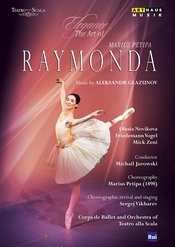
雷蒙达 [演出] 豆瓣
Раймонда
类型: 舞剧 编剧: Lidiya Pashkova / Marius Petipa
其它标题: Раймонда / Raymonda 导演: Marius Petipa / 莫妮卡·帕克 演员: Pierina Legnani / Sergey Legat / Pavel Gerdt / Olga Smirnova / Artemy Belyakov
《雷蒙达》属于俄国古典芭蕾舞剧的后期代表作,1898年1月19日由圣彼得堡的马林斯基剧院芭蕾舞团首演于该剧院,编剧L.普西科娃和M.珀蒂帕,作曲A.格拉祖诺夫,编导珀蒂帕,布景设计O.阿莱格里、K.伊凡诺夫和P.兰宾,服装设计E.奥菲泽洛娃,女伯爵雷蒙达(Raymonda)由P.莱妮娅妮扮演,十字军将领让·德布里耶纳(Jean de Brienne)由S.莱加扮演,萨拉森人骑士阿布德拉赫曼(Abderakhman)由P.热德特扮演。
显而易见的是,这部舞剧的故事情节相当地淡化,而首演后的十年中,它的情节又得到了进一步的削减,最后,充其量只是编导家珀蒂帕为串联女主演几个高难技术舞段的线索,由此,再次证明了在芭蕾舞剧中,一直或者只能是以“舞”为主,以“剧”为辅的。
舞剧取材于中世纪匈牙利的一段骑士传奇,它发生在陶里斯家族的城堡。这一天,匈牙利国王、达官贵人、亲朋好友和游吟诗人们纷纷到场,为年轻漂亮的女伯爵雷蒙达祝贺生日。她的未婚夫让·德布里耶纳骑士也前来祝贺,赠送她一条白围巾作为礼物,并向她辞行,随后便随十字军东征去了。乘让·德布里耶纳远征之际,一直耳闻雷蒙达美貌却不得一见的萨拉森人骑士阿布德拉赫曼匆匆赶到陶府,以赠送镶有大量宝石的红围巾为名终于见到了雷蒙达,惊喜交加于她名不虚传的美貌,并对她一见钟情。他不顾异族与贵族之间的繁文缛节,当众向雷蒙达表白了自己的爱慕之情。这种炽热与坦诚让雷蒙达既心惊肉跳又受宠若惊,并在她的心中第一次激起了真正的爱情波澜。此后,在欢迎让·德布里耶纳凯旋的庆典上,阿布德拉赫曼再次登场,他又一次地向雷蒙达表达了自己的赤诚,并同时向她求婚。雷蒙达犹豫不决,阿布德拉赫曼便决定带她私奔,不料恰好撞上了荣归故里的让·德布里耶纳及其国王叔父,由此导致了一场情敌之间的撕杀。最后,在安德烈二世的建议下,双方同意用决斗的君子方式决一雌雄。正当让·德布里耶纳节节败退之时,白衣夫人开始显灵,从而使得让·德布里耶纳转败为胜,并重创了阿布德拉赫曼。雷蒙达冲向阿布德拉赫曼的身边,并断然地拒绝了让·德布里耶纳的示爱。白衣夫人再次施用法术,将让·德布里耶纳送的那条白围巾披到了雷蒙达肩上,刹那间,她便忘记了阿布德拉赫曼的存在,并在国王的主持下,与让·德布里耶纳赫然成婚。婚礼上,嘉宾们个个气宇轩昂,跳起了辉煌的《匈牙利古典舞》,从而将全剧的气氛推向了最后的高潮。
第一幕
雷蒙达在姑母(或者姨母)匈牙利伯爵西比尔(Gräfin Sybille von Ungarn)的城堡庆祝生日。雷蒙达的未婚夫让·德布里耶纳(Jean de Brienne)也在场。然而这对恋人必须彼此道别,因为让·德布里耶纳将率匈牙利军投入战争。在第二天晚上雷蒙达在梦中被一白衣女子引至一处神秘的花园,在那里她认出了让·德布里耶纳。然而此时让·德布里耶纳却变成一个向她示爱的阿拉伯酋长。
第二幕
在一次许多来自遥远国度的客人参加的宴会上,雷蒙达意外的发现了梦中的酋长阿布德拉赫曼(Abderakhman)也在其中。阿布德拉赫曼向雷蒙达求婚,起先被其拒绝,最终却渐获芳心。此时让·德布里耶纳从前线归来,同阿布德拉赫曼决斗。在白衣女子的帮助下,让·德布里耶纳将阿布德拉赫曼杀死。
第三幕
雷蒙达和让·德布里耶纳在国王的宫殿中举行婚礼。在幸福中,雷蒙达流露出一丝被征服的伤感。
雷蒙达 圣彼得堡1898年首演版 [演出] 豆瓣
所属 演出: 雷蒙达
剧团: Imperial Ballet 剧院: Imperial Mariinsky Theatre 导演: Marius Petipa
其它标题: 圣彼得堡1898年首演版 编剧: Lidiya Pashkova / Marius Petipa 作曲: Alexander Glazunov 演员: Pierina Legnani / Sergey Legat
《雷蒙达》属于俄国古典芭蕾舞剧的后期代表作,1898年1月19日由圣彼得堡的马林斯基剧院芭蕾舞团首演于该剧院,编剧L.普西科娃和M.珀蒂帕,作曲A.格拉祖诺夫,编导珀蒂帕,布景设计O.阿莱格里、K.伊凡诺夫和P.兰宾,服装设计E.奥菲泽洛娃,女伯爵雷蒙达(Raymonda)由P.莱妮娅妮扮演,十字军将领让·德布里耶纳(Jean de Brienne)由S.莱加扮演,萨拉森人骑士阿布德拉赫曼(Abderakhman)由P.热德特扮演。
显而易见的是,这部舞剧的故事情节相当地淡化,而首演后的十年中,它的情节又得到了进一步的削减,最后,充其量只是编导家珀蒂帕为串联女主演几个高难技术舞段的线索,由此,再次证明了在芭蕾舞剧中,一直或者只能是以“舞”为主,以“剧”为辅的。
舞剧取材于中世纪匈牙利的一段骑士传奇,它发生在陶里斯家族的城堡。这一天,匈牙利国王、达官贵人、亲朋好友和游吟诗人们纷纷到场,为年轻漂亮的女伯爵雷蒙达祝贺生日。她的未婚夫让·德布里耶纳骑士也前来祝贺,赠送她一条白围巾作为礼物,并向她辞行,随后便随十字军东征去了。乘让·德布里耶纳远征之际,一直耳闻雷蒙达美貌却不得一见的萨拉森人骑士阿布德拉赫曼匆匆赶到陶府,以赠送镶有大量宝石的红围巾为名终于见到了雷蒙达,惊喜交加于她名不虚传的美貌,并对她一见钟情。他不顾异族与贵族之间的繁文缛节,当众向雷蒙达表白了自己的爱慕之情。这种炽热与坦诚让雷蒙达既心惊肉跳又受宠若惊,并在她的心中第一次激起了真正的爱情波澜。此后,在欢迎让·德布里耶纳凯旋的庆典上,阿布德拉赫曼再次登场,他又一次地向雷蒙达表达了自己的赤诚,并同时向她求婚。雷蒙达犹豫不决,阿布德拉赫曼便决定带她私奔,不料恰好撞上了荣归故里的让·德布里耶纳及其国王叔父,由此导致了一场情敌之间的撕杀。最后,在安德烈二世的建议下,双方同意用决斗的君子方式决一雌雄。正当让·德布里耶纳节节败退之时,白衣夫人开始显灵,从而使得让·德布里耶纳转败为胜,并重创了阿布德拉赫曼。雷蒙达冲向阿布德拉赫曼的身边,并断然地拒绝了让·德布里耶纳的示爱。白衣夫人再次施用法术,将让·德布里耶纳送的那条白围巾披到了雷蒙达肩上,刹那间,她便忘记了阿布德拉赫曼的存在,并在国王的主持下,与让·德布里耶纳赫然成婚。婚礼上,嘉宾们个个气宇轩昂,跳起了辉煌的《匈牙利古典舞》,从而将全剧的气氛推向了最后的高潮。
第一幕
雷蒙达在姑母(或者姨母)匈牙利伯爵西比尔(Gräfin Sybille von Ungarn)的城堡庆祝生日。雷蒙达的未婚夫让·德布里耶纳(Jean de Brienne)也在场。然而这对恋人必须彼此道别,因为让·德布里耶纳将率匈牙利军投入战争。在第二天晚上雷蒙达在梦中被一白衣女子引至一处神秘的花园,在那里她认出了让·德布里耶纳。然而此时让·德布里耶纳却变成一个向她示爱的阿拉伯酋长。
第二幕
在一次许多来自遥远国度的客人参加的宴会上,雷蒙达意外的发现了梦中的酋长阿布德拉赫曼(Abderakhman)也在其中。阿布德拉赫曼向雷蒙达求婚,起先被其拒绝,最终却渐获芳心。此时让·德布里耶纳从前线归来,同阿布德拉赫曼决斗。在白衣女子的帮助下,让·德布里耶纳将阿布德拉赫曼杀死。
第三幕
雷蒙达和让·德布里耶纳在国王的宫殿中举行婚礼。在幸福中,雷蒙达流露出一丝被征服的伤感。