Matti Salminen — 演员 (19)
瓦格纳《特里斯坦与伊索尔德》 (2009) [电影] 豆瓣
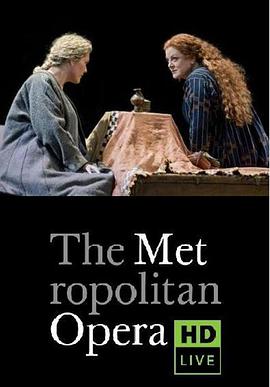
The Metropolitan Opera HD Live: Season 2, Episode 6 Wagner: Tristan und Isolde
导演: 芭芭拉·威利斯·斯威特 演员: Robert Dean Smith / Deborah Voigt
其它标题: The Metropolitan Opera HD Live: Season 2, Episode 6 Wagner: Tristan und Isolde / 大都会歌剧院高清转播系列 第二季第六集
莱茵的黄金 (1980) [电影] 豆瓣 TMDB
Rheingold, Das (TV)
其它标题: Rheingold, Das (TV)
《莱茵的黄金》(Das Rheingold)是瓦格纳的四联神话歌剧《尼伯龙根的指环》的第一部。 相传,在德国莱茵河流过的尼伯龙根,在莱茵河底,住着三位莱茵的仙女,她们日夜守卫着河底的一块岩石,因为在那岩石之上镶嵌着一块具有魔力的金子。尼伯龙根族的侏儒阿尔贝里希在石丛后面向莱茵女儿们游来,他很想得到她们其中之一的人的爱情,但是,阿尔贝里希却遭到了她们的嘲笑和鄙薄。他十分恼怒,不过这时,看到了在那块在巨岩上方闪闪发光的具有魔力黄金,三位莱茵的仙女们向他透露了:“谁要是能够把这些黄金制成了指环,谁就能统治世界,但他必须放弃爱情”的秘密,于是,阿尔贝里希诅咒了爱情并且抢走了黄金。 情节概述: 拯救诸神 夺取指环
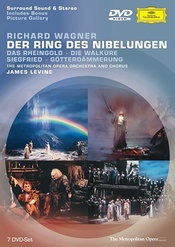
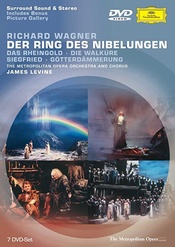
尼伯龙人的指环 1989-1990年大都会歌剧团版 [演出] 豆瓣
所属 演出: 尼伯龙人的指环
语言: german 德语 剧团: Metropolitan Opera Orchestra 大都会歌剧团管弦乐团 ; Metropolitan Opera Chorus 大都会歌剧团合唱团 剧院: Metropolitan Opera House 大都会歌剧院 导演: Otto Schenk / Phebe Berkowitz
其它标题: 1989-1990年大都会歌剧团版 编剧: Richard Wagner 作曲: Richard Wagner 演员: Hildegard Behrens / Siegfried Jerusalem
The plot revolves around a magic ring that grants the power to rule the world, forged by the Nibelung dwarf Alberich from gold he stole from the Rhine maidens in the river Rhine. The Ring itself as described by Wagner is a Rune-magic taufr ("tine", or "talisman") intended to rule the feminine multiplicative power by a fearful magical act termed as 'denial of love' ("Liebesverzicht"). With the assistance of the god Loge, Wotan – the chief of the gods – steals the ring from Alberich, but is forced to hand it over to the giants, Fafner and Fasolt in payment for building the home of the gods, Valhalla, or they will take Freia, who provides the gods with the golden apples that keep them young. Wotan's schemes to regain the ring, spanning generations, drive much of the action in the story. His grandson, the mortal Siegfried, wins the ring by slaying Fafner (who slew Fasolt for the ring) – as Wotan intended – but is eventually betrayed and slain as a result of the intrigues of Alberich's son Hagen, who wants the ring for himself. Finally, the Valkyrie Brünnhilde – Siegfried's lover and Wotan's daughter who lost her immortality for defying her father in an attempt to save Siegfried's father Sigmund – returns the ring to the Rhine maidens as she commits suicide on Siegfried's funeral pyre. Hagen is drowned as he attempts to recover the ring. In the process, the gods and Valhalla are destroyed.
Details of the storylines can be found in the articles on each music drama.
Wagner created the story of the Ring by fusing elements from many German and Scandinavian myths and folk tales. The Old Norse Edda supplied much of the material for Das Rheingold, while Die Walküre was largely based on the Völsunga saga. Siegfried contains elements from the Eddur, the Völsunga saga and Thidrekssaga. The final Götterdämmerung, draws from the 12th-century German poem, the Nibelungenlied, which appears to have been the original inspiration for the Ring.
The Ring has been the subject of myriad interpretations. For example, George Bernard Shaw, in The Perfect Wagnerite, argues for a view of The Ring as an essentially socialist critique of industrial society and its abuses. Robert Donington in Wagner's Ring And Its Symbols interprets it in terms of Jungian psychology, as an account of the development of unconscious archetypes in the mind, leading towards individuation.
尼伯龙人的指环 1979-1980年拜罗伊特音乐节版 [演出] 豆瓣
所属 演出: 尼伯龙人的指环
语言: german 德语 剧团: Bayreuther Festspielorchester 拜罗伊特音乐节管弦乐团 ; Bayreuther Festspielchor 拜罗伊特音乐节合唱团 剧院: Bayreuther Festspielhaus 拜罗伊特音乐节剧院 导演: Patrice Chéreau
其它标题: 1979-1980年拜罗伊特音乐节版 编剧: Richard Wagner 作曲: Richard Wagner 演员: Gwyneth Jones / Manfred Jung
The plot revolves around a magic ring that grants the power to rule the world, forged by the Nibelung dwarf Alberich from gold he stole from the Rhine maidens in the river Rhine. The Ring itself as described by Wagner is a Rune-magic taufr ("tine", or "talisman") intended to rule the feminine multiplicative power by a fearful magical act termed as 'denial of love' ("Liebesverzicht"). With the assistance of the god Loge, Wotan – the chief of the gods – steals the ring from Alberich, but is forced to hand it over to the giants, Fafner and Fasolt in payment for building the home of the gods, Valhalla, or they will take Freia, who provides the gods with the golden apples that keep them young. Wotan's schemes to regain the ring, spanning generations, drive much of the action in the story. His grandson, the mortal Siegfried, wins the ring by slaying Fafner (who slew Fasolt for the ring) – as Wotan intended – but is eventually betrayed and slain as a result of the intrigues of Alberich's son Hagen, who wants the ring for himself. Finally, the Valkyrie Brünnhilde – Siegfried's lover and Wotan's daughter who lost her immortality for defying her father in an attempt to save Siegfried's father Sigmund – returns the ring to the Rhine maidens as she commits suicide on Siegfried's funeral pyre. Hagen is drowned as he attempts to recover the ring. In the process, the gods and Valhalla are destroyed.
Details of the storylines can be found in the articles on each music drama.
Wagner created the story of the Ring by fusing elements from many German and Scandinavian myths and folk tales. The Old Norse Edda supplied much of the material for Das Rheingold, while Die Walküre was largely based on the Völsunga saga. Siegfried contains elements from the Eddur, the Völsunga saga and Thidrekssaga. The final Götterdämmerung, draws from the 12th-century German poem, the Nibelungenlied, which appears to have been the original inspiration for the Ring.
The Ring has been the subject of myriad interpretations. For example, George Bernard Shaw, in The Perfect Wagnerite, argues for a view of The Ring as an essentially socialist critique of industrial society and its abuses. Robert Donington in Wagner's Ring And Its Symbols interprets it in terms of Jungian psychology, as an account of the development of unconscious archetypes in the mind, leading towards individuation.
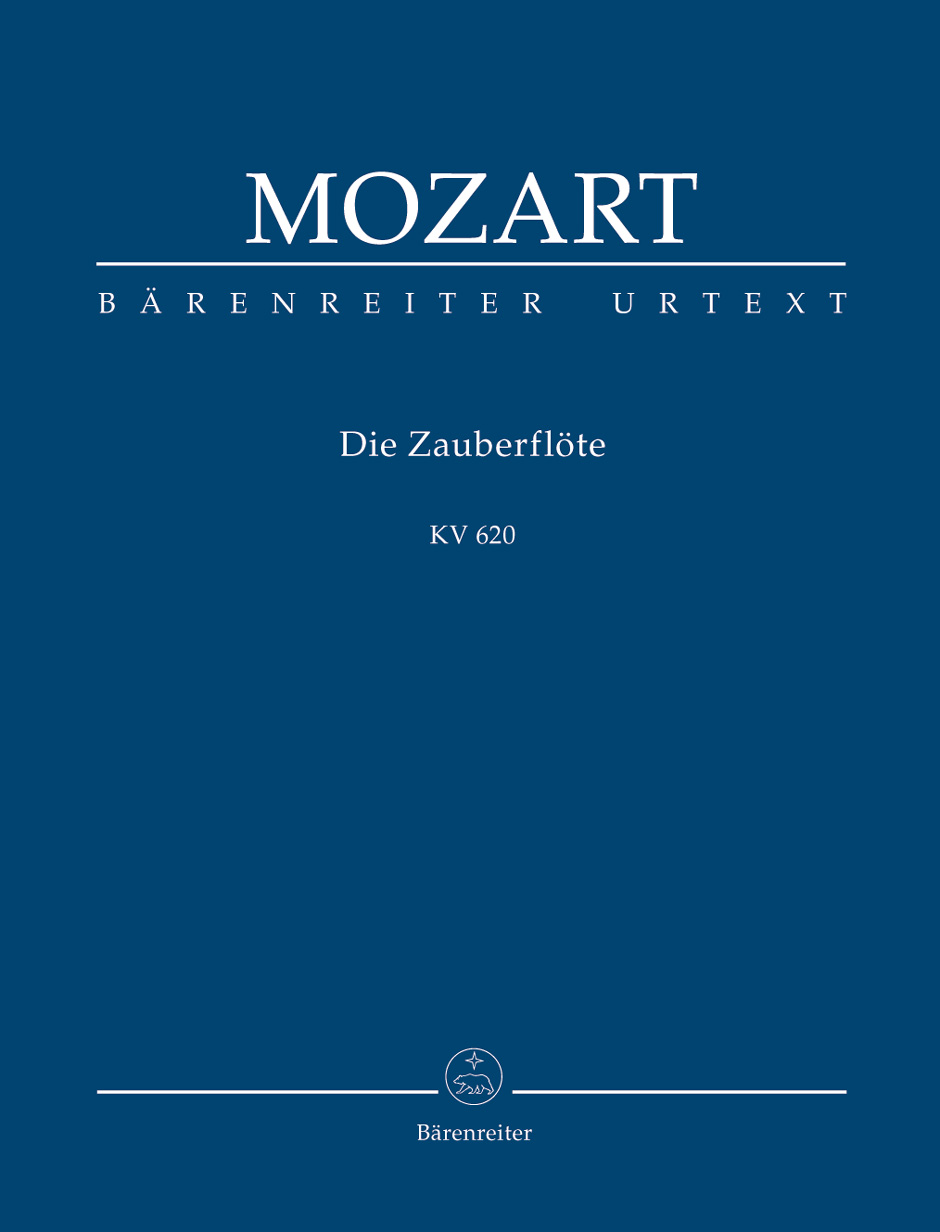
魔笛 2000年苏黎世歌剧团版 [演出] 豆瓣
所属 演出: 魔笛
语言: german 德语 剧团: Orchester der Oper Zürich 苏黎世歌剧团管弦乐团 ; Chor der Oper Zürich 苏黎世歌剧团合唱团 ; Statistenverein am Opernhaus Zürich 剧院: Opernhaus Zürich 苏黎世歌剧院 导演: Jonathan Miller
其它标题: 2000年苏黎世歌剧团版 编剧: Emanuel Schikaneder 作曲: Wolfgang Amadeus Mozart 演员: Piotr Beczała / Malin Hartelius
The opera begins with the overture, which Mozart composed last.
Act 1
Scene 1: A rough, rocky landscape
Tamino, a handsome prince lost in a distant land, is pursued by a serpent and asks the gods to save him (aria: "Zu Hilfe! Zu Hilfe!" segued into trio: "Stirb, Ungeheuer, durch uns're Macht!"). He faints, and three ladies, attendants of the Queen of the Night, appear and kill the serpent. They find the unconscious prince extremely attractive, and each of them tries to convince the other two to leave. After arguing, they reluctantly decide to leave together.
Tamino wakes up, and is surprised to find himself still alive. Papageno enters dressed as a bird. He describes his life as a bird-catcher, complaining he has no wife or girlfriend (aria: "Der Vogelfänger bin ich ja"). Tamino introduces himself to Papageno, thinking Papageno killed the serpent. Papageno happily takes the credit – claiming he strangled it with his bare hands. The three ladies suddenly reappear and instead of giving Papageno wine, cake and figs, they give him water, a stone and place a padlock over his mouth as a warning not to lie. They give Tamino a portrait of the Queen of the Night's daughter Pamina, with whom Tamino falls instantly in love (aria: "Dies Bildnis ist bezaubernd schön" / This image is enchantingly beautiful).
The ladies return and tell Tamino that Pamina has been captured by Sarastro, whom they describe as a powerful, evil demon. Tamino vows to rescue Pamina. The Queen of the Night appears and promises Tamino that Pamina will be his if he rescues her from Sarastro (Recitative and aria: "O zittre nicht, mein lieber Sohn" / Oh, tremble not, my dear son!). The Queen leaves and the ladies remove the padlock from Papageno's mouth with a warning not to lie any more. They give Tamino a magic flute which has the power to change sorrow into joy. They tell Papageno to go with Tamino, and give him (Papageno) magic bells for protection. The ladies introduce three child-spirits, who will guide Tamino and Papageno to Sarastro's temple. Together Tamino and Papageno set forth (Quintet: "Hm! Hm! Hm! Hm!").
Scene 2: A room in Sarastro's palace
Pamina is dragged in by Sarastro's slaves, apparently having tried to escape. Monostatos, a blackamoor and chief of the slaves, orders the slaves to chain her and leave him alone with her. Papageno, sent ahead by Tamino to help find Pamina, enters (Trio: "Du feines Täubchen, nur herein!"). Monostatos and Papageno are each terrified by the other's strange appearance and both flee. Papageno returns and announces to Pamina that her mother has sent Tamino to save her. Pamina rejoices to hear that Tamino is in love with her. She offers sympathy and hope to Papageno, who longs for a wife. Together they reflect on the joys and sacred duties of marital love (duet: "Bei Männern welche Liebe fühlen").
Finale. Scene 3: A grove in front of a temple
The three child-spirits lead Tamino to Sarastro's temple, promising that if he remains patient, wise and steadfast, he will succeed in rescuing Pamina (Quartet: "Zum Ziele führt dich diese Bahn"). Tamino approaches the left-hand entrance and is denied access by voices from within. The same happens when he goes to the entrance on the right. But from the entrance in the middle, an old priest appears and lets Tamino in. (The old priest is referred to as "The Speaker" in the libretto, but his role is a singing role.) He tells Tamino that Sarastro is benevolent, not evil, and that he should not trust the Queen of the Night. He promises that Tamino's confusion will be lifted when Tamino approaches the temple in a spirit of friendship. Tamino plays his magic flute. Animals appear and dance, enraptured, to his music. Tamino hears Papageno's pipes sounding offstage, and hurries off to find him (aria: "Wie stark ist nicht dein Zauberton").
Papageno and Pamina enter, searching for Tamino (trio: "Schnelle Füße, rascher Mut"). They are recaptured by Monostatos and his slaves. Papageno plays his magic bells, and Monostatos and his slaves begin to dance, and exit the stage, still dancing, mesmerised by the beauty of the music (chorus: "Das klinget so herrlich"). Papageno and Pamina hear the sound of Sarastro's retinue approaching. Papageno is frightened and asks Pamina what they should say. She answers that they must tell the truth. Sarastro enters, with a crowd of followers. (chorus: "Es lebe Sarastro!")
Pamina falls at Sarastro's feet and confesses that she tried to escape because Monostatos had forced his attentions on her. Sarastro receives her kindly and assures her that he wishes only for her happiness. But he refuses to return her to her mother, whom he describes as a proud, headstrong woman, and a bad influence on those around her. Pamina, he says, must be guided by a man.
Monostatos brings in Tamino. The two lovers see one another for the first time and embrace, causing indignation among Sarastro's followers. Monostatos tells Sarastro that he caught Papageno and Pamina trying to escape, and demands a reward. Sarastro, however, punishes Monostatos for his lustful behaviour toward Pamina, and sends him away. He announces that Tamino must undergo trials of wisdom in order to become worthy as Pamina's husband. The priests declare that virtue and righteousness will sanctify life and make mortals like gods ("Wenn Tugend und Gerechtigkeit").
Act 2
Scene 1: A grove of palms
The council of priests of Isis and Osiris, headed by Sarastro, enters to the sound of a solemn march. Sarastro tells the priests that Tamino is ready to undergo the ordeals that will lead to enlightenment. He invokes the gods Isis and Osiris, asking them to protect Tamino and Pamina (Aria and chorus: "O Isis und Osiris").
Scene 2: The courtyard of the Temple of Ordeal
Tamino and Papageno are led in by two priests for the first trial. The two priests advise Tamino and Papageno of the dangers ahead of them, warn them of women's wiles and swear them to silence (Duet: "Bewahret euch von Weibertücken"). The three ladies appear and try to frighten Tamino and Papageno into speaking. (Quintet: "Wie, wie, wie") Papageno cannot resist answering the ladies, but Tamino remains aloof, angrily instructing Papageno not to listen to the ladies' threats and to keep quiet. Seeing that Tamino will not speak to them, the ladies withdraw in confusion.
Scene 3: A garden
Pamina is asleep. Monostatos approaches and gazes upon her with rapture. (Aria: "Alles fühlt der Liebe Freuden") He is about to kiss the sleeping Pamina, when the Queen of the Night appears. Monostatos hides. In response to the Queen's questioning, Pamina explains that Tamino is joining Sarastro's brotherhood and she is thinking of accompanying him too. The Queen is not pleased. She explains that her husband was the previous owner of the temple and on his deathbed, gave the ownership to Sarastro instead of her, rendering the Queen powerless (this is in the original libretto, but is usually omitted from modern productions, to shorten the scene with Pamina and her mother). She gives Pamina a dagger, ordering her to kill Sarastro with it and threatening to disown her if she does not. (Aria: "Der Hölle Rache kocht in meinem Herzen"). She leaves. Monostatos returns and tries to force Pamina's love by threatening to reveal the Queen's plot, but Sarastro enters and drives him off. Pamina begs Sarastro to forgive her mother and he reassures her that revenge and cruelty have no place in his domain (Aria: "In diesen heil'gen Hallen").
Scene 4: A hall in the Temple of Ordeal
Tamino and Papageno are led in by priests, who remind them that they must remain silent. Papageno complains of thirst. An old woman enters and offers Papageno a cup of water. He drinks and teasingly asks whether she has a boyfriend. She replies that she does and that his name is Papageno. She disappears as Papageno asks for her name, and the three child-spirits bring in food, the magic flute, and the bells, sent from Sarastro (Trio: "Seid uns zum zweiten Mal willkommen"). Tamino begins to play the flute, which summons Pamina. She tries to speak with him, but Tamino, bound by his vow of silence, cannot answer her, and Pamina begins to believe that he no longer loves her. (Aria: "Ach, ich fühl's, es ist verschwunden") She leaves in despair.
Scene 5: The pyramids
The priests celebrate Tamino's successes so far, and pray that he will succeed and become worthy of their order (Chorus: "O Isis und Osiris"). Pamina is brought in and Sarastro instructs Pamina and Tamino to bid each other farewell before the greater trials ahead, alarming them by describing it as their "final farewell". (Trio: Sarastro, Pamina, Tamino – "Soll ich dich, Teurer, nicht mehr sehn?" Note: In order to preserve the continuity of Pamina's suicidal feelings, this trio is sometimes performed earlier in act 2, preceding or immediately following Sarastro's aria "O Isis und Osiris".[f][30]) They exit and Papageno enters. The priests grant his request for a glass of wine and he expresses his desire for a wife. (Aria: "Ein Mädchen oder Weibchen"). The elderly woman reappears and warns him that unless he immediately promises to marry her, he will be imprisoned forever. When Papageno promises to love her faithfully (muttering that he will only do this until something better comes along), she is transformed into the young and pretty Papagena. Papageno rushes to embrace her, but the priests drive him back, telling him that he is not yet worthy of her.
Finale. Scene 6: A garden
The three child-spirits hail the dawn. They observe Pamina, who is contemplating suicide because she believes Tamino has abandoned her. The child-spirits restrain her and reassure her of Tamino's love. (Quartet: "Bald prangt, den Morgen zu verkünden").
Scene change without interrupting the music, to Scene 7: Outside the Temple of Ordeal
Two men in armor lead in Tamino. They recite one of the formal creeds of Isis and Osiris, promising enlightenment to those who successfully overcome the fear of death ("Der, welcher wandert diese Strasse voll Beschwerden"). This recitation takes the musical form of a Baroque chorale prelude, to a tune inspired by Martin Luther's hymn "Ach Gott, vom Himmel sieh darein" (Oh God, look down from heaven).[g][32] Tamino declares that he is ready to be tested. Pamina calls to him from offstage. The men in armour assure him that the trial by silence is over and he is free to speak with her. Pamina enters and declares her intention to undergo the remaining trials with him. She hands him the magic flute to help them through the trials ("Tamino mein, o welch ein Glück!"). Protected by the music of the magic flute, they pass unscathed through chambers of fire and water. Offstage, the priests hail their triumph and invite the couple to enter the temple.
Scene change without interrupting the music, to Scene 8: A garden with a tree
Papageno despairs at having lost Papagena and decides to hang himself (Aria/Quartet: "Papagena! Papagena! Papagena! Weibchen, Täubchen, meine Schöne") The three child-spirits appear and stop him. They advise him to play his magic bells to summon Papagena. She appears and, united, the happy couple stutter in astonishment and make bird-like courting sounds at each other. They plan their future and dream of the many children they will have together (Duet: "Pa... pa... pa...").
Scene change without interrupting the music, to Scene 9: A rocky landscape outside the temple; night
The traitorous Monostatos appears with the Queen of the Night and her three ladies. They plot to destroy the temple ("Nur stille, stille") and the Queen confirms that she has promised her daughter Pamina to Monostatos. But before the conspirators can enter the temple, they are magically cast out into eternal night.
Scene change without interrupting the music, to Scene 10: The Temple of the Sun
Sarastro announces the sun's triumph over the night, and hails the dawn of a new era of wisdom and brotherhood. Animals appear again and dance in the sun.
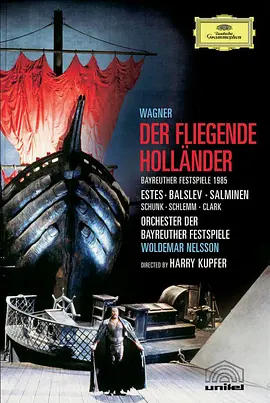
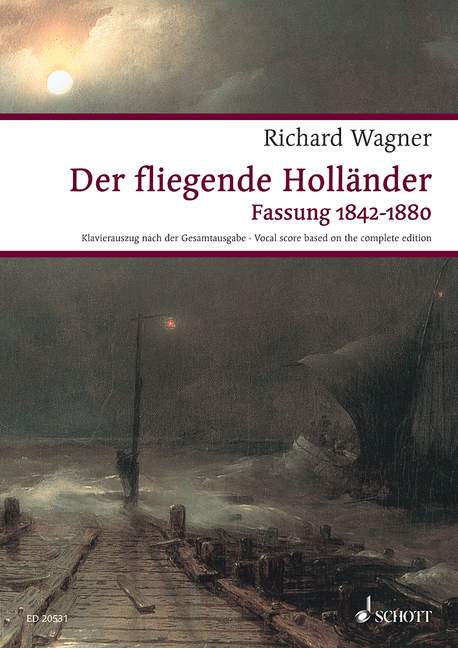
漂泊的荷兰人 1985年拜罗伊特音乐节版 [演出] 豆瓣
所属 演出: 漂泊的荷兰人
语言: 德语 german 剧团: Bayreuther Festspielorchester 拜罗伊特音乐节管弦乐团 ; Bayreuther Festspielchor 拜罗伊特音乐节合唱团 剧院: Bayreuther Festspielhaus 拜罗伊特音乐节剧院 导演: Harry Kupfer
其它标题: 1985年拜罗伊特音乐节版 编剧: Richard Wagner 作曲: Richard Wagner 演员: Simon Estes / Lisbeth Balslev
Place: On the coast of Norway
Act 1
On his homeward journey, the sea captain Daland is compelled by stormy weather to seek a port of refuge near Sandwike in southern Norway. He leaves the helmsman on watch and he and the sailors retire. (Song of the helmsman: "Mit Gewitter und Sturm aus fernem Meer" — "With tempest and storm on distant seas.") The helmsman falls asleep. A ghostly vessel appearing astern is dashed against Daland's vessel by the sea and the grappling irons hold the two ships together. Invisible hands furl the sails. A man of pale aspect, dressed in black, his face framed by a thick black beard, steps ashore. He laments his fate. (Aria: "Die Frist ist um, und abermals verstrichen sind sieben Jahr" — "The time has come and seven years have again elapsed") Because he once invoked Satan, the ghost captain is cursed to roam the sea forever without rest. An angel brought to him the terms of his redemption: Every seven years the waves will cast him upon the shore; if he can find a wife who will be true to him he will be released from his curse.
Daland wakes up and meets the stranger. The stranger hears that Daland has an unmarried daughter named Senta, and he asks for her hand in marriage, offering a chest of treasure as a gift. Tempted by gold, Daland agrees to the marriage. The southwind blows and both vessels set sail for Daland's home.
Act 2
A group of local girls are singing and spinning in Daland's house. (Spinning chorus: "Summ und brumm, du gutes Rädchen" — "Whir and whirl, good wheel") Senta, Daland's daughter, dreamily gazes upon a gorgeous picture of the legendary Dutchman that hangs from the wall; she desires to save him. Against the will of her nurse, she sings to her friends the story of the Dutchman (Ballad with the Leitmotiv), how Satan heard him swear and took him at his word. She vows to save him by her fidelity.
The huntsman Erik, Senta's former boyfriend, arrives and hears her; the girls depart, and the huntsman, who loves the maiden, warns her, telling her of his dream, in which Daland returned with a mysterious stranger, who carried her off to sea. She listens with delight, and Erik leaves in despair.
Daland arrives with the stranger; he and Senta stand gazing at each other in silence. Daland is scarcely noticed by his daughter, even when he presents his guest as her betrothed. In the following duet, which closes the act, Senta swears to be true till death.
Act 3
Later in the evening, the local girls bring Daland's men food and drink. They invite the crew of the strange vessel to join in the merry-making, but in vain. The girls retire in wonder; ghostly forms appear at work upon the vessel The Flying Dutchman, and Daland's men retreat in fear.
Senta arrives, followed by Erik, who reproves her for deserting him, as she had formerly loved him and vowed constancy. When the stranger, who has been listening, hears these words, he is overwhelmed with despair, as he thinks he is now forever lost. He summons his men, tells Senta of the curse, and to the consternation of Daland and his crew declares that he is the "Flying Dutchman".
As the Dutchman sets sail, Senta throws herself into the sea, claiming that she will be faithful to him unto death. This is his salvation. The spectral ship disappears, and Senta and the Dutchman are seen ascending to heaven.
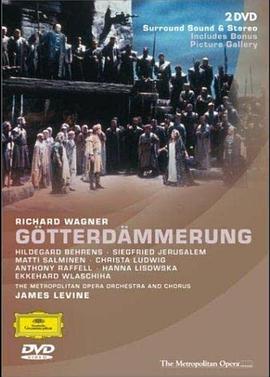
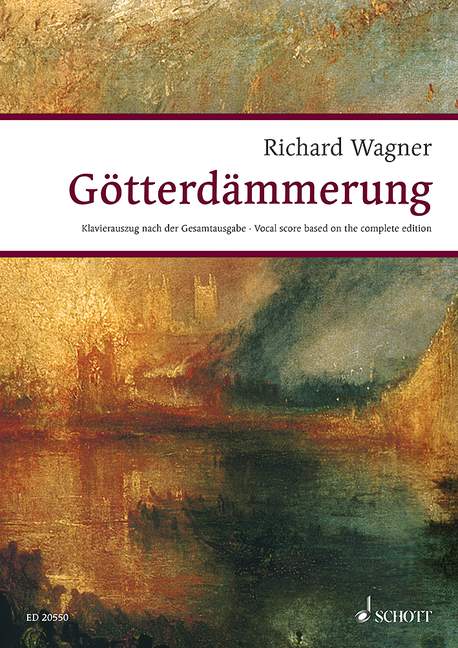
众神的黄昏 [演出] 豆瓣
Götterdämmerung
类型: 歌剧 编剧: Richard Wagner
其它标题: Götterdämmerung / 诸神的黄昏 导演: Otto Schenk / Patrice Chéreau 演员: Hildegard Behrens / Siegfried Jerusalem / Matti Salminen / Hanna Lisowska / Anthony Raffell
Prologue
The three Norns, daughters of Erda, gather beside Brünnhilde's rock, weaving the rope of Destiny. They sing of the past and the present, and of the future when Wotan will set fire to Valhalla to signal the end of the gods. Without warning, their rope breaks. Lamenting the loss of their wisdom, the Norns disappear.
As day breaks, Siegfried and Brünnhilde emerge from their cave, high on a mountaintop surrounded by magic fire. Brünnhilde sends Siegfried off to new adventures, urging him to keep their love in mind. As a pledge of fidelity, Siegfried gives her the ring of power that he took from Fafner's hoard. Bearing Brünnhilde's shield and mounting her horse Grane, Siegfried rides away as an orchestral interlude (Siegfried's Journey to the Rhine) starts.
Act 1
The act begins in the Hall of the Gibichungs, a population dwelling by the Rhine. Gunther, lord of the Gibichungs, sits enthroned. His half-brother and chief minister, Hagen, advises him to find a wife for himself and a husband for their sister Gutrune. He suggests Brünnhilde for Gunther's wife, and Siegfried for Gutrune's husband. He reminds Gutrune that he has given her a potion that she can use to make Siegfried forget Brünnhilde and fall in love with Gutrune; under its influence, Siegfried will win Brünnhilde for Gunther. Gunther and Gutrune agree enthusiastically with this plan.
Siegfried appears at Gibichung Hall, seeking to meet Gunther. Gunther extends his hospitality to the hero, and Gutrune offers him the love potion. Unaware of the deception, Siegfried toasts Brünnhilde and their love. Drinking the potion, he loses his memory of Brünnhilde and falls in love with Gutrune instead. In his drugged state, Siegfried offers to win a wife for Gunther, who tells him about Brünnhilde and the magic fire which only a fearless person can cross. They swear blood-brotherhood (Hagen holds the drinking horn in which they mix their blood, but he does not join in the oath) and leave for Brünnhilde's rock. Hagen, left on guard duty, gloats that his so-called masters are unwittingly bringing the ring to him (Monologue: Hagen's watch).
Meanwhile, Brünnhilde is visited by her Valkyrie sister Waltraute, who tells her that Wotan returned from his wanderings with his spear shattered. Wotan is dismayed at losing his spear, as it has all the treaties and bargains he has made—everything that gives him power—carved into its shaft. Wotan ordered branches of the World tree, to be piled around Valhalla; sent his magic ravens to spy on the world and bring him news; and currently waits in Valhalla for the end. Waltraute begs Brünnhilde to return the ring to the Rhinemaidens, since the ring's curse is now affecting their father, Wotan. However, Brünnhilde refuses to relinquish Siegfried's token of love, and Waltraute rides away in despair.
Siegfried arrives, disguised as Gunther by using the Tarnhelm, and claims Brünnhilde as his wife. Though Brünnhilde resists violently, Siegfried overpowers her, snatching the ring from her hand and placing it on his own.
Act 2
Hagen, waiting by the bank of the Rhine, is visited in his semi-waking sleep (sitting up, eyes open, but motionless) by his father, Alberich. On Alberich's urging, he swears to kill Siegfried and acquire the ring. Alberich exits as dawn breaks. Siegfried arrives via Tarnhelm-magic, having resumed his natural form and left Brünnhilde on the boat with Gunther. Hagen summons the Gibichung vassals to welcome Gunther and his bride. He does this by sounding the war-alarm. The vassals are surprised to learn that the occasion is not battle, but their master's wedding and party.
Gunther leads in a downcast Brünnhilde, who is astonished to see Siegfried. Noticing the ring on Siegfried's hand, she realizes she has been betrayed—that the man who conquered her was not Gunther, but Siegfried in disguise. She denounces Siegfried in front of Gunther's vassals and accuses Siegfried of having seduced her himself. Siegfried, who does not remember ever having been Brünhilde's lover, swears on Hagen's spear that her accusations are false. Brünnhilde seizes the tip of the spear and swears that they are true. Once again Hagen supervises silently as others take oaths to his advantage. But this time, since the oath is sworn on a weapon, the understanding is that if the oath is proven false, the weapon's owner should avenge it by killing the perjurer with that weapon. Siegfried then leads Gutrune and the bystanders off to the wedding feast, leaving Brünnhilde, Hagen, and Gunther alone by the shore. Deeply shamed by Brünnhilde's outburst, Gunther agrees to Hagen's suggestion that Siegfried must be killed in order for Gunther to regain his standing. Brünnhilde, seeking revenge for Siegfried's manifest treachery, joins the plot and tells Hagen that Siegfried would be vulnerable to a stab in the back. Hagen and Gunther decide to lure Siegfried on a hunting-trip and murder him. They sing a trio in which Brünnhilde and Gunther vow in the name of Wotan, "guardian of oaths", to kill Siegfried, while Hagen repeats his pledge to Alberich: to acquire the ring and rule the world through its power.
Act 3
In the woods by the bank of the Rhine, the Rhinemaidens mourn the lost Rhine gold. Siegfried happens by, separated from the hunting party. The Rhinemaidens urge him to return the ring and avoid its curse, but he laughs at them and says he prefers to die rather than bargain for his life. They swim away, predicting that Siegfried will die and that his heir, a lady, will treat them more fairly.
Siegfried rejoins the hunters, who include Gunther and Hagen. While resting, he tells them about the adventures of his youth. Hagen gives him another potion, which restores his memory, and he tells of discovering the sleeping Brünnhilde and awakening her with a kiss. Hagen stabs him in the back with his spear. The others look on in horror, and Hagen explains in three words ("Meineid rächt' ich!" – "I have avenged perjury!") that since Siegfried admitted loving Brünnhilde, the oath he swore on Hagen's spear was obviously false, therefore it was Hagen's duty to kill him with it. Hagen calmly walks away into the wood. Siegfried recollects his awakening of Brünnhilde and dies. His body is carried away in a solemn funeral procession (Siegfried's funeral march) that forms the interlude as the scene is changed and recapitulates many of the themes associated with Siegfried and the Wälsungs.
Back in the Gibichung Hall, Gutrune awaits Siegfried's return. Hagen arrives ahead of the funeral party. Gutrune is devastated when Siegfried's corpse is brought in. Gunther blames Siegfried's death on Hagen, who replies that Siegfried had incurred the penalty of his false oath, and further, claims the ring on Siegfried's finger by right of conquest. When Gunther objects, Hagen appeals to the vassals to support his claim. Gunther draws his sword but Hagen attacks and easily kills him. However, as Hagen moves to take the ring, Siegfried's hand rises threateningly. Hagen recoils in fear.
Brünnhilde makes her entrance and issues orders for a huge funeral pyre to be assembled by the river (the start of the Immolation Scene). She takes the ring and tells the Rhinemaidens to claim it from her ashes, once fire has cleansed it of its curse. Lighting the pyre with a firebrand, she sends Wotan's ravens home with "anxiously longed-for tidings", and to fly by the magic fire for Loge to fulfill his task. After an apostrophe to the dead hero, Brünnhilde mounts her horse Grane and rides into the flames.
A sequence of leitmotifs portray the fire flaring up, and the hall of the Gibichungs catching fire and collapsing. The Rhine overflows its banks, quenching the fire, and the Rhinemaidens swim in to claim the ring. Hagen tries to stop them but they drag him into the depths and drown him. As they celebrate the return of the ring and its gold to the river, a red glow is seen in the sky. As the Gibichungs watch, the interior of Valhalla is finally seen, with gods and heroes visible as described by Waltraute in Act 1. Flames flare up in the Hall of the Gods, hiding it and them from sight completely. As the gods are consumed in the flames, the curtain falls to the sound of the Erlösungsmotif—the redemption leitmotif.
众神的黄昏 1990年大都会歌剧团版 [演出] 豆瓣
所属 演出: 众神的黄昏
语言: german 德语 剧团: Metropolitan Opera Orchestra 大都会歌剧团管弦乐团 ; Metropolitan Opera Chorus 大都会歌剧团合唱团 剧院: Metropolitan Opera House 大都会歌剧院 导演: Otto Schenk
其它标题: 1990年大都会歌剧团版 编剧: Richard Wagner 作曲: Richard Wagner 演员: Hildegard Behrens / Siegfried Jerusalem
Prologue
The three Norns, daughters of Erda, gather beside Brünnhilde's rock, weaving the rope of Destiny. They sing of the past and the present, and of the future when Wotan will set fire to Valhalla to signal the end of the gods. Without warning, their rope breaks. Lamenting the loss of their wisdom, the Norns disappear.
As day breaks, Siegfried and Brünnhilde emerge from their cave, high on a mountaintop surrounded by magic fire. Brünnhilde sends Siegfried off to new adventures, urging him to keep their love in mind. As a pledge of fidelity, Siegfried gives her the ring of power that he took from Fafner's hoard. Bearing Brünnhilde's shield and mounting her horse Grane, Siegfried rides away as an orchestral interlude (Siegfried's Journey to the Rhine) starts.
Act 1
The act begins in the Hall of the Gibichungs, a population dwelling by the Rhine. Gunther, lord of the Gibichungs, sits enthroned. His half-brother and chief minister, Hagen, advises him to find a wife for himself and a husband for their sister Gutrune. He suggests Brünnhilde for Gunther's wife, and Siegfried for Gutrune's husband. He reminds Gutrune that he has given her a potion that she can use to make Siegfried forget Brünnhilde and fall in love with Gutrune; under its influence, Siegfried will win Brünnhilde for Gunther. Gunther and Gutrune agree enthusiastically with this plan.
Siegfried appears at Gibichung Hall, seeking to meet Gunther. Gunther extends his hospitality to the hero, and Gutrune offers him the love potion. Unaware of the deception, Siegfried toasts Brünnhilde and their love. Drinking the potion, he loses his memory of Brünnhilde and falls in love with Gutrune instead. In his drugged state, Siegfried offers to win a wife for Gunther, who tells him about Brünnhilde and the magic fire which only a fearless person can cross. They swear blood-brotherhood (Hagen holds the drinking horn in which they mix their blood, but he does not join in the oath) and leave for Brünnhilde's rock. Hagen, left on guard duty, gloats that his so-called masters are unwittingly bringing the ring to him (Monologue: Hagen's watch).
Meanwhile, Brünnhilde is visited by her Valkyrie sister Waltraute, who tells her that Wotan returned from his wanderings with his spear shattered. Wotan is dismayed at losing his spear, as it has all the treaties and bargains he has made—everything that gives him power—carved into its shaft. Wotan ordered branches of the World tree, to be piled around Valhalla; sent his magic ravens to spy on the world and bring him news; and currently waits in Valhalla for the end. Waltraute begs Brünnhilde to return the ring to the Rhinemaidens, since the ring's curse is now affecting their father, Wotan. However, Brünnhilde refuses to relinquish Siegfried's token of love, and Waltraute rides away in despair.
Siegfried arrives, disguised as Gunther by using the Tarnhelm, and claims Brünnhilde as his wife. Though Brünnhilde resists violently, Siegfried overpowers her, snatching the ring from her hand and placing it on his own.
Act 2
Hagen, waiting by the bank of the Rhine, is visited in his semi-waking sleep (sitting up, eyes open, but motionless) by his father, Alberich. On Alberich's urging, he swears to kill Siegfried and acquire the ring. Alberich exits as dawn breaks. Siegfried arrives via Tarnhelm-magic, having resumed his natural form and left Brünnhilde on the boat with Gunther. Hagen summons the Gibichung vassals to welcome Gunther and his bride. He does this by sounding the war-alarm. The vassals are surprised to learn that the occasion is not battle, but their master's wedding and party.
Gunther leads in a downcast Brünnhilde, who is astonished to see Siegfried. Noticing the ring on Siegfried's hand, she realizes she has been betrayed—that the man who conquered her was not Gunther, but Siegfried in disguise. She denounces Siegfried in front of Gunther's vassals and accuses Siegfried of having seduced her himself. Siegfried, who does not remember ever having been Brünhilde's lover, swears on Hagen's spear that her accusations are false. Brünnhilde seizes the tip of the spear and swears that they are true. Once again Hagen supervises silently as others take oaths to his advantage. But this time, since the oath is sworn on a weapon, the understanding is that if the oath is proven false, the weapon's owner should avenge it by killing the perjurer with that weapon. Siegfried then leads Gutrune and the bystanders off to the wedding feast, leaving Brünnhilde, Hagen, and Gunther alone by the shore. Deeply shamed by Brünnhilde's outburst, Gunther agrees to Hagen's suggestion that Siegfried must be killed in order for Gunther to regain his standing. Brünnhilde, seeking revenge for Siegfried's manifest treachery, joins the plot and tells Hagen that Siegfried would be vulnerable to a stab in the back. Hagen and Gunther decide to lure Siegfried on a hunting-trip and murder him. They sing a trio in which Brünnhilde and Gunther vow in the name of Wotan, "guardian of oaths", to kill Siegfried, while Hagen repeats his pledge to Alberich: to acquire the ring and rule the world through its power.
Act 3
In the woods by the bank of the Rhine, the Rhinemaidens mourn the lost Rhine gold. Siegfried happens by, separated from the hunting party. The Rhinemaidens urge him to return the ring and avoid its curse, but he laughs at them and says he prefers to die rather than bargain for his life. They swim away, predicting that Siegfried will die and that his heir, a lady, will treat them more fairly.
Siegfried rejoins the hunters, who include Gunther and Hagen. While resting, he tells them about the adventures of his youth. Hagen gives him another potion, which restores his memory, and he tells of discovering the sleeping Brünnhilde and awakening her with a kiss. Hagen stabs him in the back with his spear. The others look on in horror, and Hagen explains in three words ("Meineid rächt' ich!" – "I have avenged perjury!") that since Siegfried admitted loving Brünnhilde, the oath he swore on Hagen's spear was obviously false, therefore it was Hagen's duty to kill him with it. Hagen calmly walks away into the wood. Siegfried recollects his awakening of Brünnhilde and dies. His body is carried away in a solemn funeral procession (Siegfried's funeral march) that forms the interlude as the scene is changed and recapitulates many of the themes associated with Siegfried and the Wälsungs.
Back in the Gibichung Hall, Gutrune awaits Siegfried's return. Hagen arrives ahead of the funeral party. Gutrune is devastated when Siegfried's corpse is brought in. Gunther blames Siegfried's death on Hagen, who replies that Siegfried had incurred the penalty of his false oath, and further, claims the ring on Siegfried's finger by right of conquest. When Gunther objects, Hagen appeals to the vassals to support his claim. Gunther draws his sword but Hagen attacks and easily kills him. However, as Hagen moves to take the ring, Siegfried's hand rises threateningly. Hagen recoils in fear.
Brünnhilde makes her entrance and issues orders for a huge funeral pyre to be assembled by the river (the start of the Immolation Scene). She takes the ring and tells the Rhinemaidens to claim it from her ashes, once fire has cleansed it of its curse. Lighting the pyre with a firebrand, she sends Wotan's ravens home with "anxiously longed-for tidings", and to fly by the magic fire for Loge to fulfill his task. After an apostrophe to the dead hero, Brünnhilde mounts her horse Grane and rides into the flames.
A sequence of leitmotifs portray the fire flaring up, and the hall of the Gibichungs catching fire and collapsing. The Rhine overflows its banks, quenching the fire, and the Rhinemaidens swim in to claim the ring. Hagen tries to stop them but they drag him into the depths and drown him. As they celebrate the return of the ring and its gold to the river, a red glow is seen in the sky. As the Gibichungs watch, the interior of Valhalla is finally seen, with gods and heroes visible as described by Waltraute in Act 1. Flames flare up in the Hall of the Gods, hiding it and them from sight completely. As the gods are consumed in the flames, the curtain falls to the sound of the Erlösungsmotif—the redemption leitmotif.
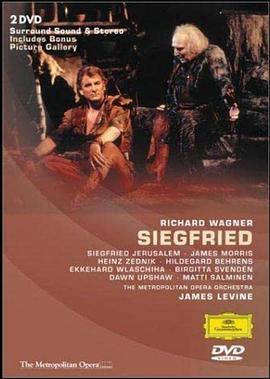
齐格弗里德 1990年大都会歌剧团版 [演出] 豆瓣
所属 演出: 齐格弗里德
语言: german 德语 剧团: Metropolitan Opera Orchestra 大都会歌剧团管弦乐团 剧院: Metropolitan Opera House 大都会歌剧院 导演: Otto Schenk
其它标题: 1990年大都会歌剧团版 编剧: Richard Wagner 作曲: Richard Wagner 演员: Siegfried Jerusalem / Hildegard Behrens
Act 1
Scene 1
A cave in rocks in the forest. An orchestral introduction includes references to leitmotifs including themes relating to the original hoard plundered by the Nibelung Alberich, and one in B-flat minor associated with the Nibelungs themselves. As the curtain rises, Alberich's brother, the dwarf Mime, is forging a sword. Mime is plotting to obtain the ring of power originally created by his brother Alberich. He has raised the human boy Siegfried as a foster child, to kill Fafner, who obtained the ring and other treasures in the opera Das Rheingold and has since transformed himself from a giant to a dragon. Mime needs a sword for Siegfried to use, but the youth has contemptuously broken every sword Mime has made. Siegfried returns from his wanderings in the forest with a wild bear in tow, and immediately breaks the new sword. After a whining speech by Mime about ingratitude, and how Mime has brought him up from a mewling infant ("Als zullendes Kind"), Siegfried senses why he keeps coming back to Mime although he despises him: he wants to know his parentage. Mime is forced to explain how he took in Siegfried's mother, Sieglinde, who then died giving birth to Siegfried. He shows Siegfried the broken pieces of the sword Nothung, which Mime had obtained from her. Siegfried orders him to reforge the sword; Mime, however, is unable to accomplish this. Siegfried departs, leaving Mime in despair.
Scene 2
An old man (Wotan in disguise) arrives at the door and introduces himself as the Wanderer. In return for the hospitality due a guest, he wagers his head on answering any three questions of Mime. The dwarf asks the Wanderer to name the races that live beneath the ground, on the earth, and in the skies. These are the Nibelung, the Giants, and the Gods, as the Wanderer answers correctly. The Wanderer then induces Mime to wager his own head on three further riddles: the race most beloved of Wotan, but most harshly treated; the name of the sword that can destroy Fafner; and the person who can repair the sword. Mime answers the first two questions: the Wälsungs (Siegmund and Sieglinde whose tale is told in the opera Die Walküre) and Nothung. However, he cannot answer the last. Wotan spares Mime, telling him that only "he who does not know fear" can reforge Nothung, and leaves Mime's head forfeit to that person.
Scene 3
Mime despairs as he imagines the ferocity of the dragon Fafner, while "the orchestra paints a dazzling picture of flickering lights and roaring flames". Siegfried returns and is annoyed by Mime's lack of progress. Mime realizes that Siegfried is "the one who does not know fear" and that unless he can instill fear in him, Siegfried will kill him as the Wanderer foretold. He tells Siegfried that fear is an essential craft; Siegfried is eager to learn it, and Mime promises to teach him by taking him to Fafner. Since Mime was unable to forge Nothung, Siegfried decides to do it himself. He succeeds by shredding the metal, melting it, and casting it anew. In the meantime, Mime brews a poisoned drink to offer Siegfried after the youth has defeated the dragon. After he finishes forging the sword, Siegfried demonstrates its strength by chopping the anvil in half with it.
Act 2
Scene 1
Deep in the forest. The Wanderer arrives at the entrance to Fafner's cave, where Alberich is keeping vigil. The two enemies recognize each other. Alberich boasts of his plans to regain the ring and rule the world. Wotan states that he does not intend to interfere, only to observe. He even offers to awaken the dragon so that Alberich can bargain with him. Alberich warns the dragon that a hero is coming to kill him, and offers to prevent the fight in exchange for the ring. Fafner dismisses the threat, declines Alberich's offer, and returns to sleep. Wotan leaves and Alberich withdraws, muttering threats.
Scene 2
At daybreak, Siegfried and Mime arrive. After assuring Siegfried that the dragon will teach him what fear is, Mime withdraws. As Siegfried waits for the dragon to appear, he hears a woodbird singing. He attempts to mimic the bird's song using a reed pipe, but is unsuccessful. He then plays a tune on his horn, which brings Fafner out of his cave. After a short exchange, they fight; Siegfried stabs Fafner in the heart with Nothung. In his last moments, Fafner learns Siegfried's name, and tells him to beware of treachery. When Siegfried withdraws his sword from Fafner's body, his hands are burned by the dragon's blood and he puts his finger in his mouth. On tasting the blood, he finds that he can understand the woodbird's song. Following its instructions, he takes the ring and the magic helmet Tarnhelm from Fafner's hoard.
Scene 3
Outside the cave, Alberich and Mime quarrel over the treasure. Alberich hides as Siegfried comes out of the cave. Siegfried complains to Mime that he has still not learned the meaning of fear. Mime offers him the poisoned drink; however, the magic power of the dragon's blood allows Siegfried to read Mime's treacherous thoughts, and he stabs him to death. He throws Mime's body into the treasure cave and places Fafner's body in the cave entrance to block it. The woodbird now sings of a woman sleeping on a rock surrounded by magic fire. Siegfried, wondering if he can learn fear from this woman, follows the bird towards the rock.
Act 3
Scene 1
At the foot of Brünnhilde's rock. The Wanderer summons Erda, the earth goddess. Erda, appearing confused, is unable to offer any advice. Wotan informs her that he no longer fears the end of the gods; indeed, it is his desire. His heritage will be left to Siegfried the Wälsung, and Brünnhilde (Erda's and Wotan's child), who will "work the deed that redeems the World." Dismissed, Erda sinks back into the earth.
Scene 2
Siegfried arrives, and the Wanderer questions the youth. Siegfried, who does not recognize his grandfather, answers insolently and starts down the path toward Brünnhilde's rock. The Wanderer blocks his path, but Siegfried mocks him, laughing at his floppy hat and his missing eye, and breaks his spear (the symbol of Wotan's authority) with a blow from Nothung. Wotan calmly gathers up the pieces and vanishes.
Scene 3
Siegfried passes through the ring of fire, emerging on Brünnhilde's rock. At first, he thinks the sleeping armored figure is a man. However, when he removes the armor, he finds a woman beneath. At the sight of the first woman he has ever seen, Siegfried at last experiences fear. In desperation, he kisses Brünnhilde, waking her from her magic sleep. Hesitant at first, Brünnhilde is won over by Siegfried's love, and renounces the world of the gods. Together, they hail "light-bringing love, and laughing death."
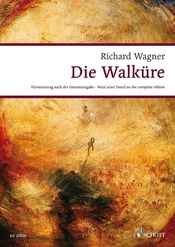
女武神 1980年拜罗伊特音乐节版 [演出] 豆瓣
所属 演出: 女武神
语言: german 德语 剧团: Bayreuther Festspielorchester 拜罗伊特音乐节管弦乐团 剧院: Bayreuther Festspielhaus 拜罗伊特音乐节剧院 导演: Patrice Chéreau
其它标题: 1980年拜罗伊特音乐节版 编剧: Richard Wagner 作曲: Richard Wagner 演员: Gwyneth Jones / Peter Hofmann
Prior history
During the lengthy time that has passed since the gods entered Valhalla at the end of Das Rheingold, Fafner has used the Tarnhelm to assume the form of a dragon, and guards the gold and the ring in the depths of the forest. Wotan has visited Erda seeking wisdom, and by her has fathered a daughter, Brünnhilde; he has fathered eight other daughters, possibly also by Erda. These, with Brünnhilde, form the Valkyries, whose task is to recover heroes fallen in battle and bring them to Valhalla, where they will protect the fortress from Alberich's assault should the dwarf recover the ring. Wotan has also wandered the earth, and with a woman of the Völsung race has fathered the twins Siegmund and Sieglinde, who have grown up separately and unaware of each other. From the Volsungs Wotan hopes for a hero who, unencumbered by the gods' treaties, will obtain the ring from Fafner.
Act 1
As a storm rages, Siegmund finds shelter from his enemies in a large dwelling built around a massive ash-tree. Unarmed and wounded, he collapses with exhaustion. Sieglinde enters; she tells Siegmund that she is the wife of Hunding, and that he may rest here until Hunding's return. As they talk, they look at each other with growing interest and emotion. Siegmund gets ready to leave, telling Sieglinde that misfortune follows him and he does not want to bring it on her; she replies that misfortune dwells with her already.
Hunding returns, and questions Siegmund's presence. Calling himself Wehwalt ("woeful"), Siegmund explains that he grew up in the forest with his parents and twin sister. One day he found their home burned down, his mother killed and his sister gone. Recently he fought with the relatives of a girl being forced into marriage. His weapons were destroyed, the bride was killed, and he was forced to flee. Hunding reveals that he is one of Siegmund's pursuers; Siegmund may stay, he says, but they must fight in the morning. Before leaving, Sieglinde gives a meaningful glance to a particular spot on the tree in which, the firelight reveals, a sword is buried to the hilt.
Sieglinde returns, having drugged Hunding's drink. She reveals that she was forced into the marriage and that during their wedding feast, an old man appeared and plunged a sword into the trunk of the ash tree which neither Hunding nor any of his companions have been able to remove. She is longing for the hero who will draw the sword and save her. When Siegmund expresses his love for her, she reciprocates, and when he speaks the name of his father, Wälse, she recognises him as Siegmund, and realises that the sword was left for him. Siegmund then draws the sword from the tree. She reveals herself as Sieglinde, his twin sister. Siegmund names the sword "Nothung" and declares that it will be her protection. The two sing of their passionate love for each other, as the act ends.
Act 2
On a high mountain ridge, Wotan instructs Brünnhilde, his Valkyrie daughter, to protect Siegmund in his forthcoming battle with Hunding. Fricka arrives, and in her role as goddess of family values demands that Siegmund and Sieglinde be punished for their adultery and incest. She scorns Wotan's argument that he requires Siegmund as a "free hero", who can further his plans to recover the ring from Fafner, uninhibited by Wotan's contracts. She retorts that Siegmund is not free but is Wotan's pawn, whose every move the god seeks to direct. Defeated by Fricka's logic, Wotan reluctantly agrees that he will not protect Siegmund. After Fricka leaves, the troubled Wotan gives Brünnhilde the full backstory, and with great sorrow rescinds his earlier instruction; he orders her to give the victory to Hunding, and then departs.
Siegmund and Sieglinde now enter, and Sieglinde faints, consumed with guilt and exhaustion. Brünnhilde tells Siegmund of his impending death; he refuses to follow Brünnhilde to Valhalla when she tells him Sieglinde cannot accompany him. Siegmund still believes that his father's sword will assure him of victory over Hunding, but Brünnhilde tells him it has lost its power. Siegmund threatens to kill both Sieglinde and himself. Much moved, Brünnhilde decides to defy her father and grant victory to Siegmund.
Hunding's call is heard; he arrives, and attacks Siegmund. Under Brünnhilde's power Siegmund begins to overpower Hunding, but Wotan appears and shatters Siegmund's sword with his spear. Hunding then stabs him to death. Brünnhilde gathers up the fragments of the sword and flees on horseback with Sieglinde. Contemptuously, Wotan strikes Hunding dead, and swearing that Brünnhilde will be punished for her defiance, sets out in pursuit of her.
Act 3
The Valkyries congregate on the mountain-top, each carrying a dead hero and chattering excitedly. Brünnhilde arrives with Sieglinde, and begs her sisters for help, but they dare not defy Wotan. Sieglinde tells Brünnhilde that without Siegmund she no longer wishes to live. Brünnhilde informs her that she is pregnant by Siegmund, and urges her to remain alive for the child's sake, and to name the child Siegfried. Brünnhilde gives the fragments of the sword Nothung to Sieglinde, who thanks her for her loyalty and comfort, and resolves to save the child. As she departs, Wotan is heard approaching with great wrath.
When Wotan arrives, the Valkyries vainly try to hide Brünnhilde. He faces her and declares her punishment: she is to be stripped of her Valkyrie status and become a mortal woman, to be held in defenceless sleep on the mountain, prey to any man who finds her. The other Valkyries protest, but when Wotan threatens them with the same, they flee. In a long discourse with Wotan Brünnhilde explains that she decided to protect Siegmund knowing that this was Wotan's true desire. Wotan consents to her request that he surround her resting place with a circle of fire that will protect her from all but the bravest of heroes. He bids her a loving farewell and lays her sleeping form down on a rock. He then summons Loge, the demigod of fire, who creates a circle of flames around her. Before slowly departing, Wotan pronounces that anyone with fear shall never pass through the fire.
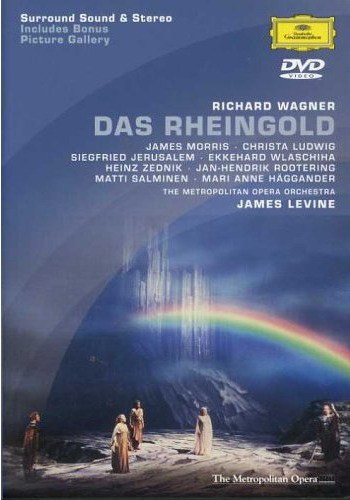
莱茵河的黄金 1990年大都会歌剧团版 [演出] 豆瓣
所属 演出: 莱茵河的黄金
语言: german 德语 剧团: Metropolitan Opera Orchestra 大都会歌剧团管弦乐团 剧院: Metropolitan Opera House 大都会歌剧院 导演: Otto Schenk
其它标题: 1990年大都会歌剧团版 编剧: Richard Wagner 作曲: Richard Wagner 演员: James Morris / Christa Ludwig
Scene 1
At the bottom of the Rhine, the three Rhinemaidens, Woglinde, Wellgunde, and Floßhilde, play together. Alberich, a Nibelung dwarf, appears from a deep chasm and tries to woo them. The maidens mock his advances and he grows angry – he chases them, but they elude, tease and humiliate him. A sudden ray of sunshine pierces the depths, to reveal the Rhine gold. The maidens sing a hymn of praise to the gold, and Alberich asks what it is. They explain that the gold, which their father has ordered them to guard, can be made into a magic ring which gives power to rule the world, if its bearer first renounces love. The maidens think they have nothing to fear from the lustful dwarf, but Alberich, embittered by their mockery, curses love, seizes the gold and returns to his chasm, leaving them screaming in dismay.
Scene 2
Wotan, ruler of the gods, is asleep on a mountaintop, with a magnificent castle behind him. His wife, Fricka, wakes Wotan, who salutes their new home. Fricka reminds him of his promise to the giants Fasolt and Fafner, who built the castle, that he would give them Fricka's sister Freia, the goddess of youth and beauty, as payment. Fricka is worried for her sister, but Wotan is confident that Loge, the demigod of fire, will find an alternative payment.
Freia enters in a panic, followed by Fasolt and Fafner. Fasolt demands that Freia be given up. He points out that Wotan's authority is sustained by the treaties carved into his spear, including his contract with the giants, which Wotan therefore cannot violate. Donner, god of thunder, and Froh, god of sunshine, arrive to defend Freia, but Wotan cannot permit the use of force to break the agreement. Hoping that Loge will arrive with the alternative payment he had promised, Wotan tries to stall.
When Loge arrives, his initial report is discouraging: nothing is more valuable to men than love, so, there is apparently no possible alternative payment besides Freia. Loge was able to find only one instance where someone willingly gave up love for something else: Alberich the Nibelung had renounced love, stolen the Rhine gold and made a powerful magic ring out of it. A discussion of the ring and its powers ensues, to which the giants listen carefully, and everyone finds good reasons for wanting to own it. Fafner makes a counter-offer: the giants will accept the Nibelung's treasure in payment, instead of Freia. When Wotan tries to haggle, the giants depart, taking Freia with them as hostage and promising to keep her forever unless the gods ransom her by obtaining, and giving them, the Nibelung's gold, by the end of the day.
Freia's golden apples had kept the gods eternally young, but in her absence they begin to age and weaken. In order to redeem Freia, Wotan resolves to travel with Loge to Alberich's subterranean kingdom to obtain the gold.
Scene 3
In Nibelheim, Alberich has enslaved the rest of the Nibelung dwarves with the power of the ring. He has forced his brother Mime, a skillful smith, to create a magic helmet, the Tarnhelm. Alberich demonstrates the Tarnhelm's power by making himself invisible, the better to torment his subjects.
Wotan and Loge arrive and happen upon Mime, who tells them of the misery under Alberich's rule. Alberich returns, driving his slaves to pile up a huge mound of gold. He boasts to the visitors about his plans to conquer the world using the power of the ring. Loge asks how he can protect himself against a thief while he sleeps. Alberich replies the Tarnhelm will hide him, by allowing him to turn invisible or change his form. Loge expresses doubt and requests a demonstration. Alberich complies by transforming himself into a giant snake; Loge acts suitably impressed, and then asks whether Alberich can also reduce his size, which would be very useful for hiding. Alberich transforms himself into a toad. Wotan and Loge seize him and drag him up to the surface.
Scene 4
Back on the mountaintop, Wotan and Loge force Alberich to exchange his wealth for his freedom. He summons the Nibelungen, who bring up the hoard of gold. He then asks for the return of the Tarnhelm, but Loge says that it is part of his ransom. Alberich still hopes he can keep the ring, but Wotan demands it, and when Alberich refuses, Wotan tears it from Alberich's hand and puts it on his own finger. Crushed by his loss, Alberich lays a curse on the ring: until it should return to him, whoever possesses it will live in anxiety, and will eventually be robbed of it and killed.
The gods reconvene. Fasolt and Fafner return with Freia. Fasolt, reluctant to release her, insists that the gold be piled high enough to hide her from view. Wotan is forced to relinquish the Tarnhelm, to help cover Freia completely. However, Fasolt spots a remaining crack in the gold, through which one of Freia's eyes can be seen. Loge says that there is no more gold, but Fafner, who has noticed the ring on Wotan's finger, demands that Wotan add it to the pile, to block the crack. Loge protests that the ring belongs to the Rheinmaidens, and Wotan angrily declares that he intends to keep it for his own. As the giants seize Freia and start to leave, Erda, the earth goddess, appears and warns Wotan of impending doom, urging him to give up the cursed ring. Troubled, Wotan calls the giants back and surrenders the ring. The giants release Freia and begin dividing the treasure, but they quarrel over the ring itself. Fafner clubs Fasolt to death. Wotan, horrified, realizes that Alberich's curse has terrible power.
Donner summons a thunderstorm to clear the air, after which Froh creates a rainbow bridge that stretches to the gate of the castle. Wotan leads the gods across the bridge to the castle, which he names Valhalla. Loge does not follow; he says in an aside that he is tempted to destroy the treacherous gods by fire – he will think it over. Far below, the Rhine maidens mourn the loss of their gold, and condemn the gods as false and cowardly.
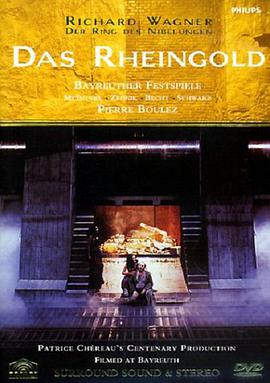
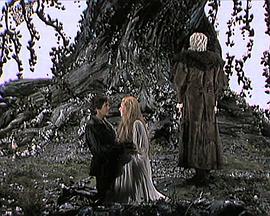
莱茵河的黄金 1980年拜罗伊特音乐节版 [演出] 豆瓣
所属 演出: 莱茵河的黄金
语言: german 德语 剧团: Bayreuther Festspielorchester 拜罗伊特音乐节管弦乐团 剧院: Bayreuther Festspielhaus 拜罗伊特音乐节剧院 导演: Patrice Chéreau
其它标题: 1980年拜罗伊特音乐节版 编剧: Richard Wagner 作曲: Richard Wagner 演员: Donald McIntyre / Hanna Schwarz
Scene 1
At the bottom of the Rhine, the three Rhinemaidens, Woglinde, Wellgunde, and Floßhilde, play together. Alberich, a Nibelung dwarf, appears from a deep chasm and tries to woo them. The maidens mock his advances and he grows angry – he chases them, but they elude, tease and humiliate him. A sudden ray of sunshine pierces the depths, to reveal the Rhine gold. The maidens sing a hymn of praise to the gold, and Alberich asks what it is. They explain that the gold, which their father has ordered them to guard, can be made into a magic ring which gives power to rule the world, if its bearer first renounces love. The maidens think they have nothing to fear from the lustful dwarf, but Alberich, embittered by their mockery, curses love, seizes the gold and returns to his chasm, leaving them screaming in dismay.
Scene 2
Wotan, ruler of the gods, is asleep on a mountaintop, with a magnificent castle behind him. His wife, Fricka, wakes Wotan, who salutes their new home. Fricka reminds him of his promise to the giants Fasolt and Fafner, who built the castle, that he would give them Fricka's sister Freia, the goddess of youth and beauty, as payment. Fricka is worried for her sister, but Wotan is confident that Loge, the demigod of fire, will find an alternative payment.
Freia enters in a panic, followed by Fasolt and Fafner. Fasolt demands that Freia be given up. He points out that Wotan's authority is sustained by the treaties carved into his spear, including his contract with the giants, which Wotan therefore cannot violate. Donner, god of thunder, and Froh, god of sunshine, arrive to defend Freia, but Wotan cannot permit the use of force to break the agreement. Hoping that Loge will arrive with the alternative payment he had promised, Wotan tries to stall.
When Loge arrives, his initial report is discouraging: nothing is more valuable to men than love, so, there is apparently no possible alternative payment besides Freia. Loge was able to find only one instance where someone willingly gave up love for something else: Alberich the Nibelung had renounced love, stolen the Rhine gold and made a powerful magic ring out of it. A discussion of the ring and its powers ensues, to which the giants listen carefully, and everyone finds good reasons for wanting to own it. Fafner makes a counter-offer: the giants will accept the Nibelung's treasure in payment, instead of Freia. When Wotan tries to haggle, the giants depart, taking Freia with them as hostage and promising to keep her forever unless the gods ransom her by obtaining, and giving them, the Nibelung's gold, by the end of the day.
Freia's golden apples had kept the gods eternally young, but in her absence they begin to age and weaken. In order to redeem Freia, Wotan resolves to travel with Loge to Alberich's subterranean kingdom to obtain the gold.
Scene 3
In Nibelheim, Alberich has enslaved the rest of the Nibelung dwarves with the power of the ring. He has forced his brother Mime, a skillful smith, to create a magic helmet, the Tarnhelm. Alberich demonstrates the Tarnhelm's power by making himself invisible, the better to torment his subjects.
Wotan and Loge arrive and happen upon Mime, who tells them of the misery under Alberich's rule. Alberich returns, driving his slaves to pile up a huge mound of gold. He boasts to the visitors about his plans to conquer the world using the power of the ring. Loge asks how he can protect himself against a thief while he sleeps. Alberich replies the Tarnhelm will hide him, by allowing him to turn invisible or change his form. Loge expresses doubt and requests a demonstration. Alberich complies by transforming himself into a giant snake; Loge acts suitably impressed, and then asks whether Alberich can also reduce his size, which would be very useful for hiding. Alberich transforms himself into a toad. Wotan and Loge seize him and drag him up to the surface.
Scene 4
Back on the mountaintop, Wotan and Loge force Alberich to exchange his wealth for his freedom. He summons the Nibelungen, who bring up the hoard of gold. He then asks for the return of the Tarnhelm, but Loge says that it is part of his ransom. Alberich still hopes he can keep the ring, but Wotan demands it, and when Alberich refuses, Wotan tears it from Alberich's hand and puts it on his own finger. Crushed by his loss, Alberich lays a curse on the ring: until it should return to him, whoever possesses it will live in anxiety, and will eventually be robbed of it and killed.
The gods reconvene. Fasolt and Fafner return with Freia. Fasolt, reluctant to release her, insists that the gold be piled high enough to hide her from view. Wotan is forced to relinquish the Tarnhelm, to help cover Freia completely. However, Fasolt spots a remaining crack in the gold, through which one of Freia's eyes can be seen. Loge says that there is no more gold, but Fafner, who has noticed the ring on Wotan's finger, demands that Wotan add it to the pile, to block the crack. Loge protests that the ring belongs to the Rheinmaidens, and Wotan angrily declares that he intends to keep it for his own. As the giants seize Freia and start to leave, Erda, the earth goddess, appears and warns Wotan of impending doom, urging him to give up the cursed ring. Troubled, Wotan calls the giants back and surrenders the ring. The giants release Freia and begin dividing the treasure, but they quarrel over the ring itself. Fafner clubs Fasolt to death. Wotan, horrified, realizes that Alberich's curse has terrible power.
Donner summons a thunderstorm to clear the air, after which Froh creates a rainbow bridge that stretches to the gate of the castle. Wotan leads the gods across the bridge to the castle, which he names Valhalla. Loge does not follow; he says in an aside that he is tempted to destroy the treacherous gods by fire – he will think it over. Far below, the Rhine maidens mourn the loss of their gold, and condemn the gods as false and cowardly.
1985年拜罗伊特剧院现场演出《漂泊的荷兰人》 (1986) [电影] 豆瓣
Fliegende Holländer, Der
导演: Brian Large 演员: Simon Estes / Lisbeth Balslev
其它标题: Fliegende Holländer, Der
When Daland and his Norwegian sailors spot the Dutchman's ship, they hail him. He tells them that he is doomed to sail the seas and can come on land once every seven years to seek redemption from the curse. Daland, who is rather greedy, hopes the wealthy stranger will marry his daughter, although Erik, a young hunter, has already been courting her. They go to Daland's house, where Senta promises obedience to her father's wishes. She has been feeling that Erik is a little bit too conventional and boring and she finds the stranger mysterious and romantic, so she sings her desire to be the woman who can redeem the Dutchman. He warns that her fate won't be pretty if she swears fidelity but fails to keep it, but Senta has fallen in love at first sight and pledges her faithfulness unto death. Party time! But when the sailors and their women call to the Dutch ship for the crew to come ashore and join the celebration, it becomes clear that the ship is manned by ghosts. Written by Fiona Kelleghan
男孩的角度 (2012) [电影] 维基数据 IMDb TMDB Eggplant.place
Kulman pojat
导演: Teppo Airaksinen 演员: Eero Ritala / Joonas Saartamo
其它标题: Kulman pojat / Fanatics
这是一部关于一个狂热的小城镇足球支持者爱上一个完美的女孩,没想到他的梦想女孩却支持不合其意的球队的朋友情谊喜剧。现在他要么和对手化敌为友,要么忘记他所爱的女孩。