Ken Auletta — 作者 (6)
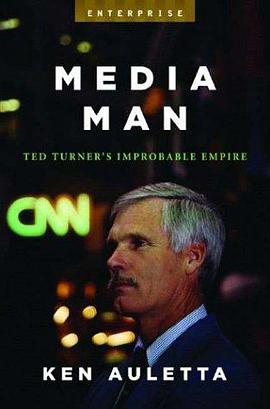
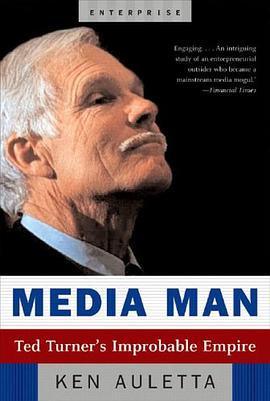
Media Man [图书] 豆瓣
作者: Ken Auletta 出版社: W. W. Norton 2005 - 10
"Auletta puts the most human of faces on Turner yet . . . [as] a tycoon who has lost his power." — BusinessWeek Ted Turner revolutionized television. Foreseeing cable's potential in its infancy, he parlayed a tiny UHF station in Atlanta into a national superstation, invented CNN, and transformed sports teams and the MGM film library into lucrative programming. Ken Auletta, the most respected media journalist in America, enjoyed unparalleled access to the outspoken and defiant Turner in writing this book (named one of BusinessWeek's Top Ten Books of 2004), capturing the visionary businessman as he built—and lost—his improbable empire. 6 photographs
Media Man [图书] 豆瓣
作者: Ken Auletta 出版社: W. W. Norton & Company 2004 - 9
America's top media journalist on the rise and fall of the industry's most colorful titan.
Ted Turner, the "mouth from the South," revolutionized television. Grasping cable's potential in its infancy, Turner parlayed a tiny UHF station in Atlanta into a national cable superstation; invented the world's first 24-hour cable news channel, CNN; and transformed the MGM film library into lucrative cable networks. Although Turner sold his company to Time Warner and was eventually ousted, his influence is still pervasive in the business world through his philanthropy.
Ken Auletta, whose New Yorker profile of Turner won a National Magazine Award for Best Profile in 2001, has written the first book-length retrospective on the volatile Turner and his roller-coaster career, and received the active cooperation of Turner himself, including fifteen hours of taped interviews. Media Man is a captivating view of a daring entrepreneur, a pioneering company, and the industry they helped create. 6 photographs.
About the series: W. W. Norton and Atlas Books announce the launch of a dynamic new series: ENTERPRISE pairs distinguished writers with stories of the economic forces that have shaped the modern world—the institutions, the entrepreneurs, the ideas. Enterprise introduces a new genre—the business book as literature.
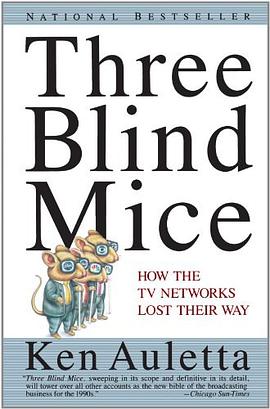
Three Blind Mice [图书] 豆瓣
作者: Ken Auletta 出版社: Vintage 1992 - 9
Three Blind Mice may be the most thorough probe ever into how the TV industry works. -- Newsweek What happened to network television in the 1980s? How did CBS, NBC, and ABC lose a third of their audience and more than half of their annual profits? Ken Auletta, author of Greed and Glory on Wall Street, tells the gripping story of the decline of the networks in this epically scaled work of journalism. He chronicles the takeovers and executive coups that turned ABC and NBC into assets of two mega-corporations and CBS into the fiefdom of one man, Larry Tisch, whose obsession with the bottom line could be both bracing and appalling. Auletta takes us inside the CBS newsroom on the night that Dan Rather went off-camera for six deadly minutes; into the screening rooms where NBC programming wunderkind Brandon Tartikoff watched two of his brightest prospects for new series thud disastrously to earth; and into the boardrooms where the three networks were trying to decide whether television is a public trust or a cash cow. Rich in anecdote and gossip, scalpel-sharp in its perceptions, Three Blind Mice chronicles a revolution in American business and popular culture, one that is changing the world on both sides of the television screen. "This is one of the best books on television. Maybe the best." -- Dallas Morning News "The book's fascination and fun lie in the detail -- Mr. Auletta's extraordinary access to the principal players, his eye for color, ear for anecdote and reporter's instinct for conflict." -- Wall Street Journal "It's a tour de force of reporting" -- Business Week
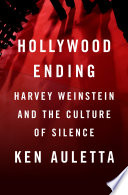
Hollywood Ending [图书] 谷歌图书
作者: Ken Auletta 出版社: Penguin 2022 - 7
A vivid biography of Harvey Weinstein—how he rose to become a dominant figure in the film world, how he used that position to feed his monstrous sexual appetites, and how it all came crashing down, from the author who has covered the Hollywood and media power game for The New Yorker for three decades

Twenty years ago, Ken Auletta wrote an iconic New Yorker profile of the Hollywood mogul Harvey Weinstein, who was then at the height of his powers. The profile made waves for exposing how volatile, even violent, Weinstein was to his employees and collaborators. But there was a much darker story that was just out of reach: rumors had long swirled that Weinstein was a sexual predator. Auletta confronted Weinstein, who denied the claims. Since no one was willing to go on the record, Auletta and the magazine concluded they couldn’t close the case. Years later, he was able to share his reporting notes and knowledge with Ronan Farrow; he cheered as Farrow, and Jodi Kantor and Megan Twohey, finally revealed the truth.

Still, the story continued to nag him. The trail of assaults and cover-ups had been exposed, but the larger questions remained: What was at the root of Weinstein’s monstrousness? How, and why, was it never checked? Why the silence? How does a man run the day-to-day operations of a company with hundreds of employees and revenues in the hundreds of millions of dollars, and at the same time live a shadow life of sexual predation without ever being caught? How much is this a story about Harvey Weinstein, and how much is this a story about Hollywood and power?

In pursuit of the answers, Auletta digs into Weinstein’s life, searching for the mysteries beneath a film career unparalleled for its extraordinary talent and creative success, which combined with a personal brutality and viciousness to leave a trail of ruined lives in its wake. Hollywood Ending is more than a prosecutor’s litany; it is an unflinching examination of Weinstein's life and career, embedding his crimes in the context of the movie business, in his failures and the successes that led to enormous power. Film stars, Miramax employees and board members, old friends and family, and even the person who knew him best—Harvey’s brother, Bob—all talked to Auletta at length. Weinstein himself also responded to Auletta’s questions from prison. The result is not simply the portrait of a predator but of the power that allowed Weinstein to operate with such impunity for so many years, the spiderweb in which his victims found themselves trapped.
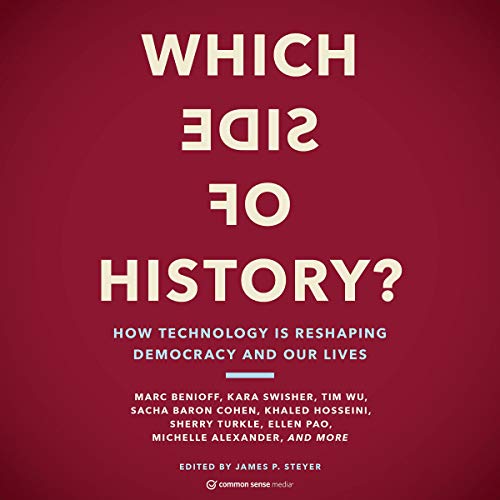
Which Side of History?: How Technology Is Reshaping Democracy and Our Lives [图书] Goodreads
作者: James P. Steyer / Cheri Vandenheuvel 出版社: Chronicle Prism 2020 - 10
'WHICH SIDE OF HISTORY' offers a collection of bold essays on how technology is affecting democracy, society, and our future.

Featuring prominent national voices such as Sacha Baron Cohen, Marc Benioff, Ellen Pao, Ken Auletta, Chelsea Clinton, Tim Wu, Khaled Hosseini, Nicholas Kristof and Sheryl WuDunn, Jaron Lanier, Willow Bay, Sal Khan, Sherry Turkle, Shoshana Zuboff, and many more.

The essays focus on the extraordinary impact of technology on our privacy, kids and families, race and gender roles, democracy, climate change, and mental health.

This groundbreaking audiobook challenges opinion leaders and the broader public to take action to improve technology's effects on our lives.

Featuring notable journalists, engineers, entrepreneurs, novelists, activists, filmmakers, business leaders, scholars, and researchers, including: Thomas Friedman, Kara Swisher, Aaron Sorkin, Jennifer Siebel Newsom, Cameron Kasky, Tristan Harris, and many others.

With the rise of cyberbullying and hate speech online, issues around climate change and technology, and the "move fast and break things" mentality of tech culture, 'WHICH SIDE OF HISTORY?' will urge listeners to draw the line. This audiobook will help shape the conversations we have around technology in our society and our future for years to come.

A smart gift for anyone who approaches tech and the future with a healthy skepticism.

Edited by James Steyer, the CEO and founder of Common Sense Media.

Add it to the shelf with books like 'Ten Arguments for Deleting Your Social Media Accounts Right Now' by Jaron Lanier, 'The Shallows: What the Internet Is Doing to Our Brains' by Nicholas Carr, and 'The Age of Surveillance Capitalism: The Fight for a Human Future at the New Frontier of Power' by Shoshana Zuboff.