约瑟夫·康拉德 — 作者 (42)
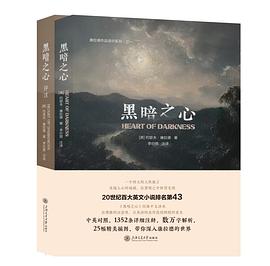
Heart of Darkness [图书] 豆瓣
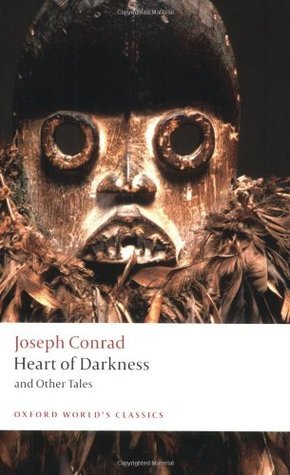
The Fourth Edition is again based on Robert Kimbrough's meticulously re-edited text. Missing words have been restored and the entire novel has been repunctuated in accordance with Conrad's style. The result is the first published version of Heart of Darkness that allows readers to hear Marlow's voice as Conrad heard it when he wrote the story.
" Backgrounds and Contexts " provides readers with a generous collection of maps and photographs that bring the Belgian Congo to life. Textual materials, topically arranged, address nineteenth-century views of imperialism and racism and include autobiographical writings by Conrad on his life in the Congo. New to the Fourth Edition is an excerpt from Adam Hochschild's recent book, King Leopold's Ghost , as well as writings on race by Hegel, Darwin, and Galton.
" Criticism " includes a wealth of new materials, including nine contemporary reviews and assessments of Conrad and Heart of Darkness and twelve recent essays by Chinua Achebe, Peter Brooks, Daphne Erdinast-Vulcan, Edward Said, and Paul B. Armstrong, among others. Also new to this edition is a section of writings on the connections between Heart of Darkness and the film Apocalypse Now by Louis K. Greiff, Margot Norris, and Lynda J. Dryden.
A Chronology and Selected Bibliography are also included.
About the Series : No other series of classic texts equals the caliber of the Norton Critical Editions . Each volume combines the most authoritative text available with the comprehensive pedagogical apparatus necessary to appreciate the work fully. Careful editing, first-rate translation, and thorough explanatory annotations allow each text to meet the highest literary standards while remaining accessible to students. Each edition is printed on acid-free paper and every text in the series remains in print. Norton Critical Editions are the choice for excellence in scholarship for students at more than 2,000 universities worldwide.
" Backgrounds and Contexts " provides readers with a generous collection of maps and photographs that bring the Belgian Congo to life. Textual materials, topically arranged, address nineteenth-century views of imperialism and racism and include autobiographical writings by Conrad on his life in the Congo. New to the Fourth Edition is an excerpt from Adam Hochschild's recent book, King Leopold's Ghost , as well as writings on race by Hegel, Darwin, and Galton.
" Criticism " includes a wealth of new materials, including nine contemporary reviews and assessments of Conrad and Heart of Darkness and twelve recent essays by Chinua Achebe, Peter Brooks, Daphne Erdinast-Vulcan, Edward Said, and Paul B. Armstrong, among others. Also new to this edition is a section of writings on the connections between Heart of Darkness and the film Apocalypse Now by Louis K. Greiff, Margot Norris, and Lynda J. Dryden.
A Chronology and Selected Bibliography are also included.
About the Series : No other series of classic texts equals the caliber of the Norton Critical Editions . Each volume combines the most authoritative text available with the comprehensive pedagogical apparatus necessary to appreciate the work fully. Careful editing, first-rate translation, and thorough explanatory annotations allow each text to meet the highest literary standards while remaining accessible to students. Each edition is printed on acid-free paper and every text in the series remains in print. Norton Critical Editions are the choice for excellence in scholarship for students at more than 2,000 universities worldwide.
Under Western Eyes [图书] 豆瓣
'Whenever two Russians come together, the shadow of autocracy is with them...haunting the secret of their silences.' First published in 1911, Under Western Eyes traces the experiences of Razumov, a young Russian student of philosophy who is uninvolved in politics or protest. Against his will he finds himself caught up in the aftermath of a terrorist bombing directed against the Tsarist authorities. He is pulled in different directions - by his conscience and his ambitions, by powerful opposed political forces, but most of all by personal emotions he is unable to suppress. Set in St Petersburg and Geneva, the novel is in part a critical response to Dostoevsky's Crime and Punishment but it is also a startlingly modern book. Viewed through the 'Western eyes' of Conrad's English narrator, Razumov's story forces the reader to confront the same moral issues: the defensibility of terrorist resistance to tyranny, the loss of individual privacy in a surveillance society, and the demands thrown up by the interplay of power and knowledge. This new edition is based on the first English edition text, and has a new chronology and bibliography. ABOUT THE SERIES: For over 100 years Oxford World's Classics has made available the widest range of literature from around the globe. Each affordable volume reflects Oxford's commitment to scholarship, providing the most accurate text plus a wealth of other valuable features, including expert introductions by leading authorities, helpful notes to clarify the text, up-to-date bibliographies for further study, and much more.

Heart of Darkness [图书] 豆瓣
Originally published in 1902, Heart of Darkness remains one of this century's most enduring - and harrowing - works of fiction. Written several years after Conrad's grueling sojourn in the Belgian Congo, the novel tells the story of Marlow, a seaman who undertakes his own journey into the African jungle to find the tormented white trader Kurtz. Rich in irony and spellbinding prose, Heart of Darkness is a complex meditation on colonialism, evil, and the thin line between civilization and barbarity.
.
This edition contains selections from Conrad's Congo Diary of 1890 - the first notes, in effect, for the novel which was composed at the end of that decade. Virginia Woolf wrote of Conrad, "His books are full of moments of vision. They light up a whole character in a flash. . . . He could not write badly, one feels, to save his life."
.
This edition contains selections from Conrad's Congo Diary of 1890 - the first notes, in effect, for the novel which was composed at the end of that decade. Virginia Woolf wrote of Conrad, "His books are full of moments of vision. They light up a whole character in a flash. . . . He could not write badly, one feels, to save his life."
Nostromo [图书] 豆瓣
A gripping tale of capitalist exploitation and rebellion, set amid the mist-shrouded mountains of a fictional South American republic, employs flashbacks and glimpses of the future to depict the lure of silver and its effects on men. Conrad's deep moral consciousness and masterful narrative technique are at their best in this, one of his greatest works.
Lord Jim [图书] 豆瓣
First published in 1900, Lord Jim established Conrad as one of the great storytellers of the twentieth century. Set in the Malay Archipelago, the novel not only provides a gripping account of maritime adventure and romance, but also an exotic tale of the East. Its themes also challenge the conventions of nineteenth-century adventure fiction, confirming Conrad's place in literature as one of the first 'modernists' of English letters. Lord Jim explores the dilemmas of conscience, of moral isolation, of loyalty and betrayal confronting a sensitive individual whose romantic quest for an honourable ideal are tested to the limit.
Nostromo [图书] 豆瓣
One of the greatest political novels in any language, Nostromo reenacts the establishment of modern capitalism in a remote South American province locked between the Andes and the Pacific. In the harbor town of Sulaco, a vivid cast of characters is caught up in a civil war to decide whether its fabulously wealthy silver mine, funded by American money but owned by a third-generation English immigrant, can be preserved from the hands of venal politicians. Greed and corruption seep into the lives of everyone, and Nostromo, the principled foreman of the mine, is tested to the limit.
Conrad's evocation of Latin America--its grand landscapes, the ferocity of its politics, and the tenacity of individuals swept up in imperial ambitions--has never been bettered.
Under Western Eyes [图书] 豆瓣
Political turmoil convulses 19th-century Russia, as Razumov, a young student preparing for a career in the czarist bureaucracy, unwittingly becomes embroiled in the assassination of a public official. Asked to spy on the family of the assassin--his close friend--Razumov must come to terms with timeless questions of accountability and human integrity. One of Conrad's finest literary achievements.
Nostromo [图书] 豆瓣
Book Description
The Wordsworth Classics covers a huge list of beloved works of literature in English and translations. This growing series is rigorously updated, with scholarly introductions and notes added to new titles.
Set in the imaginary South American republic of Costaguana, this work is an illustration of the impact of foreign exploitation on a developing nation. As Sulaco, site of an English/American controlled silver mine establishes its independence, its ideals are inevitably compromised.
From Library Journal
This involved, philosophical novel is not for the casual listener, especially one who is supposed to be concentrating on the road ahead. Writing in 1904, Conrad invented a complex South American country with a turbulent history and a potentially explosive population, ranging from the wealthy gringo running the Sulaco silver mine to the poorest worker loading cargo on the docks. Although the story teems with lively characters, the dazzling figure of Nostromo eclipses them all. A natural leader?brave, handsome, and incorruptible?he naturally becomes the epicenter of the revolution that soon devastates Sulaco. With characteristic eloquence, Conrad has focused on the dramatic action of the revolution to explore challenging themes: capitalism, imperialism, revolution, and social justice. Unfortunately, this audio program, read by Frederick Davidson, is disappointing. Despite fine dramatic characterizations, the narrator's posh British accent is so pronounced that it often detracts from the text. Since Nostromo has also been narrated by Frank Muller (Recorded Books) and Wolfram Kandinsky (Books on TapeR), perhaps this version may not be the best choice.
Jo Carr, Sarasota, Fla.
From AudioFile
This abridgment of Joseph Conrad's classic keeps in mind that the story is as much about the fictional province of Sulaco and the San Tome silver mine as it is about Nostromo, the "incorruptible" sailor who ends up concealing a fortune in silver. Although Nostromo is a presence throughout the novel, his tale actually begins on Side six. It preserves much of Conrad's fine detail, background history of Sulaco, and prose style, making the listener almost forget that this is an abridgment. Joss Ackland speaks Conrad's descriptive passages with a clear, refined voice that brings an authoritative air to this fictional history, while giving its main characters rougher voices. J.A.S.
About Author
Joseph Conrad was born Józef Teodor Konrad Korzeniowski in Russian-occupied Poland on December 3, 1857. His parents were aristocrats and intensely nationalistic political activists who were exiled to Vologda, northeast of Moscow, for their opposition to tsarist rule. Józef's mother, Ewa, died in 1865 of tuberculosis, and his father, Apollo, succumbed to the same disease four years later. Józef was cared for by his uncle Tadeusz Bobrowski until the young man acted on a long-expressed desire to go to sea. In 1874 he left for Marseilles, where he began sailing for the French merchant service.
In 1878, in money difficulties and no longer able to sail on French vessels because he had not secured an exemption from military service in Russia, Conrad attempted suicide. After his recovery, he left Marseilles on a British ship and went to England, where he worked the route between Lowestoft and Newcastle. He arrived in England virtually without qualifications and with very little English, but he was able in a few years to earn his master's certificate in the British merchant marine and became a British national. Conrad traveled to Mauritius and Constantinople, worked on wool clippers from London to Australia, and sailed the waters of the Far East. These voyages were punctuated by long periods when he could not find suitable positions because of the decline in sail-powered transport in the age of the steamship.
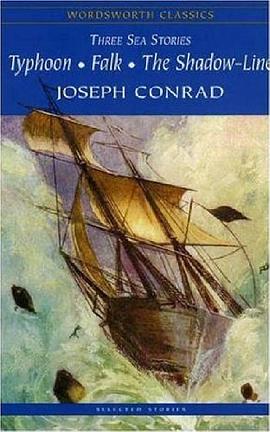
Conrad began writing in English, which became his language of choice after his native Polish and French, although he complained of difficulties with English grammar and syntax. His voyages provided the background for much of his fiction. 'Youth' and 'Typhoon' draw on Conrad's personal experience with disasters at sea. In 1881, he became second mate on the Palestine, a ship that was rammed, caught in tempestuous gales in the English Channel, had its cargo of coal catch fire, and sank off Sumatra. His captaincy of the Otago from Bangkok in 1888 informs The Shadow-Line (1917) and the stories 'Falk' and 'The Secret Sharer.' Heart of Darkness (1899) is drawn from an expedition to the Belgian Congo in 1890. He was already working on a novel when he traveled to the Congo, where he expected to take command of a river steamer. The assignment failed to materialize, and Conrad fell dangerously ill. On his return to England, he was forced to find work as a ship's mate. He was able during this period of intermittent employment to devote more time to his writing, and in 1894 he submitted the novel Almayer's Folly to the publisher Fisher Unwin. Unwin published it in 1895 under the anglicized version of Conrad's Polish name.
Conrad was encouraged to continue to write by Unwin's reader Edward Garnett, although he went on applying for posts as a ship's captain. He finished The Outcast of the Islands in 1895 and in 1896 married Jessie George. They had two sons, Borys and John, born in 1898 and 1906. Constantly in need of more money, Conrad produced short stories and serialized his novels. Although plagued by physical illness and psychological problems, he established one of the most formidable bodies of work in the English language. His longer works include The Nigger of the 'Narcissus (1897), Lord Jim (1900), Nostromo (1904), The Secret Agent (1907), Under Western Eyes (1911), and Victory (1915). Nostromo, set in the imaginary South American republic of Costaguana, is considered by many critics to be Conrad's best work and by some to be the finest novel of the twentieth century.
From early in his career Conrad had the admiration of fellow writers--Stephen Crane, John Galsworthy, Henry James, and Ford Madox Ford, with whom Conrad collaborated on The Inheritors (1901) and Romance (1903). It was only after the success of Chance (1913), however, that his writing afforded him widespread recognition and relative financial security. He spent his declining years in Kent, often in ill health, and died on August 3, 1924, at his home near Canterbury.
Book Dimension :
length: (cm)19.8 width:(cm)12.6
The Wordsworth Classics covers a huge list of beloved works of literature in English and translations. This growing series is rigorously updated, with scholarly introductions and notes added to new titles.
Set in the imaginary South American republic of Costaguana, this work is an illustration of the impact of foreign exploitation on a developing nation. As Sulaco, site of an English/American controlled silver mine establishes its independence, its ideals are inevitably compromised.
From Library Journal
This involved, philosophical novel is not for the casual listener, especially one who is supposed to be concentrating on the road ahead. Writing in 1904, Conrad invented a complex South American country with a turbulent history and a potentially explosive population, ranging from the wealthy gringo running the Sulaco silver mine to the poorest worker loading cargo on the docks. Although the story teems with lively characters, the dazzling figure of Nostromo eclipses them all. A natural leader?brave, handsome, and incorruptible?he naturally becomes the epicenter of the revolution that soon devastates Sulaco. With characteristic eloquence, Conrad has focused on the dramatic action of the revolution to explore challenging themes: capitalism, imperialism, revolution, and social justice. Unfortunately, this audio program, read by Frederick Davidson, is disappointing. Despite fine dramatic characterizations, the narrator's posh British accent is so pronounced that it often detracts from the text. Since Nostromo has also been narrated by Frank Muller (Recorded Books) and Wolfram Kandinsky (Books on TapeR), perhaps this version may not be the best choice.
Jo Carr, Sarasota, Fla.
From AudioFile
This abridgment of Joseph Conrad's classic keeps in mind that the story is as much about the fictional province of Sulaco and the San Tome silver mine as it is about Nostromo, the "incorruptible" sailor who ends up concealing a fortune in silver. Although Nostromo is a presence throughout the novel, his tale actually begins on Side six. It preserves much of Conrad's fine detail, background history of Sulaco, and prose style, making the listener almost forget that this is an abridgment. Joss Ackland speaks Conrad's descriptive passages with a clear, refined voice that brings an authoritative air to this fictional history, while giving its main characters rougher voices. J.A.S.
About Author
Joseph Conrad was born Józef Teodor Konrad Korzeniowski in Russian-occupied Poland on December 3, 1857. His parents were aristocrats and intensely nationalistic political activists who were exiled to Vologda, northeast of Moscow, for their opposition to tsarist rule. Józef's mother, Ewa, died in 1865 of tuberculosis, and his father, Apollo, succumbed to the same disease four years later. Józef was cared for by his uncle Tadeusz Bobrowski until the young man acted on a long-expressed desire to go to sea. In 1874 he left for Marseilles, where he began sailing for the French merchant service.
In 1878, in money difficulties and no longer able to sail on French vessels because he had not secured an exemption from military service in Russia, Conrad attempted suicide. After his recovery, he left Marseilles on a British ship and went to England, where he worked the route between Lowestoft and Newcastle. He arrived in England virtually without qualifications and with very little English, but he was able in a few years to earn his master's certificate in the British merchant marine and became a British national. Conrad traveled to Mauritius and Constantinople, worked on wool clippers from London to Australia, and sailed the waters of the Far East. These voyages were punctuated by long periods when he could not find suitable positions because of the decline in sail-powered transport in the age of the steamship.
Conrad began writing in English, which became his language of choice after his native Polish and French, although he complained of difficulties with English grammar and syntax. His voyages provided the background for much of his fiction. 'Youth' and 'Typhoon' draw on Conrad's personal experience with disasters at sea. In 1881, he became second mate on the Palestine, a ship that was rammed, caught in tempestuous gales in the English Channel, had its cargo of coal catch fire, and sank off Sumatra. His captaincy of the Otago from Bangkok in 1888 informs The Shadow-Line (1917) and the stories 'Falk' and 'The Secret Sharer.' Heart of Darkness (1899) is drawn from an expedition to the Belgian Congo in 1890. He was already working on a novel when he traveled to the Congo, where he expected to take command of a river steamer. The assignment failed to materialize, and Conrad fell dangerously ill. On his return to England, he was forced to find work as a ship's mate. He was able during this period of intermittent employment to devote more time to his writing, and in 1894 he submitted the novel Almayer's Folly to the publisher Fisher Unwin. Unwin published it in 1895 under the anglicized version of Conrad's Polish name.
Conrad was encouraged to continue to write by Unwin's reader Edward Garnett, although he went on applying for posts as a ship's captain. He finished The Outcast of the Islands in 1895 and in 1896 married Jessie George. They had two sons, Borys and John, born in 1898 and 1906. Constantly in need of more money, Conrad produced short stories and serialized his novels. Although plagued by physical illness and psychological problems, he established one of the most formidable bodies of work in the English language. His longer works include The Nigger of the 'Narcissus (1897), Lord Jim (1900), Nostromo (1904), The Secret Agent (1907), Under Western Eyes (1911), and Victory (1915). Nostromo, set in the imaginary South American republic of Costaguana, is considered by many critics to be Conrad's best work and by some to be the finest novel of the twentieth century.
From early in his career Conrad had the admiration of fellow writers--Stephen Crane, John Galsworthy, Henry James, and Ford Madox Ford, with whom Conrad collaborated on The Inheritors (1901) and Romance (1903). It was only after the success of Chance (1913), however, that his writing afforded him widespread recognition and relative financial security. He spent his declining years in Kent, often in ill health, and died on August 3, 1924, at his home near Canterbury.
Book Dimension :
length: (cm)19.8 width:(cm)12.6
The Nigger of the "Narcissus" [图书] 豆瓣
在线阅读本书
JOSEPH CONRAD (1857-1924) was one of the most remarkable figures in English literature. Born in Poland, and originally named Josef Teodor Konrad Walecz Korzeniowski, he went to sea at the age of seventeen and eventually joined the crew of an English vessel, becoming a British citizen in the process. He retired from the sea in 1894 and took up the pen, writing all his works in English, a language he had only learned as an adult. Despite this, he was a master stylist, both lush and precise. His outsider's eye gave him special insights into the moral dangers of the great age of European empires. In his prefactory note to _The Nigger of the Narcissus,_ Conrad wrote, "A work that aspires, however humbly, to the condition of art should carry its justification in every line. And art itself may be defined as a single-minded attempt to render the highest kind of justice to the visible universe, by bringing to light the truth, manifold and one, underlying its every aspect. . . ."
The Secret Agent [图书] 豆瓣
Edited and with Notes by Peter Lancelot MalliosIntroduction by Robert D. Kaplan In reexamining "The Secret Agent" in a post-9/11 world, Robert D. Kaplan praises Joseph Conrad's "surgical insight into the mechanics of terrorism," calling the book "a fine example of how a savvy novelist may detect the future long before a social scientist does." This intense 1907 thriller-a precursor to works by Graham Greene and John le Carre-concerns a British double agent who infiltrates a cabal of anarchists. Conrad explores political and criminal intrigue in a modern society, building to a climax that the critic F. R. Leavis deemed "one of the most astonishing triumphs of genius in fiction."
The Selected Works of Joseph Conrad [图书] 豆瓣
Book Description
Contains three novels such as: "Lord Jim", "Nostromo" and "The Secret Agent", together with a selection of the author's matchless short stories - "Youth", "Heart of Darkness", "The End of the Tether" and "The Shadow-Line".
Book Dimension :
length: (cm)19.8 width:(cm)12.6
Contains three novels such as: "Lord Jim", "Nostromo" and "The Secret Agent", together with a selection of the author's matchless short stories - "Youth", "Heart of Darkness", "The End of the Tether" and "The Shadow-Line".
Book Dimension :
length: (cm)19.8 width:(cm)12.6
Heart of Darkness & Other Stories [图书] 豆瓣
Heart of Darkness is a chilling tale of horror which, as the author intended, is capable of many interpretations. Set in the Congo during the period of rapid colonial expansion in the 19th century, the story deals with the highly disturbing effects of economic, social and political exploitation of European and African societies and the cataclysmic behaviour this induced in some individuals. A very influential story, it provided the plot of the film Apocalpyse Now.
Almayer's Folly [图书] 豆瓣
Lush prose and penetrating psychological insight infuse Conrad's first novel with the qualities that have made him one of the most popular and most studied writers in English literature. The novel chronicles the tragic decline of a Dutch merchant isolated in 19th-century Borneo, the machinations of his bitter Malayan wife, and the loss of his much loved daughter. Unabridged republication of a standard edition.
The Mirror of the Sea [图书] 豆瓣
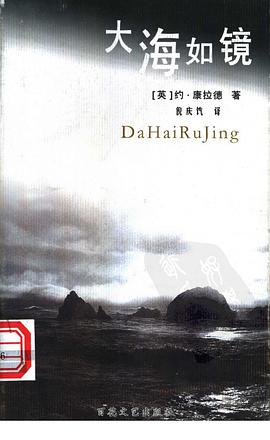
While steam and internal combustion were changing maritime travel forever, Conrad started to reflect on the voyages he had made in the Golden Age of Sail, the people and ships he had known, the extraordinary communities whose lives, language and very nature were shaped by the swells and silences of the open ocean.
Heart of Darkness [图书] Goodreads
Heart of Darkness
Heart of Darkness, a novel by Joseph Conrad, was originally a three-part series in Blackwood's Magazine in 1899. It is a story within a story, following a character named Charlie Marlow, who recounts his adventure to a group of men onboard an anchored ship. The story told is of his early life as a ferry boat captain. Although his job was to transport ivory downriver, Charlie develops an interest in investing an ivory procurement agent, Kurtz, who is employed by the government. Preceded by his reputation as a brilliant emissary of progress, Kurtz has now established himself as a god among the natives in “one of the darkest places on earth.” Marlow suspects something else of Kurtz: he has gone mad.
A reflection on corruptive European colonialism and a journey into the nightmare psyche of one of the corrupted,
is considered one of the most influential works ever written.
A reflection on corruptive European colonialism and a journey into the nightmare psyche of one of the corrupted,
is considered one of the most influential works ever written.