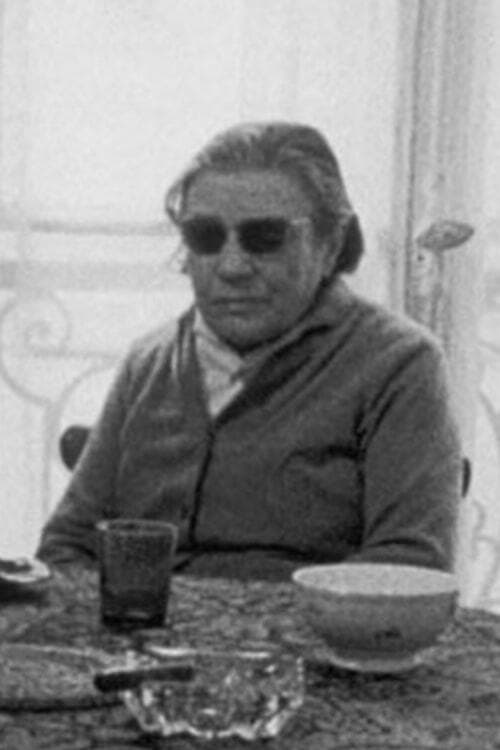
Boris Eustache — 演员 (3)
〇号 (1971) [电影] 豆瓣 IMDb 维基数据 TMDB
Numéro zéro
导演:
让·厄斯塔什
演员:
Boris Eustache
/
让·厄斯塔什
…
其它标题:
Numéro zéro
/
Odette Robert
…
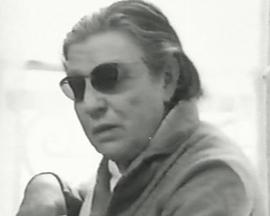
这部电影在厄斯塔什与其祖母奥代特·罗贝尔居住的公寓中拍摄。祖母复述了自己在法国历史上跨越六代人的身世。除了简短的无声序幕后,整部电影是从两个固定的机位以一个镜头拍摄的:一部在右侧拍摄奥代特,厄斯塔什于左前方背对镜头;一部近距离拍摄奥黛特。厄斯塔什通过于拍摄中在开拍版上做出标记的方式,让我们认识到两部摄影机交替工作的运行时间,一部摄影机拍摄时,另一部可以换交卷。一盘接着一盘,一共用了10盘。交卷用完时,电影结束。厄斯塔什以这样一种方式复述了历史,即“时间”不会丢失,时间等同于电影的持续展现。这部电影只在法国电视上播放过一次剪辑版,而完整版只在厄斯塔什自己的公寓中对他的 8 个朋友放映过一次。——参见《电影的虚拟生命》D.N.罗德维克 华明 华伦译
阿历克斯的照片 (1980) [电影] 豆瓣
Les photos d'Alix
导演:
让·厄斯塔什
演员:
Alix Clio-Roubaud
/
Boris Eustache
其它标题:
Les photos d'Alix
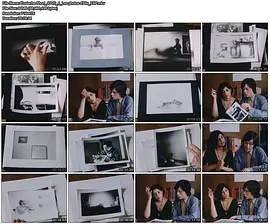
Ostensibly an informal guided commentary through personal photographs taken by Alix Cléo Roubaud for a young interviewer (Boris Eustache), Jean Eustache's Les Photos d'Alix ingeniously explores the nature of reality and perspective within the framework of documentary filmmaking. This sense of trompe l'oeil is prefigured in an early double exposed photograph of Alix's husband, novelist Jacques Roubaud taken from a London hotel room, explaining that the duality had been intentionally developed in order to simulate an elongated profile that more appropriately conforms to the traditional notion of a Hollywood style bed, a manipulation of image that is also illustrated in a subsequent photograph of an induced sunset created by selective masking. Eustache's approach to the film similarly expounds on Alix's photographic experimentation, juxtaposing the curious image of a smiling, shirtless man seemingly disembodied below the rib cage against Alix's comical, if askew anecdote on plying a friend with alcoholic beverages in order to look more relaxed as she takes his picture on a couch. In another humorous episode, Alix conveys the fond memories her father through what she describes as the most iconic image of him from her childhood, revealing a shot of a driver's ear and receded hairline taken from the back of a car, his face partially visible only through the reflection of the rearview mirror. Soon, the conversation grows even more puzzling, as the young man apparently fails to recognize himself in a photograph, Alix incongruously points out the admirable physicality of an unknown man who was accidentally captured on film, as a naked, overweight man stands on the side of the frame, and her revelry on the coincidence of having two former romantic interests converging in the same shot is seemingly reduced to the banal image of a pair of worn boots. As Alix's insights into her sources of inspiration and creative process become increasingly dissociated from the images, Eustache illustrates the point of rupture between the visual and aural, where filmed storytelling lies, not in the symmetry of information, but in its chance intersections and disjunctions.
---- from strictly film school
---- from strictly film school