Tamara Mumford — 演员 (10)
莫扎特歌剧 (2006) [电影] 豆瓣
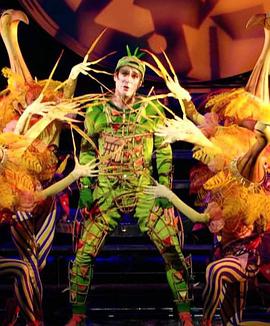
The Magic Flute
导演: 詹姆斯·莱文 演员: 马修·波伦萨尼 / 黄英
其它标题: 莫扎特《魔笛》 / The Magic Flute
埃及王子塔米诺(约瑟夫·凯泽 Joseph Kaiser 饰)在临危受难之际得到了夜女王的拯救,夜女王将自己的女儿帕米纳(Amy Carson 饰)的肖像拿给塔米诺看,美丽的帕米纳一下子就俘虏了王子的心。夜女王告诉王子,帕米纳被一位名叫萨拉斯特罗(勒内·帕佩 René Pape 饰)的男子给掳走了,如果王子能够将自己的女儿平安的带回来,就把帕米纳许配给他为妻,塔米诺欣然应允。
实际上,萨拉斯特罗并非夜女王所说的那样十恶不赦,夜女王的丈夫在死前将女儿托付给他,交由他来管教,这一举动招致了夜女王的不满,于是设下了如此的计谋。在拯救帕米纳的途中,聪慧的塔米诺渐渐识破了夜女王的阴谋。
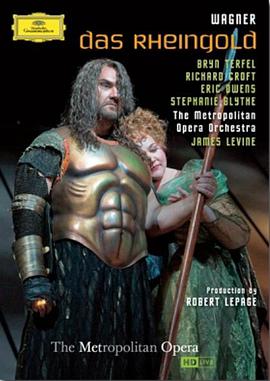
瓦格纳《莱茵的黄金》 (2010) [电影] 豆瓣
"The Metropolitan Opera HD Live" Wagner's Das Rheingold
导演: Gary Halvorson 演员: Bryn Terfel / Richard Croft
其它标题: "The Metropolitan Opera HD Live" Wagner's Das Rheingold / 大都会歌剧院高清转播系列
大都会歌剧院高清转播系列,瓦格纳的四联剧《尼伯龙人的指环》,前夜剧《莱茵的黄金》在2011年10月8日首度向全美直播,此次直播的录像在2013年11月底在上海大剧院以及上海艺术人文频道进行剧场放映和电视播出。
尼伯龙人的指环 2010-2012年大都会歌剧团版 [演出] 豆瓣
所属 演出: 尼伯龙人的指环
语言: 德语 german 剧团: Metropolitan Opera Orchestra 大都会歌剧团管弦乐团 ; Metropolitan Opera Chorus 大都会歌剧团合唱团 剧院: Metropolitan Opera House 大都会歌剧院 导演: Robert Lepage
其它标题: 2010-2012年大都会歌剧团版 编剧: Richard Wagner 作曲: Richard Wagner 演员: Deborah Voigt / Jay Hunter Morris
The plot revolves around a magic ring that grants the power to rule the world, forged by the Nibelung dwarf Alberich from gold he stole from the Rhine maidens in the river Rhine. The Ring itself as described by Wagner is a Rune-magic taufr ("tine", or "talisman") intended to rule the feminine multiplicative power by a fearful magical act termed as 'denial of love' ("Liebesverzicht"). With the assistance of the god Loge, Wotan – the chief of the gods – steals the ring from Alberich, but is forced to hand it over to the giants, Fafner and Fasolt in payment for building the home of the gods, Valhalla, or they will take Freia, who provides the gods with the golden apples that keep them young. Wotan's schemes to regain the ring, spanning generations, drive much of the action in the story. His grandson, the mortal Siegfried, wins the ring by slaying Fafner (who slew Fasolt for the ring) – as Wotan intended – but is eventually betrayed and slain as a result of the intrigues of Alberich's son Hagen, who wants the ring for himself. Finally, the Valkyrie Brünnhilde – Siegfried's lover and Wotan's daughter who lost her immortality for defying her father in an attempt to save Siegfried's father Sigmund – returns the ring to the Rhine maidens as she commits suicide on Siegfried's funeral pyre. Hagen is drowned as he attempts to recover the ring. In the process, the gods and Valhalla are destroyed.
Details of the storylines can be found in the articles on each music drama.
Wagner created the story of the Ring by fusing elements from many German and Scandinavian myths and folk tales. The Old Norse Edda supplied much of the material for Das Rheingold, while Die Walküre was largely based on the Völsunga saga. Siegfried contains elements from the Eddur, the Völsunga saga and Thidrekssaga. The final Götterdämmerung, draws from the 12th-century German poem, the Nibelungenlied, which appears to have been the original inspiration for the Ring.
The Ring has been the subject of myriad interpretations. For example, George Bernard Shaw, in The Perfect Wagnerite, argues for a view of The Ring as an essentially socialist critique of industrial society and its abuses. Robert Donington in Wagner's Ring And Its Symbols interprets it in terms of Jungian psychology, as an account of the development of unconscious archetypes in the mind, leading towards individuation.
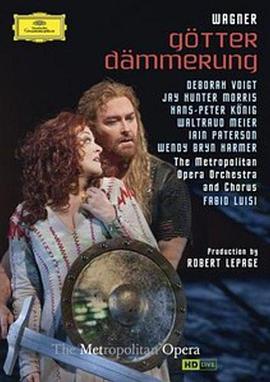
众神的黄昏 2012年大都会歌剧团版 [演出] 豆瓣
所属 演出: 众神的黄昏
语言: german 德语 剧团: Metropolitan Opera Orchestra 大都会歌剧团管弦乐团 ; Metropolitan Opera Chorus 大都会歌剧团合唱团 剧院: Metropolitan Opera House 大都会歌剧院 导演: Robert Lepage
其它标题: 2012年大都会歌剧团版 编剧: Richard Wagner 作曲: Richard Wagner 演员: Deborah Voigt / Jay Hunter Morris
Prologue
The three Norns, daughters of Erda, gather beside Brünnhilde's rock, weaving the rope of Destiny. They sing of the past and the present, and of the future when Wotan will set fire to Valhalla to signal the end of the gods. Without warning, their rope breaks. Lamenting the loss of their wisdom, the Norns disappear.
As day breaks, Siegfried and Brünnhilde emerge from their cave, high on a mountaintop surrounded by magic fire. Brünnhilde sends Siegfried off to new adventures, urging him to keep their love in mind. As a pledge of fidelity, Siegfried gives her the ring of power that he took from Fafner's hoard. Bearing Brünnhilde's shield and mounting her horse Grane, Siegfried rides away as an orchestral interlude (Siegfried's Journey to the Rhine) starts.
Act 1
The act begins in the Hall of the Gibichungs, a population dwelling by the Rhine. Gunther, lord of the Gibichungs, sits enthroned. His half-brother and chief minister, Hagen, advises him to find a wife for himself and a husband for their sister Gutrune. He suggests Brünnhilde for Gunther's wife, and Siegfried for Gutrune's husband. He reminds Gutrune that he has given her a potion that she can use to make Siegfried forget Brünnhilde and fall in love with Gutrune; under its influence, Siegfried will win Brünnhilde for Gunther. Gunther and Gutrune agree enthusiastically with this plan.
Siegfried appears at Gibichung Hall, seeking to meet Gunther. Gunther extends his hospitality to the hero, and Gutrune offers him the love potion. Unaware of the deception, Siegfried toasts Brünnhilde and their love. Drinking the potion, he loses his memory of Brünnhilde and falls in love with Gutrune instead. In his drugged state, Siegfried offers to win a wife for Gunther, who tells him about Brünnhilde and the magic fire which only a fearless person can cross. They swear blood-brotherhood (Hagen holds the drinking horn in which they mix their blood, but he does not join in the oath) and leave for Brünnhilde's rock. Hagen, left on guard duty, gloats that his so-called masters are unwittingly bringing the ring to him (Monologue: Hagen's watch).
Meanwhile, Brünnhilde is visited by her Valkyrie sister Waltraute, who tells her that Wotan returned from his wanderings with his spear shattered. Wotan is dismayed at losing his spear, as it has all the treaties and bargains he has made—everything that gives him power—carved into its shaft. Wotan ordered branches of the World tree, to be piled around Valhalla; sent his magic ravens to spy on the world and bring him news; and currently waits in Valhalla for the end. Waltraute begs Brünnhilde to return the ring to the Rhinemaidens, since the ring's curse is now affecting their father, Wotan. However, Brünnhilde refuses to relinquish Siegfried's token of love, and Waltraute rides away in despair.
Siegfried arrives, disguised as Gunther by using the Tarnhelm, and claims Brünnhilde as his wife. Though Brünnhilde resists violently, Siegfried overpowers her, snatching the ring from her hand and placing it on his own.
Act 2
Hagen, waiting by the bank of the Rhine, is visited in his semi-waking sleep (sitting up, eyes open, but motionless) by his father, Alberich. On Alberich's urging, he swears to kill Siegfried and acquire the ring. Alberich exits as dawn breaks. Siegfried arrives via Tarnhelm-magic, having resumed his natural form and left Brünnhilde on the boat with Gunther. Hagen summons the Gibichung vassals to welcome Gunther and his bride. He does this by sounding the war-alarm. The vassals are surprised to learn that the occasion is not battle, but their master's wedding and party.
Gunther leads in a downcast Brünnhilde, who is astonished to see Siegfried. Noticing the ring on Siegfried's hand, she realizes she has been betrayed—that the man who conquered her was not Gunther, but Siegfried in disguise. She denounces Siegfried in front of Gunther's vassals and accuses Siegfried of having seduced her himself. Siegfried, who does not remember ever having been Brünhilde's lover, swears on Hagen's spear that her accusations are false. Brünnhilde seizes the tip of the spear and swears that they are true. Once again Hagen supervises silently as others take oaths to his advantage. But this time, since the oath is sworn on a weapon, the understanding is that if the oath is proven false, the weapon's owner should avenge it by killing the perjurer with that weapon. Siegfried then leads Gutrune and the bystanders off to the wedding feast, leaving Brünnhilde, Hagen, and Gunther alone by the shore. Deeply shamed by Brünnhilde's outburst, Gunther agrees to Hagen's suggestion that Siegfried must be killed in order for Gunther to regain his standing. Brünnhilde, seeking revenge for Siegfried's manifest treachery, joins the plot and tells Hagen that Siegfried would be vulnerable to a stab in the back. Hagen and Gunther decide to lure Siegfried on a hunting-trip and murder him. They sing a trio in which Brünnhilde and Gunther vow in the name of Wotan, "guardian of oaths", to kill Siegfried, while Hagen repeats his pledge to Alberich: to acquire the ring and rule the world through its power.
Act 3
In the woods by the bank of the Rhine, the Rhinemaidens mourn the lost Rhine gold. Siegfried happens by, separated from the hunting party. The Rhinemaidens urge him to return the ring and avoid its curse, but he laughs at them and says he prefers to die rather than bargain for his life. They swim away, predicting that Siegfried will die and that his heir, a lady, will treat them more fairly.
Siegfried rejoins the hunters, who include Gunther and Hagen. While resting, he tells them about the adventures of his youth. Hagen gives him another potion, which restores his memory, and he tells of discovering the sleeping Brünnhilde and awakening her with a kiss. Hagen stabs him in the back with his spear. The others look on in horror, and Hagen explains in three words ("Meineid rächt' ich!" – "I have avenged perjury!") that since Siegfried admitted loving Brünnhilde, the oath he swore on Hagen's spear was obviously false, therefore it was Hagen's duty to kill him with it. Hagen calmly walks away into the wood. Siegfried recollects his awakening of Brünnhilde and dies. His body is carried away in a solemn funeral procession (Siegfried's funeral march) that forms the interlude as the scene is changed and recapitulates many of the themes associated with Siegfried and the Wälsungs.
Back in the Gibichung Hall, Gutrune awaits Siegfried's return. Hagen arrives ahead of the funeral party. Gutrune is devastated when Siegfried's corpse is brought in. Gunther blames Siegfried's death on Hagen, who replies that Siegfried had incurred the penalty of his false oath, and further, claims the ring on Siegfried's finger by right of conquest. When Gunther objects, Hagen appeals to the vassals to support his claim. Gunther draws his sword but Hagen attacks and easily kills him. However, as Hagen moves to take the ring, Siegfried's hand rises threateningly. Hagen recoils in fear.
Brünnhilde makes her entrance and issues orders for a huge funeral pyre to be assembled by the river (the start of the Immolation Scene). She takes the ring and tells the Rhinemaidens to claim it from her ashes, once fire has cleansed it of its curse. Lighting the pyre with a firebrand, she sends Wotan's ravens home with "anxiously longed-for tidings", and to fly by the magic fire for Loge to fulfill his task. After an apostrophe to the dead hero, Brünnhilde mounts her horse Grane and rides into the flames.
A sequence of leitmotifs portray the fire flaring up, and the hall of the Gibichungs catching fire and collapsing. The Rhine overflows its banks, quenching the fire, and the Rhinemaidens swim in to claim the ring. Hagen tries to stop them but they drag him into the depths and drown him. As they celebrate the return of the ring and its gold to the river, a red glow is seen in the sky. As the Gibichungs watch, the interior of Valhalla is finally seen, with gods and heroes visible as described by Waltraute in Act 1. Flames flare up in the Hall of the Gods, hiding it and them from sight completely. As the gods are consumed in the flames, the curtain falls to the sound of the Erlösungsmotif—the redemption leitmotif.
莱茵河的黄金 2010年大都会歌剧团版 [演出] 豆瓣
所属 演出: 莱茵河的黄金
语言: german 德语 剧团: Metropolitan Opera Orchestra 大都会歌剧团管弦乐团 剧院: Metropolitan Opera House 大都会歌剧院 导演: Robert Lepage
其它标题: 2010年大都会歌剧团版 编剧: Richard Wagner 作曲: Richard Wagner 演员: Bryn Terfel / Stephanie Blythe
Scene 1
At the bottom of the Rhine, the three Rhinemaidens, Woglinde, Wellgunde, and Floßhilde, play together. Alberich, a Nibelung dwarf, appears from a deep chasm and tries to woo them. The maidens mock his advances and he grows angry – he chases them, but they elude, tease and humiliate him. A sudden ray of sunshine pierces the depths, to reveal the Rhine gold. The maidens sing a hymn of praise to the gold, and Alberich asks what it is. They explain that the gold, which their father has ordered them to guard, can be made into a magic ring which gives power to rule the world, if its bearer first renounces love. The maidens think they have nothing to fear from the lustful dwarf, but Alberich, embittered by their mockery, curses love, seizes the gold and returns to his chasm, leaving them screaming in dismay.
Scene 2
Wotan, ruler of the gods, is asleep on a mountaintop, with a magnificent castle behind him. His wife, Fricka, wakes Wotan, who salutes their new home. Fricka reminds him of his promise to the giants Fasolt and Fafner, who built the castle, that he would give them Fricka's sister Freia, the goddess of youth and beauty, as payment. Fricka is worried for her sister, but Wotan is confident that Loge, the demigod of fire, will find an alternative payment.
Freia enters in a panic, followed by Fasolt and Fafner. Fasolt demands that Freia be given up. He points out that Wotan's authority is sustained by the treaties carved into his spear, including his contract with the giants, which Wotan therefore cannot violate. Donner, god of thunder, and Froh, god of sunshine, arrive to defend Freia, but Wotan cannot permit the use of force to break the agreement. Hoping that Loge will arrive with the alternative payment he had promised, Wotan tries to stall.
When Loge arrives, his initial report is discouraging: nothing is more valuable to men than love, so, there is apparently no possible alternative payment besides Freia. Loge was able to find only one instance where someone willingly gave up love for something else: Alberich the Nibelung had renounced love, stolen the Rhine gold and made a powerful magic ring out of it. A discussion of the ring and its powers ensues, to which the giants listen carefully, and everyone finds good reasons for wanting to own it. Fafner makes a counter-offer: the giants will accept the Nibelung's treasure in payment, instead of Freia. When Wotan tries to haggle, the giants depart, taking Freia with them as hostage and promising to keep her forever unless the gods ransom her by obtaining, and giving them, the Nibelung's gold, by the end of the day.
Freia's golden apples had kept the gods eternally young, but in her absence they begin to age and weaken. In order to redeem Freia, Wotan resolves to travel with Loge to Alberich's subterranean kingdom to obtain the gold.
Scene 3
In Nibelheim, Alberich has enslaved the rest of the Nibelung dwarves with the power of the ring. He has forced his brother Mime, a skillful smith, to create a magic helmet, the Tarnhelm. Alberich demonstrates the Tarnhelm's power by making himself invisible, the better to torment his subjects.
Wotan and Loge arrive and happen upon Mime, who tells them of the misery under Alberich's rule. Alberich returns, driving his slaves to pile up a huge mound of gold. He boasts to the visitors about his plans to conquer the world using the power of the ring. Loge asks how he can protect himself against a thief while he sleeps. Alberich replies the Tarnhelm will hide him, by allowing him to turn invisible or change his form. Loge expresses doubt and requests a demonstration. Alberich complies by transforming himself into a giant snake; Loge acts suitably impressed, and then asks whether Alberich can also reduce his size, which would be very useful for hiding. Alberich transforms himself into a toad. Wotan and Loge seize him and drag him up to the surface.
Scene 4
Back on the mountaintop, Wotan and Loge force Alberich to exchange his wealth for his freedom. He summons the Nibelungen, who bring up the hoard of gold. He then asks for the return of the Tarnhelm, but Loge says that it is part of his ransom. Alberich still hopes he can keep the ring, but Wotan demands it, and when Alberich refuses, Wotan tears it from Alberich's hand and puts it on his own finger. Crushed by his loss, Alberich lays a curse on the ring: until it should return to him, whoever possesses it will live in anxiety, and will eventually be robbed of it and killed.
The gods reconvene. Fasolt and Fafner return with Freia. Fasolt, reluctant to release her, insists that the gold be piled high enough to hide her from view. Wotan is forced to relinquish the Tarnhelm, to help cover Freia completely. However, Fasolt spots a remaining crack in the gold, through which one of Freia's eyes can be seen. Loge says that there is no more gold, but Fafner, who has noticed the ring on Wotan's finger, demands that Wotan add it to the pile, to block the crack. Loge protests that the ring belongs to the Rheinmaidens, and Wotan angrily declares that he intends to keep it for his own. As the giants seize Freia and start to leave, Erda, the earth goddess, appears and warns Wotan of impending doom, urging him to give up the cursed ring. Troubled, Wotan calls the giants back and surrenders the ring. The giants release Freia and begin dividing the treasure, but they quarrel over the ring itself. Fafner clubs Fasolt to death. Wotan, horrified, realizes that Alberich's curse has terrible power.
Donner summons a thunderstorm to clear the air, after which Froh creates a rainbow bridge that stretches to the gate of the castle. Wotan leads the gods across the bridge to the castle, which he names Valhalla. Loge does not follow; he says in an aside that he is tempted to destroy the treacherous gods by fire – he will think it over. Far below, the Rhine maidens mourn the loss of their gold, and condemn the gods as false and cowardly.
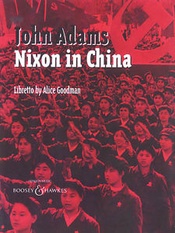
尼克松在中国 2011年大都会歌剧团版 [演出] 豆瓣
所属 演出: 尼克松在中国
语言: english 英语 剧团: Metropolitan Opera Orchestra 大都会歌剧团管弦乐团 ; Metropolitan Opera Chorus 大都会歌剧团合唱团 ; Metropolitan Opera Ballet 大都会歌剧团芭蕾舞团 剧院: Metropolitan Opera House 大都会歌剧院 导演: Peter Sellars
其它标题: 2011年大都会歌剧团版 编剧: Alice Goodman 作曲: John Adams 演员: James Maddalena / Janis Kelly
Time: February 1972
Place: In and around Peking
Act 1
At Peking Airport, contingents of the Chinese military await the arrival of the American presidential aircraft "Spirit of '76", carrying Nixon and his party. The military chorus sings the Three Rules of Discipline and Eight Points for Attention. After the aircraft touches down, Nixon emerges with Pat Nixon and Henry Kissinger. The president exchanges stilted greetings with the Chinese premier, Chou En-lai, who heads the welcoming party. Nixon speaks of the historical significance of the visit, and of his hopes and fears for the encounter ("News has a kind of mystery"). The scene changes to Chairman Mao's study, where the Chairman awaits the arrival of the presidential party. Nixon and Kissinger enter with Chou, and Mao and the president converse in banalities as photographers record the scene. In the discussion that follows, the westerners are confused by Mao's gnomic and frequently impenetrable comments, which are amplified by his secretaries and often by Chou. The scene changes again, to the evening's banquet in the Great Hall of the People. Chou toasts the American visitors ("We have begun to celebrate the different ways") and Nixon responds ("I have attended many feasts"), after which the toasts continue as the atmosphere becomes increasingly convivial. Nixon, a politician who rose to prominence on anti-communism, announces: "Everyone, listen; just let me say one thing. I opposed China, I was wrong".
Act 2
Pat Nixon is touring the city, with guides. Factory workers present her with a small model elephant which, she delightedly informs them, is the symbol of the Republican Party which her husband leads. She visits a commune where she is greeted enthusiastically, and is captivated by the children's games that she observes in the school. "I used to be a teacher many years ago", she sings, "and now I'm here to learn from you". She moves on to the Summer Palace, where in a contemplative aria ("This is prophetic") she envisages a peaceful future for the world. In the evening the presidential party, as guests of Mao's wife Chiang Ch'ing, attends the Peking Opera for a performance of a political ballet-opera The Red Detachment of Women. This depicts the downfall of a cruel and unscrupulous landlord's agent (played by an actor who strongly resembles Kissinger) at the hands of brave women revolutionary workers. The action deeply affects the Nixons; at one point Pat rushes onstage to help a peasant girl she thinks is being whipped to death. As the stage action ends, Chiang Ch'ing, angry at the apparent misinterpretation of the piece's message, sings a harsh aria ("I am the wife of Mao Tse-tung"), praising the Cultural Revolution and glorifying her own part in it. A revolutionary chorus echoes her words.
Act 3
On the last evening of the visit, as they lie in their respective beds, the chief protagonists muse on their personal histories in a surreal series of interwoven dialogues. Nixon and Pat recall the struggles of their youth; Nixon evokes wartime memories ("Sitting round the radio"). Mao and Chiang Ch'ing dance together, as the Chairman remembers "the tasty little starlet" who came to his headquarters in the early days of the revolution. As they reminisce, Chiang Ch'ing asserts that "the revolution must not end". Chou meditates alone; the opera finishes on a thoughtful note with his aria "I am old and I cannot sleep", asking: "How much of what we did was good?" The early morning birdcalls are summoning him to resume his work, while "outside this room the chill of grace lies heavy on the morning grass".