乌尔里克·奥廷格 — 导演 (9)
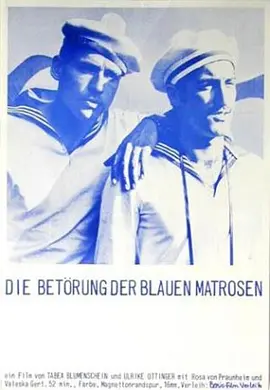
蓝水手的陶醉 (1975) [电影] 豆瓣 TMDB IMDb 维基数据
Die Betörung der blauen Matrosen
导演:
塔贝亚·布卢门谢因
/
乌尔里克·奥廷格
演员:
Valeska Gert
/
Tabea Blumenschein
…
其它标题:
Die Betörung der blauen Matrosen
/
The Enchantment of the Blue Sailors
…
In collage sequences, the surrogate of synthetic sensuality takes form and seduces the sailors in the guise of a Hawaiian girl. In ritual punctuation, she distributes deaths which seemingly only the hardy siren Fatality can survive.
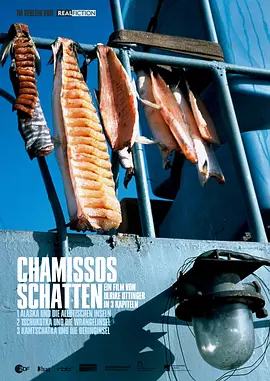
Chamisso’s Shadow (2016) [电影] 豆瓣 维基数据 IMDb TMDB
Chamissos Schatten
导演:
乌尔里克·奥廷格
演员:
汉斯·齐施勒
/
布尔格哈特·克劳斯纳
…
其它标题:
Chamissos Schatten
/
Chamisso's Shadow
…
A three-chapter 720-minute cinematic exploration inspired by historical explorers like Adelbert von Chamisso. The film intertwines past and present travel experiences, using readings and visual materials to explore themes of cultural knowledge loss and change, drawing parallels to Chamisso’s “Wondrous Story” of Schlemihl and his shadow.
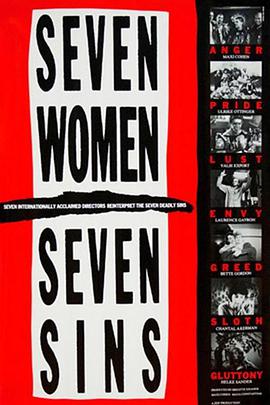
七个女人七宗罪 (1986) [电影] 豆瓣 IMDb 维基数据 TMDB
Seven Women, Seven Sins
导演:
香特尔·阿克曼
/
Maxi Cohen
…
演员:
德菲因·塞里格
其它标题:
Seven Women, Seven Sins
/
Superbia 傲慢
…
Superbia — The Pride is the first of the Seven Deadly Sins.
The introduction is made thorugh early allegorical forms and figures (triumphal procession, dance of death, Baroque tragedy etc.) The triumphal procession of the giant haystack as a symbol of human vanities becomes a military parade of abrupt, functional and arrogant gestures. The most diverse musical fragments and rhythms intone the montage of details in the staged triumphal procession, juxtaposed with documentary images, including marches, ticker-tape parades and military review.
The introduction is made thorugh early allegorical forms and figures (triumphal procession, dance of death, Baroque tragedy etc.) The triumphal procession of the giant haystack as a symbol of human vanities becomes a military parade of abrupt, functional and arrogant gestures. The most diverse musical fragments and rhythms intone the montage of details in the staged triumphal procession, juxtaposed with documentary images, including marches, ticker-tape parades and military review.
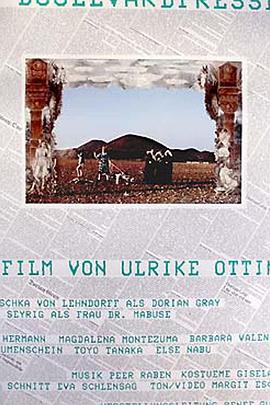
八卦小报图片中的多里安·格雷 (1984) [电影] 豆瓣 IMDb 维基数据 TMDB
Dorian Gray im Spiegel der Boulevardpresse
导演:
Ulrike Ottinger
演员:
范若施卡·冯·兰朵夫
/
德菲因·塞里格
…
其它标题:
Dorian Gray im Spiegel der Boulevardpresse
/
The Image of Dorian Gray in the Yellow Press
…
The final installment in Ulrike Ottinger’s Berlin Trilogy (following TICKET OF NO RETURN and FREAK ORLANDO) casts Delphine Seyrig as the nefarious Fritz Lang supervillain Dr. Mabuse, here the head of a powerful media empire that seeks to create headlines by manufacturing (and then publicly destroying) its own celebrity: the wealthy, handsome playboy Dorian Gray.
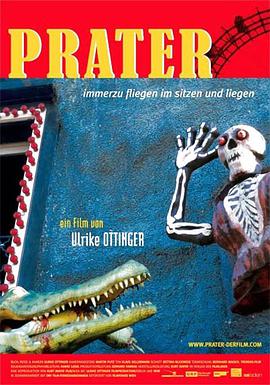
普拉特公园 (2007) [电影] 豆瓣 TMDB IMDb 维基数据
Prater
导演:
Ulrike Ottinger
演员:
彼得·菲茨
/
Veruschka von Lehndorff
…
其它标题:
Prater
Voted Best Documentary of 2008 by German film critics, PRATER is a feast of extravagant imagery portraying the past and present of Prater, Vienna’s famed amusement park. Director Ottinger (FREAK ORLANDO, MADAME X: ABSOLUTE RULER) is in her element shaping this colorful odyssey with a down-the-rabbit-hole feel. Shiver-inducing wonder and horror attend views of sideshow attractions, human oddities, and sinister sculpted icons including the genies, dragons, giants, and monsters that make up this surreal kingdom.
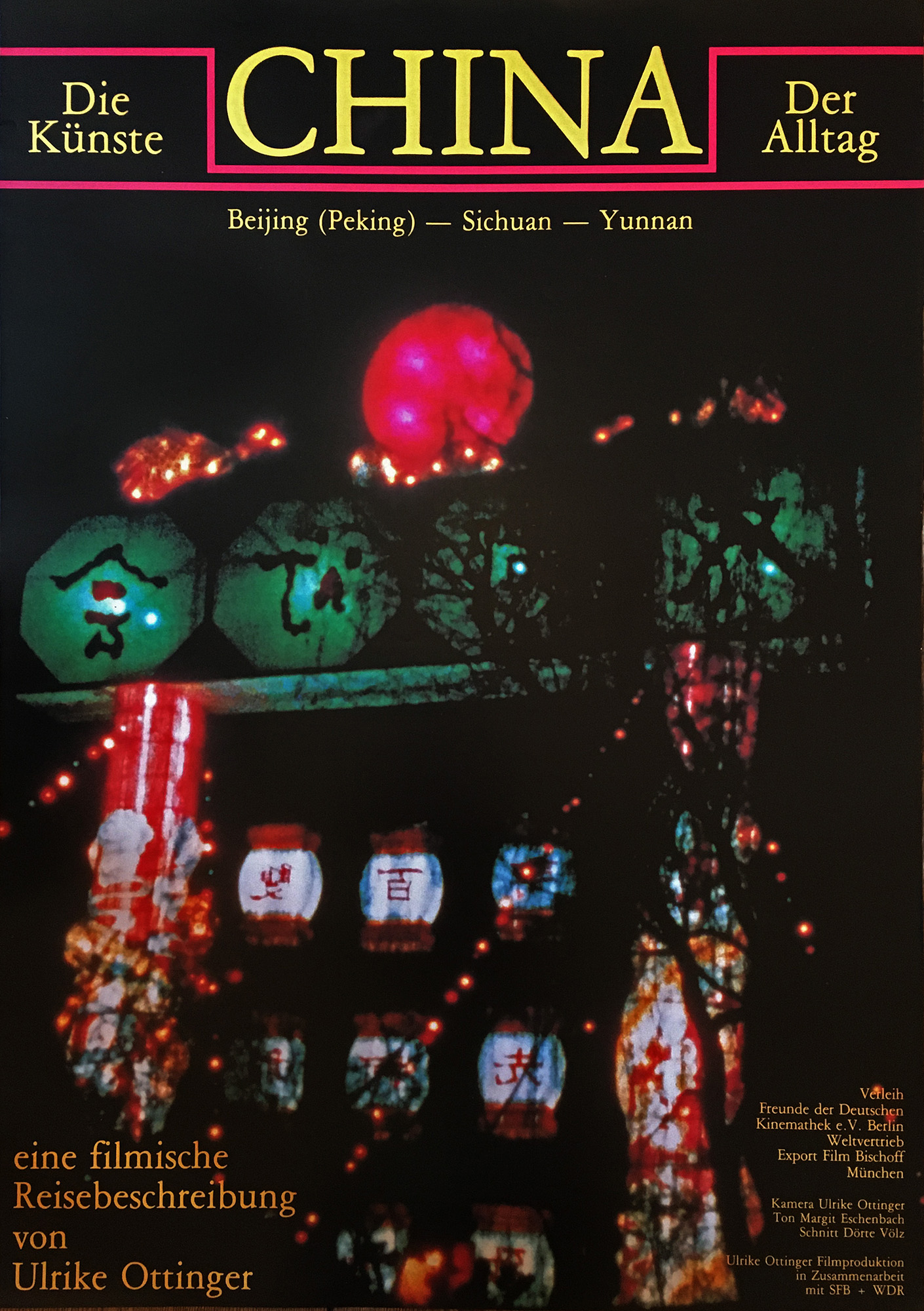
中国:艺术与生活 (1986) [电影] 豆瓣 TMDB IMDb
China. Die Künste - der Alltag. Eine filmische Reisebeschreibung
导演:
Ulrike Ottinger
其它标题:
China. Die Künste - der Alltag. Eine filmische Reisebeschreibung
/
China. Die Künste – Der Alltag
…
在这个四个半小时的纪录片或电影短篇小说中,乌尔里克·奥廷格试图传授看待外国文化的新方式。 “在我以前的电影中,我处理过异国情调、少数民族以及他们在自己文化中的不同角色行为等主题。现在我有兴趣扩展这个主题,在异国他乡了解“真正的异国情调”不同的文化。我正试图用我的相机就异国情调作为一个观点问题进行视觉讨论。
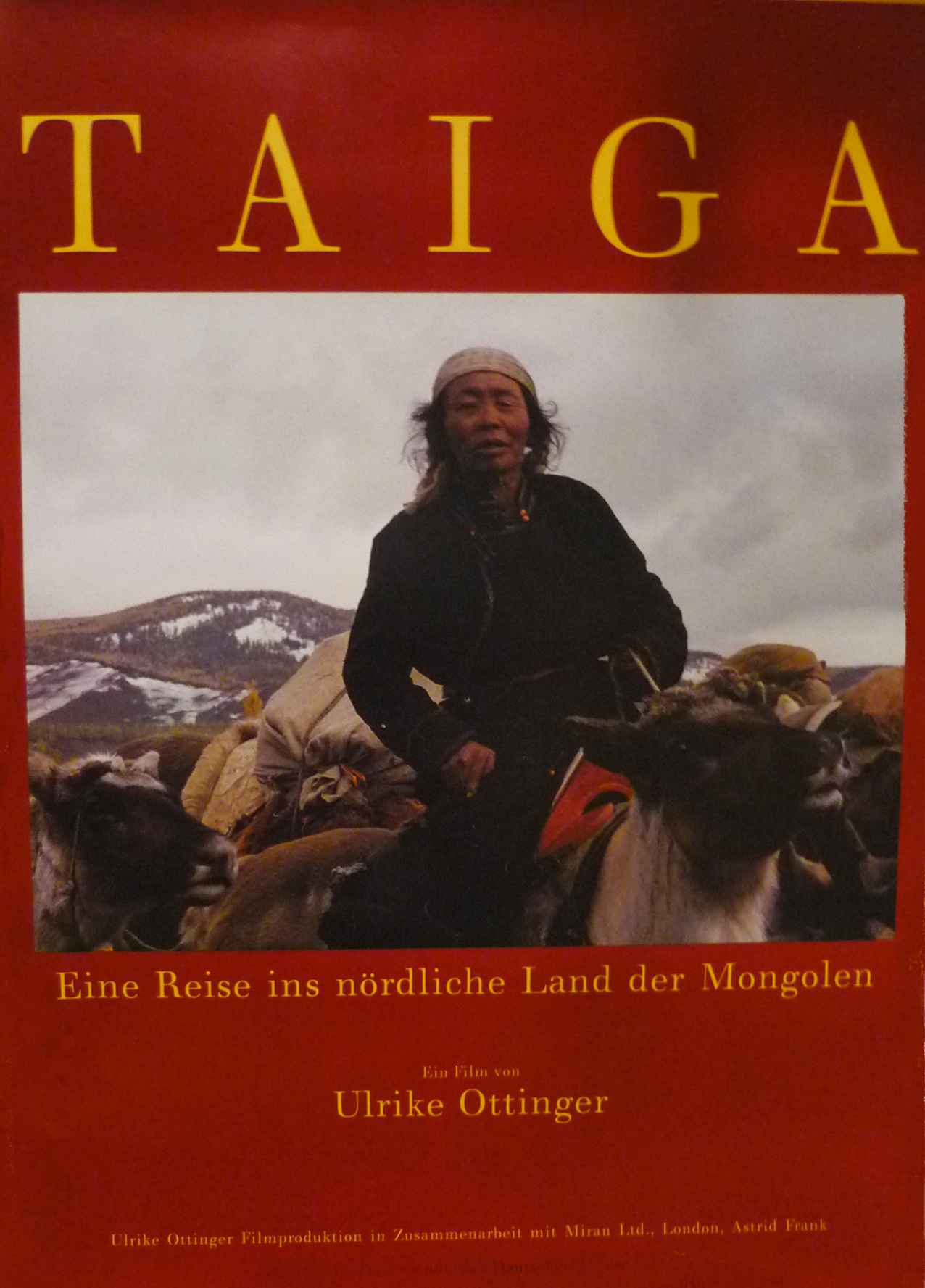
蒙古生活 (1992) [电影] 豆瓣 TMDB 维基数据 IMDb
Taiga
导演:
Ulrike Ottinger
其它标题:
Taiga
The films of Ulrike Ottinger (b. 1942) are shaped by a fascination with place, a topical and topographical curiosity that drives their wanderlust across locales both imagined and real, from the fantastically spectral Berlin of the early Freak Orlando and the nostalgia shrouded Viennese amusement park of Prater, to the vast, remote steppes of Central Asia explored in Taiga and the busy banquet halls of present-day Seoul in The Korean Wedding Chest. Ottinger’s fiction films kaleidoscope a carnivalesque vision of the world, staging unpredictable encounters with a remarkably motley cast of “freak” outsiders – lovers, pirates, brigands, grafters and their adversaries. While Ottinger’s documentaries, in contrast, focus insightfully on the quotidian reality of everyday people, but are no less colorful and exuberant in their spirited exploration of the playful and poetic intersection of the traditional and contemporary.
Born in Konstanz, Germany, Ottinger spent much of the 1960s working as a painter in Paris – where she also studied with the likes of Claude Lévi-Strauss and Louis Althusser – before launching her film career in Berlin in the early 1970s. Ottinger’s earliest films grow out of her close association with various Berlin subcultures and art scenes and involved collaborations with such luminary figures as Tabea Blumenschein, as well as Irm Hermann, Kurt Raab and Magdalena Montezuma, actors central to the Fassbinder scene. International recognition and reknown followed her first feature film Madame X (1977), which especially drew the interest of queer and feminist critics and scholars in the U.S. To this day Ottinger’s films are held up for their radicalness, not only of narrative but also of their treatment of sexuality and of gender itself. A Renaissance woman, Ottinger writes her own scripts, frequently operates the camera and even designs the often elaborate sets and costumes showcased in her films.
The fall of the Berlin Wall and a massive funding crisis for “art cinema” coincided at the beginning of the 1990s to inspire a distinct shift in Ottinger’s cinema away from the theatrical extravagances of her early film work to a mode of carefully observed documentary. Yet uniting and cross-pollinating Ottinger’s documentary and fiction work are a set of running themes – a concern for the normative function of power and its ability to repress and ostracize difference; a nostalgia for the cosmopolitism of pre-war Central Europe; and a delight in the richness and beauty of “other cultures,” be they popular, archaic or simply non-Western.
Taiga
Directed by Ulrike Ottinger.
Germany 1992, 16mm, color, 501 min. Mongolian and Tuvinian with English subtitles
Ottinger returned to Mongolia to craft her incredible epic documentary portrait of reindeer herders on the far Northern steppes. While offering rare glimpses into the shamanic ceremonies, hunts, weddings and amusements that color the herders’ lives, Taiga uses its nine hours to resist any notion of the nomads as simply “exotic” by creating a fully immersive encounter with the Mongolians daily routines and rituals. Bearing mesmerizing witness to a world seemingly out of time, Taiga is ultimately a study in contrasts: between the vast steppes and the intimacy of the nomads’ private spaces, between the mobility of the nomadic life and the fixity of Ottinger’s camera, between pre-modern practices and their contemporary variations.
Born in Konstanz, Germany, Ottinger spent much of the 1960s working as a painter in Paris – where she also studied with the likes of Claude Lévi-Strauss and Louis Althusser – before launching her film career in Berlin in the early 1970s. Ottinger’s earliest films grow out of her close association with various Berlin subcultures and art scenes and involved collaborations with such luminary figures as Tabea Blumenschein, as well as Irm Hermann, Kurt Raab and Magdalena Montezuma, actors central to the Fassbinder scene. International recognition and reknown followed her first feature film Madame X (1977), which especially drew the interest of queer and feminist critics and scholars in the U.S. To this day Ottinger’s films are held up for their radicalness, not only of narrative but also of their treatment of sexuality and of gender itself. A Renaissance woman, Ottinger writes her own scripts, frequently operates the camera and even designs the often elaborate sets and costumes showcased in her films.
The fall of the Berlin Wall and a massive funding crisis for “art cinema” coincided at the beginning of the 1990s to inspire a distinct shift in Ottinger’s cinema away from the theatrical extravagances of her early film work to a mode of carefully observed documentary. Yet uniting and cross-pollinating Ottinger’s documentary and fiction work are a set of running themes – a concern for the normative function of power and its ability to repress and ostracize difference; a nostalgia for the cosmopolitism of pre-war Central Europe; and a delight in the richness and beauty of “other cultures,” be they popular, archaic or simply non-Western.
Taiga
Directed by Ulrike Ottinger.
Germany 1992, 16mm, color, 501 min. Mongolian and Tuvinian with English subtitles
Ottinger returned to Mongolia to craft her incredible epic documentary portrait of reindeer herders on the far Northern steppes. While offering rare glimpses into the shamanic ceremonies, hunts, weddings and amusements that color the herders’ lives, Taiga uses its nine hours to resist any notion of the nomads as simply “exotic” by creating a fully immersive encounter with the Mongolians daily routines and rituals. Bearing mesmerizing witness to a world seemingly out of time, Taiga is ultimately a study in contrasts: between the vast steppes and the intimacy of the nomads’ private spaces, between the mobility of the nomadic life and the fixity of Ottinger’s camera, between pre-modern practices and their contemporary variations.

十二把椅子 (2004) [电影] 豆瓣 IMDb 维基数据 TMDB
Zwölf Stühle
导演:
Ulrike Ottinger
演员:
Georgiy Deliev
/
Геннадий Скарга
…
其它标题:
Zwölf Stühle
/
Twelve Chairs
…
...Her son-in-law, Ippolit Matwejewitch Worobjaninow, is a former nobleman and a dandy who is currently wasting away as a small town magistrate in charge of civil marriages. He eagerly takes up the quest to find the treasure. Meanwhile, over the years, the twelve chairs have been dispersed all over the country. However, Worobjaninow is not the only one in pursuit of the treasure. Hot on its trail are Ostap Bender, a clever and colorful conman, as well as Father Fjodor, a priest to whom the wealthy aristocrat has also confessed her secret. Thus begins a wild chase that ranges from North to South, West to East, across water and land, from the country to the city.