乌尔里克·奥廷格 — 编剧 (5)
Chamisso’s Shadow (2016) [电影] 豆瓣 维基数据 IMDb TMDB
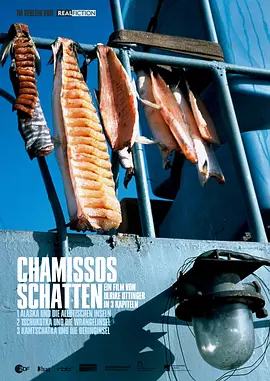
Chamissos Schatten
导演:
乌尔里克·奥廷格
演员:
汉斯·齐施勒
/
布尔格哈特·克劳斯纳
…
其它标题:
Chamissos Schatten
/
Chamisso's Shadow
…
A three-chapter 720-minute cinematic exploration inspired by historical explorers like Adelbert von Chamisso. The film intertwines past and present travel experiences, using readings and visual materials to explore themes of cultural knowledge loss and change, drawing parallels to Chamisso’s “Wondrous Story” of Schlemihl and his shadow.

The Korean Wedding Chest (2009) [电影] 豆瓣 IMDb 维基数据 TMDB
Die koreanische Hochzeitstruhe
导演:
乌尔莱克·奥汀格
演员:
乌尔莱克·奥汀格
其它标题:
Die Koreanische Hochzeitstruhe
/
Die koreanische Hochzeitstruhe
…
According to tradition, a Korean groom offers an elaborate wedding chest to his bride's parents. Dressed in traditional garb, he carries its meticulously layered treasures, each one prescribed by centuries-old custom, strapped to his back all the way to their door. Venerable filmmaker Ulrike Ottinger delicately unpacks the ornate rituals and complex mores of the Korean wedding rite. While clearly reverent of the past, Korea also has a pervasive modern wedding industry, which amplifies the drive for everything to be picture perfect, down to the last highly codified detail. The traditional Pe Baek ceremony, which sees the newly married couple receive their parents, is now awkwardly, and rather hilariously, run by wedding assistants who physically lift relatives into position. Like a polite guest, however, Ottinger never interrupts, allowing her poetic images to speak for themselves as old and new Korea marry in this fascinating cultural portrait.
蒙古生活 (1992) [电影] 豆瓣 TMDB 维基数据 IMDb
Taiga
导演:
Ulrike Ottinger
其它标题:
Taiga
The films of Ulrike Ottinger (b. 1942) are shaped by a fascination with place, a topical and topographical curiosity that drives their wanderlust across locales both imagined and real, from the fantastically spectral Berlin of the early Freak Orlando and the nostalgia shrouded Viennese amusement park of Prater, to the vast, remote steppes of Central Asia explored in Taiga and the busy banquet halls of present-day Seoul in The Korean Wedding Chest. Ottinger’s fiction films kaleidoscope a carnivalesque vision of the world, staging unpredictable encounters with a remarkably motley cast of “freak” outsiders – lovers, pirates, brigands, grafters and their adversaries. While Ottinger’s documentaries, in contrast, focus insightfully on the quotidian reality of everyday people, but are no less colorful and exuberant in their spirited exploration of the playful and poetic intersection of the traditional and contemporary.
Born in Konstanz, Germany, Ottinger spent much of the 1960s working as a painter in Paris – where she also studied with the likes of Claude Lévi-Strauss and Louis Althusser – before launching her film career in Berlin in the early 1970s. Ottinger’s earliest films grow out of her close association with various Berlin subcultures and art scenes and involved collaborations with such luminary figures as Tabea Blumenschein, as well as Irm Hermann, Kurt Raab and Magdalena Montezuma, actors central to the Fassbinder scene. International recognition and reknown followed her first feature film Madame X (1977), which especially drew the interest of queer and feminist critics and scholars in the U.S. To this day Ottinger’s films are held up for their radicalness, not only of narrative but also of their treatment of sexuality and of gender itself. A Renaissance woman, Ottinger writes her own scripts, frequently operates the camera and even designs the often elaborate sets and costumes showcased in her films.
The fall of the Berlin Wall and a massive funding crisis for “art cinema” coincided at the beginning of the 1990s to inspire a distinct shift in Ottinger’s cinema away from the theatrical extravagances of her early film work to a mode of carefully observed documentary. Yet uniting and cross-pollinating Ottinger’s documentary and fiction work are a set of running themes – a concern for the normative function of power and its ability to repress and ostracize difference; a nostalgia for the cosmopolitism of pre-war Central Europe; and a delight in the richness and beauty of “other cultures,” be they popular, archaic or simply non-Western.
Taiga
Directed by Ulrike Ottinger.
Germany 1992, 16mm, color, 501 min. Mongolian and Tuvinian with English subtitles
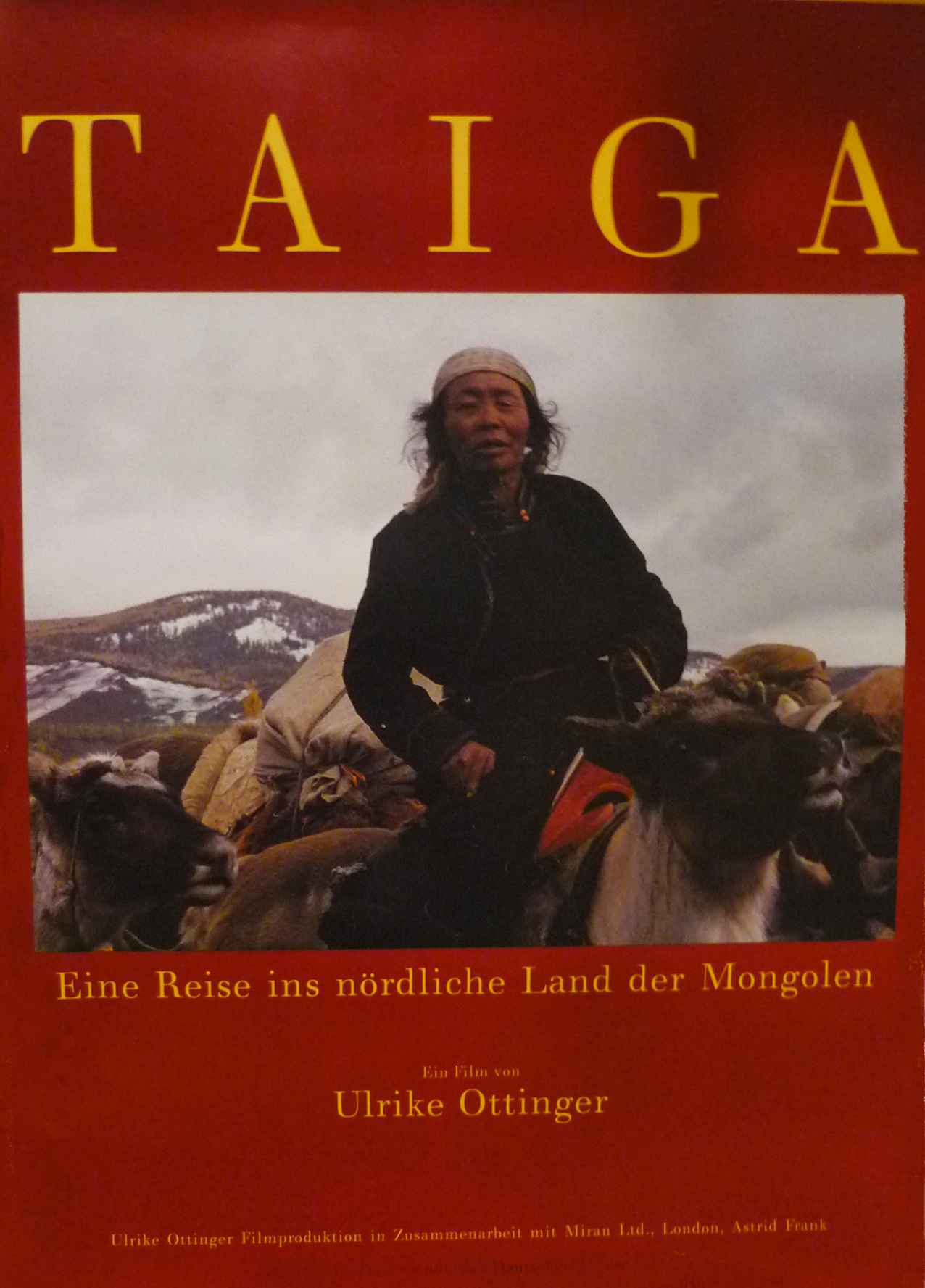
Ottinger returned to Mongolia to craft her incredible epic documentary portrait of reindeer herders on the far Northern steppes. While offering rare glimpses into the shamanic ceremonies, hunts, weddings and amusements that color the herders’ lives, Taiga uses its nine hours to resist any notion of the nomads as simply “exotic” by creating a fully immersive encounter with the Mongolians daily routines and rituals. Bearing mesmerizing witness to a world seemingly out of time, Taiga is ultimately a study in contrasts: between the vast steppes and the intimacy of the nomads’ private spaces, between the mobility of the nomadic life and the fixity of Ottinger’s camera, between pre-modern practices and their contemporary variations.
Born in Konstanz, Germany, Ottinger spent much of the 1960s working as a painter in Paris – where she also studied with the likes of Claude Lévi-Strauss and Louis Althusser – before launching her film career in Berlin in the early 1970s. Ottinger’s earliest films grow out of her close association with various Berlin subcultures and art scenes and involved collaborations with such luminary figures as Tabea Blumenschein, as well as Irm Hermann, Kurt Raab and Magdalena Montezuma, actors central to the Fassbinder scene. International recognition and reknown followed her first feature film Madame X (1977), which especially drew the interest of queer and feminist critics and scholars in the U.S. To this day Ottinger’s films are held up for their radicalness, not only of narrative but also of their treatment of sexuality and of gender itself. A Renaissance woman, Ottinger writes her own scripts, frequently operates the camera and even designs the often elaborate sets and costumes showcased in her films.
The fall of the Berlin Wall and a massive funding crisis for “art cinema” coincided at the beginning of the 1990s to inspire a distinct shift in Ottinger’s cinema away from the theatrical extravagances of her early film work to a mode of carefully observed documentary. Yet uniting and cross-pollinating Ottinger’s documentary and fiction work are a set of running themes – a concern for the normative function of power and its ability to repress and ostracize difference; a nostalgia for the cosmopolitism of pre-war Central Europe; and a delight in the richness and beauty of “other cultures,” be they popular, archaic or simply non-Western.
Taiga
Directed by Ulrike Ottinger.
Germany 1992, 16mm, color, 501 min. Mongolian and Tuvinian with English subtitles
Ottinger returned to Mongolia to craft her incredible epic documentary portrait of reindeer herders on the far Northern steppes. While offering rare glimpses into the shamanic ceremonies, hunts, weddings and amusements that color the herders’ lives, Taiga uses its nine hours to resist any notion of the nomads as simply “exotic” by creating a fully immersive encounter with the Mongolians daily routines and rituals. Bearing mesmerizing witness to a world seemingly out of time, Taiga is ultimately a study in contrasts: between the vast steppes and the intimacy of the nomads’ private spaces, between the mobility of the nomadic life and the fixity of Ottinger’s camera, between pre-modern practices and their contemporary variations.

十二把椅子 (2004) [电影] 豆瓣 IMDb 维基数据 TMDB
Zwölf Stühle
导演:
Ulrike Ottinger
演员:
Georgiy Deliev
/
Геннадий Скарга
…
其它标题:
Zwölf Stühle
/
Twelve Chairs
…
...Her son-in-law, Ippolit Matwejewitch Worobjaninow, is a former nobleman and a dandy who is currently wasting away as a small town magistrate in charge of civil marriages. He eagerly takes up the quest to find the treasure. Meanwhile, over the years, the twelve chairs have been dispersed all over the country. However, Worobjaninow is not the only one in pursuit of the treasure. Hot on its trail are Ostap Bender, a clever and colorful conman, as well as Father Fjodor, a priest to whom the wealthy aristocrat has also confessed her secret. Thus begins a wild chase that ranges from North to South, West to East, across water and land, from the country to the city.