Terry Eagleton — 作者 (66)
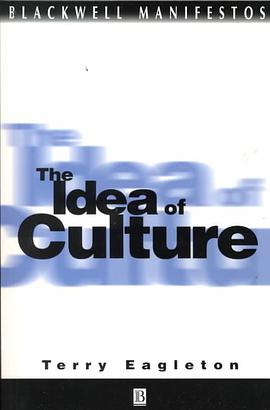
The Idea of Culture [图书] Goodreads 豆瓣
Terry Eagleton's book, in this vital new series from Blackwell, focuses on discriminating different meanings of culture, as a way of introducing to the general reader the contemporary debates around it.
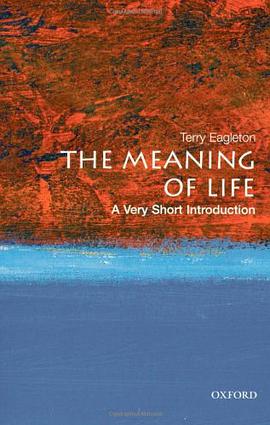
The Meaning of Life [图书] 豆瓣
'Philosophers have an infuriating habit of analysing questions rather than answering them', writes Terry Eagleton, who, in these pages, asks the most important question any of us ever ask, and attempts to answer it. So what is the meaning of life? In this witty, spirited, and stimulating inquiry, Eagleton shows how centuries of thinkers - from Shakespeare and Schopenhauer to Marx, Sartre and Beckett - have tackled the question. Refusing to settle for the bland and boring, Eagleton reveals with a mixture of humour and intellectual rigour how the question has become particularly problematic in modern times. Instead of addressing it head-on, we take refuge from the feelings of 'meaninglessness' in our lives by filling them with a multitude of different things: from football and sex, to New Age religions and fundamentalism. 'Many of the readers of this book are likely to be as sceptical of the phrase "the meaning of life" as they are of Santa Claus', he writes. But Eagleton contends that in a world where we need to find common meanings, it is important that we set about answering the question of all questions; and, in conclusion, he suggests his own answer.
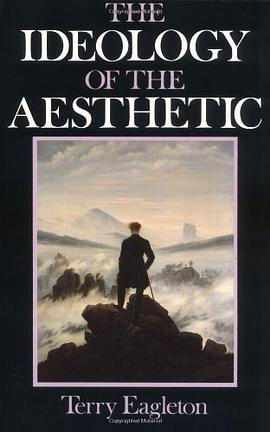
The Ideology of the Aesthetic [图书] Goodreads 豆瓣
"The Ideology of the Aesthetic" presents a history & critique of the concept of the aesthetic throughout modern Western thought. As such, this is a critical survey of modern Western philosophy, focusing in particular on the complex relations between aesthetics, ethics & politics. Eagleton provides a brilliant & challenging introduction to these concerns, as characterized in the work of Kant, Schiller, Schopenhauer, Kierkegaard, Marx, Nietzsche, Freud, Heidegger, Lukacs, Adorno, Habermas & others. Wide in span, as well as morally & politically committed, this is his major work to date. It forms both an original enquiry & an exemplary introduction.
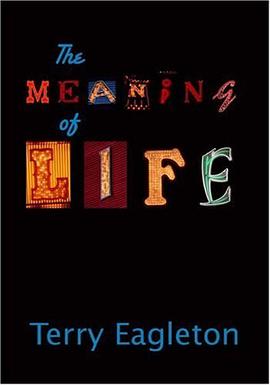
The Meaning of Life [图书] 豆瓣
We have all wondered about the meaning of life. But is there an answer? And do we even really know what we're asking? Terry Eagleton takes a stimulating and quirky look at this most compelling of questions: at the answers explored in philosophy and literature; at the crisis of meaning in modern times; and suggests his own solution to how we might rediscover meaning in our lives.
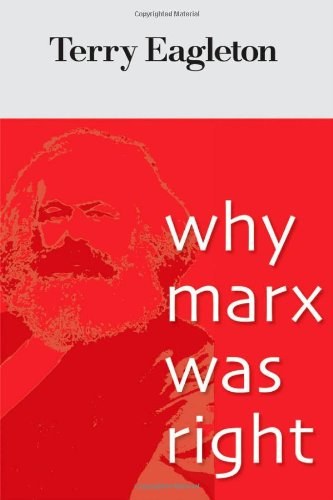
Why Marx Was Right [图书] 豆瓣
In this combative, controversial book, Terry Eagleton takes issue with the prejudice that Marxism is dead and done with. Taking ten of the most common objections to Marxism - that it leads to political tyranny, that it reduces everything to the economic, that it is a form of historical determinism, and so on - he demonstrates in each case what a woeful travesty of Marx's own thought these assumptions are. In a world in which capitalism has been shaken to its roots by some major crises, "Why Marx Was Right" is as urgent and timely as it is brave and candid. Written with Eagleton's familiar wit, humour and clarity, it will attract an audience far beyond the confines of academia.
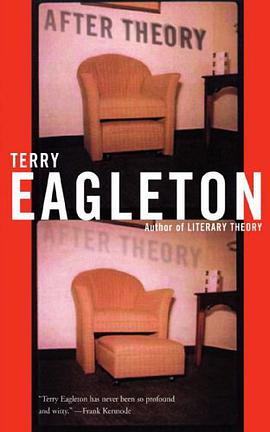
After Theory [图书] 豆瓣
As heralded everywhere from NPR to the pages of the New York Times Magazine , a new era is underway in our colleges and universities: after a lengthy tenure, the dominance of postmodern theory has come to an end. In this timely and topical book, the legendary Terry Eagleton ("one of [our] best-known public intellectuals."- Boston Globe ) traces the rise and fall of these ideas from the 1960s through the 1990s, candidly assessing the resultant gains and losses. What's needed now, After Theory argues, is a return to the big questions and grand narratives. Today's global politics demand we pay attention to a range of topics that have gone ignored by the academy and public alike, from fundamentalism to objectivity, religion to ethics. Fresh, provocative, and consistently engaging, Eagleton's latest salvo will challenge everyone looking to better grasp the state of the world.
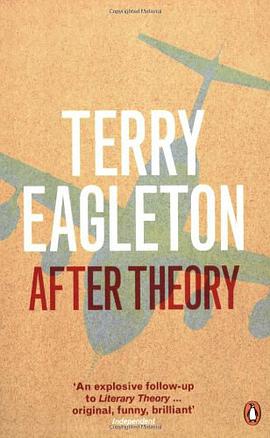
After Theory [图书] 豆瓣
The golden age of cultural theory (the product of a decade and a half, from 1965 to 1980) is long past. We are living now in its aftermath, in an age which, having grown rich in the insights of thinkers like Althusser, Barthes and Derrida, has also moved beyond them. What kind of new, fresh thinking does this new era demand? Eagleton concludes that cultural theory must start thinking ambitiously again - not so that it can hand the West its legitimation, but so that it can seek to make sense of the grand narratives in which it is now embroiled.
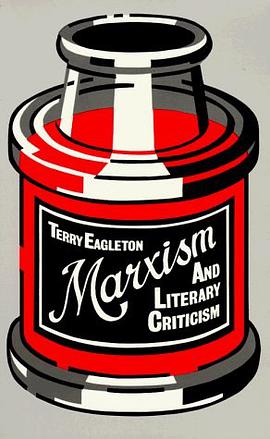
Marxism and Literary Criticism [图书] 豆瓣
Without doubt the most important work on literary criticism that has emerged out of the tradition of Marxist philosophy and social theory since the 19th century.</P>
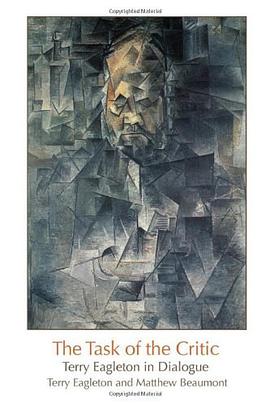
The Task of the Critic [图书] 豆瓣
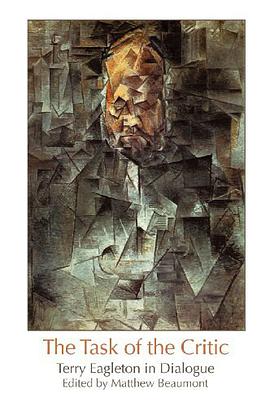
The leading literary theorist is dissected in interview. This is an easily accessible guide to his views. Terry Eagleton occupies a unique position in the English-speaking world today. He is not only a productive literary theorist, but also a novelist and playwright. He remains a committed socialist deeply hostile to the zeitgeist. Over the last forty years his public interventions have enlivened an otherwise bland and conformist culture. His pen, as many colleagues in the academy - including Harold Bloom, Gayatri Spivak and Homi Bhabha - have learnt, is merciless and unsparing. As a critic Eagleton has not shied away from confronting the high priests of native conformity as highlighted by his coruscating polemic against Martin Amis on the issue of civil liberties and religion. This comprehensive volume of interviews covers both his life and the development of his thought and politics. Lively and insightful, they will appeal not only to those with an interest in Eagleton himself, but to all those interested in the evolution of radical politics, modernism, cultural theory, the history of ideas, sociology, semantic inquiry and the state of Marxist theory.
Walter Benjamin: Or, Towards a Revolutionary Criticism [图书] 豆瓣
Eagleton is second to none among cultural critics writing in the English language today. --Guardian

How to Read Literature [图书] 豆瓣 Goodreads
How to Read Literature
What makes a work of literature good or bad? How freely can the reader interpret it? Could a nursery rhyme like Baa Baa Black Sheep be full of concealed loathing, resentment and aggression? In this accessible, delightfully entertaining book, Terry Eagleton addresses these intriguing questions and a host of others. How to Read Literature is the book of choice for students new to the study of literature and for all other readers interested in deepening their understanding and enriching their reading experience. In a series of brilliant analyses, Eagleton shows how to read with due attention to tone, rhythm, texture, syntax, allusion, ambiguity, and other formal aspects of literary works. He also examines broader questions of character, plot, narrative, the creative imagination, the meaning of fictionality, and the tension between what works of literature say and what they show. Unfailingly authoritative and cheerfully opinionated, the author provides useful commentaries on classicism, Romanticism, modernism and postmodernism along with spellbinding insights into a huge range of authors, from Shakespeare and Jane Austen to Samuel Beckett and J. K. Rowling.
The Task of the Critic [图书] 豆瓣
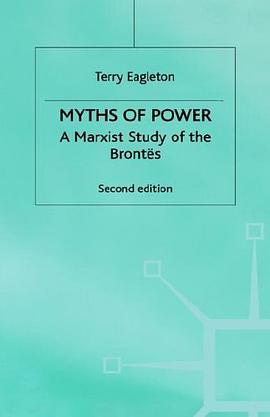
Myths of Power [图书] 豆瓣
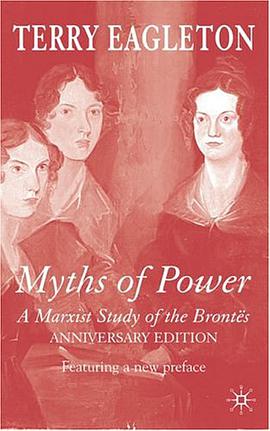
Myths of Power - Anniversary Edition sets out to interpret the fiction of the Brontë sisters in light of a Marxist analysis of the historical conditions in which it was produced. Its aim is not merely to relate literary facts, but by a close critical examination of the novels, to find in them a significant structure of ideas and values which related to the Brontës' ambiguous situation within the class-system of their society. Its intention is to forge close relations between the novels, nineteenth-century ideology, and historical forces, in order to illuminate the novels themselves in a radically new perspective. When originally published in 1975 (second edition in 1988), it was the first full-length Marxist study of the Brontës and is now reissued to celebrate 30 years since its first publication. It includes a new Introduction by Terry Eagleton which reflects on the changes which have happened in Marxist literary criticism since 1988, and situates this reissue of the second edition in current debates.
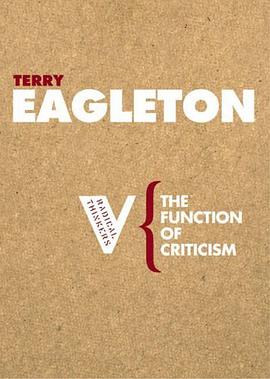
The Function of Criticism (Radical Thinkers) (Radical Thinkers) [图书] 豆瓣
A history and critique of the last 200 years of cultural criticism, from Addison and Steele to Barthes and Derrida, by Britain's most stylish critic.
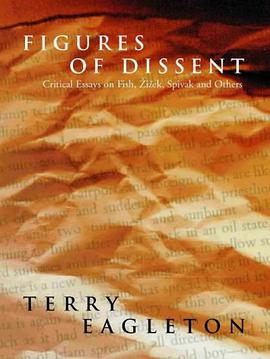
Figures of Dissent [图书] 豆瓣
Playwright, literary theorist, fine analyst of the works of Shakespeare, the Brontes, Swift and Joyce, scourge of postmodernism, autobiographer...Terry Eagleton's achievements are many and his combative intelligence widely admired and respected. His skill as a reviewer is particularly notable: never content merely to assess the ideas of a writer and the theses of a book, Eagleton, in his inimitable and often wickedly funny style, always paints a vivid theoretical and political fresco as the background to his engagement with the texts. In this collection of more than a decade of such bracing criticism, Eagleton comes face to face with Stanley Fish, Gayatri Spivak, Slavoj Zizek, Edward Said, and even David Beckham. All are subjected to his pugnacious wit, scathing critical pen, and brilliant literary investigations.
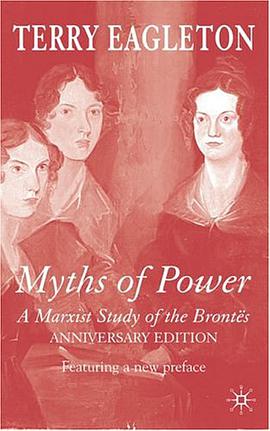
Myths of Power - Anniversary Edition [图书] 豆瓣
This book sets out to interpret the fiction of the Bronte sisters in light of a Marxist analysis of the historical conditions in which it was produced. Its aim is not merely to relate literary facts, but by a close critical examination of the novels, to find in them a significant structure of ideas and values which related to the Brontes' ambiguous situation within the class system of their society. Its intention is to forge close relations between the novels, nineteenth-century ideology, and historical forces, in order to illuminate the novels themselves in a radically new perspective. When originally published in 1975 (second edition in 1988), it was the first full-length Marxist study of the Brontes and is now reissued to celebrate 30 years since its first publication. It includes a new Introduction by Terry Eagleton that reflects the changes that have happened in Marxist literary criticism since 1988, and situates this reissue in current debates.