彼得·杰克逊 — 作者 (4)
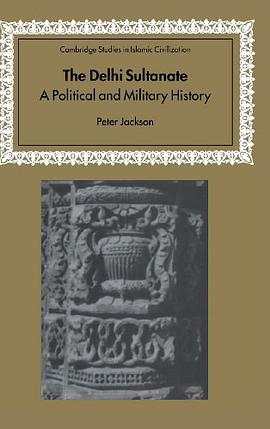
The Delhi Sultanate [图书] 豆瓣
The Delhi Sultanate was the first Islamic state to be established in India. In a broad-ranging, accessible narrative, Peter Jackson traces the history of the Sultanate from its foundation in 1210 to its demise in 1400 at the sack of Delhi by the Central Asian conqueror, Tamerlane. During the thirteenth and fourteenth centuries, the Sultanate was the principal bastion of Islam in the subcontinent. While the book focuses on military and political affairs, tracing the Sultanate's resistance to formidable Mongol invasions from the north-west and the administrative developments that underpinned these exploits, it also explores the Sultans' relations with their non-Muslim subjects. As a comprehensive treatment of the period, the book will make a significant contribution to the literature on medieval Indo-Muslim history. Students of Islamic and Indian history, and those with a general interest in the region, will find it a valuable resource.
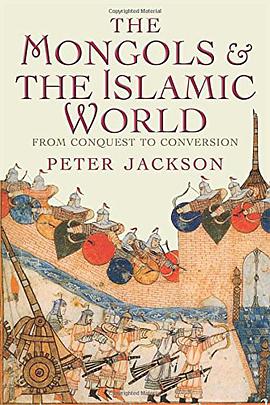
The Mongols and the Islamic World [图书] 豆瓣 Goodreads
An epic historical consideration of the Mongol conquest of Western Asia and the spread of Islam during the years of non-Muslim rule
The Mongol conquest of the Islamic world began in the early thirteenth century when Genghis Khan and his warriors overran Central Asia and devastated much of Iran. Distinguished historian Peter Jackson offers a fresh and fascinating consideration of the years of infidel Mongol rule in Western Asia, drawing from an impressive array of primary sources as well as modern studies to demonstrate how Islam not only survived the savagery of the conquest, but spread throughout the empire.
This unmatched study goes beyond the well-documented Mongol campaigns of massacre and devastation to explore different aspects of an immense imperial event that encompassed what is now Iran, Iraq, Turkey, and Afghanistan, as well as Central Asia and parts of eastern Europe. It examines in depth the cultural consequences for the incorporated Islamic lands, the Muslim experience of Mongol sovereignty, and the conquerors’ eventual conversion to Islam.
The Mongol conquest of the Islamic world began in the early thirteenth century when Genghis Khan and his warriors overran Central Asia and devastated much of Iran. Distinguished historian Peter Jackson offers a fresh and fascinating consideration of the years of infidel Mongol rule in Western Asia, drawing from an impressive array of primary sources as well as modern studies to demonstrate how Islam not only survived the savagery of the conquest, but spread throughout the empire.
This unmatched study goes beyond the well-documented Mongol campaigns of massacre and devastation to explore different aspects of an immense imperial event that encompassed what is now Iran, Iraq, Turkey, and Afghanistan, as well as Central Asia and parts of eastern Europe. It examines in depth the cultural consequences for the incorporated Islamic lands, the Muslim experience of Mongol sovereignty, and the conquerors’ eventual conversion to Islam.
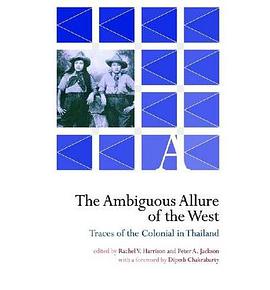
The Ambiguous Allure of the West [图书] 豆瓣
The book brings studies of modern Thai history and culture into dialogue with debates in comparative intellectual history, Asian cultural studies, and postcolonial studies. It takes Thai Studies in new directions through case studies of the cultural hybridity and ambivalences that have emerged from the manifold interactions between Siam/Thailand and the West from 1850 to the present day. Central aims of The Ambiguous Allure of the West are to critique notions of Thai “uniqueness” or “exceptionalism” and locate Thai Studies in a broader, comparative perspective by arguing that modern Siam/Thailand needs to be understood as a semicolonial society. In contrast to conservative nationalist and royalist accounts of Thai history and culture, which resist comparing the country to its once-colonized Asian neighbours, this book’s contributors highlight the value of postcolonial analysis in understanding the complexly ambiguous, interstitial, liminal and hybrid character of Thai/Western cultural interrelationships. At the same time, by pointing to the distinctive position of semicolonial societies in the Western-dominated world order, the chapters in this book make significant contributions to developing the critical theoretical perspectives of international cultural studies. The contributors demonstrate how the disciplines of history, anthropology, political science, film and cultural studies all enhance these contestations in intersecting ways, and across different historical moments. Each of the chapters raises manifold themes and questions regarding the nature of intercultural exchange, interrogated through theoretically critical lenses. This book directs its discussions at those studying not only in the fields of Thai and Southeast Asian studies but also in colonial and postcolonial studies, Asian cultural studies, film studies and comparative critical theory.