Jean-Louis Comolli — Director (3)
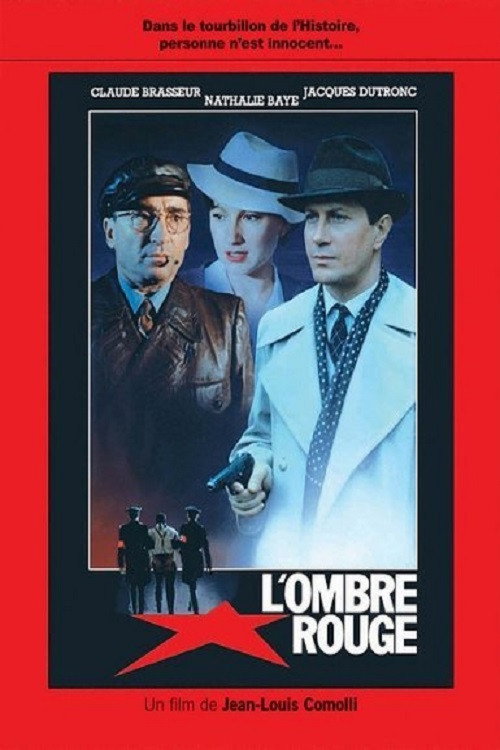
The Red Shade (1981) [Movie] TMDB IMDb WikiData
L'Ombre rouge
other title: Geheimaktion Marseille / L'Ombre rouge
The time is the 1930s and two Soviet spies (both Frenchmen by nationality) have been helping Communist factions during the Civil War in Spain. It is the time of Stalin's iron rule in the USSR, and the two agents are suddenly called to Moscow by the KGB. Knowing that they are in trouble for no fault of their own, fear drives one of them to suicide while the other gets his lover and her child and begins a run for his life, knowing that the KGB will never let him go free.
塞西莉亚 (1975) [Movie] Douban
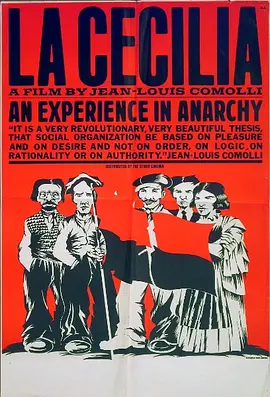
La Cecilia
director: Jean-Louis Comolli actor: Massimo Foschi ... Giovanni Rossi / Maria Carta ... Olimpia
other title: La Cecilia / 香格里拉塞西莉亚
A small group of Italian anarchists goes to the State of Parana in Brazil to take advantage of an offer that could be out of a fairy tale : Pedro II (a real-life emperor) is known mostly for having promoted the emancipation of slaves. He is a believer in science and harmony, a man enamored of his country, and who knows that it could become paradise on earth for whoever is capable of extracting its riches from the fertile soil. The anarchists want to cultivate the land organically and rationally ( Giovanni Rossi is an agronomist), but they lack practical sense. They need seeds and tools, but the local merchant applies prices that he knows they will not be able to pay. Thus, some of the anarchists are forced to work for private enterprises in order to generate cash to help the survival of the group. The commune members, hating barriers, don’t anticipate that their corn will be destroyed by wild boars gaining free entrance because of the lack of fences. To complicate things a little more, with the advent of the Republic, their "property" is no longer protected by the king (Would you ask a monarch for a property deed ?), and the new authorities want them to pay taxes. More people come to live at La Cecilia, and suddenly there is a school for children, theatrical representations, songs and games. But conflicts also develop. Back home, certain anarchist newspapers criticize their experiment in communal living and accuse them of having deserted the struggle at the very moment when unions are being organized on the peninsula.
Jean-Louis Comolli has the wonderful talent of being able to describe as objectively as humanly possible delicate situations of conflict that make his characters believable and captivating. Each one of them possesses a crucial portion of truth, and we are free to accept or reject their conclusions or proposals. La Cecilia is an historical fact, a microcosm containing myriad possible variations on the theme of anarchism.
Intelligent and stimulating, La Cecilia is based on the story of the colony set up in Brazil in 1890 by a group of Italian anarchists. The colony lasted about three years, and Comolli's account, drawing on original sources, examines its development and eventual collapse. Documenting both external pressures and internal tensions, the film lucidly considers what kind of political organisation is needed in a supposedly collective situation, and the kind of obstacles that occur. Comolli creates no villains to pin the blame on; the fact that one can retain emotional solidarity with the colonists makes the immediate relevance of the questions raised all the more apparent and thought-provoking.
我们时代的电影 (1964) [TV] Douban
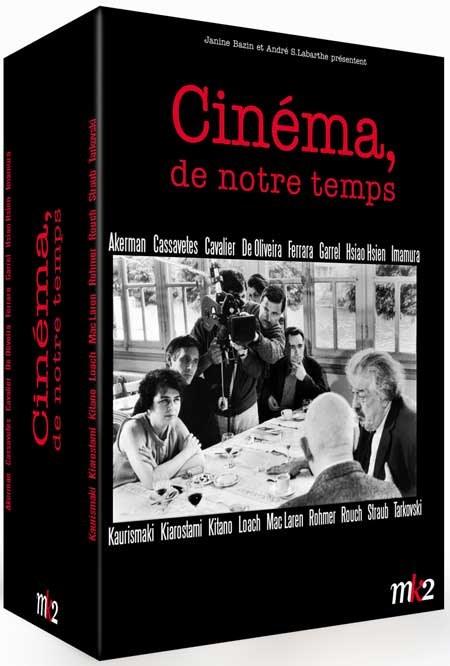
Cinema, de notre temps
Chaque documentaire traite d'un cinéaste, voire d'une école cinématographique (la Nouvelle Vague...), ou d'une question particulière liée au cinéma (Critique et cinéma...). Le choix des réalisateurs, comme les questions abordées sont très empreintes de la vision des Cahiers du cinéma dont André S. Labarthe est l'un des anciens rédacteurs, Janine Bazin étant par ailleurs l'épouse d'André Bazin, fondateur de la revue.
Sur le plan du traitement audiovisuel, les documentaires sont assez hétérogènes et tentent d'ailleurs de s'accorder au style du réalisateur concerné : une caméra portée en plan séquence pour John Cassavetes, une conversation en voiture pour Abbas Kiarostami... D'une manière générale, les documentaires se gardent de comporter une voix-off et cherchent à donner la parole aux réalisateurs, pénétrer son univers, sans forcément recourir à l'interview.
La série démarre en 1964 sur l'ORTF et se poursuit aujourd'hui sur Arte. En 1989, à l'occasion de sa reprise par Arte, la collection est rebaptisée Cinéma, de notre temps.