Jean Giono — 作者 (10)
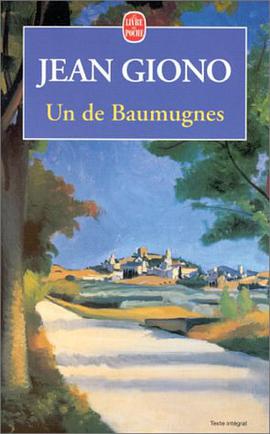
Un de Baumugnes [图书] 豆瓣
Le Hussard sur le toit [图书] 豆瓣
Melville [图书] 豆瓣
In the fall of 1849, Herman Melville traveled to London to deliver his novel White-Jacket to his publisher. On his return to America, Melville would write Moby-Dick. Melville: A Novel imagines what happened in between: the adventurous writer fleeing London for the country, wrestling with an angel, falling in love with an Irish nationalist, and, finally, meeting the angel’s challenge—to express man’s fate by writing the novel that would become his masterpiece.
Eighty years after it appeared in English, Moby-Dick was translated into French for the first time by the Provençal novelist Jean Giono and his friend Lucien Jacques. The publisher persuaded Giono to write a preface, granting him unusual latitude. The result was this literary essai,
Melville: A Novel—part biography, part philosophical rumination, part romance, part unfettered fantasy. Paul Eprile’s expressive translation of this intimate homage brings the exchange full circle.
Eighty years after it appeared in English, Moby-Dick was translated into French for the first time by the Provençal novelist Jean Giono and his friend Lucien Jacques. The publisher persuaded Giono to write a preface, granting him unusual latitude. The result was this literary essai,
Melville: A Novel—part biography, part philosophical rumination, part romance, part unfettered fantasy. Paul Eprile’s expressive translation of this intimate homage brings the exchange full circle.
The Horseman on the Roof 屋顶上的轻骑兵 [图书] 豆瓣
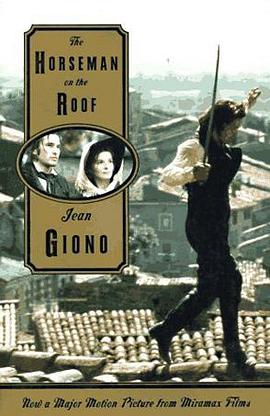
Perhaps no other of his novels better reveals Giono's perfect balance between lyricism and narrative, description and characterization, the epic and the particular, than The Horseman on the Roof. This novel, which Giono began writing in 1934 and which was published in 1951, expanded and solidified his reputation as one of Europe's most important writers.
This is a novel of adventure, a roman courtois, that tells the story of Angelo, a nobleman who has been forced to leave Italy because of a duel, and is returning to his homeland by way of Provence. But that region is in the grip of a cholera epidemic, travelers are being imprisoned behind barricades, and exposure to the disease is almost certain.
Angelo's escapades, adventures, and heroic self-sacrifice in this hot, hallucinatory landscape, among corpses, criminals and rioting townspeople, share this epic tale.
This is a novel of adventure, a roman courtois, that tells the story of Angelo, a nobleman who has been forced to leave Italy because of a duel, and is returning to his homeland by way of Provence. But that region is in the grip of a cholera epidemic, travelers are being imprisoned behind barricades, and exposure to the disease is almost certain.
Angelo's escapades, adventures, and heroic self-sacrifice in this hot, hallucinatory landscape, among corpses, criminals and rioting townspeople, share this epic tale.
The Man Who Planted Trees [图书] 豆瓣
Twenty years ago Chelsea Green published the first trade edition of "The Man Who Planted Trees," a timeless eco-fable about what one person can do to restore the earth. The hero of the story, Elzard Bouffier, spent his life planting one hundred acorns a day in a desolate, barren section of Provence in the south of France. The result was a total transformation of the landscape-from one devoid of life, with miserable, contentious inhabitants, to one filled with the scent of flowers, the songs of birds, and fresh, flowing water.Since our first publication, the book has sold over a quarter of a million copies and inspired countless numbers of people around the world to take action and plant trees. On National Arbor Day, April 29, 2005, Chelsea Green is releasing a special twentieth anniversary edition with a new foreword by Wangari Maathai, winner of the 2004 Nobel Peace Prize and founder of the African Green Belt Movement.
Occupation Journal [图书] 豆瓣
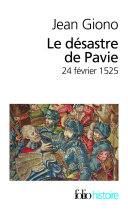
Le Désastre de Pavie [图书] 谷歌图书
Le désastre de Pavie, c’est l’occasion inespérée pour un romancier de raconter une histoire vraie qui est en soi totalement romanesque. D'entrée, les personnages sont campés : un beau roi, séducteur, dont l’appétit de vivre n’a d’égal que l’ambition d’être le prince des Arts et des Lettres, fasciné qu’il est par la Renaissance italienne qu’il vient de découvrir de l’autre côté des Alpes ; en face, un personnage sombre, ombrageux, obsédé par son salut au point, dans quelques années, de renoncer à son formidable trône et pouvoir sur l’Allemagne, l’Autriche, les Flandres, l’Espagne et le Nouveau Monde, puis se retirer dans un couvent et y vivre de macérations. Entre la superbe et l’austérité, la bataille de Pavie en décidera autrement, le roi de France sera vaincu, emprisonné à Madrid, devra jurer la paix puis se parjurer, une fois libéré. Giono n’a pas à forcer son talent pour narrer cet incroyable scénario.