Paul Mills — 导演 (7)
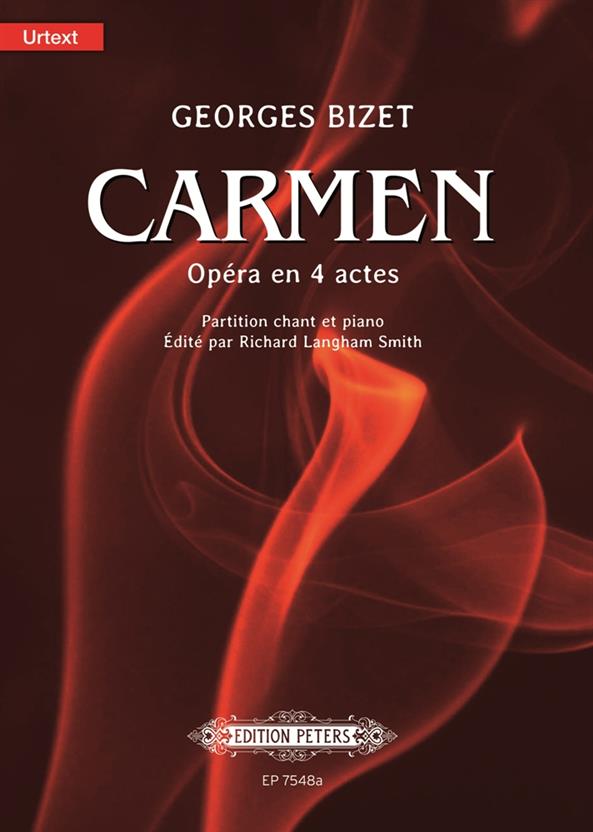
卡门 1987年大都会歌剧团版 [演出] 豆瓣
所属 演出: 卡门
语言: 法语 french 剧团: Metropolitan Opera Orchestra 大都会歌剧团管弦乐团 ; Metropolitan Opera Chorus 大都会歌剧团合唱团 ; Metropolitan Opera Ballet 大都会歌剧团芭蕾舞团 剧院: Metropolitan Opera House 大都会歌剧院 导演: Peter Hall / Paul Mills
其它标题: 1987年大都会歌剧团版 编剧: Henri Meilhac / Ludovic Halévy 作曲: Georges Bizet 演员: Agnes Baltsa / José Carreras
Place: Seville, Spain, and surrounding hills
Time: Around 1820
Act 1
A square, in Seville. On the right, a door to the tobacco factory. At the back, a bridge. On the left, a guardhouse.
A group of soldiers relaxes in the square, waiting for the changing of the guard and commenting on the passers-by ("Sur la place, chacun passe"). Micaëla appears, seeking José. Moralès tells her that "José is not yet on duty" and invites her to wait with them. She declines, saying she will return later. José arrives with the new guard, who is greeted and imitated by a crowd of urchins ("Avec la garde montante").
As the factory bell rings, the cigarette girls emerge and exchange banter with young men in the crowd ("La cloche a sonné"). Carmen enters and sings her provocative habanera on the untameable nature of love ("L'amour est un oiseau rebelle"). The men plead with her to choose a lover, and after some teasing she throws a flower to Don José, who thus far has been ignoring her but is now annoyed by her insolence.
As the women go back to the factory, Micaëla returns and gives José a letter and a kiss from his mother ("Parle-moi de ma mère!"). He reads that his mother wants him to return home and marry Micaëla, who retreats in shy embarrassment on learning this. Just as José declares that he is ready to heed his mother's wishes, the women stream from the factory in great agitation. Zuniga, the officer of the guard, learns that Carmen has attacked a woman with a knife. When challenged, Carmen answers with mocking defiance ("Tra la la... Coupe-moi, brûle-moi"); Zuniga orders José to tie her hands while he prepares the prison warrant. Left alone with José, Carmen beguiles him with a seguidilla, in which she sings of a night of dancing and passion with her lover—whoever that may be—in Lillas Pastia's tavern. Confused yet mesmerised, José agrees to free her hands; as she is led away she pushes her escort to the ground and runs off laughing. José is arrested for dereliction of duty.
Act 2
Lillas Pastia's Inn
Two months have passed. Carmen and her friends Frasquita and Mercédès are entertaining Zuniga and other officers ("Les tringles des sistres tintaient") in Pastia's inn. Carmen is delighted to learn of José's release from two months' detention. Outside, a chorus and procession announces the arrival of the toreador Escamillo ("Vivat, vivat le Toréro"). Invited inside, he introduces himself with the "Toreador Song" ("Votre toast, je peux vous le rendre") and sets his sights on Carmen, who brushes him aside. Lillas Pastia hustles the crowds and the soldiers away.
When only Carmen, Frasquita and Mercédès remain, smugglers Dancaïre and Remendado arrive and reveal their plans to dispose of some recently acquired contraband ("Nous avons en tête une affaire"). Frasquita and Mercédès are keen to help them, but Carmen refuses, since she wishes to wait for José. After the smugglers leave, José arrives. Carmen treats him to a private exotic dance ("Je vais danser en votre honneur ... La la la"), but her song is joined by a distant bugle call from the barracks. When José says he must return to duty, she mocks him, and he answers by showing her the flower that she threw to him in the square ("La fleur que tu m'avais jetée"). Unconvinced, Carmen demands he show his love by leaving with her. José refuses to desert, but as he prepares to depart, Zuniga enters looking for Carmen. He and José fight, and are separated by the returning smugglers, who restrain Zuniga. Having attacked a superior officer, José now has no choice but to join Carmen and the smugglers ("Suis-nous à travers la campagne").
Act 3
A wild spot in the mountains
Carmen and José enter with the smugglers and their booty ("Écoute, écoute, compagnons"); Carmen has now become bored with José and tells him scornfully that he should go back to his mother. Frasquita and Mercédès amuse themselves by reading their fortunes from the cards; Carmen joins them and finds that the cards are foretelling her death, and José's. The women depart to suborn the customs officers who are watching the locality. José is placed on guard duty.
Micaëla enters with a guide, seeking José and determined to rescue him from Carmen ("Je dis que rien ne m'épouvante"). On hearing a gunshot she hides in fear; it is José, who has fired at an intruder who proves to be Escamillo. José's pleasure at meeting the bullfighter turns to anger when Escamillo declares his infatuation with Carmen. The pair fight ("Je suis Escamillo, toréro de Grenade"), but are interrupted by the returning smugglers and girls ("Holà, holà José"). As Escamillo leaves he invites everyone to his next bullfight in Seville. Micaëla is discovered; at first, José will not leave with her despite Carmen's mockery, but he agrees to go when told that his mother is dying. As he departs, vowing he will return, Escamillo is heard in the distance, singing the toreador's song.
Act 4
A square in Seville. At the back, the walls of an ancient amphitheatre
Zuniga, Frasquita and Mercédès are among the crowd awaiting the arrival of the bullfighters ("Les voici ! Voici la quadrille!"). Escamillo enters with Carmen, and they express their mutual love ("Si tu m'aimes, Carmen"). As Escamillo goes into the arena, Frasquita and Mercedes warn Carmen that José is nearby, but Carmen is unafraid and willing to speak to him. Alone, she is confronted by the desperate José ("C'est toi ! C'est moi !"). While he pleads vainly for her to return to him, cheers are heard from the arena. As José makes his last entreaty, Carmen contemptuously throws down the ring he gave her and attempts to enter the arena. He then stabs her, and as Escamillo is acclaimed by the crowds, Carmen dies. José kneels and sings "Ah! Carmen! ma Carmen adorée!"; as the crowd exits the arena, José confesses to killing the woman he loved.
厄勒克特拉 [演出] 豆瓣
Elektra
类型: Opera 编剧: Hugo von Hofmannsthal
其它标题: Elektra / 埃莱克特拉 导演: Georg Toller / nobody 演员: Annie Krull / Margarethe Siems / Ernestine Schumann-Heink / Karl Perron / Johannes Sembach
Before the opera begins, Agamemnon has sacrificed Iphigenia on the ruse that she is to be married, and subsequently goes off to war against Troy. Iphigenia's mother Klytaemnestra has thus come to hate her husband. After his return, with the help of her paramour Aegisthus, she murders her husband and now is afraid that her crime will be avenged by her other children, Elektra, Chrysothemis and their banished brother Orest. Elektra has managed to send her brother away while remaining behind to keep her father's memory alive, but all the while, suffering the scorn of her mother and the entire court.
The action
"Wo bleibt Elektra?" ("Where is Elektra?")
Five servants try to wash the courtyard of the palace in Mycenae. While they do their work, they ask where can Elektra be, and she emerges from the shadows with a wild look on her face. The servants continue commenting how she came to be in that state and talk about how they taunt her only to receive insults from her. Only one servant shows sympathy for her, but she is taken away by the overseer to be flogged.
"Allein! Weh, ganz allein." ("Alone! Alas, all alone.")
Elektra comes back for her daily ritual in memory of her father, who upon his return from Troy was killed while bathing by Klytaemnestra and Aegisth and dragged out into the courtyard. Elektra now starts imagining the day when her father will be avenged and then of the ensuing celebration in which she will lead the triumphal dance.
"Elektra!"
Chrysothemis leaves the palace but, unlike Elektra, she is meek and accommodating, and has remained on good terms with Klytaemnestra and Aegisth; she enjoys the privileges that come with being a princess. She warns her sister that their mother plans to lock Elektra in a tower, but she is rebuffed.
"Ich kann nicht sitzen und ins Dunkel starren." ("I can not sit and stare into the darkness.")
Chrysothemis does not wish to go on living a half-death in her own house: she wants to leave, marry and raise children.
"Es geht ein Lärm los." ("What tumult is this?")
As loud sounds are heard inside, Elektra mocks her sister that it is her wedding party.
"Was willst du? Seht doch, dort!" ("What do you want? Behold, there!")
In reality, Klytaemnestra has yet again been awakened by her own nightmares of being killed by Orest. Chrysothemis begs Elektra to leave, wishing only to speak to her mother. Followed by her retinue, Klytaemnestra comes to make another sacrifice to appease the gods, but she stops at the sight of Elektra and wishes that she were not there to disturb her. She asks the gods for the reason for her burdens, but Elektra appeases her by telling her mother that she is a goddess herself.
"Ich will nichts Hören!" ("I will not listen!")
Despite the protests of the Trainbearer and Confidante, Klytaemnestra climbs down to talk to Elektra.
"Ich habe keine guten Nächte." ("I have no good nights.")
Klytaemnestra confides to her daughter that she has been suffering nightmares every night and that she still has not found the way to appease the gods. But, she claims, once that happens, she will be able to sleep again.
"Wenn Das rechte Blutopfer unterm Beile fällt." ("When the right blood under the hatchet flows.")
Elektra teases her mother with little pieces of information about the right victim that must be slain, but she changes the conversation to her brother and why he is not allowed back. To Elektra's horror, Klytaemnestra says that he has become mad and keeps company with animals. She responds that this is not true and that all the gold that her mother has sent was not being used to support her son but to have him killed.
"Was bluten muß? Dein eigenes Genick." ("Who must bleed? Your own throat.")
Then Elektra reveals who is to be the actual victim: it is Klytaemnestra herself. She goes on to describe how the gods must be appeased once and for all. She must be awakened and chased around the house just like an animal that is being hunted. Only when she wishes that all was over and after envying prisoners in their cells, she will come to realize that her prison is her own body. At that time, the axe with which she killed her husband and which will be handed to Orest by Elektra, will fall on her. Only then the dreams will stop.
"Lichter! Mehr Lichter" ("Lights! More lights!")
The Trainbearer and Confidante enter and whisper to her. Klytaemnestra laughs hysterically and, mocking Elektra, leaves. Elektra wonders what has made her mother laugh.
"Orest! Orest ist tot!" ("Orest! Orest is dead!")
Chrysothemis comes to tell her: two messengers have arrived with the news that Orest is dead, trampled by his own horses.
"Platz da! Wer lungert so vor einer Tür?" ("Give way! Who spies thus upon the threshold?")
As a young servant comes out of the house to fetch the master, he trips over Elektra and Chrysothemis.
"Nun muß es hier von uns geschehn." ("It is for us to act now.")
Elektra does not relent and a terrified Chrysothemis listens as her sister demands that she help her to avenge their father.
"Wie stark du bist." ("How strong you are.")
Elektra goes on to praise her sister and her beauty, promising that Elektra shall be her slave at her bridal chamber in exchange for the assistance in her task. Chrysothemis fights off her sister and flees. Elektra curses her.
"Nun denn, allein!" ("Well, alone!")
Determined to do it alone, she digs for the axe that killed her father, but is interrupted by a mysterious man who comes into the courtyard.
"Was willst du, fremder Mensch?" ("What do you want, stranger?")
She hears that he is expecting to be called from within the palace because he has a message for the lady of the house. He claims to be a friend of Orest, and says that he was with him at the time of his death.
"Wer bist denn du?" ("Who are you?")
Elektra grieves. The man first guesses that she must be a blood relative of Orest and Agamemnon, then, upon asking her name, discovers she is Elektra.
"Orest!"
Then, taken aback, she recognizes him: it is Orest who has come back in disguise. Elektra is initially ecstatic, but also ashamed of what she has become and how she has sacrificed her own royal state for the cause.
"Du wirst es tun? Allein? Du armes Kind?" ("You'll do it? Alone? Poor child?")
Orest's Tutor comes and interrupts the siblings; their task is dangerous and anything can jeopardize it. The Trainbearer and Confidante come out of the palace and lead Orest in.
"Ich habe ihm das Beil nicht geben können!" ("I could not give him the axe!")
A shriek is heard from within the palace, then a grim moan. Elektra smiles brightly, knowing that Orest has killed their mother.
"He! Lichter!" ("Torches there!")
Aegisth arrives. He is ecstatic to have heard that Orest is dead and wishes to speak with the messengers. Elektra happily ushers him inside the palace.
"Helft! Mörder!" ("Help! Murder!")
As Aegisth screams and calls for help, Elektra replies: "Agamemnon can hear you."
"Elektra! Schwester!" ("Elektra! Sister!")
Chrysothemis comes out of the palace stating that Orest is inside and that he has killed Klytaemnestra and Aegisth. A massacre has begun with Orest's followers killing those who supported Aegisth and the Queen.
"Ob ich nicht höre?" ("If I do not hear?")
Elektra is ecstatic and wants to lead the crowd to dance but at first cannot.
"Hörst du denn nicht." ("You do not hear because.")
Chrysothemis and Elektra praise their brother's feat.
"Schweig, und tanze." ("Be silent and dance.")
At last Elektra begins to dance. As she reaches the climax of her dance, she falls to the ground: Elektra is dead. Chrysothemis goes into the palace to be with her brother. Banging on the palace door, she calls for her brother. There is no answer.
厄勒克特拉 1994年大都会歌剧团版 [演出] 豆瓣
所属 演出: 厄勒克特拉
语言: german 德语 剧团: Metropolitan Opera Orchestra 大都会歌剧团管弦乐团 ; Metropolitan Opera Chorus 大都会歌剧团合唱团 剧院: Metropolitan Opera House 大都会歌剧院 导演: Otto Schenk / Paul Mills
其它标题: 1994年大都会歌剧团版 编剧: Hugo von Hofmannsthal 作曲: Richard Strauss 演员: Hildegard Behrens / Deborah Voigt
Before the opera begins, Agamemnon has sacrificed Iphigenia on the ruse that she is to be married, and subsequently goes off to war against Troy. Iphigenia's mother Klytaemnestra has thus come to hate her husband. After his return, with the help of her paramour Aegisthus, she murders her husband and now is afraid that her crime will be avenged by her other children, Elektra, Chrysothemis and their banished brother Orest. Elektra has managed to send her brother away while remaining behind to keep her father's memory alive, but all the while, suffering the scorn of her mother and the entire court.
The action
"Wo bleibt Elektra?" ("Where is Elektra?")
Five servants try to wash the courtyard of the palace in Mycenae. While they do their work, they ask where can Elektra be, and she emerges from the shadows with a wild look on her face. The servants continue commenting how she came to be in that state and talk about how they taunt her only to receive insults from her. Only one servant shows sympathy for her, but she is taken away by the overseer to be flogged.
"Allein! Weh, ganz allein." ("Alone! Alas, all alone.")
Elektra comes back for her daily ritual in memory of her father, who upon his return from Troy was killed while bathing by Klytaemnestra and Aegisth and dragged out into the courtyard. Elektra now starts imagining the day when her father will be avenged and then of the ensuing celebration in which she will lead the triumphal dance.
"Elektra!"
Chrysothemis leaves the palace but, unlike Elektra, she is meek and accommodating, and has remained on good terms with Klytaemnestra and Aegisth; she enjoys the privileges that come with being a princess. She warns her sister that their mother plans to lock Elektra in a tower, but she is rebuffed.
"Ich kann nicht sitzen und ins Dunkel starren." ("I can not sit and stare into the darkness.")
Chrysothemis does not wish to go on living a half-death in her own house: she wants to leave, marry and raise children.
"Es geht ein Lärm los." ("What tumult is this?")
As loud sounds are heard inside, Elektra mocks her sister that it is her wedding party.
"Was willst du? Seht doch, dort!" ("What do you want? Behold, there!")
In reality, Klytaemnestra has yet again been awakened by her own nightmares of being killed by Orest. Chrysothemis begs Elektra to leave, wishing only to speak to her mother. Followed by her retinue, Klytaemnestra comes to make another sacrifice to appease the gods, but she stops at the sight of Elektra and wishes that she were not there to disturb her. She asks the gods for the reason for her burdens, but Elektra appeases her by telling her mother that she is a goddess herself.
"Ich will nichts Hören!" ("I will not listen!")
Despite the protests of the Trainbearer and Confidante, Klytaemnestra climbs down to talk to Elektra.
"Ich habe keine guten Nächte." ("I have no good nights.")
Klytaemnestra confides to her daughter that she has been suffering nightmares every night and that she still has not found the way to appease the gods. But, she claims, once that happens, she will be able to sleep again.
"Wenn Das rechte Blutopfer unterm Beile fällt." ("When the right blood under the hatchet flows.")
Elektra teases her mother with little pieces of information about the right victim that must be slain, but she changes the conversation to her brother and why he is not allowed back. To Elektra's horror, Klytaemnestra says that he has become mad and keeps company with animals. She responds that this is not true and that all the gold that her mother has sent was not being used to support her son but to have him killed.
"Was bluten muß? Dein eigenes Genick." ("Who must bleed? Your own throat.")
Then Elektra reveals who is to be the actual victim: it is Klytaemnestra herself. She goes on to describe how the gods must be appeased once and for all. She must be awakened and chased around the house just like an animal that is being hunted. Only when she wishes that all was over and after envying prisoners in their cells, she will come to realize that her prison is her own body. At that time, the axe with which she killed her husband and which will be handed to Orest by Elektra, will fall on her. Only then the dreams will stop.
"Lichter! Mehr Lichter" ("Lights! More lights!")
The Trainbearer and Confidante enter and whisper to her. Klytaemnestra laughs hysterically and, mocking Elektra, leaves. Elektra wonders what has made her mother laugh.
"Orest! Orest ist tot!" ("Orest! Orest is dead!")
Chrysothemis comes to tell her: two messengers have arrived with the news that Orest is dead, trampled by his own horses.
"Platz da! Wer lungert so vor einer Tür?" ("Give way! Who spies thus upon the threshold?")
As a young servant comes out of the house to fetch the master, he trips over Elektra and Chrysothemis.
"Nun muß es hier von uns geschehn." ("It is for us to act now.")
Elektra does not relent and a terrified Chrysothemis listens as her sister demands that she help her to avenge their father.
"Wie stark du bist." ("How strong you are.")
Elektra goes on to praise her sister and her beauty, promising that Elektra shall be her slave at her bridal chamber in exchange for the assistance in her task. Chrysothemis fights off her sister and flees. Elektra curses her.
"Nun denn, allein!" ("Well, alone!")
Determined to do it alone, she digs for the axe that killed her father, but is interrupted by a mysterious man who comes into the courtyard.
"Was willst du, fremder Mensch?" ("What do you want, stranger?")
She hears that he is expecting to be called from within the palace because he has a message for the lady of the house. He claims to be a friend of Orest, and says that he was with him at the time of his death.
"Wer bist denn du?" ("Who are you?")
Elektra grieves. The man first guesses that she must be a blood relative of Orest and Agamemnon, then, upon asking her name, discovers she is Elektra.
"Orest!"
Then, taken aback, she recognizes him: it is Orest who has come back in disguise. Elektra is initially ecstatic, but also ashamed of what she has become and how she has sacrificed her own royal state for the cause.
"Du wirst es tun? Allein? Du armes Kind?" ("You'll do it? Alone? Poor child?")
Orest's Tutor comes and interrupts the siblings; their task is dangerous and anything can jeopardize it. The Trainbearer and Confidante come out of the palace and lead Orest in.
"Ich habe ihm das Beil nicht geben können!" ("I could not give him the axe!")
A shriek is heard from within the palace, then a grim moan. Elektra smiles brightly, knowing that Orest has killed their mother.
"He! Lichter!" ("Torches there!")
Aegisth arrives. He is ecstatic to have heard that Orest is dead and wishes to speak with the messengers. Elektra happily ushers him inside the palace.
"Helft! Mörder!" ("Help! Murder!")
As Aegisth screams and calls for help, Elektra replies: "Agamemnon can hear you."
"Elektra! Schwester!" ("Elektra! Sister!")
Chrysothemis comes out of the palace stating that Orest is inside and that he has killed Klytaemnestra and Aegisth. A massacre has begun with Orest's followers killing those who supported Aegisth and the Queen.
"Ob ich nicht höre?" ("If I do not hear?")
Elektra is ecstatic and wants to lead the crowd to dance but at first cannot.
"Hörst du denn nicht." ("You do not hear because.")
Chrysothemis and Elektra praise their brother's feat.
"Schweig, und tanze." ("Be silent and dance.")
At last Elektra begins to dance. As she reaches the climax of her dance, she falls to the ground: Elektra is dead. Chrysothemis goes into the palace to be with her brother. Banging on the palace door, she calls for her brother. There is no answer.
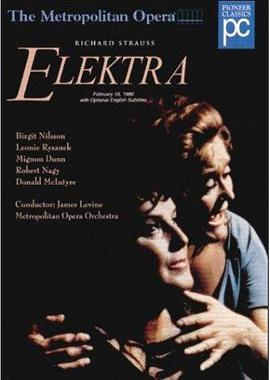
厄勒克特拉 1980年大都会歌剧团版 [演出] 豆瓣
所属 演出: 厄勒克特拉
语言: german 德语 剧团: Metropolitan Opera Orchestra 大都会歌剧团管弦乐团 ; Metropolitan Opera Chorus 大都会歌剧团合唱团 剧院: Metropolitan Opera House 大都会歌剧院 导演: Herbert Graf / Paul Mills
其它标题: 1980年大都会歌剧团版 编剧: Hugo von Hofmannsthal 作曲: Richard Strauss 演员: Birgit Nilsson / Leonie Rysanek
Before the opera begins, Agamemnon has sacrificed Iphigenia on the ruse that she is to be married, and subsequently goes off to war against Troy. Iphigenia's mother Klytaemnestra has thus come to hate her husband. After his return, with the help of her paramour Aegisthus, she murders her husband and now is afraid that her crime will be avenged by her other children, Elektra, Chrysothemis and their banished brother Orest. Elektra has managed to send her brother away while remaining behind to keep her father's memory alive, but all the while, suffering the scorn of her mother and the entire court.
The action
"Wo bleibt Elektra?" ("Where is Elektra?")
Five servants try to wash the courtyard of the palace in Mycenae. While they do their work, they ask where can Elektra be, and she emerges from the shadows with a wild look on her face. The servants continue commenting how she came to be in that state and talk about how they taunt her only to receive insults from her. Only one servant shows sympathy for her, but she is taken away by the overseer to be flogged.
"Allein! Weh, ganz allein." ("Alone! Alas, all alone.")
Elektra comes back for her daily ritual in memory of her father, who upon his return from Troy was killed while bathing by Klytaemnestra and Aegisth and dragged out into the courtyard. Elektra now starts imagining the day when her father will be avenged and then of the ensuing celebration in which she will lead the triumphal dance.
"Elektra!"
Chrysothemis leaves the palace but, unlike Elektra, she is meek and accommodating, and has remained on good terms with Klytaemnestra and Aegisth; she enjoys the privileges that come with being a princess. She warns her sister that their mother plans to lock Elektra in a tower, but she is rebuffed.
"Ich kann nicht sitzen und ins Dunkel starren." ("I can not sit and stare into the darkness.")
Chrysothemis does not wish to go on living a half-death in her own house: she wants to leave, marry and raise children.
"Es geht ein Lärm los." ("What tumult is this?")
As loud sounds are heard inside, Elektra mocks her sister that it is her wedding party.
"Was willst du? Seht doch, dort!" ("What do you want? Behold, there!")
In reality, Klytaemnestra has yet again been awakened by her own nightmares of being killed by Orest. Chrysothemis begs Elektra to leave, wishing only to speak to her mother. Followed by her retinue, Klytaemnestra comes to make another sacrifice to appease the gods, but she stops at the sight of Elektra and wishes that she were not there to disturb her. She asks the gods for the reason for her burdens, but Elektra appeases her by telling her mother that she is a goddess herself.
"Ich will nichts Hören!" ("I will not listen!")
Despite the protests of the Trainbearer and Confidante, Klytaemnestra climbs down to talk to Elektra.
"Ich habe keine guten Nächte." ("I have no good nights.")
Klytaemnestra confides to her daughter that she has been suffering nightmares every night and that she still has not found the way to appease the gods. But, she claims, once that happens, she will be able to sleep again.
"Wenn Das rechte Blutopfer unterm Beile fällt." ("When the right blood under the hatchet flows.")
Elektra teases her mother with little pieces of information about the right victim that must be slain, but she changes the conversation to her brother and why he is not allowed back. To Elektra's horror, Klytaemnestra says that he has become mad and keeps company with animals. She responds that this is not true and that all the gold that her mother has sent was not being used to support her son but to have him killed.
"Was bluten muß? Dein eigenes Genick." ("Who must bleed? Your own throat.")
Then Elektra reveals who is to be the actual victim: it is Klytaemnestra herself. She goes on to describe how the gods must be appeased once and for all. She must be awakened and chased around the house just like an animal that is being hunted. Only when she wishes that all was over and after envying prisoners in their cells, she will come to realize that her prison is her own body. At that time, the axe with which she killed her husband and which will be handed to Orest by Elektra, will fall on her. Only then the dreams will stop.
"Lichter! Mehr Lichter" ("Lights! More lights!")
The Trainbearer and Confidante enter and whisper to her. Klytaemnestra laughs hysterically and, mocking Elektra, leaves. Elektra wonders what has made her mother laugh.
"Orest! Orest ist tot!" ("Orest! Orest is dead!")
Chrysothemis comes to tell her: two messengers have arrived with the news that Orest is dead, trampled by his own horses.
"Platz da! Wer lungert so vor einer Tür?" ("Give way! Who spies thus upon the threshold?")
As a young servant comes out of the house to fetch the master, he trips over Elektra and Chrysothemis.
"Nun muß es hier von uns geschehn." ("It is for us to act now.")
Elektra does not relent and a terrified Chrysothemis listens as her sister demands that she help her to avenge their father.
"Wie stark du bist." ("How strong you are.")
Elektra goes on to praise her sister and her beauty, promising that Elektra shall be her slave at her bridal chamber in exchange for the assistance in her task. Chrysothemis fights off her sister and flees. Elektra curses her.
"Nun denn, allein!" ("Well, alone!")
Determined to do it alone, she digs for the axe that killed her father, but is interrupted by a mysterious man who comes into the courtyard.
"Was willst du, fremder Mensch?" ("What do you want, stranger?")
She hears that he is expecting to be called from within the palace because he has a message for the lady of the house. He claims to be a friend of Orest, and says that he was with him at the time of his death.
"Wer bist denn du?" ("Who are you?")
Elektra grieves. The man first guesses that she must be a blood relative of Orest and Agamemnon, then, upon asking her name, discovers she is Elektra.
"Orest!"
Then, taken aback, she recognizes him: it is Orest who has come back in disguise. Elektra is initially ecstatic, but also ashamed of what she has become and how she has sacrificed her own royal state for the cause.
"Du wirst es tun? Allein? Du armes Kind?" ("You'll do it? Alone? Poor child?")
Orest's Tutor comes and interrupts the siblings; their task is dangerous and anything can jeopardize it. The Trainbearer and Confidante come out of the palace and lead Orest in.
"Ich habe ihm das Beil nicht geben können!" ("I could not give him the axe!")
A shriek is heard from within the palace, then a grim moan. Elektra smiles brightly, knowing that Orest has killed their mother.
"He! Lichter!" ("Torches there!")
Aegisth arrives. He is ecstatic to have heard that Orest is dead and wishes to speak with the messengers. Elektra happily ushers him inside the palace.
"Helft! Mörder!" ("Help! Murder!")
As Aegisth screams and calls for help, Elektra replies: "Agamemnon can hear you."
"Elektra! Schwester!" ("Elektra! Sister!")
Chrysothemis comes out of the palace stating that Orest is inside and that he has killed Klytaemnestra and Aegisth. A massacre has begun with Orest's followers killing those who supported Aegisth and the Queen.
"Ob ich nicht höre?" ("If I do not hear?")
Elektra is ecstatic and wants to lead the crowd to dance but at first cannot.
"Hörst du denn nicht." ("You do not hear because.")
Chrysothemis and Elektra praise their brother's feat.
"Schweig, und tanze." ("Be silent and dance.")
At last Elektra begins to dance. As she reaches the climax of her dance, she falls to the ground: Elektra is dead. Chrysothemis goes into the palace to be with her brother. Banging on the palace door, she calls for her brother. There is no answer.
福斯塔夫 [演出] 豆瓣
Falstaff
类型: Opera 编剧: Arrigo Boito
其它标题: Falstaff / 法尔斯塔夫 / 法斯塔夫 导演: 未知 / Franco Zeffirelli 演员: Victor Maurel / Emma Zilli / Antonio Pini-Corsi / Edoardo Garbin / Adelina Stehle
Time: The reign of Henry IV, 1399 to 1413
Place: Windsor, England
Act 1
A room at the Garter Inn
Falstaff and his servants, Bardolfo and Pistola, are drinking at the inn. Dr Caius bursts in and accuses Falstaff of burgling his house and Bardolfo of picking his pocket. He is ejected. Falstaff hands a letter to each of his servants for delivery to Alice Ford and Meg Page, two wealthy married women. In these two identical letters, Falstaff professes his love for each of the women, although it is access to their husbands' money that he chiefly covets. Bardolfo and Pistola refuse, claiming that honour prevents them from obeying him. Falstaff dispatches his page, Robin, to deliver the letters. Falstaff delivers a tirade at his rebellious followers (L'onore! Ladri ... ! / "Honour! You rogues ... !") telling them that honour is a mere word and is of no practical value. He chases them out of his sight.
Ford's garden
Alice and Meg have received Falstaff's letters. They compare them, see that they are identical and, together with Mistress Quickly and Nannetta Ford, resolve to punish Falstaff. Meanwhile, Ford has been warned of the letters by Bardolfo and Pistola. All three are thirsty for revenge and are supported by Dr Caius and Fenton, a young gentleman. To Ford's disapproval, Fenton is in love with Nannetta. Finding a moment to be alone, the young lovers exchange banter. They are interrupted by the return of Alice, Meg and Mistress Quickly. The act ends with an ensemble in which the women and the men separately plan revenge on Falstaff.
Act 2
A room at the Garter Inn
Falstaff is alone at the inn. Bardolfo and Pistola, now in the pay of Ford, enter and pretend to beg for forgiveness for past transgressions. They announce to their master the arrival of Mistress Quickly, who delivers an invitation to go to Alice's house that afternoon between the hours of two and three. She also delivers an answer from Meg Page and assures Falstaff that neither is aware of the other's letter. Falstaff celebrates his potential success ("Va, vecchio John" / "Go, old Jack, go your own way"). Ford arrives, masquerading as "Signor Fontana", supposedly an admirer of Alice; he offers money to the fat knight to seduce her. Falstaff is puzzled at the request, and "Fontana" explains that if Alice succumbs to Falstaff, it will then be easier for Fontana to overcome her virtuous scruples. Falstaff agrees with pleasure and reveals that he already has a rendezvous arranged with Alice for two o'clock – the hour when Ford is always absent from home. Falstaff goes off to change into his best clothes; Ford is consumed with jealousy (È sogno o realtà? / "Is it a dream or reality?"). When Falstaff returns in his finery, they leave together with elaborate displays of mutual courtesy.
A room in Ford's house
The three women plot their strategy ("Gaie Comari di Windsor" / "Merry wives of Windsor, the time has come!"). They are in high spirits, but Alice notices that Nannetta is not. This is because Ford plans to marry her to Dr Caius, a man old enough to be her grandfather; the women reassure her that they will prevent it. Mistress Quickly announces Falstaff's arrival, and Mistress Ford has a large laundry basket and a screen placed in readiness. Falstaff's attempts to seduce Alice with tales of his past glory ("Quand'ero paggio del Duca di Norfolk" / "When I was page to the Duke of Norfolk I was slender") are cut short, as Mistress Quickly reports the impending arrival of Ford with a retinue of henchmen to catch his wife's lover. Falstaff hides first behind the screen, and then the women hide him in the laundry basket. In the meantime Fenton and Nannetta hide behind the screen. The men hear the sound of a kiss behind it. They assume it is Falstaff with Alice, but instead they find the young lovers. Ford orders Fenton to leave. Inside the hamper Falstaff is almost suffocating. While the men resume the search of the house Alice orders her servants to throw the laundry basket through the window into the River Thames, where Falstaff endures the jeers of the crowd.
Act 3
Before the inn
Falstaff glumly curses the sorry state of the world. Some mulled wine soon improves his mood. Mistress Quickly arrives and delivers another invitation to meet Alice. Falstaff at first wants nothing to do with it, but she persuades him. He is to meet Alice at midnight at Herne's Oak in Windsor Great Park dressed up as Herne the Hunter. He and Mistress Quickly go inside the inn. Ford has realised his error in suspecting his wife, and they and their allies have been watching secretly. They now concoct a plan for Falstaff's punishment: dressed as supernatural creatures, they will ambush and torment him at midnight. Ford privately proposes a separate plot to Caius: Nannetta will be disguised as Queen of the Fairies, Caius will wear a monk's costume, and Ford will join the two of them with a nuptial blessing. Mistress Quickly overhears and quietly vows to thwart Ford's scheme.
Herne's Oak in Windsor Park on a moonlit midnight
Fenton arrives at the oak tree and sings of his happiness ("Dal labbro il canto estasiato vola" / "From my lips, a song of ecstasy flies") ending with "Lips that are kissed lose none of their allure." Nannetta enters to finish the line with "Indeed, they renew it, like the moon." The women arrive and disguise Fenton as a monk, telling him that they have arranged to spoil Ford's and Caius's plans. Nannetta, as the Fairy Queen, instructs her helpers ("Sul fil d'un soffio etesio" / "On the breath of a fragrant breeze, fly, nimble spirits") before all the characters arrive on the scene. Falstaff's attempted love scene with Alice is interrupted by the announcement that witches are approaching, and the men, disguised as elves and fairies, soundly thrash Falstaff. At length he recognises Bardolfo in disguise. The joke is over, and Falstaff acknowledges that he has received his due. Ford announces that a wedding shall ensue. Caius and the Queen of the Fairies enter. A second couple, also in masquerade, ask Ford to deliver the same blessing for them as well. Ford conducts the double ceremony. Caius finds that instead of Nannetta, his bride is the disguised Bardolfo, and Ford has unwittingly blessed the marriage of Fenton and Nannetta. Ford accepts the fait accompli with good grace. Falstaff, pleased to find himself not the only dupe, proclaims in a fugue, which the entire company sings, that all the world is folly, and all are figures of fun (Tutto nel mondo è burla ... Tutti gabbati! / "Everything in the world is a jest ...").
福斯塔夫 1992年大都会歌剧团版 [演出] 豆瓣
所属 演出: 福斯塔夫
语言: italian 意大利语 剧团: Metropolitan Opera Orchestra 大都会歌剧团管弦乐团 ; Metropolitan Opera Chorus 大都会歌剧团合唱团 ; Metropolitan Opera Ballet 大都会歌剧团芭蕾舞团 剧院: Metropolitan Opera House 大都会歌剧院 导演: Franco Zeffirelli / Paul Mills
其它标题: 1992年大都会歌剧团版 编剧: Arrigo Boito 作曲: Giuseppe Verdi 演员: Paul Plishka / Mirella Freni
Time: The reign of Henry IV, 1399 to 1413
Place: Windsor, England
Act 1
A room at the Garter Inn
Falstaff and his servants, Bardolfo and Pistola, are drinking at the inn. Dr Caius bursts in and accuses Falstaff of burgling his house and Bardolfo of picking his pocket. He is ejected. Falstaff hands a letter to each of his servants for delivery to Alice Ford and Meg Page, two wealthy married women. In these two identical letters, Falstaff professes his love for each of the women, although it is access to their husbands' money that he chiefly covets. Bardolfo and Pistola refuse, claiming that honour prevents them from obeying him. Falstaff dispatches his page, Robin, to deliver the letters. Falstaff delivers a tirade at his rebellious followers (L'onore! Ladri ... ! / "Honour! You rogues ... !") telling them that honour is a mere word and is of no practical value. He chases them out of his sight.
Ford's garden
Alice and Meg have received Falstaff's letters. They compare them, see that they are identical and, together with Mistress Quickly and Nannetta Ford, resolve to punish Falstaff. Meanwhile, Ford has been warned of the letters by Bardolfo and Pistola. All three are thirsty for revenge and are supported by Dr Caius and Fenton, a young gentleman. To Ford's disapproval, Fenton is in love with Nannetta. Finding a moment to be alone, the young lovers exchange banter. They are interrupted by the return of Alice, Meg and Mistress Quickly. The act ends with an ensemble in which the women and the men separately plan revenge on Falstaff.
Act 2
A room at the Garter Inn
Falstaff is alone at the inn. Bardolfo and Pistola, now in the pay of Ford, enter and pretend to beg for forgiveness for past transgressions. They announce to their master the arrival of Mistress Quickly, who delivers an invitation to go to Alice's house that afternoon between the hours of two and three. She also delivers an answer from Meg Page and assures Falstaff that neither is aware of the other's letter. Falstaff celebrates his potential success ("Va, vecchio John" / "Go, old Jack, go your own way"). Ford arrives, masquerading as "Signor Fontana", supposedly an admirer of Alice; he offers money to the fat knight to seduce her. Falstaff is puzzled at the request, and "Fontana" explains that if Alice succumbs to Falstaff, it will then be easier for Fontana to overcome her virtuous scruples. Falstaff agrees with pleasure and reveals that he already has a rendezvous arranged with Alice for two o'clock – the hour when Ford is always absent from home. Falstaff goes off to change into his best clothes; Ford is consumed with jealousy (È sogno o realtà? / "Is it a dream or reality?"). When Falstaff returns in his finery, they leave together with elaborate displays of mutual courtesy.
A room in Ford's house
The three women plot their strategy ("Gaie Comari di Windsor" / "Merry wives of Windsor, the time has come!"). They are in high spirits, but Alice notices that Nannetta is not. This is because Ford plans to marry her to Dr Caius, a man old enough to be her grandfather; the women reassure her that they will prevent it. Mistress Quickly announces Falstaff's arrival, and Mistress Ford has a large laundry basket and a screen placed in readiness. Falstaff's attempts to seduce Alice with tales of his past glory ("Quand'ero paggio del Duca di Norfolk" / "When I was page to the Duke of Norfolk I was slender") are cut short, as Mistress Quickly reports the impending arrival of Ford with a retinue of henchmen to catch his wife's lover. Falstaff hides first behind the screen, and then the women hide him in the laundry basket. In the meantime Fenton and Nannetta hide behind the screen. The men hear the sound of a kiss behind it. They assume it is Falstaff with Alice, but instead they find the young lovers. Ford orders Fenton to leave. Inside the hamper Falstaff is almost suffocating. While the men resume the search of the house Alice orders her servants to throw the laundry basket through the window into the River Thames, where Falstaff endures the jeers of the crowd.
Act 3
Before the inn
Falstaff glumly curses the sorry state of the world. Some mulled wine soon improves his mood. Mistress Quickly arrives and delivers another invitation to meet Alice. Falstaff at first wants nothing to do with it, but she persuades him. He is to meet Alice at midnight at Herne's Oak in Windsor Great Park dressed up as Herne the Hunter. He and Mistress Quickly go inside the inn. Ford has realised his error in suspecting his wife, and they and their allies have been watching secretly. They now concoct a plan for Falstaff's punishment: dressed as supernatural creatures, they will ambush and torment him at midnight. Ford privately proposes a separate plot to Caius: Nannetta will be disguised as Queen of the Fairies, Caius will wear a monk's costume, and Ford will join the two of them with a nuptial blessing. Mistress Quickly overhears and quietly vows to thwart Ford's scheme.
Herne's Oak in Windsor Park on a moonlit midnight
Fenton arrives at the oak tree and sings of his happiness ("Dal labbro il canto estasiato vola" / "From my lips, a song of ecstasy flies") ending with "Lips that are kissed lose none of their allure." Nannetta enters to finish the line with "Indeed, they renew it, like the moon." The women arrive and disguise Fenton as a monk, telling him that they have arranged to spoil Ford's and Caius's plans. Nannetta, as the Fairy Queen, instructs her helpers ("Sul fil d'un soffio etesio" / "On the breath of a fragrant breeze, fly, nimble spirits") before all the characters arrive on the scene. Falstaff's attempted love scene with Alice is interrupted by the announcement that witches are approaching, and the men, disguised as elves and fairies, soundly thrash Falstaff. At length he recognises Bardolfo in disguise. The joke is over, and Falstaff acknowledges that he has received his due. Ford announces that a wedding shall ensue. Caius and the Queen of the Fairies enter. A second couple, also in masquerade, ask Ford to deliver the same blessing for them as well. Ford conducts the double ceremony. Caius finds that instead of Nannetta, his bride is the disguised Bardolfo, and Ford has unwittingly blessed the marriage of Fenton and Nannetta. Ford accepts the fait accompli with good grace. Falstaff, pleased to find himself not the only dupe, proclaims in a fugue, which the entire company sings, that all the world is folly, and all are figures of fun (Tutto nel mondo è burla ... Tutti gabbati! / "Everything in the world is a jest ...").