Drood [Book] Douban
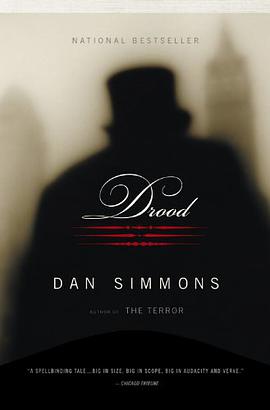
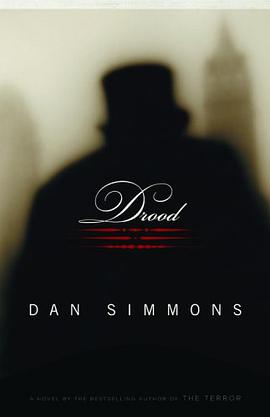
Drood by Dan Simmons
(2009-02-16)
Submit Your Own Review
3 comments / Submit comment
February 2009
Little, Brown and Company
ISBN 978-0316007023
784 Pages
http://www.dansimmons.com
Already an acknowledged master at his craft (Hugo Award, Bram Stoker Award, British Fantasy Award, World Fantasy Award), Dan Simmons may have written his most accomplished novel in Drood. The novel gives readers what could be a bird eye view on Charles Dickens during the last five years of his life following the writer near fatal rail crash. While the novel does center on those years, it is through the eyes of Dickens Wilkie Collins, a successful novelist in his own right and prot嶲?and friend to Dickens and in Collins mind rival.
At the outset, Collins seems a rather affable, if slightly proud individual. Considering the critical and financial success he attained, Collins is probably allowed some leeway in feeling good about what he does. As the novel progresses, Collins becomes a more self-important, pretentious, arrogant, spiteful, and bitter individual. This only made the novel all the more addictive and difficult to put down, much like the laudanum Collins consumes in greater quantities as the story progresses.
But, what of Dickens? Well, the story truly becomes more about Collins than Dickens and much of the power Dickens holds over Collins. Collins both loves Dickens and seeks his approval, but comes to despise and wish death upon the great writer. In many ways, I was reminded of how Gollum/Smeagol felt about the One Ring and himself. Dickens is inescapable throughout the novel. His presence is felt even in his absence, as Collins cannot stop thinking about him. Throughout the novel, Dickens comes across as a larger-than-life character, with an affable, confident nature that is like a sun in a galaxy, ever drawing people to him to share in his power. Many times in the novel, Collins refers to Dickens by one of his nicknames, the Inimitable, for that is truly the feel Simmons evokes for Dickens. There is and can only be one Dickens and what he is in the novel is the epitome of Cult of Personality ?he works the media, he works the crowd, and is able to convince the engender the general populace to side with him in a divorce he initiated because of his passion for another woman.
But what of Drood? Even more so than Dickens, his absence for a majority of the narrative is a looming thing. With only Collins as our source of information, just who or what Drood is comes into question for a majority of the novel. Early on it becomes relatively clear that Wilkie Collins is one of a long line of Unreliable Narrators. Dickens tells Collins he came across the person of Drood amidst the wreckage of the infamous Staplehurst Rail crash of 1865 in which 10 people died and 40 were injured. Drood, through Collins relay of Dickens account, comes across as almost a Grim-Reaper figure, but is much more than that. His presence haunts Collins narrative as a sometimes figure of evil, retribution, injustice, death, and the unknown.
Many of the flaws in Collins character, in a "who he is" sense rather than "a person in a story" sense, are what help to make him such an engaging narrator. It bears repeating what an arrogant man he comes across as because it isn a major element at the outset of the novel. This progression and inflation of his ego is paralleled with the increasing amounts of laudanum Collins ingests to offset his rheumatic gout, a form of arthritis. Collins speaks of a ghostly doppelg鄚ger who has visited him for most of his life. Clearly, Collins is not only unreliable as a narrator, but can considered unstable in general.
The feel of the novel is rich and exquisitely evokes Victorian London. Since I can really travel back in time to check on Simmon veracity in his ability to evoke the time and place, I can only go with my gut and it tells me Simmons hit the mark in this respect. In that sense, the novel haunted feel is only strengthened by the time and place ?an era of gaslights, trains and a world at the cusp of vast technological change. The London of Drood, especially the London nights, is very much hidden in shadows with smoke ound the corner and hints of danger and otherworldy Underworlds.
Both Collins and Dickens take mythic journeys in this novel, most notably to the Underworld of London. A vast cavern of tunnels underneath the great city where day laborers live in abject poverty and opium dens are visited by men of society, including Collins. It is a dangerous place, a place where vagrants live, where "lost boys" roam the catacombs, and where the dark figure of Drood and his two steersmen usher Dickens on a gondola to the deepest recesses of Underworld. The mythic parallels to Charon, and more explicitly, the Egyptian god of the dead, Anubis are evocative and resonant in their power. Here again, Collins role as Unreliable Narrator comes into play, if not during these scenes as much as they do later upon reflection of the events.
While Drood himself is said to have Egyptian heritage, and the catacombs of the Underworld of London are marked with Egyptian hieroglyphics, I couldn help but feel a bit of a Lovecraft flavor as well. The Lovecraftian elements are not blatant, but the talk of ancient gods to whom Drood is loyal bears some parallels to much of the Lovecraftian/Cthulhu mythos. This is probably more from Lovecraft drawing inspiration from Egyptian mythology than anything else.
In many ways, Drood is also a novel for bibliophiles and (obviously) lovers of Victorian literature and culture. Throughout the novel, many allusions are made to past works of Dickens, the inspiration for characters in his novels as well as the characters, plots and genesis of much of Collins fiction. Drood has encouraged me to dip my toes into both Dickens fiction and Collins fiction
So in the end, what is Drood about? Many things ?the power of creativity, imagination, the haunting specter of death, jealousy, addiction, the written word, story, delusion, artistry, and many more things. What Dan Simmons has done in Drood is nothing short of breathtaking and captivating, in evoking such a genuine feel for these people and the world in which they inhabit, but by also creating a narrator/character who is both something of a prick, but also a vastly compelling storyteller. I can recommend this staggering and immersive novel highly enough.
?2009 Rob H. Bedford
(2009-02-16)
Submit Your Own Review
3 comments / Submit comment
February 2009
Little, Brown and Company
ISBN 978-0316007023
784 Pages
http://www.dansimmons.com
Already an acknowledged master at his craft (Hugo Award, Bram Stoker Award, British Fantasy Award, World Fantasy Award), Dan Simmons may have written his most accomplished novel in Drood. The novel gives readers what could be a bird eye view on Charles Dickens during the last five years of his life following the writer near fatal rail crash. While the novel does center on those years, it is through the eyes of Dickens Wilkie Collins, a successful novelist in his own right and prot嶲?and friend to Dickens and in Collins mind rival.
At the outset, Collins seems a rather affable, if slightly proud individual. Considering the critical and financial success he attained, Collins is probably allowed some leeway in feeling good about what he does. As the novel progresses, Collins becomes a more self-important, pretentious, arrogant, spiteful, and bitter individual. This only made the novel all the more addictive and difficult to put down, much like the laudanum Collins consumes in greater quantities as the story progresses.
But, what of Dickens? Well, the story truly becomes more about Collins than Dickens and much of the power Dickens holds over Collins. Collins both loves Dickens and seeks his approval, but comes to despise and wish death upon the great writer. In many ways, I was reminded of how Gollum/Smeagol felt about the One Ring and himself. Dickens is inescapable throughout the novel. His presence is felt even in his absence, as Collins cannot stop thinking about him. Throughout the novel, Dickens comes across as a larger-than-life character, with an affable, confident nature that is like a sun in a galaxy, ever drawing people to him to share in his power. Many times in the novel, Collins refers to Dickens by one of his nicknames, the Inimitable, for that is truly the feel Simmons evokes for Dickens. There is and can only be one Dickens and what he is in the novel is the epitome of Cult of Personality ?he works the media, he works the crowd, and is able to convince the engender the general populace to side with him in a divorce he initiated because of his passion for another woman.
But what of Drood? Even more so than Dickens, his absence for a majority of the narrative is a looming thing. With only Collins as our source of information, just who or what Drood is comes into question for a majority of the novel. Early on it becomes relatively clear that Wilkie Collins is one of a long line of Unreliable Narrators. Dickens tells Collins he came across the person of Drood amidst the wreckage of the infamous Staplehurst Rail crash of 1865 in which 10 people died and 40 were injured. Drood, through Collins relay of Dickens account, comes across as almost a Grim-Reaper figure, but is much more than that. His presence haunts Collins narrative as a sometimes figure of evil, retribution, injustice, death, and the unknown.
Many of the flaws in Collins character, in a "who he is" sense rather than "a person in a story" sense, are what help to make him such an engaging narrator. It bears repeating what an arrogant man he comes across as because it isn a major element at the outset of the novel. This progression and inflation of his ego is paralleled with the increasing amounts of laudanum Collins ingests to offset his rheumatic gout, a form of arthritis. Collins speaks of a ghostly doppelg鄚ger who has visited him for most of his life. Clearly, Collins is not only unreliable as a narrator, but can considered unstable in general.
The feel of the novel is rich and exquisitely evokes Victorian London. Since I can really travel back in time to check on Simmon veracity in his ability to evoke the time and place, I can only go with my gut and it tells me Simmons hit the mark in this respect. In that sense, the novel haunted feel is only strengthened by the time and place ?an era of gaslights, trains and a world at the cusp of vast technological change. The London of Drood, especially the London nights, is very much hidden in shadows with smoke ound the corner and hints of danger and otherworldy Underworlds.
Both Collins and Dickens take mythic journeys in this novel, most notably to the Underworld of London. A vast cavern of tunnels underneath the great city where day laborers live in abject poverty and opium dens are visited by men of society, including Collins. It is a dangerous place, a place where vagrants live, where "lost boys" roam the catacombs, and where the dark figure of Drood and his two steersmen usher Dickens on a gondola to the deepest recesses of Underworld. The mythic parallels to Charon, and more explicitly, the Egyptian god of the dead, Anubis are evocative and resonant in their power. Here again, Collins role as Unreliable Narrator comes into play, if not during these scenes as much as they do later upon reflection of the events.
While Drood himself is said to have Egyptian heritage, and the catacombs of the Underworld of London are marked with Egyptian hieroglyphics, I couldn help but feel a bit of a Lovecraft flavor as well. The Lovecraftian elements are not blatant, but the talk of ancient gods to whom Drood is loyal bears some parallels to much of the Lovecraftian/Cthulhu mythos. This is probably more from Lovecraft drawing inspiration from Egyptian mythology than anything else.
In many ways, Drood is also a novel for bibliophiles and (obviously) lovers of Victorian literature and culture. Throughout the novel, many allusions are made to past works of Dickens, the inspiration for characters in his novels as well as the characters, plots and genesis of much of Collins fiction. Drood has encouraged me to dip my toes into both Dickens fiction and Collins fiction
So in the end, what is Drood about? Many things ?the power of creativity, imagination, the haunting specter of death, jealousy, addiction, the written word, story, delusion, artistry, and many more things. What Dan Simmons has done in Drood is nothing short of breathtaking and captivating, in evoking such a genuine feel for these people and the world in which they inhabit, but by also creating a narrator/character who is both something of a prick, but also a vastly compelling storyteller. I can recommend this staggering and immersive novel highly enough.
?2009 Rob H. Bedford