Naomi Klein — 作者 (26)
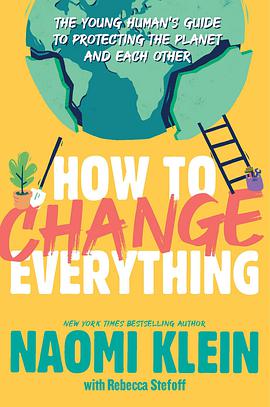
How to Change Everything [图书] 豆瓣
作者: Naomi Klein / Rebecca Stefoff publishing house: Puffin Canada 2021 - 2
A long-awaited guide to climate action and justice for young readers by bestselling, award-winning, internationally acclaimed writer and climate activist Naomi Klein.
Temperatures are rising all over the world, leading to wildfires, droughts, animal extinctions and ferocious storms -- climate change is real. But how did we get to this state, and what can we do next? What if we could work to protect the planet, while also taking action to make life fairer and more equal for the people who live on it?
We can -- if we're willing to change everything.
In her first book written for young readers, internationally acclaimed, bestselling author and social activist Naomi Klein, with Rebecca Steffof, lays out the facts and challenges of climate change and the movement for climate justice. Using examples of change and protest from around the world, including profiles of young activists from a wide range of backgrounds, Klein shows that young people are not just part of the climate change movement, they are leading the way.
How to Change Everything will provide readers with clear information about how our planet is changing, but also, more importantly, with inspiration, ideas, and tools for action. Because young people can help build a better future. Young people can help decide what happens next. Young people can help change everything.
"If you can get only one climate change book for youth, let it be this one.” --STARRED REVIEW, Kirkus Reviews
"A necessary purchase to educate teens on the seriousness of climate change and the imperative to enact change now." --School Library Journal
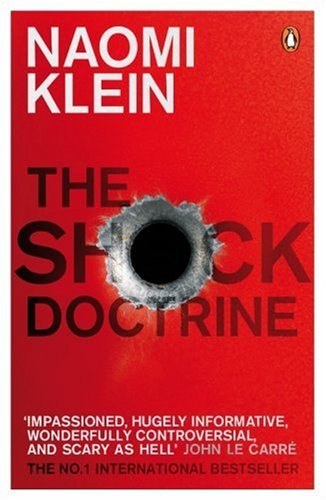
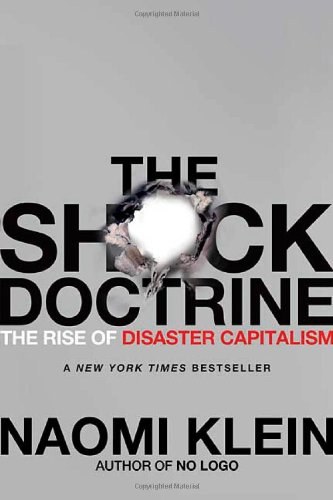
The Shock Doctrine [图书] 豆瓣
作者: Naomi Klein publishing house: Penguin Books Ltd 2008 - 5
Around the world in Britain, the United States, Asia and the Middle East, there are people with power who are cashing in on chaos; exploiting bloodshed and catastrophe to brutally remake our world in their image. They are the shock doctors. Thrilling and revelatory, "The Shock Doctrine" cracks open the secret history of our era. Exposing these global profiteers, Naomi Klein discovered information and connections that shocked even her about how comprehensively the shock doctors' beliefs now dominate our world - and how this domination has been achieved. Raking in billions out of the tsunami, plundering Russia, exploiting Iraq - this is the chilling tale of how a few are making a killing while more are getting killed.
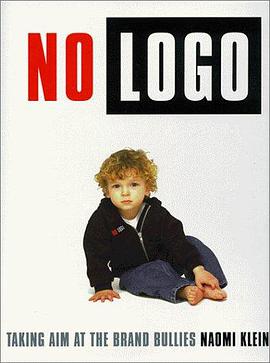
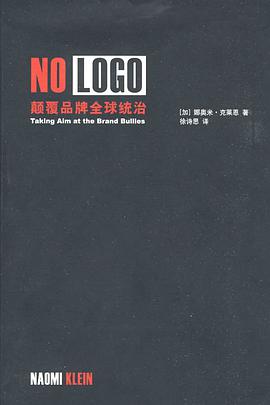
No Logo [图书] 豆瓣
作者: Naomi Klein publishing house: Picador 2000 - 1
With a new Afterword to the 2002 edition. No Logo employs journalistic savvy and personal testament to detail the insidious practices and far-reaching effects of corporate marketing—and the powerful potential of a growing activist sect that will surely alter the course of the 21st century. First published before the World Trade Organization protests in Seattle, this is an infuriating, inspiring, and altogether pioneering work of cultural criticism that investigates money, marketing, and the anti-corporate movement.
As global corporations compete for the hearts and wallets of consumers who not only buy their products but willingly advertise them from head to toe—witness today’s schoolbooks, superstores, sporting arenas, and brand-name synergy—a new generation has begun to battle consumerism with its own best weapons. In this provocative, well-written study, a front-line report on that battle, we learn how the Nike swoosh has changed from an athletic status-symbol to a metaphor for sweatshop labor, how teenaged McDonald’s workers are risking their jobs to join the Teamsters, and how “culture jammers” utilize spray paint, computer-hacking acumen, and anti-propagandist wordplay to undercut the slogans and meanings of billboard ads (as in “Joe Chemo” for “Joe Camel”).
No Logo will challenge and enlighten students of sociology, economics, popular culture, international affairs, and marketing.
“This book is not another account of the power of the select group of corporate Goliaths that have gathered to form our de facto global government. Rather, it is an attempt to analyze and document the forces opposing corporate rule, and to lay out the particular set of cultural and economic conditions that made the emergence of that opposition inevitable.”—Naomi Klein, from her Introduction
The Shock Doctrine [图书] 豆瓣 Goodreads
作者: Naomi Klein publishing house: Metropolitan Books 2007 - 9
The bestselling author of No Logo shows how the global free market has exploited crises and shock for three decades, from Chile to Iraq
In her groundbreaking reporting over the past few years, Naomi Klein introduced the term disaster capitalism. Whether covering Baghdad after the U.S. occupation, Sri Lanka in the wake of the tsunami, or New Orleans post-Katrina, she witnessed something remarkably similar. People still reeling from catastrophe were being hit again, this time with economic shock treatment, losing their land and homes to rapid-fire corporate makeovers.
The Shock Doctrine retells the story of the most dominant ideology of our time, Milton Friedman s free market economic revolution. In contrast to the popular myth of this movement s peaceful global victory, Klein shows how it has exploited moments of shock and extreme violence in order to implement its economic policies in so many parts of the world from Latin America and Eastern Europe to South Africa, Russia, and Iraq.
At the core of disaster capitalism is the use of cataclysmic events to advance radical privatization combined with the privatization of the disaster response itself. Klein argues that by capitalizing on crises, created by nature or war, the disaster capitalism complex now exists as a booming new economy, and is the violent culmination of a radical economic project that has been incubating for fifty years.
From Publishers Weekly
The neo-liberal economic policies—privatization, free trade, slashed social spending—that the Chicago School and the economist Milton Friedman have foisted on the world are catastrophic in two senses, argues this vigorous polemic. Because their results are disastrous—depressions, mass poverty, private corporations looting public wealth, by the author's accounting—their means must be cataclysmic, dependent on political upheavals and natural disasters as coercive pretexts for free-market reforms the public would normally reject. Journalist Klein (No Logo) chronicles decades of such disasters, including the Chicago School makeovers launched by South American coups; the corrupt sale of Russia's state economy to oligarchs following the collapse of the Soviet Union; the privatization of New Orleans's public schools after Katrina; and the seizure of wrecked fishing villages by resort developers after the Asian tsunami. Klein's economic and political analyses are not always meticulous. Likening free-market shock therapies to electroshock torture, she conflates every misdeed of right-wing dictatorships with their economic programs and paints a too simplistic picture of the Iraq conflict as a struggle over American-imposed neo-liberalism. Still, much of her critique hits home, as she demonstrates how free-market ideologues welcome, and provoke, the collapse of other people's economies. The result is a powerful populist indictment of economic orthodoxy.
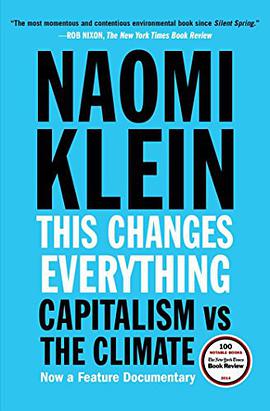
This Changes Everything [图书] 豆瓣
Naomi Klein
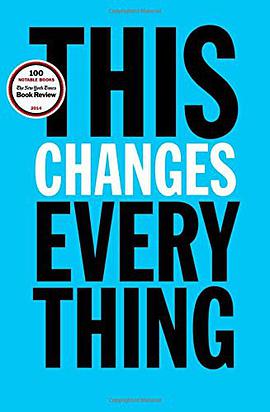
作者: Naomi Klein publishing house: Simon & Schuster 2014 - 9
The most important book yet from the author of the international bestseller The Shock Doctrine, a brilliant explanation of why the climate crisis challenges us to abandon the core “free market” ideology of our time, restructure the global economy, and remake our political systems.
In short, either we embrace radical change ourselves or radical changes will be visited upon our physical world. The status quo is no longer an option.
In This Changes Everything Naomi Klein argues that climate change isn’t just another issue to be neatly filed between taxes and health care. It’s an alarm that calls us to fix an economic system that is already failing us in many ways. Klein meticulously builds the case for how massively reducing our greenhouse emissions is our best chance to simultaneously reduce gaping inequalities, re-imagine our broken democracies, and rebuild our gutted local economies. She exposes the ideological desperation of the climate-change deniers, the messianic delusions of the would-be geoengineers, and the tragic defeatism of too many mainstream green initiatives. And she demonstrates precisely why the market has not—and cannot—fix the climate crisis but will instead make things worse, with ever more extreme and ecologically damaging extraction methods, accompanied by rampant disaster capitalism.
Klein argues that the changes to our relationship with nature and one another that are required to respond to the climate crisis humanely should not be viewed as grim penance, but rather as a kind of gift—a catalyst to transform broken economic and cultural priorities and to heal long-festering historical wounds. And she documents the inspiring movements that have already begun this process: communities that are not just refusing to be sites of further fossil fuel extraction but are building the next, regeneration-based economies right now.
Can we pull off these changes in time? Nothing is certain. Nothing except that climate change changes everything. And for a very brief time, the nature of that change is still up to us.