Jack Kornfield — 作者 (9)
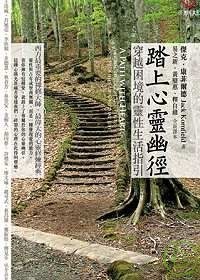
踏上心靈幽徑-穿越困境的靈性生活指引 [图书] 豆瓣
作者: Jack Kornfield 译者: 易之新,黃璧惠,釋自鼐 出版社: 張老師文化 2008 - 3
『西方最重要的禪修大師,最偉大的心靈修煉經典』
-繼西藏生死書後,又一開啟智慧與慈悲的靈性巨著
☆二○○八年全新譯本,鄭振煌、趙可式、余德慧、李欣頻等心理界、學術界、宗教界、媒體界十四位名家強力推薦,《EQ》作者高曼感動推薦!
☆佛教徒必讀,對靈修有興趣者之必備案頭書。
你,是否曾好好愛過?
在我們所有的活動之下,深藏著對愛和愛之行動的渴求。
靈性與占有或智商無關,而是一種發現愛的能力。
當你擁有這種愛,就踏上了專屬於你的心靈幽徑。
這條心路允許痛苦穿透我們,碎裂的心將在此得到療癒。
本書是美國內觀禪大師暨臨床心理學博士傑克.康菲爾德的半自傳實錄,也是靈性禪修領域的經典之作。康菲爾德認為許多人誤解靈性修行的真意,只是用來逃避存在的痛苦和困難;許多人進入寺院、教堂和道場,只為了尋求特殊的效果,如狂喜狀態與超凡經驗。他認為人們需要勇士的心來直接面對自己的生活,包括各種苦痛和限制、快樂和可能性。這種勇氣會將各個生活層面納入靈性修行之中,那時靈性才能真正與生活整合。
心理治療有如靈性修行的道路。康菲爾德主張結合禪修與心理治療,將靈性修行落實於日常生活,並由心智的開悟轉向心的療癒。書中充滿靈性的撫慰,提供各類初階到進階的修行方法,也點出物化靈性與靈性團體的潛在危險。康菲爾德不但是個說故事高手,穿插文中的詩篇、哲語更為這本優美的靈性之書增添豐富的文學性。
本書特色
☆ 西方最重要的禪修大師,最偉大的心靈修煉經典:作者康菲爾德是將上座部(小乘)佛教引介至西方最重要的禪修大師,本書是其代表作。書中反省一般人對靈性修行的誤解與迷思,重新將靈修帶進日常生活,為東西方讀者帶來莫大啟發。
☆整合現代心靈和心理的小百科:作者身兼佛學老師與心理治療師,另闢蹊徑,走出一條全新的心靈幽徑:結合東方內觀禪修與西方心理學,為玄祕的心靈境界和現代心理學搭起一座橋樑。
☆廣納各傳統靈修精華,鼓勵讀者走出自己的靈性道路:介紹各種傳統的靈修精華,包括南傳、藏傳佛教、禪宗、基督宗教、猶太教、回教、蘇菲教等,給予讀者開闊的視野。
☆作者經歷特殊,親身見證本書論點:本書為作者半生以來的修行史。他有基督宗教的文化背景,出家後卻又還俗,攻讀臨床心理學,正是本書的最佳見證。
☆將靈修帶進生活,直指修行弊病:作者置身靈性團體,卻能直指其中的弊病,提點讀者面對修行常見狀況的應對方法,以及選擇靈修老師等相關注意事項。
☆實用的冥想練習:書中附有簡易的禪修練習,由淺入深為讀者介紹靈性修行的各個階段。
作者出家後又還俗、娶妻生子,對於世出世間法允厥其中,不盲目偏執出家勝過在家,強調在日常生活中修禪,活潑實用。-鄭振煌,中華維鬘學會理事長
作者天衣無縫地整合了西方心理治療與佛教禪修,創造出一套能夠學習並實行的「內觀禪修」,開啟智慧與慈悲的心門,使現代孤寂焦躁的心靈找到觸動生命核心的修行方法。 -趙可式,國立成功大學醫學院教授.台灣安寧療護推手
現代修行接受苦難的折磨,並在其中轉識成智。這並非苦行,而是「苦中行」,是苦集滅道真實的運作循環。它不再仰賴書本或教條,而是隨著苦痛的進程進入「真實本心」的運動。 -余德慧,慈濟大學宗教與文化研究所教授兼所長
傑克.康菲爾德為禪修者的道路提供了親切、溫暖而實用的指引,充滿澄澈的洞見。本書是所有探索靈性生活者的完美指南。-丹尼爾.高曼(Daniel Goleman),《EQ》作者
傑克.康菲爾德再次證實他在靈性旅程(特別是禪修)中,對於心的領域及其韻律的認識與體驗是多麼廣博。他以西方人少見的開放識見,為讀者提供了親切的心路見聞。-史蒂芬.拉維(Stephen Levine),《擁抱憂傷》、《生命之歌》作者
我們太常將心理過程與靈性歷程分開,令人高興的是,本書讓我們看到這兩個部分如何重新結合起來。-拉姆.達斯(Ram Dass),《活在當下》作者
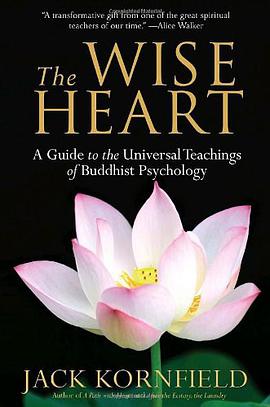
The Wise Heart [图书] 豆瓣
作者: Jack Kornfield 出版社: Bantam 2009 - 5
Experience the Transformational Power of Buddhism’s Psychology of the Heart with Bestselling Author Jack Kornfield
You have within you unlimited capacities for extraordinary love, for joy, for communion with life, and for unshakable freedom—and here is how to awaken them. In The Wise Heart , celebrated author and psychologist Jack Kornfield offers the most accessible, comprehensive, and illuminating guide to Buddhist psychology ever published in the West. For meditators and mental health professionals, Buddhists and non-Buddhists alike, here is a vision of radiant human dignity, a journey to the highest expression of human possibility—and a practical path for realizing it in our own lives.
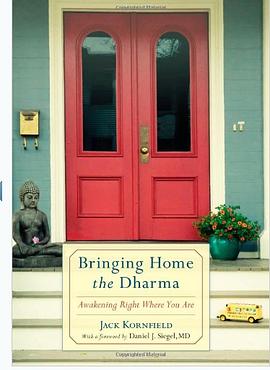
Bringing Home the Dharma [图书] 豆瓣
作者: Jack Kornfield 出版社: Shambhala 2011 - 11
If you want to find inner peace and wisdom, you don't need to move to an ashram or monastery. Your life, just as it is, is the perfect place to be. Jack Kornfield, one of America's most respected Buddhist teachers, shares this and other key lessons gleaned from more than forty years of committed study and practice.
Topics include:
• How to cultivate loving-kindness, compassion, joy, and equanimity
• Conscious parenting
• Spirituality and sexuality
• The way of forgiveness
• Committing ourselves to healing the suffering in the world
Bringing Home the Dharma includes simple meditation practices for awakening our buddha nature—our wise and understanding heart—amid the ups and downs of our ordinary daily lives.
Review
“One of the greatest spiritual teachers of our time.”—Alice Walker
“Jack Kornfield is a wonderful storyteller and a great teacher.”—Thich Nhat Hanh
“One of Western Buddhism’s wise elders, Jack Kornfield harvests a lifetime of experiences to create a masterful, clear, and moving picture of the human mind and heart.”—Norman Fischer
“Jack Kornfield brings to life a way to understand and cultivate mindfulness, compassion, lovingkindness, and true wisdom that penetrates to the core of what liberation is all about.”—Jon Kabat-Zinn
“Jack is helping to pave the path for American Buddhism, bringing essential basics into our crazy modern lives.”—Natalie Goldberg
“[Kornfield’s] eloquence and accuracy here demonstrate his own mastery of many everyday and ethereal insights.”—New York Journal of Books
“Kornfield has filled his latest book with jewels of Buddhist insight, wisdom, metaphor, and anecdotes, as well as practical instructions for meditation practice and living a meaningful life.”—Yoga International
“Ever wish your life had an owner’s manual? Jack Kornfield has written it for you in Bringing Home the Dharma.”—Portland Book Review
Meditation for Beginners [图书] 豆瓣
作者: Jack Kornfield 出版社: Sounds True 2008 - 8
Chapter One
The Ancient Art of Meditation
MEDITATION FOR BEGINNERS offers the central training and teachings found in the best Buddhist monasteries translated for Western society. In Meditation for Beginners, you will find some of the simplest and most universal of these practices of meditation — in particular, the practices of mindfulness and lovingkindness. An integral part of this instruction will be the six fundamental meditation practices included on the enclosed CD. These guided meditations were recorded at actual meditation retreats and are designed to give you a direct experience of the material presented in this book.
The point of these teachings has nothing to do with becoming a Buddhist, or learning any Eastern ceremonies or rituals or bowing. What is important is that you learn how to work with meditation in order to find benefits from it in your life. When we take time to quiet ourselves, we can all sense that our lives could be lived with greater compassion and greater wakefulness. To meditate is to support this inner potential and allow it to come forth into our lives.
There are many good forms of meditation practice. A good meditation practice is any one that develops awareness or mindfulness of our body and our senses, of our mind and heart. It does not really matter which kind you choose. What is more important is that after you choose a form of meditation you stay with it, and practice it regularly. Meditation takes discipline, just like learning how to play the piano. If you want to learn how to play the piano, it takes more than just a few minutes a day, once in a while, here and there. If you really want to learn any important skill—whether it is playing the piano or meditation — it grows with perseverance, patience, and systematic training.
So pick a type of meditation that appeals to you and practice it. Work with it every day, and work with a teacher if you can, or find circumstances where you can sit together with other people. In the process of practicing regularly, you will begin to develop your capacity to open to the present moment. You will begin to develop your capacity to open to the present moment. You will begin to develop patience and compassion when you sit regularly, and you will open to everything that is here.
Meditation for Beginners will present the most important basic exercises for mindfulness meditation, also called vipassana practice, the heart of Buddhist meditation. Vipassana (a Pali word meaning “ to see things as they really are”) is the most widely practiced form of meditation in Southeast Asia and is central to all Buddhist traditions. This practice emphasizes mindful attention, developing an immediate awareness of one’s experience in all spheres of activity.
The meditations in Meditation for Beginners are designed to help you shine the light of mindfulness on every aspect of your daily experience — and to show you how to extend the healing the healing power of lovingkindness to yourself and others. Mindfulness practice is also called “insight meditation.” It does not seek to focus attention on a meditative image of Buddha, or a deity, or a light, or a candle, or sacred words. Instead, through mindfulness we discover a way to develop stillness in the midst of activity. Then, even the most mundane, repetitive experience — such as eating, walking, or answering the phone — can be drawn into the field of meditative awareness, included in the practice of mindfulness. In this way, our meditation is not an exercise that we do every once in a while, but rather away of being that we can carry with us every moment of our days.
Mindfulness helps train us to be more present and alive for whatever we meet to develop what Alan Watts describes as “the art of living”: “The art of living… is neither careless drifting on the one hand nor fearful clinging to the past… on the other. It consists in being completely sensitive to each moment, in regarding it as utterly new and unique, in having the mind open and wholly receptive.”
To begin to meditate is to look into our lives with interest and kindness and discover how to be wakeful and free. We have so many ideas and beliefs about ourselves. We tell ourselves stories about what we want and who we are, smart or kind. Often these are the unexamined and limited ideas of others that we have internalized and then gone on to live out. To meditate is to discover new possibilities, to awaken the capacity that each of us has to live more wisely, more lovingly, more compassionately, and more fully.
A Path with Heart [图书] 豆瓣
作者: Jack Kornfield 出版社: Bantam 1993 - 6
Beloved Western Buddhist master Kornfield makes known his personal, practical wisdom, garnered from 25 years of practicing and teaching the path of awakening, as he guides self-searchers to a simplicity of perception that brings alive spiritual practice, peace, and truth in their daily lives.
Holotropic Breathwork: A New Approach to Self-Exploration and Therapy [图书] Goodreads
作者: Stanislav Grof / Christina Grof 出版社: Excelsior Editions 2010 - 1
The definitive overview of this transformative breathwork.

In this long-awaited book, Stanislav Grof and Christina Grof describe their groundbreaking new form of self-exploration and Holotropic Breathwork. Holotropic means “moving toward wholeness,” from the Greek holos (whole) and trepein (moving in the direction of). The breathwork utilizes the remarkable healing and transformative potential of nonordinary states of consciousness. These states engender a rich array of experiences with unique healing potential—reliving childhood memories, infancy, birth and prenatal life, and elements from the historical and archetypal realms of the collective unconscious. Induced by very simple means—a combination of accelerated breathing, evocative music, and bodywork in a safe and supportive setting, Holotropic Breathwork integrates the insights from modern consciousness research, depth psychology, transpersonal psychology, anthropology, Eastern spiritual practices, and mystical traditions. The Grofs’ work with holotropic states of consciousness has introduced revolutionary changes to psychiatry, psychology, and psychotherapy. Written in a clear, easily understandable style, this indispensable book summarizes their remarkable insights.

“Stanislav Grof is one of the most important pioneers in the scientific understanding of consciousness. He and his wife, Christina, have contributed both to its intellectual and experiential understanding through their work with Holotropic Breathwork. Their book on this new approach to self-exploration and therapy is a must read.” — Deepak Chopra, author of Reinventing the Body, Resurrecting the How to Create a New You

“This fascinating, informative book invites you to open your mind to explore the depths of the psyche and transpersonal dimensions of consciousness. Stanislav and Christina Grof, who pioneered this powerful, innovative approach to therapy and personal growth, offer sound advice, thoroughly grounded in decades of practical experience.” — Frances Vaughan, author of Shadows of the Seeing Through Spiritual Illusions

“Take a few rapid, staccato breaths and open this book. You will have a great read, and at the same time maybe discover a new kind of consciousness, just waiting inside of you to be revealed. Stanislav and Christina Grof are modern pioneers of consciousness and this book is their map of the territory. Holotropic Breathwork reveals how the Grofs developed their revolutionary healing techniques, often told through fascinating stories of people being transformed by the breathwork process. The Grofs are at the center of the current psycho-spiritual revolution in the West, and this book is a testament to their role in our collective healing.” — Wes Nisker, author of The Essential Crazy Wisdom and Buddha’s A Practical Guide to Discovering Your Place in the Cosmos

“The Grofs offer the first comprehensive text of the theory and practice of their pioneering and integrative model of experiential psychotherapy and self-exploration. This ‘psychology of the future,’ with its extended cartography of the psyche, provides irrefutable evidence that spontaneous episodes of nonordinary states of consciousness have great healing, transformative, and even evolutionary potential for humankind. History will record that Holotropic Breathwork and the certification training and program designed by the Grofs advanced the field of psychotherapy far beyond the contributions of Freud and Jung.” — Angeles Arrien, author of The Four-Fold Walking the Paths of the Warrior, Teacher, Healer, and Visionary

“In this remarkable book Stanislav and Christina Grof summarize their pathbreaking discoveries of the past thirty years. They make two significant contributions, one to science, the other to our shared future. The first, by showing that altered states of consciousness have a dimension that is veridical—‘imaginal’ rather than ‘imaginary’—and thereby transcend the outdated but still persistent belief that our experience of the world is limited to information conveyed by our senses. The second, by demonstrating that the altered states achieved inter alia through their holotropic breathwork method reduce aggression and enhance tolerance, compassion, ecological sensitivity, and a sense of planetary citizenship. Since these are the very qualities we urgently need to cope with the global emergency in which we presently find ourselves, their contribution to the future of humankind matches their contribution to the future of psychology.” — Ervin Laszlo, author of The Connectivity Foundations of an Integral Science of Quantum, Cosmos, Life, and Consciousness

“Holotropic Breathwork appears to have the potential for facilitating psychological insights and transformations that can be remarkably rapid and deep.” — Roger Walsh, coeditor of Higher Eminent Elders Explore the...