Marcel Dalio — Actor (39)
I, Dalio (2015) [Movie] Douban TMDB IMDb
I, Dalio
director:
马克·拉帕珀特
actor:
马塞尔·达里奥
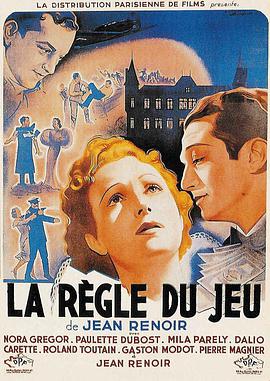
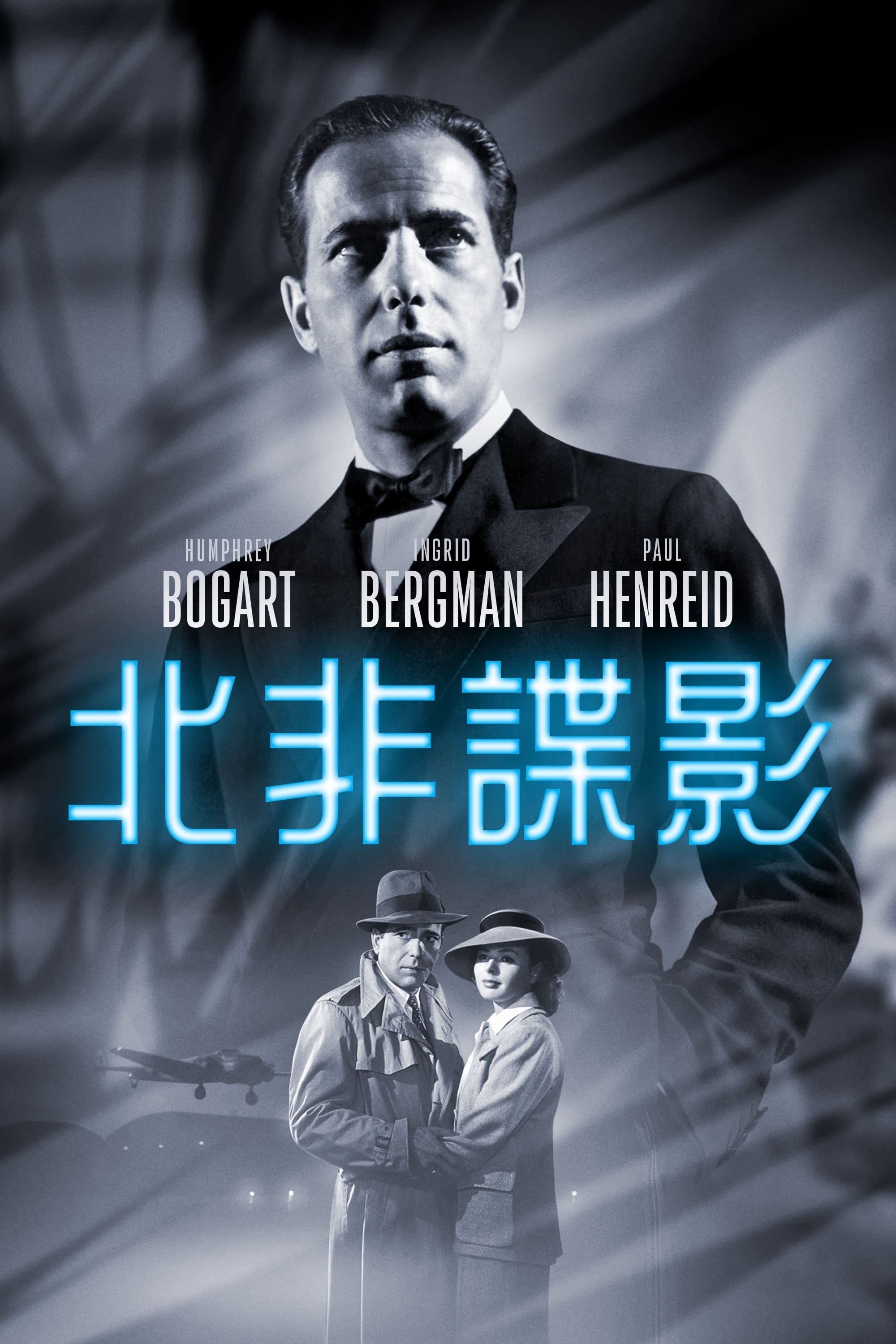
The great French actor, Marcel Dalio, who has the lead role in Jean Renoir's THE RULES OF THE GAME, also appears in Renoir's GRAND ILLUSION. In both films he plays a character who is Jewish, as Dalio was in real life. In fact, in most of the French films he's in the 1930s, he almost always plays shady characters, informers, blackmailers and gangsters. In other words, he is always "the Jew." When the Nazis invaded France in 1940, he fled to America and appeared in CASABLANCA and TO HAVE AND HAVE NOT. In America, he was no longer the Jew but The Frenchman. He became, in dozens of films, America's idea of a typical Frenchman. His film career has these two strands in which he has two different identities. Are you defined by other people and their perceptions of who you are? Are you always a creation of the way people want to see you? Or can you exist outside of the arbitrary boundaries which are placed on you? Written by Fandor

Can-Can (1960) [Movie] Douban TMDB IMDb WikiData
Can-Can
other title:
康康舞
/
我爱巴黎(港/台)
…
A Parisian nightclub owner known for her performances of the can-can attracts the ire of a self-righteous judge. He hatches a plot to photograph her in the act but ends up falling for her — much to the chagrin of her lawyer boyfriend.
The Pearls of the Crown (1937) [Movie] Douban TMDB IMDb WikiData
Les Perles de la couronne
director:
萨卡·圭特瑞
actor:
雅克琳·德吕巴克
/
萨卡·圭特瑞
…
other title:
皇冠上的珍珠
/
Les Perles de la couronne
…
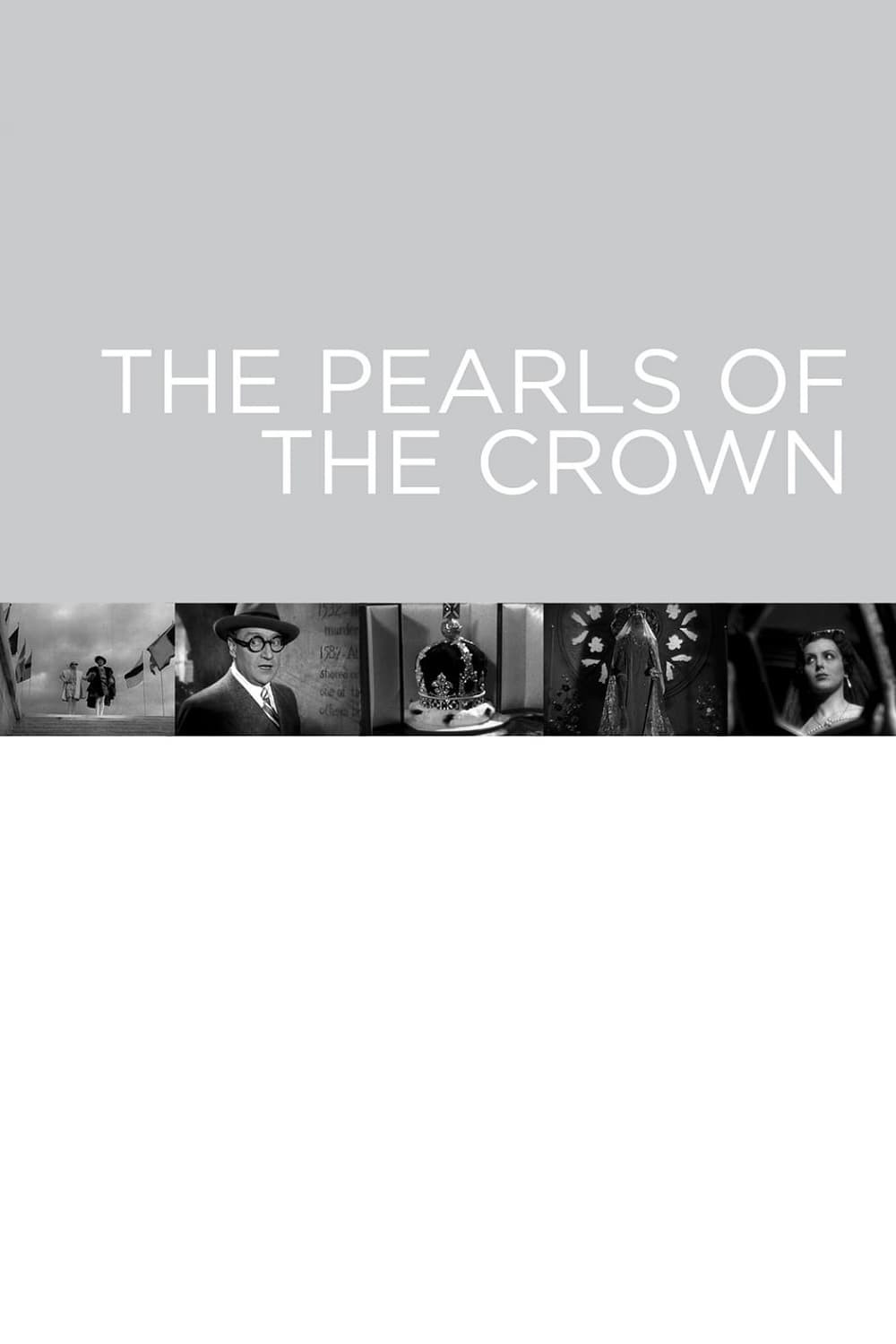
Originally titled Les Perles de Couronne, this Sacha Guitry historical extravaganza stars both Guitry and his wife Jacqueline Delubac. The plotline hinges on four valuable pearls, which pass from hand to hand over a period of several centuries, from the time of Britain's Henry VIII to the present. All of this is offered in flashback form, as a group of modern-day treasure hunters try to locate three of the missing pearls by tracing them back to their previous owners. Guitry shows up as King Francis I, Barras and Napoleon III, in addition to his contemporary persona of Jean Martin; Debulac is seen as Mary Queen of Scots and Empress Josephine. There isn't a scintilla of historical accuracy in the film, nor did Guitry have the slightest intention of including any; his sole purpose was to entertain the audience and serve up a superbly ironic denoument. The supporting cast is a polyglot of French, English and Italian actors, each speaking in his or her own language. The screenplay for Pearls of the Crown was cowritten by Guitry and another immensely talented filmmaker, Christian-Jaque. ~ Hal Erickson, Rovi
Male Companion (1964) [Movie] Douban TMDB IMDb WikiData
Un monsieur de compagnie
director:
Philippe de Broca
actor:
Jean-Pierre Cassel
/
伊琳娜·德米克
…
other title:
男伴
/
Un monsieur de compagnie
…
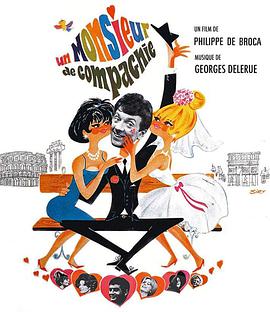
Antoine was raised into the easy life by his very rich grandfather. After the death of his grandfather the money has gone and Antoine falls under the influence of various easy people.
Marthe Richard (1937) [Movie] Douban TMDB IMDb WikiData
Marthe Richard, au service de la France
director:
雷蒙·贝尔纳
actor:
艾薇琪·弗伊勒
/
Délia Col
…
other title:
Marthe Richard au service de la France
/
Marthe Richard, au service de la France
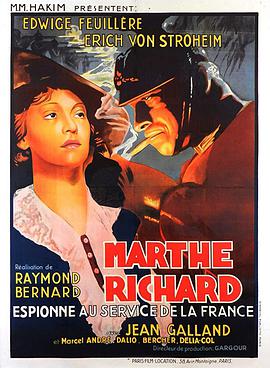
At the start of the First World War, Marthe Richard sees her parents arrested by German soldiers, taken away and shot. When she loses contact with her fiancé, André, a soldier on the Western Front, the young woman hastens to Paris with one thought in her mind – to take revenge on the Germans by serving her country. She is engaged by Commandant Rémond to work as a spy. She is sent to Saint-Sébastien in Spain to make contact with two senior German officers, von Ludow and von Falken. Von Ludow is easily seduced by Marthe’s charms and offers her work as a spy. Having gained the confidence of her enemies, Marthe stands every chance of fulfilling her mission, to determine the whereabouts of a hidden submarine base. However, von Ludow’s mistress, Mata Hari, sees Marthe as a rival and sets out to thwart her mission...
Marthe Richard au service de la France is one of three films by director Raymond Bernard which were set at the time of the First World War. The other two were: Les Croix de bois (1932) and Les Otages (1938). The film is based on the memoirs of Marthe Richard who, as a young woman, worked as a spy for the French during WWI. Richard would later became a leading campaigner against prostitution in France, a staunch supporter of the law that would result in the closure of brothels in 1946.
The main attraction of this film is its cast. The part of Marthe Richard is played by Edwige Feuillère, an engaging and very talented actress who was one of the stars of French cinema in the 1930s and 1940s. Her co-star is the impressive Erich von Stroheim, who had established himself as an actor in Hollywood after an inspired but largely unsuccessful career as a film director. This was the first of around half a dozen French films which von Stroheim starred in before his return to the United States at the start of World War II. It was immediately followed by La Grande illusion, in which von Stroheim again plays a German officer during WWI, arguably the actor’s most memorable film role. At the time, von Stroheim could not speak French and had to learn his lines phonetically, but that did not prevent him from giving a powerful, intensely human performance.
Unlike most of Raymond Bernard’s films, Marthe Richard au service de la France has not aged well. This is partly to do with the quality of the special effects – the air-sea battle sequence at the end of the film was clearly too ambitious to be realised convincingly with the available resources and looks risible compared with comparable Hollywood offerings of the period. However, what most dates the film is its flagrant appeal to nationalism. In contrast to Bernard’s earlier WWI film (the excellent Les Croix de bois), it shows a grotesquely idealised view of war, with John Buchan-style heroes, bloodless conflict and no end of flag-waving crowds. Obviously, the film was an appeal to patriotism as a time when war in Europe looked imminent, when a more realistic approach would have been a much harder sell. It is interesting to compare this with Bernard’s next film, Les Otages, also set during World War I. Whilst this later film also takes a patriotic line, it does so in a far more subtle way, whilst giving a more honest and convincing portrayal of the horrors of war.
One of the main themes of Marthe Richard au service de la France is the question of identity, of people not realising who the real enemy is during a period of crisis. Bernard seems to be strangely prescient of the problems that would beset the French nation when it fell under German occupation in the early 1940s, a time when no one could know for certain who was a collaborator or who was a resistance supporter, a time when persecuted minorities and free-thinkers had to conceal their identities or face deportation to the Nazi death camps. This would provide the subject for Raymond Bernard’s Un ami viendra ce soir (1946), the first film he made after a period of obscurity during the Second World War, one of his darkest and most interesting films. ~ James Travers@frenchfilmguide.com
Marthe Richard au service de la France is one of three films by director Raymond Bernard which were set at the time of the First World War. The other two were: Les Croix de bois (1932) and Les Otages (1938). The film is based on the memoirs of Marthe Richard who, as a young woman, worked as a spy for the French during WWI. Richard would later became a leading campaigner against prostitution in France, a staunch supporter of the law that would result in the closure of brothels in 1946.
The main attraction of this film is its cast. The part of Marthe Richard is played by Edwige Feuillère, an engaging and very talented actress who was one of the stars of French cinema in the 1930s and 1940s. Her co-star is the impressive Erich von Stroheim, who had established himself as an actor in Hollywood after an inspired but largely unsuccessful career as a film director. This was the first of around half a dozen French films which von Stroheim starred in before his return to the United States at the start of World War II. It was immediately followed by La Grande illusion, in which von Stroheim again plays a German officer during WWI, arguably the actor’s most memorable film role. At the time, von Stroheim could not speak French and had to learn his lines phonetically, but that did not prevent him from giving a powerful, intensely human performance.
Unlike most of Raymond Bernard’s films, Marthe Richard au service de la France has not aged well. This is partly to do with the quality of the special effects – the air-sea battle sequence at the end of the film was clearly too ambitious to be realised convincingly with the available resources and looks risible compared with comparable Hollywood offerings of the period. However, what most dates the film is its flagrant appeal to nationalism. In contrast to Bernard’s earlier WWI film (the excellent Les Croix de bois), it shows a grotesquely idealised view of war, with John Buchan-style heroes, bloodless conflict and no end of flag-waving crowds. Obviously, the film was an appeal to patriotism as a time when war in Europe looked imminent, when a more realistic approach would have been a much harder sell. It is interesting to compare this with Bernard’s next film, Les Otages, also set during World War I. Whilst this later film also takes a patriotic line, it does so in a far more subtle way, whilst giving a more honest and convincing portrayal of the horrors of war.
One of the main themes of Marthe Richard au service de la France is the question of identity, of people not realising who the real enemy is during a period of crisis. Bernard seems to be strangely prescient of the problems that would beset the French nation when it fell under German occupation in the early 1940s, a time when no one could know for certain who was a collaborator or who was a resistance supporter, a time when persecuted minorities and free-thinkers had to conceal their identities or face deportation to the Nazi death camps. This would provide the subject for Raymond Bernard’s Un ami viendra ce soir (1946), the first film he made after a period of obscurity during the Second World War, one of his darkest and most interesting films. ~ James Travers@frenchfilmguide.com
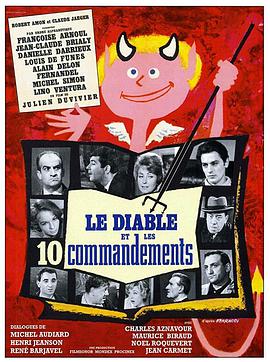
The Devil and the Ten Commandments (1962) [Movie] Douban TMDB IMDb
Le Diable et les Dix Commandements
other title:
恶魔的十个指挥
/
Le Diable et les Dix Commandements
…
The film consists of seven roughly 15 minute episodes, each showing what will happen if one or more of the Ten Commandments will be broken: Jérome Chambard is warned that he will lose his job if he continues to swear; Françoise Beaufort enamored of a stripper calls on her only to find her married to a janitor who doesn't know what kind of dancing his wife performs; Denis, a Jesuit novice, leaves the order to avenge his sister's suicide, which was provoked by Garigny, who seduced her into prostitution and drug addiction; Philip buys a necklace for Micheline though he is bored with her; a young man find out that his real mother is not Madeleine, but actress Clarisse Ardant; Didier Marin, cashier of a bank, was fired by his boss; the Devil appears as a serpent for Jérome Chambard and the bishop are eating.
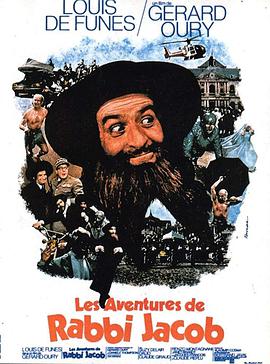
The Mad Adventures of 'Rabbi' Jacob (1973) [Movie] Douban WikiData IMDb TMDB
Les aventures de Rabbi Jacob
other title:
雅各布教士历险记
/
Les aventures de Rabbi Jacob
…
In this riot of frantic disguises and mistaken identities, Victor Pivert, a blustering, bigoted French factory owner, finds himself taken hostage by Slimane, an Arab rebel leader. The two dress up as rabbis as they try to elude not only assasins from Slimane's country, but also the police, who think Pivert is a murderer. Pivert ends up posing as Rabbi Jacob, a beloved figure who's returned to France for his first visit after 30 years in the United States. Adding to the confusion are Pivert's dentist-wife, who thinks her husband is leaving her for another woman, their daughter, who's about to get married, and a Parisian neighborhood filled with people eager to celebrate the return of Rabbi Jacob.
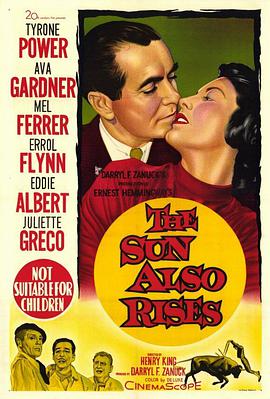
The Sun Also Rises (1957) [Movie] Douban
The Sun Also Rises
other title:
太阳照样升起
/
妾似朝阳又照君
…
美国青年巴恩斯(泰隆·鲍华 Tyrone Power 饰)在第一次世界大战之中身受重伤,就此失去了性能力。战争结束之后,巴恩斯来到了巴黎,在那里成为了一名记者。当性感美艳的阿什利夫人(艾娃·加德纳 Ava Gardner 饰)出现在了巴恩斯的生命中后,两人很快就走到了一起。
然而,巴恩斯并不能够给阿什利带来真正的快乐,两人的关系因此陷入了困苦的局面之中。之后,他们和一帮朋友一同前往西班牙参加斗牛节,在那里,阿什利邂逅了名为罗梅罗(罗伯特·埃文斯 Robert Evans 饰)的年轻斗牛士。然而,这段激情四射的艳遇并没能够持续多久,最终,阿什利还是回到了巴恩斯的身边。
然而,巴恩斯并不能够给阿什利带来真正的快乐,两人的关系因此陷入了困苦的局面之中。之后,他们和一帮朋友一同前往西班牙参加斗牛节,在那里,阿什利邂逅了名为罗梅罗(罗伯特·埃文斯 Robert Evans 饰)的年轻斗牛士。然而,这段激情四射的艳遇并没能够持续多久,最终,阿什利还是回到了巴恩斯的身边。
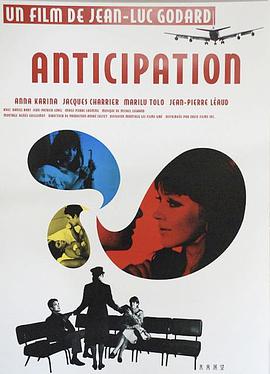
憧憬,或2000年的爱情 (1966) [Movie] Douban
Anticipation, ou l'Amour en l'an 2000
other title:
Anticipation, ou l'Amour en l'an 2000
Anticipation, ou l'Amour en l'an 2000 est un court métrage réalisé par Jean-Luc Godard en 1966 et est sorti en 1967. Il a été tourné en noir en blanc, à l'exception de la scène finale. Il est l'un des épisodes du film Le Plus Vieux Métier du monde qui traite de la prostitution à travers les âges et qui est composé de six épisodes en tout. Anticipation, ou l'Amour en l'an 2000 est le dernier épisode.

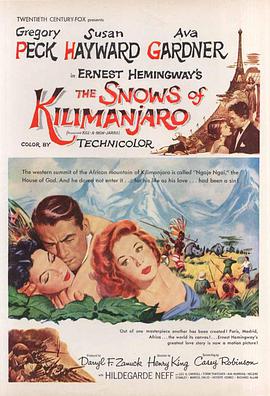
The Snows of Kilimanjaro (1952) [Movie] Douban IMDb TMDB WikiData
The Snows of Kilimanjaro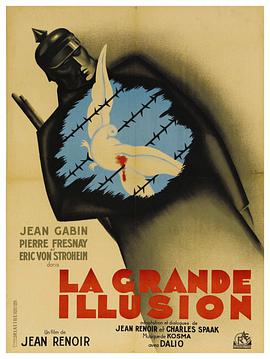
The Grand Illusion (1937) [Movie] Douban TMDB Eggplant.place WikiData IMDb Skybridge
La grande illusion
other title:
大幻影
/
La grande illusion
…
1937 film by Jean Renoir
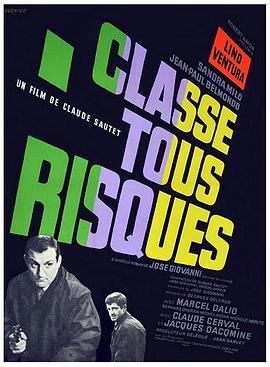
The Big Risk (1960) [Movie] Douban IMDb WikiData TMDB
Classe tous risques
7.1 (13 ratings)
director:
克洛德·索泰
actor:
利诺·文图拉
/
桑德拉·米洛
…
other title:
冒一切风险的阶级
/
Classe tous risques
…
Two men pull off a daring daylight payroll heist in Milan, making a fast getaway. One is returning to France after years in hiding, needing money to start fresh with his family.