中原瞳 — 演员 (19)
萤火虫之星 (2005) [电影] 豆瓣 TMDB IMDb 维基数据
ほたるの星
其它标题:
ほたるの星
/
萤光虫,飞吧!(港)
…
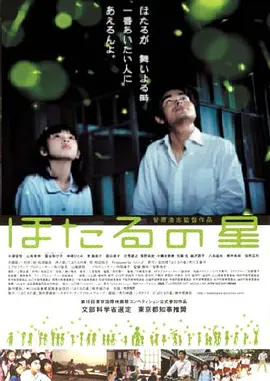
三轮元(小泽征悦 饰)年幼时遇到过一个非常善良的老师,因此毕生的志愿就是成为一名和他一样的老师。师范毕业之后,三轮元被派往偏僻的乡村小学就职,那里的孩子们自幼出生在贫困的家庭之中,问题多多,难缠的家长和冥顽不灵的学校领导让三轮元四面楚歌,焦头烂额。
尽管情势十分的不乐观,但三轮元仍旧没有放弃希望,他发起了“萤火虫饲养计划”,希望能够通过这一举动加深师生之间的羁绊。琪琪(菅谷梨沙子 饰)从小生活在破碎的家庭之中,性格十分的孤僻冷漠,但是她却相信,只要能够放飞萤火虫,就能够重新获得失去的母爱。
祝女儿7岁生日快乐 (1982) [电影] 豆瓣 TMDB
この子の七つのお祝いに
其它标题:
この子の七つのお祝いに
/
For My Daughter's 7th Birthday
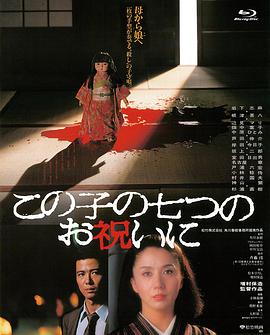
次期総理の座を狙う大蔵大臣磯部の私設秘書・秦一毅の元お手伝い・池畑良子が殺された。ルポライター、母田耕一は政界の謎をあばこうと秦の身辺をさぐっていた矢先の事件で秦の内妻、青蛾が奇妙な手型占いをするという噂をきく。しかもその的中率を頼んで大物政治家、財界人等が己れの手型を持って続々と詰めかけており、秦自身もこの占いのお陰で現在の地位を築いたというのだ。母田は青蛾の影を追い始める。そんなある日、後輩の事件記者須藤に、ゆき子という変り者の美人ママがいるというバーに連れて行かれる。母田は彼女に強くひかれ、彼のマンションで密会するようになった。だが母田は何者かによって殺害され、須藤は危険を承知で母田の仕事を引き継ぎ、彼の残した足跡を探る。昔、ある麻布のバーに占いのよく当たる娘がいたという事、ママの名前は麗子。そして秦の内妻、つまり青蛾の正体が麗子である事をつきとめる。やがて彼は謎の占いの娘の写真を見せられるが、それは青蛾ではなく倉田ゆき子だった。追いうちをかけるように、須藤のもとに青蛾惨殺の報が届いた。さらに、ホテル王高橋佳哉にゆき子から呼び出しがかかった。高橋に同行した須藤の前にゆき子が姿を現わした。ゆき子の告白によれば高橋は母の仇だという。敗戦の混乱の中、妻と生き別れて満州から引き揚げてきた高橋は真弓と結ばれ、赤ん坊が生まれた。だがその赤ん坊はすぐに病死し真弓はショックのあまり精神に異常をきたした。高橋はふとした偶然で生き別れていた妻と再会し、真弓の前から姿を消して別に家庭を持った。二人の間に生まれた赤ん坊は、復讐鬼となった真弓に盗まれ、三十数年が経過した。その間、真弓に育てられたのが盗まれた赤ん坊のゆき子で、高橋に復讐する事だけを徹底的に教え込まれ、占いという特殊能力を生かし、青蛾を使って高橋が目の前に現われる日を待っていたのだが、途中、おじ気づいた青蛾を殺害した。高橋に、真弓の本当の娘でない事を教えられたゆき子はあまりの残酷さに発狂寸前だった。
闪光的女人 (1987) [电影] 豆瓣
光る女
其它标题:
光る女
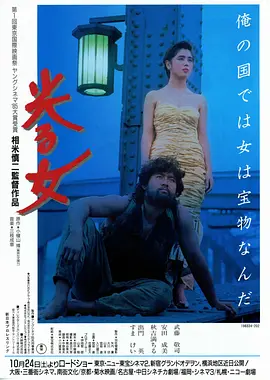
A burly man from the wilds of Hokkaido arrives in Tokyo on the trail of his fiancée, but meets a nightclub diva who has lost the ability to sing, and the two find themselves drawn to each other... This unconventional love story employs powerful imagery in a daring attempt to visualize the contrast between people who live in concert with nature, and those who live in urbanized civil society.
the proud challenge(豪气挑战) (1962) [电影] 豆瓣
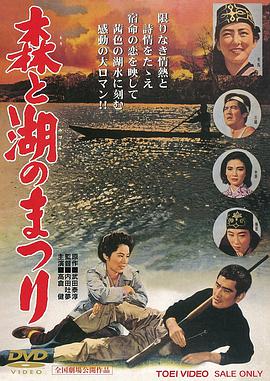
森林与湖的祭祀 (1958) [电影] 豆瓣
森と湖のまつり
其它标题:
森と湖のまつり
/
Mori to mizuumi no matsuri
…
One of the major joys of writing about Japanese movies is that whenever you begin to get that tired, jaded feeling that you think you’ve seen it all and that there’s nothing left that’s ever going to set your pulse racing, you stumble across a whole previously hidden seam of movies that completely revolutionises any ideas of what Japanese cinema is. I remember getting this feeling watching the works of Hiroshi Shimizu at the 2003 Tokyo FILMeX, and I got it again at the same festival exactly one year later, during a 13-film retrospective of Tomu Uchida, which travelled to the Rotterdam Film Festival in a slimmed-down version a couple of months later.
In English-language film circles, not much is really generally known about Japanese cinema prior to the 1960s. Anderson and Richie’s The Japanese Film: Art and Industry is still the bible for those who want to find out more, but more recent non-academic publications are limited by the films that are available for viewing. It’s a catch-22 situation, which DVD is slowly overcoming. Yet still, outside of the work of a few major directors like Kurosawa and Ozu, recent releases have tended to stick with products from more recent years, more often than not focused around the twin poles of art and exploitation.
It is therefore really difficult to get any broader picture of what the industry was doing before the days of yakuza movies and Roman Porno. Yet the 1950s were the decade when the Japanese cinema had reached full maturity and cinema attendances were at a peak, the so-called Golden Age when the major companies were between them turning out around 500 films a year, all made by directors with several decades of experience behind them, at long-established studios with a large highly-trained professional team of technicians. Far from being the bastion of conservativeness that Oshima and the New Wave directors labelled it to be, I am coming to look at the decade as a vast lucky dip with some fabulous treasures still waiting to be found – such as The Outsiders, for example, an epic outdoor adventure in which an embittered Ken Takakura fights for the rights of Hokkaido’s oppressed Ainu population.
Tomu Uchida was one of those names I’d heard bandied about a lot, most often in conjunction with the film Earth (Tsuchi) made in 1939. A seminal piece of social-realism made by a director noted for his leftist inclinations, Earth focused on the harsh lives of a community of farmers at a time when rapid urbanisation was bleeding the countryside dry. It was a political film in that it confronted the swelling ranks of the emergent urban middle classes who made up the large bulk of cinema audiences with the plight of the rural poor, paralleling the release of John Ford’s adaptation of John Steinbeck’s The Grapes of Wrath in America around the same time in 1940.
Remember, long before the days of television, cinema was the only way of seeing how the other half lived, and in today’s image-saturated mass-media culture it is easy to overlook the power and immediacy of what people saw on the big screen. Uchida’s film was all the more political because it was made at the time when the lion’s share of agricultural production was being put towards Japan’s wartime expansion. Needless to say, it went bang in the face of the type of films the government was promoting at the time.
Earth was filmed over the course of a year with a documentarist’s attention to detail, taking in each of the seasons and focusing very much on man’s relationship with the soil. This approach of drawing out the realism and charting the passage of time through the use of the four seasons much later became a staple of the documentary films made by the collective centred around Shinsuke Ogawa, such as Magino Village – A Tale (Sennen Kizami no Hidokei: Magino-Mura Monogatari, 1987), or more recently in the documentary-styled fictional work of Naomi Kawase, specifically the films Suzaku and Hotaru.
Uchida’s film, by the way, is not to be confused with the German-Japanese co-production, The New Earth (Atarashii Tsuchi), directed by Mansaku Itami, the father of Tampopo director Juzo Itami. This film, released in 1941, was a nationalist propaganda work made under the instigation of Dr Arnold Fanck, the German director who sparked off the peculiar genre of the “Mountain Film” as typified by The Holy Mountain (Der Heilige Berg, recently released on DVD in the UK by Eureka). As written by Fanck, its goal was to portray “unity of the Nazi group-spirit and the racial spirit of the Japanese as opposed to the weak spirit of the democracies”, but there was conflict between the Japanese and the German creative elements throughout the production due to the way in which Fanck constantly misrepresented elements of Japanese culture in service of the film’s higher propagandist purpose (The Last Samurai, anyone?). Released overseas at the time as The Daughter of the Samurai, one of the first co-productions Japan ever made with the West thus ended up a classic textbook example of orientalist filmmaking.
Much of what has been written about Uchida’s career in the English language – basically in Anderson and Richie’s book – has focused on his pre-war career. But as the FILMeX retrospective clearly demonstrated, this was only half of the story. In 1945, the left-leaning director travelled to the formerly Japanese-occupied area of Manchuria in China to join the Manchuria Film Association, or Man’ei, and was not to come back until 1953. Upon his return he continued for almost two decades to produce a wide range of films that fit into every genre conceivable, from traditional kabuki adaptations to melodrama and yakuza movies.
The diversity of his oeuvre therefore means that getting a grip on what elements typify an Uchida picture is a difficult task, but on the evidence of The Outsiders, one of the original program that tellingly did not go over to the Rotterdam festival, perhaps it is fruitful to turn once again to the parallel with John Ford. The film’s mixture of heroic action, making full use of one of the top macho icons of its day, an expansive sense of location, masterful use of colour and composition and a focus on social injustice meted out on large sectors of the nation’s indigenous people had me thinking in terms of The Searchers. In what seems like another unlikely case of synchronicity, Ford’s film was released just two years previously in 1956.
The Outsiders is something of a revelation. It certainly looks nothing like what you’d expect from a Japanese movie made around the mid-50s, which is perhaps the reason why it is completely unknown outside of Japan. Opening with a lengthy pan across the barren mountaintops of Hokkaido, Uchida’s third film in colour, after the two parts of the jidai-geki Daibosatsu Pass (Daibosatsutoge, 1957/58) is an undeniably exhilarating visual experience, making full use of the Toeiscope widescreen format to capture Japan’s northernmost territory in all its rugged beauty. It also is of particular interest for drawing attention to the destruction of the culture and the discrimination against the indigenous Ainu people, a dwindling race faced with danger of extinction since the Japanese nation began its concerted push northwards with the government extending administration over all parts of the landmass in 1868.
Screen legend Ken Takakura is Ishitaro Kazamori, known as Byakki “the Phoenix” by the local Ainu population, as he whisks from village to village on horseback delivering supplies and educational books to the locals, an outcast Robin Hood character working for the future of his people. But Byakki’s rough methods aren’t to everyone’s tastes. Money has been going missing from the funds raised by the chairman of the Ainu Society, Dr. Ike (Kitazawa), a well-meaning “shamo” (non-Ainu) who has dedicated much of his life to researching the history and culture of Japan’s aboriginal people.
When Dr Ike brings a young landscape painter Yoshiko Saeki (Kagawa) from Tokyo with him on his field trips to sketch the local landscapes, there is initially resentment of another outsider treating the local populations as her own pet project. But Yoshiko soon befriends Mitsu (Fujisato), an Ainu girl who was jilted years ago on the eve of the holy Bekanbe Festival by her “shamo” lover who couldn’t go through with the stigma of marrying into this ostracised class. Mitsu may also hold the key to Byakki’s whereabouts.
Meanwhile, as the next Bekanbe Festival approaches, tension is growing between the Ainu and the Japanese settlers in the coastal town of Nanbetsu due to Byakki’s increasingly unruly antics. One local who steadfastly refuses to pitch in to Dr. Ike’s project is Oiwa (Mikuni), who runs the local fishery with his old father (Susukida), and runs a strict policy of not hiring any Ainu workers. Oiwa bears Byakki a particular enmity, because Byakki knows that Oiwa is living in denial, masquerading as a “shamo” and keeping his real Ainu ancestry well hidden. But Oiwa also knows a few secrets about Byakki.
Hokkaido is in many ways Japan’s northernmost frontier, its own equivalent to the Wild West, and The Outsiders, though based on the novel Mori to Mizuumi no Matsuri by Taijun Takeda, most clearly resembles an American western, a gripping action film letting forth a righteous cry against social injustice against the indigenous population and unfolding against an epic landscape. Such genre appropriations can’t be coincidental. As could be seen as early back as Uchida’s own 1933 silent, The Police Officer (Keisatsukan), which also played at FILMeX, Japanese filmmakers were certainly not above borrowing heavily from typically American staples such as the cops-and-robbers film. I can’t say whether Uchida consciously modelled his film on the western, but the crucial fact about The Outsiders is that the story makes sense and works in its own right, rather than just being noteworthy as a cross-cultural hybrid curio.
The main drawing point is of course Hokkaido itself, shot beautifully by cinematographer Shoe Nishikawa, picking out the autumnal russet-tinged hues of the majestic countryside of lakes, plains and woods, as the camera glides and tracks through a series of mainly exterior locations. But aside from this vibrant use of colour, also used to great effect in the matsuri (festival) scenes and the coloured fabrics of the traditional costumes, The Outsiders is also unique for revealing a facet of Japanese culture almost completely disregarded in its cinema. Bold, beautiful, and packing a powerful dramatic punch, there is little else quite like it. We can only hope that some adventurous DVD company will pick it up soon, because this is a film that could change people’s perceptions and prejudices about Japanese film for good. from midnighteye
In English-language film circles, not much is really generally known about Japanese cinema prior to the 1960s. Anderson and Richie’s The Japanese Film: Art and Industry is still the bible for those who want to find out more, but more recent non-academic publications are limited by the films that are available for viewing. It’s a catch-22 situation, which DVD is slowly overcoming. Yet still, outside of the work of a few major directors like Kurosawa and Ozu, recent releases have tended to stick with products from more recent years, more often than not focused around the twin poles of art and exploitation.
It is therefore really difficult to get any broader picture of what the industry was doing before the days of yakuza movies and Roman Porno. Yet the 1950s were the decade when the Japanese cinema had reached full maturity and cinema attendances were at a peak, the so-called Golden Age when the major companies were between them turning out around 500 films a year, all made by directors with several decades of experience behind them, at long-established studios with a large highly-trained professional team of technicians. Far from being the bastion of conservativeness that Oshima and the New Wave directors labelled it to be, I am coming to look at the decade as a vast lucky dip with some fabulous treasures still waiting to be found – such as The Outsiders, for example, an epic outdoor adventure in which an embittered Ken Takakura fights for the rights of Hokkaido’s oppressed Ainu population.
Tomu Uchida was one of those names I’d heard bandied about a lot, most often in conjunction with the film Earth (Tsuchi) made in 1939. A seminal piece of social-realism made by a director noted for his leftist inclinations, Earth focused on the harsh lives of a community of farmers at a time when rapid urbanisation was bleeding the countryside dry. It was a political film in that it confronted the swelling ranks of the emergent urban middle classes who made up the large bulk of cinema audiences with the plight of the rural poor, paralleling the release of John Ford’s adaptation of John Steinbeck’s The Grapes of Wrath in America around the same time in 1940.
Remember, long before the days of television, cinema was the only way of seeing how the other half lived, and in today’s image-saturated mass-media culture it is easy to overlook the power and immediacy of what people saw on the big screen. Uchida’s film was all the more political because it was made at the time when the lion’s share of agricultural production was being put towards Japan’s wartime expansion. Needless to say, it went bang in the face of the type of films the government was promoting at the time.
Earth was filmed over the course of a year with a documentarist’s attention to detail, taking in each of the seasons and focusing very much on man’s relationship with the soil. This approach of drawing out the realism and charting the passage of time through the use of the four seasons much later became a staple of the documentary films made by the collective centred around Shinsuke Ogawa, such as Magino Village – A Tale (Sennen Kizami no Hidokei: Magino-Mura Monogatari, 1987), or more recently in the documentary-styled fictional work of Naomi Kawase, specifically the films Suzaku and Hotaru.
Uchida’s film, by the way, is not to be confused with the German-Japanese co-production, The New Earth (Atarashii Tsuchi), directed by Mansaku Itami, the father of Tampopo director Juzo Itami. This film, released in 1941, was a nationalist propaganda work made under the instigation of Dr Arnold Fanck, the German director who sparked off the peculiar genre of the “Mountain Film” as typified by The Holy Mountain (Der Heilige Berg, recently released on DVD in the UK by Eureka). As written by Fanck, its goal was to portray “unity of the Nazi group-spirit and the racial spirit of the Japanese as opposed to the weak spirit of the democracies”, but there was conflict between the Japanese and the German creative elements throughout the production due to the way in which Fanck constantly misrepresented elements of Japanese culture in service of the film’s higher propagandist purpose (The Last Samurai, anyone?). Released overseas at the time as The Daughter of the Samurai, one of the first co-productions Japan ever made with the West thus ended up a classic textbook example of orientalist filmmaking.
Much of what has been written about Uchida’s career in the English language – basically in Anderson and Richie’s book – has focused on his pre-war career. But as the FILMeX retrospective clearly demonstrated, this was only half of the story. In 1945, the left-leaning director travelled to the formerly Japanese-occupied area of Manchuria in China to join the Manchuria Film Association, or Man’ei, and was not to come back until 1953. Upon his return he continued for almost two decades to produce a wide range of films that fit into every genre conceivable, from traditional kabuki adaptations to melodrama and yakuza movies.
The diversity of his oeuvre therefore means that getting a grip on what elements typify an Uchida picture is a difficult task, but on the evidence of The Outsiders, one of the original program that tellingly did not go over to the Rotterdam festival, perhaps it is fruitful to turn once again to the parallel with John Ford. The film’s mixture of heroic action, making full use of one of the top macho icons of its day, an expansive sense of location, masterful use of colour and composition and a focus on social injustice meted out on large sectors of the nation’s indigenous people had me thinking in terms of The Searchers. In what seems like another unlikely case of synchronicity, Ford’s film was released just two years previously in 1956.
The Outsiders is something of a revelation. It certainly looks nothing like what you’d expect from a Japanese movie made around the mid-50s, which is perhaps the reason why it is completely unknown outside of Japan. Opening with a lengthy pan across the barren mountaintops of Hokkaido, Uchida’s third film in colour, after the two parts of the jidai-geki Daibosatsu Pass (Daibosatsutoge, 1957/58) is an undeniably exhilarating visual experience, making full use of the Toeiscope widescreen format to capture Japan’s northernmost territory in all its rugged beauty. It also is of particular interest for drawing attention to the destruction of the culture and the discrimination against the indigenous Ainu people, a dwindling race faced with danger of extinction since the Japanese nation began its concerted push northwards with the government extending administration over all parts of the landmass in 1868.
Screen legend Ken Takakura is Ishitaro Kazamori, known as Byakki “the Phoenix” by the local Ainu population, as he whisks from village to village on horseback delivering supplies and educational books to the locals, an outcast Robin Hood character working for the future of his people. But Byakki’s rough methods aren’t to everyone’s tastes. Money has been going missing from the funds raised by the chairman of the Ainu Society, Dr. Ike (Kitazawa), a well-meaning “shamo” (non-Ainu) who has dedicated much of his life to researching the history and culture of Japan’s aboriginal people.
When Dr Ike brings a young landscape painter Yoshiko Saeki (Kagawa) from Tokyo with him on his field trips to sketch the local landscapes, there is initially resentment of another outsider treating the local populations as her own pet project. But Yoshiko soon befriends Mitsu (Fujisato), an Ainu girl who was jilted years ago on the eve of the holy Bekanbe Festival by her “shamo” lover who couldn’t go through with the stigma of marrying into this ostracised class. Mitsu may also hold the key to Byakki’s whereabouts.
Meanwhile, as the next Bekanbe Festival approaches, tension is growing between the Ainu and the Japanese settlers in the coastal town of Nanbetsu due to Byakki’s increasingly unruly antics. One local who steadfastly refuses to pitch in to Dr. Ike’s project is Oiwa (Mikuni), who runs the local fishery with his old father (Susukida), and runs a strict policy of not hiring any Ainu workers. Oiwa bears Byakki a particular enmity, because Byakki knows that Oiwa is living in denial, masquerading as a “shamo” and keeping his real Ainu ancestry well hidden. But Oiwa also knows a few secrets about Byakki.
Hokkaido is in many ways Japan’s northernmost frontier, its own equivalent to the Wild West, and The Outsiders, though based on the novel Mori to Mizuumi no Matsuri by Taijun Takeda, most clearly resembles an American western, a gripping action film letting forth a righteous cry against social injustice against the indigenous population and unfolding against an epic landscape. Such genre appropriations can’t be coincidental. As could be seen as early back as Uchida’s own 1933 silent, The Police Officer (Keisatsukan), which also played at FILMeX, Japanese filmmakers were certainly not above borrowing heavily from typically American staples such as the cops-and-robbers film. I can’t say whether Uchida consciously modelled his film on the western, but the crucial fact about The Outsiders is that the story makes sense and works in its own right, rather than just being noteworthy as a cross-cultural hybrid curio.
The main drawing point is of course Hokkaido itself, shot beautifully by cinematographer Shoe Nishikawa, picking out the autumnal russet-tinged hues of the majestic countryside of lakes, plains and woods, as the camera glides and tracks through a series of mainly exterior locations. But aside from this vibrant use of colour, also used to great effect in the matsuri (festival) scenes and the coloured fabrics of the traditional costumes, The Outsiders is also unique for revealing a facet of Japanese culture almost completely disregarded in its cinema. Bold, beautiful, and packing a powerful dramatic punch, there is little else quite like it. We can only hope that some adventurous DVD company will pick it up soon, because this is a film that could change people’s perceptions and prejudices about Japanese film for good. from midnighteye
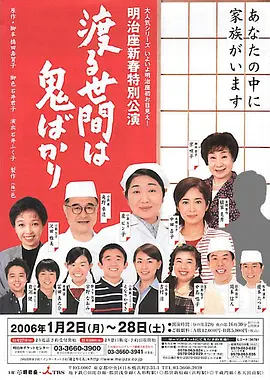
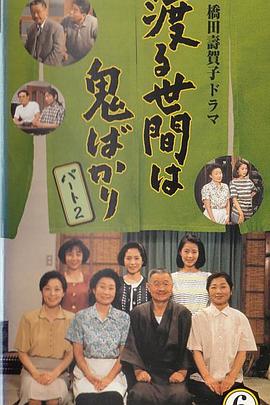
冷暖人间 第六部 (2002) [剧集] 豆瓣
渡る世间は鬼ばかり 第6シリーズ
导演:
井下靖央
/
石井福子
…
演员:
藤冈琢也
/
长山蓝子
…
大吉不问来历的雇用了森山壮太在冈仓工作,TAKI取得了厨师资格考试的合格。壮太的父亲前来拜访冈仓,说希望让他继续上高中。但是,壮太说自己的梦想是成为优秀的厨师而拒绝了。
野田家
明里为了能够与儿子勇气两人自立的生活,考虑要流动车贩卖饭团。前夫和夫出现说希望能和明里复婚,并固执的听不进劝告。阿良和弥生的饭店很顺利的经营着,但却突然的阿良说要帮助公司变的经营困难的女社长而去了仙台。担心两人关系的阿良的母亲说服了自己说带着阿良回来出发到了仙台。
小岛家
建治带着说要结婚的光子来到了五月这里,能干的光子开始为幸乐的便当售卖增加客户。小真和加津找到了之前行踪不明的森山壮太,依赖大吉成为了安身之计。建治和久子的女儿加奈终于从纽约回到了幸乐,而担心久子境遇的贵美单身一人来到纽约,然后给了久子作为小茶店开店资金的2000万日圆。抱持着不满的阿勇继续每晚往返于バー的母亲里美那里,并开始着手工作。加津在网络上连载的小说得到了认可,作为单行本被出版。成为了大的热门话题,FANS们蜂拥来到幸乐。住在老旧旅馆的加津的母亲也知道了这本书,为了见到加津而在网络上开始与她联系。小爱为了成为播音员而拜托城代教她英语。之后瞒着双亲来到电视台作为AD开始打工。
高桥家
金田利子控诉小望跟踪她的女儿,事实却是目标同为音乐大学的友人,这也成为了机会,文子和利子关系好了起来。
野田家
明里为了能够与儿子勇气两人自立的生活,考虑要流动车贩卖饭团。前夫和夫出现说希望能和明里复婚,并固执的听不进劝告。阿良和弥生的饭店很顺利的经营着,但却突然的阿良说要帮助公司变的经营困难的女社长而去了仙台。担心两人关系的阿良的母亲说服了自己说带着阿良回来出发到了仙台。
小岛家
建治带着说要结婚的光子来到了五月这里,能干的光子开始为幸乐的便当售卖增加客户。小真和加津找到了之前行踪不明的森山壮太,依赖大吉成为了安身之计。建治和久子的女儿加奈终于从纽约回到了幸乐,而担心久子境遇的贵美单身一人来到纽约,然后给了久子作为小茶店开店资金的2000万日圆。抱持着不满的阿勇继续每晚往返于バー的母亲里美那里,并开始着手工作。加津在网络上连载的小说得到了认可,作为单行本被出版。成为了大的热门话题,FANS们蜂拥来到幸乐。住在老旧旅馆的加津的母亲也知道了这本书,为了见到加津而在网络上开始与她联系。小爱为了成为播音员而拜托城代教她英语。之后瞒着双亲来到电视台作为AD开始打工。
高桥家
金田利子控诉小望跟踪她的女儿,事实却是目标同为音乐大学的友人,这也成为了机会,文子和利子关系好了起来。
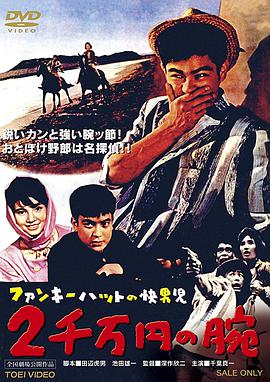
戴时髦帽子的侦探 两千万圆之腕 (1961) [电影] 豆瓣
ファンキーハットの快男児 2千万円の腕
其它标题:
ファンキーハットの快男児 2千万円の腕
/
Funky Hat no kaidanji: Nisenman-en no ude
…
全国高校野球選手権では若葉高校の川原投手が大活躍しており、プロ野球の各球団からスカウトが甲子園に集まっていた。そのピッチングを天下探偵事務所でテレビ観戦していた天下一郎は、相棒・近藤茂から川原を自分の後輩だと自慢げに聞かされていた。後に若葉高校は優勝し、原動力となった川原の獲得に各球団は動き出し始める。川原は帝都ホテルで会った後援会の会長・黒谷から「君の身は我々が預かる」と伝えられ、この時から川原は姿を見せなくなった。
一郎はいつものように茂とジャズ喫茶「エンジン」に入り浸っていたが、入ってきた綺麗な女の子・武智美矢子に惹かれる。父親と待ち合わせしていたスポーツ記者の美矢子は見合い相手と会うよう、有無を言わさずコンサートチケットを渡され、行くように説得された。一郎は美矢子の後を付いていき、ちゃっかり隣の席「への13番」に座り、美矢子を食事に誘う。
取り残された茂は川原と連絡が取れなくなり心配し出していたが、同時刻に川べりで身元不明の水死体が上がる。ポケットには「への13番」と記されたチケットが入っていた。一方レストランにいた美矢子は見合い相手が一郎だと思い込み、その旺盛な食欲に呆れていたら、刑事がやってきて二人は連行されてしまう。警察で事情を説明するものの、一郎はこってり説教された。「見合い相手は事件に巻き込まれるような碌な人物じゃない」と美矢子の父親は身上調査をデタラメと決めつけ、担当した天下探偵事務所に抗議。
果たして水死体は何者なのか? そして川原の行方は? 天下探偵事務所の名誉回復という大義名分のもと、一郎は調査を始めるが、ライフスタイル同様、軽やかに鮮やかに解決へ導いていく。
一郎はいつものように茂とジャズ喫茶「エンジン」に入り浸っていたが、入ってきた綺麗な女の子・武智美矢子に惹かれる。父親と待ち合わせしていたスポーツ記者の美矢子は見合い相手と会うよう、有無を言わさずコンサートチケットを渡され、行くように説得された。一郎は美矢子の後を付いていき、ちゃっかり隣の席「への13番」に座り、美矢子を食事に誘う。
取り残された茂は川原と連絡が取れなくなり心配し出していたが、同時刻に川べりで身元不明の水死体が上がる。ポケットには「への13番」と記されたチケットが入っていた。一方レストランにいた美矢子は見合い相手が一郎だと思い込み、その旺盛な食欲に呆れていたら、刑事がやってきて二人は連行されてしまう。警察で事情を説明するものの、一郎はこってり説教された。「見合い相手は事件に巻き込まれるような碌な人物じゃない」と美矢子の父親は身上調査をデタラメと決めつけ、担当した天下探偵事務所に抗議。
果たして水死体は何者なのか? そして川原の行方は? 天下探偵事務所の名誉回復という大義名分のもと、一郎は調査を始めるが、ライフスタイル同様、軽やかに鮮やかに解決へ導いていく。
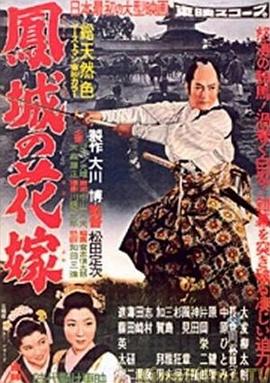
LORD TAKES A BRIDE (1957) [电影] 豆瓣
其它标题:
鳳城の花嫁
LORD TAKES A BRIDE
Otorijo no Hanayome - 1957 - Color - Widescreen
Young Lord Gentaro (Otomo Ryutaro) takes a journey to Edo in search of his future
wife. Easier said than done, evil forces lurk in Edo and Gentaro must use his
phenomenal sword skills to overcome the evil and find the love of his life. Another must
have for fans of the great Otomo Ryutaro. And don't let the "silly" English title fool you,
this is a great movie! (TV Broadcast quality)
Directed by: MATSUDA Sadatsugu
Cast: OTOMO Ryutaro, HASEGAWA Yumiko, NAKAHARA Hitomi, KAGA Kunio
Otorijo no Hanayome - 1957 - Color - Widescreen
Young Lord Gentaro (Otomo Ryutaro) takes a journey to Edo in search of his future
wife. Easier said than done, evil forces lurk in Edo and Gentaro must use his
phenomenal sword skills to overcome the evil and find the love of his life. Another must
have for fans of the great Otomo Ryutaro. And don't let the "silly" English title fool you,
this is a great movie! (TV Broadcast quality)
Directed by: MATSUDA Sadatsugu
Cast: OTOMO Ryutaro, HASEGAWA Yumiko, NAKAHARA Hitomi, KAGA Kunio
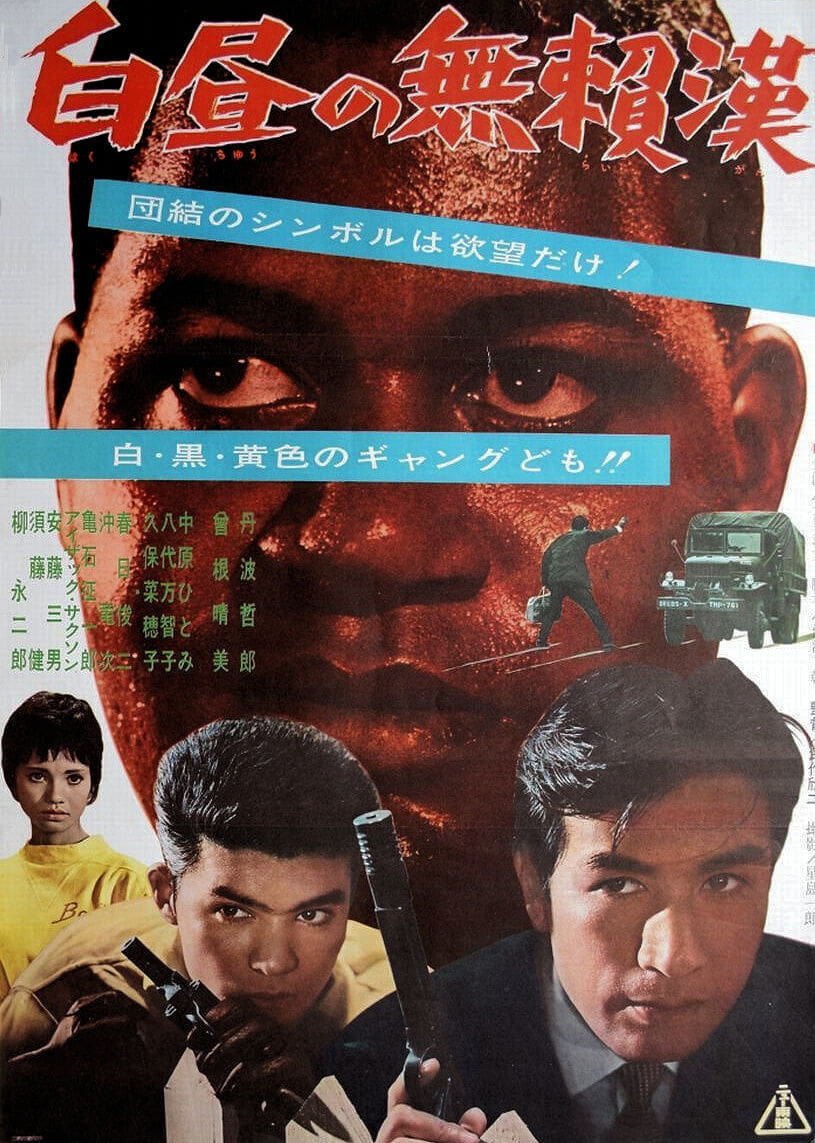
白昼的无赖汉 (1961) [电影] 豆瓣 维基数据 TMDB IMDb
白昼の無頼漢
导演:
Kinji Fukasaku
演员:
Tetsurō Tamba
/
Naoko Kubo
…
其它标题:
白昼の無頼漢
/
Hakuchu no buraikan
…
1961 Japanese crime film
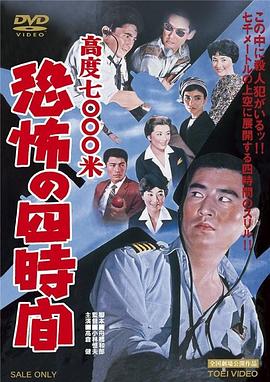
高度7000米 恐怖の四時間 (1959) [电影] 豆瓣
一三時五〇分羽田発仙台経由北海道行“ダグラスDC-3”の乗務員は次の四人である。機長は山本で、飛行時間五〇〇〇時間をもつエキスパート。副操縦士の原は、山本の妹と恋仲だ。スチュワーデスは大野と並木の二人。--空港ロビーのテレビに、殺人強盗現場が映し出された。兇器は拳銃、容疑者として木田正太郎が指名された。左足は義足だという。“ダグラスDC-3”は離陸した。乗客の和子の眼が、同席の石川の左足に釘づけされた。義足。背広のネームは「石川」でなく「木田」。殺人犯に違いない。逃げようとする和子を、木田の眼ざしが制止した。拳銃が出された。機が下降し、ネーブルが木田の足許に転った。並木が拾おうとした時、木田の拳銃を見た。木田は操従室に入りこんだ。山本は、乗客の生命に害を加えないなら、八戸空港で木田を逃すことを約束した。機は滑走路に向ったが、そこには警察の手が廻っていた。約束が違うと木田は拳銃を発射、機は八戸を去った。山本はトリックを試みることにした。木田に海岸へ下降するとみせかけ、高度七〇〇〇米まで上昇するのだ。酸素の欠乏が、木田を曚朧とさせ、その間に拳銃を奪おうというのである。高度七〇〇〇米。機首が上向きになった途端、木田は機の最後尾までふっ飛んだ。木田は失神、客席に縛られた。だが、木田が射抜いた銃弾によって、滑走に必要な機の脚が故障した。山本と原は、機体の振動によって脚を出そうと試みた。乗客のたびかさなる不安。最後の試みが成功した。急上昇したはずみに、脚が胴体より飛び出た。機は滑走路を真直に滑った。一七時五〇分、数々の危機を体験した“ダグラスDC-3”は、千歳飛行場に着陸した。
冷暖人间 第九部 (2008) [剧集] 豆瓣
渡る世間は鬼ばかり 第9シリーズ Season 9
大吉
大吉的店来了位女顾客─小宫怜子,和大吉聊天聊得很合,并跑到店里来帮忙,多纪与长子也就离开了冈仓,和怜子日久生情下,大吉生起续弦的念头。五个女儿中,除了五月反对大吉梅开二度,其它女儿不忍父亲孤独,希望爸爸幸福而支持大吉的想法。最后大吉并没有继弦。
弥生
小明丢下勇气,离开了野田家前往海外会情人,同时武志佐枝夫妇一家三口因为负债的关系,搬回了野田家。
由于佐枝肩负起一家六口的家务,弥生便可以从事自己照顾儿童的工作。
五月
阿勇与五月为了家里的事不愉快,正好这时阿勇、阿诚(小爱的老公)、典介(小望女友的爸爸)等人兴起筹组乐团的计划,瞒着五月偷偷进行但最后还是被五月发现了。起先以为五月会反对,想不到最后五月也加入乐团来帮忙。
久子回到幸乐,让大家十分意外,从加奈的来信中得知,久子在美国已经没有住所与工作。久子遂利用幸乐一楼的另一间店铺,开起了乐乐洗衣店,邦子、健治与加津也来帮忙,久子也因此与加津关系良好。
小爱结婚后,夫妇两人在幸乐工作,租用幸乐所在的大楼三楼为家,育有一个孩子,孩子是个一岁的宝宝,十分讨喜。
将要毕业的小真毕业,打算在公司上班成为白领职员。由于担任家教,与学生大井辉一家认识,一方面大井辉的姐姐贵子与小真成为男女朋友,另一方面爸爸道隆想要找小真到大井精机上班,好好培养小真。一开始五月觉得小真犹如入赘到大井家一般表示反对,因此小真离开了大井精机,五月见小真对大井集团的工作很喜爱,向大井家表示歉意,小真回到大井精机上班。
另一方面贵子与小真想要结为连理,五月对这婚事不表赞成,提出要贵子到幸乐来帮忙为条件,贵子不顾母亲直子的反对欲让五月接受这个准儿媳,到幸乐帮忙,在阿勇与五月忙乐团时扛起店务,直到大井精机生意失败,五月见到贵子的努力,接受了这准儿媳。
由于大井精机生意失败,大井直子离开了大井家,再加上小爱的反对,无处可去的道隆与贵子一行人被五月安排先是搬到大吉之前为长子买的房子,贵子也帮起冈仓料理店的生意,后来又搬入冈仓家。最后大井道隆决定前往中国谋生,贵子要陪伴父亲一同前往,于是与小真的感情无疾而终。
文子
叶子
叶子由于忙于工作,没好好照顾身体,孩子流产了。丈夫大原透为了准备一级建筑师的考试,离开了叶子,叶子感到孤单,后悔让大原透离开自己。
长子
长子的婆婆常子中风,丈夫英作也因为过于疲劳而住院,长子遂肩负起照顾两人的工作,再加上冈仓料理已经不需要长子的帮忙,长子一行人先是搬到大吉买的房子,后又搬到神林清明家。
大吉的店来了位女顾客─小宫怜子,和大吉聊天聊得很合,并跑到店里来帮忙,多纪与长子也就离开了冈仓,和怜子日久生情下,大吉生起续弦的念头。五个女儿中,除了五月反对大吉梅开二度,其它女儿不忍父亲孤独,希望爸爸幸福而支持大吉的想法。最后大吉并没有继弦。
弥生
小明丢下勇气,离开了野田家前往海外会情人,同时武志佐枝夫妇一家三口因为负债的关系,搬回了野田家。
由于佐枝肩负起一家六口的家务,弥生便可以从事自己照顾儿童的工作。
五月
阿勇与五月为了家里的事不愉快,正好这时阿勇、阿诚(小爱的老公)、典介(小望女友的爸爸)等人兴起筹组乐团的计划,瞒着五月偷偷进行但最后还是被五月发现了。起先以为五月会反对,想不到最后五月也加入乐团来帮忙。
久子回到幸乐,让大家十分意外,从加奈的来信中得知,久子在美国已经没有住所与工作。久子遂利用幸乐一楼的另一间店铺,开起了乐乐洗衣店,邦子、健治与加津也来帮忙,久子也因此与加津关系良好。
小爱结婚后,夫妇两人在幸乐工作,租用幸乐所在的大楼三楼为家,育有一个孩子,孩子是个一岁的宝宝,十分讨喜。
将要毕业的小真毕业,打算在公司上班成为白领职员。由于担任家教,与学生大井辉一家认识,一方面大井辉的姐姐贵子与小真成为男女朋友,另一方面爸爸道隆想要找小真到大井精机上班,好好培养小真。一开始五月觉得小真犹如入赘到大井家一般表示反对,因此小真离开了大井精机,五月见小真对大井集团的工作很喜爱,向大井家表示歉意,小真回到大井精机上班。
另一方面贵子与小真想要结为连理,五月对这婚事不表赞成,提出要贵子到幸乐来帮忙为条件,贵子不顾母亲直子的反对欲让五月接受这个准儿媳,到幸乐帮忙,在阿勇与五月忙乐团时扛起店务,直到大井精机生意失败,五月见到贵子的努力,接受了这准儿媳。
由于大井精机生意失败,大井直子离开了大井家,再加上小爱的反对,无处可去的道隆与贵子一行人被五月安排先是搬到大吉之前为长子买的房子,贵子也帮起冈仓料理店的生意,后来又搬入冈仓家。最后大井道隆决定前往中国谋生,贵子要陪伴父亲一同前往,于是与小真的感情无疾而终。
文子
叶子
叶子由于忙于工作,没好好照顾身体,孩子流产了。丈夫大原透为了准备一级建筑师的考试,离开了叶子,叶子感到孤单,后悔让大原透离开自己。
长子
长子的婆婆常子中风,丈夫英作也因为过于疲劳而住院,长子遂肩负起照顾两人的工作,再加上冈仓料理已经不需要长子的帮忙,长子一行人先是搬到大吉买的房子,后又搬到神林清明家。
遺品整理人・谷崎藍子〜死者が遺したメッセージ〜 (2010) [剧集] 豆瓣
2010年春季 TBS MBS 日剧SP
ある日、藍子とは旧知の刑事・三田村が、ある事件のことで「青い鳥」を訪ねてきた。2ヶ月前、母親の相沢りつを介護していた息子の俊介が、本人に頼まれて母親を殺害するという事件(嘱託殺人)があった。俊介は孝行息子として知られており、事件後には自首もしている。その事情を裏付けるりつの自筆の遺書もあり、執行猶予が付くものだと思われていた。
三田村は俊介に同情し、俊介の希望でりつの部屋を整理して欲しいと依頼する。三田村・工藤と共にアパートを訪れた藍子は、誰かが自分たちよりも前に整理を済ませたような違和感を覚えた。その整理の最中、食器棚の上にあった海苔の缶の中から、3200万円もの残高がある預金通帳を発見して驚く。藍子は、その通帳と一緒に入っていた壊れた眼鏡が気にかかる。通帳の金は、りつの2番目の夫が、かつて事故死した時に受け取った保険金だった。拘置所を訪れた藍子と三田村に対して、保険金のことは知らなかったと語る俊介。俊介の刑が確定すれば、法律上その金は、俊介の息子が相続することになる。
ところが壊れた眼鏡を見た瞬間に、俊介の表情が一変。その後、俊介が多額の借金を抱えていたことがわかり、藍子にはある疑問が浮かぶ。藍子は、幼い頃の俊介とりつを知る小豆島の赤松岩江の元を訪ね、母子の意外な過去を聞く。
ある日、藍子とは旧知の刑事・三田村が、ある事件のことで「青い鳥」を訪ねてきた。2ヶ月前、母親の相沢りつを介護していた息子の俊介が、本人に頼まれて母親を殺害するという事件(嘱託殺人)があった。俊介は孝行息子として知られており、事件後には自首もしている。その事情を裏付けるりつの自筆の遺書もあり、執行猶予が付くものだと思われていた。
三田村は俊介に同情し、俊介の希望でりつの部屋を整理して欲しいと依頼する。三田村・工藤と共にアパートを訪れた藍子は、誰かが自分たちよりも前に整理を済ませたような違和感を覚えた。その整理の最中、食器棚の上にあった海苔の缶の中から、3200万円もの残高がある預金通帳を発見して驚く。藍子は、その通帳と一緒に入っていた壊れた眼鏡が気にかかる。通帳の金は、りつの2番目の夫が、かつて事故死した時に受け取った保険金だった。拘置所を訪れた藍子と三田村に対して、保険金のことは知らなかったと語る俊介。俊介の刑が確定すれば、法律上その金は、俊介の息子が相続することになる。
ところが壊れた眼鏡を見た瞬間に、俊介の表情が一変。その後、俊介が多額の借金を抱えていたことがわかり、藍子にはある疑問が浮かぶ。藍子は、幼い頃の俊介とりつを知る小豆島の赤松岩江の元を訪ね、母子の意外な過去を聞く。
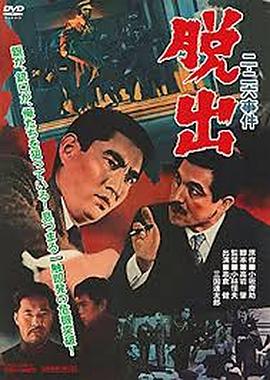
The Escape (1962) [电影] 豆瓣
二・二六事件 脱出
其它标题:
二・二六事件 脱出
/
二・二六事件:脱逃
今日もなお跡を絶たない暴力による政治テロ…。昭和という時代において、世間を驚倒させた1936年2月26日に起こった皇道派青年将校によるクーデタである二・二六事件の裏面史を小坂慶助の原作『特高』に求めた野心大作。叛乱軍の包囲下から首相官邸に取り残された首相を救出しようとする人々の勇気と決断の息詰まるスリルとサスペンスが描かれる。メインキャストには、三国連太郎と高倉健ががっぷり四つを組み、さらに江原真二郎、今井俊二、千葉真一が加わる。女優には中原ひとみ、久保菜穂子、星美智子が彩りを添える。そして、監督には、才匠・小林恒夫が気合いのメガホンを取る。
请问芳名 (1991) [剧集] IMDb TMDB
君の名は
其它标题:
君の名は
/
Kimi no na wa
…
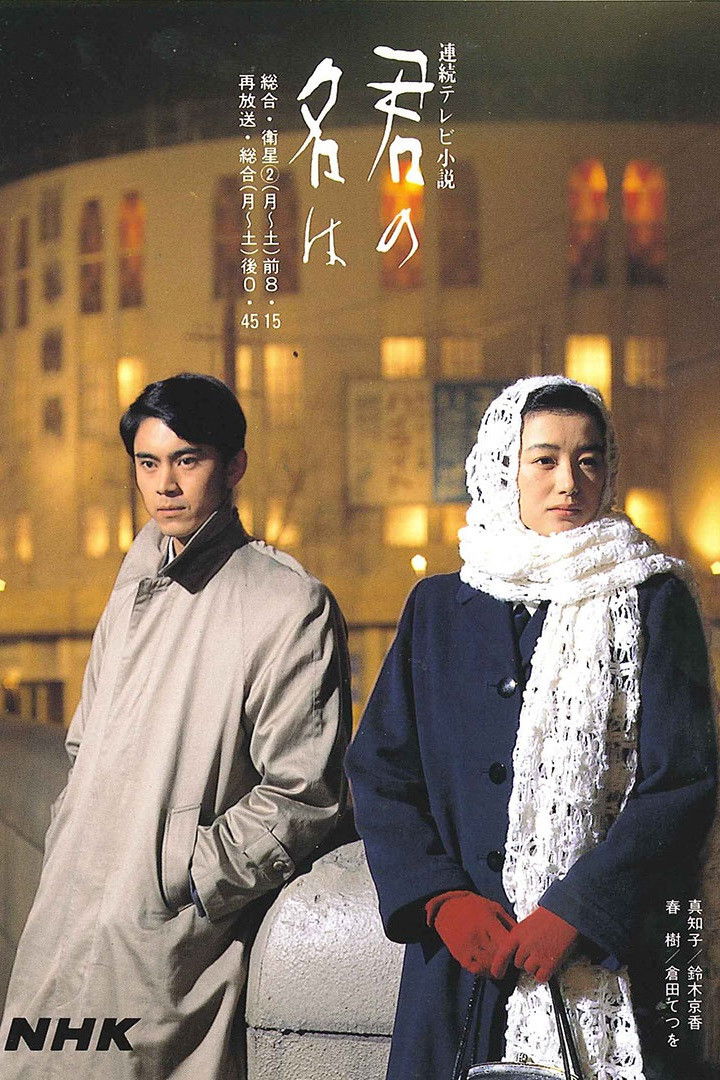
NHK的第46部晨间剧。东京大空袭的那一夜,正当烧夷弹不断被投下的时候,一对素昧平生的男女:真知子与春树偶然相遇了。真知子在春树的帮助下逃过一劫,两人逃到了银座的数寄屋桥。在确定彼此都安然无恙后,他们都没有询问对方的名字就分别了,但却约定半年后要在这座桥相见,若有一方半年后没有前来,则再延后半年相会。就这样两人的命运开始牵绊在一起,半年后并没有见到面,直到再隔半年相会时,真知子已经准备要嫁为人妻了。但是婚后的真知子与丈夫生活并不美满,为此感到苦恼。此后便以真知子及春树为中心,演绎他们二人及其周围相关人物的故事。