Jonathan Kent — 导演 (34)
我,堂吉诃德 [演出] 豆瓣
Man of La Mancha
8.2 (40 个评分) 类型: Musical 编剧: Dale Wasserman / Dale Wasserman 戴尔·瓦瑟曼
其它标题: Man of La Mancha / 梦幻骑士 导演: Joseph Graves / Joseph Graves 约瑟夫·格雷夫斯 演员: 刘阳 / 卞佳平 / 苗芳 / 苏江涛 / 林中琦
16世纪末的西班牙,作家、演员、剧作家和兼职税收员米格尔•德•塞万提斯因为试图向一所教堂征税而被宗教法庭逮捕。塞万提斯和他的仆人被扔进监狱的一个单间里,与强盗和小偷关在一起。

他们被夺去了随身财物,为了活命而不得不接受其他犯人的拷问,他要用他所写的故事来为自己辩护。这个故事是关于一个叫阿隆索. 基哈诺的年老地主,他钟情于骑士年代,现在他将自己称为堂吉诃德,来自拉曼查的骑士。

塞万提斯和他的仆人说服犯人们配合他们,一切排演一出关于堂吉诃德的戏剧,在排演的过程中,堂吉诃德的故事感动了这些穷凶极恶,对生活失去了任何希望的人们。塞万提斯赢得了狱友们的敬佩,虽然他即将走上法庭面临最后的审判,但是他的故事和犯人们的人生,也许已经彻底地被改变了……
Noël Coward's Private Lives (2014) [电影] 豆瓣
Elyot Chase (Toby Stephens) and Amanda Prynne (Anna Chancellor) are glamorous, rich and reckless divorcees. Five years later, whilst on their second honeymoons with their brand new spouses, their passionate love for one another is unexpectedly rekindled, when they take adjoining suites at a French hotel. They both fling themselves headlong once more, into a new and exciting whirlwind of lust/love, without any thought for their partners present or their past issues. Written by Anonymous
我,堂吉诃德 [演出]
Man of La Mancha
类型: Musical 编剧: Dale Wasserman / Dale Wasserman 戴尔·瓦瑟曼
其它标题: Man of La Mancha / 梦幻骑士 导演: Joseph Graves / Joseph Graves 约瑟夫·格雷夫斯 演员: 刘阳 / 卞佳平 / 苗芳 / 苏江涛 / 林中琦


16世纪末的西班牙,作家、演员、剧作家和兼职税收员米格尔•德•塞万提斯因为试图向一所教堂征税而被宗教法庭逮捕。塞万提斯和他的仆人被扔进监狱的一个单间里,与强盗和小偷关在一起。
他们被夺去了随身财物,为了活命而不得不接受其他犯人的拷问,他要用他所写的故事来为自己辩护。这个故事是关于一个叫阿隆索. 基哈诺的年老地主,他钟情于骑士年代,现在他将自己称为堂吉诃德,来自拉曼查的骑士。
塞万提斯和他的仆人说服犯人们配合他们,一切排演一出关于堂吉诃德的戏剧,在排演的过程中,堂吉诃德的故事感动了这些穷凶极恶,对生活失去了任何希望的人们。塞万提斯赢得了狱友们的敬佩,虽然他即将走上法庭面临最后的审判,但是他的故事和犯人们的人生,也许已经彻底地被改变了……

我,堂吉诃德 2002年百老汇复排版 [演出] 豆瓣
所属 演出: 我,堂吉诃德
剧院: Martin Beck Theatre 导演: Jonathan Kent
其它标题: 2002年百老汇复排版 编剧: Dale Wasserman戴尔·瓦瑟曼 作曲: Mitch Leigh米奇·李 演员: Mary Elizabeth Mastrantonio / Don Mayo
16世纪末的西班牙,作家、演员、剧作家和兼职税收员米格尔•德•塞万提斯因为试图向一所教堂征税而被宗教法庭逮捕。塞万提斯和他的仆人被扔进监狱的一个单间里,与强盗和小偷关在一起。

他们被夺去了随身财物,为了活命而不得不接受其他犯人的拷问,他要用他所写的故事来为自己辩护。这个故事是关于一个叫阿隆索. 基哈诺的年老地主,他钟情于骑士年代,现在他将自己称为堂吉诃德,来自拉曼查的骑士。

塞万提斯和他的仆人说服犯人们配合他们,一切排演一出关于堂吉诃德的戏剧,在排演的过程中,堂吉诃德的故事感动了这些穷凶极恶,对生活失去了任何希望的人们。塞万提斯赢得了狱友们的敬佩,虽然他即将走上法庭面临最后的审判,但是他的故事和犯人们的人生,也许已经彻底地被改变了……
风暴之巅 [演出] 豆瓣
The Height of the Storm
类型: Theater 编剧: Florian Zeller / Christopher Hampton
其它标题: The Height of the Storm 导演: Jonathan Kent 演员: Jonathan Pryce / Dame Eileen Atkins / Amanda Drew / Anna Madeley / James Hillier


André and Madeleine have been in love for over fifty years. This weekend, as their daughters visit, something feels unusual. A bunch of flowers arrives, but who sent them? A woman from the past turns up, but who is she? And why does André feel like he isn’t there at all?

The Height of the Storm is a beautifully compelling family drama by Florian Zeller, “the most exciting playwright of our time” (The Guardian). Starring two of the greatest actors of their generation on stage together for the first time, this major new play from the writer of Olivier Award-Winning The Father is a searing exploration of love, family and the fragility of life.

私生活 [演出] 豆瓣
Private Lives
类型: Theater 编剧: Noël Coward
其它标题: Private Lives / 私人生活 / 私人秘史 / 私密生活 导演: Jonathan Kent / Maria Aitken 演员: Toby Stephens / Anna Chancellor / Anthony Calf / Anna-Louis Plowman / Maggie McCarthy
Elyot and Amanda, having been divorced for 5 years, now find themselves sharing an adjoining suite at a hotel in Deauville, each on honeymoon with their new spouses (Elyot's young and kittenish wife Sybil, Amanda's husband Victor). The chance reunion re-ignites their passion, upon realising that they still love one another, and both regret having divorced, Elyot and Amanda flee to her Paris flat, where the initial bliss is replaced by the inevitable squabbles and violent rows that had lead to the divorce in the first place. It is a love and hate cycle that repeats itself, and a trap Elyot and Amanda cannot get out of - they cannot live without one another, nor can they live together as they are.
The arguments escalate into physical abuse, and at the height of which, Victor and Sybil arrive at the flat. The jilted spouses display their reasonable understandings towards Elyot and Amanda, and a decision is reached that they be given a year in which to consider and confirm their wishes to be together, thence divorces will be granted.
Each defending their respective spouses, Victor and Sybil start to quarrel. It is becoming clear to Amanda and Elyot that the two are just suited to each other as they are themselves. So the ex-husband and wife decide to forgive one another and tiptoe out of view, leaving Victor and Sybil to their now out-of-hand and soon-to-be violent fights.
私生活 2012年Minerva版 [演出] 豆瓣
所属 演出: 私生活
语言: 英语 english 剧院: Minerva, Chichester 导演: Jonathan Kent
其它标题: 2012年Minerva版 编剧: Noël Coward 演员: Toby Stephens / Anna Chancellor
Elyot and Amanda, having been divorced for 5 years, now find themselves sharing an adjoining suite at a hotel in Deauville, each on honeymoon with their new spouses (Elyot's young and kittenish wife Sybil, Amanda's husband Victor). The chance reunion re-ignites their passion, upon realising that they still love one another, and both regret having divorced, Elyot and Amanda flee to her Paris flat, where the initial bliss is replaced by the inevitable squabbles and violent rows that had lead to the divorce in the first place. It is a love and hate cycle that repeats itself, and a trap Elyot and Amanda cannot get out of - they cannot live without one another, nor can they live together as they are.
The arguments escalate into physical abuse, and at the height of which, Victor and Sybil arrive at the flat. The jilted spouses display their reasonable understandings towards Elyot and Amanda, and a decision is reached that they be given a year in which to consider and confirm their wishes to be together, thence divorces will be granted.
Each defending their respective spouses, Victor and Sybil start to quarrel. It is becoming clear to Amanda and Elyot that the two are just suited to each other as they are themselves. So the ex-husband and wife decide to forgive one another and tiptoe out of view, leaving Victor and Sybil to their now out-of-hand and soon-to-be violent fights.
私生活 2013 WEST END版 [演出] 豆瓣
所属 演出: 私生活
语言: 英语 english 剧院: Gielgud Theatre 导演: Jonathan Kent
其它标题: 2013 WEST END版 编剧: Noël Coward 演员: Toby Stephens / Anna Chancellor
Elyot and Amanda, having been divorced for 5 years, now find themselves sharing an adjoining suite at a hotel in Deauville, each on honeymoon with their new spouses (Elyot's young and kittenish wife Sybil, Amanda's husband Victor). The chance reunion re-ignites their passion, upon realising that they still love one another, and both regret having divorced, Elyot and Amanda flee to her Paris flat, where the initial bliss is replaced by the inevitable squabbles and violent rows that had lead to the divorce in the first place. It is a love and hate cycle that repeats itself, and a trap Elyot and Amanda cannot get out of - they cannot live without one another, nor can they live together as they are.
The arguments escalate into physical abuse, and at the height of which, Victor and Sybil arrive at the flat. The jilted spouses display their reasonable understandings towards Elyot and Amanda, and a decision is reached that they be given a year in which to consider and confirm their wishes to be together, thence divorces will be granted.
Each defending their respective spouses, Victor and Sybil start to quarrel. It is becoming clear to Amanda and Elyot that the two are just suited to each other as they are themselves. So the ex-husband and wife decide to forgive one another and tiptoe out of view, leaving Victor and Sybil to their now out-of-hand and soon-to-be violent fights.
普拉多诺夫 [演出] 豆瓣
Platonov
类型: Theater 编剧: Nikson Pitaqaj / David Hare
其它标题: Platonov / SONS WITHOUT FATHERS 导演: Nikson Pitaqaj / Jonathan Kent 演员: Henri Vatin / Lina Cespedes / Yan Brailowsky


Une soirée, une bande d’amis réunis histoire de bavarder, de cancaner, de tromper l’ennui, de manger, de danser, de boire aussi bien sûr. La musique s’enraye. Le drame survient mais la fête continue. Une adaptation mouvementée aux accents balkaniques.
« Mes origines balkaniques guident ma sensibilité vers des personnages slaves, écorchés vifs qui ont une fureur de vivre, à tout prix, et tout le temps »

普拉多诺夫 2016英国国家剧院复排版 [演出] 豆瓣
所属 演出: 普拉多诺夫
导演: Jonathan Kent
其它标题: 2016英国国家剧院复排版 编剧: David Hare / Anton Chekhov


Une soirée, une bande d’amis réunis histoire de bavarder, de cancaner, de tromper l’ennui, de manger, de danser, de boire aussi bien sûr. La musique s’enraye. Le drame survient mais la fête continue. Une adaptation mouvementée aux accents balkaniques.
« Mes origines balkaniques guident ma sensibilité vers des personnages slaves, écorchés vifs qui ont une fureur de vivre, à tout prix, et tout le temps »

托斯卡 2011年英国皇家歌剧团版 [演出] 豆瓣
所属 演出: 托斯卡
语言: italian 意大利语 剧团: Orchestra of the Royal Opera House 英国皇家歌剧院管弦乐团 ; Royal Opera Chorus 英国皇家歌剧团合唱团 剧院: Royal Opera House, Covent Garden 考文特花园皇家歌剧院 导演: Jonathan Kent
其它标题: 2011年英国皇家歌剧团版 编剧: Giuseppe Giacosa / Luigi Illica 作曲: Giacomo Puccini 演员: Angela Gheorghiu / Jonas Kaufmann
Historical context
A crowded scene with many soldiers and horses, and much smoke. Some soldiers lie dead or wounded. In the distance, beyond a short line of trees, is a tall church tower.
According to the libretto, the action of Tosca occurs in Rome in June 1800. Sardou, in his play, dates it more precisely; La Tosca takes place in the afternoon, evening, and early morning of 17 and 18 June 1800.
Italy had long been divided into a number of small states, with the Pope in Rome ruling the Papal States in Central Italy. Following the French Revolution, a French army under Napoleon invaded Italy in 1796, entering Rome almost unopposed on 11 February 1798 and establishing a republic there. Pope Pius VI was taken prisoner, and was sent into exile on February 20, 1798. (Pius VI would die in exile in 1799, and his successor, Pius VII, who was elected in Venice on 14 March 1800, would not enter Rome until July 3. There is thus neither a Pope nor papal government in Rome during the days depicted in the opera.) The new republic was ruled by seven consuls; in the opera this is the office formerly held by Angelotti, whose character may be based on the real-life consul Liborio Angelucci. In September 1799 the French, who had protected the republic, withdrew from Rome. As they left, troops of the Kingdom of Naples occupied the city.
In May 1800 Napoleon, by then the undisputed leader of France, brought his troops across the Alps to Italy once again. On 14 June his army met the Austrian forces at the Battle of Marengo (near Alessandria). Austrian troops were initially successful; by mid-morning they were in control of the field of battle. Their commander, Michael von Melas, sent this news south towards Rome. However, fresh French troops arrived in late afternoon, and Napoleon attacked the tired Austrians. As Melas retreated in disarray with the remains of his army, he sent a second courier south with the revised message. The Neapolitans abandoned Rome, and the city spent the next fourteen years under French domination.
Act 1
Inside the church of Sant'Andrea della Valle
Scene depicting a church interior with high stained-glass windows and heavy ornamental columns. The central figure is a high dignatory around whom several figures are kneeling, while in the background can be seen the tall pikes of the Swiss Guard.
Cesare Angelotti, former consul of the Roman Republic and now an escaped political prisoner, runs into the church and hides in the Attavanti private chapel – his sister, the Marchesa Attavanti, has left a key to the chapel hidden at the feet of the statue of the Madonna. The elderly Sacristan enters and begins cleaning. The Sacristan kneels in prayer as the Angelus sounds.
The painter Mario Cavaradossi arrives to continue work on his picture of Mary Magdalene. The Sacristan identifies a likeness between the portrait and a blonde-haired woman who has been visiting the church recently (unknown to him, it is Angelotti's sister the Marchesa). Cavaradossi describes the "hidden harmony" ("Recondita armonia") in the contrast between the blonde beauty of his painting and his dark-haired lover, the singer Floria Tosca. The Sacristan mumbles his disapproval before leaving.
Angelotti emerges and tells Cavaradossi, an old friend who has republican sympathies, that he is being pursued by the Chief of Police, Baron Scarpia. Cavaradossi promises to assist him after nightfall. Tosca's voice is heard, calling to Cavaradossi. Cavaradossi gives Angelotti his basket of food and Angelotti hurriedly returns to his hiding place.
Tosca enters and suspiciously asks Cavaradossi what he has been doing – she thinks that he has been talking to another woman. Cavaradossi reassures her and Tosca tries to persuade him to take her to his villa that evening: "Non la sospiri, la nostra casetta" ("Do you not long for our little cottage"). She then expresses jealousy over the woman in the painting, whom she recognises as the Marchesa Attavanti. Cavaradossi explains the likeness; he has merely observed the Marchesa at prayer in the church. He reassures Tosca of his fidelity and asks her what eyes could be more beautiful than her own: "Qual'occhio al mondo" ("What eyes in the world").
After Tosca has left, Angelotti reappears and discusses with the painter his plan to flee disguised as a woman, using clothes left in the chapel by his sister. Cavaradossi gives Angelotti a key to his villa, suggesting that he hide in a disused well in the garden. The sound of a cannon signals that Angelotti's escape has been discovered. He and Cavaradossi hasten out of the church.
The Sacristan re-enters with choristers, celebrating the news that Napoleon has apparently been defeated at Marengo. The celebrations cease abruptly with the entry of Scarpia, his henchman Spoletta and several police agents. They have heard that Angelotti has sought refuge in the church. Scarpia orders a search, and the empty food basket and a fan bearing the Attavanti coat of arms are found in the chapel. Scarpia questions the Sacristan, and his suspicions are aroused further when he learns that Cavaradossi has been in the church; Scarpia mistrusts the painter, and believes him complicit in Angelotti's escape.
When Tosca arrives looking for her lover, Scarpia artfully arouses her jealous instincts by implying a relationship between the painter and the Marchesa Attavanti. He draws Tosca's attention to the fan and suggests that someone must have surprised the lovers in the chapel. Tosca falls for his deceit; enraged, she rushes off to confront Cavaradossi. Scarpia orders Spoletta and his agents to follow her, assuming she will lead them to Cavaradossi and Angelotti. He privately gloats as he reveals his intentions to possess Tosca and execute Cavaradossi. A procession enters the church singing the Te Deum; exclaiming 'Tosca, you make me forget even God!', Scarpia joins the chorus in the prayer.
Act 2
The body of a man lies supine, with a woman, crucifix in hand, kneeling over him. A candle is placed to each side of his head.
Scarpia's apartment in the Palazzo Farnese, that evening
Scarpia, at supper, sends a note to Tosca asking her to come to his apartment, anticipating that two of his goals will soon be fulfilled at once. His agent, Spoletta, arrives to report that Angelotti remains at large, but Cavaradossi has been arrested for questioning. He is brought in, and an interrogation ensues. As the painter steadfastly denies knowing anything about Angelotti's escape, Tosca's voice is heard singing a celebratory cantata elsewhere in the Palace.
She enters the apartment in time to see Cavaradossi being escorted to an antechamber. All he has time to say is that she mustn't tell them anything. Scarpia then claims she can save her lover from indescribable pain if she reveals Angelotti's hiding place. She resists, but the sound of screams coming through the door eventually breaks her down, and she tells Scarpia to search the well in the garden of Cavaradossi's villa.
Scarpia orders his torturers to cease, and the bloodied painter is dragged back in. He's devastated to discover that Tosca has betrayed his friend. Sciarrone, another agent, then enters with news: there was an upset on the battlefield at Marengo, and the French are marching on Rome. Cavaradossi, unable to contain himself, gloats to Scarpia that his rule of terror will soon be at an end. This is enough for the police to consider him guilty, and they haul him away to be shot.
Scarpia, now alone with Tosca, proposes a bargain: if she gives herself to him, Cavaradossi will be freed. She is revolted, and repeatedly rejects his advances, but she hears the drums outside announcing an execution. As Scarpia awaits her decision, she prays, asking why God has abandoned her in her hour of need: "Vissi d'arte" ("I lived for art"). She tries to offer money, but Scarpia isn't interested in that kind of bribe: he wants Tosca herself.
Spoletta returns with the news that Angelotti has killed himself upon discovery, and that everything is in place for Cavaradossi's execution. Scarpia hesitates to give the order, looking to Tosca, and despairingly she agrees to submit to him. He tells Spoletta to arrange a mock execution, both men repeating that it will be "as we did with Count Palmieri," and Spoletta exits.
Tosca insists that Scarpia must provide safe-conduct out of Rome for herself and Cavaradossi. He easily agrees to this and heads to his desk. While he's drafting the document, she quietly takes a knife from the supper table. Scarpia triumphantly strides toward Tosca. When he begins to embrace her, she stabs him, crying "this is Tosca's kiss!" Once she's certain he's dead, she ruefully says "now I forgive him." She removes the safe-conduct from his pocket, lights candles in a gesture of piety, and places a crucifix on the body before leaving.
Act 3
The upper parts of the Castel Sant'Angelo, early the following morning
Roman panorama showing, centre, an arched bridge over a river with a domed building in the distance. To the right of the bridge is a large circular fortress.
A shepherd boy is heard offstage singing (in Romanesco dialect) "Io de' sospiri" ("I give you sighs") as church bells sound for matins. The guards lead Cavaradossi in and inform him that he has one hour to live. He declines to see a priest, but asks permission to write a letter to Tosca. He begins to write, but is soon overwhelmed by memories: "E lucevan le stelle" ("And the stars shone").
Tosca enters and shows him the safe-conduct pass she's obtained, adding that she has killed Scarpia and that the imminent execution is a sham. Cavaradossi must feign death, after which they can flee together before Scarpia's body is discovered. Cavaradossi is awestruck by his gentle lover's courage: "O dolci mani" ("Oh sweet hands"). The pair ecstatically imagines the life they will share, far from Rome. Tosca then anxiously coaches Cavaradossi on how to play dead when the firing squad shoots at him with blanks. He giddily promises he'll fall "like Tosca in the theatre."
Cavaradossi is led away, and Tosca watches with increasing impatience as the execution is prepared. The men fire, Cavaradossi falls, and Tosca exclaims "Ecco un artista!" ("What an actor!"). When the soldiers have all left, she hurries towards Cavaradossi, only to find that Scarpia betrayed her: the bullets were real. Heartbroken, she clasps her lover's lifeless body and weeps.
The voices of Spoletta, Sciarrone, and the soldiers are heard, shouting that Scarpia is dead and Tosca has killed him. As the men rush in, Tosca rises, evades their clutches, and runs to the parapet. Crying "O Scarpia, Avanti a Dio!" ("O Scarpia, we meet before God!"), she flings herself over the edge to her death.
Oedipus [演出] 豆瓣
类型: Theater 编剧: Sophocles / Frank McGuinness
剧院: National Theatre 导演: Jonathan Kent 演员: Ralph Fiennes / Alan Howard / Clare Higgins / Jasper Britton


Ralph Fiennes plays the title role in a new adaptation of Sophocles tragedy by Frank McGuinness directed by Jonathan Kent. The people of Thebes look to Oedipus to lift a terrible curse from them and their city. He consults the oracle and learns that he must root out the late king's murderer. But his relentless interrogation of one man after another leads inexorably, and in the space of a single day, to his own savage conclusion. You are who you are seeking to find.

大胆妈妈和她的孩子们 [演出] 豆瓣
Mother Courage and Her Children
类型: Theater 编剧: 贝托尔特-布莱希特 Bertolt Brecht / Bertolt Brecht
其它标题: Mother Courage and Her Children / Мамаша Кураж и её дети 导演: 贝托尔特-布莱希特 Bertolt Brecht / Jonathan Kent 演员: Anne Bancroft / Conrad Bromberg / James Catusi / Harry Eno / Bruce Glover
The play is set in the 17th century in Europe during the Thirty Years' War. The Recruiting Officer and Sergeant are introduced, both complaining about the difficulty of recruiting soldiers to the war. A canteen woman named Anna Fierling (Mother Courage) enters pulling a cart that she uses to trade with soldiers and make profits from the war. She has three children, Eilif, Kattrin, and Swiss Cheese. The sergeant negotiates a deal with Mother Courage while Eilif is led off by the recruiting officer. One of her children is now gone.

Two years from then, Mother Courage argues with a Protestant General's cook over a capon, or chicken. At the same time, Eilif is congratulated by the General for killing peasants and slaughtering their cattle. Eilif and his mother sing "The Fishwife and the Soldier". Mother Courage scolds her son for taking risks that could have got him killed and slaps him across the face.

Three years later, Swiss Cheese works as an army paymaster. The camp prostitute, Yvette Pottier, sings "The Fraternization Song". Mother Courage uses this song to warn Kattrin about involving herself with soldiers. Before the Catholic troops arrive, the Cook and Chaplain bring a message from Eilif. Swiss Cheese hides the regiment's paybox from invading soldiers. Mother Courage & co. hurriedly switch their insignia from Protestant to Catholic. Swiss Cheese is captured by the Catholics while attempting to return the paybox to his General. Mother Courage deals her cart to get money to try and barter with the soldiers to free her son. She takes too long trying negotiate small amount of money for herself, the Chaplin, and Kattrin to live from and Swiss Cheese is shot dead with 11 bullets. To acknowledge the body could be fatal, so Mother Courage does not acknowledge it and it is thrown into a pit.

Later, Mother Courage waits outside the General's tent in order to register a complaint and sings the "Song of Great Capitulation" to a young soldier waiting for the General as well. The soldier is angry that he has not been paid and also wishes to complain. The song persuades the soldier that complaining would be unwise, and Mother Courage (reaching the same conclusion) decides she also does not want to complain.

When Catholic General Tilly's funeral approaches, Mother Courage discusses with the Chaplain about whether the war will continue. The Chaplain then suggests to Mother Courage that she marry him, but she rejects his proposal. Mother Courage curses the war because she finds Kattrin disfigured after being raped by the clerk while collecting more merchandise.

At some point about here Mother Courage is again following the Protestant army.

Two peasants wake Mother Courage up and try to sell merchandise to her while they find out that peace has broken out. The Cook appears and creates an argument between Mother Courage and the Chaplain. Mother Courage departs for the town while Eilif enters, dragged in by soldiers. Eilif is executed for killing peasants but his mother never finds out. When the war begins again, the Cook and Mother Courage start their own business.

The seventeenth year of the war marks a point where there is no food and no supplies. The Cook inherits an inn in Utrecht and suggests to Mother Courage that she operate it with him, but he refuses to harbour Kattrin. It is a very small inn. Mother Courage will not leave her daughter and they part ways with the Cook. Mother Courage and Kattrin pull the wagon by themselves.

The Catholic army attacks the small Protestant town of Halle while Mother Courage is away from town, trading. Kattrin is woken up by a search party that is taking peasants as guides. Kattrin fetches a drum from the cart, climbs onto the roof, and beats it in an attempt to awake the townspeople. Though the soldiers shoot Kattrin, she succeeds in waking up the town.

Early in the morning, Mother Courage sings to her daughter's corpse, has the peasants bury her and hitches herself to the cart. The cart rolls lighter now because there are no more children and very little merchandise left.
大胆妈妈和她的孩子们 1955年版 [演出] 豆瓣
所属 演出: 大胆妈妈和她的孩子们
剧院: National Theatre 导演: Jonathan Kent
其它标题: 1955年版 编剧: 贝托尔特-布莱希特 Bertolt Brecht
The play is set in the 17th century in Europe during the Thirty Years' War. The Recruiting Officer and Sergeant are introduced, both complaining about the difficulty of recruiting soldiers to the war. A canteen woman named Anna Fierling (Mother Courage) enters pulling a cart that she uses to trade with soldiers and make profits from the war. She has three children, Eilif, Kattrin, and Swiss Cheese. The sergeant negotiates a deal with Mother Courage while Eilif is led off by the recruiting officer. One of her children is now gone.

Two years from then, Mother Courage argues with a Protestant General's cook over a capon, or chicken. At the same time, Eilif is congratulated by the General for killing peasants and slaughtering their cattle. Eilif and his mother sing "The Fishwife and the Soldier". Mother Courage scolds her son for taking risks that could have got him killed and slaps him across the face.

Three years later, Swiss Cheese works as an army paymaster. The camp prostitute, Yvette Pottier, sings "The Fraternization Song". Mother Courage uses this song to warn Kattrin about involving herself with soldiers. Before the Catholic troops arrive, the Cook and Chaplain bring a message from Eilif. Swiss Cheese hides the regiment's paybox from invading soldiers. Mother Courage & co. hurriedly switch their insignia from Protestant to Catholic. Swiss Cheese is captured by the Catholics while attempting to return the paybox to his General. Mother Courage deals her cart to get money to try and barter with the soldiers to free her son. She takes too long trying negotiate small amount of money for herself, the Chaplin, and Kattrin to live from and Swiss Cheese is shot dead with 11 bullets. To acknowledge the body could be fatal, so Mother Courage does not acknowledge it and it is thrown into a pit.

Later, Mother Courage waits outside the General's tent in order to register a complaint and sings the "Song of Great Capitulation" to a young soldier waiting for the General as well. The soldier is angry that he has not been paid and also wishes to complain. The song persuades the soldier that complaining would be unwise, and Mother Courage (reaching the same conclusion) decides she also does not want to complain.

When Catholic General Tilly's funeral approaches, Mother Courage discusses with the Chaplain about whether the war will continue. The Chaplain then suggests to Mother Courage that she marry him, but she rejects his proposal. Mother Courage curses the war because she finds Kattrin disfigured after being raped by the clerk while collecting more merchandise.

At some point about here Mother Courage is again following the Protestant army.

Two peasants wake Mother Courage up and try to sell merchandise to her while they find out that peace has broken out. The Cook appears and creates an argument between Mother Courage and the Chaplain. Mother Courage departs for the town while Eilif enters, dragged in by soldiers. Eilif is executed for killing peasants but his mother never finds out. When the war begins again, the Cook and Mother Courage start their own business.

The seventeenth year of the war marks a point where there is no food and no supplies. The Cook inherits an inn in Utrecht and suggests to Mother Courage that she operate it with him, but he refuses to harbour Kattrin. It is a very small inn. Mother Courage will not leave her daughter and they part ways with the Cook. Mother Courage and Kattrin pull the wagon by themselves.

The Catholic army attacks the small Protestant town of Halle while Mother Courage is away from town, trading. Kattrin is woken up by a search party that is taking peasants as guides. Kattrin fetches a drum from the cart, climbs onto the roof, and beats it in an attempt to awake the townspeople. Though the soldiers shoot Kattrin, she succeeds in waking up the town.

Early in the morning, Mother Courage sings to her daughter's corpse, has the peasants bury her and hitches herself to the cart. The cart rolls lighter now because there are no more children and very little merchandise left.
海鸥 2016 Chichester Festival Theatre版 [演出] 豆瓣
所属 演出: 海鸥
导演: Jonathan Kent
其它标题: 2016 Chichester Festival Theatre版 编剧: Anton Chekhov / David Hare 演员: Anna Chancellor / Joshua James


Through both comedy and tragedy, "Seagull" explores lives that are precariously balanced between love and indifference, success and failure, hope and despair. The first of what are considered to be Chekhov's four great plays, it sets the scene for the playwright's unmistakable mix of melancholia and laughter combined with a unique understanding of the daily torment of an unfulfilled. 

长夜迢迢路漫漫 [演出] 豆瓣
Long Day's Journey into the Night
类型: Theater 编剧: Eugene O’Neill / Eugene O'Neill
其它标题: Long Day's Journey into the Night / 进入黑夜的漫长旅程 / 长昼的安魂曲 导演: José Quintero / Bengt Ekerot 演员: Fredric March / Florence Eldridge / Jason Robards, Jr. / Bradford Dillman / Lars Hanson


Long Day’s Journey into Night is one of the seminal plays of the twentieth century. This heart-breaking drama tells the story of a troubled family as they struggle with addiction and personal demons on one fateful day at the turn of the twentieth century.

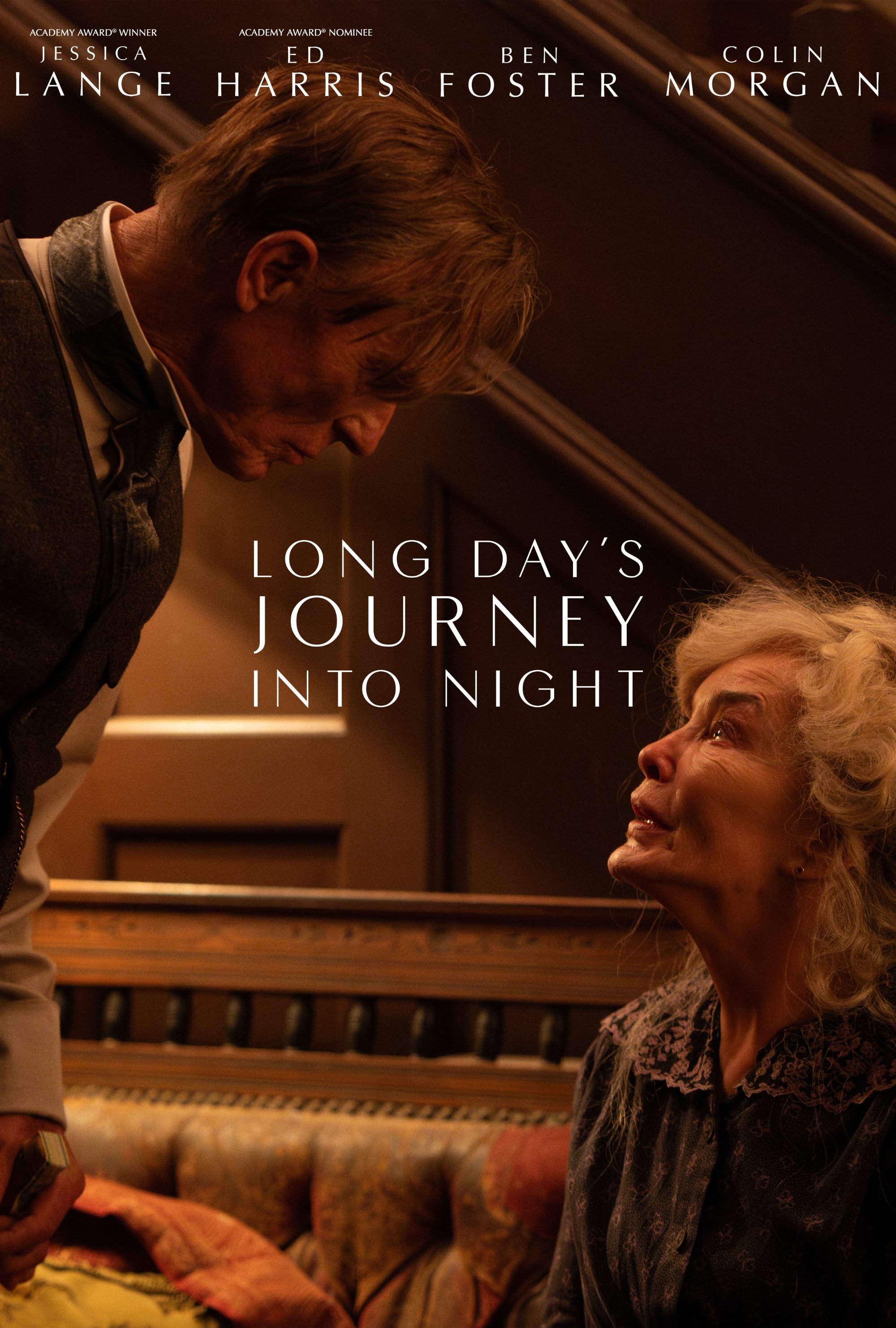
长夜迢迢路漫漫 2016 Roundabout Revival版 [演出] 豆瓣
所属 演出: 长夜迢迢路漫漫
语言: 英语 english 剧院: American Airline Theater 导演: Jonathan Kent
其它标题: 2016 Roundabout Revival版 编剧: Eugene O'Neill 演员: Gabriel Byrne / Jessica Lange


Long Day’s Journey into Night is one of the seminal plays of the twentieth century. This heart-breaking drama tells the story of a troubled family as they struggle with addiction and personal demons on one fateful day at the turn of the twentieth century.

美狄亚 [演出] 豆瓣
Medea
类型: Theater 编剧: Euripides / RACHEL CUSK
其它标题: Medea 导演: Jonathan Kent / 迈克尔·塔尔海默 Michael Thalheimer 演员: Diana Rigg / 约瑟芬·普拉特 Josefin Platt / 贝蒂娜·霍普 Bettina Hoppe / 康斯坦丝·贝克尔 Constanze Becker / 马丁·伦萨奇 Martin Rentzsch
The play tells the story of the revenge of a woman betrayed by her husband. All of the action of the play is at Corinth, where Jason has brought Medea after the adventures of the Golden Fleece. He has now left her in order to marry Glauce, the daughter of King Creon. (Glauce is also known in Latin works as Creusa — see Seneca the Younger's Medea and Propertius 2.16.30. This King Creon is not to be confused with King Creon of Thebes.) The play opens with Medea grieving over her loss and with her elderly nurse fearing what she might do to herself or her children.
Creon, also fearing what Medea might do, arrives determined to send Medea into exile. Medea pleads for one day's delay, and Creon begrudgingly acquiesces. In the next scene Jason arrives to confront her and explain himself. He believes he could not pass up the opportunity to marry a royal princess, as Medea is only a barbarian woman, but hopes to someday join the two families and keep Medea as his mistress. Medea, and the chorus of Corinthian women, do not believe him. She reminds him that she left her own people for him ("I am the mother of your children. Whither can I fly, since all Greece hates the barbarian?"), and that she saved him and slew the dragon. Jason promises to support her after his new marriage, but Medea spurns him: "Marry the maid if thou wilt; perchance full soon thou mayst rue thy nuptials."
Next Medea is visited by Aegeus, King of Athens; he is aggrieved by his lack of children, and does not understand the oracle that was supposed to give him guidance. Medea begs him to protect her, in return for her helping his wife conceive a child. Aegeus does not know what Medea is going to do in Corinth, but promises to give her refuge in any case, provided she can escape to Athens.
Medea then returns to her plotting how she may kill Creon and Glauce. She decides to poison some golden robes (a family heirloom and gift from the sun god), in hopes that the bride will not be able to resist wearing them, and consequently be poisoned. Medea resolves to kill her own children as well, not because the children have done anything wrong, but because she feels it is the best way to hurt Jason. She calls for Jason once more, falsely apologizes to him, and sends the poisoned robes with her children as the gift-bearers.
Forgive what I said in anger! I will yield to the decree, and only beg one favor, that my children may stay. They shall take to the princess a costly robe and a golden crown, and pray for her protection.
The request is granted and the gifts are accepted. Offstage, while Medea ponders her actions, Glauce is killed by the poisoned dress, and Creon is also killed by the poison while attempting to save her. These events are related by a messenger.

Alas! The bride had died in horrible agony; for no sooner had she put on Medea's gifts than a devouring poison consumed her limbs as with fire, and in his endeavor to save his daughter the old father died too.
Medea is pleased with her revenge thus far, but resolves to carry it further: to utterly destroy Jason's plans for a new family, she will kill her own sons. She rushes offstage with a knife to kill her children. As the chorus laments her decision, the children are heard screaming. Jason rushes to the scene to punish her for the murder of Glauce and learns that his children too have been killed. Medea then appears above the stage in the chariot of the sun god Helios; this was probably accomplished using the mechane device usually reserved for the appearance of a god or goddess. She confronts Jason, reveling in his pain at being unable to ever hold his children again:
"I do not leave my children's bodies with thee; I take them with me that I may bury them in Hera's precinct. And for thee, who didst me all that evil, I prophesy an evil doom."
She escapes to Athens with the bodies. The chorus is left contemplating the will of Zeus in Medea's actions:
Manifold are thy shapings, Providence!
Many a hopeless matter gods arrange.
What we expected never came to pass,
What we did not expect the gods brought to bear;
So have things gone, this whole experience through!