Luciano Pavarotti — 演员 (18)
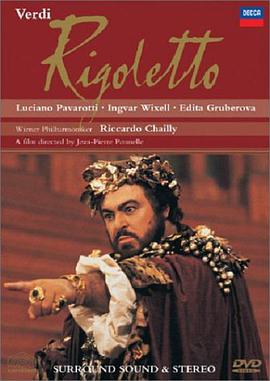
弄臣 (1982) [电影] TMDB 豆瓣 IMDb 维基数据
Rigoletto
9.8 (18 个评分) 导演: Jean-Pierre Ponnelle 演员: Edita Gruberova / Ingvar Wixell
其它标题: Rigoletto / 威尔第 歌剧电影《弄臣》
里戈莱托(卢奇亚诺·帕瓦罗蒂 Luciano Pavarotti 饰)天生矮小丑陋,是宫廷里博人一笑的弄臣。曼图亚公爵(Ingvar Wixell 饰)仗着自己生得英俊潇洒,四处侮辱玩弄女性,里戈莱托为了上位,整天在他身边为他出谋划策助纣为虐。久而久之,大家对于曼图亚公爵的恶行忍无可忍,决定设计报复。
这一次公爵看上的,是里戈莱托年轻纯洁的小女儿吉尔达(爱狄塔·格鲁贝罗娃 Edita Gruberova 饰),对此并不知情的里戈莱托亲手将自己的女儿送到了荒淫无度的公爵手中。当里戈莱托发现了真相后悲痛欲绝,决心杀死公爵为自己的女儿报仇,哪知道当他打开装有公爵尸体的麻袋后,发现里面的人竟然是吉尔达。
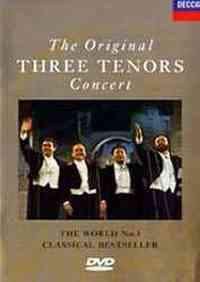
世界三大男高音:1990年罗马世纪音乐会 [电影] 豆瓣
Carreras Domingo Pavarotti in Concert 1990 (TV)
导演: Brian Large 演员: Josep Carreras / Plácido Domingo
其它标题: Carreras Domingo Pavarotti in Concert 1990 (TV) / The Original Three Tenors Concert
The triumvirate of tenors blend classical arias with an encore round of popular Italian ballads in this concert special from the Musicale Fiorentino Teatro Opera in Rome. Experience the emotion, the excitement and the triumph of the greatest classical event of our time, captured as never before in studio-quality vision and spectacular 5-channel surround sound!
Recorded in Rome 7 July 1990. Contents: Titles, "Il Lamento di Federico", "O paradis", "Recondita armonia", "Dein ist mein ganzes Herz", "Rondine al nido", "Core 'ngrato", "I vespri siciliani (Sinfonia)", "Torna a Surriento", "Granada", "No puerde ser", "L'improvviso", "E lucevan le stelle", "Nessun dorma", Finale Medley, Encore "'O sole mio", Encore "Nessun dorma".
三大男高音1994年洛杉矶音乐会 (1994) [电影] 豆瓣
The Three Tenors - in Concert 1994
导演: William Cosel 演员: José Carreras / Plácido Domingo
其它标题: The Three Tenors - in Concert 1994
1994年,世界杯足球赛决赛之夜在美国洛杉矶道奇体育场举办的三大男高音演唱会,是音乐史上空前绝后聚集全球15亿观众同时欣赏之世纪盛会。本专辑收录世界名歌、好莱坞名曲等二十余首,加收一首电视未转播的精彩安歌(Encore,又译“安可曲”),全长112分钟,是三大男高音超越巅峰之后的最后巨献,雅俗共赏。
1990年是三位男高音个人声音状态和艺术水平无法超越的顶峰。1994年的演唱会,是他们最后的辉煌。
尤其是卡雷拉斯,白血病对他的演唱打击很大,1990年还算状态不错,之后就一直走下坡,1990~1994年间还凑合,而1994~1998年间则有些吓人,1998年的演唱会上,他的状态实在是令人心酸,苦苦撑完的一场音乐会啊。1998年他也到北京去了,在人民大会堂开个唱,也是让人揪心的状态。1994年的这一场,主要听多明戈的出色表现。老帕的表现则很稳定,当时还没有受伤患影响,状态不错,不过声音的变化同1990年相比已经很明显了。三人的情绪很高,他们难得四年之后又能相聚。不过从此之后他们就经常相聚,但也一次不如一次了。
这场演唱会是商业运作的正面典范,艺术水平也很高,场面热烈,选曲则因为兼顾了经典流行所以非常通俗而受欢迎,对于普及歌剧艺术来说则非常有利。
专辑曲目:
01. 美国国歌 The Star-Spangled Banner
02. 伯恩斯坦“憨第得”歌剧序曲 Overture
03. 啊,征服者,判官,天父 O Souverain, O Juge, O Pere(卡雷拉斯)
04. 在那平静的夜晚 Quando Le Sere Al Placido(多明戈)
05. 好梦由来最易醒 Pourquoi Me Reveiller(帕瓦罗蒂)
06. 心灵之歌 With A Song In My Heart(卡雷拉斯)
07. 格兰纳达 Granada(多明戈)
08. 毋忘我 Non Ti Scordar Di Me(帕瓦罗蒂)
09. 好莱坞名曲集锦 A Tribute To Hollywood(三大男高音)
10. 匈牙利进行曲 Marche Hongroise(Rakoczy)
11. 你,有泪不轻弹 Tu, Ca Nun Chiagne(卡雷拉斯)
12. 爱情,我的生命 Amor, Vida De Mi Vida(多明戈)
13. 圣母颂(舒伯特) Ave Maria(帕瓦罗蒂)
14. 星光灿烂 E Lucevan Le Stelle(卡雷拉斯)
15. 粉墨登场 Vesti La Giubba(多明戈)
16. 今夜无人入睡 Nessun Dorma(帕瓦罗蒂)
17. 世界名歌组曲(三大男高音)
18. 善变的女人(三大男高音)
19. 饮酒歌(三大男高音)
20. 今夜无人入睡(三大男高音)
托斯卡 1990年罗马歌剧院版 [演出] 豆瓣
所属 演出: 托斯卡
语言: 意大利语 剧团: Orchestra del Teatro dell'Opera di Roma 罗马歌剧院管弦乐团 ; Coro del Teatro dell'Opera di Roma 罗马歌剧院合唱团 剧院: Teatro Costanzi 科斯坦齐剧院 导演: Mauro Bolognini
其它标题: 1990年罗马歌剧院版 编剧: Giuseppe Giacosa / Luigi Illica 作曲: Giacomo Puccini 演员: Raina Kabaivanska / Luciano Pavarotti
Historical context
A crowded scene with many soldiers and horses, and much smoke. Some soldiers lie dead or wounded. In the distance, beyond a short line of trees, is a tall church tower.
According to the libretto, the action of Tosca occurs in Rome in June 1800. Sardou, in his play, dates it more precisely; La Tosca takes place in the afternoon, evening, and early morning of 17 and 18 June 1800.
Italy had long been divided into a number of small states, with the Pope in Rome ruling the Papal States in Central Italy. Following the French Revolution, a French army under Napoleon invaded Italy in 1796, entering Rome almost unopposed on 11 February 1798 and establishing a republic there. Pope Pius VI was taken prisoner, and was sent into exile on February 20, 1798. (Pius VI would die in exile in 1799, and his successor, Pius VII, who was elected in Venice on 14 March 1800, would not enter Rome until July 3. There is thus neither a Pope nor papal government in Rome during the days depicted in the opera.) The new republic was ruled by seven consuls; in the opera this is the office formerly held by Angelotti, whose character may be based on the real-life consul Liborio Angelucci. In September 1799 the French, who had protected the republic, withdrew from Rome. As they left, troops of the Kingdom of Naples occupied the city.
In May 1800 Napoleon, by then the undisputed leader of France, brought his troops across the Alps to Italy once again. On 14 June his army met the Austrian forces at the Battle of Marengo (near Alessandria). Austrian troops were initially successful; by mid-morning they were in control of the field of battle. Their commander, Michael von Melas, sent this news south towards Rome. However, fresh French troops arrived in late afternoon, and Napoleon attacked the tired Austrians. As Melas retreated in disarray with the remains of his army, he sent a second courier south with the revised message. The Neapolitans abandoned Rome, and the city spent the next fourteen years under French domination.
Act 1
Inside the church of Sant'Andrea della Valle
Scene depicting a church interior with high stained-glass windows and heavy ornamental columns. The central figure is a high dignatory around whom several figures are kneeling, while in the background can be seen the tall pikes of the Swiss Guard.
Cesare Angelotti, former consul of the Roman Republic and now an escaped political prisoner, runs into the church and hides in the Attavanti private chapel – his sister, the Marchesa Attavanti, has left a key to the chapel hidden at the feet of the statue of the Madonna. The elderly Sacristan enters and begins cleaning. The Sacristan kneels in prayer as the Angelus sounds.
The painter Mario Cavaradossi arrives to continue work on his picture of Mary Magdalene. The Sacristan identifies a likeness between the portrait and a blonde-haired woman who has been visiting the church recently (unknown to him, it is Angelotti's sister the Marchesa). Cavaradossi describes the "hidden harmony" ("Recondita armonia") in the contrast between the blonde beauty of his painting and his dark-haired lover, the singer Floria Tosca. The Sacristan mumbles his disapproval before leaving.
Angelotti emerges and tells Cavaradossi, an old friend who has republican sympathies, that he is being pursued by the Chief of Police, Baron Scarpia. Cavaradossi promises to assist him after nightfall. Tosca's voice is heard, calling to Cavaradossi. Cavaradossi gives Angelotti his basket of food and Angelotti hurriedly returns to his hiding place.
Tosca enters and suspiciously asks Cavaradossi what he has been doing – she thinks that he has been talking to another woman. Cavaradossi reassures her and Tosca tries to persuade him to take her to his villa that evening: "Non la sospiri, la nostra casetta" ("Do you not long for our little cottage"). She then expresses jealousy over the woman in the painting, whom she recognises as the Marchesa Attavanti. Cavaradossi explains the likeness; he has merely observed the Marchesa at prayer in the church. He reassures Tosca of his fidelity and asks her what eyes could be more beautiful than her own: "Qual'occhio al mondo" ("What eyes in the world").
After Tosca has left, Angelotti reappears and discusses with the painter his plan to flee disguised as a woman, using clothes left in the chapel by his sister. Cavaradossi gives Angelotti a key to his villa, suggesting that he hide in a disused well in the garden. The sound of a cannon signals that Angelotti's escape has been discovered. He and Cavaradossi hasten out of the church.
The Sacristan re-enters with choristers, celebrating the news that Napoleon has apparently been defeated at Marengo. The celebrations cease abruptly with the entry of Scarpia, his henchman Spoletta and several police agents. They have heard that Angelotti has sought refuge in the church. Scarpia orders a search, and the empty food basket and a fan bearing the Attavanti coat of arms are found in the chapel. Scarpia questions the Sacristan, and his suspicions are aroused further when he learns that Cavaradossi has been in the church; Scarpia mistrusts the painter, and believes him complicit in Angelotti's escape.
When Tosca arrives looking for her lover, Scarpia artfully arouses her jealous instincts by implying a relationship between the painter and the Marchesa Attavanti. He draws Tosca's attention to the fan and suggests that someone must have surprised the lovers in the chapel. Tosca falls for his deceit; enraged, she rushes off to confront Cavaradossi. Scarpia orders Spoletta and his agents to follow her, assuming she will lead them to Cavaradossi and Angelotti. He privately gloats as he reveals his intentions to possess Tosca and execute Cavaradossi. A procession enters the church singing the Te Deum; exclaiming 'Tosca, you make me forget even God!', Scarpia joins the chorus in the prayer.
Act 2
The body of a man lies supine, with a woman, crucifix in hand, kneeling over him. A candle is placed to each side of his head.
Scarpia's apartment in the Palazzo Farnese, that evening
Scarpia, at supper, sends a note to Tosca asking her to come to his apartment, anticipating that two of his goals will soon be fulfilled at once. His agent, Spoletta, arrives to report that Angelotti remains at large, but Cavaradossi has been arrested for questioning. He is brought in, and an interrogation ensues. As the painter steadfastly denies knowing anything about Angelotti's escape, Tosca's voice is heard singing a celebratory cantata elsewhere in the Palace.
She enters the apartment in time to see Cavaradossi being escorted to an antechamber. All he has time to say is that she mustn't tell them anything. Scarpia then claims she can save her lover from indescribable pain if she reveals Angelotti's hiding place. She resists, but the sound of screams coming through the door eventually breaks her down, and she tells Scarpia to search the well in the garden of Cavaradossi's villa.
Scarpia orders his torturers to cease, and the bloodied painter is dragged back in. He's devastated to discover that Tosca has betrayed his friend. Sciarrone, another agent, then enters with news: there was an upset on the battlefield at Marengo, and the French are marching on Rome. Cavaradossi, unable to contain himself, gloats to Scarpia that his rule of terror will soon be at an end. This is enough for the police to consider him guilty, and they haul him away to be shot.
Scarpia, now alone with Tosca, proposes a bargain: if she gives herself to him, Cavaradossi will be freed. She is revolted, and repeatedly rejects his advances, but she hears the drums outside announcing an execution. As Scarpia awaits her decision, she prays, asking why God has abandoned her in her hour of need: "Vissi d'arte" ("I lived for art"). She tries to offer money, but Scarpia isn't interested in that kind of bribe: he wants Tosca herself.
Spoletta returns with the news that Angelotti has killed himself upon discovery, and that everything is in place for Cavaradossi's execution. Scarpia hesitates to give the order, looking to Tosca, and despairingly she agrees to submit to him. He tells Spoletta to arrange a mock execution, both men repeating that it will be "as we did with Count Palmieri," and Spoletta exits.
Tosca insists that Scarpia must provide safe-conduct out of Rome for herself and Cavaradossi. He easily agrees to this and heads to his desk. While he's drafting the document, she quietly takes a knife from the supper table. Scarpia triumphantly strides toward Tosca. When he begins to embrace her, she stabs him, crying "this is Tosca's kiss!" Once she's certain he's dead, she ruefully says "now I forgive him." She removes the safe-conduct from his pocket, lights candles in a gesture of piety, and places a crucifix on the body before leaving.
Act 3
The upper parts of the Castel Sant'Angelo, early the following morning
Roman panorama showing, centre, an arched bridge over a river with a domed building in the distance. To the right of the bridge is a large circular fortress.
A shepherd boy is heard offstage singing (in Romanesco dialect) "Io de' sospiri" ("I give you sighs") as church bells sound for matins. The guards lead Cavaradossi in and inform him that he has one hour to live. He declines to see a priest, but asks permission to write a letter to Tosca. He begins to write, but is soon overwhelmed by memories: "E lucevan le stelle" ("And the stars shone").
Tosca enters and shows him the safe-conduct pass she's obtained, adding that she has killed Scarpia and that the imminent execution is a sham. Cavaradossi must feign death, after which they can flee together before Scarpia's body is discovered. Cavaradossi is awestruck by his gentle lover's courage: "O dolci mani" ("Oh sweet hands"). The pair ecstatically imagines the life they will share, far from Rome. Tosca then anxiously coaches Cavaradossi on how to play dead when the firing squad shoots at him with blanks. He giddily promises he'll fall "like Tosca in the theatre."
Cavaradossi is led away, and Tosca watches with increasing impatience as the execution is prepared. The men fire, Cavaradossi falls, and Tosca exclaims "Ecco un artista!" ("What an actor!"). When the soldiers have all left, she hurries towards Cavaradossi, only to find that Scarpia betrayed her: the bullets were real. Heartbroken, she clasps her lover's lifeless body and weeps.
The voices of Spoletta, Sciarrone, and the soldiers are heard, shouting that Scarpia is dead and Tosca has killed him. As the men rush in, Tosca rises, evades their clutches, and runs to the parapet. Crying "O Scarpia, Avanti a Dio!" ("O Scarpia, we meet before God!"), she flings herself over the edge to her death.
游吟诗人 1988年大都会歌剧团版 [演出] 豆瓣
所属 演出: 游吟诗人
语言: italian 意大利语 剧团: Metropolitan Opera Orchestra 大都会歌剧团管弦乐团 ; Metropolitan Opera Chorus 大都会歌剧团合唱团 剧院: Metropolitan Opera House 大都会歌剧院 导演: Fabrizio Melano
其它标题: 1988年大都会歌剧团版 编剧: Salvadore Cammarano / Leone Emanuele Bardare 作曲: Giuseppe Verdi 演员: Luciano Pavarotti / Éva Marton
Place: Biscay and Aragon (Spain)
Time: Fifteenth century.
Act 1: The Duel
Scene 1: The guard room in the castle of Luna (The Palace of Aljafería, Zaragoza, Spain)
Ferrando, the captain of the guards, orders his men to keep watch while Count di Luna wanders restlessly beneath the windows of Leonora, lady-in-waiting to the Princess. Di Luna loves Leonora and is jealous of his successful rival, a troubadour whose identity he does not know. In order to keep the guards awake, Ferrando narrates the history of the count (Racconto: Di due figli vivea padre beato / "The good Count di Luna lived happily, the father of two sons"): many years ago, a gypsy was wrongfully accused of having bewitched the youngest of the di Luna children; the child had fallen sick, and for this the gypsy had been burnt alive as a witch, her protests of innocence ignored. Dying, she had commanded her daughter Azucena to avenge her, which she did by abducting the baby. Although the burnt bones of a child were found in the ashes of the pyre, the father refused to believe his son's death. Dying, the father commanded his firstborn, the new Count di Luna, to seek Azucena.
Scene 2: Garden in the palace of the princess
Leonora confesses her love for the Troubadour to her confidante, Ines (Cavatina:Tacea la notte placida / "The peaceful night lay silent"... Di tale amor / "A love that words can scarcely describe"), in which she tells how she fell in love with a mystery knight, victor at a tournament: lost track of him when a civil war broke out: then encountered him again, in disguise as a wandering troubadour who sang beneath her window. When they have gone, Count di Luna enters, intending to pay court to Leonora himself, but hears the voice of his rival, in the distance: (Deserto sulla terra / "Alone upon this earth"). Leonora in the darkness briefly mistakes the count for her lover, until the Troubadour himself enters the garden, and she rushes to his arms. The Count challenges his rival to reveal his true identity, which he does: Manrico, a knight now outlawed and under death sentence for his allegiance to a rival prince. Manrico in turn challenges him to call the guards, but the Count regards this encounter as a personal rather than political matter, and challenges Manrico instead to a duel over their common love. Leonora tries to intervene, but cannot stop them from fighting (Trio: Di geloso amor sprezzato / "The fire of jealous love" ).
Act 2: The Gypsy Woman
Scene 1: The gypsies' camp
The gypsies sing the Anvil Chorus: Vedi le fosche notturne / "See! The endless sky casts off her sombre nightly garb...". Azucena, the daughter of the Gypsy burnt by the count, is still haunted by her duty to avenge her mother (Canzone: Stride la vampa / "The flames are roaring!"). The Gypsies break camp while Azucena confesses to Manrico that after stealing the di Luna baby she had intended to burn the count's little son along with her mother, but overwhelmed by the screams and the gruesome scene of her mother's execution, she became confused and threw her own child into the flames instead (Racconto: Condotta ell'era in ceppi / "They dragged her in bonds").
Manrico realises that he is not the son of Azucena, but loves her as if she were indeed his mother, as she has always been faithful and loving to him - and, indeed, saved his life only recently, discovering him left for dead on a battlefield after being caught in ambush. Manrico tells Azucena that he defeated di Luna in their earlier duel, but was held back from killing him by a mysterious power (Duet: Mal reggendo / "He was helpless under my savage attack"): and Azucena reproaches him for having stayed his hand then, especially since it was the Count's forces that defeated him in the subsequent battle of Pelilla. A messenger arrives and reports that Manrico's allies have taken Castle Castellor, which Manrico is ordered to hold in the name of his prince: and also that Leonora, who believes Manrico dead, is about to enter a convent and take the veil that night. Although Azucena tries to prevent him from leaving in his weak state (Ferma! Son io che parlo a te! / "I must talk to you"), Manrico rushes away to prevent her from carrying out this intent.
Scene 2: In front of the convent
Di Luna and his attendants intend to abduct Leonora and the Count sings of his love for her (Aria: Il balen del suo sorriso / "The light of her smile" ... Per me ora fatale / "Fatal hour of my life"). Leonora and the nuns appear in procession, but Manrico prevents di Luna from carrying out his plans and takes Leonora away with him, although once again leaving the Count behind unharmed, as the soldiers on both sides back down from bloodshed, the Count being held back by his own men.
Act 3: The Son of the Gypsy Woman
Scene 1: Di Luna's camp
Di Luna and his army are attacking the fortress Castellor where Manrico has taken refuge with Leonora (Chorus: Or co' dadi ma fra poco / "Now we play at dice"). Ferrando drags in Azucena, who has been captured wandering near the camp. When she hears di Luna’s name, Azucena’s reactions arouse suspicion and Ferrando recognizes her as the supposed murderer of the count’s brother. Azucena cries out to her son Manrico to rescue her and the count realizes that he has the means to flush his enemy out of the fortress. He orders his men to build a pyre and burn Azucena before the walls.
Scene 2: A chamber in the castle
Inside the castle, Manrico and Leonora are preparing to be married. She is frightened; the battle with di Luna is imminent and Manrico’s forces are outnumbered. He assures her of his love (Aria: Ah sì, ben mio, coll'essere / "Ah, yes, my love, in being yours"), even in the face of death. When news of Azucena’s capture reaches him, he summons his men and desperately prepares to attack (Cabaletta: Di quella pira l'orrendo foco / "The horrid flames of that pyre"). Leonora faints.
Act 4: The Punishment
Scene 1: Before the dungeon keep
Manrico has failed to free Azucena and has been imprisoned himself. Leonora attempts to free him (Aria: D'amor sull'ali rosee / "On the rosy wings of love"; Chorus & Duet: Miserere / "Lord, thy mercy on this soul") by begging di Luna for mercy and offers herself in place of her lover. She promises to give herself to the count, but secretly swallows poison from her ring in order to die before di Luna can possess her (Duet: Mira, d'acerbe lagrime / "See the bitter tears I shed").
Scene 2: In the dungeon
Manrico and Azucena are awaiting their execution. Manrico attempts to soothe Azucena, whose mind wanders to happier days in the mountains (Duet: Ai nostri monti ritorneremo / "Again to our mountains we shall return"). At last the gypsy slumbers. Leonora comes to Manrico and tells him that he is saved, begging him to escape. When he discovers she cannot accompany him, he refuses to leave his prison. He believes Leonora has betrayed him until he realizes that she has taken poison to remain true to him. As she dies in agony in Manrico's arms she confesses that she prefers to die with him than to marry another (Trio: Prima che d'altri vivere / "Rather than live as another's"). The count has heard Leonora's last words and orders Manrico's execution. Azucena awakes and tries to stop di Luna. Once Manrico is dead, she cries: Egli era tuo fratello! Sei vendicata, o madre. / "He was your brother ... You are avenged, oh mother!"
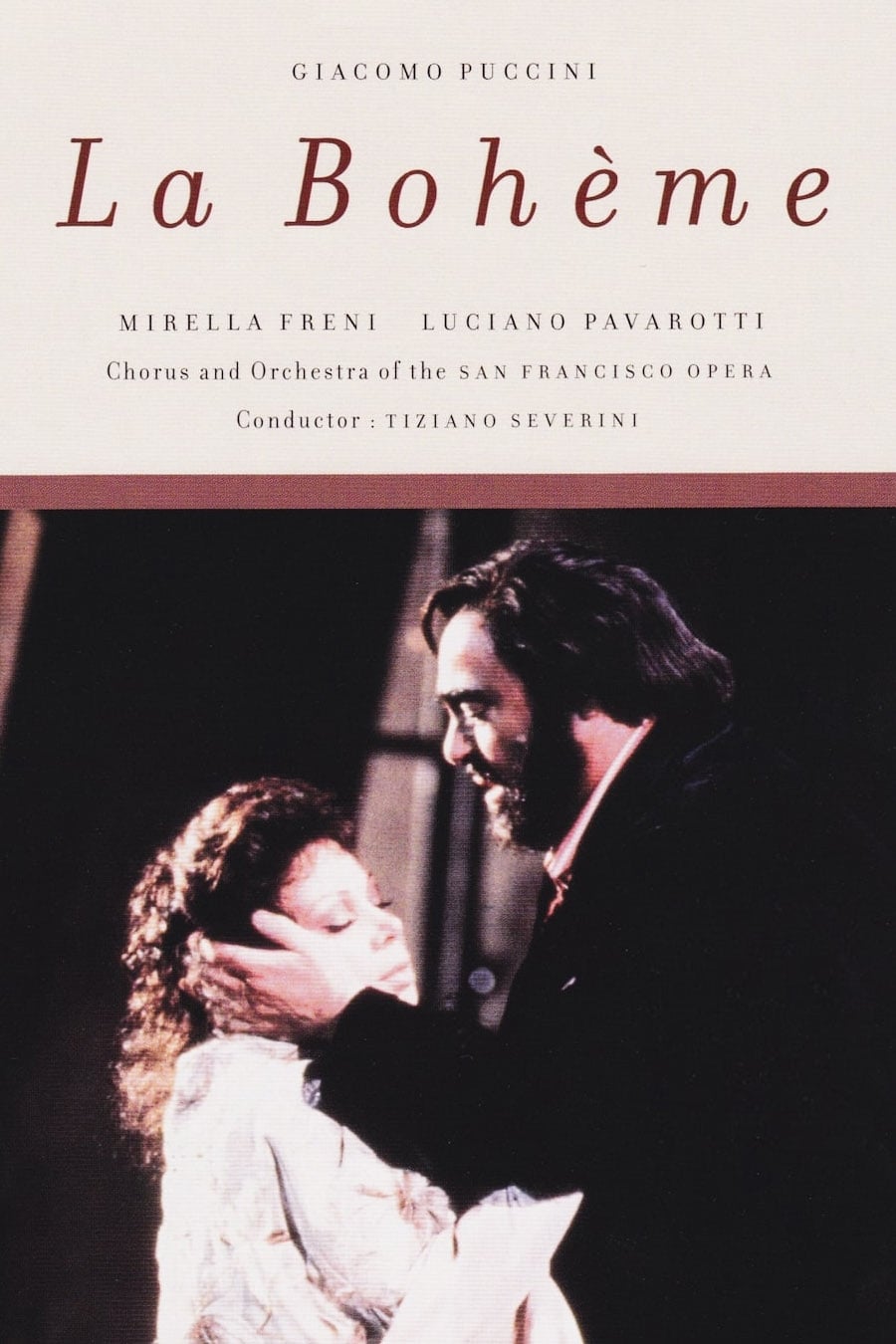
波希米亚人 1988年大都会歌剧团版 [演出] 豆瓣
所属 演出: 波希米亚人
语言: 意大利语 剧团: Metropolitan Opera Orchestra 大都会歌剧团管弦乐团 ; Metropolitan Opera Chorus 大都会歌剧团合唱团 剧院: Metropolitan Opera House 大都会歌剧院 导演: Franco Zeffirelli
其它标题: 1988年大都会歌剧团版 编剧: Giuseppe Giacosa / Luigi Illica 作曲: Giacomo Puccini 演员: Mirella Freni / Luciano Pavarotti
Place: Paris
Time: Around 1830
Act 1
In the four bohemians' garret (Christmas Eve)
Marcello is painting while Rodolfo gazes out of the window. They complain of the cold. In order to keep warm, they burn the manuscript of Rodolfo's drama. Colline, the philosopher, enters shivering and disgruntled at not having been able to pawn some books. Schaunard, the musician of the group, arrives with food, wine and cigars. He explains the source of his riches: a job with an eccentric English gentleman, who ordered him to play his violin to a parrot until it died. The others hardly listen to his tale as they set up the table to eat and drink. Schaunard interrupts, telling them that they must save the food for the days ahead: tonight they will all celebrate his good fortune by dining at Cafe Momus, and he will pay.
The friends are interrupted by Benoît, the landlord, who arrives to collect the rent. They flatter him and ply him with wine. In his drunkenness, he begins to boast of his amorous adventures, but when he also reveals that he is married, they thrust him from the room—without the rent payment—in comic moral indignation. The rent money is divided for their evening out in the Quartier Latin.
Marcello, Schaunard and Colline go out, but Rodolfo remains alone for a moment in order to finish an article he is writing, promising to join his friends soon. There is a knock at the door. It is a girl who lives in another room in the building. Her candle has blown out, and she has no matches; she asks Rodolfo to light it. She is briefly overcome with faintness, and Rodolfo helps her to a chair and offers her a glass of wine. She thanks him. After a few minutes, she says that she is better and must go. But as she turns to leave, she realizes that she has lost her key.
Her candle goes out in the draught and Rodolfo's candle goes out too; the pair stumble in the dark. Rodolfo, eager to spend time with the girl, to whom he is already attracted, finds the key and pockets it, feigning innocence. He takes her cold hand (Che gelida manina—"What a cold little hand") and tells her of his life as a poet, then asks her to tell him more about her life. The girl says her name is Mimì (Sì, mi chiamano Mimì—"Yes, they call me Mimì"), and describes her simple life as an embroiderer. Impatiently, the waiting friends call Rodolfo. He answers and turns to see Mimì bathed in moonlight (duet, Rodolfo and Mimì: O soave fanciulla—"Oh lovely girl"). They realize that they have fallen in love. Rodolfo suggests remaining at home with Mimì, but she decides to accompany him to the Cafe Momus. As they leave, they sing of their newfound love.
Act 2
Quartier Latin (same evening)
A great crowd, including children, has gathered with street sellers announcing their wares (chorus: Aranci, datteri! Caldi i marroni!—"Oranges, dates! Hot chestnuts!"). The friends arrive; Rodolfo buys Mimì a bonnet from a vendor, while Colline buys a coat and Schaunard a horn. Parisians gossip with friends and bargain with the vendors; the children of the streets clamor to see the wares of Parpignol, the toy seller. The friends enter the Cafe Momus.
As the men and Mimì dine at the cafe, Musetta, formerly Marcello's sweetheart, arrives with her rich (and elderly) government minister admirer, Alcindoro, whom she is tormenting. It is clear she has tired of him. To the delight of the Parisians and the embarrassment of her patron, she sings a risqué song (Musetta's waltz: Quando m'en vo'—"When I go along"), hoping to reclaim Marcello's attention. The ploy works; at the same time, Mimì recognizes that Musetta truly loves Marcello. To be rid of Alcindoro for a bit, Musetta pretends to be suffering from a tight shoe and sends him to the shoemaker to get her shoe mended. Alcindoro leaves, and Musetta and Marcello fall rapturously into each other's arms.
The friends are presented with their bill. However, Schaunard's purse has gone missing and no one else has enough money to pay. The sly Musetta has the entire bill charged to Alcindoro. The sound of a military band is heard, and the friends leave. Alcindoro returns with the repaired shoe seeking Musetta. The waiter hands him the bill and, dumbfounded, Alcindoro sinks into a chair.
Act 3
At the toll gate at the Barrière d'Enfer (late February)
Peddlers pass through the barriers and enter the city. Mimì appears, coughing violently. She tries to find Marcello, who is currently living in a little tavern where he paints signs for the innkeeper. She tells him of her hard life with Rodolfo, who abandoned her the night before, and of Rodolfo's terrible jealousy (O buon Marcello, aiuto!—"Oh, good Marcello, help me!"). Marcello tells her that Rodolfo is asleep inside, and expresses concern about Mimì's cough. Rodolfo wakes up and comes out looking for Marcello. Mimì hides and overhears Rodolfo first telling Marcello that he left Mimì because of her coquettishness, but finally confessing that his jealousy is a sham: he fears she is slowly being consumed by a deadly illness (most likely tuberculosis, known by the catchall name "consumption" in the nineteenth century). Rodolfo, in his poverty, can do little to help Mimì and hopes that his pretended unkindness will inspire her to seek another, wealthier suitor (Marcello, finalmente—"Marcello, finally").
Out of kindness towards Mimì, Marcello tries to silence him, but she has already heard all. Her weeping and coughing reveal her presence, and Rodolfo hurries to her. Musetta's laughter is heard and Marcello goes to find out what has happened. Mimì tells Rodolfo that she is leaving him, and asks that they separate amicably (Mimì: Donde lieta uscì—"From here she happily left"); but their love for one another is too strong for the pair to part. As a compromise, they agree to remain together until the spring, when the world is coming to life again and no one feels truly alone. Meanwhile, Marcello has found Musetta, and the couple quarrel fiercely about Musetta's flirtatiousness: an antithetical counterpoint to the other pair's reconciliation (quartet: Mimì, Rodolfo, Musetta, Marcello: Addio dolce svegliare alla mattina!—"Goodbye, sweet awakening in the morning!").
Act 4
Back in the garret (some months later)
Marcello and Rodolfo are trying to work, though they are primarily talking about their girlfriends, who have left them and found wealthy lovers. Rodolfo has seen Musetta in a fine carriage and Marcello has seen Mimì dressed like a queen. The men both express their nostalgia (duet: O Mimì, tu più non torni—"O Mimì, will you not return?"). Schaunard and Colline arrive with a very frugal dinner and all parody eating a plentiful banquet, dance together and sing, before Schaunard and Colline engage in a mock duel.
Musetta suddenly appears; Mimì, who took up with a wealthy viscount after leaving Rodolfo in the spring, has left her patron. Musetta found her that day in the street, severely weakened by her illness, and Mimì begged Musetta to bring her to Rodolfo. Mimì, haggard and pale, is assisted onto a bed. Briefly, she feels as though she is recovering. Musetta and Marcello leave to sell Musetta's earrings in order to buy medicine, and Colline leaves to pawn his overcoat (Vecchia zimarra—"Old coat"). Schaunard leaves with Colline to give Mimì and Rodolfo some time together. Mimì tells Rodolfo that her love for him is her whole life (aria/duet, Mimì and Rodolfo: Sono andati?—"Have they gone?").
To Mimì's delight, Rodolfo presents her with the pink bonnet he bought her, which he has kept as a souvenir of their love. They remember past happiness and their first meeting—the candles, the lost key. Suddenly, Mimì is overwhelmed by a coughing fit. The others return, with a gift of a muff to warm Mimì's hands and some medicine. Mimì gently thanks Rodolfo for the muff, which she believes is a present from him, reassures him that she is better and falls asleep. Musetta prays. Schaunard discovers that Mimì has died. Rodolfo rushes to the bed, calling Mimì's name in anguish, weeping helplessly as the curtain falls.
波希米亚人 1977年大都会歌剧团版 [演出] 豆瓣
所属 演出: 波希米亚人
语言: italian 意大利语 剧团: Metropolitan Opera Orchestra 大都会歌剧团管弦乐团 ; Metropolitan Opera Chorus 大都会歌剧团合唱团 剧院: Metropolitan Opera House 大都会歌剧院 导演: Fabrizio Melano
其它标题: 1977年大都会歌剧团版 编剧: Giuseppe Giacosa / Luigi Illica 作曲: Giacomo Puccini 演员: Renata Scotto / Luciano Pavarotti
Place: Paris
Time: Around 1830
Act 1
In the four bohemians' garret (Christmas Eve)
Marcello is painting while Rodolfo gazes out of the window. They complain of the cold. In order to keep warm, they burn the manuscript of Rodolfo's drama. Colline, the philosopher, enters shivering and disgruntled at not having been able to pawn some books. Schaunard, the musician of the group, arrives with food, wine and cigars. He explains the source of his riches: a job with an eccentric English gentleman, who ordered him to play his violin to a parrot until it died. The others hardly listen to his tale as they set up the table to eat and drink. Schaunard interrupts, telling them that they must save the food for the days ahead: tonight they will all celebrate his good fortune by dining at Cafe Momus, and he will pay.
The friends are interrupted by Benoît, the landlord, who arrives to collect the rent. They flatter him and ply him with wine. In his drunkenness, he begins to boast of his amorous adventures, but when he also reveals that he is married, they thrust him from the room—without the rent payment—in comic moral indignation. The rent money is divided for their evening out in the Quartier Latin.
Marcello, Schaunard and Colline go out, but Rodolfo remains alone for a moment in order to finish an article he is writing, promising to join his friends soon. There is a knock at the door. It is a girl who lives in another room in the building. Her candle has blown out, and she has no matches; she asks Rodolfo to light it. She is briefly overcome with faintness, and Rodolfo helps her to a chair and offers her a glass of wine. She thanks him. After a few minutes, she says that she is better and must go. But as she turns to leave, she realizes that she has lost her key.
Her candle goes out in the draught and Rodolfo's candle goes out too; the pair stumble in the dark. Rodolfo, eager to spend time with the girl, to whom he is already attracted, finds the key and pockets it, feigning innocence. He takes her cold hand (Che gelida manina—"What a cold little hand") and tells her of his life as a poet, then asks her to tell him more about her life. The girl says her name is Mimì (Sì, mi chiamano Mimì—"Yes, they call me Mimì"), and describes her simple life as an embroiderer. Impatiently, the waiting friends call Rodolfo. He answers and turns to see Mimì bathed in moonlight (duet, Rodolfo and Mimì: O soave fanciulla—"Oh lovely girl"). They realize that they have fallen in love. Rodolfo suggests remaining at home with Mimì, but she decides to accompany him to the Cafe Momus. As they leave, they sing of their newfound love.
Act 2
Quartier Latin (same evening)
A great crowd, including children, has gathered with street sellers announcing their wares (chorus: Aranci, datteri! Caldi i marroni!—"Oranges, dates! Hot chestnuts!"). The friends arrive; Rodolfo buys Mimì a bonnet from a vendor, while Colline buys a coat and Schaunard a horn. Parisians gossip with friends and bargain with the vendors; the children of the streets clamor to see the wares of Parpignol, the toy seller. The friends enter the Cafe Momus.
As the men and Mimì dine at the cafe, Musetta, formerly Marcello's sweetheart, arrives with her rich (and elderly) government minister admirer, Alcindoro, whom she is tormenting. It is clear she has tired of him. To the delight of the Parisians and the embarrassment of her patron, she sings a risqué song (Musetta's waltz: Quando m'en vo'—"When I go along"), hoping to reclaim Marcello's attention. The ploy works; at the same time, Mimì recognizes that Musetta truly loves Marcello. To be rid of Alcindoro for a bit, Musetta pretends to be suffering from a tight shoe and sends him to the shoemaker to get her shoe mended. Alcindoro leaves, and Musetta and Marcello fall rapturously into each other's arms.
The friends are presented with their bill. However, Schaunard's purse has gone missing and no one else has enough money to pay. The sly Musetta has the entire bill charged to Alcindoro. The sound of a military band is heard, and the friends leave. Alcindoro returns with the repaired shoe seeking Musetta. The waiter hands him the bill and, dumbfounded, Alcindoro sinks into a chair.
Act 3
At the toll gate at the Barrière d'Enfer (late February)
Peddlers pass through the barriers and enter the city. Mimì appears, coughing violently. She tries to find Marcello, who is currently living in a little tavern where he paints signs for the innkeeper. She tells him of her hard life with Rodolfo, who abandoned her the night before, and of Rodolfo's terrible jealousy (O buon Marcello, aiuto!—"Oh, good Marcello, help me!"). Marcello tells her that Rodolfo is asleep inside, and expresses concern about Mimì's cough. Rodolfo wakes up and comes out looking for Marcello. Mimì hides and overhears Rodolfo first telling Marcello that he left Mimì because of her coquettishness, but finally confessing that his jealousy is a sham: he fears she is slowly being consumed by a deadly illness (most likely tuberculosis, known by the catchall name "consumption" in the nineteenth century). Rodolfo, in his poverty, can do little to help Mimì and hopes that his pretended unkindness will inspire her to seek another, wealthier suitor (Marcello, finalmente—"Marcello, finally").
Out of kindness towards Mimì, Marcello tries to silence him, but she has already heard all. Her weeping and coughing reveal her presence, and Rodolfo hurries to her. Musetta's laughter is heard and Marcello goes to find out what has happened. Mimì tells Rodolfo that she is leaving him, and asks that they separate amicably (Mimì: Donde lieta uscì—"From here she happily left"); but their love for one another is too strong for the pair to part. As a compromise, they agree to remain together until the spring, when the world is coming to life again and no one feels truly alone. Meanwhile, Marcello has found Musetta, and the couple quarrel fiercely about Musetta's flirtatiousness: an antithetical counterpoint to the other pair's reconciliation (quartet: Mimì, Rodolfo, Musetta, Marcello: Addio dolce svegliare alla mattina!—"Goodbye, sweet awakening in the morning!").
Act 4
Back in the garret (some months later)
Marcello and Rodolfo are trying to work, though they are primarily talking about their girlfriends, who have left them and found wealthy lovers. Rodolfo has seen Musetta in a fine carriage and Marcello has seen Mimì dressed like a queen. The men both express their nostalgia (duet: O Mimì, tu più non torni—"O Mimì, will you not return?"). Schaunard and Colline arrive with a very frugal dinner and all parody eating a plentiful banquet, dance together and sing, before Schaunard and Colline engage in a mock duel.
Musetta suddenly appears; Mimì, who took up with a wealthy viscount after leaving Rodolfo in the spring, has left her patron. Musetta found her that day in the street, severely weakened by her illness, and Mimì begged Musetta to bring her to Rodolfo. Mimì, haggard and pale, is assisted onto a bed. Briefly, she feels as though she is recovering. Musetta and Marcello leave to sell Musetta's earrings in order to buy medicine, and Colline leaves to pawn his overcoat (Vecchia zimarra—"Old coat"). Schaunard leaves with Colline to give Mimì and Rodolfo some time together. Mimì tells Rodolfo that her love for him is her whole life (aria/duet, Mimì and Rodolfo: Sono andati?—"Have they gone?").
To Mimì's delight, Rodolfo presents her with the pink bonnet he bought her, which he has kept as a souvenir of their love. They remember past happiness and their first meeting—the candles, the lost key. Suddenly, Mimì is overwhelmed by a coughing fit. The others return, with a gift of a muff to warm Mimì's hands and some medicine. Mimì gently thanks Rodolfo for the muff, which she believes is a present from him, reassures him that she is better and falls asleep. Musetta prays. Schaunard discovers that Mimì has died. Rodolfo rushes to the bed, calling Mimì's name in anguish, weeping helplessly as the curtain falls.
爱之甘醇 [演出] 豆瓣
L'elisir d'amore
类型: 歌剧 编剧: Felice Romani
其它标题: L'elisir d'amore 导演: John Copley / Franco Ripa di Meana 演员: Luciano Pavarotti / Kathleen Battle / Enzo Dara / Juan Pons / Korliss Uecker
Place: A small village in the Basque Country
Time: The end of the 18th century
Act 1
Nemorino, a poor peasant, is in love with Adina, a beautiful landowner, who torments him with her indifference. When Nemorino hears Adina reading to her workers the story of Tristan and Isolde, he is convinced that a magic potion will help him to gain Adina's love. The self-important Sergeant Belcore appears with his regiment and immediately sets about courting Adina in front of everyone. Nemorino becomes anxious (although, Adina meanwhile secretly derides Belcore's complacency) and, alone with Adina, reveals his love for her. Yet Adina rebuffs him, saying she wants a different lover every day and following her example would do Nemorino better. Nemorino declares that his feelings will never change. The travelling quack doctor, Dulcamara (the self-proclaimed Dr. Encyclopedia), arrives, selling his bottled cure-all to the townspeople. Nemorino innocently asks Dulcamara if he has any of Isolde's love potion. Despite failing to recognise the name "Isolde", Dulcamara's commercial talents nevertheless enable him to sell a bottle of the cure-all – in reality only cheap wine – to Nemorino, withdrawing all his savings.
To make a safe escape, Dulcamara tells Nemorino the potion needs 24 hours to take effect – by which time, the doctor will be long gone. Nemorino drinks the potion in a haste in order to watch the effect tomorrow. Emboldened by the "elixir" (in fact, drunk), Nemorino feigns indifference when he encounters Adina, as he expects that the elixir will facilitate his conquest of Adina the following day. She becomes increasingly annoyed; perhaps she has feelings for Nemorino after all? Belcore returns and proposes marriage to Adina. Still riled by Nemorino and wishing to give him a lesson, Adina falsely promises to marry Belcore in six days' time. Yet Nemorino only laughs in response: such confidence is sustained in the belief in the magic potion. However, when Belcore learns that his regiment must leave the next morning, Adina promises to marry him before his departure. This of course panics Nemorino, who cries out for Dr. Dulcamara to come to his aid. Adina, meanwhile, invites everyone to the wedding.
Act 2
Adina and Belcore's wedding party is in full swing. Dr. Dulcamara encourages Adina to sing a duet with him to entertain the guests. The notary arrives to make the marriage official. Adina is annoyed to see that Nemorino has not appeared, for the whole deal has been intended only to punish him. While everyone goes to witness the signing of the wedding contract, Dulcamara stays behind, helping himself to food and drink. Having seen the notary, Nemorino appears, depressed, as he believes that he has lost Adina. He sees Dulcamara and frantically begs him for a more powerful, faster-acting elixir. Although Dulcamara is proud to boast of his philanthropy, upon discovering that Nemorino now has no money he changes his tune and marches off, refusing to supply him anything. Belcore emerges, musing about why Adina has suddenly put off the wedding and signing of the contract. He spots Nemorino and asks his rival why he is depressed. When Nemorino says he needs cash, Belcore suggests joining the army, as he'll receive funds on the spot. Belcore tries to excite Nemorino with tales of military life, while Nemorino only thinks of getting the potion and thus winning Adina, if only for a day before departure. Belcore produces a contract, which Nemorino signs in return for the money. Nemorino privately vows to rush and buy more potion, while Belcore muses about how sending Nemorino off to war has so easily dispatched his rival.
After the two men have left, Giannetta gossips with the women of the village. Swearing them all to secrecy, she reveals that Nemorino's uncle has just died and left his nephew a large fortune. However, neither Nemorino nor Adina is yet aware of this. Nemorino enters, having spent his military signing bonus on – and consumed – a large amount of the fake elixir from Dr. Dulcamara. Hoping to share his fortune, the women approach Nemorino with overly friendly greetings. So out of character is this that Nemorino takes it as proof of the elixir's efficacy. Adina sees Nemorino with the women, is rattled by his newfound popularity, and asks Dr. Dulcamara for an explanation. Unaware that Adina is the object of Nemorino's affection, Dulcamara explains that Nemorino spent his last penny on the elixir and joined the army for money to get more, so desperate was he to win the love of some unnamed cruel beauty. Adina immediately recognises Nemorino's sincerity, regrets her behaviour and realises that she has loved Nemorino all along. Although Dulcamara seizes the opportunity to try to sell her some of his potion to win back Nemorino, Adina declares that she has full confidence in her own powers of attraction.
Nemorino appears alone, pensive, reflecting on a tear he saw in Adina's eye when he was ignoring her earlier. Solely based on that, he convinces himself that Adina loves him. She enters and asks why he has chosen to join the army and leave the village. When Nemorino explains that he was seeking a better life, Adina responds that he is loved and that she has purchased back his military contract from Sergeant Belcore. She offers the cancelled contract to Nemorino and reassures him that, if he stays, he will be happy. As he takes the contract, Adina turns to leave. Nemorino believes she is abandoning him and flies into a desperate fit, vowing that if he is not loved he might as well go off and die a soldier. Deeply moved by his fidelity, Adina finally declares that she will love Nemorino forever. Nemorino is ecstatic. Adina begs him to forgive her, which he does with a kiss. Belcore returns to see Nemorino and Adina in an embrace. When Adina explains that she loves Nemorino, the Sergeant takes the news in stride, noting that there are plenty of other women in the world. Adina and Nemorino learn about the inheritance from his uncle. Dulcamara returns and boasts of the success of his elixir: Nemorino is now not only loved but also rich. He exults in the boost this will bring to the sales of his product. As he prepares to leave, everyone queues up to buy the elixir and hails Dulcamara as a great physician.
爱之甘醇 1991年大都会歌剧团版 [演出] 豆瓣
所属 演出: 爱之甘醇
语言: 意大利语 剧团: Metropolitan Opera Orchestra 大都会歌剧团管弦乐团 ; Metropolitan Opera Chorus 大都会歌剧团合唱团 剧院: Metropolitan Opera House 大都会歌剧院 导演: John Copley
其它标题: 1991年大都会歌剧团版 编剧: Felice Romani 作曲: Gaetano Donizetti 演员: Luciano Pavarotti / Kathleen Battle
Place: A small village in the Basque Country
Time: The end of the 18th century
Act 1
Nemorino, a poor peasant, is in love with Adina, a beautiful landowner, who torments him with her indifference. When Nemorino hears Adina reading to her workers the story of Tristan and Isolde, he is convinced that a magic potion will help him to gain Adina's love. The self-important Sergeant Belcore appears with his regiment and immediately sets about courting Adina in front of everyone. Nemorino becomes anxious (although, Adina meanwhile secretly derides Belcore's complacency) and, alone with Adina, reveals his love for her. Yet Adina rebuffs him, saying she wants a different lover every day and following her example would do Nemorino better. Nemorino declares that his feelings will never change. The travelling quack doctor, Dulcamara (the self-proclaimed Dr. Encyclopedia), arrives, selling his bottled cure-all to the townspeople. Nemorino innocently asks Dulcamara if he has any of Isolde's love potion. Despite failing to recognise the name "Isolde", Dulcamara's commercial talents nevertheless enable him to sell a bottle of the cure-all – in reality only cheap wine – to Nemorino, withdrawing all his savings.
To make a safe escape, Dulcamara tells Nemorino the potion needs 24 hours to take effect – by which time, the doctor will be long gone. Nemorino drinks the potion in a haste in order to watch the effect tomorrow. Emboldened by the "elixir" (in fact, drunk), Nemorino feigns indifference when he encounters Adina, as he expects that the elixir will facilitate his conquest of Adina the following day. She becomes increasingly annoyed; perhaps she has feelings for Nemorino after all? Belcore returns and proposes marriage to Adina. Still riled by Nemorino and wishing to give him a lesson, Adina falsely promises to marry Belcore in six days' time. Yet Nemorino only laughs in response: such confidence is sustained in the belief in the magic potion. However, when Belcore learns that his regiment must leave the next morning, Adina promises to marry him before his departure. This of course panics Nemorino, who cries out for Dr. Dulcamara to come to his aid. Adina, meanwhile, invites everyone to the wedding.
Act 2
Adina and Belcore's wedding party is in full swing. Dr. Dulcamara encourages Adina to sing a duet with him to entertain the guests. The notary arrives to make the marriage official. Adina is annoyed to see that Nemorino has not appeared, for the whole deal has been intended only to punish him. While everyone goes to witness the signing of the wedding contract, Dulcamara stays behind, helping himself to food and drink. Having seen the notary, Nemorino appears, depressed, as he believes that he has lost Adina. He sees Dulcamara and frantically begs him for a more powerful, faster-acting elixir. Although Dulcamara is proud to boast of his philanthropy, upon discovering that Nemorino now has no money he changes his tune and marches off, refusing to supply him anything. Belcore emerges, musing about why Adina has suddenly put off the wedding and signing of the contract. He spots Nemorino and asks his rival why he is depressed. When Nemorino says he needs cash, Belcore suggests joining the army, as he'll receive funds on the spot. Belcore tries to excite Nemorino with tales of military life, while Nemorino only thinks of getting the potion and thus winning Adina, if only for a day before departure. Belcore produces a contract, which Nemorino signs in return for the money. Nemorino privately vows to rush and buy more potion, while Belcore muses about how sending Nemorino off to war has so easily dispatched his rival.
After the two men have left, Giannetta gossips with the women of the village. Swearing them all to secrecy, she reveals that Nemorino's uncle has just died and left his nephew a large fortune. However, neither Nemorino nor Adina is yet aware of this. Nemorino enters, having spent his military signing bonus on – and consumed – a large amount of the fake elixir from Dr. Dulcamara. Hoping to share his fortune, the women approach Nemorino with overly friendly greetings. So out of character is this that Nemorino takes it as proof of the elixir's efficacy. Adina sees Nemorino with the women, is rattled by his newfound popularity, and asks Dr. Dulcamara for an explanation. Unaware that Adina is the object of Nemorino's affection, Dulcamara explains that Nemorino spent his last penny on the elixir and joined the army for money to get more, so desperate was he to win the love of some unnamed cruel beauty. Adina immediately recognises Nemorino's sincerity, regrets her behaviour and realises that she has loved Nemorino all along. Although Dulcamara seizes the opportunity to try to sell her some of his potion to win back Nemorino, Adina declares that she has full confidence in her own powers of attraction.
Nemorino appears alone, pensive, reflecting on a tear he saw in Adina's eye when he was ignoring her earlier. Solely based on that, he convinces himself that Adina loves him. She enters and asks why he has chosen to join the army and leave the village. When Nemorino explains that he was seeking a better life, Adina responds that he is loved and that she has purchased back his military contract from Sergeant Belcore. She offers the cancelled contract to Nemorino and reassures him that, if he stays, he will be happy. As he takes the contract, Adina turns to leave. Nemorino believes she is abandoning him and flies into a desperate fit, vowing that if he is not loved he might as well go off and die a soldier. Deeply moved by his fidelity, Adina finally declares that she will love Nemorino forever. Nemorino is ecstatic. Adina begs him to forgive her, which he does with a kiss. Belcore returns to see Nemorino and Adina in an embrace. When Adina explains that she loves Nemorino, the Sergeant takes the news in stride, noting that there are plenty of other women in the world. Adina and Nemorino learn about the inheritance from his uncle. Dulcamara returns and boasts of the success of his elixir: Nemorino is now not only loved but also rich. He exults in the boost this will bring to the sales of his product. As he prepares to leave, everyone queues up to buy the elixir and hails Dulcamara as a great physician.
假面舞会 1991年大都会歌剧团版 [演出] 豆瓣
所属 演出: 假面舞会
语言: 意大利语 剧团: Metropolitan Opera Orchestra 大都会歌剧团管弦乐团 ; Metropolitan Opera Chorus 大都会歌剧团合唱团 剧院: Metropolitan Opera House 大都会歌剧院 导演: Piero Faggioni
其它标题: 1991年大都会歌剧团版 编剧: Antonio Somma 作曲: Giuseppe Verdi 演员: Luciano Pavarotti / Aprile Millo
Place: Stockholm, Sweden or Boston, Massachusetts
Time: March 1792 in Sweden or the end of the 17th century in Boston
Act 1
Scene 1: A public audience at Riccardo's palace, attended by his supporters, but also by his enemies who hope for his demise.
Riccardo (Gustavo) reviews the list of guests who will attend an upcoming masked ball. He is elated to see the name of the woman he loves on the list – Amelia, the wife of his friend and advisor, Renato (Count Anckarström). (Aria: La rivedrò nell'estasi / "There I will be in ecstasy to see her again"). When Renato arrives, he tries to warn Riccardo about the growing conspiracy against him (aria: Alla vita che t'arride / "Your life, so full of joy and hope"), but Riccardo refuses to listen to his words.
Next, Riccardo is presented with a complaint against a fortune-teller named Ulrica (Madame Arvidson), accused of witchcraft. A magistrate calls for her banishment, but Oscar the page defends her (Aria: Volta la terrea / "Turning her eyes from the earth"). Riccardo resolves to investigate for himself and tells the members of the court to disguise themselves and to meet him at Ulrica's lodging later that day.
Scene 2: At Ulrica's dwelling
Ulrica summons her magical powers: Re dell'abisso, affrettati / "King of the abyss, make haste". Disguised as a fisherman, Riccardo arrives before the others. He makes the fortune of a sailor named Silvano come true by spiriting a document of promotion into his pouch, convincing the crowd of the truth of Ulrica's powers. When he realizes that Amelia is coming to see Ulrica, he hides and watches. Alone with Ulrica, Amelia confesses that she is tormented by her love for Riccardo, and asks for a means to bring peace to her heart. Ulrica tells her to gather a certain herb with magical powers; Riccardo resolves to be there when she does so. Amelia leaves.
Now Riccardo presents himself again, along with all of the courtiers, and asks to have his fortune told. (Aria: Di' tu se fedele / "Tell me if the sea awaits me faithfully"). Ulrica reveals that he will be killed by the next man who shakes his hand. He laughingly dismisses her prophecy and offers his hand to the courtiers, who refuse to take it. Renato arrives and shakes Riccardo's hand in greeting. Riccardo's true identity is now revealed and he is acclaimed by the people.
Act 2
On the outskirts of the town, at the gallows-place. Midnight
Amelia, conquering her fears, has come here alone to pick the herb of which Ulrica told her (Aria: Ma dall'arido stelo divulsa / "But when I have plucked the herb"). She is surprised by Riccardo, who has come to meet her, and the two finally declare their love for each other.
Unexpectedly, Renato arrives, and Amelia covers her face with her veil before he can recognize her. Renato explains to Riccardo that the conspirators are pursuing him, and his life is in danger. Riccardo leaves, making Renato promise to escort the veiled woman safely back to town, not asking her identity. When the conspirators arrive, they confront Renato; in the struggle, Amelia's veil drops. Renato assumes that Amelia and Riccardo have been involved in an adulterous love affair. He asks the two leaders of the conspiracy, Samuel and Tom, to meet him the next day.
Act 3
Scene 1: Renato's house
Renato has resolved to kill Amelia for the dishonor she has brought on him. She protests her innocence and begs to see her son one last time. (Aria: Morrò, ma prima in grazia / "I will die, but first, a kindness"). Renato relents, and declares that it is Riccardo, not Amelia, who deserves to die (Aria: Eri tu che macchiavi quell'anima / "You were the one who stained her soul").
Samuel (Count Ribbing) and Tom (Count Horn) arrive, and Renato asks to join their plot, pledging the life of his son as proof of his sincerity. They agree to draw lots to decide who will kill Riccardo. Amelia is forced to draw the winning name – Renato.
Oscar, the page, arrives with invitations to the masked ball; Samuel, Tom and Renato agree that this is where the assassination will take place.
Scene 2: The ball
Riccardo, torn between love and duty, has resolved to renounce his love for Amelia and send her and Renato back to England (Aria: Ma se m'è forza perderti / "But if I am forced to lose her").
At the ball, Renato tries to learn from Oscar what costume Riccardo is wearing. Oscar at first refuses to tell (Aria: Saper vorreste / "You want to know"), but he finally answers: a black cloak and a red ribbon. Riccardo manages to identify Amelia and tells her of the decision he has made. As they say goodbye, Renato stabs Riccardo. The wounded Riccardo discloses that though he loved Amelia, she never broke her marriage vows. He pardons all the conspirators, bidding farewell to his friends and his country as he dies.
唐 • 卡洛斯 1992年斯卡拉剧院版 [演出] 豆瓣
所属 演出: 唐 • 卡洛斯
语言: italian 意大利语 剧团: Orchestra del Teatro alla Scala 斯卡拉剧院管弦乐团 ; Coro del Teatro alla Scala 斯卡拉剧院合唱团 剧院: Teatro alla Scala 斯卡拉剧院 导演: Franco Zeffirelli
其它标题: 1992年斯卡拉剧院版 编剧: Joseph Méry / Camille du Locle 作曲: Giuseppe Verdi 演员: Luciano Pavarotti / Samuel Ramey
[This synopsis is based on the original five-act version composed for Paris and completed in 1866. Important changes for subsequent versions are noted in indented brackets. First lines of arias, etc., are given in French and Italian.]
Act 1
[This act was omitted in the 1883 revision]
A prelude and chorus of woodcutters and their wives is heard. They complain of their hard life, made worse by war with Spain. Elisabeth, daughter of the King of France, arrives with her attendants. She reassures the people that her impending marriage to Don Carlos, Infante and son of Philip II, King of Spain, will bring the war to an end, and departs.
[This was cut before the Paris première and replaced by a short scene in which Elisabeth crosses the stage and hands out money to the woodcutters; she exits without singing.]
Carlos, coming out from hiding, has seen Elisabeth and fallen in love with her (Aria: "Je l'ai vue" / "Io la vidi"). When she reappears, he initially pretends to be a member of the Count of Lerma's delegation. She asks him about Don Carlos, whom she has not yet met. Before long, Carlos reveals his true identity and his feelings, which she reciprocates (Duet: "De quels transports poignants et doux" / "Di quale amor, di quanto ardor"). A cannon-shot signifies that peace has been declared between Spain and France. Thibault appears and gives Elisabeth the surprising news that her hand is to be claimed not by Carlos but by his father, Philip. When Lerma and his followers confirm this, Elisabeth is devastated but feels bound to accept, in order to consolidate the peace. She departs for Spain, leaving Carlos equally devastated.
Act 2
[This is Act 1 in the 1883 revision]
Scene 1: The monastery of Saint-Just (San Jerónimo de Yuste) in Spain
The scene takes place soon after King Philip II and Elisabeth have married. Monks pray before the tomb of the former Emperor Charles V ("Carlo Quinto"). The monks' leader proclaims that the Emperor was proud but has been humbled though error.
Don Carlos enters, anguished that the woman he loves is now his stepmother.
[In the 1883 revision, he sings a revised version of the aria "Je l'ai vue" / "Io la vidi", which was salvaged from the omitted first act but with some different music and different text to reflect his current situation. In the four-act version he already knows that he cannot marry Elisabeth. In the original, when singing the aria, he was still expecting to marry her.]
When Carlos pauses in his lament, the leader of the monks proclaims that the turbulence of the world persists even in sacred places; we cannot rest except in Heaven. The sound of his voice frightens Carlos, who thinks it sounds like that of the Emperor Charles V. Carlos further notices that the monk physically resembles the Emperor, and recalls hearing rumors that the Emperor's ghost haunts the monastery.
Carlos' dear friend Rodrigue, Marquis of Posa, who has just arrived from the oppressed land of Flanders, enters. The two greet each other joyfully (Aria: "J'étais en Flandres").
Posa asks for the Infante's aid on behalf of the suffering people there. Carlos reveals that he loves his stepmother. Posa is first shocked, but then sympathetic. He encourages Carlos to leave Spain and go to Flanders, and to forget his pain by focusing on political activity there. The two men swear eternal friendship (Duet: "Dieu, tu semas dans nos âmes" / "Dio, che nell'alma infondere").
King Philip and his new wife, with their attendants, enter also to do homage at Charles V's tomb, while Don Carlos laments his lost love.
Scene 2: A garden near Saint-Just
Princess Eboli sings the Veil Song ("Au palais des fées" / "Nel giardin del bello") about a Moorish King trying to seduce an alluring veiled beauty, who turns out to be his own neglected wife. Elisabeth enters. Posa gives her a letter from France, which covers a secret note from Don Carlos. At his urging (Aria: "L'Infant Carlos, notre espérance" / "Carlo ch'è sol il nostro amore"), Elisabeth agrees to see the Infante alone. Unaware of this relationship, Eboli infers that she, Eboli, is the one Don Carlos loves.
When they are alone, Don Carlos tells Elisabeth that he is miserable, and asks her to request the King to send him to Flanders. She promptly agrees, provoking Carlos to renew his declarations of love, which she piously rejects. Don Carlos exits in a frenzy, shouting that he must be under a curse. The King enters and becomes angry because the Queen is alone and unattended. His suspicions are insulting to her. He orders the lady-in-waiting who was meant to be attending her, the Countess of Aremberg, to return to France, prompting Elizabeth to sing a sorrowful farewell-aria. (Aria: "Oh ma chère compagne" / "Non pianger, mia compagna").
The King now approaches Posa, with whose character and activism he is impressed, and offers to reward him for his loyalty and service. Posa begs the King to stop oppressing the people of Flanders. The King calls Posa's idealism unrealistic and warns that the Grand Inquisitor is watching him. The King confides in Posa, telling him that he fears that Carlos is having an affair with Elisabeth. Posa replies that Carlos is innocent, and offers to watch Elisabeth and to be responsible for her good behavior. The King gratefully accepts this offer, and again warns Posa to beware of the Grand Inquisitor.
[This dialogue was revised three times by Verdi]
Act 3
[This is Act 2 in the 1883 revision]
Scene 1: Evening in the Queen's garden in Madrid
Elisabeth is tired, and wishes to concentrate on the following day's coronation of the King. To avoid the divertissement planned for the evening, she exchanges masks with Eboli, assuming that thereby her absence will not be noticed, and leaves.
[This scene was omitted from the 1883 revision]
[In the première, the ballet (choreographed by Lucien Petipa and entitled "La Pérégrina") took place at this point]
At midnight, Don Carlos enters, clutching a note suggesting a tryst in the gardens. Although he thinks this is from Elisabeth, it is really from Eboli. Eboli, who still thinks Don Carlos loves her, enters. Don Carlos mistakes her for Elisabeth in the dark, and passionately declares his love. When he sees Eboli's face, he realizes his error and recoils from her. Eboli guesses his secret - that he was expecting the Queen, whom he loves. She threatens to tell the King that Elisabeth and Carlos are lovers. Carlos, terrified, begs for mercy. Posa enters, and warns her not to cross him; he is the King's confidant. Eboli replies by hinting darkly that she is a formidable and dangerous foe, with power which Posa does not yet know about. (Her power is that she is having an affair with the King, but she does not reveal this yet.) Posa draws his dagger, intending to stab her to death, but reconsiders, spares her, and declares his trust in the Lord. Eboli exits in a vengeful rage. Posa advises Carlos to entrust to him any sensitive, potentially incriminating political documents that he may have and, when Carlos agrees, they reaffirm their friendship.
Scene 2: In front of the Cathedral of Valladolid
Preparations are being made for an "Auto-da-fé", the public parade and burning of condemned heretics. While the people celebrate, monks drag the condemned to the woodpile. A royal procession follows, and the King addresses the populace, promising to protect them with fire and sword. Don Carlos enters with six Flemish envoys, who plead with the King for their country's freedom. Although the people and the court are sympathetic, the King, supported by the monks, orders his guards to arrest the envoys. Carlos demands that the King grant him authority to govern Flanders; the King scornfully refuses. Enraged, Carlos draws his sword against the King. The King calls for help but the guards will not attack Don Carlos. Posa steps in and takes the sword from Carlos. Relieved and grateful, the King raises Posa to the rank of Duke. The guards arrest Carlos, the monks fire the woodpile, and as the flames start to rise, a heavenly voice can be heard promising heavenly peace to the condemned souls.
Act 4
[This is Act 3 in the 1883 revision]
Scene 1: Dawn in King Philip's study in Madrid
Alone and suffering from insomnia, the King, in a reverie, laments that Elisabeth has never loved him, that his position means that he has to be eternally vigilant and that he will only sleep properly when he is in his tomb in the Escorial (Aria: "Elle ne m'aime pas" / "Ella giammai m'amò"). The blind, ninety-year-old Grand Inquisitor is announced and shuffles into the King's apartment. When the King asks if the Church will object to him putting his own son to death, the Inquisitor replies that the King will be in good company: God sacrificed His own son. In return for his support, the Inquisitor demands that the King have Posa killed. The King refuses at first to kill his friend, whom he admires and likes. However, the Grand Inquisitor reminds the King that the Inquisition can take down any king; he has created and destroyed other rulers before. Frightened and overwhelmed, the King begs the Grand Inquisitor to forget about the past discussion. The latter replies "Peut-être" / "Forse!" – perhaps! – and leaves. The King bitterly muses on his helplessness to oppose the Church.
Elisabeth enters, alarmed at the apparent theft of her jewel casket. However, the King produces it and points to the portrait of Don Carlos which it contains, accusing her of adultery. She protests her innocence but, when the King threatens her, she faints. In response to his calls for help, into the chamber come Eboli and Posa. Their laments of suspicion cause the King to realize that he has been wrong to suspect his wife ("Maudit soit le soupçon infâme" / "Ah, sii maledetto, sospetto fatale"). Aside, Posa resolves to save Carlos, though it may mean his own death. Eboli feels remorse for betraying Elisabeth; the latter, recovering, expresses her despair.
[This quartet was revised by Verdi in 1883]
Elisabeth and Eboli are left together.
[Duet: "J'ai tout compris", was cut before the première]
Eboli confesses that it was she who told the King that Elisabeth and Carlos were having an affair, for revenge against Carlos for having rejected her. She also confesses that she herself has had an affair with the King. Elisabeth orders her to go into exile, or enter a convent. After Elisabeth exits, Eboli, left alone, curses her own beauty and pride, and resolves to make amends by trying to save Carlos from the Inquisition (Aria: "O don fatal" / "O don fatale").
Scene 2: A prison
Don Carlos has been imprisoned. Posa arrives and tells Carlos that he (Posa) has saved Carlos from being executed, by allowing himself (Posa) to be incriminated by the politically sensitive documents which he had obtained from Carlos earlier (Aria, part 1: "C'est mon jour suprême" / "Per me giunto è il dì supremo"). A shadowy figure appears--one of the Grand Inquisitor's assassins--and shoots Posa in the chest. As he dies, Posa tells Carlos that Elisabeth will meet him at Saint-Just the following day. He adds that he is content to die if his friend can save Flanders and rule over a happier Spain (Aria, part 2: "Ah, je meurs, l'âme joyeuse" / "Io morrò, ma lieto in core"). At that moment, the King enters, offering his son freedom, as Posa had arranged. Carlos repulses him for having murdered Posa. The King sees that Posa is dead and cries out in sorrow.
[Duet: Carlos and the King- "Qui me rendra ce mort ?" /"Chi rende a me quest'uom" It was cut before the première and, following it, Verdi authorized its optional removal. The music was later re-used by Verdi for the Lacrimosa of his Messa da Requiem of 1874.]
Bells ring as Elisabeth and Eboli enter. The crowd pushes its way into the prison and threatens the King, demanding the release of Carlos. In the confusion, Eboli escapes with Carlos. The people are brave enough at first in the presence of the King, but they are terrified by the arrival of the Grand Inquisitor, and instantly obey his angry command to quiet down and pay homage to the King.
[After the première, some productions ended this act with the death of Posa. However, in 1883 Verdi provided a much shortened version of the insurrection, as he felt that otherwise it would not be clear how Eboli had fulfilled her promise to rescue Carlos.]
Act 5
[This is Act 4 in the 1883 revision]
The moonlit monastery of Yuste
Elisabeth kneels before the tomb of Charles V. She is committed to help Don Carlos on his way to fulfill his destiny in Flanders, but she herself longs only for death (Aria: "Toi qui sus le néant" / "Tu che le vanità"). Carlos appears and tells her that he has overcome his desire for her; he now loves her honorably, as a son loves his mother. They say a final farewell, promising to meet again in Heaven (Duet: "Au revoir dans un monde où la vie est meilleure" / "Ma lassù ci vedremo in un mondo migliore").
[This duet was twice revised by Verdi]
The King and the Grand Inquisitor enter. The King infers that Carlos and Elisabeth have been lovers and demands that they both be immediately killed in a double sacrifice. The Inquisitor confirms that the Inquisition will do its duty. A short summary trial follows, confirming Carlos's putative culpability.
[The trial was omitted in 1883 and does not occur on any recording]
Carlos, calling on God for protection, draws his sword to defend himself against the guards. He is fighting well in spite of being outnumbered, when a mysterious figure (the leader of the monks from the earlier scene at the tomb, which is listed here as Act 2 Scene 1 but is usually the opening scene of the opera, since the first act is usually omitted--so the Monk appears only at the very beginning and the very end of most performances and recordings) suddenly emerges from the tomb of Charles V. He grabs Carlos by the shoulder, and loudly proclaims that the turbulence of the world persists even in the Church; we cannot rest except in Heaven. The King and the Inquisitor recognize the Monk's voice: he is the King's father, Charles V, who was believed dead. Everyone screams in shock and astonishment, while the Monk drags Carlos into the tomb and closes the entrance.