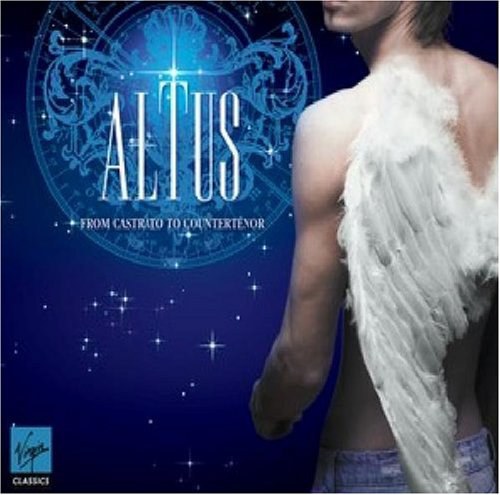
The male voice hits an all-time high with this collection. Starting as far back as 1902 with the last of the castrati, Alessandro Moreschi, it comes right up to the present with Philippe Jaroussky and David Daniels. Compilation with Philippe Jaroussky, Max-Emanuel Cencic, James Bowman, Alfred Deller, Gérard Lesne, René Jacobs, Charles Brett, Derek Lee Ragin, David Daniels… Including last castrato Alessandro Moreschi recorded in 1902 30 years ago, when the boom in Baroque music was just beginning, the countertenor was an exotic species. Today, male falsettists performing in the alto and soprano register are best-selling stars, with Philippe Jaroussky, David Daniels, Max-Emmanuel Cencic and Andreas Scholl leading the way. Today, countertenors sing virtuoso music composed in the 18th century by figures such as Handel, Vivaldi and Mozart for the castrati, men ‘surgically altered’ before adolescence to preserve their pure, high voices. They went on to gain adult power, stamina and temperament while preserving the angelic tones of a choirboy. Among the great castrato names were Giovanni Carestini, Francesco Bernardi – known as Senesino, Girolami Crescentini and, above all, Carlo Boschi, alias Farinelli, the subject of a 1994 movie directed by Gérard Corbiau which became an international hit. These three CDs feature a roll-call of virtually all the leading countertenors of recent history, hailing from continental Europe, the UK and the US. Each has his own special vocal colour and style, from the very British restraint of Alfred Deller, probably the first great countertenor of the modern era, to the lushness of the American Daniels, the elegance of the Frenchman Philippe Jaroussky, the fire of the middle-European Max-Emmanuel Cencic and the clarity of the German Andreas Scholl. All these artists are exponents of ‘authentic’ performance, but – fortunately for the gentlemen in question – true authenticity is restricted to the track performed by Alessandro Moreschi. Dating from 1902 and the only known audio memento of a genuine castrato, it was recorded in the Sistine Chapel, Rome, where Moreschi sang in the choir. His sound is understandably plaintive, but – in every sense – the countertenors of Altus : from castrato countertenor bring complete male bravado (along with sensitivity) to some glorious music.