John Banville — 作者 (25)
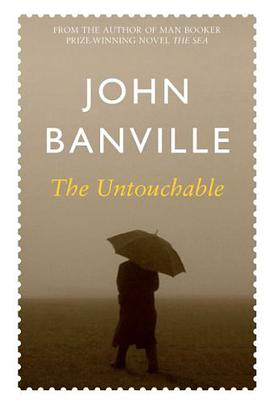
The Untouchable [图书] 豆瓣
作者: John Banville 出版社: Picador 1997
A brilliant, engaging and highly literate espionage-cum-existential novel, John Banville's The Untouchable concerns the suddenly-exposed double agent Victor Maskell, a character based on the real Cambridge intellectual elites who famously spied on the United Kingdom in the middle of the 20th century. But Maskell--scholar, adventurer, soldier, art curator and more--respected and still living in England well past his retirement from espionage, looked like he was going to get away with it when unexpectedly, in his 70s and sick with cancer, he is unmasked. The question of why, and by whom assumes less importance for Maskell than the soul-searching questions of who, ultimately, he really is, why he spied in the first place, and whether his many-faceted existence adds up to an authentic life.
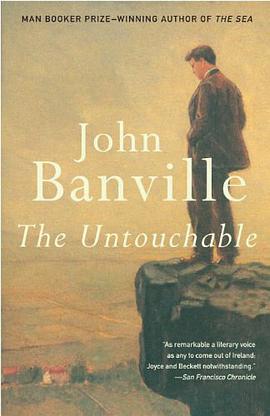
The Untouchable [图书] 豆瓣
作者: John Banville 出版社: Vintage 1998 - 6
One of the most dazzling and adventurous writers now working in English takes on the enigma of the Cambridge spies in a novel of exquisite menace, biting social comedy, and vertiginous moral complexity. The narrator is the elderly Victor Maskell, formerly of British intelligence, for many years art expert to the Queen. Now he has been unmasked as a Russian agent and subjected to a disgrace that is almost a kind of death. But at whose instigation?
As Maskell retraces his tortuous path from his recruitment at Cambridge to the airless upper regions of the establishment, we discover a figure of manifold doubleness: Irishman and Englishman; husband, father, and lover of men; betrayer and dupe. Beautifully written, filled with convincing fictional portraits of Maskell's co-conspirators, and vibrant with the mysteries of loyalty and identity, The Untouchable places John Banville in the select company of both Conrad and le Carre.
Winner of the Lannan Literary Award for Fiction
"Contemporary fiction gets no better than this... Banville's books teem with life and humor." - Patrick McGrath, The New York Times Book Review
"Victor Maskell is one of the great characters in recent fiction... The Untouchable is the best work of art in any medium on [its] subject." - Washington Post Book World
"As remarkable a literary voice as any to come out of Ireland; Joyce and Beckett notwithstanding." - San Francisco Chronicle
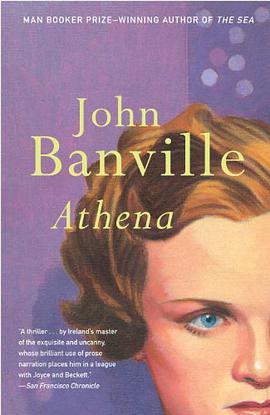
Athena [图书] 豆瓣
作者: John Banville 出版社: Vintage 1996 - 5
From the internationally acclaimed author of The Book of Evidence and Ghosts comes a mesmerizing novel that is both a literary thriller and a love story as sumptuously perverse as Lolita. "A strange and dreamlike book . . . Banville has a breathtaking style."--Boston Globe.
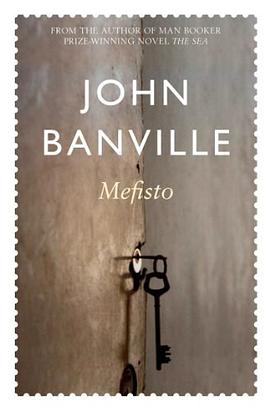
Mefisto [图书] 豆瓣
作者: John Banville 出版社: Pan Macmill 1999 - 4
'Fable, intellectual thriller, Gothic extravaganza, symbolist conundrum ...a true work of art' Sunday Independent Is there a numerical solution to the quest for the meaning of life? A brilliant reworking of the classic Dr Faustus theme, Mefisto focuses on the mathematically gifted Gabriel Swan, who seeks a numerical solution to his quest for order and meaning in life. 'Mefisto renders all superlatives woefully inadequate ...Undisputed master of language, the laconic pause and the blackly comic, Banville is a supreme stylist ...He is a magician ...Another expectedly astonishing and very daring display from this richly, almost wickedly, gifted artist' Time Out 'An excellent novel, beautifully written. The sort of thing you have to read more than once wonderful stuff' Punch 'Few writers in Ireland today can arouse such expectation by the advent of a new novel ...A profound beauty of words displayed by their lover ...Banville's great enterprise does not falter ...read Mefisto straight through; it deserves it' Irish Times
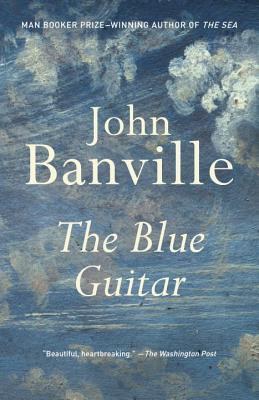
The Blue Guitar [图书] 豆瓣
作者: John Banville 2016 - 8
John Banville, the Man Booker Prize–winning author of The Sea and Ancient Light, now gives us a new novel—at once trenchant, witty, and shattering—about the intricacies of artistic creation, about theft, and about the ways in which we learn to possess one another, and to hold on to ourselves.
Equally self-aggrandizing and self-deprecating, our narrator, Oliver Otway Orme (“O O O. An absurdity. You could hang me over the door of a pawnshop”), is a painter of some renown and a petty thief who has never before been caught and steals only for pleasure. Both art and the art of thievery have been part of his “endless effort at possession,” but now he’s pushing fifty, feels like a hundred, and things have not been going so well. Having recognized the “man-killing crevasse” that exists between what he sees and any representation he might make of it, he has stopped painting. And his last act of thievery—the last time he felt its “secret shiver of bliss”—has been discovered. The fact that the purloined possession was the wife of the man who was, perhaps, his best friend has compelled him to run away—from his mistress, his home, his wife; from whatever remains of his impulse to paint; and from a tragedy that has long haunted him—and to sequester himself in the house where he was born. Trying to uncover in himself the answer to how and why things have turned out as they have, excavating memories of family, of places he has called home, and of the way he has apprehended the world around him (“one of my eyes is forever turning towards the world beyond”), Olly reveals the very essence of a man who, in some way, has always been waiting to be rescued from himself.