Stefano Vizioli — 导演 (7)
弄臣 [演出] 豆瓣
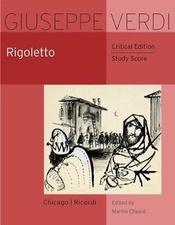
Rigoletto
6.6 (5 个评分) 类型: Opera 编剧: Francesco Maria Piave
其它标题: Rigoletto 导演: 未知 / John Dexter 演员: Felice Varesi / Teresa Brambilla / Raffaele Mirate / Paolo Damini / Annetta Casaloni
Place: Mantua
Time: the sixteenth century
Act 1
Scene 1: Mantua. A magnificent hall in the ducal palace. Doors at the back open into other rooms, splendidly lit up. A crowd of lords and ladies in grand costumes are seen walking about in the rear rooms; page boys come and go. The festivities are at their height. Music is heard from offstage. The Duke and Borsa enter from a door in the back.
At a ball in his palace, the Duke sings of a life of pleasure with as many women as possible, and mentions that he particularly enjoys cuckolding his courtiers: "Questa o quella" ("This woman or that"). He mentions to Borsa that he has seen an unknown beauty in church and desires to possess her, but he also wishes to seduce the Countess of Ceprano. Rigoletto, the Duke's hunchbacked court jester, mocks the husbands of the ladies to whom the Duke is paying attention, including the Count Ceprano, and advises the Duke to get rid of him by prison or death. The Duke laughs indulgently, but Ceprano is not amused. Marullo, one of the guests at the ball, informs the courtiers that Rigoletto has a "lover", which astonishes them. (Marullo is not aware that the "lover" is actually Rigoletto's daughter.) The courtiers, at Ceprano's suggestion, resolve to take vengeance on Rigoletto for making fun of them. The festivities are interrupted by the arrival of the elderly Count Monterone, whose daughter the Duke had seduced. Rigoletto provokes him further by making fun of his helplessness to avenge his daughter's honor. Monterone confronts the Duke, and is immediately arrested by the Duke's guards. Before being led off to prison, Monterone curses both the Duke for the attack on his daughter and Rigoletto for having mocked his righteous anger. The curse terrifies Rigoletto, who believes the popular superstition that an old man's curse has real power.
Scene 2: The end of a dead-end street. On the left, a house of discreet appearance with one small courtyard surrounded by walls. In the yard there is one tall tree and a marble seat; in the wall, a door that leads to the street; above the wall, a terrace supported by arches. The second floor door opens on to the said terrace, which can also be reached by a staircase in front. To the right of the street is the very high wall of the garden and a side of the Ceprano palace. It is night.
Preoccupied with the old man's curse, Rigoletto approaches the house where he is concealing his daughter from the world and is accosted by the hit-man Sparafucile, who walks up to him and offers his services. Rigoletto declines for the moment, but leaves open the possibility of hiring Sparafucile later, should the need arise. Sparafucile wanders off, after repeating his own name a few times. Rigoletto contemplates the similarities between the two of them: "Pari siamo!" ("We are alike!"); Sparafucile kills men with his sword, and Rigoletto uses "a tongue of malice" to stab his victims. Rigoletto opens a door in the wall and embraces his daughter Gilda. They greet each other warmly: "Figlia!" "Mio padre!" ("Daughter!" "My father!"). Rigoletto has been concealing his daughter from the Duke and the rest of the city, and she does not know her father's occupation. Since he has forbidden her to appear in public, she has been nowhere except to church and does not even know her own father's name.
When Rigoletto has gone, the Duke appears and overhears Gilda confess to her nurse Giovanna that she feels guilty for not having told her father about a young man she had met at the church. She says that she fell in love with him, but that she would love him even more if he were a student and poor. As she declares her love, the Duke enters, overjoyed. Gilda, alarmed, calls for Giovanna, unaware that the Duke had sent her away. Pretending to be a student, the Duke convinces Gilda of his love: "È il sol dell'anima" ("Love is the sunshine of the soul"). When she asks for his name, he hesitantly calls himself Gualtier Maldè. Hearing sounds and fearing that her father has returned, Gilda sends the Duke away after they quickly trade vows of love: "Addio, addio" ("Farewell, farewell"). Alone, Gilda meditates on her love for the Duke, whom she believes is a student: "Gualtier Maldè!... Caro nome che il mio cor" ("Dearest name").
Later, Rigoletto returns: "Riedo!... perché?" ("I've returned!... why?"), while the hostile courtiers outside the walled garden (believing Gilda to be the jester's mistress, unaware she is his daughter) get ready to abduct the helpless girl. They tell Rigoletto that they are actually abducting the Countess Ceprano. He sees that they are masked and asks for a mask for himself; while they are tying the mask onto his face, they also blindfold him. Blindfolded and deceived, he holds the ladder steady while they climb up to Gilda's room: Chorus: "Zitti, zitti" ("Softly, softly"). With her father's unknowing assistance Gilda is carried away by the courtiers. Left alone, Rigoletto removes his mask and blindfold, and realizes that it was in fact Gilda who was carried away. He collapses in despair, remembering the old man's curse.
Act 2
A room in the ducal palace. There are doors on both sides as well as a larger one at the far end by the sides of which hang full length portraits of the Duke and his wife. There is one high-backed chair at a table covered with velvet and other furnishings.
The Duke is concerned that Gilda has disappeared: "Ella mi fu rapita!" ("She was stolen from me!") and "Parmi veder le lagrime" ("I seem to see tears"). The courtiers then enter and inform him that they have captured Rigoletto's mistress: Chorus: "Scorrendo uniti" ("We went together at nightfall"). By their description, he recognizes it to be Gilda and rushes off to the room where she is held: "Possente amor mi chiama" ("Mighty love beckons me"). Rigoletto enters singing and feigning nonchalance, but also looking anxiously for any trace of Gilda, whom he fears may have fallen into the hands of the Duke. The courtiers pretend not to notice his anxiety, but quietly laugh at him with each other. A page boy arrives with a message from the Duke's wife - the Duchess wishes to speak to her husband - but the courtiers reply suggestively that the Duke cannot be disturbed at the moment. Rigoletto realizes this must mean that Gilda is with the Duke. To the courtiers' surprise, he reveals that Gilda is his daughter. He first demands, then tearfully pleads with the courtiers to return her to him: "Cortigiani, vil razza dannata" ("Accursed race of courtiers"). Rigoletto attempts to run into the room in which Gilda is being held, but the courtiers block his way. After a time, Gilda enters, and Rigoletto orders the courtiers to leave him alone with her. The courtiers leave the room, believing Rigoletto has gone mad. Gilda describes to her father what has happened to her in the palace: "Tutte le feste al tempio" ("On all the holy days") and he attempts to console her. Monterone is led across the room on the way to prison and pauses in front of the portrait of the Duke to regret that his curse on the libertine has had no effect. As the guards lead Monterone away, Rigoletto mutters that the old man is mistaken; he, Rigoletto, the dishonored buffoon, shall make thunder and lightning rain from heaven onto the offender's head. He repeats this vow as Gilda pleads for mercy for her lover the Duke: Duet:"Sì! Vendetta, tremenda vendetta!" ("Yes! Revenge, terrible revenge!").
Act 3
The right bank of the river Mincio. On the left is a two-story house, half ruined. Through a large arch on the ground floor a rustic tavern can be seen as well as a rough stone staircase that leads to an attic room with a small bed which is in full view as there are no shutters. In the wall downstairs that faces the street is a door that opens to the inside. The wall is so full of holes and cracks that everything that happens inside is easily seen from the exterior. At the back of the stage are deserted areas by the river which flows behind a parapet that has half collapsed into ruins. Beyond the river is Mantua. It is night. Gilda and Rigoletto, both uneasy, are standing in the road; Sparafucile is seated at a table in the tavern.
A portion of Sparafucile's house is seen, with two rooms open to the view of the audience. Rigoletto and Gilda arrive outside. The Duke's voice can be heard from inside, singing "La donna è mobile" ("Woman is fickle"). Sparafucile's sister, Maddalena, has lured him to the house. Rigoletto and Gilda listen from outside as the Duke flirts with Maddalena. Gilda laments that the Duke is unfaithful; Rigoletto assures her that he is arranging revenge: "Bella figlia dell’amore" ("Beautiful daughter of love").
Rigoletto orders Gilda to put on a man's clothes to prepare to leave for Verona and tells her that he plans to follow later. After she leaves, he completes his bargain with the assassin, who is ready to murder his guest for 20 scudi. Rigoletto then withdraws.
With falling darkness, a thunderstorm approaches and the Duke decides to spend the rest of the night in the house. Sparafucile directs him to the upstairs sleeping quarters, resolving to kill him in his sleep.
Gilda, who still loves the Duke despite knowing him to be unfaithful, returns dressed as a man and stands outside the house. Maddalena, who is smitten with the Duke, begs Sparafucile to spare his life: "È amabile invero cotal giovinotto/ Ah, più non ragiono!...". Sparafucile reluctantly promises her that if by midnight another victim can be found, he will kill the other instead of the Duke. Gilda, overhearing this exchange, resolves to sacrifice herself for the Duke, and enters the house: "Trio: Se pria ch’abbia il mezzo la notte toccato". Sparafucile stabs her and she collapses, mortally wounded.
At midnight, when Rigoletto arrives with money, he receives a corpse wrapped in a sack, and rejoices in his triumph. Weighting it with stones, he is about to cast the sack into the river when he hears the voice of the Duke, sleepily singing a reprise of his "La donna è mobile" aria. Bewildered, Rigoletto opens the sack and, to his despair, discovers his dying daughter. For a moment, she revives and declares she is glad to die for her beloved: "V'ho ingannato" ("Father, I deceived you"). She dies in his arms. Rigoletto cries out in horror: "La maledizione!" ("The curse!")
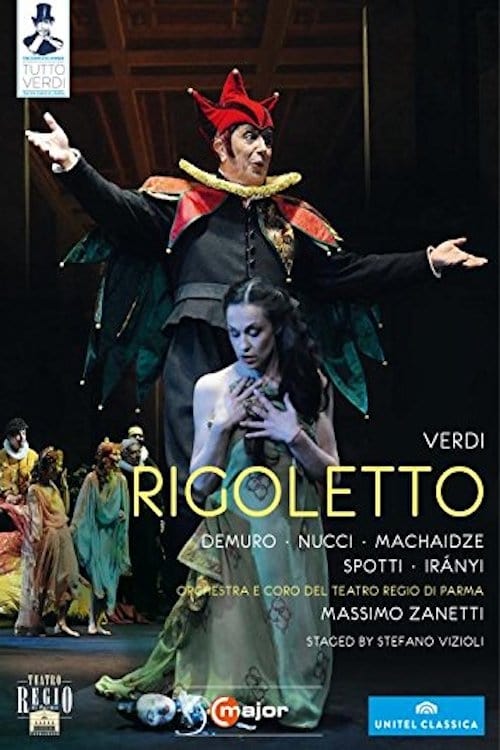
弄臣 2008年帕尔马皇家剧院版 [演出] 豆瓣
所属 演出: 弄臣
语言: italian 意大利语 剧团: Orchestra del Teatro Regio di Parma 帕尔马皇家剧院管弦乐团 ; Coro del Teatro Regio di Parma 帕尔马皇家剧院合唱团 剧院: Teatro Regio di Parma 帕尔马皇家剧院 导演: Stefano Vizioli
其它标题: 2008年帕尔马皇家剧院版 编剧: Francesco Maria Piave 作曲: Giuseppe Verdi 演员: Leo Nucci / Nino Machaidze
Place: Mantua
Time: the sixteenth century
Act 1
Scene 1: Mantua. A magnificent hall in the ducal palace. Doors at the back open into other rooms, splendidly lit up. A crowd of lords and ladies in grand costumes are seen walking about in the rear rooms; page boys come and go. The festivities are at their height. Music is heard from offstage. The Duke and Borsa enter from a door in the back.
At a ball in his palace, the Duke sings of a life of pleasure with as many women as possible, and mentions that he particularly enjoys cuckolding his courtiers: "Questa o quella" ("This woman or that"). He mentions to Borsa that he has seen an unknown beauty in church and desires to possess her, but he also wishes to seduce the Countess of Ceprano. Rigoletto, the Duke's hunchbacked court jester, mocks the husbands of the ladies to whom the Duke is paying attention, including the Count Ceprano, and advises the Duke to get rid of him by prison or death. The Duke laughs indulgently, but Ceprano is not amused. Marullo, one of the guests at the ball, informs the courtiers that Rigoletto has a "lover", which astonishes them. (Marullo is not aware that the "lover" is actually Rigoletto's daughter.) The courtiers, at Ceprano's suggestion, resolve to take vengeance on Rigoletto for making fun of them. The festivities are interrupted by the arrival of the elderly Count Monterone, whose daughter the Duke had seduced. Rigoletto provokes him further by making fun of his helplessness to avenge his daughter's honor. Monterone confronts the Duke, and is immediately arrested by the Duke's guards. Before being led off to prison, Monterone curses both the Duke for the attack on his daughter and Rigoletto for having mocked his righteous anger. The curse terrifies Rigoletto, who believes the popular superstition that an old man's curse has real power.
Scene 2: The end of a dead-end street. On the left, a house of discreet appearance with one small courtyard surrounded by walls. In the yard there is one tall tree and a marble seat; in the wall, a door that leads to the street; above the wall, a terrace supported by arches. The second floor door opens on to the said terrace, which can also be reached by a staircase in front. To the right of the street is the very high wall of the garden and a side of the Ceprano palace. It is night.
Preoccupied with the old man's curse, Rigoletto approaches the house where he is concealing his daughter from the world and is accosted by the hit-man Sparafucile, who walks up to him and offers his services. Rigoletto declines for the moment, but leaves open the possibility of hiring Sparafucile later, should the need arise. Sparafucile wanders off, after repeating his own name a few times. Rigoletto contemplates the similarities between the two of them: "Pari siamo!" ("We are alike!"); Sparafucile kills men with his sword, and Rigoletto uses "a tongue of malice" to stab his victims. Rigoletto opens a door in the wall and embraces his daughter Gilda. They greet each other warmly: "Figlia!" "Mio padre!" ("Daughter!" "My father!"). Rigoletto has been concealing his daughter from the Duke and the rest of the city, and she does not know her father's occupation. Since he has forbidden her to appear in public, she has been nowhere except to church and does not even know her own father's name.
When Rigoletto has gone, the Duke appears and overhears Gilda confess to her nurse Giovanna that she feels guilty for not having told her father about a young man she had met at the church. She says that she fell in love with him, but that she would love him even more if he were a student and poor. As she declares her love, the Duke enters, overjoyed. Gilda, alarmed, calls for Giovanna, unaware that the Duke had sent her away. Pretending to be a student, the Duke convinces Gilda of his love: "È il sol dell'anima" ("Love is the sunshine of the soul"). When she asks for his name, he hesitantly calls himself Gualtier Maldè. Hearing sounds and fearing that her father has returned, Gilda sends the Duke away after they quickly trade vows of love: "Addio, addio" ("Farewell, farewell"). Alone, Gilda meditates on her love for the Duke, whom she believes is a student: "Gualtier Maldè!... Caro nome che il mio cor" ("Dearest name").
Later, Rigoletto returns: "Riedo!... perché?" ("I've returned!... why?"), while the hostile courtiers outside the walled garden (believing Gilda to be the jester's mistress, unaware she is his daughter) get ready to abduct the helpless girl. They tell Rigoletto that they are actually abducting the Countess Ceprano. He sees that they are masked and asks for a mask for himself; while they are tying the mask onto his face, they also blindfold him. Blindfolded and deceived, he holds the ladder steady while they climb up to Gilda's room: Chorus: "Zitti, zitti" ("Softly, softly"). With her father's unknowing assistance Gilda is carried away by the courtiers. Left alone, Rigoletto removes his mask and blindfold, and realizes that it was in fact Gilda who was carried away. He collapses in despair, remembering the old man's curse.
Act 2
A room in the ducal palace. There are doors on both sides as well as a larger one at the far end by the sides of which hang full length portraits of the Duke and his wife. There is one high-backed chair at a table covered with velvet and other furnishings.
The Duke is concerned that Gilda has disappeared: "Ella mi fu rapita!" ("She was stolen from me!") and "Parmi veder le lagrime" ("I seem to see tears"). The courtiers then enter and inform him that they have captured Rigoletto's mistress: Chorus: "Scorrendo uniti" ("We went together at nightfall"). By their description, he recognizes it to be Gilda and rushes off to the room where she is held: "Possente amor mi chiama" ("Mighty love beckons me"). Rigoletto enters singing and feigning nonchalance, but also looking anxiously for any trace of Gilda, whom he fears may have fallen into the hands of the Duke. The courtiers pretend not to notice his anxiety, but quietly laugh at him with each other. A page boy arrives with a message from the Duke's wife - the Duchess wishes to speak to her husband - but the courtiers reply suggestively that the Duke cannot be disturbed at the moment. Rigoletto realizes this must mean that Gilda is with the Duke. To the courtiers' surprise, he reveals that Gilda is his daughter. He first demands, then tearfully pleads with the courtiers to return her to him: "Cortigiani, vil razza dannata" ("Accursed race of courtiers"). Rigoletto attempts to run into the room in which Gilda is being held, but the courtiers block his way. After a time, Gilda enters, and Rigoletto orders the courtiers to leave him alone with her. The courtiers leave the room, believing Rigoletto has gone mad. Gilda describes to her father what has happened to her in the palace: "Tutte le feste al tempio" ("On all the holy days") and he attempts to console her. Monterone is led across the room on the way to prison and pauses in front of the portrait of the Duke to regret that his curse on the libertine has had no effect. As the guards lead Monterone away, Rigoletto mutters that the old man is mistaken; he, Rigoletto, the dishonored buffoon, shall make thunder and lightning rain from heaven onto the offender's head. He repeats this vow as Gilda pleads for mercy for her lover the Duke: Duet:"Sì! Vendetta, tremenda vendetta!" ("Yes! Revenge, terrible revenge!").
Act 3
The right bank of the river Mincio. On the left is a two-story house, half ruined. Through a large arch on the ground floor a rustic tavern can be seen as well as a rough stone staircase that leads to an attic room with a small bed which is in full view as there are no shutters. In the wall downstairs that faces the street is a door that opens to the inside. The wall is so full of holes and cracks that everything that happens inside is easily seen from the exterior. At the back of the stage are deserted areas by the river which flows behind a parapet that has half collapsed into ruins. Beyond the river is Mantua. It is night. Gilda and Rigoletto, both uneasy, are standing in the road; Sparafucile is seated at a table in the tavern.
A portion of Sparafucile's house is seen, with two rooms open to the view of the audience. Rigoletto and Gilda arrive outside. The Duke's voice can be heard from inside, singing "La donna è mobile" ("Woman is fickle"). Sparafucile's sister, Maddalena, has lured him to the house. Rigoletto and Gilda listen from outside as the Duke flirts with Maddalena. Gilda laments that the Duke is unfaithful; Rigoletto assures her that he is arranging revenge: "Bella figlia dell’amore" ("Beautiful daughter of love").
Rigoletto orders Gilda to put on a man's clothes to prepare to leave for Verona and tells her that he plans to follow later. After she leaves, he completes his bargain with the assassin, who is ready to murder his guest for 20 scudi. Rigoletto then withdraws.
With falling darkness, a thunderstorm approaches and the Duke decides to spend the rest of the night in the house. Sparafucile directs him to the upstairs sleeping quarters, resolving to kill him in his sleep.
Gilda, who still loves the Duke despite knowing him to be unfaithful, returns dressed as a man and stands outside the house. Maddalena, who is smitten with the Duke, begs Sparafucile to spare his life: "È amabile invero cotal giovinotto/ Ah, più non ragiono!...". Sparafucile reluctantly promises her that if by midnight another victim can be found, he will kill the other instead of the Duke. Gilda, overhearing this exchange, resolves to sacrifice herself for the Duke, and enters the house: "Trio: Se pria ch’abbia il mezzo la notte toccato". Sparafucile stabs her and she collapses, mortally wounded.
At midnight, when Rigoletto arrives with money, he receives a corpse wrapped in a sack, and rejoices in his triumph. Weighting it with stones, he is about to cast the sack into the river when he hears the voice of the Duke, sleepily singing a reprise of his "La donna è mobile" aria. Bewildered, Rigoletto opens the sack and, to his despair, discovers his dying daughter. For a moment, she revives and declares she is glad to die for her beloved: "V'ho ingannato" ("Father, I deceived you"). She dies in his arms. Rigoletto cries out in horror: "La maledizione!" ("The curse!")
Don Pasquale [演出] 豆瓣
Don Pasquale
类型: Opera 编剧: Giovanni Ruffini / Gaetano Donizetti
其它标题: 唐 • 帕斯夸莱 导演: 未知 / Pier Francesco Maestrini 演员: Luigi Lablache / Giulia Grisi / Giovanni Mario / Antonio Tamburini / Federico Lablache
Time: Early 19th century
Place: Rome
Overture
The music is suggestive of a comic opera; bright and lively, it starts with plenty of percussion and brass instruments. After a while, the ambience changes to suggesting a party, and the overture ends with a finale.
Act 1
Scenes 1–3: A room in the home of Don Pasquale, at 9 o'clock
Ernesto has refused the woman that his uncle Don Pasquale had found for him, and as a result is to be disinherited. Ernesto declares his devotion to the young – but poor – widow Norina. In view of Ernesto's determination, Don Pasquale decides to marry in old age to produce his own heir, and anxiously awaits the arrival of his physician, Dr. Malatesta, who is determined to teach Don Pasquale how foolish he is being, but has been pretending to search for a suitable bride. Malatesta, confronted with Pasquale's impatience, mutters that he is a buffoon, but proceeds to describe the attributes of the bride-to-be (Bella siccome un angelo – "Beautiful like an angel"). Honest, modest and sweet – when pressed, Malatesta reveals she is in fact his sister. Overcome with joy, Pasquale demands to meet her at once, and sends Malatesta to fetch her, before singing of the love that has gripped him (Ah, un foco insolito – "A sudden fire").
Ernesto comes back and pleads with the Don to consult with his friend Malatesta – when he hears that Malatesta supposedly supports Pasquale, he is amazed at this apparent betrayal (Mi fa il destino mendico – "Fate has made a beggar of me"). Ernesto determines to elope and writes to tell Norina that all is lost.
Scenes 4–5: An apartment in the home of Norina
Norina sits alone, reading a book. She recites a passage, before laughing at the situation described and reflecting on her own temperament (So anch'io la virtù magica – "I too know your magical virtues"). She is in cahoots with Dr. Malatesta and impatiently waits for him to come and explain his plan at which he had only hinted. A servant delivers the letter from Ernesto, which she quickly reads and is instantly dismayed.
Malatesta arrives to explain the stratagem, but Norina cuts him off and hands him the letter, which he reads aloud: Ernesto has announced his intention to leave Rome, and Europe altogether. Malatesta reassures her, saying that he has adapted his plan: Norina shall play the part of Malatesta's sister. Having arranged for his cousin to act as a notary, they will easily deceive the Don. Norina consents to play her part in the deception, and they discuss her strategies in a lively duet (Pronta son; purch'io non manchi – "I am ready; if I do not miss").
Act 2
A salon in the home of Don Pasquale
Ernesto is alone: lamenting his fate, he considers his decision to leave Rome (Cercherò lontana terra – "I shall seek a distant land"). He leaves the room just as Pasquale enters, dressed in his outdated finery, along with his servants, to whom he gives instructions to admit Malatesta on his arrival. He parades around in his grand costume, hoping it will conceal his advancing years.
Malatesta arrives with Norina in tow, and introduces her to Pasquale as his sister, Sofronia, fresh out of the convent. Pasquale is smitten, and Norina plays the part of a dutiful, modest and submissive lady, to Pasquale's satisfaction. Norina consents to the proposed marriage, which delights Pasquale. He wants to send for the notary to conduct the ceremony straight away – conveniently, Malatesta has brought one along, who waits in the antechamber.
Malatesta fetches the supposed notary, as servants arrange a table. Taking his seat, the "notary" writes out a marriage contract as dictated by Malatesta and Pasquale (Fra da una parta – "Between, on one hand"), where the Don bequeaths all his estate to be administrated by Sofronia. The contract is quickly drawn up: Pasquale signs but, before Norina can affix her signature, Ernesto bursts in. Intending to say a final farewell, he is amazed to see Norina about to marry Pasquale. However, Malatesta persuades him not to say anything (Figliol non mi far scene – "Son, don't make a scene"), and he is forced to act as the final witness much to Don Pasquale's delight.
As soon as the contract is signed, Norina abandons her pretence of docility, and refuses Pasquale's embrace. She announces her intention to teach him manners, and to have Ernesto as a gallant to accompany her on evening strolls. Pasquale is horrified at this transformation, while Malatesta and Ernesto can barely conceal their amusement (È rimasto là impietrato – "He stands there, petrified"). Summoning the household staff, Norina recites a long list of demands – more servants (young and handsome at that), carriages and horses, furniture – and instructs them to spare no expense doubling all their wages. Pasquale is stricken at his misfortune, so Malatesta urges him to go to bed.
Act 3
Scenes 1–5: A room in the home of Don Pasquale
Pasquale sits in a room, surrounded by piles of newly purchased jewels, dresses and the like, as the servants bustle in and out of Norina's apartment (I diamanti presto presto – "The diamonds, quickly, quickly"). Dismayed by the piles of bills and invoices, the Don summons the courage to confront his tyrannical new wife. Norina emerges, dressed to go out. He attempts to reason with her, but she pays little heed (Signorina, in tanta fretta – "Madam, where are you off to in such a hurry"). He suggests that if she leaves, he may not allow her to return, an idea that she meets with patronising insincerity (Via, caro sposino – "There, there, dear little husband") but the discussion ends in her slapping him. As she exits, she drops a note which Pasquale picks up and reads. The note is addressed to Sofronia, arranging a meeting in the garden with its unnamed, admiring author. Pasquale calls for a servant to summon Malatesta, before leaving the room.
The servants return and, amongst themselves, at once complain at the amount of work they are being made to do, and reveal how much they are enjoying the farcical drama developing between Pasquale and his new wife (Che interminabile andirivieni! – "Such endless coming and going!"). At the approach of Malatesta and Ernesto, however, they exit, assured of more entertainment to come. Malatesta reminds Ernesto of the finer points of their plan, and the latter leaves. The doctor moves forward to greet Don Pasquale, who tells him of Norina's intended assignation, and his own plan to expose her unfaithfulness before a magistrate. Malatesta persuades him to moderate his plan and Pasquale, believing him an ally, consents to his conditions, while plotting his revenge on Norina (Aspetta, aspetta, cara sposina – "Wait, wait, dear little wife").
Scenes 6–7: The garden, adjoining Pasquale's house
In the garden, as night draws in, Ernesto sings of his love for Norina, as he waits for her arrival (Com'è gentil – "How lovely"). At last, Norina emerges, and they express their love: (Tornami a dir che m'ami – "Tell me once more that you love me"). Don Pasquale and Malatesta have observed and, as they reveal themselves, Ernesto covers himself with a cloak and runs to the house. Pasquale tries to confront Norina – he has caught her in flagrante – but this only provokes a fight that leaves the Don spluttering. She refuses to leave at his demand, so Malatesta, as per his agreement with Pasquale, takes over. Pretending to negotiate with Norina/Sofronia, he tells Pasquale that the only way to make her leave will be to allow Ernesto to marry his beloved, whom "Sofronia" apparently despises. Pasquale consents, and calls out to the house, from which Ernesto and the servants emerge. He instructs Ernesto to send for his would-be bride, but Malatesta reveals that Norina is in fact the woman Pasquale thinks he married, while the real Sofronia remains in a convent. All are reconciled, and the moral of the story – not to marry in old age – is revealed in a playful quartet (La moral di tutto questo – "The moral of all this").
Don Pasquale 1994年斯卡拉剧院版 [演出] 豆瓣
所属 演出: Don Pasquale
语言: italian 意大利语 剧团: Orchestra del Teatro alla Scala 斯卡拉剧院管弦乐团 ; Coro del Teatro alla Scala 斯卡拉剧院合唱团 剧院: Teatro alla Scala 斯卡拉剧院 导演: Stefano Vizioli
其它标题: 1994年斯卡拉剧院版 编剧: Giovanni Ruffini / Gaetano Donizetti 作曲: Gaetano Donizetti 演员: Ferruccio Furlanetto / Nuccia Focile
Time: Early 19th century
Place: Rome
Overture
The music is suggestive of a comic opera; bright and lively, it starts with plenty of percussion and brass instruments. After a while, the ambience changes to suggesting a party, and the overture ends with a finale.
Act 1
Scenes 1–3: A room in the home of Don Pasquale, at 9 o'clock
Ernesto has refused the woman that his uncle Don Pasquale had found for him, and as a result is to be disinherited. Ernesto declares his devotion to the young – but poor – widow Norina. In view of Ernesto's determination, Don Pasquale decides to marry in old age to produce his own heir, and anxiously awaits the arrival of his physician, Dr. Malatesta, who is determined to teach Don Pasquale how foolish he is being, but has been pretending to search for a suitable bride. Malatesta, confronted with Pasquale's impatience, mutters that he is a buffoon, but proceeds to describe the attributes of the bride-to-be (Bella siccome un angelo – "Beautiful like an angel"). Honest, modest and sweet – when pressed, Malatesta reveals she is in fact his sister. Overcome with joy, Pasquale demands to meet her at once, and sends Malatesta to fetch her, before singing of the love that has gripped him (Ah, un foco insolito – "A sudden fire").
Ernesto comes back and pleads with the Don to consult with his friend Malatesta – when he hears that Malatesta supposedly supports Pasquale, he is amazed at this apparent betrayal (Mi fa il destino mendico – "Fate has made a beggar of me"). Ernesto determines to elope and writes to tell Norina that all is lost.
Scenes 4–5: An apartment in the home of Norina
Norina sits alone, reading a book. She recites a passage, before laughing at the situation described and reflecting on her own temperament (So anch'io la virtù magica – "I too know your magical virtues"). She is in cahoots with Dr. Malatesta and impatiently waits for him to come and explain his plan at which he had only hinted. A servant delivers the letter from Ernesto, which she quickly reads and is instantly dismayed.
Malatesta arrives to explain the stratagem, but Norina cuts him off and hands him the letter, which he reads aloud: Ernesto has announced his intention to leave Rome, and Europe altogether. Malatesta reassures her, saying that he has adapted his plan: Norina shall play the part of Malatesta's sister. Having arranged for his cousin to act as a notary, they will easily deceive the Don. Norina consents to play her part in the deception, and they discuss her strategies in a lively duet (Pronta son; purch'io non manchi – "I am ready; if I do not miss").
Act 2
A salon in the home of Don Pasquale
Ernesto is alone: lamenting his fate, he considers his decision to leave Rome (Cercherò lontana terra – "I shall seek a distant land"). He leaves the room just as Pasquale enters, dressed in his outdated finery, along with his servants, to whom he gives instructions to admit Malatesta on his arrival. He parades around in his grand costume, hoping it will conceal his advancing years.
Malatesta arrives with Norina in tow, and introduces her to Pasquale as his sister, Sofronia, fresh out of the convent. Pasquale is smitten, and Norina plays the part of a dutiful, modest and submissive lady, to Pasquale's satisfaction. Norina consents to the proposed marriage, which delights Pasquale. He wants to send for the notary to conduct the ceremony straight away – conveniently, Malatesta has brought one along, who waits in the antechamber.
Malatesta fetches the supposed notary, as servants arrange a table. Taking his seat, the "notary" writes out a marriage contract as dictated by Malatesta and Pasquale (Fra da una parta – "Between, on one hand"), where the Don bequeaths all his estate to be administrated by Sofronia. The contract is quickly drawn up: Pasquale signs but, before Norina can affix her signature, Ernesto bursts in. Intending to say a final farewell, he is amazed to see Norina about to marry Pasquale. However, Malatesta persuades him not to say anything (Figliol non mi far scene – "Son, don't make a scene"), and he is forced to act as the final witness much to Don Pasquale's delight.
As soon as the contract is signed, Norina abandons her pretence of docility, and refuses Pasquale's embrace. She announces her intention to teach him manners, and to have Ernesto as a gallant to accompany her on evening strolls. Pasquale is horrified at this transformation, while Malatesta and Ernesto can barely conceal their amusement (È rimasto là impietrato – "He stands there, petrified"). Summoning the household staff, Norina recites a long list of demands – more servants (young and handsome at that), carriages and horses, furniture – and instructs them to spare no expense doubling all their wages. Pasquale is stricken at his misfortune, so Malatesta urges him to go to bed.
Act 3
Scenes 1–5: A room in the home of Don Pasquale
Pasquale sits in a room, surrounded by piles of newly purchased jewels, dresses and the like, as the servants bustle in and out of Norina's apartment (I diamanti presto presto – "The diamonds, quickly, quickly"). Dismayed by the piles of bills and invoices, the Don summons the courage to confront his tyrannical new wife. Norina emerges, dressed to go out. He attempts to reason with her, but she pays little heed (Signorina, in tanta fretta – "Madam, where are you off to in such a hurry"). He suggests that if she leaves, he may not allow her to return, an idea that she meets with patronising insincerity (Via, caro sposino – "There, there, dear little husband") but the discussion ends in her slapping him. As she exits, she drops a note which Pasquale picks up and reads. The note is addressed to Sofronia, arranging a meeting in the garden with its unnamed, admiring author. Pasquale calls for a servant to summon Malatesta, before leaving the room.
The servants return and, amongst themselves, at once complain at the amount of work they are being made to do, and reveal how much they are enjoying the farcical drama developing between Pasquale and his new wife (Che interminabile andirivieni! – "Such endless coming and going!"). At the approach of Malatesta and Ernesto, however, they exit, assured of more entertainment to come. Malatesta reminds Ernesto of the finer points of their plan, and the latter leaves. The doctor moves forward to greet Don Pasquale, who tells him of Norina's intended assignation, and his own plan to expose her unfaithfulness before a magistrate. Malatesta persuades him to moderate his plan and Pasquale, believing him an ally, consents to his conditions, while plotting his revenge on Norina (Aspetta, aspetta, cara sposina – "Wait, wait, dear little wife").
Scenes 6–7: The garden, adjoining Pasquale's house
In the garden, as night draws in, Ernesto sings of his love for Norina, as he waits for her arrival (Com'è gentil – "How lovely"). At last, Norina emerges, and they express their love: (Tornami a dir che m'ami – "Tell me once more that you love me"). Don Pasquale and Malatesta have observed and, as they reveal themselves, Ernesto covers himself with a cloak and runs to the house. Pasquale tries to confront Norina – he has caught her in flagrante – but this only provokes a fight that leaves the Don spluttering. She refuses to leave at his demand, so Malatesta, as per his agreement with Pasquale, takes over. Pretending to negotiate with Norina/Sofronia, he tells Pasquale that the only way to make her leave will be to allow Ernesto to marry his beloved, whom "Sofronia" apparently despises. Pasquale consents, and calls out to the house, from which Ernesto and the servants emerge. He instructs Ernesto to send for his would-be bride, but Malatesta reveals that Norina is in fact the woman Pasquale thinks he married, while the real Sofronia remains in a convent. All are reconciled, and the moral of the story – not to marry in old age – is revealed in a playful quartet (La moral di tutto questo – "The moral of all this").
诺尔玛 [演出] 豆瓣
Norma
类型: Opera 编剧: Felice Romani
其它标题: Norma 导演: 未知 / Stefano Vizioli 演员: Giuditta Pasta / Domenico Donzelli / Giulia Grisi / Vincenzo Negrini / Marietta Sacchi
Place: Gaul
Time: c. 100-50 BCE (Roman occupation)
Act 1
Sinfonia
Scene 1: The grove of the Druids
Oroveso leads the Druids in a procession in the forest to pray for victory against the invading Romans: (Oroveso and Druids: Ite sul colle, o Druidi / "Go up on the hill, O Druids. Go and observe the skies and see when the new moon will show her silver crescent"). The Druids pray that Norma will come and have the courage to broker peace with the Romans: (Druids and Oroveso: Dell'aura tua profetica / "With thy prophetic aura, imbue her, O terrible God".) All leave to go to the temple.
Pollione and Flavio enter. Although Norma has secretly broken her vows in order to love him and has borne him two children, Pollione tells Flavio that he no longer loves her, having fallen in love with the priestess Adalgisa. But he expresses some remorse, describing his dream in which Adalgisa was beside him at the altar of Venus and a huge storm arose: (Pollione, aria: Meco all'altar di Venere / "With me at the altar in Rome was Adalgisa dressed in white, veiled all in white.") The storm presaged disaster for them both: "Thus does Norma punish her faithless lover," he declares. They hear the trumpets sounding to announce Norma's arrival. Flavio urges his friend to leave, but Pollione stands firm, proclaiming that he will confront them with a superior power and overthrow their altars: (Cabaletta: Me protegge, me difende / "I am protected and defended by a power greater than theirs / I am inspired by the thought of the one I love ...")
As Norma leads the Druids and Priestesses, the crowd proclaims: Norma viene / "Norma is coming" and, as Oroveso awaits her, they describe her dress and manner. All kneel as she approaches. "The time is not ripe for our revenge," she declares, stating that Rome will perish one day by being worn down. Then, with the mistletoe in hand, she approaches the altar with a plea to the moon (the "Chaste Goddess"): (cavatina: Casta diva / "Chaste goddess ... turn upon us thy fair face, unclouded and unveiled"). Continuing, she pleads that the goddess shed upon earth that peace which she has created in heaven. She calls for all to complete the rites and then clear the uninitiated from the grove. To herself, she declares that she cannot hurt Pollione, but desires that things return to where they used to be: (Cabaletta: Ah! bello a me ritorna / "Return to me, O beautiful one, as in the bloom of our true love"). The assembled crowd accepts her cautious approach, and all leave the grove.
Later that night: The Temple of Irminsul in the grove
Adalgisa prays at the temple, remembering with some sorrow how she became involved with Pollione. He enters, telling her that she prays to a cruel god and is not trying to invoke the god of love. While she appears to reject him, he declares (Aria: Va crudele /"Go, O cruel one, to your god: make an offering of my blood") but he is convinced that he cannot leave her; he is distraught, but she is equally torn, until the moment when he declares that he must return to Rome the following day. He begs Adalgisa to go with him: (Duet: Pollione, then Adalgisa, then together: Vieni in Roma / "Come to Rome, my darling; Love and joy and life are there"). She resists him, but finally appears to agree that they will leave together the following day.
Scene 2: Norma's dwelling
Norma appears to be upset and orders her maid, Clotilde, to take the two children away from her, expressing very conflicted feelings about them. She tells Clotilde that Pollione has been recalled to Rome, but does not know if he will take her or how he feels about leaving his children. As Adalgisa approaches, the children are taken away.
Adalgisa tells Norma she has fallen in love with a Roman, whom she does not name. As she describes how she fell in love while waiting at the temple and seeing "his handsome face" appear, Norma recalls (as an aside) her own feelings for Pollione ("my passions, too, burned like this"), and more and more, their experiences of falling in love run parallel: (Norma and Adalgisa, duet: Sola, furtiva al tempio / "Often I would wait for him, At the temple, alone and in secret"). Adalgisa pleads for help and forgiveness, and Norma pledges that she will do that and will also free her from her vows as a priestess: (Norma: Ah! sì, fa core, abbracciami, Perdono e ti compiango / "Yes, take heart, embrace me. I forgive you, and sympathise with you". Adalgisa: Ripeti, o ciel, ripetimi / "Say that again, heavens, say again, Such wonderful words: Through you my long suffering is calmed.")
Norma asks Adalgisa to describe the man whom she loves. Responding, she tells her that he is a Roman, and, at that moment, turns to indicate that it is Pollione who is just then entering the room. As Norma furiously turns to confront Pollione, Adalgisa is confused: Norma: Oh! non tremare, o perfido, per lei. Essa non è colpevole, Il malfattor tu sei / "O faithless man, Do not tremble for her. She is not guilty, You are the wicked one."
Forcing the priestess to realise that she is the victim of a huge deception, Norma addresses Adalgisa. (Trio: each sings in succession, beginning with Norma: Oh! di qual sei tu vittima / "Oh, you are the victim of such a bitter, deadly deception. It would have been better to die, than to know this man!"; then Adalgisa: Oh! qual traspare orribile, Dal tuo parlar mistero / "Your mysterious words, reveal such horror"; then the two women together, followed by Pollione alone: Norma! de' tuoi rimproveri, segno non farmi adesso / "Norma, do not reproach me now", continuing with "Please give this wretched girl some respite"; after which all three repeat their words, singing at first singly, then together.)
There follow angry exchanges among the three, Norma declaring Pollione to be a traitor; he trying to persuade Adalgisa to leave with him; and she angrily telling him to go away. When he declares that it is his fate to leave Norma, she encourages the young priestess to go with him, but the latter declares that she would rather die. Norma then demands that her lover go, leaving behind his children—and his honour. (Finale: brief duet, Adalgisa and Pollione: he declares his love, and she her desire to Norma not to be the cause of grief to her. Trio: Norma continues to rage at Pollione, Adalgisa repeats her desire to make him return to Norma, and Pollione curses the day when he met Norma.) Then the sound of the Druids calling Norma to the temple is heard. They report that the angry god, Irminsul, has spoken. Pollione storms out.
Act 2
Orchestral introduction
Scene 1: Norma's dwelling
Norma looks at both of her sons, who are asleep. She considers killing them. Advancing towards them with knife upraised, she hesitates. (Recitative: Dormono entrambi ... non vedran la mano che li percuote / "They are both asleep ... they shall not see the hand which strikes them.") But she cannot bring herself to do it: (Aria: Teneri, teneri figli, Essi, pur dianzi delizia mia / "My dear, dear sons; a moment ago they were my delight, in their smiles, I thought I saw the forgiveness of heaven.") The children wake up and she calls for Clotilde, demanding that Adalgisa be brought to her.
The young priestess enters, concerned at how pale Norma looks. Norma makes her swear to do everything she asks and, upon her agreement, tells her that she is entrusting the two children to her care and states that they should be taken to the Roman camp to their father Pollione, a man whom she hopes will make a better mate for Adalgisa than he was for her. Adalgisa is aghast. Norma: "I beg you for his children's sake." (Duet, first Norma: Deh! con te, con te li prendi, Li sostieni, li difendi / "Please, take them with you, support them and protect them; I don't ask you for honour or power, let that be kept for your own children.") Adalgisa tells her that she'll never leave Gaul and only agreed to the request in order to do what was good for Norma. (Duet, Adalgisa: Vado al campo, ed all'ingrato Tutti io reco i tuoi lamenti.) In the duet, Adalgisa agrees to go to the Roman camp and tell Pollione of Norma's grief but her hope is to persuade him to return to Norma. She then renounces Pollione: (Duet: Mira, o Norma / "O Norma, look at your dear children of yours on your knees. Be moved by pity for them, even if you have no pity for yourself.") They sing together, each expressing her own thoughts and feelings until Norma realises that Adalgisa will give up Pollione and remain with her: (Cabaletta: Duet, Norma and Adalgisa: Si fino all'ore estreme, compagna tua m'avrai / "Yes, you will have me as your friend until your last hour; the world is large enough to be a shelter to both of us together.")
Scene 2: The grove
The Druid warriors gather and prepare themselves to attack the Romans. Oroveso enters with news from the gods: the time has not arrived to strike. Somewhat frustrated, the soldiers accept the decision.
Scene 3: The temple of Irminsul
Norma enters. (Aria: Ei tornerà. Si, mia fidanza è posta in Adalgisa / "He will come back. Yes, I place my trust in Adalgisa: he will come back repentant, imploring, full of love.") Then Clotilde arrives with news that Adalgisa has failed to persuade Pollione to return. Although Norma questions whether she should have trusted her, she then learns from her servant that Adalgisa is returning and wishes to take her vows at the altar and that the Roman has sworn to abduct her from the temple. In anger, Norma strikes a gong-like shield as a summons to war. Trumpets sound and Oroveso and the Druids all rush in, demanding to know what is happening. They hear Norma's answer and the soldiers take up the refrain: Guerra, guerra! / "War, war!", while Norma proclaims "Blood, blood! Revenge!"
In order for Norma to complete the rites to authorise going to war, Oroveso demands to know who will be the sacrificial victim. At that moment, Clotilde rushes in to announce that a Roman has desecrated the temple, but that he has been apprehended. It is Pollione who is led in, and Norma is urged to take the sacrificial knife to stab him but, approaching him, she is unable to perform the deed. The assembled crowd demands to know why, but she dismisses them, stating that she needs to question her victim.
The crowd departs: (Duet, Norma and Pollione: In mia man alfin tu sei / "At last you are in my hands; no one can cut your bonds. I can"). Norma demands that he forever shun Adalgisa; only then will she release him and never see him again. He refuses, and she vents her anger by telling him that she will then kill her children. "Strike me instead", he demands, "so that only I alone will die", but she quickly asserts that not only will all the Romans die, but so will Adalgisa, who has broken her vows as a priestess. This prompts him to plead for her life. (Cabaletta: Norma and Pollione: Già mi pasco ne' tuoi sguardi / "Already I take pleasure in the look you give me, your grief and in her death; at last I can make you as miserable as I".) When Pollione demands the knife, she calls the priests to assemble. Norma announces that it would be better to sacrifice a priestess who has broken her vows, and orders the pyre to be lit. Oroveso demands to know who is to be sacrificed while Pollione begs that she stays silent. Norma then wonders to herself if she isn't in fact the guilty one, then reveals that it is she who is to be the victim: a high Priestess who has broken her vows, has become involved with the enemy, and has borne his children. (Aria, Norma to Pollione: Qual cor tradisti / "May this awful moment now show you the heart you betrayed and lost"; Duet: Norma and Pollione; Ensemble, Norma, Oroveso, Pollione, Druids, Priests: each expresses his/her sorrow, anger, pleas to Norma, with Oroveso learning for the first time that Norma is a mother.)
In the concerted finale, Norma pleads with Oroveso to spare her children (Deh! non volerli vittime / "Please don't make them victims of my fatal error, don't cut down the flowers in their innocent age. Remember that they are your blood too, and have pity on them"). As she prepares to leap into the flames, the re-enamoured Pollione joins her, declaring "your pyre is mine as well. There, a holier and everlasting love will begin".
诺尔玛 1994年拉韦纳音乐节版 [演出] 豆瓣
所属 演出: 诺尔玛
语言: italian 意大利语 剧团: Orchestra del Maggio Musicale Fiorentino 佛罗伦萨五月音乐节管弦乐团 ; Coro del Maggio Musicale Fiorentino 佛罗伦萨五月音乐节合唱团 剧院: Teatro Alighieri 阿利吉耶里剧院 导演: Stefano Vizioli
其它标题: 1994年拉韦纳音乐节版 编剧: Felice Romani 作曲: Vincenzo Bellini 演员: Jane Eaglen / Vincenzo La Scola
Place: Gaul
Time: c. 100-50 BCE (Roman occupation)
Act 1
Sinfonia
Scene 1: The grove of the Druids
Oroveso leads the Druids in a procession in the forest to pray for victory against the invading Romans: (Oroveso and Druids: Ite sul colle, o Druidi / "Go up on the hill, O Druids. Go and observe the skies and see when the new moon will show her silver crescent"). The Druids pray that Norma will come and have the courage to broker peace with the Romans: (Druids and Oroveso: Dell'aura tua profetica / "With thy prophetic aura, imbue her, O terrible God".) All leave to go to the temple.
Pollione and Flavio enter. Although Norma has secretly broken her vows in order to love him and has borne him two children, Pollione tells Flavio that he no longer loves her, having fallen in love with the priestess Adalgisa. But he expresses some remorse, describing his dream in which Adalgisa was beside him at the altar of Venus and a huge storm arose: (Pollione, aria: Meco all'altar di Venere / "With me at the altar in Rome was Adalgisa dressed in white, veiled all in white.") The storm presaged disaster for them both: "Thus does Norma punish her faithless lover," he declares. They hear the trumpets sounding to announce Norma's arrival. Flavio urges his friend to leave, but Pollione stands firm, proclaiming that he will confront them with a superior power and overthrow their altars: (Cabaletta: Me protegge, me difende / "I am protected and defended by a power greater than theirs / I am inspired by the thought of the one I love ...")
As Norma leads the Druids and Priestesses, the crowd proclaims: Norma viene / "Norma is coming" and, as Oroveso awaits her, they describe her dress and manner. All kneel as she approaches. "The time is not ripe for our revenge," she declares, stating that Rome will perish one day by being worn down. Then, with the mistletoe in hand, she approaches the altar with a plea to the moon (the "Chaste Goddess"): (cavatina: Casta diva / "Chaste goddess ... turn upon us thy fair face, unclouded and unveiled"). Continuing, she pleads that the goddess shed upon earth that peace which she has created in heaven. She calls for all to complete the rites and then clear the uninitiated from the grove. To herself, she declares that she cannot hurt Pollione, but desires that things return to where they used to be: (Cabaletta: Ah! bello a me ritorna / "Return to me, O beautiful one, as in the bloom of our true love"). The assembled crowd accepts her cautious approach, and all leave the grove.
Later that night: The Temple of Irminsul in the grove
Adalgisa prays at the temple, remembering with some sorrow how she became involved with Pollione. He enters, telling her that she prays to a cruel god and is not trying to invoke the god of love. While she appears to reject him, he declares (Aria: Va crudele /"Go, O cruel one, to your god: make an offering of my blood") but he is convinced that he cannot leave her; he is distraught, but she is equally torn, until the moment when he declares that he must return to Rome the following day. He begs Adalgisa to go with him: (Duet: Pollione, then Adalgisa, then together: Vieni in Roma / "Come to Rome, my darling; Love and joy and life are there"). She resists him, but finally appears to agree that they will leave together the following day.
Scene 2: Norma's dwelling
Norma appears to be upset and orders her maid, Clotilde, to take the two children away from her, expressing very conflicted feelings about them. She tells Clotilde that Pollione has been recalled to Rome, but does not know if he will take her or how he feels about leaving his children. As Adalgisa approaches, the children are taken away.
Adalgisa tells Norma she has fallen in love with a Roman, whom she does not name. As she describes how she fell in love while waiting at the temple and seeing "his handsome face" appear, Norma recalls (as an aside) her own feelings for Pollione ("my passions, too, burned like this"), and more and more, their experiences of falling in love run parallel: (Norma and Adalgisa, duet: Sola, furtiva al tempio / "Often I would wait for him, At the temple, alone and in secret"). Adalgisa pleads for help and forgiveness, and Norma pledges that she will do that and will also free her from her vows as a priestess: (Norma: Ah! sì, fa core, abbracciami, Perdono e ti compiango / "Yes, take heart, embrace me. I forgive you, and sympathise with you". Adalgisa: Ripeti, o ciel, ripetimi / "Say that again, heavens, say again, Such wonderful words: Through you my long suffering is calmed.")
Norma asks Adalgisa to describe the man whom she loves. Responding, she tells her that he is a Roman, and, at that moment, turns to indicate that it is Pollione who is just then entering the room. As Norma furiously turns to confront Pollione, Adalgisa is confused: Norma: Oh! non tremare, o perfido, per lei. Essa non è colpevole, Il malfattor tu sei / "O faithless man, Do not tremble for her. She is not guilty, You are the wicked one."
Forcing the priestess to realise that she is the victim of a huge deception, Norma addresses Adalgisa. (Trio: each sings in succession, beginning with Norma: Oh! di qual sei tu vittima / "Oh, you are the victim of such a bitter, deadly deception. It would have been better to die, than to know this man!"; then Adalgisa: Oh! qual traspare orribile, Dal tuo parlar mistero / "Your mysterious words, reveal such horror"; then the two women together, followed by Pollione alone: Norma! de' tuoi rimproveri, segno non farmi adesso / "Norma, do not reproach me now", continuing with "Please give this wretched girl some respite"; after which all three repeat their words, singing at first singly, then together.)
There follow angry exchanges among the three, Norma declaring Pollione to be a traitor; he trying to persuade Adalgisa to leave with him; and she angrily telling him to go away. When he declares that it is his fate to leave Norma, she encourages the young priestess to go with him, but the latter declares that she would rather die. Norma then demands that her lover go, leaving behind his children—and his honour. (Finale: brief duet, Adalgisa and Pollione: he declares his love, and she her desire to Norma not to be the cause of grief to her. Trio: Norma continues to rage at Pollione, Adalgisa repeats her desire to make him return to Norma, and Pollione curses the day when he met Norma.) Then the sound of the Druids calling Norma to the temple is heard. They report that the angry god, Irminsul, has spoken. Pollione storms out.
Act 2
Orchestral introduction
Scene 1: Norma's dwelling
Norma looks at both of her sons, who are asleep. She considers killing them. Advancing towards them with knife upraised, she hesitates. (Recitative: Dormono entrambi ... non vedran la mano che li percuote / "They are both asleep ... they shall not see the hand which strikes them.") But she cannot bring herself to do it: (Aria: Teneri, teneri figli, Essi, pur dianzi delizia mia / "My dear, dear sons; a moment ago they were my delight, in their smiles, I thought I saw the forgiveness of heaven.") The children wake up and she calls for Clotilde, demanding that Adalgisa be brought to her.
The young priestess enters, concerned at how pale Norma looks. Norma makes her swear to do everything she asks and, upon her agreement, tells her that she is entrusting the two children to her care and states that they should be taken to the Roman camp to their father Pollione, a man whom she hopes will make a better mate for Adalgisa than he was for her. Adalgisa is aghast. Norma: "I beg you for his children's sake." (Duet, first Norma: Deh! con te, con te li prendi, Li sostieni, li difendi / "Please, take them with you, support them and protect them; I don't ask you for honour or power, let that be kept for your own children.") Adalgisa tells her that she'll never leave Gaul and only agreed to the request in order to do what was good for Norma. (Duet, Adalgisa: Vado al campo, ed all'ingrato Tutti io reco i tuoi lamenti.) In the duet, Adalgisa agrees to go to the Roman camp and tell Pollione of Norma's grief but her hope is to persuade him to return to Norma. She then renounces Pollione: (Duet: Mira, o Norma / "O Norma, look at your dear children of yours on your knees. Be moved by pity for them, even if you have no pity for yourself.") They sing together, each expressing her own thoughts and feelings until Norma realises that Adalgisa will give up Pollione and remain with her: (Cabaletta: Duet, Norma and Adalgisa: Si fino all'ore estreme, compagna tua m'avrai / "Yes, you will have me as your friend until your last hour; the world is large enough to be a shelter to both of us together.")
Scene 2: The grove
The Druid warriors gather and prepare themselves to attack the Romans. Oroveso enters with news from the gods: the time has not arrived to strike. Somewhat frustrated, the soldiers accept the decision.
Scene 3: The temple of Irminsul
Norma enters. (Aria: Ei tornerà. Si, mia fidanza è posta in Adalgisa / "He will come back. Yes, I place my trust in Adalgisa: he will come back repentant, imploring, full of love.") Then Clotilde arrives with news that Adalgisa has failed to persuade Pollione to return. Although Norma questions whether she should have trusted her, she then learns from her servant that Adalgisa is returning and wishes to take her vows at the altar and that the Roman has sworn to abduct her from the temple. In anger, Norma strikes a gong-like shield as a summons to war. Trumpets sound and Oroveso and the Druids all rush in, demanding to know what is happening. They hear Norma's answer and the soldiers take up the refrain: Guerra, guerra! / "War, war!", while Norma proclaims "Blood, blood! Revenge!"
In order for Norma to complete the rites to authorise going to war, Oroveso demands to know who will be the sacrificial victim. At that moment, Clotilde rushes in to announce that a Roman has desecrated the temple, but that he has been apprehended. It is Pollione who is led in, and Norma is urged to take the sacrificial knife to stab him but, approaching him, she is unable to perform the deed. The assembled crowd demands to know why, but she dismisses them, stating that she needs to question her victim.
The crowd departs: (Duet, Norma and Pollione: In mia man alfin tu sei / "At last you are in my hands; no one can cut your bonds. I can"). Norma demands that he forever shun Adalgisa; only then will she release him and never see him again. He refuses, and she vents her anger by telling him that she will then kill her children. "Strike me instead", he demands, "so that only I alone will die", but she quickly asserts that not only will all the Romans die, but so will Adalgisa, who has broken her vows as a priestess. This prompts him to plead for her life. (Cabaletta: Norma and Pollione: Già mi pasco ne' tuoi sguardi / "Already I take pleasure in the look you give me, your grief and in her death; at last I can make you as miserable as I".) When Pollione demands the knife, she calls the priests to assemble. Norma announces that it would be better to sacrifice a priestess who has broken her vows, and orders the pyre to be lit. Oroveso demands to know who is to be sacrificed while Pollione begs that she stays silent. Norma then wonders to herself if she isn't in fact the guilty one, then reveals that it is she who is to be the victim: a high Priestess who has broken her vows, has become involved with the enemy, and has borne his children. (Aria, Norma to Pollione: Qual cor tradisti / "May this awful moment now show you the heart you betrayed and lost"; Duet: Norma and Pollione; Ensemble, Norma, Oroveso, Pollione, Druids, Priests: each expresses his/her sorrow, anger, pleas to Norma, with Oroveso learning for the first time that Norma is a mother.)
In the concerted finale, Norma pleads with Oroveso to spare her children (Deh! non volerli vittime / "Please don't make them victims of my fatal error, don't cut down the flowers in their innocent age. Remember that they are your blood too, and have pity on them"). As she prepares to leap into the flames, the re-enamoured Pollione joins her, declaring "your pyre is mine as well. There, a holier and everlasting love will begin".