瑞安·尼科迪默斯 — 作者 (3)
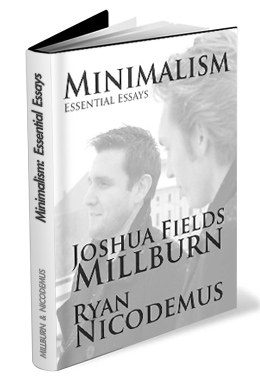
Minimalism [图书] 豆瓣
作者: Joshua Fields Millburn / Ryan Nicodemus 出版社: Mins Publishing 2011 - 9
About the Book
Minimalism: Essential Essays is an edited collection of 29 of our favorite essays about living a more meaningful life with less stuff. This 133-page collection also contains a special forward by Joshua and Ryan, as well as two bonus essays you can’t find anywhere else.
The book is organized into seven interconnected themes:
Living in the Moment
Emotional Health
Growth
Contribution
Passion and Mission
Taking Action
Change and Experimentation
The order of this collection is deliberate: it is meant to be read from beginning to end. We believe doing so will result in a better overall experience—a different experience from reading our essays all over the web—connecting various concepts that might otherwise seem unconnected.
Two Bonus Essays
As a special thank you to our readers, we also included two unpublished essays in this collection: Dealing with Overwhelm and Focus On What’s Important. These two essays can’t be found anywhere else on the web.
About The Minimalists
A couple years ago, as we approached age 30, we had achieved everything that was supposed to make us happy: we had great six-figure jobs, nice cars, big houses with more bedrooms than inhabitants, lots of toys, and lots of stuff in general.
And yet with all that stuff, we knew we weren’t satisfied with our lives. We knew we weren’t truly happy. We discovered that working 70 to 80 hours a week for a corporation and buying even more stuff didn’t fill the void. In fact, it only brought us more debt and anxiety and fear and loneliness and guilt and overwhelm and paranoia and crippling depression.
What’s worse, we found out we didn’t have control of our time and thus didn’t control our own lives. So we took back control using the principles of minimalism to focus on what’s important in life—to focus on living meaningful lives.
Our Vision is to see more people live meaningful, happy, passionate, free lives.
Our Mission is to contribute to other people in meaningful ways and share the freedom that minimalism provides.
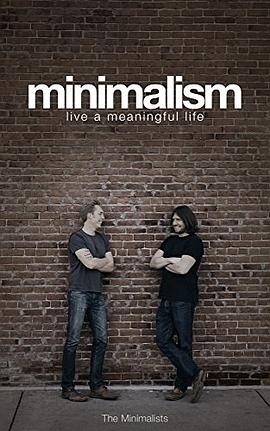
Minimalism: Live a Meaningful Life [图书] 豆瓣
作者: Joshua Fields Millburn / Ryan Nicodemus 出版社: Mins Publishing 2011
Minimalism: Live a Meaningful Life is our finest, most important creation to date. It’s also the best thing we’ve ever written about Minimalism and will likely serve as the cornerstone to our work for years to come. It took us a year to write this book—a year of creating the best material possible and finding ways to relate it back to our lives so you would have practical ways to relate the subject matter to your life.
Chapter Themes:
Do you jump out of bed every morning excited about the day in front of you? Do you live a life defined by deep meaning, endless passion, excellent health, empowering relationships, and constant growth?
You can.
Ultimately, the eight chapters and ninety-eight sections inside this book are meant to help you take small actions each day that will radically improve your life over a short period of time.
This book’s foreword and first chapter go into vast detail on our personal backgrounds, our troubled pasts, our depression, and how we made changes that transformed our lives over two years. These chapters discuss why didn’t feel fulfilled by our careers and why we turned to our society’s idea of a meaningful life: we bought stuff, we spent too much money, and we lived paycheck to paycheck trying to purchase happiness in every trip to the shopping mall or luxurious vacation we could find. Instead of finding our passion, instead of searching for our mission, we pacified ourselves with ephemeral indulgences, inducing a crack-cocaine high that didn’t last far past the checkout line.
The subsequent chapters move on the the five dimensions that comprise a meaningful life:
1. Health
2. Relationships
3. Passions
4. Growth
5. Contribution
These are the things we changed in our lives that had the most impact. These changes resulted in more meaningful lives for the two of us. These five chapters discuss each of these concepts in depth, much more than our website. Throughout these chapters we consider why these areas are the most important dimensions of our lives and how minimalism allowed us to focus on these areas. We give you personal examples of how we changed everything in our lives over two year span. We left our big corporate jobs, changed our diets, started exercising regularly, got healthy, strengthened our core relationships, made great new relationships, started pursuing our passions, contributed to more people than we ever had, and found ways to be happy and content with our lives.
The final chapter of this book, "The Confluence of Meaning," binds together the five dimensions and asks the reader important questions about their life. These questions are not rhetorical, they are meant to make you think. The entire book is designed to help you actively engage in each chapter by reading the content more than once, taking notes, highlighting meaningful passages, making lists, and, most importantly, taking action.
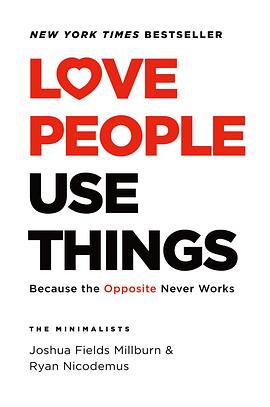
Love People Use Things [图书] 豆瓣
作者: Joshua Fields Millburn / Ryan Nicodemus 出版社: Celadon Books 2021 - 7
How might your life be better with less?
Imagine a life with less: less stuff, less clutter, less stress and debt and discontent―a life with fewer distractions. Now, imagine a life with more: more time, more meaningful relationships, more growth and contribution and contentment―a life of passion, unencumbered by the trappings of the chaotic world around you. What you’re imagining is an intentional life. And to get there, you’ll have to let go of some clutter that’s in the way.
In Love People Use Things, Joshua Fields Millburn and Ryan Nicodemus move past simple decluttering to show how minimalism makes room to reevaluate and heal the seven essential relationships in our lives: stuff, truth, self, money, values, creativity, and people. They use their own experiences―and those of the people they have met along the minimalist journey―to provide a template for how to live a fuller, more meaningful life.
Because once you have less, you can make room for the right kind of more.