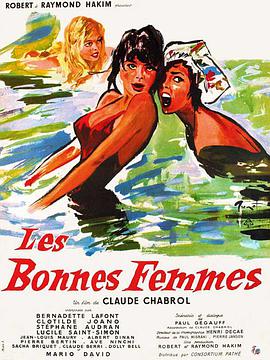
Claude Chabrol — Director (58)
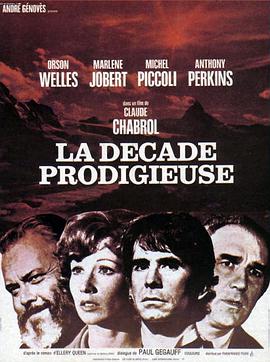
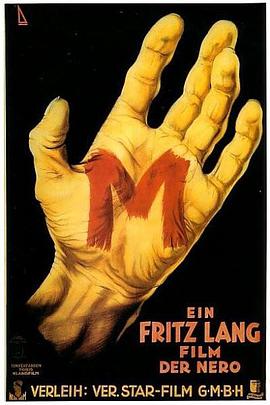
M the Damned (1982) [Movie] Douban TMDB IMDb WikiData
M. le maudit
director:
Claude Chabrol
actor:
Francis Arnaud
/
Henri Attal
…
other title:
M. le maudit
/
M le maudit
…
A Claude Chabrol remake of M by Fritz Lang for French television.
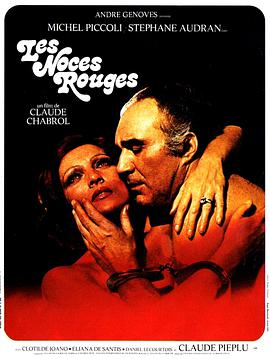
Wedding in Blood (1973) [Movie] Douban TMDB IMDb WikiData
Les noces rouges
other title:
血色婚礼
/
Les noces rouges
…
Lucienne Delamare and Pierre Maury are having an affair. Lucienne's husband Paul is the mayor, and a French deputy. Pierre's wife Clotilde has been weak and sickly for years. Lucienne's husband holds no excitement for her, and he is always away in Paris on business. Pierre is now the vice-mayor, thanks to Paul. Lucienne and Pierre have a secret meeting spot by a lake along a country lane. Pierre's wife dies suddenly, by suicide the town gossips believe. Pierre confesses otherwise to Lucienne. Paul proposes a shady land deal which will "benefit the town", and wants Pierre's political support and collusion. Then Paul discovers proof of his wife's affair...
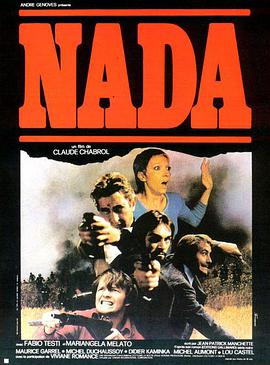
Nada (1974) [Movie] Douban IMDb WikiData TMDB
Nada
other title:
纳达
/
Sterminate gruppo Zero
…
Nada, named after a gang of Spanish anarchists, is a small, confused band of French terrorists. They kidnap the American ambassador after one of his regular visits to an exclusive brothel. The gang starts to quarrel amongst themselves as to the diplomat's fate, while the police purge suspects in their attempts to destroy the Nada faction. As the violence escalates on both sides, the States and the terrorists are forced to use one another's methods in an increasingly desperate and relentless conflict.
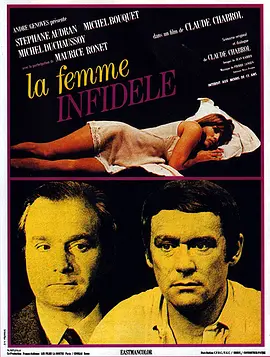
The Unfaithful Wife (1969) [Movie] Douban IMDb TMDB WikiData
La femme infidèle
other title:
不忠
/
La femme infidèle
…
This film is that Diane Lane stole the show "infidelity" French Edition, by Chabrol M and his wife alderaan. www. iav5.com provided by the actor is an insurance company executive, wife of a writer to make love with boring. The husband hired detectives to find out the truth, personally visited third, join the conversation after he killed. Later his wife accidentally learned that Valentine was killed by her husband, she did not turn him in, but that the husband of her deep love.
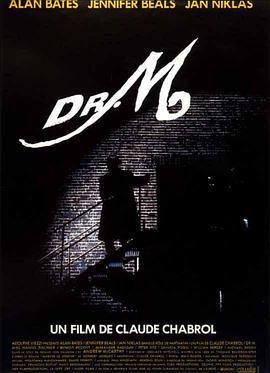
Club Extinction (1990) [Movie] Douban TMDB WikiData IMDb
Dr. M
director:
Claude Chabrol
actor:
Alan Bates
/
Jennifer Beals
…
other title:
M博士
/
Dr. M
…
In the not-too-distant future Berlin is shocked by a series of spectacular suicides; a policeman's investigations lead him to a beautiful, enigmatic woman and the revelation of a sinister plot to manipulate the population through mass hypnosis.
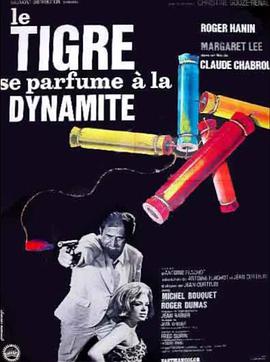
An Orchid for the Tiger (1965) [Movie] Douban
Le tigre se parfume à la dynamite
director:
克洛德·夏布洛尔
actor:
罗杰·哈宁
/
玛格丽特·李
…
other title:
老虎爱用炸弹洒香水
/
Le tigre se parfume à la dynamite
…
法国安全部的特工路易,绰号“老虎”他受命去调查法属殖民地皮特尔角城可能发生的政变危机,他按约和“美国船长”接头并搭乘他的船去该城,不料中途遇到预谋的袭击,一船人都被谋害,只有路易和同伴苏舒侥幸逃脱,他们顺着海浪漂到了皮特尔角城开始着手调查阴谋
A Girl Cut in Two (2007) [Movie] Douban
La fille coupée en deux
other title:
分身乏术
/
La fille coupée en deux
…
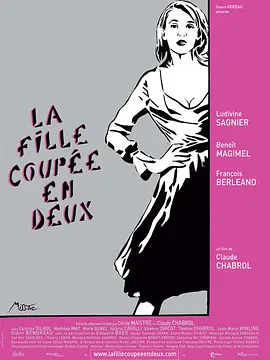
影片《双面娇娃》改编自1906年纽约的一个真实案件,著名建筑师斯坦福·怀特(麦迪逊广场花园的设计者)被谋杀,凶手是一个曾与怀特太太有染的年轻百万富翁。嫉妒与精神失常是这场惨案的起因,也是一个世纪后夏布洛尔拍摄此片的灵感来源,写出一个发生在里昂的“真实的心理故事”,一如既往的揭露上流阶层中隐含的虚伪堕落和犯罪欲望。年轻的女气象预报员加布里耶尔(露德薇·莎内Ludivine Sagnier饰)在摄影棚邂遇比她年长30多岁、已婚但崇尚性自由的名作家查里·圣-德尼(贝朗François Berléand饰)并且爱上了他。她的身体和心灵属于两个不同的男人:一个衰老古怪的著名作家,和一个年轻失常的百万富翁。虽然她嫁给了后者,可随之而来的却是意想不到的犯罪。
夏布洛尔平均每年执导一部影片,无论褒贬,都能成为当季节法国影坛的焦点。去年由于《权力欲望》而颇受好评,今年此片也自然成为了暑假期待的又一部力作。此片的关键人物女孩加布艾尔,由法国新生代女星露德薇·莎内扮演。按照导演的设想,她的戏份最重,既要在两个男人之间周旋,充分展示出“双面”的性格,又要让观众认可她的幼稚和无辜。能得到夏布洛尔的点拨,对于刚刚凭借《八美千娇》和《情歌》走红的莎内来说,无疑是个绝佳的学习机会。 (转自《欧洲时报》)
夏布洛尔平均每年执导一部影片,无论褒贬,都能成为当季节法国影坛的焦点。去年由于《权力欲望》而颇受好评,今年此片也自然成为了暑假期待的又一部力作。此片的关键人物女孩加布艾尔,由法国新生代女星露德薇·莎内扮演。按照导演的设想,她的戏份最重,既要在两个男人之间周旋,充分展示出“双面”的性格,又要让观众认可她的幼稚和无辜。能得到夏布洛尔的点拨,对于刚刚凭借《八美千娇》和《情歌》走红的莎内来说,无疑是个绝佳的学习机会。 (转自《欧洲时报》)
Web of Passion (1959) [Movie] Douban
À double tour
director:
克洛德·夏布洛尔
actor:
玛德琳尼·罗宾森
/
安东内拉·卢瓦尔迪
…
other title:
二重奏
/
À double tour
…
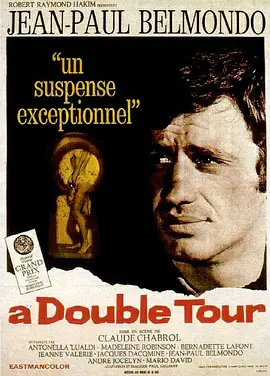
Leda, the flirt of Monsieur Marcoux is murdered. His wife and the police think, that the murderer was the milk-man, the friend of the maid, but Marcoux' daughter's fiance Lazo, who is aware of the corrupt situation in that family doesn't agree with them. Written by Stephan Eichenberg {eichenbe@fak-cbg.tu-muenchen.de}
Comedy Of Power (2006) [Movie] Douban
L'ivresse du pouvoir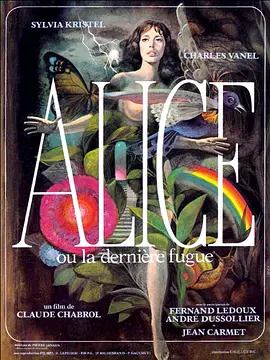
Alice or the Last Escapade (1977) [Movie] Douban TMDB IMDb WikiData
Alice ou la dernière fugue
other title:
爱丽丝最后的逃离
/
Alice ou la dernière fugue
…
One night Alice can't stand her husband anymore and she decides to leave him. It's a dark, rainy night and something smashes the windshield so Alice is forced to seek shelter in an old mansion. She is warmly welcomed but soon realises that strange things are happening. She tries to escape but it seems there's no way out.
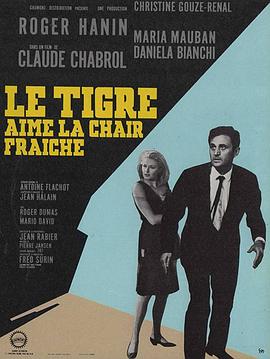
The Tiger Likes Fresh Meat (1964) [Movie] Douban TMDB IMDb WikiData
Le tigre aime la chair fraiche
director:
Claude Chabrol
actor:
罗杰·哈宁
/
玛丽亚·毛班
…
other title:
老虎爱吃鲜肉
/
Le tigre aime la chair fraiche
…
A Turkish ambassador arrives in Paris to sign an important trade agreement, allowing Turkey to buy a sophisticated new war plane from France. Immediately he is the target of an assassin, and a special agent is assigned to protect him.

The Break Up (1970) [Movie] Douban
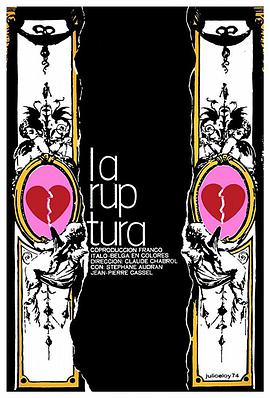
La rupture
other title:
春光破碎
/
La rupture
…
Helene Regnier's husband Charles, who is mentally ill, injures their son Michel in a rage. Charles moves back in with his wealthy and manipulative parents, who blame Helene for their son's condition and vow to win custody of Michel. While the boy is in hospital, Helene rents a room in a boarding house nearby. The Regniers hire Paul Thomas, a family acquaintance who needs money, to find dirt on Helene before the court hearing on custody. Paul moves into the boarding house and, with the help of his girlfriend Sonia, who rarely wears clothes, plots to ruin Helene's reputation and then her very life.
Innocents with Dirty Hands (1975) [Movie] Douban IMDb WikiData TMDB
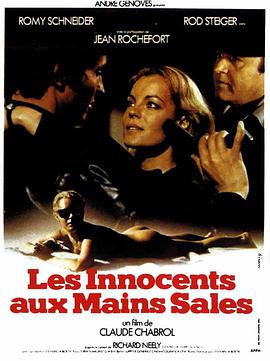
Les innocents aux mains sales
other title:
无辜的凶手
/
Les innocents aux mains sales
…
Saint Tropez. Julie Wormser and her lover, writer and neighbour Jeff Marle, plan the murder of her wealthy husband Louis, an alcoholic impotent. She hits him, and leaves the rest of the task to Jeff. Julie finds herself alone the following day, and becomes therefore the prime suspect. Where is Louis' body? Where is Jeff? Is there any secret beyond a door?
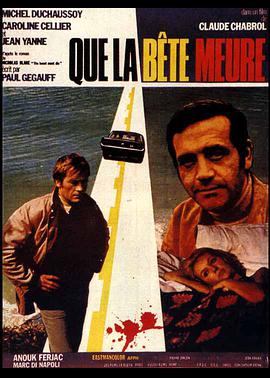
This Man Must Die (1969) [Movie] IMDb Douban TMDB WikiData
Que la bête meure
other title:
禽兽该死
/
Que la bête meure
…
When his young son is killed in a hit and run accident, Charles Thenier resolves to hunt down and murder the killer. By chance, Thenier makes the acquaintance of an actress, Helène Lanson, who was in the car at the time of the accident. He then meets Helène’s brother-in-law, Paul Decourt, a truly horrible individual.
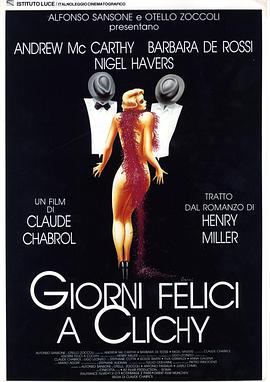
Quiet Days in Clichy (1990) [Movie] Douban
Jours tranquilles à Clichy
other title:
克里西区的静静日子
/
Jours tranquilles à Clichy
The American writer Joe arrives in Paris to research and write about Proust. He meets the Polish Karl and they become friends and costumers of brothels and restaurants. When the fifteen year-old Colette arrives in Paris, they both fall in love with her.
Expatriate Henry Miller indulges in a variety of sexual escapades while struggling to establish himself as a serious writer in Paris.
Very nice portrait of the thirties..., 23 April 2002
Author: Oreste (oreste.sl@sympatico.ca) from Montréal, Québec
Different from many other Chabrol movies that follow "Hitchock-like" patterns, _Jours tranquilles à Clichy_ relates the days a young American writer (Henry Miller) spent in the Gay Paris of the early thirties, with his polish-descent friend and their young Colette, a 14 years old-ish girl with whom they both fall in love. The story in itself doesn't send us from a surprising even to another but slowly lifts the curtain over the prostitution, pornography, libertinage and partying that seemed to oppose Paris so much to New York, in the eyes of Miller, searching for a change from the dull like he lead before. The story is a quest for Proust and his lost time, a quest for a new life, for thrills, for truth in forgetting oneself...
Expatriate Henry Miller indulges in a variety of sexual escapades while struggling to establish himself as a serious writer in Paris.
Very nice portrait of the thirties..., 23 April 2002
Author: Oreste (oreste.sl@sympatico.ca) from Montréal, Québec
Different from many other Chabrol movies that follow "Hitchock-like" patterns, _Jours tranquilles à Clichy_ relates the days a young American writer (Henry Miller) spent in the Gay Paris of the early thirties, with his polish-descent friend and their young Colette, a 14 years old-ish girl with whom they both fall in love. The story in itself doesn't send us from a surprising even to another but slowly lifts the curtain over the prostitution, pornography, libertinage and partying that seemed to oppose Paris so much to New York, in the eyes of Miller, searching for a change from the dull like he lead before. The story is a quest for Proust and his lost time, a quest for a new life, for thrills, for truth in forgetting oneself...