让·鲁什 — 导演 (25)

Ayorou Singing Stones (1968) [电影] 豆瓣 IMDb
Pierres Chantantes d'Ayorou
导演:
让·鲁什
其它标题:
Pierres chantantes d'Ayorou
/
Pierres Chantantes d'Ayorou
On the Niger River, the island of Ayorou is home to a “singing stone,” an imposing boulder rock covered with cupules. It is used as a percussion instrument by local musicians who have come in a canoe. After long rehearsals, the artists will play their compositions to their audience accompanied by a guitar.

巴巴图的三个秘诀 (1976) [电影] 豆瓣 TMDB IMDb 维基数据
Babatou, les trois conseils
导演:
让·鲁什
演员:
Lam Ibrahim Dia
/
Diama
…
其它标题:
Babatou, les trois conseils
/
Babatu, les trois conseils
…
在上个世纪中叶,有一位名叫巴巴图的伟大战士。尼日利亚跨线从Dounga Gurunsi区域入侵该国并在那里定居下来。勇敢的囚犯被纳入军队,妇女拥护。五十年来,来自尼日尔富有冒险精神的年轻人巴巴图被载入史册。
Once upon a time, in the middle of the last century, a great warrior named Babatou. Nigerian jumper from the region Dounga Gurunsi invaded the country and settled there. The brave prisoners were integrated into the army, women espoused. For fifty years, the adventurous young people from Niger Babatou went to live in the epic.
戛纳国际电影节提名
Once upon a time, in the middle of the last century, a great warrior named Babatou. Nigerian jumper from the region Dounga Gurunsi invaded the country and settled there. The brave prisoners were integrated into the army, women espoused. For fifty years, the adventurous young people from Niger Babatou went to live in the epic.
戛纳国际电影节提名

Hommage à Marcel Mauss: Germaine Dieterlen (1977) [电影] 豆瓣
导演:
让·鲁什
Horendi (1972) [电影] Eggplant.place TMDB
Horendi
导演:
Gilbert Rouget
/
Jean Rouch
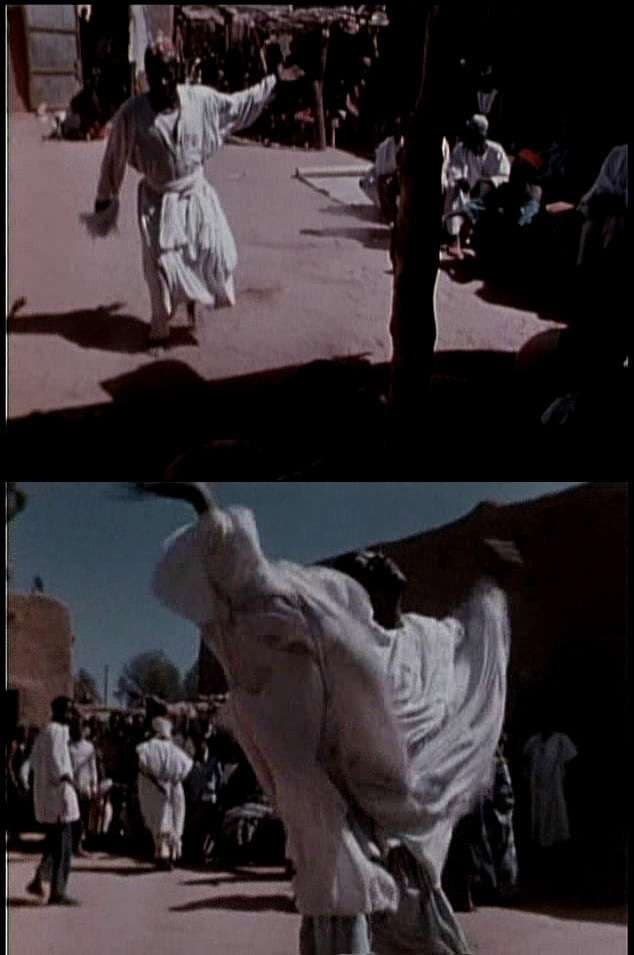
The title of this film translates literally as 'to put on a hori,' a hori being the Songhay term for ceremony of festival. Here it is used to refer to a ganandi, literally 'to make dance' This film concerns two women whom the zima [priest] had diagnosed some months before as being ill through possession by spirits. In the meantime, their families have gathered together the resources to pay for the musicians, dancers, and the priest himself to put on an initiation dance lasting seven days This is a film of documentation, simply recording various moments in the progress of the ceremony, without any form of explanation, neither in intertitle cards nor in voice-over. (Paul Henley, The Adventure of the Real)
Bataille sur le grand fleuve (1950) [电影] 豆瓣
导演:
Jean Rouch
其它标题:
Chasse à l'hippopotame

Margaret Mead: A Portrait by a Friend (1977) [电影] 豆瓣
导演:
让·鲁什
VW-Voyou (1973) [电影] 豆瓣
导演:
Jean Rouch
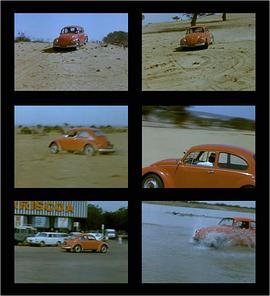
Advertising film for Volkswagen cars aimed at African market.
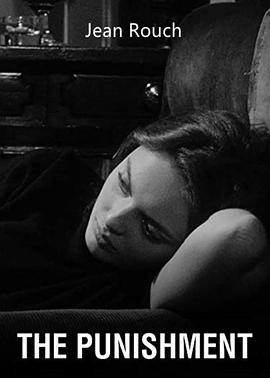
惩罚 (1962) [电影] 豆瓣
La punition
导演:
让·鲁什
演员:
Nadine Ballot
/
Jean-Claude Darnal
其它标题:
La punition
/
处罚
…
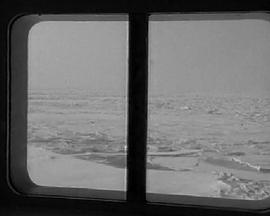
破冰船 (1988) [电影] 豆瓣
Brise-glace
导演:
Jean Rouch
/
Titte Törnroth
演员:
让·鲁什
/
劳尔·鲁伊斯
…
其它标题:
Brise-glace
在一艘行驶在北欧Botnie冰川峡湾的破冰船上,三位导演将三部电影合而为一。Givre号船(35分钟) :影片片头,导演Jean Rouch就用摄像机无声地记录着破冰船及其水手日日夜夜的工作,让我们隐约感受到船舶在海洋中无止尽的飘荡。影片在广阔的冰川和薄雾中拍摄完成,显现出一种现实主义诗歌氛围。

耶南地,或造雨者 (1951) [电影] 豆瓣
Yenendi: les hommes qui font la pluie
导演:
Jean Rouch
其它标题:
Yenendi: les hommes qui font la pluie
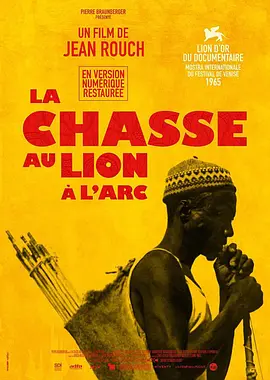
以弓猎狮 (1965) [电影] 豆瓣
La Chasse au lion à l'arc
导演:
让·鲁什
演员:
Tahirou Koro
/
Issiaka Moussa
…
其它标题:
La Chasse au lion à l'arc
/
Hunting the Lion with Bow and Arrow
从1957年到1964年,让鲁什跟随在Yatakala地区的Gaos猎人进行了多次尝试,试图狩猎老狮子,技能和魔法紧密联系在一起: 造弓和制箭、准备毒药、追逐、杀害仪式。这个绰号叫“美国人”的老狮子一直躲避着陷阱…
From 1957 to 1964, Jean Rouch has followed Gaos Hunter in Yatakala, trying several time to hunt the old lion. The skill and magic connect closely together: making bow and arrow; prepare poison; chasing; killing ritual. The old lion whose nickname was American has tried so hard to avoid the trap...
From 1957 to 1964, Jean Rouch has followed Gaos Hunter in Yatakala, trying several time to hunt the old lion. The skill and magic connect closely together: making bow and arrow; prepare poison; chasing; killing ritual. The old lion whose nickname was American has tried so hard to avoid the trap...

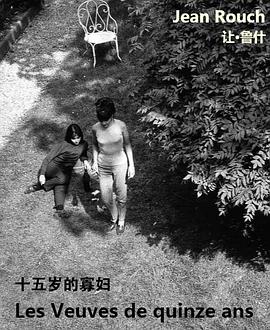
15岁的寡妇 (1965) [电影] 豆瓣
Les veuves de 15 ans
导演:
让·鲁什
演员:
Michel Aracheguesne
其它标题:
Les veuves de 15 ans
让鲁什跟随两个巴黎“耶耶”社群的年轻姑娘,带领观众见证她们的奇遇。两个生活在巴黎16区的姑娘在家庭、朋友中间追寻幸福和爱。这部电影就如关于巴黎青少年的一篇檄文,谴责了60年代资产阶级年轻人终日无所事事的萎靡状态。 Jean Rouch describes the behavior and adventures of two young girls in the Paris music scene of the 1960s (la société <yéyé>). He shows the day-to-day life of two young girls in the 16th arrondissement as they move between their family and friends in search of happiness and love. Presented as an essay on Parisian adolescent girls, this film is a critique of the carelessness and banality of 60s bourgeois youth.

Portrait de Raymond Depardon (1983) [电影] 豆瓣
导演:
André Lenôtre
/
让·鲁什
演员:
Philippe Costantini
/
Raymond Depardon
…

Faire-part: Musée Henri Langlois (1997) [电影] 豆瓣
导演:
让·鲁什
Director Jean Rouch invites the viewer to a guided tour through the cinematographic museum Henri Langlois had built in Paris. This documentary is a unique document since the museum burnt down and cannot be visited anymore.
疯癫大师 (1955) [电影] 豆瓣 TMDB 维基数据 IMDb
Les Maîtres fous
其它标题:
Les Maîtres fous
/
通灵仙师
…
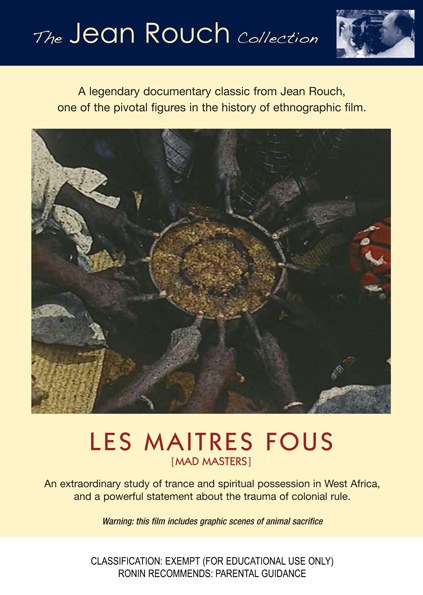
Les Maitres Fous is about the ceremony of a religious sect, the Hauka, which was widespread in West Africa from the 1920s to the 1950s. Hauka participants were usually rural migrants from Niger who came to cities such as Accra in Ghana (then Gold Coast), where they found work as laborers in the city's lumber yards, as stevedores at the docks, or in the mines. There were at least 30,000 practicing Hauka in Accra in 1954 when Jean Rouch was asked by a small group to film their annual ceremony During this ritual, which took place on a farm a few hours from the city, the Hauka entered trance and were possessed by various spirits associated with the Western colonial powers: the governorgeneral, the engineer, the doctor's wife, the wicked major, the corporal of the guard.
The roots of the Hauka lie in traditional possession cults common among the Songhay and Djerma peoples of the Niger River basin. Gifted men and women may enter trance and become possessed by any of a number of strong gods, such as Dongo, god of thunder and the sky.Supplicants consult the god through the trancing medium and receive advice about their problems, cures for diseases, comfort and support, or reprimands for their wrongdoings. Like these traditional possession cults, the Hauka sect co-existed with Islam and incorporated many Islamic saints and heroes into its rituals. Most of its adherents were Muslims.
Hauka first appeared in Niger, it is thought, in the person of a former soldier who participated in the savage battles of the second German offensive of World War I in 1917 and 1918, in which West African troops were decimated despite their spectacular performance. This soldier made the pilgrimage to Mecca and returned to Niger in the 1920s. In his village, in Rouch's account, he found the people "doing a traditional dance and the soldier was possessed, very violently possessed, and while possessed he said 'I am the avant-garde of the new gods who are coming from Malia [the Red Sea]. My name is Governor Malia and I am the first of the new gods who are coming and they are the gods of strength'."
The Hauka were quickly suppressed by the French authorities in Niger, with the support of traditional chiefs and priests who feared the popularity of the new movement and its challenge to established authority. But the Hauka cult spread, even within the jail walls, and by 1935 the British administration in Ghana again attempted to suppress it and to jail the cultists. Fires broke out in response throughout Accra, and eventually there was an agreement that Hauka priests would limit their ceremonies to certain places and to Saturdays and Sundays. This was still the case in 1954 when Rouch filmed Les Maitres Fous, which was banned by the colonial government in 1955.
The Hauka movement was a phenomenon of the colonial era. After the independence of Ghana in 1957, migration was controlled and many Hauka who had settled in Accra returned to Niger. Niger itself gained independence three years later, and the Hauka began to subside and to be absorbed into the traditional religious system. Dongo, for example, the old god of thunder, is now considered the father of the Hauka. As Rouch has pointed out, "there was no more colonial power and there never was a Hauka called Kwame N'krumah." The events filmed represent the end of the Hauka development. Today the film is shown in the villages of Ghana and in the Niger Cultural Center.
The imagery in Les Maitres Fous is powerful and often disturbing: possessed men with rolling eyes and foaming at the mouth, eating a sacrificed dog (in violation of taboo), burning their bodies with naming torches. Beyond the imagery, the themes are also powerful, and have had an impact in our own culture:Jean Genet's The Blacks was modeled upon the Hauka inversion in which blacks assume the role of masters, and Peter Brook's Marat/Sade was influenced by the theatricality and invented language of Hauka possession. Yet, as Rouch reminds us in an interview in Cineaste, possession for the Hauka cultists was not theater but reality. The significance of this reality is left ambiguous in the film, although Rouch's commentary suggests that the ritual provides a psychological release which enables the Hauka to be good workers and to endure a degrading situation with dignity. The unexplored relation of the Hauka movement to their colonial experience 1-S perhaps the most intriguing issue raised by this ceremony in which the oppressed become, for a day, the possessed and the powerful.
The roots of the Hauka lie in traditional possession cults common among the Songhay and Djerma peoples of the Niger River basin. Gifted men and women may enter trance and become possessed by any of a number of strong gods, such as Dongo, god of thunder and the sky.Supplicants consult the god through the trancing medium and receive advice about their problems, cures for diseases, comfort and support, or reprimands for their wrongdoings. Like these traditional possession cults, the Hauka sect co-existed with Islam and incorporated many Islamic saints and heroes into its rituals. Most of its adherents were Muslims.
Hauka first appeared in Niger, it is thought, in the person of a former soldier who participated in the savage battles of the second German offensive of World War I in 1917 and 1918, in which West African troops were decimated despite their spectacular performance. This soldier made the pilgrimage to Mecca and returned to Niger in the 1920s. In his village, in Rouch's account, he found the people "doing a traditional dance and the soldier was possessed, very violently possessed, and while possessed he said 'I am the avant-garde of the new gods who are coming from Malia [the Red Sea]. My name is Governor Malia and I am the first of the new gods who are coming and they are the gods of strength'."
The Hauka were quickly suppressed by the French authorities in Niger, with the support of traditional chiefs and priests who feared the popularity of the new movement and its challenge to established authority. But the Hauka cult spread, even within the jail walls, and by 1935 the British administration in Ghana again attempted to suppress it and to jail the cultists. Fires broke out in response throughout Accra, and eventually there was an agreement that Hauka priests would limit their ceremonies to certain places and to Saturdays and Sundays. This was still the case in 1954 when Rouch filmed Les Maitres Fous, which was banned by the colonial government in 1955.
The Hauka movement was a phenomenon of the colonial era. After the independence of Ghana in 1957, migration was controlled and many Hauka who had settled in Accra returned to Niger. Niger itself gained independence three years later, and the Hauka began to subside and to be absorbed into the traditional religious system. Dongo, for example, the old god of thunder, is now considered the father of the Hauka. As Rouch has pointed out, "there was no more colonial power and there never was a Hauka called Kwame N'krumah." The events filmed represent the end of the Hauka development. Today the film is shown in the villages of Ghana and in the Niger Cultural Center.
The imagery in Les Maitres Fous is powerful and often disturbing: possessed men with rolling eyes and foaming at the mouth, eating a sacrificed dog (in violation of taboo), burning their bodies with naming torches. Beyond the imagery, the themes are also powerful, and have had an impact in our own culture:Jean Genet's The Blacks was modeled upon the Hauka inversion in which blacks assume the role of masters, and Peter Brook's Marat/Sade was influenced by the theatricality and invented language of Hauka possession. Yet, as Rouch reminds us in an interview in Cineaste, possession for the Hauka cultists was not theater but reality. The significance of this reality is left ambiguous in the film, although Rouch's commentary suggests that the ritual provides a psychological release which enables the Hauka to be good workers and to endure a degrading situation with dignity. The unexplored relation of the Hauka movement to their colonial experience 1-S perhaps the most intriguing issue raised by this ceremony in which the oppressed become, for a day, the possessed and the powerful.
美洲豹 (1967) [电影] 豆瓣
Jaguar
导演:
让·鲁什
其它标题:
Jaguar
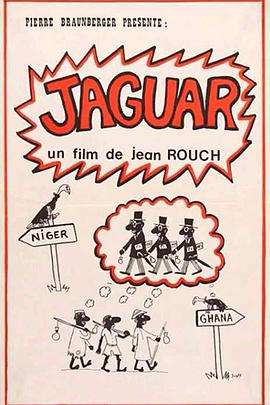
Three young men from the Savannah of Niger leave their homeland to seek wealth and adventure on the coast and in the cities of Ghana. This film is the story of their travels, their encounters along the way, their experiences in Accra and Kumasi, and, after three months, their return to their families and friends at home. The film is part documentary, part fiction, and part reflective commentary. There was no portable sound synchronized equipment in the early 1950s when Jaguar was shot. Instead, Rouch had the main characters (his friends and "accomplices") improvise a narrative while they viewed the film, which was itself improvized along the way. The resulting soundtrack consists of remembered dialogue, of joking and exclamations, of questions and explanations about the action on the screen.
Short-term, rural migration to the cities is common to much of contemporary Africa. Here we meet Lam the herdsman, Illo the fisherman and Damoure, their unsettled but literate friend. The three trek for more than a month south through Dahomey to Ghana, crossing the land of the Somba people (whose nudity shocks them), eating coconuts "more delicious than cheese," and delighting in the ocean with its waves and starfish. Eventually they part ways. Damoure and Illo go to Accra and Lam to Kumasi, where they find jobs as dockworker, foreman for a lumberman, and cattleherder for a city butcher. Having made their separate journeys, they meet again in Kumasi with a fourth friend, and set up an open-air stall, Petit a Petit, in which they hawk everything from alarm clocks to pictures of Queen Elizabeth.
Financially successful but homesick, the friends decide to leave the excitement, turmoil and bewildering complexity of the city to return home to Niger before the rains. Lam rejoins his herd, enriched with a new umbrella and a lance; Illo, "magician of the river," catches a hippo and distributes everything he has brought from his journey to his family; and Damoure admires anew the beauty of Niger women.
Yet although life in the village resumes as usual, Illo, Lam and Damoure have been "jaguars" in the city: sophisticated "keen young men" with fancy hairdos, cigarettes, sunglasses, money, and knowledge of the urban world. The film raises, but does not answer, questions about the meaning of this experience and the transformations it may entail in the lives of the returned youths. Jaguar, Thomas Beidelman has written, "does succeed in catch ing the flavor of what it must be like to pass to and from a modern city and a rural village in Africa . . . jaguar could be an eloquent document on the process of social change."
The flavor, it might be added, is very gay. Rouch has pointed out that jaguar does not attempt to reveal the misery and pain of the annual migration, or the boredom of village life in the dry season (eight months of the year) when young men, no longer warriors as in the past, have nothing to do. Few men, in actuality, become "jaguars" in the carefree style of Damoure, Lam, and Illo. For most, the city is a struggle. Yet jaguar is nonetheless a vivid portrayal of the ideal of migration, a fantasy imparted through the improvised actions and spirited commentary of the characters. In this film Rouch has developed a form one might call "ethnographic fantasy," with an authenticity and reality as important, although quite different, from that of Rouch's own monograph on rural migration to Accra.
Short-term, rural migration to the cities is common to much of contemporary Africa. Here we meet Lam the herdsman, Illo the fisherman and Damoure, their unsettled but literate friend. The three trek for more than a month south through Dahomey to Ghana, crossing the land of the Somba people (whose nudity shocks them), eating coconuts "more delicious than cheese," and delighting in the ocean with its waves and starfish. Eventually they part ways. Damoure and Illo go to Accra and Lam to Kumasi, where they find jobs as dockworker, foreman for a lumberman, and cattleherder for a city butcher. Having made their separate journeys, they meet again in Kumasi with a fourth friend, and set up an open-air stall, Petit a Petit, in which they hawk everything from alarm clocks to pictures of Queen Elizabeth.
Financially successful but homesick, the friends decide to leave the excitement, turmoil and bewildering complexity of the city to return home to Niger before the rains. Lam rejoins his herd, enriched with a new umbrella and a lance; Illo, "magician of the river," catches a hippo and distributes everything he has brought from his journey to his family; and Damoure admires anew the beauty of Niger women.
Yet although life in the village resumes as usual, Illo, Lam and Damoure have been "jaguars" in the city: sophisticated "keen young men" with fancy hairdos, cigarettes, sunglasses, money, and knowledge of the urban world. The film raises, but does not answer, questions about the meaning of this experience and the transformations it may entail in the lives of the returned youths. Jaguar, Thomas Beidelman has written, "does succeed in catch ing the flavor of what it must be like to pass to and from a modern city and a rural village in Africa . . . jaguar could be an eloquent document on the process of social change."
The flavor, it might be added, is very gay. Rouch has pointed out that jaguar does not attempt to reveal the misery and pain of the annual migration, or the boredom of village life in the dry season (eight months of the year) when young men, no longer warriors as in the past, have nothing to do. Few men, in actuality, become "jaguars" in the carefree style of Damoure, Lam, and Illo. For most, the city is a struggle. Yet jaguar is nonetheless a vivid portrayal of the ideal of migration, a fantasy imparted through the improvised actions and spirited commentary of the characters. In this film Rouch has developed a form one might call "ethnographic fantasy," with an authenticity and reality as important, although quite different, from that of Rouch's own monograph on rural migration to Accra.