The Light Club [Book] Douban
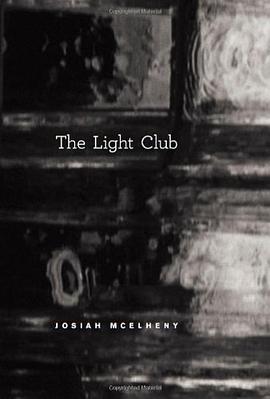
In 2008, artist Josiah McElheny exhibited new work at the Donald Young Gallery inspired by Paul Scheerbart’s peculiar short story “The Light Club of Batavia,” originally published in 1912. In the words of McElheny’s gallery, Scheerbart “tells the story of an ambitious woman’s unlikely plans for an underground light spa—a refuge for a modern illness she calls ‘Light Hunger.’ Her plan is realized by a motley crew of architects, artists, and foreign patrons after many long-winded speeches and romantic pledges”—though “long-winded” somewhat over-states the duration of a story that is itself only six pages long.
McElheny’s resulting piece is called Model for a Film Set (The Light Spa at the Bottom of a Mine). “Constructed of colored glass modules stacked and mortared, it is McElheny’s abstract envisioning of the wondrous architectural installation described in Scheerbart’s tale.” But what is the “wondrous architectural installation” that the gallery refers to?
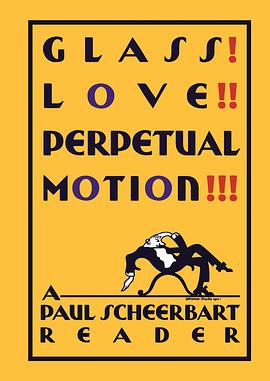
Recently republished in a volume edited by McElheny himself, Scheerbart’s story “The Light Club of Batavia” is available here in the CCA Library, where I had an opportunity to read it.
The characters are certainly odd, out of sorts with their daily circumstances—indeed, ill-fit for terrestriality altogether. There is, we read, simply “too much light here during the daytime, and too little light at night,” as if they are playing Goldilocks not with porridge but with planetary standards of illumination.
This imbalance in light is something that can be corrected, however, given certain extraordinary architectural acts.
Step number one is repurposing an otherwise abandoned mine located in the hills outside town so that “light parties” can be hosted in the depths. Using elevators made from Tiffany glass and a suite of self-illuminated glass devices, an environment of perfect brilliance can be achieved. “There will also be large pillars of light made from Tiffany-glass,” Scheerbart writes, “running through the entire mine—vertically, horizontally, and also at angles.”
This total environment of light, sounding more like Superman’s Fortress of Solitude, is also seen now as an influence on the architectural designs of Scheerbart’s friend Bruno Taut and his Crystal Chain Letters—this is the same Taut, of course, who once exclaimed in the introduction to his Frühlicht series of minor editorials: “Hurray for crystal! Hurray and again hurray for the fluid, the graceful, the angular, the sparkling, the flashing, the light—hurray for everlasting architecture!” A better—or more enthusiastic—evocation of the gleaming shards of the Fortress of Solitude might not ever be found.
In any case, Scheerbart founded his own “Society for Glass Architecture” one year after publishing this story of subterranean light parties, and he subsequently released a full-length novel one year later. The Grey Cloth tells not only of Scheerbart’s enthusiasm for glass forms, but of an obsessive need for unusually intense sources of external illumination. His characters, for instance, receive positive feedback for wearing simple grey and white clothing—the “grey cloth” of the novel’s title—so as not to detract from the other-worldly transparent architectural forms constructed all around them.
An underground light spa filled with Tiffany glass elevators is thus but one instantiation of Scheerbart’s shining world and its marvelous tectonics—and the spectacle of an abandoned mine temporarily transformed into one of the brightest spots on earth rivals 21st-century sites like the high-energy physics lab in Minnesota’s Soudan Mine, with its “special optical fibers” and “deep underground environment,” for sheer breadth of imagination.
McElheny’s resulting piece is called Model for a Film Set (The Light Spa at the Bottom of a Mine). “Constructed of colored glass modules stacked and mortared, it is McElheny’s abstract envisioning of the wondrous architectural installation described in Scheerbart’s tale.” But what is the “wondrous architectural installation” that the gallery refers to?
Recently republished in a volume edited by McElheny himself, Scheerbart’s story “The Light Club of Batavia” is available here in the CCA Library, where I had an opportunity to read it.
The characters are certainly odd, out of sorts with their daily circumstances—indeed, ill-fit for terrestriality altogether. There is, we read, simply “too much light here during the daytime, and too little light at night,” as if they are playing Goldilocks not with porridge but with planetary standards of illumination.
This imbalance in light is something that can be corrected, however, given certain extraordinary architectural acts.
Step number one is repurposing an otherwise abandoned mine located in the hills outside town so that “light parties” can be hosted in the depths. Using elevators made from Tiffany glass and a suite of self-illuminated glass devices, an environment of perfect brilliance can be achieved. “There will also be large pillars of light made from Tiffany-glass,” Scheerbart writes, “running through the entire mine—vertically, horizontally, and also at angles.”
This total environment of light, sounding more like Superman’s Fortress of Solitude, is also seen now as an influence on the architectural designs of Scheerbart’s friend Bruno Taut and his Crystal Chain Letters—this is the same Taut, of course, who once exclaimed in the introduction to his Frühlicht series of minor editorials: “Hurray for crystal! Hurray and again hurray for the fluid, the graceful, the angular, the sparkling, the flashing, the light—hurray for everlasting architecture!” A better—or more enthusiastic—evocation of the gleaming shards of the Fortress of Solitude might not ever be found.
In any case, Scheerbart founded his own “Society for Glass Architecture” one year after publishing this story of subterranean light parties, and he subsequently released a full-length novel one year later. The Grey Cloth tells not only of Scheerbart’s enthusiasm for glass forms, but of an obsessive need for unusually intense sources of external illumination. His characters, for instance, receive positive feedback for wearing simple grey and white clothing—the “grey cloth” of the novel’s title—so as not to detract from the other-worldly transparent architectural forms constructed all around them.
An underground light spa filled with Tiffany glass elevators is thus but one instantiation of Scheerbart’s shining world and its marvelous tectonics—and the spectacle of an abandoned mine temporarily transformed into one of the brightest spots on earth rivals 21st-century sites like the high-energy physics lab in Minnesota’s Soudan Mine, with its “special optical fibers” and “deep underground environment,” for sheer breadth of imagination.