汤姆·赫兰德 — 作者 (16)
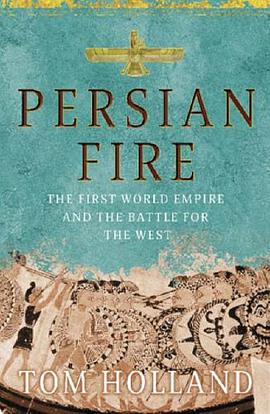
Persian Fire [图书] 豆瓣
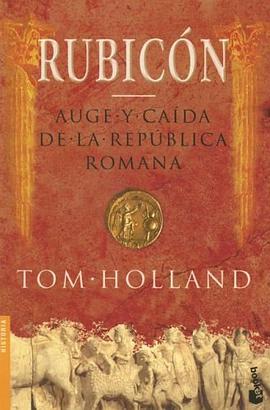
Rubicon [图书] 豆瓣
The Roman Republic was the most remarkable state in history. What began as a small community of peasants camped among marshes and hills ended up ruling the known world. Rubicon paints a vivid portrait of the Republic at the climax of its greatness - the same greatness which would herald the catastrophe of its fall. It is a story of incomparable drama. This was the century of Julius Caesar, the gambler whose addiction to glory led him to the banks of the Rubicon, and beyond; of Cicero, whose defence of freedom would make him a byword for eloquence; of Spartacus, the slave who dared to challenge a superpower; of Cleopatra, the queen who did the same. Tom Holland brings to life this strange and unsettling civilization, with its extremes of ambition and self-sacrifice, bloodshed and desire. Yet alien as it was, the Republic still holds up a mirror to us. Its citizens were obsessed by celebrity chefs, all-night dancing and exotic pets; they fought elections in law courts and were addicted to spin; they toppled foreign tyrants in the name of self-defence. Two thousand years may have passed, but we remain the Romans' heirs.
Persian Fire [图书] 豆瓣
In 480 B.C., Xerxes, the King of Persia, led an invasion of mainland Greece. Its success should have been a formality. For seventy years, victory—rapid, spectacular victory—had seemed the birthright of the Persian Empire. In the space of a single generation, they had swept across the Near East, shattering ancient kingdoms, storming famous cities, putting together an empire which stretched from India to the shores of the Aegean. As a result of those conquests, Xerxes ruled as the most powerful man on the planet. Yet somehow, astonishingly, against the largest expeditionary force ever assembled, the Greeks of the mainland managed to hold out. The Persians were turned back. Greece remained free. Had the Greeks been defeated in the epochal naval battle at Salamis, not only would the West have lost its first struggle for independence and survival, but it is unlikely that there would ever have been such an entity as the West at all.
Tom Holland’s brilliant new book describes the very first “clash of Empires” between East and West. As he did in the critically praised Rubicon, he has found extraordinary parallels between the ancient world and our own. There is no other popular history that takes in the entire sweep of the Persian Wars, and no other classical historian, academic or popular, who combines scholarly rigor with novelistic depth with a worldly irony in quite the fashion that Tom Holland does.
Rubicon [图书] 豆瓣 Goodreads
Rubicon: The Last Years of the Roman Republic
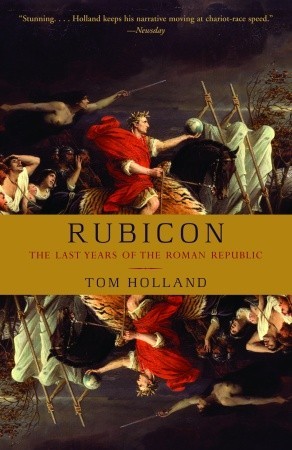
In 49 B.C., the seven hundred fifth year since the founding of Rome, Julius Caesar crossed a small border river called the Rubicon and plunged Rome into cataclysmic civil war. Tom Holland’s enthralling account tells the story of Caesar’s generation, witness to the twilight of the Republic and its bloody transformation into an empire. From Cicero, Spartacus, and Brutus, to Cleopatra, Virgil, and Augustus, here are some of the most legendary figures in history brought thrillingly to life. Combining verve and freshness with scrupulous scholarship, Rubicon is not only an engrossing history of this pivotal era but a uniquely resonant portrait of a great civilization in all its extremes of self-sacrifice and rivalry, decadence and catastrophe, intrigue, war, and world-shaking ambition.
Persian Fire [图书] 豆瓣
In the fifth century B.C., a global superpower was determined to bring truth and order to what it regarded as two terrorist states. The superpower was Persia, incomparably rich in ambition, gold, and men. The terrorist states were Athens and Sparta, eccentric cities in a poor and mountainous backwater: Greece.
The story of how their citizens took on the Great King of Persia, and thereby saved not only themselves but Western civilization as well, is as heart-stopping and fateful as any episode in history. Tom Holland’s brilliant study of these critical Persian Wars skillfully examines a conflict of critical importance to both ancient and modern history.
In the Shadow of the Sword [图书] 豆瓣
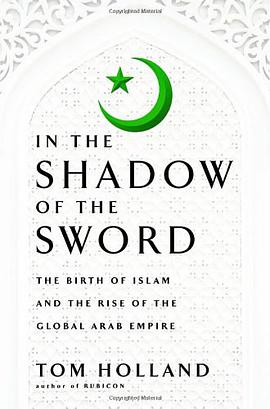
A thrillingly panoramic and incredibly timely account of the rise of Islam, from the acclaimed author of Rubicon and Persian Fire.
The evolution of the Arab empire is one of the supreme narratives of ancient history, a story dazzlingly rich in drama, character, and achievement. In this exciting and sweeping history—the third in his trilogy of books on the ancient world—Holland describes how the Arabs emerged to carve out a stupefyingly vast dominion in a matter of decades, overcoming seemingly insuperable odds to create an imperial civilization aspects of which endure to the present day. With profound bearing on the most consequential events of our time, Holland ties the exciting story of Islam’s ascent to the crises and controversies of the present.
Dynasty: The Rise and Fall of the House of Caesar [图书] Goodreads
Dynasty: The Rise and Fall of the House of Caesar
Author and historian Tom Holland returns to his roots in Roman history and the audience he cultivated with
—his masterful, witty, brilliantly researched popular history of the fall of the Roman republic—with
, a luridly fascinating history of the reign of the first five Roman emperors.
continues
's story, opening where that book ended: with the murder of Julius Caesar. This is the period of the first and perhaps greatest Roman Emperors and it's a colorful story of rule and ruination, running from the rise of Augustus through to the death of Nero. Holland's expansive history also has distinct shades of
, with five wonderfully vivid (and in three cases, thoroughly depraved) Emperors—Augustus, Tiberius, Caligula, Claudius, and Nero—featured, along with numerous fascinating secondary characters. Intrigue, murder, naked ambition and treachery, greed, gluttony, lust, incest, pageantry, decadence—the tale of these five Caesars continues to cast a mesmerizing spell across the millennia.
—his masterful, witty, brilliantly researched popular history of the fall of the Roman republic—with
, a luridly fascinating history of the reign of the first five Roman emperors.
continues
's story, opening where that book ended: with the murder of Julius Caesar. This is the period of the first and perhaps greatest Roman Emperors and it's a colorful story of rule and ruination, running from the rise of Augustus through to the death of Nero. Holland's expansive history also has distinct shades of
, with five wonderfully vivid (and in three cases, thoroughly depraved) Emperors—Augustus, Tiberius, Caligula, Claudius, and Nero—featured, along with numerous fascinating secondary characters. Intrigue, murder, naked ambition and treachery, greed, gluttony, lust, incest, pageantry, decadence—the tale of these five Caesars continues to cast a mesmerizing spell across the millennia.
Rubicon: The Last Years of the Roman Republic [图书] Goodreads
Rubicon: The Last Years of the Roman Republic
In 49 B.C., the seven hundred fifth year since the founding of Rome, Julius Caesar crossed a small border river called the Rubicon and plunged Rome into cataclysmic civil war. Tom Holland’s enthralling account tells the story of Caesar’s generation, witness to the twilight of the Republic and its bloody transformation into an empire. From Cicero, Spartacus, and Brutus, to Cleopatra, Virgil, and Augustus, here are some of the most legendary figures in history brought thrillingly to life. Combining verve and freshness with scrupulous scholarship,
is not only an engrossing history of this pivotal era but a uniquely resonant portrait of a great civilization in all its extremes of self-sacrifice and rivalry, decadence and catastrophe, intrigue, war, and world-shaking ambition.
Dynasty [图书] 豆瓣
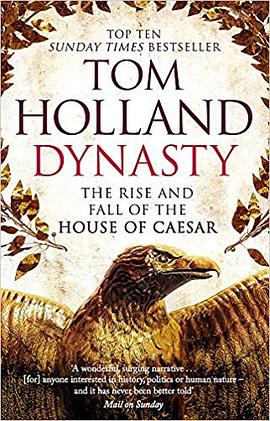
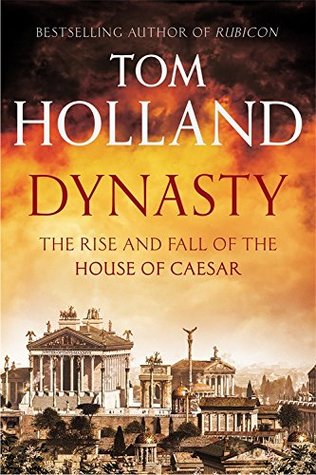
Author and historian Tom Holland returns to his roots in Roman history and the audience he cultivated with Rubicon—his masterful, witty, brilliantly researched popular history of the fall of the Roman republic—with Dynasty, a luridly fascinating history of the reign of the first five Roman emperors.
Dynasty continues Rubicon's story, opening where that book ended: with the murder of Julius Caesar. This is the period of the first and perhaps greatest Roman Emperors and it's a colorful story of rule and ruination, running from the rise of Augustus through to the death of Nero. Holland's expansive history also has distinct shades of I Claudius, with five wonderfully vivid (and in three cases, thoroughly depraved) Emperors—Augustus, Tiberius, Caligula, Claudius, and Nero—featured, along with numerous fascinating secondary characters. Intrigue, murder, naked ambition and treachery, greed, gluttony, lust, incest, pageantry, decadence—the tale of these five Caesars continues to cast a mesmerizing spell across the millennia.
Praise for Dynasty:
"...With his new book, Dynasty, the British historian Tom Holland has crafted a history of early Rome that has all the gripping detail and narrative momentum of a novel. Mr. Holland does not gloss over the holes or uncertainties in his story, but instead uses his knowledge of the period (which starts with the murder of Julius Caesar and concludes with Nero’s suicide in A.D. 68) to place early and sometimes disputed accounts in context, and to give the reader a startlingly visceral sense of the violence and brutality and wretched excess of ancient Rome.
—Michiko Kakutani, The New York Times
"This is great material, and Holland does it justice with a chiseled prose style and an eye for the luminous detail.... A graduate of both Cambridge and Oxford, Holland is a master of narrative history. On the strength of Dynasty, he deserves a laurel wreath."
—Dennis Drabelle, Washington Post
"Holland, a classical scholar turned full-time author, has written highly regarded accounts of Roman, Greek, medieval European and early Islamic history and has also translated...the sweeping narrative of Herodotus out of ancient Greek. The canvas of Dynasty is his broadest yet, both in terms of time (he begins well before the Julio-Claudians, to show how they arose) and territory. He keeps his eyes trained on the men and women of the August Family even while following events as widely dispersed as Britain, Germany and North Africa. His ability to operate at small and large scale simultaneously—both domi and fores, in Rome and abroad, as Tacitus put it—is one of his great talents.... Dynasty surely secures his place among the foremost writers of popular history practicing today."
—James Romm, Wall Street Journal
"Holland’s novelistic approach enhances a story that he has not invented. This means that his account is gripping and occasionally eloquent, but sometimes the larger historical setting vanishes as he concentrates on vivid personalities at the expense of the vast empire within which all the domestic horrors were taking place."
—G.W. Bowersock, New York Review of Books
"As for the book I read before I turn the light out, currently it’s Dynasty, by Tom Holland, about the Caesars. It has Holland’s usual novelistic ability to bring a narrative alive, together with his extraordinary command of ancient sources. It’s the sequel to his outstanding Rubicon. It’s fascinating on how, inch by inch, Augustus and his successors surreptitiously turned a republic into an autocracy."
—Matt Ridley, New York Times Book Review, "By the Book"
"Among the many virtues of Tom Holland’s terrific history is that he does not shrink from seeing the Roman emperors for what they were: 'the west’s primal examples of tyranny'. He accepts that tales of their paranoid depravity make historians uneasy.... He knits the history of ancient Rome into his narrative—its founding myths, the fall of the republic, the religious superstitions—with a skill so dextrous you don’t notice the stitching. Dynasty is both a formidable effort to compile what we can know about the ancient world and a sensational story."
—Nick Cohen, The Guardian
"A vivid account of five Roman emperors, emphasizing their vices and vicious behavior with less attention to the vast empire, which continued to prosper despite them."
—Kirkus Reviews
Dynasty continues Rubicon's story, opening where that book ended: with the murder of Julius Caesar. This is the period of the first and perhaps greatest Roman Emperors and it's a colorful story of rule and ruination, running from the rise of Augustus through to the death of Nero. Holland's expansive history also has distinct shades of I Claudius, with five wonderfully vivid (and in three cases, thoroughly depraved) Emperors—Augustus, Tiberius, Caligula, Claudius, and Nero—featured, along with numerous fascinating secondary characters. Intrigue, murder, naked ambition and treachery, greed, gluttony, lust, incest, pageantry, decadence—the tale of these five Caesars continues to cast a mesmerizing spell across the millennia.
Praise for Dynasty:
"...With his new book, Dynasty, the British historian Tom Holland has crafted a history of early Rome that has all the gripping detail and narrative momentum of a novel. Mr. Holland does not gloss over the holes or uncertainties in his story, but instead uses his knowledge of the period (which starts with the murder of Julius Caesar and concludes with Nero’s suicide in A.D. 68) to place early and sometimes disputed accounts in context, and to give the reader a startlingly visceral sense of the violence and brutality and wretched excess of ancient Rome.
—Michiko Kakutani, The New York Times
"This is great material, and Holland does it justice with a chiseled prose style and an eye for the luminous detail.... A graduate of both Cambridge and Oxford, Holland is a master of narrative history. On the strength of Dynasty, he deserves a laurel wreath."
—Dennis Drabelle, Washington Post
"Holland, a classical scholar turned full-time author, has written highly regarded accounts of Roman, Greek, medieval European and early Islamic history and has also translated...the sweeping narrative of Herodotus out of ancient Greek. The canvas of Dynasty is his broadest yet, both in terms of time (he begins well before the Julio-Claudians, to show how they arose) and territory. He keeps his eyes trained on the men and women of the August Family even while following events as widely dispersed as Britain, Germany and North Africa. His ability to operate at small and large scale simultaneously—both domi and fores, in Rome and abroad, as Tacitus put it—is one of his great talents.... Dynasty surely secures his place among the foremost writers of popular history practicing today."
—James Romm, Wall Street Journal
"Holland’s novelistic approach enhances a story that he has not invented. This means that his account is gripping and occasionally eloquent, but sometimes the larger historical setting vanishes as he concentrates on vivid personalities at the expense of the vast empire within which all the domestic horrors were taking place."
—G.W. Bowersock, New York Review of Books
"As for the book I read before I turn the light out, currently it’s Dynasty, by Tom Holland, about the Caesars. It has Holland’s usual novelistic ability to bring a narrative alive, together with his extraordinary command of ancient sources. It’s the sequel to his outstanding Rubicon. It’s fascinating on how, inch by inch, Augustus and his successors surreptitiously turned a republic into an autocracy."
—Matt Ridley, New York Times Book Review, "By the Book"
"Among the many virtues of Tom Holland’s terrific history is that he does not shrink from seeing the Roman emperors for what they were: 'the west’s primal examples of tyranny'. He accepts that tales of their paranoid depravity make historians uneasy.... He knits the history of ancient Rome into his narrative—its founding myths, the fall of the republic, the religious superstitions—with a skill so dextrous you don’t notice the stitching. Dynasty is both a formidable effort to compile what we can know about the ancient world and a sensational story."
—Nick Cohen, The Guardian
"A vivid account of five Roman emperors, emphasizing their vices and vicious behavior with less attention to the vast empire, which continued to prosper despite them."
—Kirkus Reviews
Pax [图书] 豆瓣
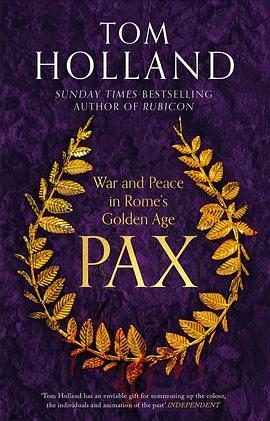
The Pax Romana has long been revered as a golden age. At its peak, the Roman Empire stretched from Scotland to Arabia, and contained perhaps a quarter of humanity. It was the wealthiest and most formidable state the world had yet seen.
Beginning in 69AD, a year that saw four Caesars in succession rule the empire, and ending some seven decades later with the death of Hadrian, Pax presents a dazzling history of Rome at the height of its power. From the gilded capital to realms beyond the frontier, historian Tom Holland portrays the Roman Empire in all its predatory glory. Vivid scene follows vivid scene: the destruction of Jerusalem and Pompeii, the building of the Colosseum and Hadrian's Wall, the conquests of Trajan. Vividly sketching the lives of Romans both ordinary and spectacular, from slaves to emperors, Holland demonstrates how Roman peace was the fruit of unprecedented military violence.
A stunning portrait of Rome's glory days, this is the epic history of the pax Romana.
Beginning in 69AD, a year that saw four Caesars in succession rule the empire, and ending some seven decades later with the death of Hadrian, Pax presents a dazzling history of Rome at the height of its power. From the gilded capital to realms beyond the frontier, historian Tom Holland portrays the Roman Empire in all its predatory glory. Vivid scene follows vivid scene: the destruction of Jerusalem and Pompeii, the building of the Colosseum and Hadrian's Wall, the conquests of Trajan. Vividly sketching the lives of Romans both ordinary and spectacular, from slaves to emperors, Holland demonstrates how Roman peace was the fruit of unprecedented military violence.
A stunning portrait of Rome's glory days, this is the epic history of the pax Romana.
Dominion [图书] 谷歌图书
A “marvelous” (Economist) account of how the Christian Revolution forged the Western imagination.
Crucifixion, the Romans believed, was the worst fate imaginable, a punishment reserved for slaves. How astonishing it was, then, that people should have come to believe that one particular victim of crucifixion-an obscure provincial by the name of Jesus-was to be worshipped as a god. Dominion explores the implications of this shocking conviction as they have reverberated throughout history. Today, the West remains utterly saturated by Christian assumptions. As Tom Holland demonstrates, our morals and ethics are not universal but are instead the fruits of a very distinctive civilization. Concepts such as secularism, liberalism, science, and homosexuality are deeply rooted in a Christian seedbed. From Babylon to the Beatles, Saint Michael to #MeToo, Dominion tells the story of how Christianity transformed the modern world.
Athelstan: The Making of England [图书] Goodreads
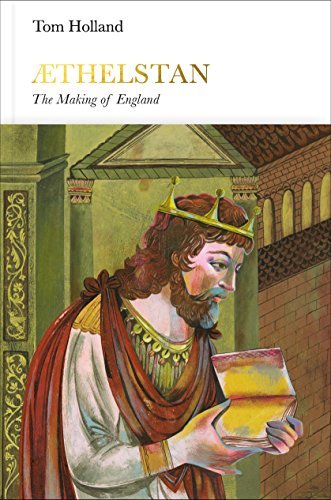
The formation of England occurred against the an island divided into rival kingdoms, under savage assault from Viking hordes. But, after King Alfred ensured the survival of Wessex and his son Edward expanded it, his grandson Athelstan inherited the rule of both Mercia and Wessex, conquered Northumbria and was hailed as Rex totius 'King of the whole of Britain'.Tom Holland recounts this extraordinary story with relish and drama, transporting us back to a time of omens, raven harbingers and blood-red battlefields. As well as giving form to the figure of Athelstan - devout, shrewd, all too aware of the precarious nature of his power, especially in the north - he introduces the great figures of the age, including Alfred and his daughter Aethelflaed, 'Lady of the Mercians', who brought Athelstan up at the Mercian court. Making sense of the family rivalries and fractious conflicts of the Anglo-Saxon rulers, Holland shows us how a royal dynasty rescued their kingdom from near-oblivion and fashioned a nation that endures to this day.
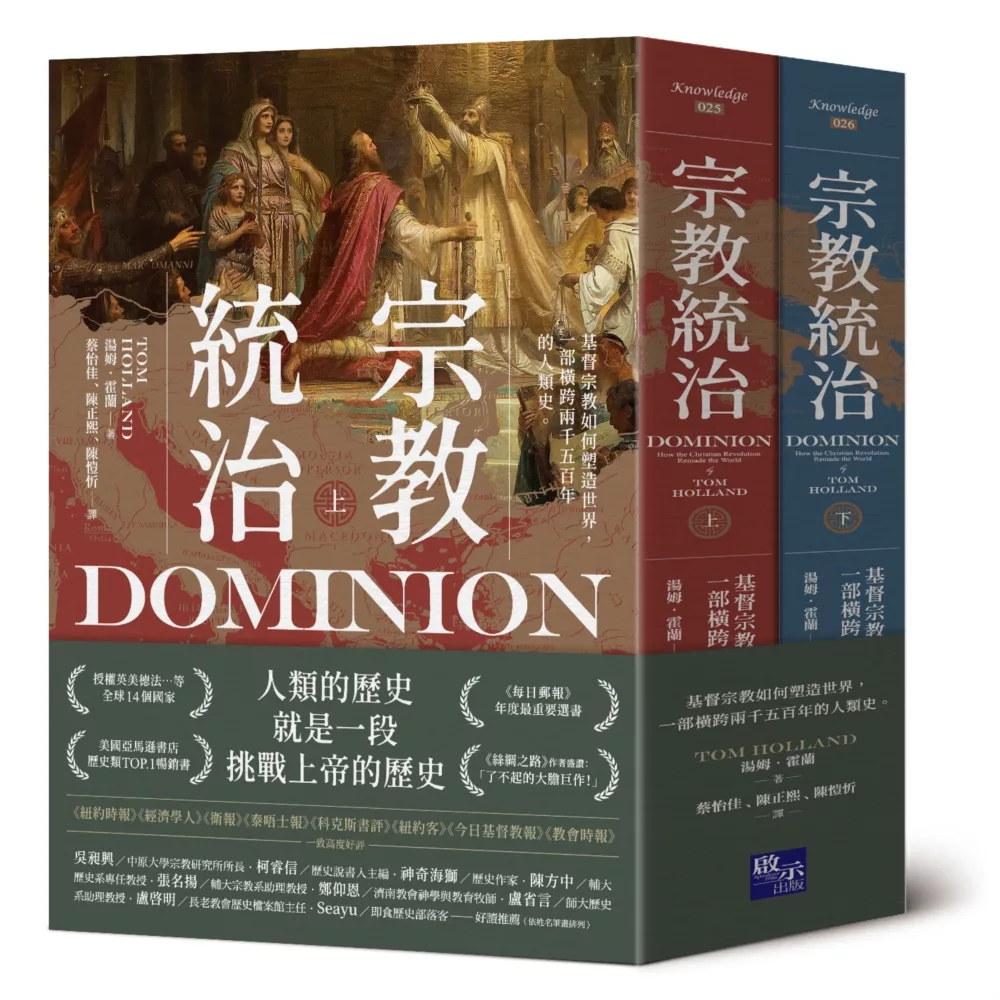
宗教統治:基督宗教如何塑造世界,一部橫跨兩千五百年的人類史(上下冊不分售) [图书] 博客來
Dominion: How the Christian Revolution Remade the World人類的歷史,就是一段挑戰上帝的歷史。
✦授權全球14個國家✦
✦美國亞馬遜書店歷史類TOP.1暢銷書✦
✦《每日郵報》年度最重要選書✦
- - - - - - - - - - - - - - - -✟- - - - - - - - - - - - - - - -
《紐約時報》《經濟學人》《衛報》《泰唔士報》《科克斯書評》
《紐約客》《每日郵報》《今日基督教報》《教會時報》
一致高度好評
- - - - - - - - - - - - - - - -✟- - - - - - - - - - - - - - - -
當西方世界越來越質疑宗教時,
為什麼人們的直覺思考仍受它的意涵所影響?
無論你相不相信耶穌死而復生,
你所處的文明世界,基督宗教的痕跡與影響都無處不在。
基督宗教文明是古代世界中最長久、最具影響力的精神遺產,它的出現是西方歷史上最具變革性的發展。即使如今有愈來愈多人放棄信仰、把所有宗教視為毫無意義的迷信,在人們身上依然可以看出基督宗教思想的傳承痕跡。
正如湯姆.霍蘭的論證,現代人的道德倫理觀念,包括眾人平等、慈善濟貧、婚姻忠誠等,並非普世生成,而是被這個獨特文明持續影響的成果。許多被視為與基督宗教對立的概念,諸如科學、世俗主義,甚至無神論,都根植於基督文明的溫床。
本書回溯了基督宗教數千年來的軌跡,從西元前480年波斯入侵希臘到今日歐洲的移民危機、從古巴比倫王到披頭四樂團、從摩西到#MeToo反性騷擾運動,對這段歷史的文化、藝術、社會、政治等層面做了細膩而平衡的描述,深入探討到底是什麼使基督宗教文明具有如此強大的變革力量?以及西方世界對宗教產生越來越多疑慮時,為什麼人們的直覺反應仍然充滿基督宗教的意涵。
英國作家協會主席、獲獎無數的歷史學家──湯姆.霍蘭──說出了一個基督宗教如何改變世界的故事。
- - - - - - - - - - - - - - - -✟- - - - - - - - - - - - - - - -
【學者、牧者、歷史愛好者共同推薦】
Seayu/即食歷史部落客
吳昶興/中原大學宗教研究所所長
柯睿信/歷史說書人主編
神奇海獅/歷史部落客
陳光中/輔大歷史系專任教授
張名揚/輔大宗教系助理教授
鄭仰恩/濟南教會神學與教育牧師
盧省言/師大歷史系助理教授
盧啓明/長老教會歷史檔案館主任
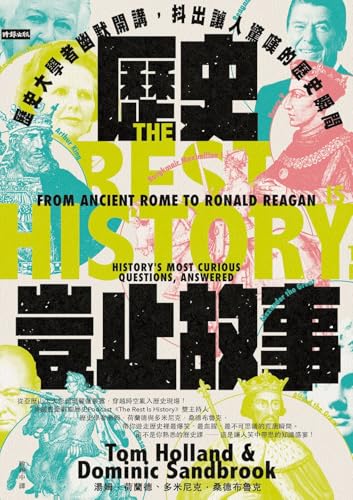
歷史豈止故事:歷史大學者幽默開講,抖出讓人驚嘆的歷史瞬間 [图书] Goodreads
★ 英國暢銷 Podcast 節目實體精選
★ 每則故事皆為真實事件,即使荒唐得令人難以置信
歷史從來沒這麼好玩!
真正會說故事的歷史大咖登場了——
從亞歷山大大帝到瑪麗蓮夢露,穿越時空亂入歷史現場!英國最受歡迎歷史Podcast《The Rest Is History》雙主持人──歷史學者湯姆.荷蘭德與多米尼克.桑德布魯克,帶你遊走歷史裡最爆笑、最血腥、最不可思議的荒唐瞬間。這不是你熟悉的歷史課──這是讓人笑中帶思的知識盛宴!啟發你重新理解「歷史」這回事:不是說教,是生活與人性的延伸。
讓我們一起打開歷史的側門,看見那些你沒學過、也從未想過的真相。
◆你知道羅馬皇帝辦過一場「玫瑰殺人派對」嗎?
◆你知道英國國王曾在宴會上假扮樹人,結果真的被火燒?
◆你知道世界上最災難的派對,不只鬧出人命,還意外點燃了世界大戰?
這不是一本講帝王將相如何統治天下的史書,而是一本帶你潛入歷史幕後,看那些離奇、瘋狂又真實的事件現場。
從古羅馬到伊朗帝國、從中世紀英國到現代網紅亂入的詐騙音樂祭,你還會讀到:
.普魯士將軍換上芭蕾舞裙,旋轉後倒地身亡
.丹麥如何舉國上下成就了一場全世界最偉大的逃亡
.伊朗沙王砸下千萬舉辦帝國慶典,十年後王朝瓦解
.史上最悲慘的派對贈品,導致莫斯科一千兩百人死亡
.納粹與英國情報局的「軍鴿諜戰」,成為二戰最意外英雄的故事
另外還有世界首位「鴿子烈士」、史上公信力最高的太監排行榜、少有人知的十九世紀英國首相比拚,以及教你烤出維多利亞風牛肉的歷史祕方……
這些看似荒誕的故事,都是歷史的一部分。它們證明歷史不是一張時間表,而是無數人性、選擇、意外與荒謬的堆疊。
翻開這本書,你會邊笑邊震驚:人類,怎麼總是這麼會搞砸事情!
★ 每則故事皆為真實事件,即使荒唐得令人難以置信
歷史從來沒這麼好玩!
真正會說故事的歷史大咖登場了——
從亞歷山大大帝到瑪麗蓮夢露,穿越時空亂入歷史現場!英國最受歡迎歷史Podcast《The Rest Is History》雙主持人──歷史學者湯姆.荷蘭德與多米尼克.桑德布魯克,帶你遊走歷史裡最爆笑、最血腥、最不可思議的荒唐瞬間。這不是你熟悉的歷史課──這是讓人笑中帶思的知識盛宴!啟發你重新理解「歷史」這回事:不是說教,是生活與人性的延伸。
讓我們一起打開歷史的側門,看見那些你沒學過、也從未想過的真相。
◆你知道羅馬皇帝辦過一場「玫瑰殺人派對」嗎?
◆你知道英國國王曾在宴會上假扮樹人,結果真的被火燒?
◆你知道世界上最災難的派對,不只鬧出人命,還意外點燃了世界大戰?
這不是一本講帝王將相如何統治天下的史書,而是一本帶你潛入歷史幕後,看那些離奇、瘋狂又真實的事件現場。
從古羅馬到伊朗帝國、從中世紀英國到現代網紅亂入的詐騙音樂祭,你還會讀到:
.普魯士將軍換上芭蕾舞裙,旋轉後倒地身亡
.丹麥如何舉國上下成就了一場全世界最偉大的逃亡
.伊朗沙王砸下千萬舉辦帝國慶典,十年後王朝瓦解
.史上最悲慘的派對贈品,導致莫斯科一千兩百人死亡
.納粹與英國情報局的「軍鴿諜戰」,成為二戰最意外英雄的故事
另外還有世界首位「鴿子烈士」、史上公信力最高的太監排行榜、少有人知的十九世紀英國首相比拚,以及教你烤出維多利亞風牛肉的歷史祕方……
這些看似荒誕的故事,都是歷史的一部分。它們證明歷史不是一張時間表,而是無數人性、選擇、意外與荒謬的堆疊。
翻開這本書,你會邊笑邊震驚:人類,怎麼總是這麼會搞砸事情!
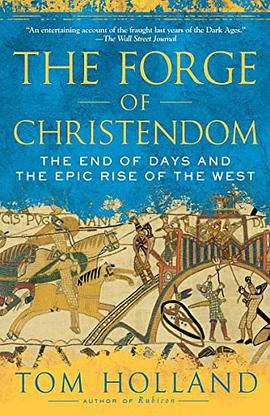
The Forge of Christendom [图书] 豆瓣
At the approach of the first millennium, the Christians of Europe did not seem likely candidates for future greatness. Weak, fractured, and hemmed in by hostile nations, they saw no future beyond the widely anticipated Second Coming of Christ. But when the world did not end, the peoples of Western Europe suddenly found themselves with no choice but to begin the heroic task of building a Jerusalem on earth.
In The Forge of Christendom , Tom Holland masterfully describes this remarkable new age, a time of caliphs and Viking sea kings, the spread of castles and the invention of knighthood. It was one of the most significant departure points in history: the emergence of Western Europe as a distinctive and expansionist power.