Adam Gopnik — Author (7)
At the Strangers' Gate [Book] Douban
From The New York Times best-selling author of Paris to the Moon and beloved New Yorker writer, a memoir that captures the romance of New York City in the 1980s.
When Adam Gopnik and his soon-to-be-wife, Martha, left the comforts of home in Montreal for New York, the city then, much like today, was a pilgrimage site for the young, the arty, and the ambitious. But it was also becoming a city of greed, where both life's consolations and its necessities were increasingly going to the highest bidder. At the Strangers' Gate builds a portrait of this particular moment in New York through the story of this couple's journey--from their excited arrival as aspiring artists to their eventual growth into a New York family. Gopnik transports us to his tiny basement room on the Upper East Side, and later to SoHo, where he captures a unicorn: an affordable New York loft. He takes us through his professional meanderings, from graduate student-cum-library-clerk to the corridors of Condé Nast and the galleries of MoMA. Between tender and humorous reminiscences, including affectionate portraits of Richard Avedon, Robert Hughes, and Jeff Koons, among many others, Gopnik discusses the ethics of ambition, the economy of creative capital, and the peculiar anthropology of art and aspiration in New York, then and now.
When Adam Gopnik and his soon-to-be-wife, Martha, left the comforts of home in Montreal for New York, the city then, much like today, was a pilgrimage site for the young, the arty, and the ambitious. But it was also becoming a city of greed, where both life's consolations and its necessities were increasingly going to the highest bidder. At the Strangers' Gate builds a portrait of this particular moment in New York through the story of this couple's journey--from their excited arrival as aspiring artists to their eventual growth into a New York family. Gopnik transports us to his tiny basement room on the Upper East Side, and later to SoHo, where he captures a unicorn: an affordable New York loft. He takes us through his professional meanderings, from graduate student-cum-library-clerk to the corridors of Condé Nast and the galleries of MoMA. Between tender and humorous reminiscences, including affectionate portraits of Richard Avedon, Robert Hughes, and Jeff Koons, among many others, Gopnik discusses the ethics of ambition, the economy of creative capital, and the peculiar anthropology of art and aspiration in New York, then and now.
The Table Comes First [Book] Douban
Never before have we cared so much about food. It preoccupies our popular culture, our fantasies, and even our moralizing—“You still eat meat?” With our top chefs as deities and finest restaurants as places of pilgrimage, we have made food the stuff of secular seeking and transcendence, finding heaven in a mouthful. But have we come any closer to discovering the true meaning of food in our lives?
With inimitable charm and learning, Adam Gopnik takes us on a beguiling journey in search of that meaning as he charts America’s recent and rapid evolution from commendably aware eaters to manic, compulsive gastronomes. It is a journey that begins in eighteenth-century France—the birthplace of our modern tastes (and, by no coincidence, of the restaurant)—and carries us to the kitchens of the White House, the molecular meccas of Barcelona, and beyond. To understand why so many of us apparently live to eat, Gopnik delves into the most burning questions of our time, including: Should a Manhattanite bother to find chicken killed in the Bronx? Is a great vintage really any better than a good bottle of wine? And: Why does dessert matter so much?
Throughout, he reminds us of a time-honored truth often lost amid our newfound gastronomic pieties and certitudes: What goes on the table has never mattered as much to our lives as what goes on around the table—the scene of families, friends, lovers coming together, or breaking apart; conversation across the simplest or grandest board. This, ultimately, is who we are.
Following in the footsteps of Jean Anthelme Brillat-Savarin, Adam Gopnik gently satirizes the entire human comedy of the comestible as he surveys the wide world of taste that we have lately made our home. The Table Comes First is the delightful beginning of a new conversation about the way we eat now.
With inimitable charm and learning, Adam Gopnik takes us on a beguiling journey in search of that meaning as he charts America’s recent and rapid evolution from commendably aware eaters to manic, compulsive gastronomes. It is a journey that begins in eighteenth-century France—the birthplace of our modern tastes (and, by no coincidence, of the restaurant)—and carries us to the kitchens of the White House, the molecular meccas of Barcelona, and beyond. To understand why so many of us apparently live to eat, Gopnik delves into the most burning questions of our time, including: Should a Manhattanite bother to find chicken killed in the Bronx? Is a great vintage really any better than a good bottle of wine? And: Why does dessert matter so much?
Throughout, he reminds us of a time-honored truth often lost amid our newfound gastronomic pieties and certitudes: What goes on the table has never mattered as much to our lives as what goes on around the table—the scene of families, friends, lovers coming together, or breaking apart; conversation across the simplest or grandest board. This, ultimately, is who we are.
Following in the footsteps of Jean Anthelme Brillat-Savarin, Adam Gopnik gently satirizes the entire human comedy of the comestible as he surveys the wide world of taste that we have lately made our home. The Table Comes First is the delightful beginning of a new conversation about the way we eat now.
A Thousand Small Sanities: The Moral Adventure of Liberalism [Book] Goodreads Douban
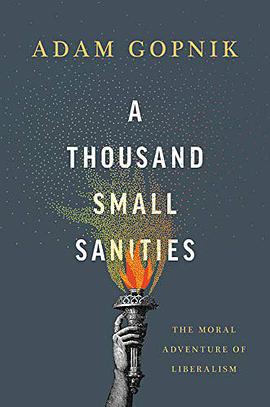
A stirring defense of liberalism against the dogmatisms of our time from an award-winning and New York Times bestselling author.
Not since the early twentieth century has liberalism, and liberals, been under such relentless attack, from both right and left. The crisis of democracy in our era has produced a crisis of faith in liberal institutions and, even worse, in liberal thought.
A Thousand Small Sanities is a manifesto rooted in the lives of people who invented and extended the liberal tradition. Taking us from Montaigne to Mill, and from Middlemarch to the civil rights movement, Adam Gopnik argues that liberalism is not a form of centrism, nor simply another word for free markets, nor merely a term denoting a set of rights. It is something far more the search for radical change by humane measures. Gopnik shows us why liberalism is one of the great moral adventures in human history -- and why, in an age of autocracy, our lives may depend on its continuation.
Not since the early twentieth century has liberalism, and liberals, been under such relentless attack, from both right and left. The crisis of democracy in our era has produced a crisis of faith in liberal institutions and, even worse, in liberal thought.
A Thousand Small Sanities is a manifesto rooted in the lives of people who invented and extended the liberal tradition. Taking us from Montaigne to Mill, and from Middlemarch to the civil rights movement, Adam Gopnik argues that liberalism is not a form of centrism, nor simply another word for free markets, nor merely a term denoting a set of rights. It is something far more the search for radical change by humane measures. Gopnik shows us why liberalism is one of the great moral adventures in human history -- and why, in an age of autocracy, our lives may depend on its continuation.
Paris to the Moon [Book] Douban
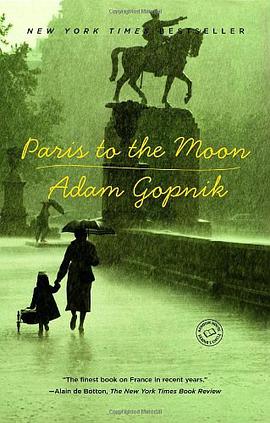
Paris. The name alone conjures images of chestnut-lined boulevards, sidewalk cafés, breathtaking façades around every corner--in short, an exquisite romanticism that has captured the American imagination for as long as there have been Americans.
In 1995, Adam Gopnik, his wife, and their infant son left the familiar comforts and hassles of New York City for the urbane glamour of the City of Light. Gopnik is a longtime New Yorker writer, and the magazine has sent its writers to Paris for decades--but his was above all a personal pilgrimage to the place that had for so long been the undisputed capital of everything cultural and beautiful. It was also the opportunity to raise a child who would know what it was to romp in the Luxembourg Gardens, to enjoy a croque monsieur in a Left Bank café--a child (and perhaps a father, too) who would have a grasp of that Parisian sense of style we Americans find so elusive.
So, in the grand tradition of the American abroad, Gopnik walked the paths of the Tuileries, enjoyed philosophical discussions at his local bistro, wrote as violet twilight fell on the arrondissements. Of course, as readers of Gopnik's beloved and award-winning "Paris Journals" in The New Yorker know, there was also the matter of raising a child and carrying on with day-to-day, not-so-fabled life. Evenings with French intellectuals preceded middle-of-the-night baby feedings; afternoons were filled with trips to the Musée d'Orsay and pinball games; weekday leftovers were eaten while three-star chefs debated a "culinary crisis."
As Gopnik describes in this funny and tender book, the dual processes of navigating a foreign city and becoming a parent are not completely dissimilar journeys--both hold new routines, new languages, a new set of rules by which everyday life is lived. With singular wit and insight, Gopnik weaves the magical with the mundane in a wholly delightful, often hilarious look at what it was to be an American family man in Paris at the end of the twentieth century. "We went to Paris for a sentimental reeducation-I did anyway-even though the sentiments we were instructed in were not the ones we were expecting to learn, which I believe is why they call it an education."
In 1995, Adam Gopnik, his wife, and their infant son left the familiar comforts and hassles of New York City for the urbane glamour of the City of Light. Gopnik is a longtime New Yorker writer, and the magazine has sent its writers to Paris for decades--but his was above all a personal pilgrimage to the place that had for so long been the undisputed capital of everything cultural and beautiful. It was also the opportunity to raise a child who would know what it was to romp in the Luxembourg Gardens, to enjoy a croque monsieur in a Left Bank café--a child (and perhaps a father, too) who would have a grasp of that Parisian sense of style we Americans find so elusive.
So, in the grand tradition of the American abroad, Gopnik walked the paths of the Tuileries, enjoyed philosophical discussions at his local bistro, wrote as violet twilight fell on the arrondissements. Of course, as readers of Gopnik's beloved and award-winning "Paris Journals" in The New Yorker know, there was also the matter of raising a child and carrying on with day-to-day, not-so-fabled life. Evenings with French intellectuals preceded middle-of-the-night baby feedings; afternoons were filled with trips to the Musée d'Orsay and pinball games; weekday leftovers were eaten while three-star chefs debated a "culinary crisis."
As Gopnik describes in this funny and tender book, the dual processes of navigating a foreign city and becoming a parent are not completely dissimilar journeys--both hold new routines, new languages, a new set of rules by which everyday life is lived. With singular wit and insight, Gopnik weaves the magical with the mundane in a wholly delightful, often hilarious look at what it was to be an American family man in Paris at the end of the twentieth century. "We went to Paris for a sentimental reeducation-I did anyway-even though the sentiments we were instructed in were not the ones we were expecting to learn, which I believe is why they call it an education."
Angels and Ages [Book] Douban
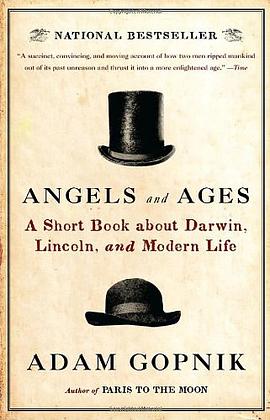
In this captivating double life, Adam Gopnik searches for the men behind the icons of emancipation and evolution. Born by cosmic coincidence on the same day in 1809 and separated by an ocean, Lincoln and Darwin coauthored our sense of history and our understanding of man’s place in the world. Here Gopnik reveals these two men as they really were: family men and social climbers, ambitious manipulators and courageous adventurers, grieving parents and brilliant scholars. Above all we see them as thinkers and writers, making and witnessing the great changes in thought that mark truly modern times.